














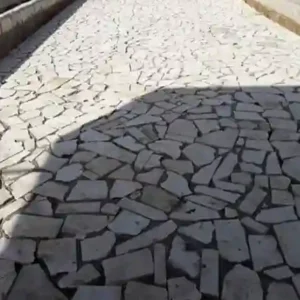

Citadel Stone supplies natural stone to St. Lucia quarry-direct: pavers, tiles, slabs and pool coping, hand-selected piece by piece and shipped by container or pallet to Castries — or Vieux Fort for southern projects. You approve physical samples before committing, your order is cut and finished to your exact specification, and you deal with one person — Kareem — from first enquiry to the day the stone lands.
Few islands set a stage like this one: the Pitons on the southwest horizon, a resort belt around Soufrière that defines Caribbean luxury photography, an established villa country in the north around Cap Estate and Rodney Bay, and a citizenship-by-investment programme keeping the development pipeline full. St. Lucian projects have their own geography — one island, two climates, two ports — and this page walks through choosing and landing stone for exactly that.
The stone St. Lucia projects ask for
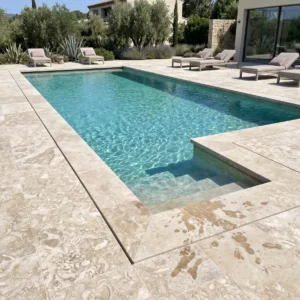
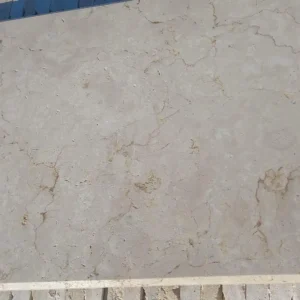
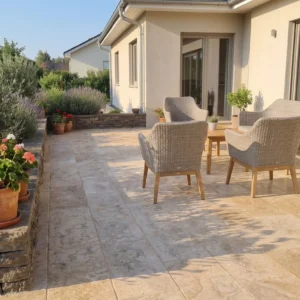
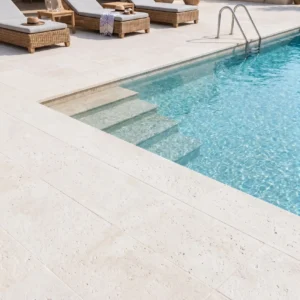
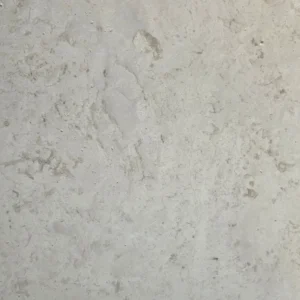
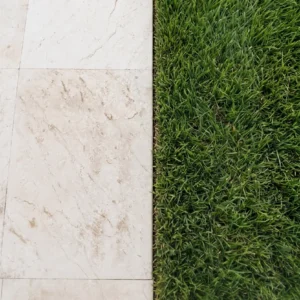
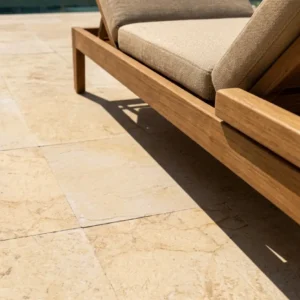
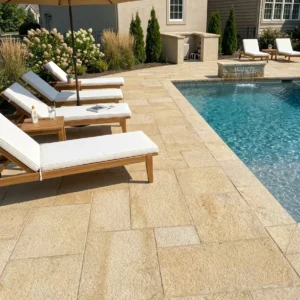
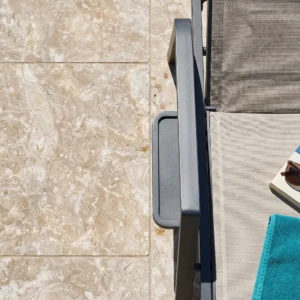
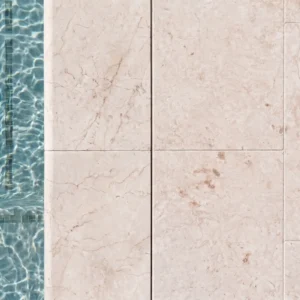
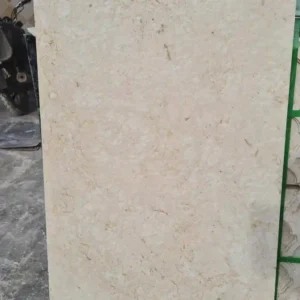
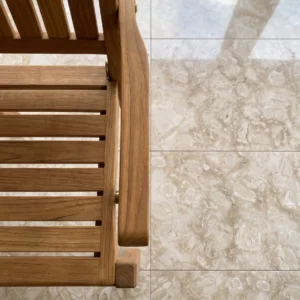
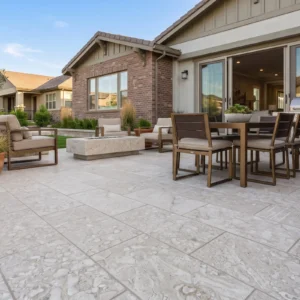
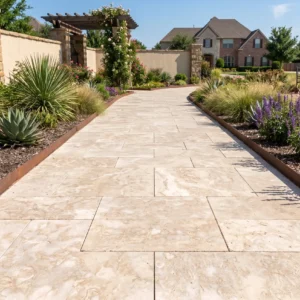
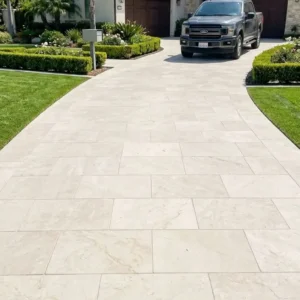
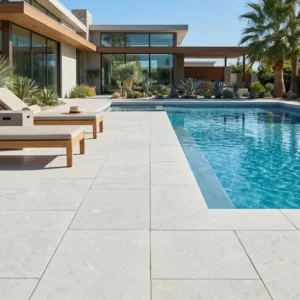
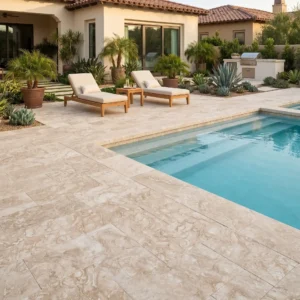
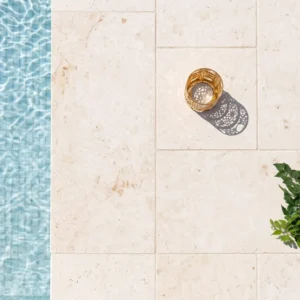
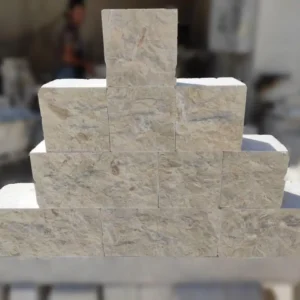
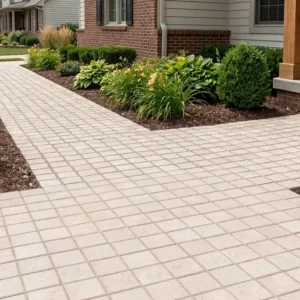
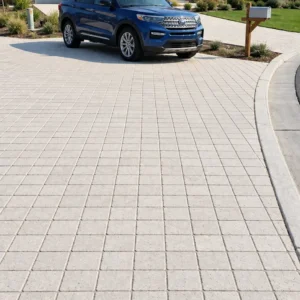
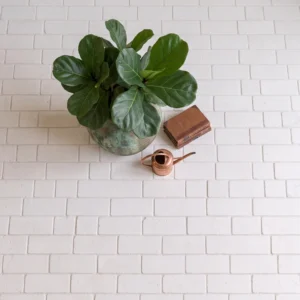
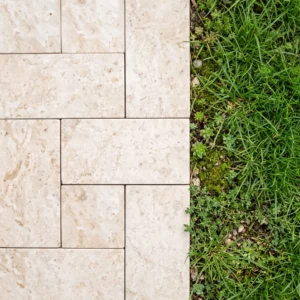
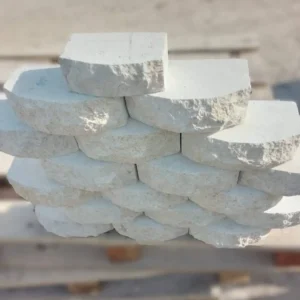
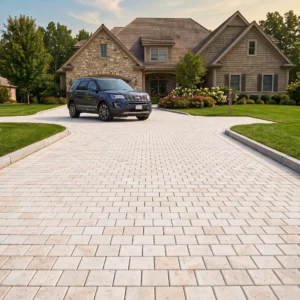
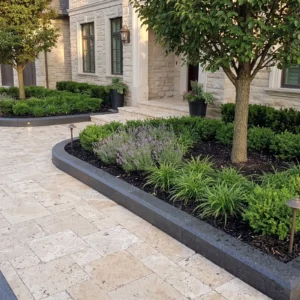
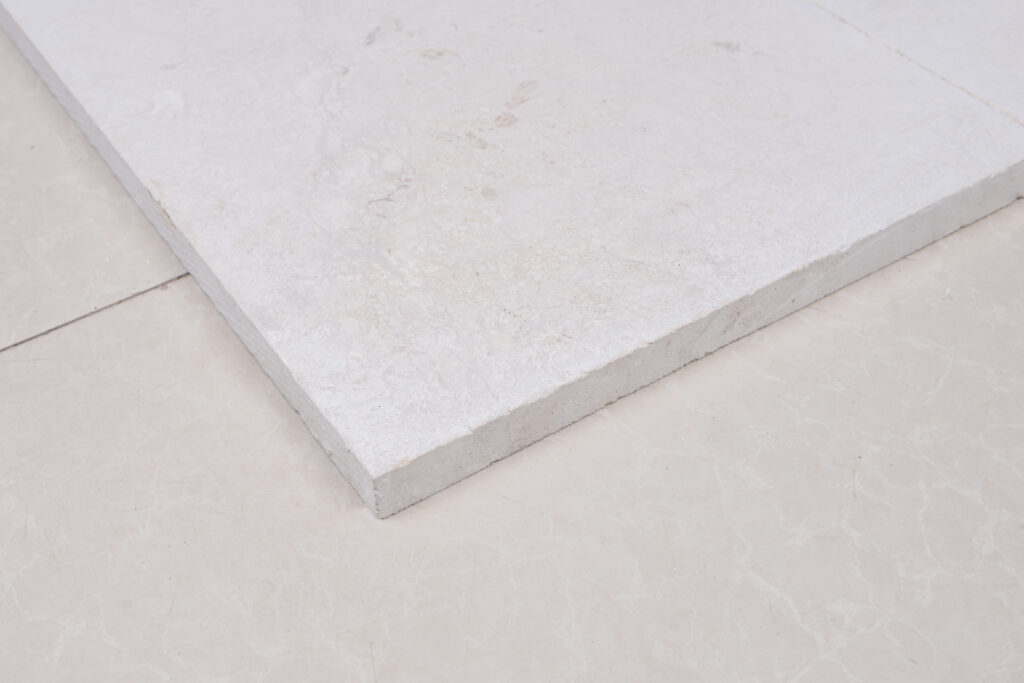
White limestone pavers and tiles lead our St. Lucia orders, and the island’s scenery explains why: against deep green ridges and the dark drama of volcanic ground, pale stone is what makes terraces glow. It keeps pool decks barefoot-comfortable through southern-coast afternoons, lifts interiors, and photographs the way the island’s famous resorts have taught every visitor to expect.
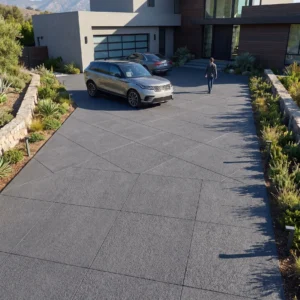
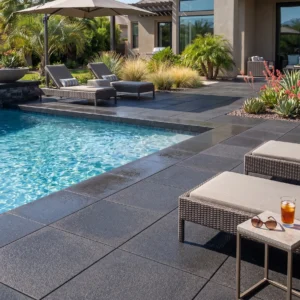
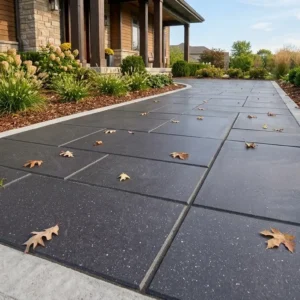
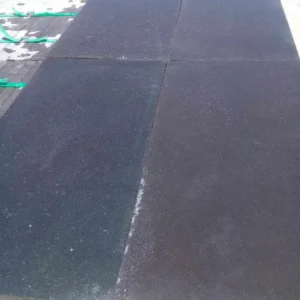
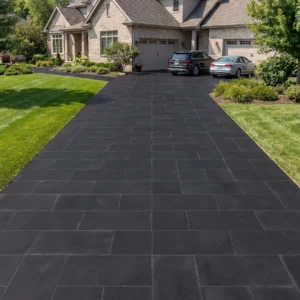
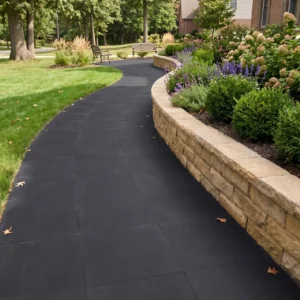
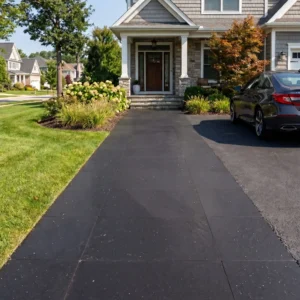
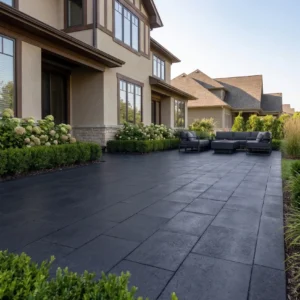
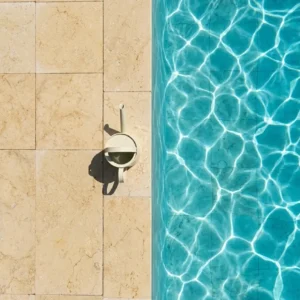
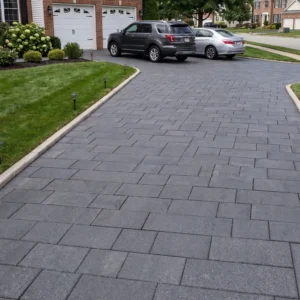
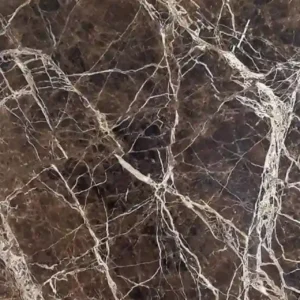
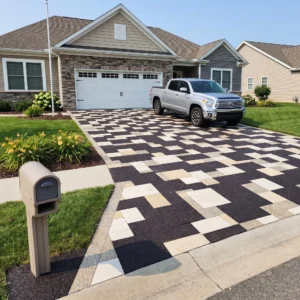
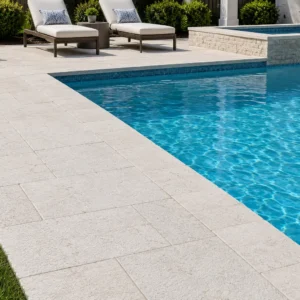
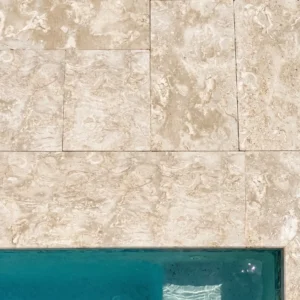
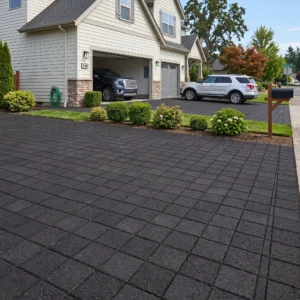
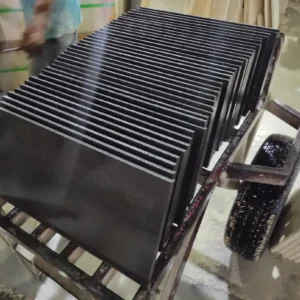
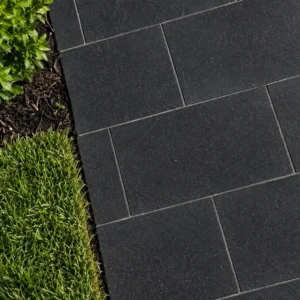
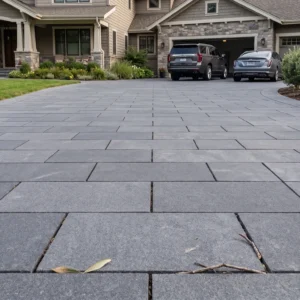
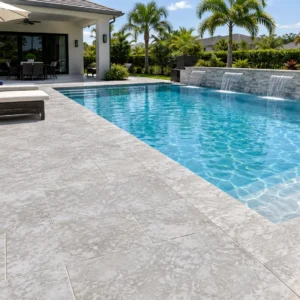
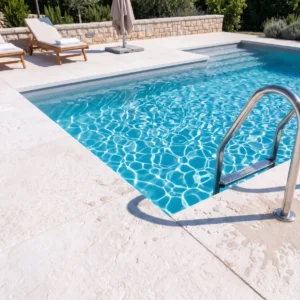
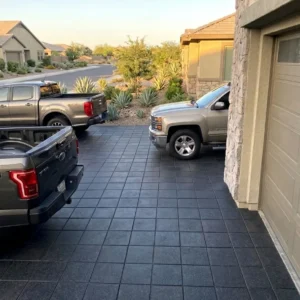
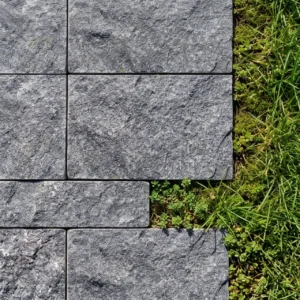
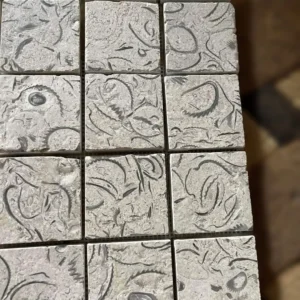
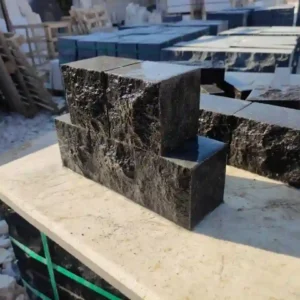
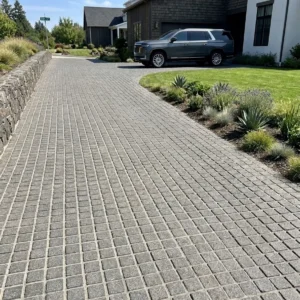
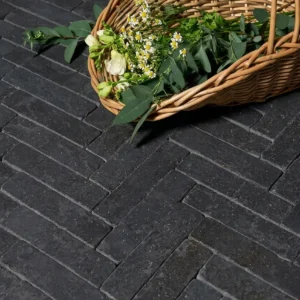
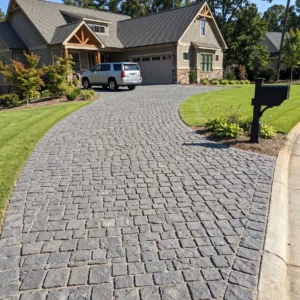
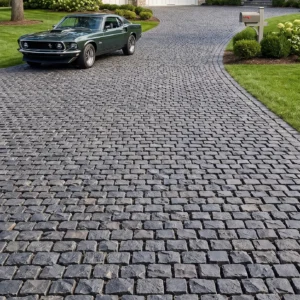
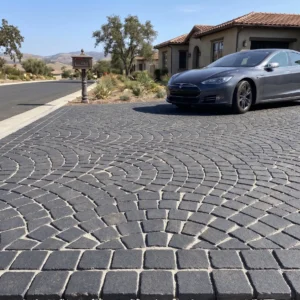
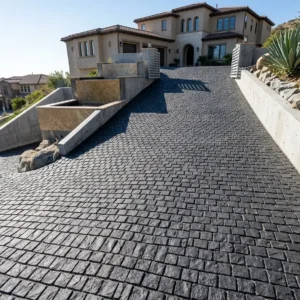
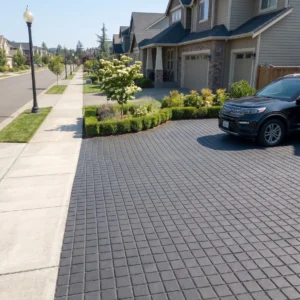
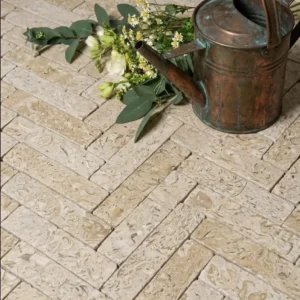
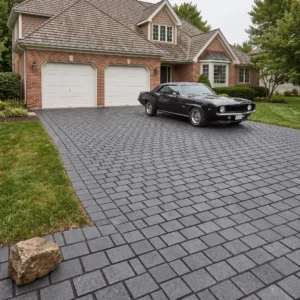
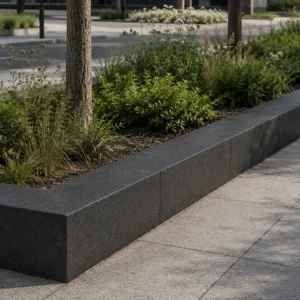
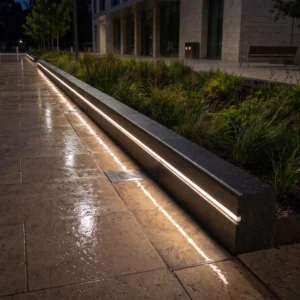
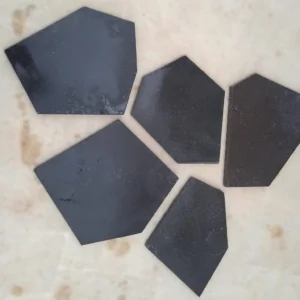
Ocean Reef shellstone brings fossil texture and warm cream tones to beach houses and relaxed outdoor rooms. Black basalt pavers earns a particular place here — volcanic stone on a volcanic island, reading native in borders, steps and drives while arriving factory-calibrated in a way no local material does. And white limestone pool coping finishes villa and resort pools with profiled, drip-grooved edges cut from the same stone as the deck.
The Pitons’ island, floored in limestone
St. Lucia’s skyline is volcanic — the Pitons are its signature, the Soufrière hills still steam — and its native rock follows: dark, igneous, quarried locally as aggregate and construction fill rather than calibrated flooring. That geology gives the island magnificent walls, road base and landscape mass, and leaves a gap exactly where outdoor living needs the opposite qualities: floors want light tones that shed heat instead of banking it, factory-flat calibration, low absorption for a generous wet season, and finished textures for grip.
Imported paving-grade limestone fills that gap, and the strongest St. Lucian designs use both stones deliberately — dark local material holding the hillsides and framing the drama, pale imported stone underfoot where people actually live. The contrast is the island’s own aesthetic; specifying it is simply making the geology official.
Where St. Lucia builds
The island’s project map has clear centres of gravity. Cap Estate in the far north is the established villa community — golf-course frontage, estate palettes, mature gardens being renewed plot by plot. Rodney Bay adds the marina life: lagoon-front homes, charter villas, and the seasonal surge when the Atlantic rally fleet arrives. Marigot Bay holds its postcard hollow of waterfront hospitality and hillside homes. The Soufrière belt is the resort country — Piton views, steep green sites, sanctuary pools, and the finish standard the flagship properties set for everyone nearby. Vieux Fort and the south grow with the island’s development pipeline near Hewanorra, while the windward east asks the front-row exposure questions. Each address tilts the specification differently — north or south is the first question we ask, and the answer tunes everything after it.
Any size, any thickness — cut to your project
Standard formats ship fastest, but every dimension is ultimately cut to order: large-format slabs such as 36 x 24 in (90 x 60 cm) and 36 x 36 in (90 x 90 cm), stair treads for hillside flights, wall cladding, sills and coping profiles are all routine requests. Thickness follows application — 2 cm under cover, 3 cm exterior standard, 5 cm and up under vehicles — and with dense limestone at roughly 80 kg per square metre at 3 cm, honest thickness is honest freight. Every piece is hand-inspected after manufacturing, and project orders ship from a single batch for color consistency.
Finishes for two coasts
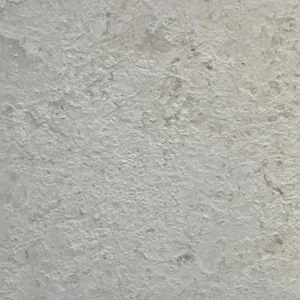
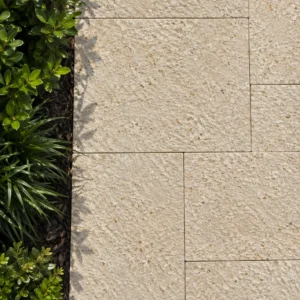
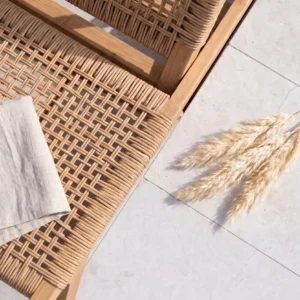
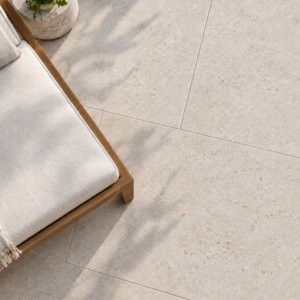
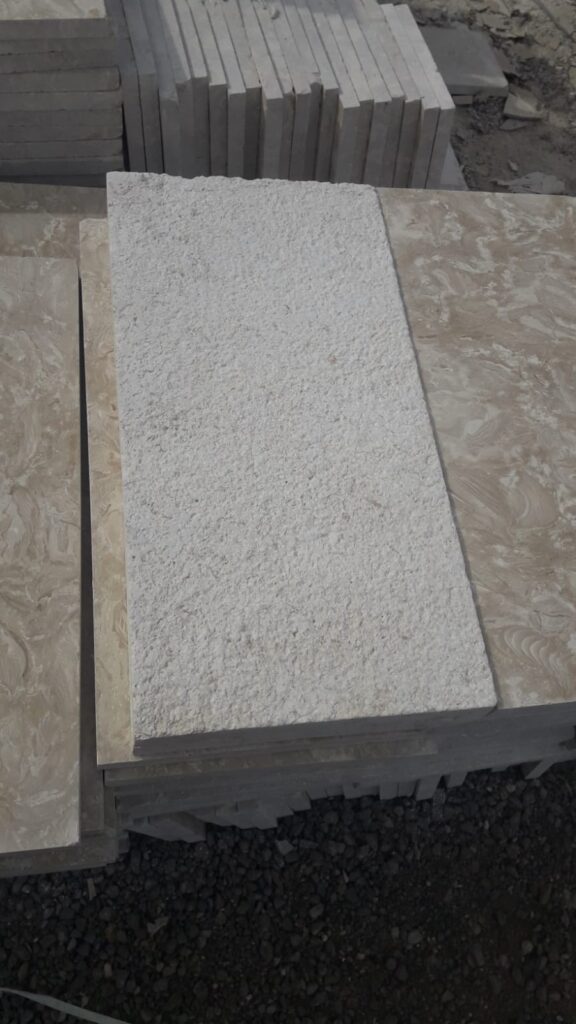
The island’s split personality shows up in the finish plan. The lush, steep southwest gets the full wet-climate treatment: brushed grades and bush-hammered faces on pool surrounds, outdoor stairs and shaded walks that stay damp under canopy. The drier, breezier north around Cap Estate and Rodney Bay leans on texture for a different reason — grip underfoot for sandy feet and glare management under open sun — with honed and fine-brushed surfaces reserved for covered verandas and interiors on both coasts. Every texture is produced in-house and photographed on real production stock in our Stone Finishes Gallery; zoning finishes across one order is standard practice.
Pools, plunge pools and the water’s edge
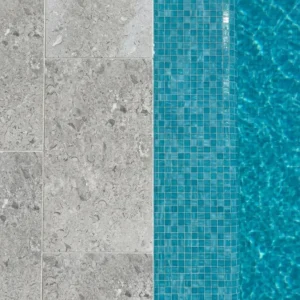
St. Lucia’s pool culture runs from Cap Estate’s full-size family pools to the Soufrière belt’s signature plunge and sanctuary pools — small water aimed at big views — and the stone package adapts to both. Full-size pools follow the regional playbook: textured pale decks, profiled coping, falls that beat the wet season. Plunge pools concentrate everything: at intimate scale the stone is most of what the eye sees, so tolerances tighten, coping becomes a drawn family of corners and radii, and lounging shelves and wet edges join the cutting list as designed pieces. Either way the edge ships as a set — coping, weirs, spa caps and deck from one batch — because the water line is the photograph, and photographs are unforgiving.
How delivery to St. Lucia works
Orders ship by sea freight — full containers for resort and development work (roughly 24–26 tonnes, on the order of 280–320 square metres at 3 cm), palletized or shared-container space for villa-scale orders. Castries is the island’s main container port and the default routing; for projects in the deep south near Vieux Fort and Hewanorra, ask about southern routing when you enquire — the right port can save the hardest road miles. We prepare the export documentation and a clear commercial invoice so your St. Lucian customs broker can settle duties and calculate landed cost before the vessel sails; projects under approved investment programmes should raise the concession question with their broker early.
The inland leg deserves the same planning as the ocean one: deliveries north to Cap Estate and Rodney Bay are short and simple, while the west-coast road to the Soufrière belt is beautiful, winding and slow — crate weights, vehicle sizes and any transfer points get agreed before the vessel sails, not discovered behind a loaded truck. Kareem confirms realistic production and sailing dates with your quote and tracks the order to arrival; new clients can pay through escrow, released only after the order is verified.
How an order actually runs
From first email to laid floor, the sequence holds at any scale. Samples arrive within 3 working days — viewed wet and dry, morning and evening, against the site’s own walls and green, with the coast named so the advice fits it. The quote itemizes the landed stack — stone, freight, insurance, the broker’s duty lines — so nothing hides in a square-metre price. The cutting list closes before production: field stone, copings, treads, wall caps and every special dimensioned, because the west-coast road is no place to discover a missing radius piece. Production documents itself — hand inspection, loading photographs before sailing. Arrival verifies everything: crates against the packing list, opened checks against the approved samples, escrow releasing on confirmation. Remote owners run the same sequence from abroad with photographs standing in for presence — a method the supporting guides cover step by step.
One island, two St. Lucias
The north is villa country: Cap Estate’s established community, Rodney Bay’s marina life, flatter ground, drier skies and short logistics. The southwest is the resort belt: Piton views, steep green sites, generous rainfall and the design standard set by some of the Caribbean’s most photographed properties. The stone conversation shifts with the coast — estate-consistent palettes and sand-wise textures in the north; view-first terraces, serious gradients and wet-season grip in the south — and orders are specified zone by zone accordingly. One supplier, one batch discipline, two very different briefs: that is the St. Lucian pattern.
Care in two climates
Maintenance follows the same split as everything else. Southern properties run the wet-climate rhythm: shaded stone brushed through the algae months, drains cleared before the season’s first cloudburst, canopy pruned off the paths, leaf-fall swept before rain prints it. Northern properties run the dry-coast version: a freshwater rinse where salt haze settles, sand swept from textured surfaces, glare-softened finishes doing their quiet work. Both coasts share the universals — pH-neutral cleaning only, no acid products near limestone, an annual walk of joints, edges and stair nosings, and attic-stock spares stored findable. The load is modest by design: stone here is chosen so the climate improves it, weathering toward the settled look the island’s oldest terraces wear.
Built for the hospitality economy
St. Lucia’s properties earn their living from guests — honeymooners above all, wedding parties, families, sailors — and stonework here is commercial infrastructure as much as landscaping. The market’s patterns repeat: sunset-facing terraces detailed for two, because romance is the island’s core product; ceremony-ready platforms and heel-proof aisles for a destination-wedding trade that fills calendars; plunge decks and wellness corners that photograph like second pools; and surfaces specified in guest-nights — dense, eased-edged, mid-textured — so a season of luggage wheels and barefoot traffic rinses off overnight. For owners, the practical translation is simple: the stone choices that delight guests and the ones that survive them are the same choices, made once. We quote with that double duty in mind, from a single villa suite to a resort phase.
Who we supply in St. Lucia
Villa owners get hand-selected stone from a single pallet up, samples first, escrow available. Contractors get cut-to-specification material arriving crated, labelled and sequenced, with wholesale pricing on volume. Resort developers and architects — on an island whose flagship properties set the regional bar — get single-batch consistency at container scale, finish and slip documentation, and one accountable counterpart: Kareem, kareem@citadelstone.us, backed by a 50-year quarrying and manufacturing operation. Small hotels and guesthouses get the same treatment at suite scale — phased low-season orders with batch continuity are a specification we recognise, not an exception.
Guides for your St. Lucia project
Fifteen supporting guides go deep on everything this page opens: two ports, two roads — the complete landing sequence; designing the Piton-view terrace; the two-climates playbook; sanctuary and plunge pools done properly; stairs to the sea on volcanic coast; and stone spaces that host a ceremony. The rest cover wellness gardens, river properties, family-proof specification and more — practical reading, written for this island specifically.
Proven across the Caribbean
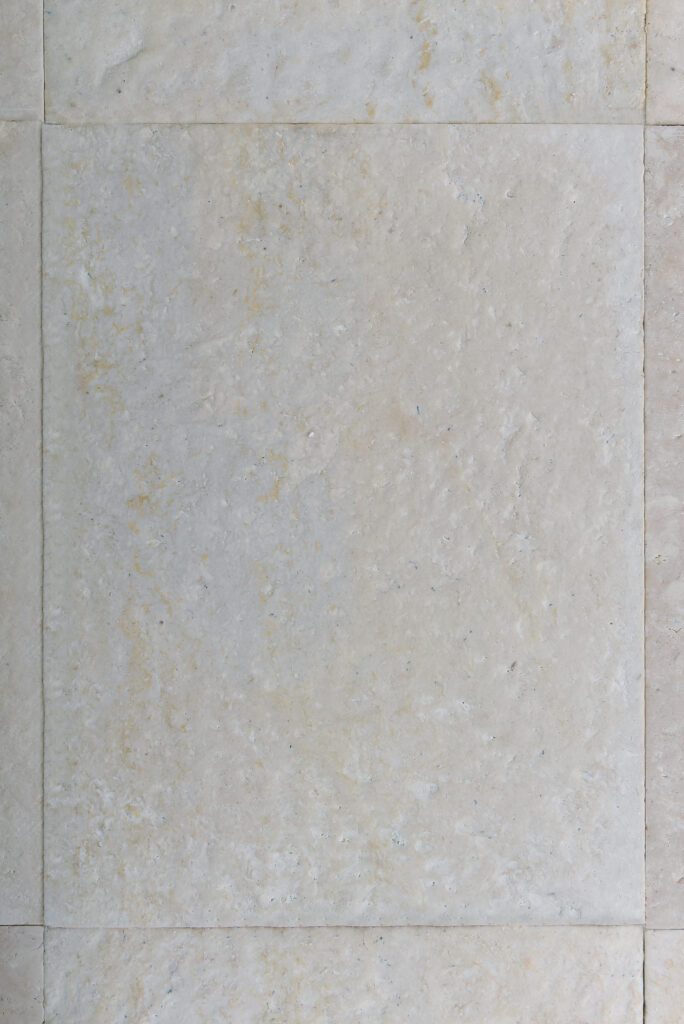
Island supply is our routine: see the Bahamas beachfront villa case study and our Bahamas, Barbados, Antigua, Jamaica, Turks & Caicos and Grenada supplier guides for how island orders come together end to end. The latest chapters reach the Cayman Islands, St. Vincent & the Grenadines, the British Virgin Islands, Aruba, Curaçao, Bermuda, St. Kitts & Nevis, Dominica, Anguilla, Sint Maarten, Puerto Rico, the US Virgin Islands, Belize, St. Barths, Bonaire, Costa Rica, Dominican Republic and Panama.
Start with samples
Tell us which stones and finishes you are considering and where in St. Lucia the project is — north or south changes the advice. Kareem confirms samples the same day — at your door within 3 working days — and quotes your exact quantities once the stone is right. Contact Citadel Stone or email kareem@citadelstone.us.