50 years quarry-direct·USA & worldwide·🛡️ Escrow payment for new clients·Contact me personally for the best wholesale prices: kareem@citadelstone.us
Quarry-Direct · Middle East Natural Stone
$2.90
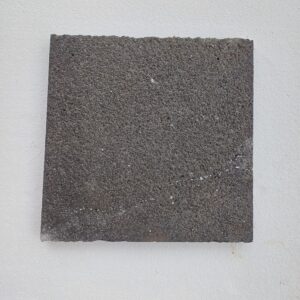
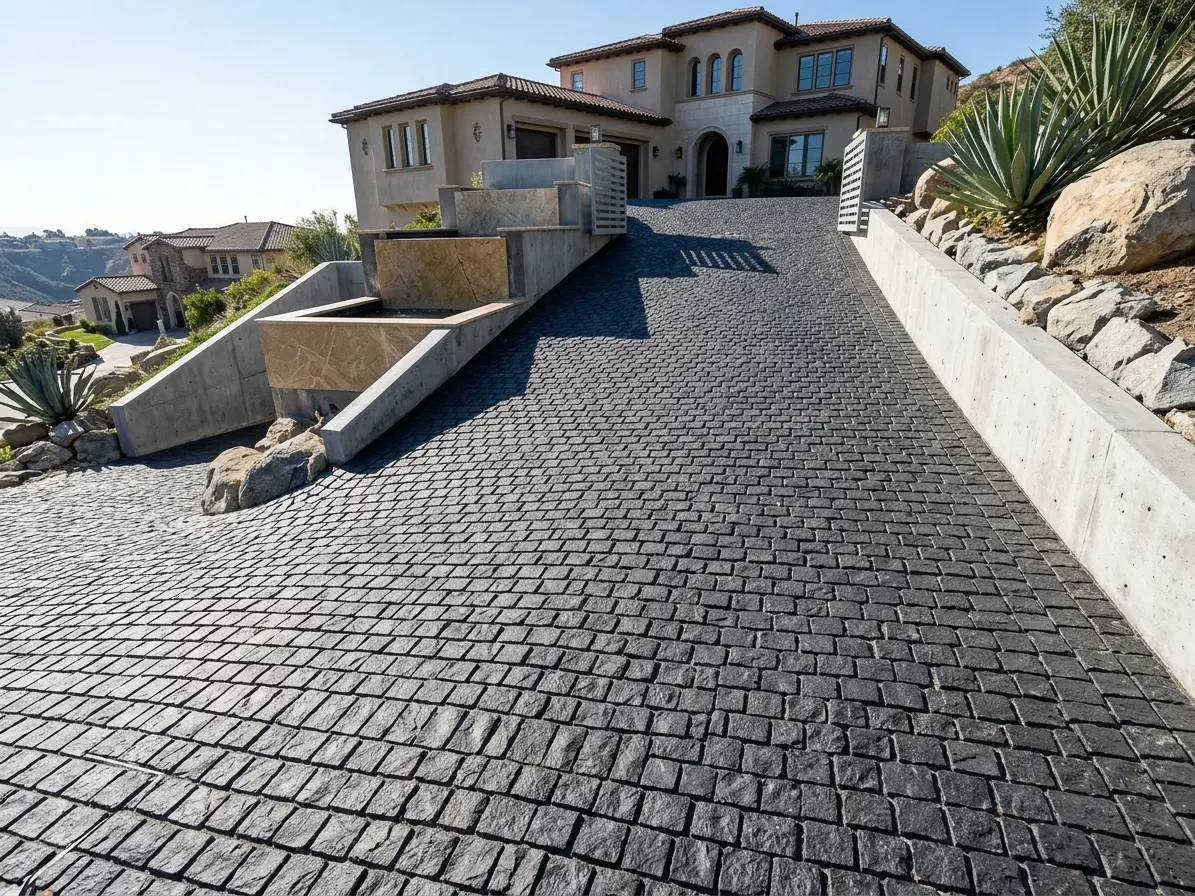
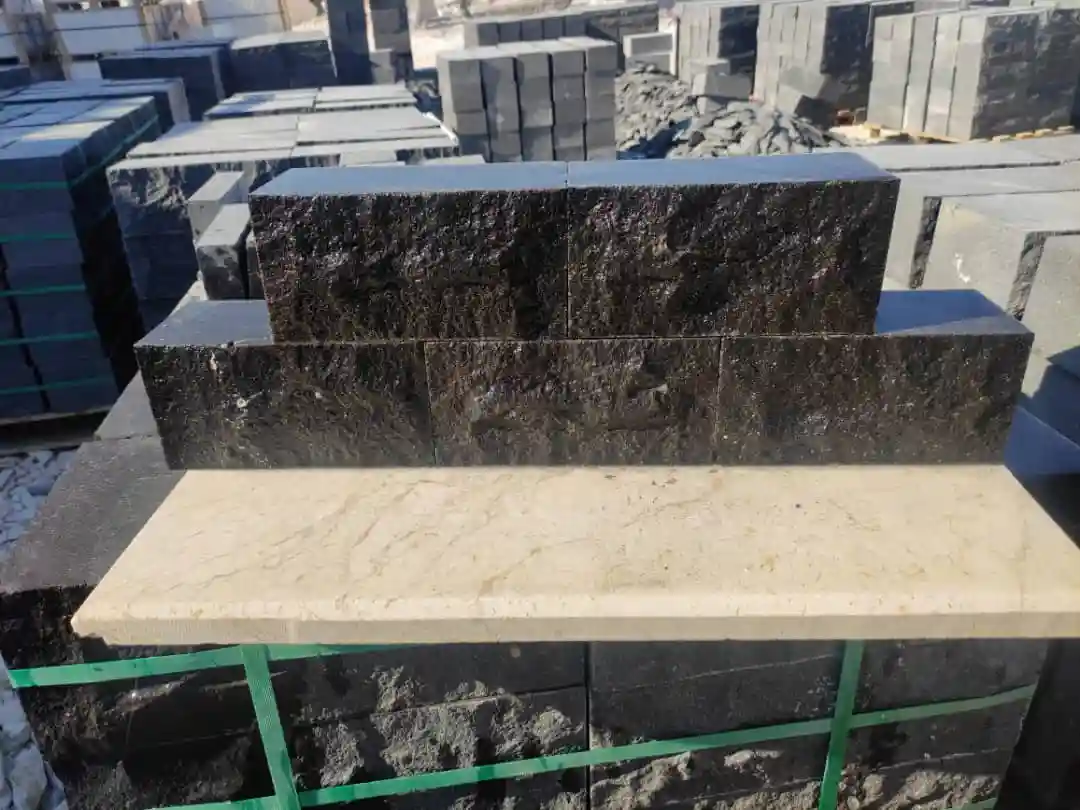
Transform your landscape project into a majestic sanctuary with these premium Black Basalt Split-Face Belgian Block. Their elegant volcanic stone creates a regal walkway that withstands the test of time for decades. The Black Basalt Split-Face Belgian Blocks are made from solid igneous rock formed deep in the earth’s crust for unrivaled strength. They are dense, hard-wearing and weather-resistant. They have a deeply textured split-face finish with a rugged, natural feel. The cobblestone patio has a rich black hue that adds dramatic flair to any landscape.
At Citadel Stone, we manufacture a comprehensive range of traditional dimensions. While the list below covers our standard production, we can manufacture any custom size and thickness to meet your project’s specific requirements.
3″ × 3″ (Approx. 8 × 8 cm)
4″ × 4″ (Approx. 10 × 10 cm) – Classic cube shape
4″ × 5″ (Approx. 10 × 13 cm)
4″ × 6″ (Approx. 10 × 15 cm)
4″ × 8″ (Approx. 10 × 20 cm) – Standard rectangular sett
5″ × 5″ (Approx. 13 × 13 cm)
6″ × 6″ (Approx. 15 × 15 cm) – Popular medium square
6″ × 9″ (Approx. 15 × 23 cm) – Traditional European style
8″ × 8″ (Approx. 20 × 20 cm)
9″ × 9″ (Approx. 23 × 23 cm)
5″ × 10″ (Approx. 13 × 25 cm)
6″ × 12″ (Approx. 15 × 30 cm)
Price: $2.90 per sq. ft.
Total: $2.90
Your size. Your thickness. Your finish, confirmed for this stone.
We cut this stone to the dimensions and thickness your project calls for. Brushed is our signature finish, from a coarse 16 grit to a fine 80, or finer to order. Most of our limestone and basalt can also be supplied sawn, honed or bush-hammered; polished, tumbled and split-face are made on selected stones. Tell us the size, thickness, finish and use, and we’ll confirm what this stone can be made in. Looking for another color? See the full collection.
Planning a laying pattern? See which of our formats suit herringbone, French pattern, running bond, stack bond, basketweave and fan layouts in our paver laying patterns guide.
Ships by pallet or container to any US state · Lead time quoted per order
Suitability varies with size, thickness, finish, and substrate. Tell us your application when you request a quote and we will confirm the right specification for it.
Bedding: full-bed sand and cement mix or a flexible adhesive appropriate to the substrate.
Joints: from 3 mm for sawn tiles; wider for split-face setts and cobbles.
Sealing: a quality impregnating sealer is recommended for limestone and shellstone; basalt and granite typically need none.
Cutting: wet saw with a diamond blade.
Installation requirements differ by stone and format — a product-specific method note is included with every quote, and our team is available for your installer’s technical questions.
Pricing improves materially with quantity: pallet rates beat per-piece pricing, and full-container rates beat both. Every quote is calculated quarry-direct, with no distributor margin in between.
Distributors, stone yards, and retailers: our Trade & Wholesale Program covers container-load pricing, recurring supply schedules, and private-label production.
Orders ship by pallet or full container to any US state, with kerbside delivery to the nearest safe access point. Lead times depend on stone, finish, and quantity, and are confirmed with your quote. Samples reach any US address within five working days.
Every crate is inspected and photographed before dispatch — if anything is wrong on arrival, contact us and we will make it right.
Citadel Stone’s Black Basalt Split-Face Belgian Block brings the raw, unrefined beauty of mechanically fractured volcanic stone to landscape and architectural projects where authentic material character, dramatic surface texture, and proven structural performance are equally the design objective.
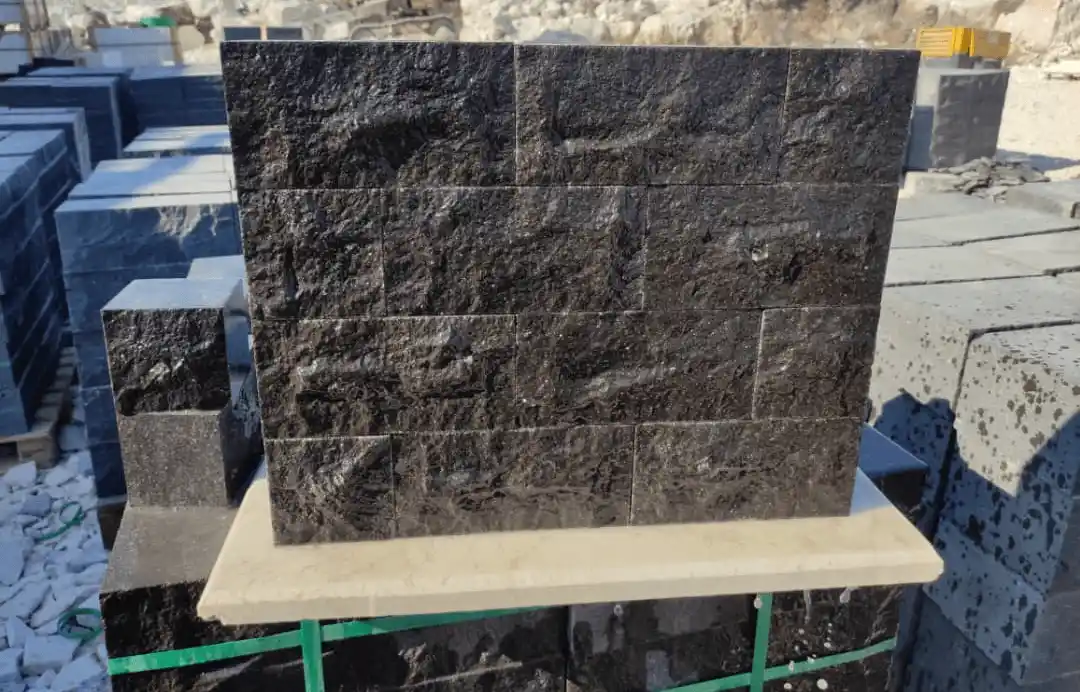
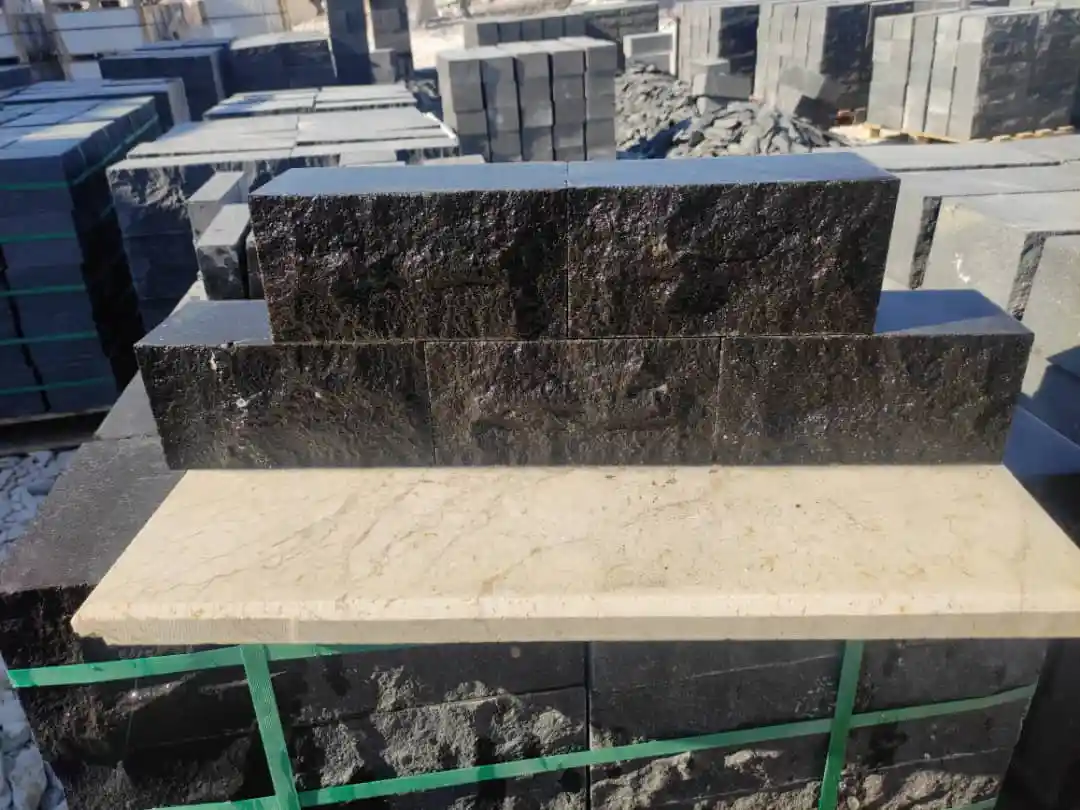
Created by controlled mechanical cleaving along basalt’s natural grain structure, each block reveals the stone’s fractured interior — organic surface relief, irregular contours, and the deep charcoal-to-black colouration of volcanic basalt’s internal mineral composition. No two blocks are identical. The result is an installation material of genuine geological authenticity and bold visual character — impossible to replicate in manufactured alternatives, and impossible to achieve with any smooth or uniformly ground stone finish.
Where the natural/sawn finish celebrates volcanic character through honest minimal processing and the bush-hammered finish creates controlled mechanical texture, the split-face finish goes further still — preserving the most raw and unmediated expression of basalt’s volcanic origins available in a precisely produced block format. It is the finish of choice for projects valuing rustic authenticity, historical resonance, and the kind of material presence that grows richer and more characterful with every year of weathering and use.
The split-face finish results from controlled mechanical fracturing — hydraulic splitting equipment cleaves the basalt block along its natural cleavage planes, breaking the stone rather than cutting or grinding it. The fractured face is exposed as the block’s visible surface: irregular peaks and valleys with substantial three-dimensional relief, natural chipping at edges, and the variation in surface height — typically 1/4″ to 1″ across the face — that gives split-face installations their characteristic topographic depth and shadow play.
This process intentionally creates the organic irregularity that defines the finish’s character. The surface projections and natural cleavage patterns catch and reflect light dynamically throughout the day, producing evolving shadow depths that add movement and visual complexity to static paving surfaces. Wet conditions darken the stone dramatically; dry periods reveal lighter internal tonal variations. The surface is never the same twice under changing light and weather — a quality of living materiality that no manufactured product and no smoother finish can achieve.
The fractured surface also makes split-face one of our most textured finishes — the irregular topography and natural cleavage projections create a rugged, characterful face with more surface relief than smooth, honed, or even sawn finishes, making split-face a natural choice for rustic driveways, courtyards and garden paths.
Dramatic Surface Relief — Unmediated Volcanic Character The split-face surface’s pronounced three-dimensional topography — peaks, valleys, fractured planes, and natural cleavage patterns — creates surface depth and light-play that no flat or uniformly textured finish can replicate. Each block carries a unique fracture pattern produced by the stone’s own internal grain structure. Installations have genuine geological individuality — no repeating pattern, no manufactured uniformity — and their character deepens rather than diminishes with weathering and age.
Natural Cleft Surface Texture The fractured surface’s irregular topography and natural cleavage projections give the finish its deep, rugged texture. As a result, split-face basalt has more surface relief than smooth, honed, and sawn finishes, and is a popular choice for driveways, patios, entrance areas and garden paths where authentic material character is the priority.
Naturally Irregular Edges Split-face processing intentionally produces irregular, chipped block perimeters — an authentic characteristic of mechanically fractured stone that contributes to the hand-crafted, historical aesthetic of the finish. These natural edge variations are design features rather than defects, adding to the organic, less formally resolved appearance that distinguishes split-face installations from the crisp precision of sawn-edge block formats. Wider joints — 1/2″ to 3/4″ — are used with split-face block to complement and honour this natural edge character.
Volcanic Hardness & Structural Strength Despite their raw, rustic appearance, Black Basalt Split-Face Belgian Blocks are dense, hard-wearing volcanic basalt — in a certified mill test our basalt measured a density of 3.01–3.06 g/cm³ and water absorption of just 0.59–0.69%. The same volcanic material performance that has kept Roman basalt block paving functional after two millennia of continuous use is present in every split-face block, regardless of surface treatment.
Colour Depth from Internal Mineral Variation The fractured surface reveals basalt’s internal mineral composition in ways that ground or polished finishes cannot — variations in deep charcoal, black, and occasional dark grey tones are visible across the irregular topography, creating colour depth and visual complexity that flat surfaces compress into uniformity. Light plays across the fractured face differently at every hour of the day, producing a surface that is genuinely dynamic in its visual character.
Improving With Age The split-face surface conceals minor wear and developing patina naturally — the irregular topography absorbs the visual evidence of use that would be conspicuous on smooth or polished finishes. Weathering deepens the stone’s character over time, producing the authentic aged quality associated with historical European stonework. Split-face basalt installations become more compelling and characterful with every year of exposure, not less.
Maintenance-Free Performance No sealing, coating, or chemical treatment is required in standard outdoor applications. Basalt’s inherent volcanic density, chemical inertness and low water absorption protect it against moisture, de-icing chemicals, pool chemicals, and environmental pollutants without surface intervention — a significant practical advantage over limestone, sandstone, and concrete alternatives.
| Property | Value |
|---|---|
| Material | Premium volcanic basalt |
| Finish | Split-face (mechanically fractured surface) |
| Colour Range | Charcoal to deep black with natural internal mineral variation |
| Surface Relief | Irregular — 1/4″ to 1″ height variation typical across face |
| Edge Condition | Naturally chipped and irregular |
| Water Absorption | 0.59–0.69% (certified mill test; lowest of the stones on our certificate) |
| Compressive Strength | 100–300 N/mm² (published range for basalt as a rock type) |
| Hardness | Böhme abrasion 0.87–0.91 (certified mill test, as reported) |
| Texture and Typical Use | Deep fractured texture; popular for driveways, patios and garden paths |
| Cold-Climate Use | Our first choice for cold-climate paving (see water absorption) |
| Sealing | Not required in standard outdoor applications |
| Recommended Joint Width | 1/2″–3/4″ — coarse sand or fine gravel |
| Lifespan | 50–100+ years with correct installation |
| Format | Size (Imperial) | Size (Metric) | Thickness |
|---|---|---|---|
| Traditional | 6″ × 9″ | 150 × 225mm | 3″ (75mm) |
| Substantial Square | 8″ × 8″ | 200 × 200mm | 4″ (100mm) |
| Rectangular | 10″ × 6″ | 250 × 150mm | 4″ (100mm) |
| Linear Plank | 12″ × 6″ | 300 × 150mm | 3″ (75mm) |
| Custom | Made to order | Made to order | Upon request |
Custom fabrication available — non-standard sizes, special thicknesses, and project-specific dimensions upon request. Minimum order quantities apply. Contact Citadel Stone for current stock availability and lead times.
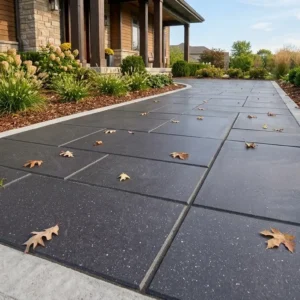
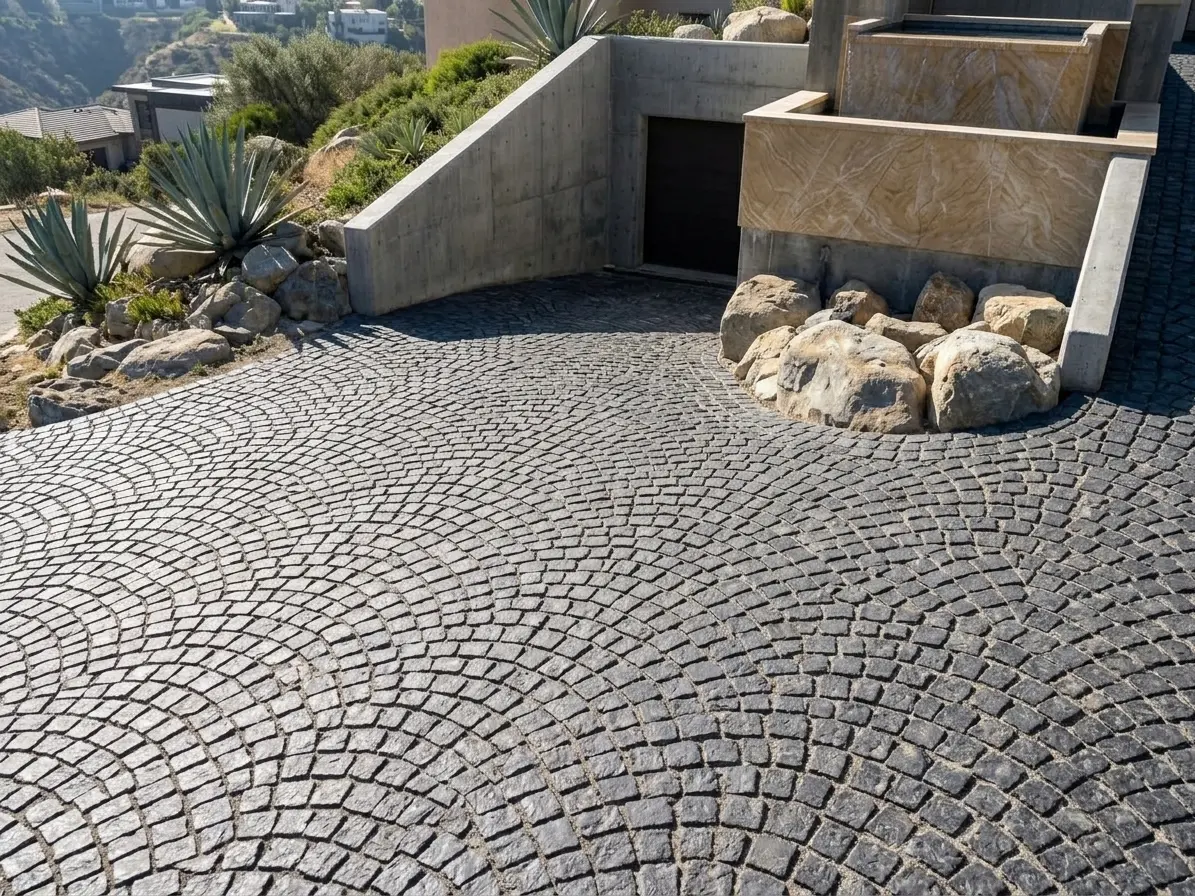
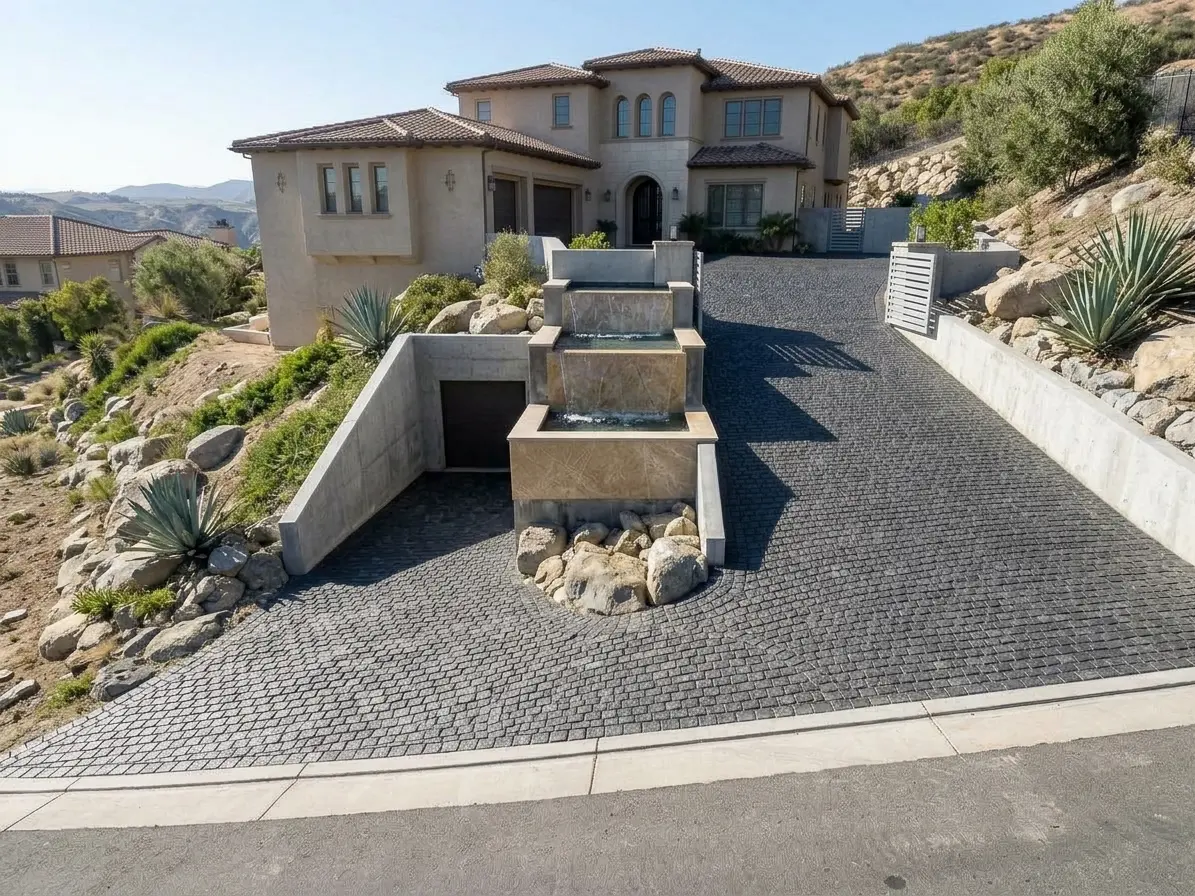
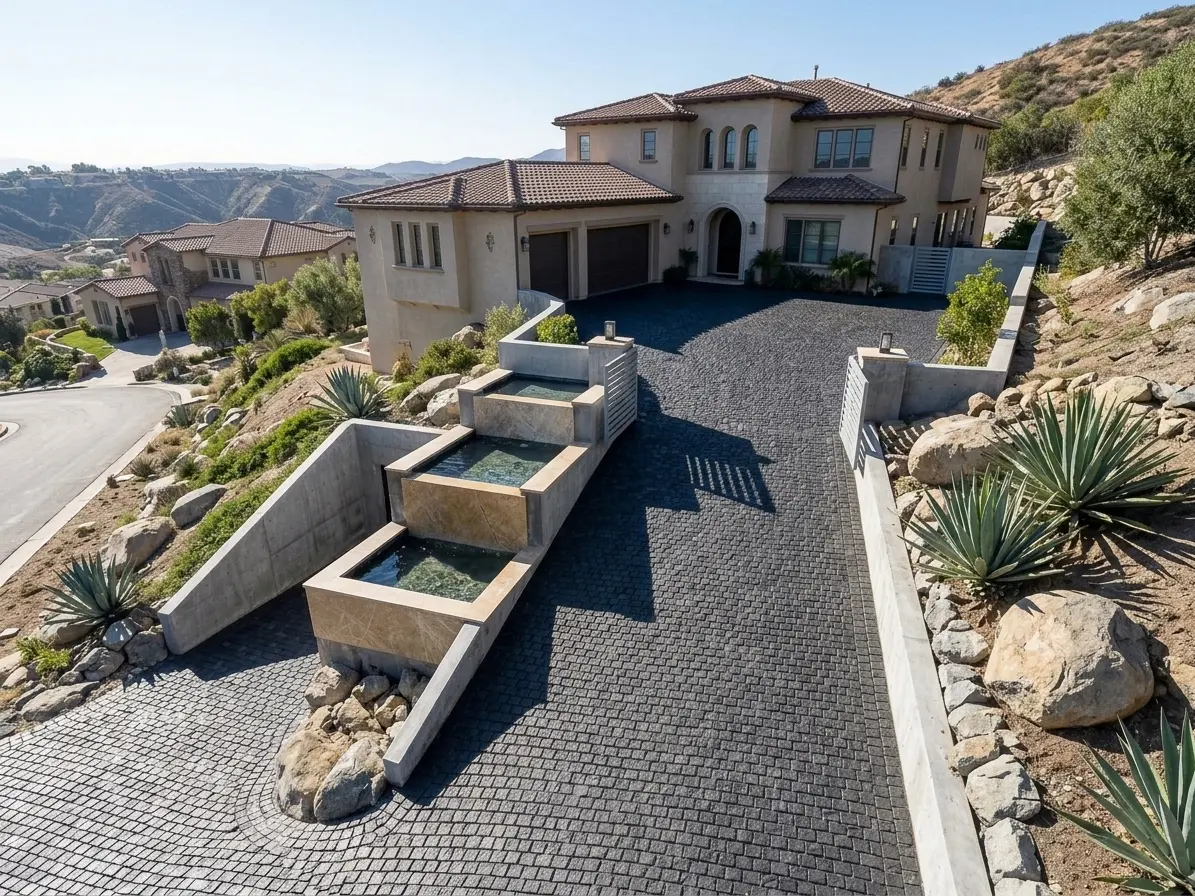
Driveways Black Basalt Split-Face Belgian Block creates driveway surfaces of bold volcanic character and immediate material presence — the fractured surface’s dramatic three-dimensional relief announcing the quality and authenticity of the material from the moment of arrival. In 4″ block thickness over a correctly prepared compacted aggregate sub-base, the structural capacity is in the dense-basalt class compressive strength, making it fully appropriate for residential and moderate commercial vehicular loading. The split-face surface’s deep, fractured texture is a rugged choice for driveway approaches and turning areas, and helps hide everyday wear. The irregular surface topography and natural charcoal-to-black colouration create a driveway aesthetic of raw geological authority, particularly effective approaching period properties, stone-built homes, and any residence where authentic material character is the design priority over formal precision. No sealing is required, and maintenance is limited to periodic sweeping and joint sand replenishment.
Patios & Terraces On outdoor terrace and entertaining surfaces, Black Basalt Split-Face Belgian Block creates the warm, textured character of a traditional stone courtyard — irregular, honest, and possessed of a surface depth and shadow play that flat or uniformly textured surfaces cannot replicate. The split-face surface’s evolving light quality — shifting through the day as sun angles change and bringing dramatic intensity after rain — creates an outdoor surface that is visually alive rather than static. In coursed or random/irregular layout, the block format creates terrace surfaces with old-world craftsmanship quality and the casual, welcoming atmosphere of an informal Mediterranean or English country setting. The split-face texture gives the terrace a rugged, characterful face, basalt’s structural strength withstands furniture loading, planter weight, and intensive entertaining use without deterioration, and no sealing or ongoing treatment is required across the full life of the installation.
Pool Surrounds & Coping Black Basalt Split-Face Belgian Block is the most deeply textured surface treatment in the Citadel Stone basalt range — a bold, rustic choice for pool surrounds. The fractured surface’s natural projections and irregular cleavage planes give pool edges a rugged, natural texture, with no specialist surface coatings needed. Any paving can be slippery when wet. Finish, slope, drainage, sealer and footwear all play a part, so ask your designer to confirm local pool-deck and code requirements. The deep charcoal-to-black colouration provides a bold, high-contrast setting alongside pool water, and the block’s raw volcanic character creates a pool environment of natural, geological authenticity — an aesthetic quality distinct from both the refined luxury of polished stone and the formal precision of large-format slab coping. Basalt’s complete resistance to pool chlorine, bromine, and salt systems ensures no degradation or discoloration in continuously wet environments. No sealing is required. Custom fabrication is available for coping profiles and shaped edge pieces through Citadel Stone.
Garden Paths Split-face basalt is one of the most naturally integrated path materials available for garden settings — the fractured surface’s organic irregularity and deep volcanic texture blending with planted borders, natural stone walls, and landscape materials in a way that reads as genuinely belonging rather than imposed. In coursed bond along formal garden axes, random/irregular layout through naturalistic planted areas, or as large stepping stones across lawn panels, the split-face block’s raw geological character integrates with the garden environment at a level of material authenticity that smoother finishes do not achieve. The fractured surface’s deep, natural texture suits informal garden paths and helps hide everyday wear. The deep dark colouration provides strong definition against green planting, pale gravel, and lighter garden materials, and basalt’s structural durability ensures path surfaces remain intact through decades of pedestrian use and seasonal weather change with no maintenance intervention required.
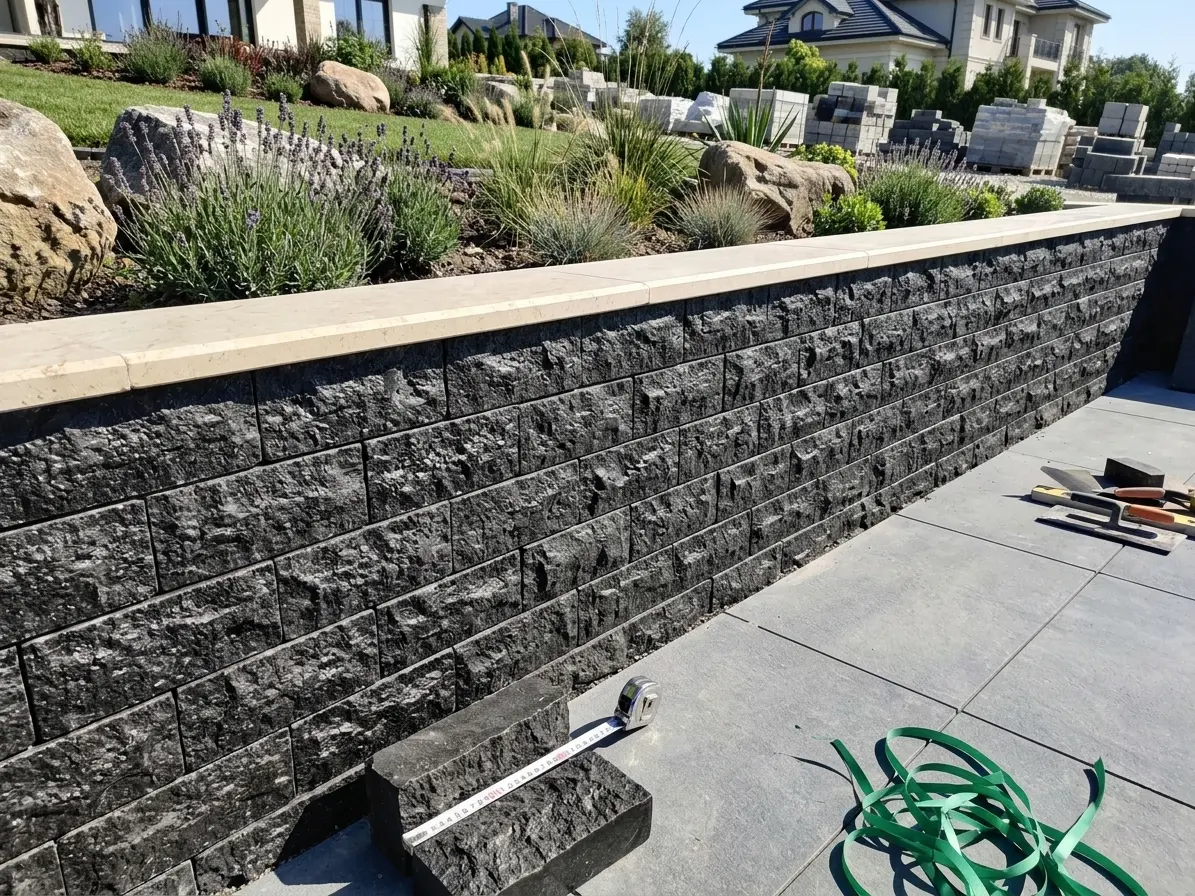
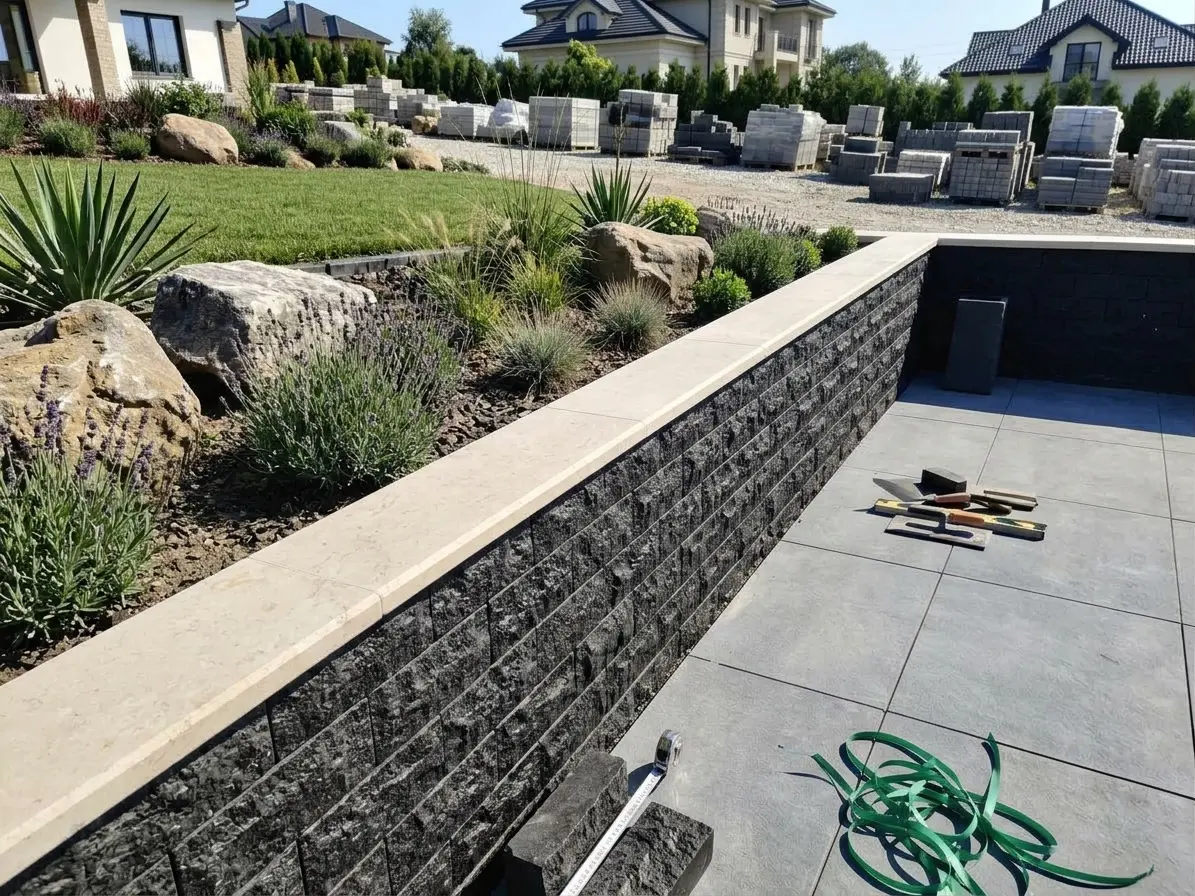
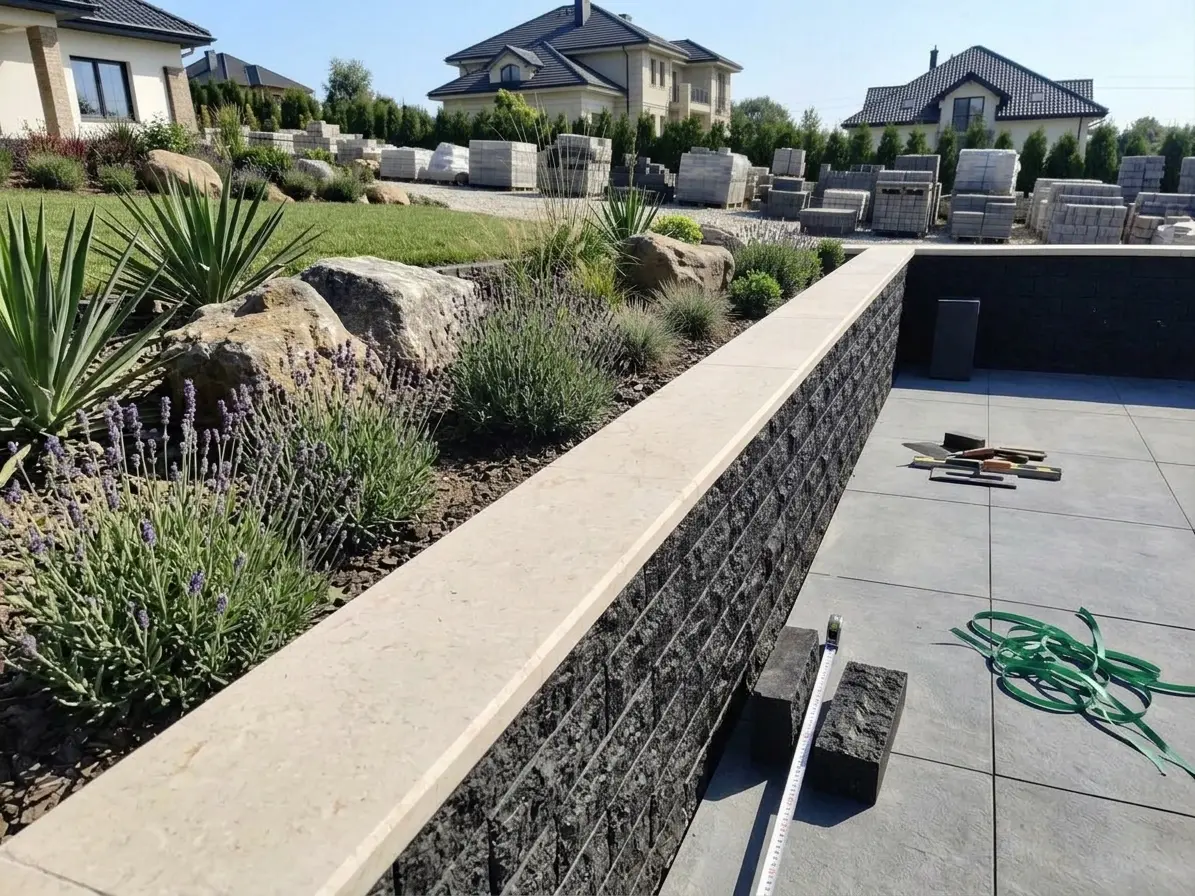
Wall Cladding Wall cladding is perhaps the most natural and expressive application for Black Basalt Split-Face Belgian Block — on vertical surfaces, the full drama of the fractured face’s three-dimensional relief can be appreciated without any of the practical constraints that apply to horizontal paving. On garden boundary walls, retaining walls with exposed faces, raised planters, outdoor kitchen structures, and architectural feature walls, the split-face block format creates surfaces of extraordinary depth and geological presence — each block carrying a unique fracture pattern, the assembled wall reading as a genuine stone construction rather than a clad surface. Under raking light — morning or evening sun, or deliberately positioned architectural lighting — the surface relief casts deep, dynamic shadows that animate the wall surface continuously. Internally, on fireplace surrounds, hearth bases, and feature walls in entrance halls or living spaces, the raw volcanic character and pronounced surface texture create a focal point of dramatic material authority — bold, honest, and entirely unlike the refined surfaces that surround it. No sealing is required for exterior wall cladding applications.
Black Basalt Split-Face Belgian Block’s format and natural irregularity suit a range of layout approaches — from formally coursed to entirely organic:
Traditional Coursed — Parallel rows running lengthwise along driveways or pathways. The most installation-efficient arrangement, delivering classic European stone block character with straightforward laying methodology. Course alignment provides formal order that contrasts productively with the split-face surface’s natural irregularity.
Herringbone — 45° or 90° angled arrangement providing maximum structural interlock and load distribution — the most appropriate pattern for vehicular driveways and high-traffic surfaces. The angular pattern dynamic adds visual energy to the split-face surface’s existing textural complexity.
Random / Irregular — Mixed block sizes arranged without formal pattern for a thoroughly rustic, organic appearance suited to naturalistic garden settings, informal landscape designs, and any project seeking the most authentic historical village-street aesthetic. The most natural expression of split-face block character — organic surface texture complemented by organic layout.
Coursed with Varied Joint Widths — Formal coursing with intentionally varied joint widths between courses, accommodating the natural dimensional variation of split-face blocks while maintaining directional order. Creates a relaxed, historically aged appearance appropriate for period property settings.
Decorative Borders & Textural Accents — Single or double courses of Black Basalt Split-Face Belgian Block used as perimeter borders within sawn or honed paving fields, as textural accent bands across terrace surfaces, or as edging definition alongside garden paths. The fractured surface’s dramatic relief provides compelling contrast against flatter adjacent materials.
| Black Basalt Split-Face Belgian Block | Concrete Block | Clay Brick | Sandstone Sett | Black Basalt Belgian Block – Natural | |
|---|---|---|---|---|---|
| Texture and Typical Use | ✅ Deeply textured — fractured surface | ⚠️ Moderate | ⚠️ Moderate | ⚠️ Moderate | ⚠️ Lightly textured — sawn surface |
| Surface Texture & Relief | ✅ Maximum — 3D fractured face | ❌ Flat | ❌ Flat | ⚠️ Moderate | ⚠️ Subtle — saw marks |
| Compressive Strength | 100–300 N/mm² (published range for basalt as a rock type) | ⚠️ ~4,000–6,000 PSI | ⚠️ Moderate | ⚠️ Moderate | 100–300 N/mm² (published range for basalt as a rock type) |
| Cold-Climate Use | Our first choice | ⚠️ Surface damage risk | ⚠️ Variable | ⚠️ Requires sealing | Our first choice |
| Maintenance Required | ✅ None | ⚠️ Periodic repair | ⚠️ Re-pointing | ⚠️ Regular sealing | ✅ None |
| Rustic / Historical Character | ✅ Maximum | ❌ None | ⚠️ Moderate | ⚠️ Moderate | ⚠️ Moderate |
| Individual Repairability | ✅ Block-by-block | ⚠️ Section repair | ✅ Brick-by-brick | ✅ Sett-by-sett | ✅ Block-by-block |
| Lifespan | ✅ 50–100+ years | ⚠️ 20–30 years | ⚠️ 30–50 years | ⚠️ 30–50 years | ✅ 100+ years |
Black Basalt Split-Face Belgian Block installs using established block paving techniques, with specific consideration for the natural dimensional variation inherent to mechanically fractured surfaces.
Base Preparation — Excavate to a depth accommodating 6–8″ of compacted crushed stone base plus the block thickness. Install geotextile fabric beneath the base to prevent soil migration over time. Compact thoroughly in multiple lifts using a vibratory plate compactor. A well-prepared base is the most critical factor in the long-term stability of any block paving installation.
Bedding & Setting — Lay blocks on a 1″–2″ coarse sand bedding layer. The irregular bottom surfaces of split-face blocks mean individual units settle to slightly different depths — this natural variation is a characteristic of the product, not an installation defect, and contributes to the organic, hand-crafted quality of the finished surface. Attempt to achieve consistent overall surface level while accepting the natural topographic variation between block faces.
Joint Width & Filling — Maintain 1/2″–3/4″ joints between blocks — wider than standard sawn-edge block installations, to complement rather than conflict with the split-face’s natural edge irregularity. Fill with coarse sand or fine gravel; tight joints feel visually inconsistent with split-face character. Polymeric sand can be used where weed resistance is a priority, though coarse sand better suits the rustic aesthetic of this finish.
Edge Restraint — Install concrete haunch, metal edging, or border block courses along all free perimeters to prevent lateral migration under vehicular loading. Edge restraint is essential for long-term stability in driveway and high-traffic applications.
Surface Variation — Embrace the inherent height variation, surface irregularity, and organic placement character of split-face blocks as defining design qualities rather than installation imperfections. Installations attempting perfect levelness are working against the nature of this finish — the authentic, slightly irregular topography is precisely what distinguishes a split-face installation from a sawn or honed surface.
Compaction — Use a vibratory plate compactor with a thick protective rubber or foam pad beneath the compactor plate — the split-face surface’s projections must be protected from mechanical damage during compaction. Do not compact without protection.
Professional installation is recommended for vehicular driveway applications and complex pattern work. Experienced installers comfortable with natural dimensional variation can successfully complete pedestrian and decorative applications.
Sealing No sealing is required for Black Basalt Split-Face Belgian Block in standard outdoor applications. Basalt’s low water absorption (just 0.59–0.69% in a certified mill test) and chemical resistance provide inherent protection against moisture, staining, de-icing chemicals, and environmental exposure without surface treatment. This maintenance-free characteristic is one of the most significant practical advantages of Citadel volcanic basalt over limestone, sandstone, and concrete alternatives that require periodic resealing to maintain their performance.
Routine Cleaning Sweep or blow clear of debris regularly — the split-face surface’s relief and crevices can accumulate organic debris more readily than flat surfaces, and regular clearing prevents organic staining and biological growth establishing in surface recesses. Periodic hosing or moderate-pressure washing — 1,200–1,500 PSI — refreshes appearance and removes surface biological growth effectively. For interior applications, sweep regularly and mop with a pH-neutral stone cleaner. Avoid acidic cleaning products on any natural stone surface.
Joint Maintenance Monitor sand joints annually and replenish coarse sand or fine gravel in any eroded areas to maintain surface stability and block interlock. The wider joints characteristic of split-face installation may require more frequent replenishment than narrow-jointed sawn-block installations — annual assessment is recommended for vehicular applications. Individual displaced or rocking blocks can be lifted and reset without disturbing surrounding material.
Winter Care No special winter preparation or protective measures are required. Less water in the stone means less water to freeze inside it, which is why basalt is our first choice for cold-climate paving. We do not have a freeze-thaw cycle rating for our stone; we publish its measured absorption instead. Standard snow-clearing equipment is compatible with the split-face surface — avoid metal-tipped snow shovels or implements that could chip projecting surface features. De-icing salts and chemical treatments cause no harm to basalt’s silicate mineral composition.
Developing Character The split-face surface’s irregular topography naturally conceals minor surface wear and developing patina in ways that smooth finishes cannot. The weathering process deepens the stone’s character over time — producing the authentic aged quality associated with historical stonework — rather than revealing wear as a deterioration. Split-face basalt installations improve aesthetically with age.
Is Black Basalt Split-Face Belgian Block suitable for driveways? Yes. In 4″ thickness over a correctly prepared 6–8″ compacted aggregate sub-base, the block is fully appropriate for residential driveways and moderate commercial vehicular applications. The split-face surface’s deep, rugged texture suits driveway settings and helps hide everyday wear. Professional installation is strongly recommended to ensure correct base preparation, edge restraint, and appropriate management of the block’s natural dimensional variation.
Does it require sealing? No. Basalt’s low water absorption (just 0.59–0.69% in a certified mill test) and chemical resistance provide inherent protection in all standard outdoor applications without sealing. This is a significant long-term practical advantage over limestone, sandstone, and concrete alternatives.
How does the split-face finish differ from the natural/sawn finish and other basalt finishes? The split-face finish is the most raw and texturally dramatic of all basalt surface treatments — mechanically fractured rather than cut, producing irregular three-dimensional surface relief, natural edge chipping, and a depth of texture that no other finish replicates. The natural/sawn finish is flatter and more formally precise — suitable for vehicular and pedestrian use with a more restrained surface character. The honed and polished finishes are smooth interior-grade surfaces of increasing refinement. The bush-hammered finish creates uniform controlled indentation with a more formally resolved appearance than the organic irregularity of split-face. Contact Citadel Stone for guidance on finish selection for your specific project application and aesthetic intent.
How does it compare to the Black Basalt Belgian Block – Natural? Both products share the same volcanic basalt material and Belgian block format. The key distinction is the surface finish and its consequences — the split-face finish delivers maximum surface texture, naturally irregular edges, and the most dramatically rustic and historically authentic aesthetic character. The natural/sawn finish delivers more formal precision, tighter joint tolerances, and a surface character suited to a wider range of design contexts from formal to informal. For projects where deep texture and raw geological character are the priorities, split-face is the stronger specification; for projects requiring greater installation precision and a wider design register, natural/sawn is more appropriate. Contact Citadel Stone to discuss which is most suited to your specific project.
Can individual blocks be replaced if damaged? Yes. Individual blocks can be lifted and replaced without disturbing surrounding material — a significant practical advantage over monolithic paving. Retaining a small quantity of matching blocks from the original supply is recommended to ensure a consistent colour and fracture character for any future replacements.
Is the surface comfortable for barefoot use? The split-face surface’s pronounced relief is more textured underfoot than sawn or honed finishes — robust and characterful rather than smooth. For pool surrounds and garden paths where some barefoot use is expected, the surface is appropriate, though visitors and users should be advised of the textured character before first encounter. For environments where extensive barefoot traffic and maximum surface comfort are the priorities — spa surrounds, indoor wet rooms — the honed or bush-hammered finish may be more appropriate. Contact Citadel Stone for guidance.
Authentic Split-Face Processing — Modern hydraulic splitting equipment creates genuinely fractured surfaces with consistent structural quality and authentic rustic character — not a manufactured texture applied to a flat surface.
Premium Quarry Sourcing — Citadel Stone sources Black Basalt Split-Face Belgian Block from select quarries producing dense, consistent basalt with the grain structure and internal mineral composition that produces the most dramatic and characterful split-face results.
Meticulous Quality Control — Every block is inspected for adequate thickness, fracture quality, structural integrity, and colour consistency before despatch. Blocks with structural defects — as opposed to natural surface variation — are rejected before reaching our customers.
Expert Consultation — Our team provides pattern recommendations, quantity calculations, sub-base specifications, installation guidance specific to split-face dimensional variation, and detailed project quotes for residential and commercial applications of any scale.
Custom Fabrication — Non-standard sizes, special thicknesses, and project-specific dimensions accommodated upon request. Contact Citadel Stone to discuss your project.
Nationwide Delivery — Reliable shipping across the continental United States with careful packaging to protect natural stone surfaces throughout transit.
Specify volcanic natural stone Belgian block in a dramatically textured split-face finish — for projects where authentic geological character, deep texture, and maintenance-free volcanic performance are the design priorities.
Request a Free Consultation — Our experienced team provides material guidance, finish comparisons, pattern recommendations, quantity calculations, sub-base specifications, and detailed project quotes tailored to your exact brief.
Trade & Professional Support — Landscape designers, architects, and contractors receive dedicated account support, competitive trade pricing, full technical data, and coordinated project delivery.
Request a Sample — Assess the split-face surface relief, charcoal-to-black colouration, and block quality of Black Basalt Split-Face Belgian Block before committing to your project. Contact Citadel Stone to arrange your sample.
Citadel Stone — Premium Natural Stone for Spaces That Endure
Product specifications and pricing are subject to change. Contact Citadel Stone for current stock availability and project-specific recommendations.
Choose Your Finish with Confidence
The finish decides how your stone looks, feels and grips underfoot. Compare every finish we produce — brushed 16, 36 and 80 grit, honed and bush-hammered — photographed up close on the actual stone we supply, so you can judge the texture before you order. Samples of any finish are at your door within 3 working days.
Explore the Stone Finishes GalleryA sample of the exact stone ships before any full order — judge tone, veining, and texture in your own light.