






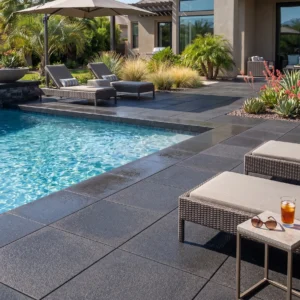
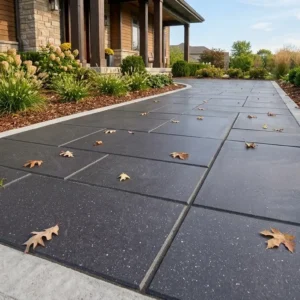


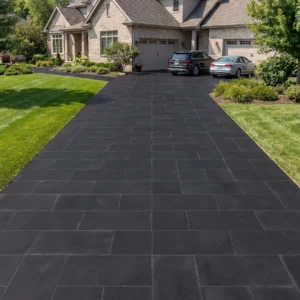
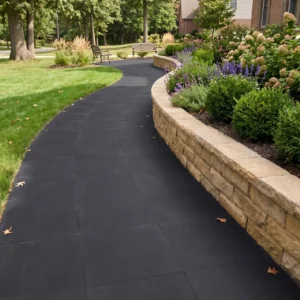





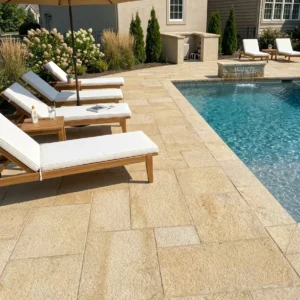

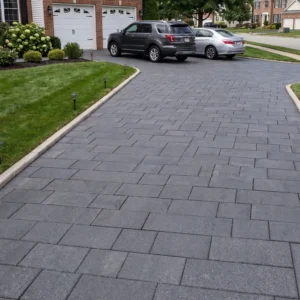


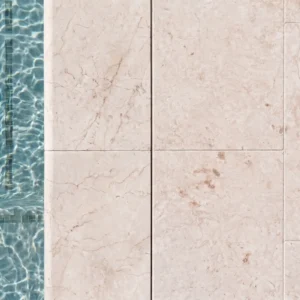
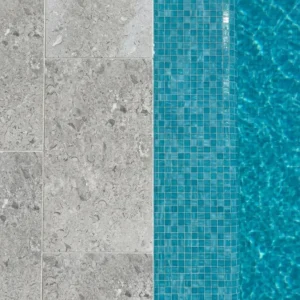



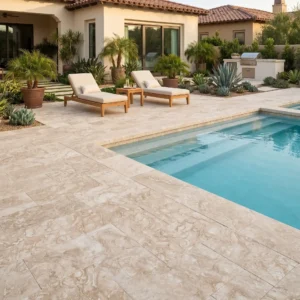
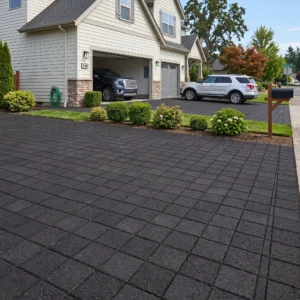

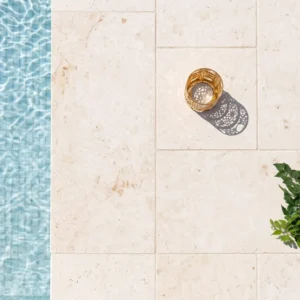
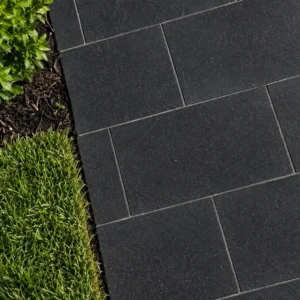









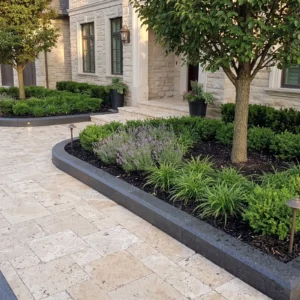
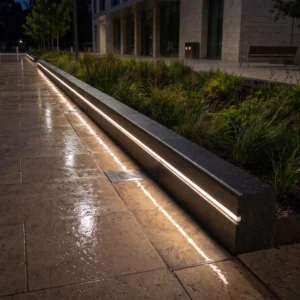





The compressive strength figures separate serious granite specification from guesswork — the tested figure for the batch you buy is what dictates whether your load-bearing application passes structural review or gets kicked back by the plan examiner. Granite Products earn their reputation from crystalline structure that resists abrasion, chemical attack, and freeze-thaw cycling in ways sedimentary stones simply can’t match. You’ll find the real specification work isn’t in choosing granite over other materials — it’s in matching the right grade, finish, and dimension to the structural and code demands your project actually carries. That’s where most specs go sideways, and where field experience earns its keep.
What Makes Granite Perform Under Load
Granite’s igneous origin gives it a densely interlocked crystalline matrix of quartz, feldspar, and mica, and that structure is why the stone shrugs off point loads that would spall softer materials. You’re working with a low water absorption rate — the property that lets it survive freeze-thaw regions where saturated stone fails. The low porosity matters more than most specifiers realize, because it drives the frost resistance that building codes in cold-climate zones demand.
Here’s what often gets overlooked in the material data: granite’s thermal expansion coefficient sits around 4.4 to 4.6 × 10⁻⁶ per °F, which is low enough that large slabs stay dimensionally stable across seasonal swings. Federal geological surveys document granite’s role in high-durability construction, and the USGS granite production statistics confirm its dominance in heavy-load dimension stone applications. You can lean on that stability when specifying continuous runs of paving or cladding.
- Compressive strength: request the tested value for the variety and grain density you are buying
- Water absorption: ask for the tested figure, which drives freeze-thaw resistance
- Flexural strength: request the tested value, which governs unsupported spans and treads
- Abrasion resistance: the interlocked quartz delivers what heavy foot and vehicle traffic requires
- Density: request the measured value, which factors directly into structural dead-load calculations
Citadel Stone sources granite from selected quarries across the Middle East and other established quarry regions, and each batch is inspected at our warehouse for grain consistency and hairline fracturing before it reaches your site. That sourcing discipline is what keeps color and density predictable across large orders.
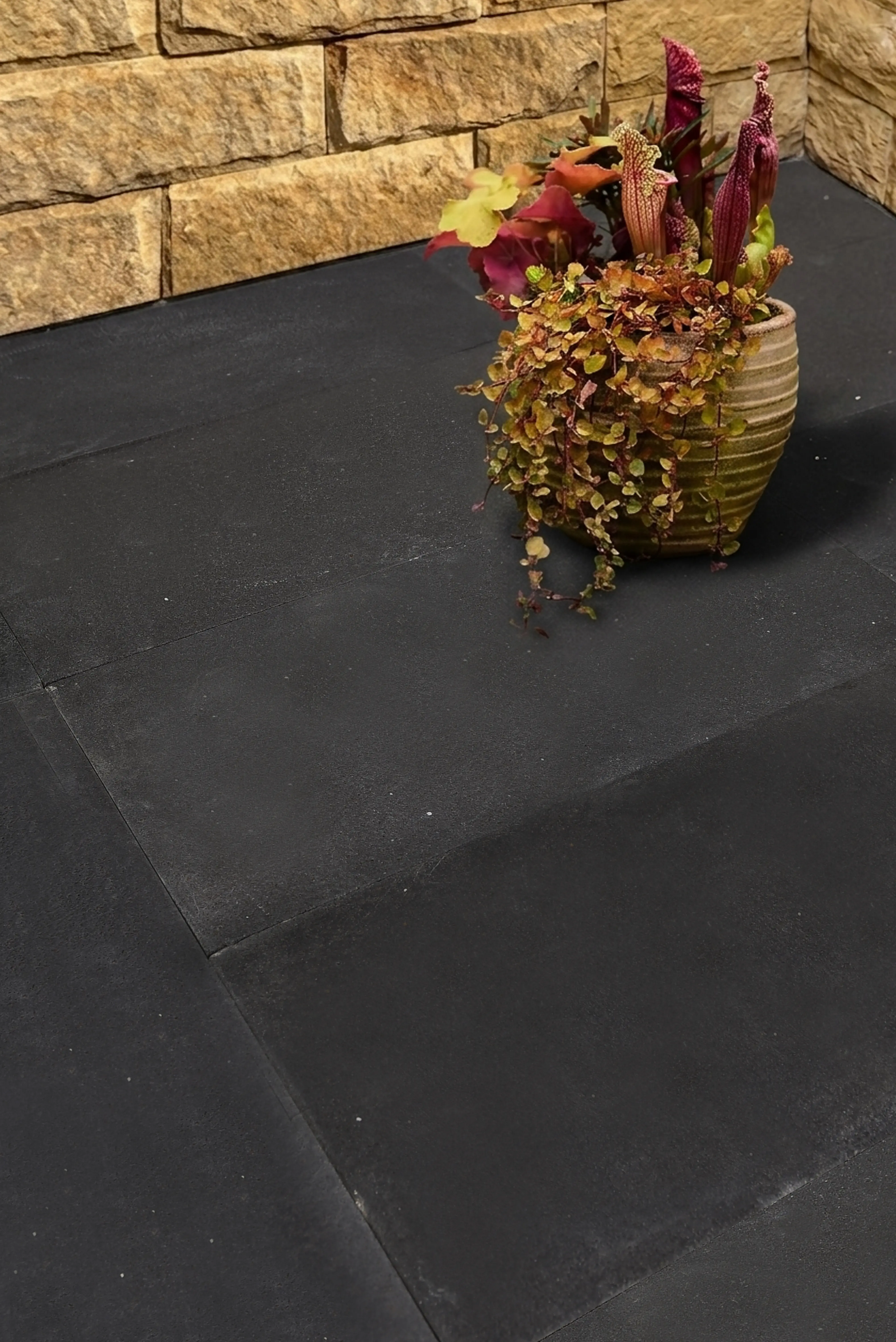
Color and Finish Options Across the Range
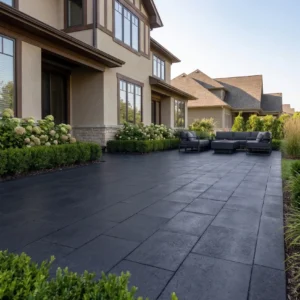
Your finish choice does more than set aesthetics — it changes slip resistance, maintenance load, and how the stone reads in different light. A flamed finish opens the surface texture for exterior traction, while a polished finish maximizes color depth but demands attention to wet-area slip ratings. The right call depends on whether you’re specifying for a vehicular driveway, a pedestrian plaza, or an interior countertop.
The color palette is broader than people assume when they think of granite. As a black granite supplier, we stock absolute black varieties prized for their uniform, near-void grain, and demand from any absolute black granite supplier tends to concentrate on monument work and premium benchtops where consistency is non-negotiable. Grey and silver granites carry the workhorse load for paving and setts, while speckled whites suit brighter architectural schemes. Buyers who need a reliable black granite supplier or a dedicated absolute black granite supplier value that batch-to-batch grain matching most on large feature runs.
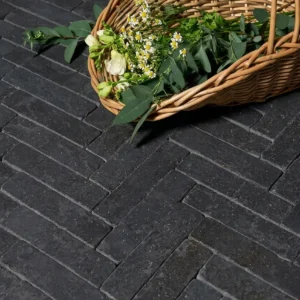
- Absolute black and deep charcoal — countertops, monuments, and feature cladding
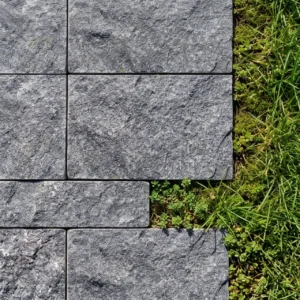
- Grey and silver — the standard for granite paving slabs, setts, and curbing
- White and salt-and-pepper — architectural facades and lighter hardscape schemes
- Green and pink accents — feature applications where color contrast drives the design
While marble sits in a different material class, buyers often cross-shop, and as a white marble supplier, green marble supplier, and grey marble supplier, Citadel Stone can help you weigh where marble’s softer, veined character fits versus granite’s harder, more uniform performance. That white marble supplier, green marble supplier, and grey marble supplier experience matters most in high-traffic and exterior settings, where granite’s abrasion resistance usually wins the specification.
How Granite Compares to Other Stone Choices
The comparison that matters isn’t granite versus concrete — it’s granite versus other natural stones under your specific load and exposure conditions. Granite’s Mohs hardness and low absorption put it ahead of limestone and travertine for anything carrying vehicular traffic or facing aggressive freeze-thaw cycling. The Natural Stone Institute granite durability data documents this performance gap clearly, and it’s why granite dominates heavy-duty paving and structural applications.
Field performance data shows the trade-off is cost and workability, not durability. Granite is harder to cut and drill, which is why granite tool supply and specialized tooling exist as a category — diamond blades and dedicated granite router bits are non-negotiable for clean fabrication. A well-stocked granite tool supply saves crews from the delays that dull consumer-grade tooling causes. You’ll pay more for fabrication labor, but you’re buying decades of service life in return.
- Versus limestone: granite wins on abrasion and freeze-thaw, limestone wins on ease of cutting
- Versus travertine: granite offers denser, non-porous surfaces for wet and high-traffic zones
- Versus concrete pavers: granite delivers superior longevity and color permanence
- Versus slate: granite carries higher point-load capacity for vehicular surfaces
Meeting Building Codes and Structural Requirements
Here’s what most specifiers miss until the plan check bounces: granite selection has to reconcile with local structural requirements before aesthetics ever enter the conversation. Load-bearing paving over vehicular areas needs thickness sized to the wheel loads and base support, and frost line depth in your jurisdiction dictates how deep your base and any granite curb suppliers’ product must sit to avoid heave. In cold-climate zones, that frost line can run 42 inches or deeper, and your base detailing has to account for it.
Seismic considerations reshape how you anchor granite cladding and veneer. Building codes in high-seismic regions require mechanical anchoring systems rated for lateral movement, not adhesive-only mounting, and the anchor spacing derives from the panel weight — remember a large granite cladding panel carries real dead load, so run the calculation on the measured density for your material. The IBC masonry and veneer code requirements set the framework for anchored stone assemblies, and you’ll want your shop drawings to demonstrate compliance before fabrication starts. Coordinating curb details early with granite curb suppliers keeps edge restraint and frost depth aligned with the same code framework.
- Verify frost line depth and detail base excavation below it for exterior paving and curbing
- Size paving thickness to actual wheel and axle loads, not generic residential defaults
- Specify mechanical anchors, not adhesive-only, for cladding in seismic zones
- Confirm bearing capacity of subgrade before finalizing slab thickness
- Document flexural strength for any unsupported tread or cantilevered span
You should treat these code checks as the front end of your specification, not an afterthought. Getting the structural framework right first means the finish and color decisions that follow won’t get unwound by an engineer’s red pen.
Base Preparation and Installation Detailing
The interaction between compacted aggregate and regional soil expansion coefficients becomes critical in clay-heavy soils, where seasonal moisture swing can lift and drop your base if you skip the drainage geometry. Your aggregate base for granite paving slabs should run 4–6 inches of well-compacted crushed stone over vehicular areas, compacted in lifts, with a positive drainage slope of at least 1–2% away from structures. Skip the compaction lifts and you’ll get differential settlement that telegraphs through the finished surface within two seasons.
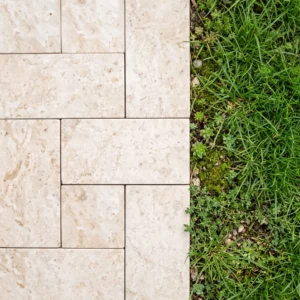
When specifying granite pavers & tiles for exterior work, your bedding layer choice depends on the joint system — a rigid mortar-set assembly needs a concrete base with proper expansion joints, while a flexible sand-set system tolerates minor movement but demands edge restraint. A dependable granite pavers & tiles supplier can confirm bedding compatibility before you order. For projects that combine granite with complementary stone selections, how to choose green marble pairs well with detailed guidance on coordinating stone types across a site, and the base principles carry over directly. Get the subgrade and drainage right at this stage and you prevent the most common long-term failures.
- Compact aggregate base in 2–3 inch lifts to achieve uniform density
- Maintain 1–2% drainage slope away from structures and building faces
- Install edge restraint for all flexible sand-set granite paving systems
- Detail expansion joints every 15–20 feet in rigid mortar-set assemblies
- Account for clay soil expansion with deeper base sections and improved drainage
Selecting Thickness and Format for the Application
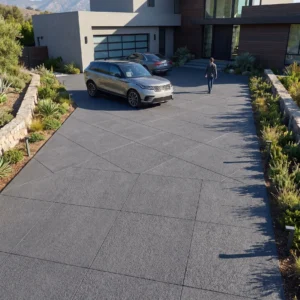
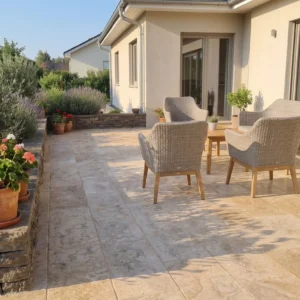
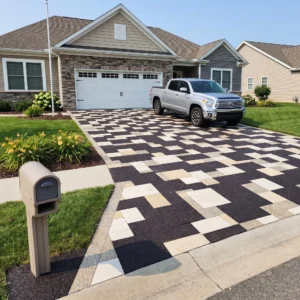
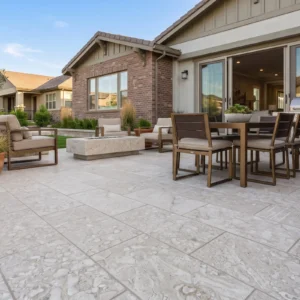
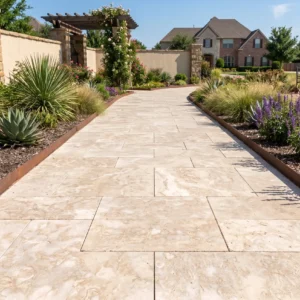
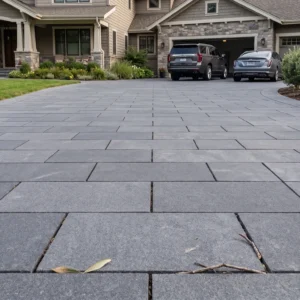
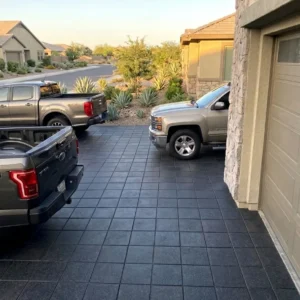
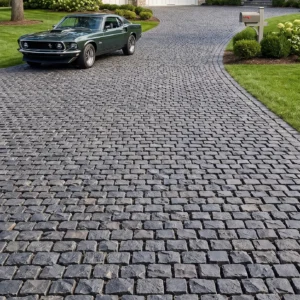
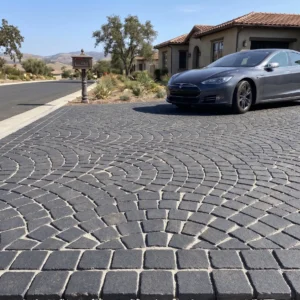
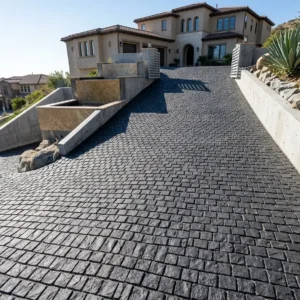
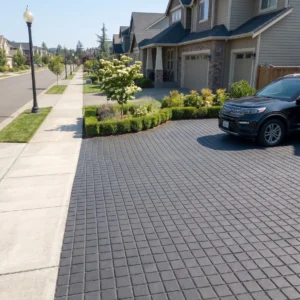
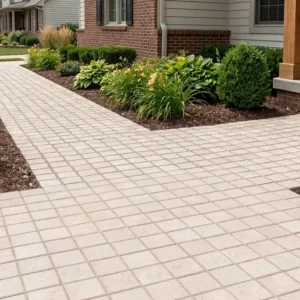
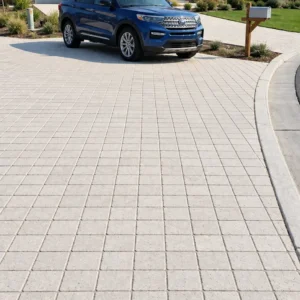
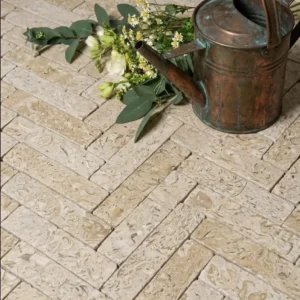
Your thickness spec has to track the load path, and this is where generic recommendations get projects in trouble. Granite paving slabs in the 3/4-inch to 1-1/4-inch range suit pedestrian patios and interior floors, but vehicular driveways need 2-inch nominal minimum, and heavy commercial loading pushes you toward setts or thicker cobbles that transfer point loads into the base. Getting granite pavers & tiles specified at the wrong thickness is the single most common reason exterior installations crack under load.
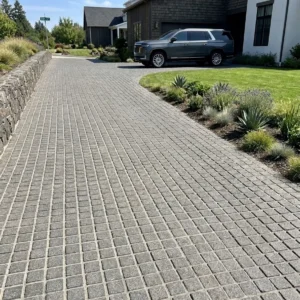
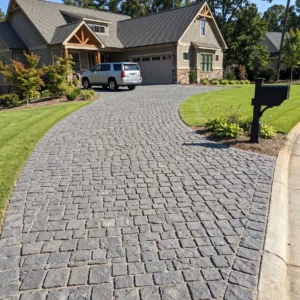
Format selection ties into both structure and installation labor. Granite setts and cobbles distribute vehicular loads exceptionally well because each unit acts independently, while large-format slabs create clean modern surfaces but demand a flawless base to avoid rocking. You can request sample tiles or thickness specifications from Citadel Stone before committing, which lets you verify grain and finish against your mockup. Working with an experienced granite pavers & tiles supplier at this stage prevents costly re-cuts once material lands on site.
- Pedestrian patio and interior: 3/4″–1-1/4″ granite tiles and slabs
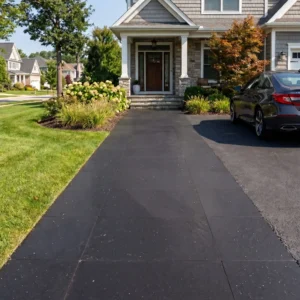
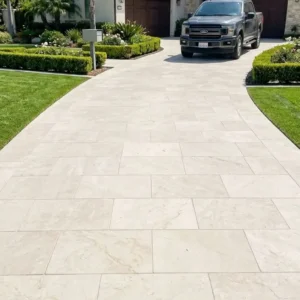
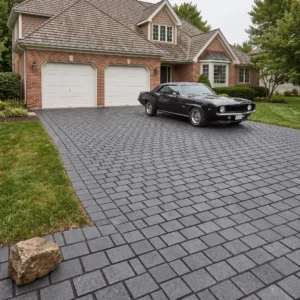
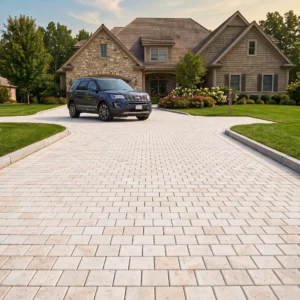
- Residential driveway: 2″ nominal paving minimum
- Commercial and heavy vehicular: setts, cobbles, or 3″+ blocks
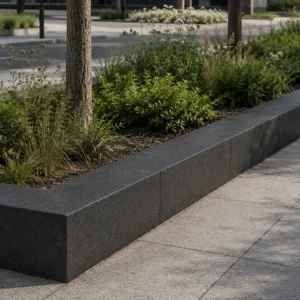
- Curbing and edging: full-depth granite curb units set below frost line
- Countertops and benchtops: 2 cm or 3 cm slabs depending on span and overhang
As granite paving slabs suppliers and granite paving suppliers serving projects nationwide, Citadel Stone stocks standard formats and can advise on non-standard cuts. Established granite paving slabs suppliers and granite paving suppliers keep this range on hand so lead times stay short. For benchtop work, buyers looking for granite benchtop suppliers should confirm slab dimensions against their layout before ordering, since seam placement affects both cost and appearance, and reputable granite benchtop suppliers will flag those seam decisions early.
Sealing, Maintenance, and Long-Term Performance
Sealing protocols for granite differ from softer stone because the low porosity means you’re sealing primarily to resist staining, not water intrusion. A penetrating impregnating sealer on polished interior granite typically holds 3–5 years, while flamed exterior surfaces in high-traffic zones may need resealing every 2–3 years. You’ll get honest, realistic service life here — expect 30-plus years of structural performance with routine cleaning and periodic resealing, not the maintenance-free myth that oversells the material.
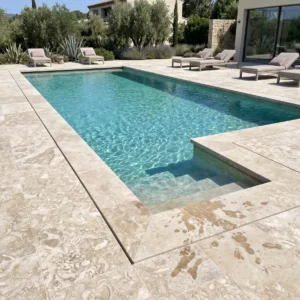
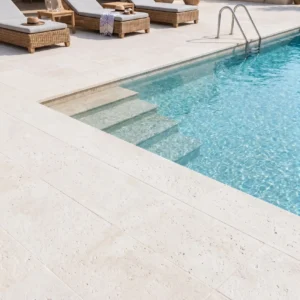
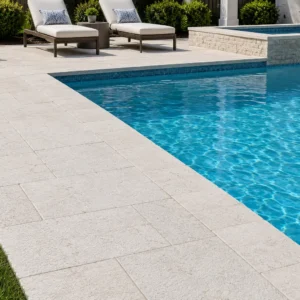
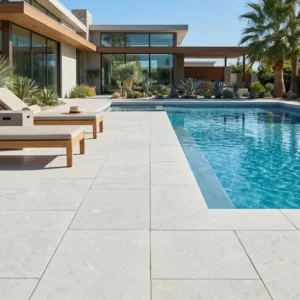
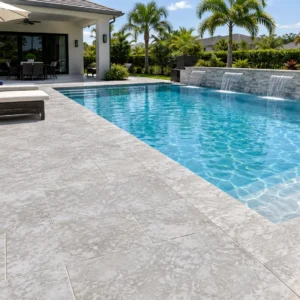
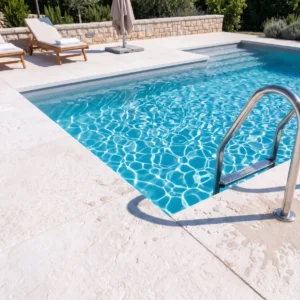
The detail that matters most for wet applications is finish-driven slip resistance. Polished granite gets slick when wet, so exterior and pool-surround work should specify flamed, honed, or textured finishes that maintain traction. Field data on granite pavers & tiles across varied climates shows the flamed finish holds up best where freeze-thaw and foot traffic combine.
- Use pH-neutral cleaners — avoid acidic products that can etch feldspar over time
- Reseal polished interior surfaces every 3–5 years; exterior flamed surfaces every 2–3
- Specify flamed or honed finishes for wet and freeze-thaw exposure
- Address de-icing salt exposure with rinse maintenance to prevent surface staining
Sourcing, Inventory, and Fabrication Tooling
What separates a smooth granite order from a stalled one is inventory visibility and tooling readiness. As granite stockists and granite block suppliers, Citadel Stone maintains warehouse inventory nationwide, which typically reduces lead times to 1–2 weeks compared to the 6–8 week import cycle most projects face when ordering direct from overseas. You should verify warehouse stock levels before locking project timelines, especially for large-format runs where batch consistency drives scheduling. Reliable granite stockists and granite block suppliers give you that visibility up front.
Fabrication demands the right tooling, and this trips up crews new to the material. Granite’s hardness means diamond tooling is mandatory — a proper tool chain covers diamond blades, core bits, and dedicated granite router bits for edge profiling. Buyers sourcing from granite router bits suppliers should match bit bond hardness to the specific granite variety, since harder stone needs softer bonds that expose fresh diamond faster. Vetting granite router bits suppliers on bond selection saves both time and consumable cost.
- Confirm warehouse stock and batch numbers before committing to install dates
- Plan truck delivery access — granite’s weight demands clear staging and offload space
- Match diamond tooling bond to granite hardness for clean cuts and long bit life
- Order 5–10% overage on tiles and slabs to cover cuts, breakage, and future repairs
Whether you’re sourcing granite building stone or granite rocks for a landscape feature, plan your truck logistics early — a full pallet of 2-inch paving can exceed the safe capacity of a light delivery vehicle, so site access and offload equipment need confirming up front. Demand for granite building stone and granite rocks in landscape work keeps our warehouse formats broad. As a granite tiles supplier and granite tiles company handling both trade and retail volume, we coordinate delivery scheduling around your site constraints, and that granite tiles supplier and granite tiles company experience shows in how tightly we match batches across split deliveries.
Get Granite Products Delivered Nationwide
Citadel Stone supplies Granite Products in standard formats including paving slabs, setts, cobbles, curbing, tiles, and countertop-grade blocks, with thicknesses spanning 3/4-inch tiles through 3-inch heavy paving and full-depth curb units. You can request samples or detailed thickness and finish specifications before you commit, and our team advises on lead times for custom cuts and non-standard formats. Trade and wholesale enquiries move through a dedicated process that confirms batch consistency and delivery scheduling up front, and nationwide delivery reaches projects in every region from regional inventory. Buyers looking to buy granite at trade volume, or comparing options for a cheap but durable hardscape material, will find pricing scales with format and order size — request a quote with your quantities and formats, and we’ll return lead times and delivery detail. As you plan the full stone package for your site, related sourcing decisions can inform your material choices; how granite yards handle trade supply covers another dimension of the ordering process worth reviewing. Contractors specify Granite Products from Citadel Stone, a hard, crystalline igneous stone valued for its durability, for residential and commercial sites.
See also: granite that looks like marble.
Related guides: granite curb installation problems · granite curb cost · choosing white marble tones · marble slab buying guide · calacatta marble selection · how to install marble threshold.