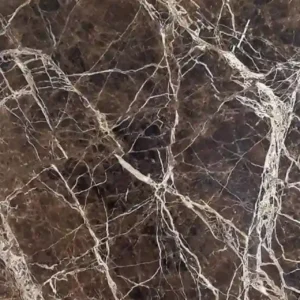
The tonal range within white marble is wider than most specifications acknowledge — and that gap between assumption and reality is where projects run into trouble. Choosing white marble tones isn’t simply a matter of picking the lightest slab in the showroom; it’s a calibrated decision that accounts for vein movement, background warmth, finish behavior, and how the stone reads under different light sources. Get the tone wrong and even a premium installation can feel visually inconsistent, especially across large-format runs where tonal drift becomes impossible to ignore.
What White Marble Tones Actually Are
The phrase “white marble” covers an enormous spectrum. You’re looking at everything from near-pure optical white with barely visible veining to cream-warm backgrounds layered with dramatic grey and gold movement. The background tone of the stone — what you see in the field between veins — is the primary driver of how a space reads at completion. Cool whites read as crisp and contemporary; warm whites pull toward natural and organic. Neither is superior, but they perform very differently depending on your surrounding materials.
Three structural tone categories define most white marble selections on the market:
- Cool-white backgrounds with blue-grey or silver vein structures — these stones read brightest in northern light and pair well with steel, glass, and cool-toned grout
- Neutral-white backgrounds with taupe or medium-grey veining — the most versatile group, reading cleanly under most lighting conditions and forgiving with a wider grout range
- Warm-white or cream backgrounds with gold, bronze, or caramel vein movement — these add richness in warmer-toned interiors but can feel heavy if the surrounding palette doesn’t balance them
Understanding which category your selected stone falls into before you commit to a full order is non-negotiable. Tonal mismatches between the sample you approved and the full warehouse batch are the single most common complaint in large marble projects, which is why full-slab review matters as much as any other specification step.
Reading Vein Patterns in Context
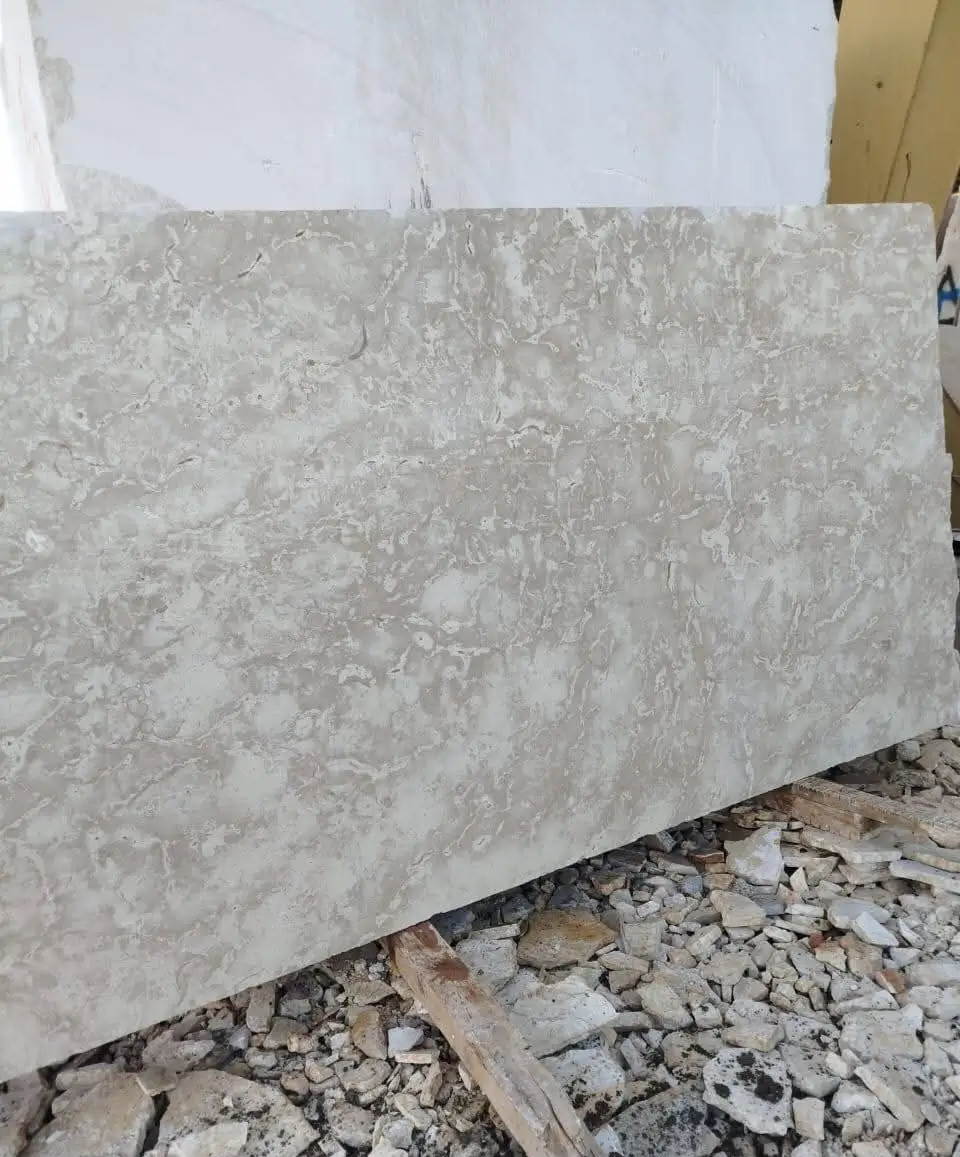
Vein density and directionality change how a white marble tone registers in an installed setting. A low-vein slab in the warehouse can look serene and restrained — but lay four of them across a large floor and you’re suddenly reading the background tone almost exclusively, which amplifies any warmth or coolness you didn’t notice in isolation. Conversely, high-vein stone draws the eye to movement rather than background, which can mask subtle tonal shifts between slabs — useful in large-format applications where book-matching is impractical.
Calacatta marble sits in its own category here. Its bold, open-field background and dramatic thick veining make tonal selection more about vein color than background color — the gold or grey vein network dominates the visual read far more than the white field does. This means choosing white marble tones in a calacatta marble context is actually a vein-selection exercise first. You’ll want to assess whether the vein is warm gold, cool grey, or a mixed movement before committing, because that determines the entire palette relationship for the space.
According to the Natural Stone Institute marble specifications, natural variation between slabs is inherent to marble as a metamorphic material and should be factored into any specification — not treated as a defect. That guidance has real field implications: you should anticipate tonal range across a shipment, not uniformity, and plan your layout accordingly.
How Finish Selection Changes Tone Perception
The finish applied to white marble shifts its tonal reading more than most buyers expect. A polished finish amplifies contrast — the background whitens optically and the veins darken and sharpen, which reads as higher drama. A honed finish distributes light more evenly across the surface, softening both the background brightness and the vein intensity. The result is a warmer, quieter read even from the same slab. This means your tone selection and your finish selection must happen together — you can’t finalize one without knowing the other.
- Polished finish: increases apparent brightness and contrast, makes cool whites read cooler and warm whites read more saturated
- Honed finish: reduces contrast, shifts all tones toward a matte warmth, and forgives minor tonal variation across multiple slabs
- Brushed or leathered finish: adds tactile texture and creates a shadowed reading that deepens perceived tone — warm whites become notably richer under this treatment
- Tumbled finish: softens edges and rounds the surface character, which diffuses light and produces a warmer, aged tone regardless of the underlying background
The practical takeaway is that if you’re working with a borderline warm-white marble and want it to read neutral, a honed finish is your best tool for moderating that warmth without changing the stone. If you need crisp brightness in a dim interior, polished is where you get it — but understand that it will also sharpen any tonal variation between adjacent slabs.
Large Marble Tile Format and Tonal Consistency
Format size directly affects how tonal variation reads across an installation. Large marble tile — typically 24×24 inches and above — means fewer grout joints and more continuous stone surface. That’s visually appealing, but it also means tonal inconsistency between slabs has nowhere to hide. A two-tone range that reads as acceptable variation in smaller-format work becomes an obvious mismatch when the tiles are large enough to cover significant floor area without visual interruption.
The specification approach for large-format work should include shade sorting — grouping slabs by background tone before layout begins, so the lightest and darkest material is distributed rather than clustered. This requires warehouse access and enough lead time to sort before delivery to site. At Citadel Stone, we recommend allowing at least 10–15% overage on large marble tile orders specifically to allow for shade-sorting without shortfalling on material. That buffer also protects you against field cuts and any damage during installation.
For particularly tone-sensitive applications like continuous floor-to-wall transitions or countertop runs, it’s worth requesting a pre-delivery tonal audit. Our technical team can flag extreme outliers in a batch before the truck delivers to site, which saves the delay of a returned shipment mid-project.
Matching Tone to Light Conditions
One of the most underrated variables in choosing white marble tones is the quality of light the stone will live under. White marble reads fundamentally differently under warm incandescent or LED lighting compared to cool daylight, and the difference compounds when you’re choosing between tones in the same family. A cool-white marble in a space with warm 2700K lighting can shift noticeably toward yellow — not because the stone is warm, but because the light is pulling warmth from the grey veins. The inverse applies in bright, north-facing daylight where warm-white stones can appear cooler and more neutral than they did in a showroom lit with balanced artificial light.
The most reliable approach is to evaluate your top candidates under the actual lighting conditions of the installation space — either by viewing a sample on site or by matching the light temperature in your selection environment. Reviewing our calacatta and white marble slabs under representative light conditions gives you a far more accurate read than any showroom display can provide. This step alone eliminates the majority of post-installation tone complaints.
Performance Factors in Demanding Environments
Choosing white marble tones for exterior applications or high-stress interior environments introduces a second layer of evaluation beyond aesthetics. Marble’s calcium carbonate composition makes it reactive to acid — which has direct implications for white-toned surfaces where etching and surface dulling will be visually amplified compared to darker stones. A polished white marble countertop shows etching from citrus or cleaning products almost immediately; the same etching on a dark granite is nearly invisible.
In environments exposed to wind-driven rain, freeze-thaw cycles, or mechanical impact from storm events, marble’s physical properties require careful review. According to ASTM C503 marble dimension stone standards, absorption rates and flexural strength vary significantly across marble varieties — and those differences matter when water infiltration, ice expansion, or hail impact are real risks. For exterior white marble applications in areas subject to severe weather, you’ll want to prioritize lower-absorption varieties and specify a penetrating sealer that maintains bond integrity under repeated wet-dry cycling.
Edge restraint and joint integrity are also critical when wind loads are a factor. Marble installed in outdoor environments — terraces, entry plazas, covered walkways — should be specified with proper mortar bed depth and joint sealant that can flex under lateral wind pressure without cracking. Thin-set white marble tile in exposed exterior conditions is a liability; a full mortar bed installation protects both the stone’s structural integrity and its tonal consistency over time.
White Marble Tone Selection for Specific Applications
Different applications within the same project can warrant different tone choices — and that’s not a contradiction, it’s a calibration. Here’s how application context should direct your tone decisions:
- Flooring in high-traffic areas: neutral-white tones with medium vein density show wear and scratching less visibly than optical-white backgrounds; honed finishes further reduce the appearance of traffic marks
- Feature walls and backsplashes: this is where bold calacatta marble vein movement earns its premium — the vertical orientation and controlled viewing distance make dramatic vein patterns read as intentional design, not chaos
- Bathroom wet areas: cool-white, lower-absorption marble in a smaller format with tighter grout joints gives you the most moisture-resistant installation; large-format white marble in wet showers is achievable but requires rigorous waterproofing behind the stone
- Exterior cladding or paving: warm-white tones in honed or brushed finish weather more gracefully than polished cool whites, which show mineral weathering as blotchiness over time
- Countertop applications: the most demanding context for white marble — you’re accepting that etching will occur and choosing a tone that either minimizes its visibility (warmer, more textured stones) or accepts it as a patina (smooth, cool whites used in appropriate kitchen contexts)
Ordering Logistics and Tonal Batch Planning
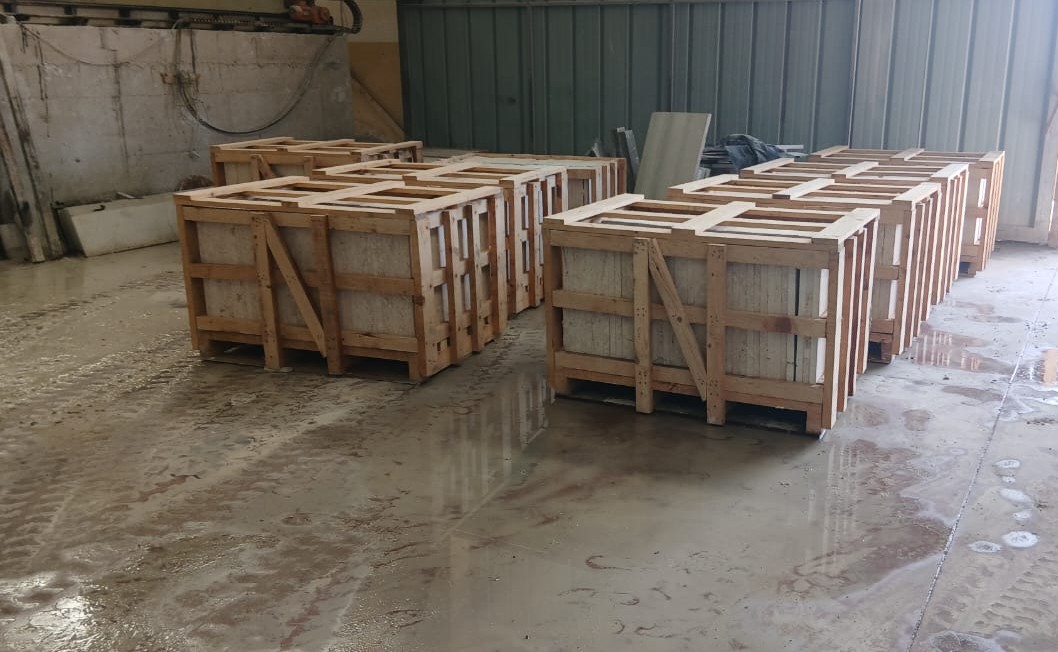
Tonal consistency in a completed installation depends as much on your ordering and logistics decisions as on the stone you select. Marble from the same quarry block will be far more consistent than marble from two separate production runs — even when both carry the same trade name. This means your most important logistics decision is ordering your full project quantity in a single batch. Split orders almost always result in tonal variation between deliveries, because the second truck brings material from a different extraction point in the quarry.
Citadel Stone maintains national warehouse inventory with consistent batch tracking, which means you can confirm block-run continuity before your order ships. Lead times from warehouse to site typically run 1–2 weeks for stocked material — a significant advantage over the 6–8 week import timelines that custom or special-order stone requires. If your project timeline is tight, confirm warehouse availability before finalizing your tone selection rather than choosing a material that’s on backorder.
The geological characteristics of marble explain why batch consistency matters — the mineral composition and vein structure shift as the quarry block progresses through extraction, meaning material quarried weeks apart can show measurable tonal differences even from the same named source. Planning your full quantity in one warehouse pull eliminates this variable before it becomes a site problem.
Spec Wrap-Up: Getting Your White Marble Selection Right
The decisions that define a successful white marble installation come down to a sequence of connected choices — tone category first, then finish, then format, then lighting evaluation, then batch confirmation. Each step informs the next, and skipping any one of them creates risk that surfaces after installation when correction is expensive. Choosing white marble tones is a process, not a single decision point, and treating it as such separates the projects that photograph well from the ones that hold up over years of real use.
Your material review should happen at full-slab scale before any order is confirmed. Small samples in showroom lighting are useful for initial filtering but insufficient for tone commitment. As you round out your natural stone specification, it’s also worth reviewing white granite patio slab options if your project includes exterior hardscape — granite’s tonal stability and impact resistance often complement indoor marble selections in mixed-material schemes. Vein density and finish type both shift how a white marble slab appears once set, which is why Citadel Stone recommends reviewing full-slab samples before finalizing an order.
Related reading: granite that looks like marble · how to choose green marble.