Why Granite Mimics Marble So Convincingly
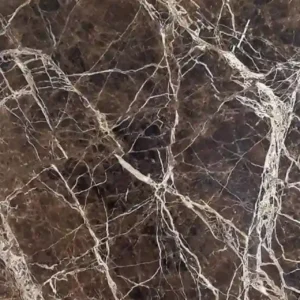
Granite that looks like marble earns its place on high-end project specs not by accident, but because of how specific mineralogical conditions produce near-identical surface patterns. Feldspar-rich granites with elevated quartz content develop veining through the same geological stress fractures that create calcite movement in true marble — the visual result is strikingly similar, but the underlying material couldn’t be more different in performance terms. You’re working with an igneous stone clocking in at 6–7 on the Mohs hardness scale versus marble’s 3–4, which changes every downstream decision: finish selection, sealing schedules, and long-term maintenance expectations. According to Natural Stone Institute granite durability and application specifications, granite’s crystalline structure delivers measurably superior resistance to etching, abrasion, and moisture absorption compared to metamorphic alternatives — the core reason design professionals increasingly substitute it for marble in demanding applications.
Thunder White Granite: The Benchmark Pick
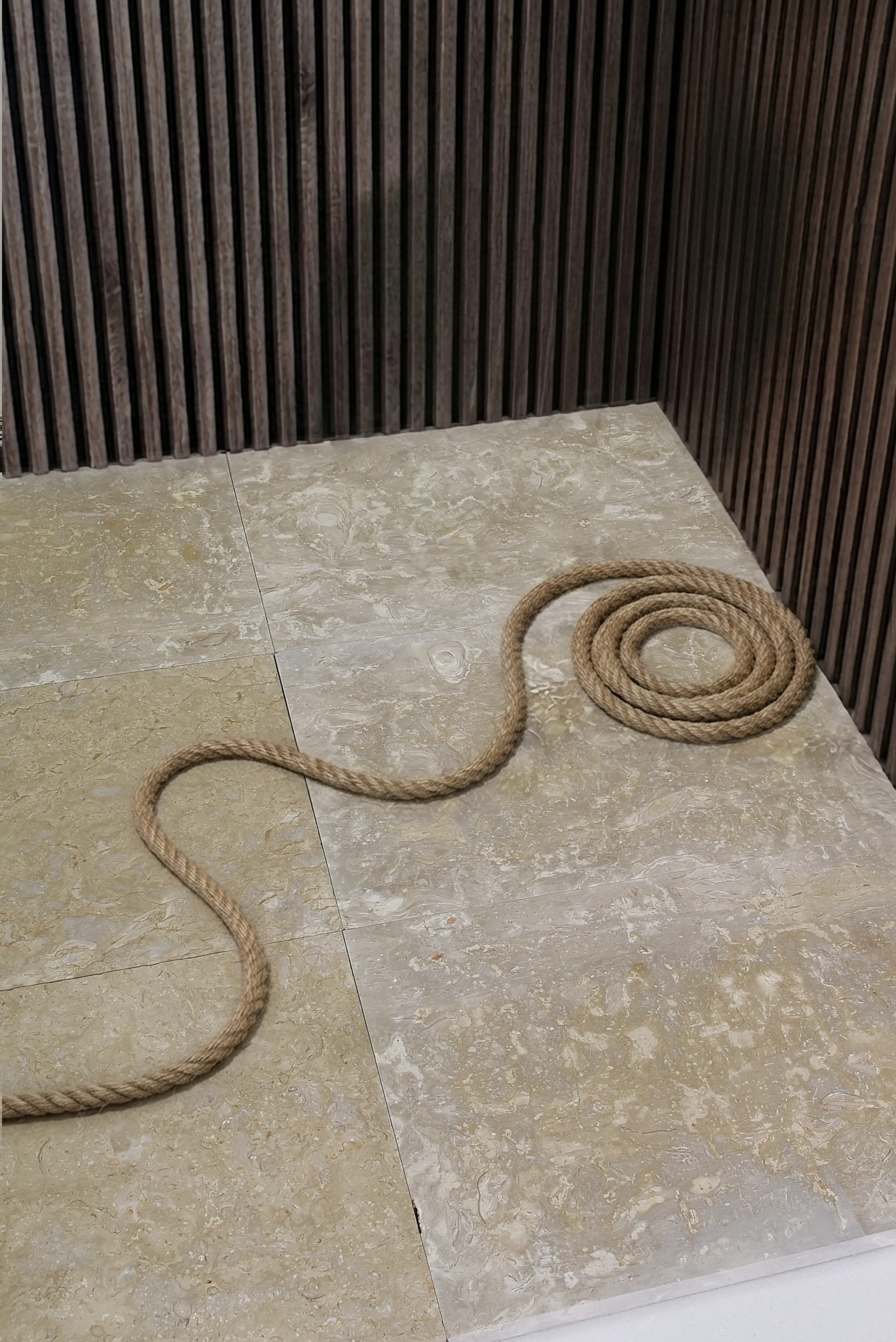
Thunder white granite is the variety that converts the most skeptics. Pull a slab and set it beside Carrara marble — without touching either surface, most observers can’t reliably tell them apart. The background is a soft, cool white with fine grey veining that moves in the same diagonal rhythm marble collectors chase. What separates it from the real thing is everything you can’t see: a water absorption rate typically below 0.4%, compressive strength in the 18,000–22,000 PSI range, and a crystalline matrix that resists the acid etching that ruins polished marble countertops inside a year of kitchen use.
Thunder white granite performs especially well in applications where UV exposure is sustained and prolonged. Its feldspathic white background is mineralogically stable — the white tones don’t yellow or shift under extended sun exposure the way some calcium-based whites do. For exterior cladding, outdoor kitchen counters, or open-patio feature walls, this stability means you’re not chasing colour drift through your sealing schedule. A penetrating impregnator applied at installation and refreshed every three to four years is typically sufficient, with the UV-exposed faces warranting the shorter end of that cycle.
- Ideal for countertops, vanities, flooring, and exterior cladding where marble aesthetics are required with granite durability
- Polished finish amplifies the veining contrast and closely mirrors the look of honed Carrara or Bianco marble
- Honed finish suits outdoor applications — reduces glare in high-UV installations without sacrificing the marble-look pattern
- Verify warehouse stock levels before committing to large-format slab quantities — vein matching across multiple slabs requires consistent batch sourcing
White Spring Granite: For Bolder, More Dramatic Veining
Some projects call for something with more visual weight than Carrara-style subtlety — and that’s exactly where white spring granite earns its specification. The background runs a warmer white-to-cream, with broader, more pronounced grey-and-black veining that reads closer to Calacatta marble’s character. The movement is more architectural, giving it presence in large-format installations: feature walls, full-height kitchen backsplashes, grand entry flooring.
White spring granite’s performance profile aligns with granite’s category strengths — low porosity, high compressive strength, and an abrasion resistance that handles foot traffic without surface degradation. In outdoor installations exposed to strong UV, this variety holds its tone reliably. The slightly warmer base doesn’t mask colour shift the way cooler whites do, so a quality penetrating sealer applied consistently is important for outdoor use — not because the stone degrades under UV, but because an unsealed or under-sealed surface can allow surface contamination to accumulate and alter the perceived background colour over time.
- Best matched to Calacatta or Statuario marble aesthetics — larger veining with cream-white background
- Suits large-format applications: feature walls, entry floors, exterior facades, outdoor kitchen islands
- Outdoor finish recommendation: honed or leathered to reduce UV glare and improve slip resistance underfoot
- Resealing cycle in high-sun-exposure applications: every two to three years with a UV-stable penetrating impregnator
How to Evaluate Granite Marble-Look Slabs Before You Specify
The single most common specification mistake with granite that looks like marble is selecting material from a sample tile rather than from a full slab. A 12×12 sample can show you colour range and general pattern — it cannot show you how veining moves across a 5×10-foot slab face. For projects where visual continuity matters, you need to book-match slabs or at minimum review adjacent slabs from the same quarry batch before committing.
At Citadel Stone, we inspect incoming slab shipments specifically for veining consistency and background tone uniformity — two variables that shift within even the same quarry block depending on extraction depth. Slabs from the upper quarry face often run cooler and more consistent; deeper extraction can introduce warmer tones or denser mineral inclusions that read differently in finished installations. Requesting batch-matched slabs from warehouse inventory is the practical way to avoid mid-project colour drift that’s nearly impossible to resolve after installation begins.
- Review full slabs, not sample tiles — veining pattern and movement only reveal themselves at full scale
- Book-matching pairs adjacent slabs to create mirrored veining — essential for high-end marble-look feature walls
- Confirm the background tone under the lighting conditions of the actual installation space — cool northern light reads differently than warm incandescent
- Ask for batch documentation — quarry run, extraction date, and block number help you source matching slabs for future repairs or expansions
- Inspect slab edges for micro-cracking — granite that looks like marble can still carry stress fractures from quarrying or transport
Finish Selection and What It Does to the Marble-Look Effect
Finish choice is where you either land the marble aesthetic or undermine it. A polished finish on thunder white granite or white spring granite produces the mirror-like reflectivity that people associate with polished marble — high gloss, amplified veining contrast, and a premium surface appearance. The tradeoff is that polished granite in high-UV exterior applications can create significant glare, and fingerprint or water mark visibility is higher on interior surfaces.
A honed finish drops the sheen to a matte or satin level that actually reads closer to the naturally worn appearance of aged marble — many designers find it more authentic-looking than high polish. It also performs better outdoors: lower glare, better slip resistance when wet, and a surface that shows UV-related changes less dramatically over time. The leathered finish is worth considering for outdoor features where a tactile dimension adds design interest — it scatters UV light rather than reflecting it directly, which helps maintain consistent surface appearance in sustained sun exposure. Per ASTM C615 granite dimension stone quality standards, surface finish type does not compromise structural integrity, but it does affect absorption behaviour and long-term maintenance requirements.
Where Granite That Looks Like Marble Performs Best
The material’s performance advantages become most tangible in applications where true marble would struggle. Kitchen countertops are the clearest example — marble etches from citric acid, wine, and coffee within months of installation in an active kitchen. Granite that looks like marble gives you identical aesthetics with a surface that genuinely tolerates kitchen chemistry. The same logic applies to outdoor entertaining areas, exterior cladding, and bathroom flooring in high-use spaces.
For outdoor installations, the UV-stability argument becomes central to the specification. True marble in sustained outdoor UV exposure is susceptible to surface dulling and micro-surface weathering through carbonate dissolution — particularly in installations without overhead shelter. Granite’s silicate mineral base is not subject to the same mechanism. You’re working with a material that maintains finish integrity under extended UV load without the annual maintenance burden that outdoor marble requires. Explore our marble-look granite range to see how these performance characteristics translate across specific slab options.
- Kitchen countertops — acid resistance eliminates the etching risk that makes marble impractical in active cooking environments
- Exterior cladding and facades — UV stability maintains consistent appearance without annual polishing or chemical treatment
- Bathroom flooring — density resists moisture infiltration, reducing mould risk in wet environments
- Commercial lobbies and entry floors — compressive strength handles sustained point loads from foot traffic and wheeled equipment
- Outdoor kitchen surfaces — maintains structural and aesthetic integrity through thermal cycling and UV exposure without marble’s maintenance demands
Sealing Schedules and Long-Term UV Appearance Retention
Here’s the detail most specifiers skip: granite that looks like marble still requires sealing — not because the stone is porous in the way marble or travertine is, but because penetrating impregnators protect the surface from oil and mineral infiltration that gradually dull the appearance. In outdoor sun-exposed installations, a quality penetrating sealer also stabilises the surface micro-texture, which affects how UV light interacts with the finish over time.
For polished exterior granite, resealing every two to three years is a defensible schedule in most climates. Honed and leathered surfaces in high-UV exposures benefit from resealing closer to every two years — their higher surface micro-texture provides more surface area for UV-catalysed contaminant bonding. The sealer itself matters: solvent-based penetrating impregnators with fluorocarbon chemistry perform measurably better in sustained UV than water-based alternatives, which can break down faster under intense sun. At Citadel Stone, our technical team advises clients to test a small rear-corner area with a water bead test annually — if water no longer beads and absorbs within 30 seconds, the sealer has degraded and reapplication is due regardless of the calendar schedule.
- Polished outdoor granite: resealing every two to three years with a fluorocarbon-based penetrating impregnator
- Honed or leathered outdoor granite: resealing every one to two years in sustained high-UV exposure conditions
- Annual water bead test is a reliable field indicator for sealer condition — no lab equipment required
- Avoid surface coatings (topical sealers) on exterior granite — UV degradation causes coating to flake and peel, creating a worse appearance problem than no sealer
- Clean with pH-neutral stone cleaner before resealing — residual alkaline cleaners inhibit impregnator penetration
Ordering, Logistics, and Project Planning for Marble-Look Granite
Slab material operates on different lead time logic than tile or cut stone. Your project timeline needs to account for slab selection, transport, and fabrication — three sequential steps that each carry their own scheduling variable. Warehouse inventory at Citadel Stone is maintained for the most popular marble-look varieties including thunder white and white spring, which typically reduces lead time to one to two weeks from confirmation versus the six to eight week import cycle for specially ordered material.
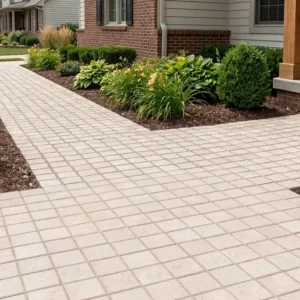
Truck delivery logistics for full-slab orders require advance planning. Slabs travel on A-frame racks and require a delivery vehicle with appropriate clearance and unloading capability — a standard flatbed truck can typically handle residential deliveries, but commercial projects with site access constraints (underground car parks, narrow access roads, or weight-restricted sites) need to be flagged at the order stage. Fabrication typically adds seven to fourteen days from slab delivery to finished pieces, so backward-scheduling from your installation window is the reliable approach to avoid site delays. Natural stone marble-look granite pavers cut to modular dimensions for flooring applications have shorter lead times than custom-fabricated countertop profiles — factor this into your overall project sequencing.
Granite That Looks Like Marble: Specification Wrap-Up
The specification decision for granite that looks like marble comes down to a straightforward value equation: you get marble’s visual character delivered at a performance level marble itself can’t match. Thunder white granite gives you the cool, Carrara-adjacent subtlety that reads as luxury in any application. White spring granite steps up the drama for projects that need Calacatta-scale movement and presence. Both hold their appearance under UV exposure, resist the etching and porosity issues that make true marble a liability in active environments, and deliver compressive strength that supports demanding commercial and residential applications alike. What often gets overlooked is how finish selection and sealing discipline determine whether that marble-look holds its character over a ten-to-twenty-year service life — the material gives you the foundation, but your specification decisions determine how it ages. For a related dimension of natural stone project planning, crushed granite landscape sizing and coverage covers how granite performs across a different but complementary hardscape application. Buyers who want marble’s visual drama without its porosity often find their answer in the granite selections Citadel Stone keeps in stock.