What Calacatta Marble Actually Is
Calacatta marble selection trips up even experienced specifiers because the name covers a far wider range of material than most people expect. Quarried primarily from the Apuan Alps in Carrara, Italy, true Calacatta sits at the premium end of the white marble spectrum — distinguished from standard Carrara by its whiter base tone and its bold, open veining that runs in dramatic sweeps of gold, grey, or taupe rather than the finer, more restrained patterning you see in Carrara slabs. The distinction matters enormously when you’re committing to a full kitchen island or feature wall, because the visual impact between grades is substantial.
The stone itself is a metamorphic calcium carbonate material, typically registering between 3 and 4 on the Mohs hardness scale. That places it well below granite and even most quartzite options, which shapes every downstream decision you’ll make — from finish selection to sealing frequency to the edge profiles that hold up in daily use. According to Natural Stone Institute marble grades and technical specifications, marble’s calcium carbonate composition makes it reactive to acidic substances, a practical reality that any realistic specification must account for.
Reading the Grade System
The grading terminology used across the industry — Commercial, Standard, Select, and First Choice — carries real performance and aesthetic consequences that go well beyond surface appearance. Commercial-grade Calacatta often displays more pronounced fissures, background cloudiness, or colour inconsistency across the slab face. These characteristics aren’t automatically disqualifying, but they demand honest evaluation against the application and the client’s expectations before you write anything into a specification.
Select and First Choice material shows tighter vein consistency, fewer structural fissures, and a more uniform white background. For book-matched applications — two mirror-image slabs opened like a book to create a continuous vein pattern — First Choice grade is essentially non-negotiable. The vein structure needs to be bold enough and consistent enough to read as intentional across the seam, not as a happy accident. Your grade choice locks in the aesthetic ceiling of the installation before a single piece of stone is cut.
- Commercial grade: wider colour variation, heavier fissuring, suitable for less visible applications or projects with tight material budgets
- Standard grade: moderate vein consistency, some background variation, appropriate for floor tile and secondary surfaces
- Select grade: tighter vein pattern, cleaner background, the minimum threshold for prominent feature applications
- First Choice grade: maximum vein drama and consistency, the correct specification for book-matched walls, waterfall countertops, and primary feature surfaces
Vein Pattern Types and What They Mean for Your Project
Calacatta marble selection is really a decision about vein character as much as material grade. The stone presents in several recognisable sub-varieties, each with a distinct visual personality — and understanding those differences before you visit a slab yard saves significant time and prevents the frustration of approving a sample that doesn’t represent the full slab population.
Calacatta Gold carries warm golden-amber veining against a bright white base — the variety most associated with luxury residential interiors. Calacatta Borghini pushes the contrast further with thick, dramatic grey-and-gold veins that can dominate an entire wall panel. Calacatta Michelangelo tends toward finer, more restrained grey veining with exceptional base whiteness, making it the preferred choice when the design calls for brightness without visual complexity. Each of these reads differently under different lighting conditions, which is why slab approval under the project’s actual light source is standard practice, not optional.
- Calacatta Gold: warm amber veining, high contrast, strong visual presence — ideal for kitchen islands and feature walls
- Calacatta Borghini: bold, graphic vein structure, statement applications with intentionally dramatic character
- Calacatta Michelangelo: refined grey veining, exceptional base whiteness, suited to applications prioritising luminosity over drama
- Calacatta Vagli: softer, more diffuse veining with a slightly warmer base tone, works well across larger floor areas
Thickness Specifications and Structural Implications
Standard slab thickness for interior Calacatta applications runs at 2 cm (approximately ¾ inch) or 3 cm (approximately 1¼ inch). The 2 cm material suits wall cladding, backsplashes, and vertical panel applications where structural loading isn’t a factor. The moment you move to countertops — particularly those with overhangs, cantilevered sections, or spans exceeding 24 inches — 3 cm becomes the defensible minimum, not a premium upgrade.
Calacatta’s inherent fissuring means that thinner slabs carry meaningful fracture risk during fabrication and under point loads in service. At Citadel Stone, we’ve found that clients who specify 2 cm countertop material to reduce costs frequently encounter edge chip-out within the first two years of use, particularly at sink cutouts and cooktop openings — the stress concentration points that expose fissure lines. The cost difference between 2 cm and 3 cm material rarely justifies the long-term risk, and the additional weight per square foot is easily managed with standard cabinet construction rated for stone tops.
- 2 cm thickness: wall cladding, backsplash panels, vertical applications — not recommended for horizontal countertop spans
- 3 cm thickness: countertops, islands, floors in moderate-traffic spaces — the standard specification for horizontal load-bearing surfaces
- Mesh-backed 2 cm material: sometimes used for large-format flooring to reduce weight; requires experienced handling during installation to avoid mid-span cracking
Finish Options and Their Practical Trade-offs
The finish you specify changes both the maintenance profile and the durability behaviour of the slab in service. Polished Calacatta displays the stone’s maximum colour depth and vein contrast — the white looks whiter, the veins read with sharper definition, and the surface has the mirror quality most associated with luxury installations. The trade-off is that polished surfaces show scratching and etching more readily, because the reflective surface broadcasts every surface change at a glance.
Honed finishes — a matte to satin surface with no reflective sheen — hide daily use evidence more effectively and provide slightly better traction underfoot, making them the more practical choice for floor applications and bathroom floors where wet conditions are routine. Leathered or brushed finishes add a tactile texture that further masks surface marks and gives the stone a more artisanal, architectural character — useful in applications where the design direction calls for warmth rather than high-gloss luxury. According to ASTM C503 marble building stone specification, surface finish affects both absorption rates and the long-term performance profile of marble in service, which is why finish selection should precede sealing product specification, not follow it.
Understanding Fissures Versus Cracks
One distinction most first-time Calacatta specifiers overlook is the difference between a fissure and a crack — and why conflating the two leads to unnecessary rejection of perfectly sound material. Fissures are naturally occurring linear features within the stone’s crystalline structure — they were present when the marble formed and are part of its geological character. A fissure running parallel to the vein direction in a well-graded slab is normal, documented in the material’s ASTM classification, and does not represent a structural deficiency.
Cracks, by contrast, are separations that extend through the full thickness of the slab or that have propagated under mechanical stress. Running your fingernail across the surface is the quickest field test — a fissure creates no perceptible gap; a crack catches the nail. Resources on marble’s geological formation and characteristics illuminate why this distinction matters: the metamorphic process that creates marble also creates natural crystalline variation that visual inspection alone can misread. Your slab approval process should include this test systematically, particularly at the edges and around any existing fabrication cuts.
- Fissure: natural crystalline feature, present at formation, no structural compromise — normal in premium Calacatta material
- Crack: mechanical separation through slab thickness — grounds for rejection, not negotiation
- Field test: fingernail drag across the feature — no catch indicates fissure, perceptible gap indicates crack
- Edge fissures: highest risk zone for propagation under installation stress — inspect all four edges before approving a slab
Durability Under Mechanical Stress and Exterior Exposure
Calacatta marble selection for exterior applications introduces performance considerations that don’t apply in controlled interior environments. The material’s primary application domain is interior — feature walls, countertops, bathroom surfaces, flooring in climate-controlled environments — but it does appear in exterior positions: cladding panels, entry thresholds, and covered loggia floors in protected positions. For any exterior use, mechanical stress from weather events becomes a genuine specification concern, and it’s one that calcium carbonate-based stones handle differently than igneous alternatives like granite.
Wind-driven rain infiltration at panel joints is a particular vulnerability in exterior Calacatta cladding. The stone’s absorption rate — typically between 0.1% and 0.5% by weight depending on grade and density — means that joint sealant integrity is more critical than with granite, where moisture penetration is less consequential. In exterior vertical panel systems exposed to wind loads, specify sealant joints at a minimum of 3/16-inch width to accommodate thermal movement without allowing sealant failure at the corners. Impact resistance from hail or windborne debris is also relevant in exposed exterior positions: Calacatta’s 3–4 Mohs hardness means it will show surface scarring from significant impact events, which polished finishes amplify visually. For exterior Calacatta cladding in exposed positions, honed finish and recessed panel edges significantly reduce the visible consequence of impact damage over the installation’s service life.
Explore our Calacatta marble selection to compare slab grades and vein profiles across available inventory before your project’s slab approval visit.
Sealing Requirements and Maintenance Reality
Calacatta marble selection carries an implicit maintenance commitment that every specifier owes their client a clear explanation of before the contract is signed. The stone is not maintenance-free, and positioning it as low-maintenance is the fastest route to a dissatisfied client. A properly sealed polished Calacatta countertop will resist most staining from casual spills — coffee, red wine, oil — if the spill is addressed within a few minutes. It will not resist etching from acids, because etching is a chemical reaction with the calcium carbonate surface, not a penetration event that sealing can prevent.
The practical sealing protocol for interior Calacatta countertops and floors runs on an annual cycle in most residential applications, biannual in commercial settings with heavier traffic. The water-bead test is the reliable field indicator: drop water on the surface and observe whether it beads within 20–30 seconds. Immediate absorption indicates the sealer is depleted and reapplication is overdue. Impregnating sealers — penetrating rather than topical film-forming products — are the correct specification for Calacatta; topical coatings can trap moisture below the surface and cause spalling, particularly in flooring applications where foot traffic creates repeated compression cycles.
- Annual resealing: standard protocol for residential countertops and light-traffic flooring
- Biannual resealing: commercial applications, high-traffic bathroom floors, kitchen surfaces with frequent food preparation
- Impregnating sealer type: penetrating formula only — no topical film coatings
- Etching cannot be sealed away: it is a surface chemistry reaction, not a penetration event — set client expectations accordingly
- Professional honing and re-polishing: the correct remediation for etched polished surfaces, typically a 3–5 year interval in active kitchen environments
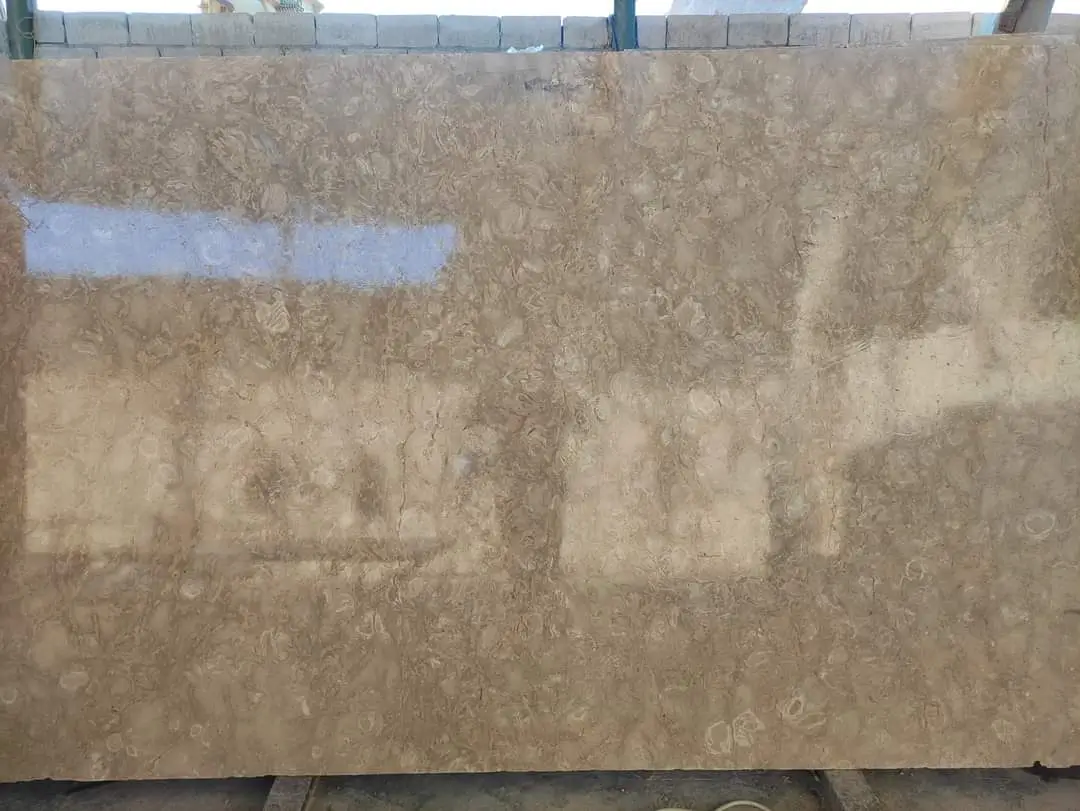
Sourcing Logistics and Slab Matching
Calacatta marble selection at the slab level requires you to think in matched sets, not individual pieces. Slab-to-slab variation within even a single quarry run can be significant — background whiteness shifts, vein density changes, and the warm or cool undertone of the stone can read differently across a pallet of twenty slabs. For any application where visual continuity matters — a full kitchen surround, a book-matched feature wall panel, a continuous bathroom floor — you need to confirm that your slabs come from the same block or bundle.
Citadel Stone warehouse stock is organised by bundle and block number, which means you can verify slab matching before committing to a quantity. Lead times from our warehouse for available inventory typically run one to two weeks to most project sites nationally, compared to six to eight weeks for direct import orders. That logistics window matters for project scheduling — particularly when fabrication is sequenced against cabinet installation or plumbing rough-in. Verify your slab availability and bundle numbers early in the process; waiting until the project is two weeks from countertop installation to confirm material is the single most common source of scheduling delays in high-end residential stone work. Your truck delivery logistics should also be confirmed before final order placement — slab weight and dimensional requirements for Calacatta in 3 cm at full slab size will dictate access constraints that may affect your delivery window.
Getting Your Calacatta Marble Specification Right
Calacatta marble selection rewards specifiers who approach it with precision — on grade, on vein variety, on thickness, on finish, and on slab matching. The material’s performance ceiling is genuinely exceptional, but that ceiling is only reached when the specification decisions that precede installation are made with full technical understanding of what the stone will and won’t do. Clients who receive honest pre-selection guidance on maintenance expectations and finish trade-offs are the ones who remain satisfied twenty years into an installation. Those who receive only the marketing version of the story are the ones who call with complaints at year three. If you’re also evaluating natural stone for other surfaces in your project, our resource on marble slab purchasing decisions covers the broader buying process in detail worth reviewing alongside your Calacatta specification work. Stone for nationwide projects, Citadel Stone supplies calacatta marble in book-matched pairs for continuous vein flow.
Related reading: granite that looks like marble · red marble · Choosing White Marble Tones: A Practical Guide.