What Marble Grade Actually Tells You Before You Buy
The marble slab buying guide conversation usually starts with aesthetics — and that’s fine — but the specification decision that determines long-term performance happens well before you choose a veining pattern. Marble grades (A through D) describe structural integrity, not appearance. A Grade A slab carries minimal fissures and consistent density throughout; a Grade D slab may look stunning in a showroom but contains natural voids, heavy veining interruptions, and resin fills that compromise load-bearing sections. Knowing which grade your application actually requires saves you from a costly mismatch between expectation and reality.
The grading system also interacts directly with thickness selection. For countertop applications, 3cm (roughly 1¼ inches) is the professional standard — not because it looks substantial, but because the flexural strength at that thickness tolerates the point loads of daily use without risking fracture at thin veining planes. A 2cm marble slab in a Grade C or D classification is asking for trouble on a kitchen island. Your fabricator may not volunteer this distinction unless you ask directly.
Thickness Specifications and Structural Requirements
The marble slab buying guide decision around thickness isn’t a preference — it’s a structural calculation. Standard countertop slabs come in 2cm and 3cm profiles. The 2cm option works where full plywood substrate support is continuous beneath the stone; without it, the reduced cross-section creates flexural risk at cantilevered edges and sink cutouts. Most residential kitchen installations should default to 3cm precisely because substrate continuity can’t always be guaranteed after plumbing rough-ins and cabinet modifications.
Wall cladding and flooring panels follow a different logic. For vertical installations, 2cm is common and structurally appropriate because gravity loads the material in compression rather than flexure. Flooring panels in high-traffic commercial applications typically require 3cm minimum, with some specifications calling for thicker custom cuts in load-bearing zones. The ASTM C503 marble building stone specification establishes minimum modulus of rupture values — 1,500 PSI for exterior applications — that directly inform your thickness decision based on span and load.
- 2cm slabs: suitable for fully supported countertops, wall cladding, and light-duty flooring with proper substrate
- 3cm slabs: required for overhanging countertop sections, unsupported spans, and commercial floor traffic
- Custom profiles: 4cm or thicker for feature staircases, monolithic islands, and high-load exterior coping
- Edge profiles: thicker stock allows more complex edge details — ogee, waterfall, and mitered profiles all require adequate material depth
Veining, Pattern Matching, and Slab Continuity
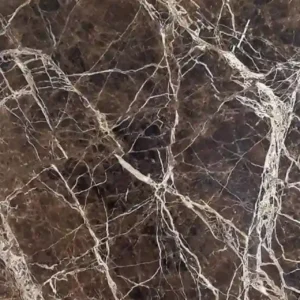
Here’s what most buyers miss when working through a marble slab buying guide for the first time: veining is not uniform within a single quarry block, let alone across multiple blocks. Two slabs from the same bundle — cut sequentially — will be bookmatched and nearly identical. Two slabs from different bundles, even from the same quarry run, can vary dramatically in background tone, vein density, and directional movement. This matters enormously for large installations like kitchen islands, continuous floor fields, and feature walls where visual continuity is part of the design intent.
The professional approach is to specify full slab quantity from a single bundle at the point of order. For an average kitchen requiring three slabs, this means reserving all three from the same quarry lot before fabrication begins. Warehouse stock turns over — slabs that match today may not be available in six weeks when your project timeline shifts. Citadel Stone holds marble slab inventory in consistent bundle groupings precisely so contractors can pull matched sets without sourcing delays. Confirm bundle availability and request slab photos before committing to a full order, especially for book-matched feature wall applications.
How Temperature Cycling Affects Marble Over Time
For exterior marble applications — cladding, outdoor countertops, covered terrace surfaces — thermal cycling deserves specific attention in your specification. Marble’s coefficient of thermal expansion runs approximately 7.3 × 10⁻⁶ per °F, meaning a 3-foot panel experiences dimensional movement of roughly 0.003 inches across a 100°F swing. That number sounds small until you’re looking at a 40-foot continuous cladding run with inadequate expansion joints — then it becomes the reason your grout lines crack in year three.
Freeze-thaw cycling adds a compounding stress vector. Water infiltrates marble’s pore structure during wet periods; when temperatures drop below freezing, that moisture expands by approximately 9% volumetrically within the stone matrix. In regions with significant day-night temperature swings — including warmer climates where desert nights drop 40°F to 50°F below afternoon peaks — this cycling happens repeatedly through a single season rather than just through winter months. The practical specification response is straightforward: exterior marble joints should be set at 1/8 inch minimum (versus the 1/16 inch common for interior work), filled with elastomeric grout or silicone, and checked for repointing every five to seven years. According to marble geological formation and characteristics, the crystalline structure that gives marble its beauty also makes it more susceptible to micro-fracturing under repeated thermal stress than denser igneous stones like granite.
- Exterior expansion joints every 8 to 10 feet — not the 15-foot spacing typical for granite or basalt cladding
- Elastomeric or silicone joint fill for any application exposed to freeze-thaw or significant day-night temperature range
- Avoid dark-backed adhesive mortars on south-facing exterior panels — thermal absorption amplifies dimensional movement
- Inspect mechanical anchors in cladding systems annually in freeze-thaw regions with more than 20 cycles per year
Porosity Levels and Sealing Protocols That Actually Hold
Marble’s water absorption rate under ASTM C97 testing typically falls between 0.1% and 0.5% by weight — lower than travertine but meaningfully higher than granite. That absorption range means unsealed marble in wet environments will stain, and it will do so faster than most homeowners expect. The critical specification variable isn’t whether to seal — it’s which sealer chemistry matches your specific marble slab variety and finish combination.
Penetrating impregnator sealers are the professional standard for marble. They bond within the pore structure without forming a surface film, so they don’t cloud the polished finish or peel under thermal movement. Topical sealers — the kind found at hardware stores — create a surface layer that discolors, scratches, and traps moisture beneath it over time. For honed marble countertops in kitchen environments, a high-quality fluorocarbon-based impregnator applied after fabrication and refreshed every 12 to 18 months provides practical stain resistance without compromising the stone’s appearance. Verify sealer performance with a simple water droplet test: apply water to the sealed surface and observe whether it beads for 10 minutes or absorbs within two. If it absorbs before 10 minutes, resealing is overdue.
Sourcing Verification and Slab Quality Checks
The marble slab market includes significant variation in stone quality that isn’t always visible at the surface. Resin-filled slabs — common practice for Grade C and D material — can look identical to unreinforced stone in normal lighting. The field check is simple: examine the reverse face of the slab under raking light. Resin fills appear as slightly glossy patches with a texture that differs from the surrounding stone. This isn’t automatically a disqualifying finding — resin reinforcement is standard practice for fragile veining — but you need to know it’s present before committing to edge profiles that expose the slab cross-section.
Reviewing origin documentation is equally important. Marble sourced from established quarries in Carrara, Turkey, and Greece carries consistent geological profiles that support predictable performance specifications. At Citadel Stone, we source directly from quarry operators and verify material against dimensional stone standards before warehouse intake — which means you’re not relying solely on visual inspection to confirm what you’re receiving. Slab dimensions, thickness consistency (tolerance should be ±1/16 inch or better for 3cm material), and flatness across the panel are all measurable quality indicators you should request in writing from any supplier. To explore the full range available, browse our full marble slab range and confirm current bundle availability before your fabrication timeline locks in.
Countertop, Wall, and Floor: Application-Specific Specifications
The marble slab buying guide framework changes meaningfully depending on where the material is going. Countertop specifications prioritize flexural strength, edge profile depth, and surface finish durability. Wall cladding specifications weight thermal movement tolerance, anchor system compatibility, and the slab’s ability to hold mechanical fixings without delaminating at thin sections. Floor specifications demand slip resistance ratings and compressive strength under point loads.
For countertop applications, your fabricator’s sink cutout technique matters as much as the stone selection. Marble has directional cleavage planes that run parallel to the primary veining. A cutout positioned across a heavy vein without adequate reinforcement support — typically a fiberglass mesh bonded to the reverse face — creates a stress concentration that can result in fracture during installation or under thermal loading. Specifying 3cm material and requiring reverse-face mesh reinforcement at all cutouts is a non-negotiable baseline for professional kitchen countertop work. For flooring, polished marble retains very little wet texture and will not meet the 0.42 wet DCOF threshold of ANSI A326.3 for interior wet areas. Honed or textured finishes carry considerably more texture, which is appropriate for bathroom flooring and shower floors where water pooling is routine.
- Countertops: 3cm minimum, impregnator sealer, mesh reinforcement at cutouts, avoid polished finish in acid-heavy kitchen environments
- Wall cladding: 2cm acceptable with full coverage adhesive, expansion joints every 8 to 10 feet for exterior, mechanical anchors for panels above 15 pounds per square foot
- Floor installations: honed or textured finish for wet areas, 3cm for commercial traffic, DCOF verification before specifying polished finish in any wet zone
- Feature panels and book-matched walls: confirm full bundle reservation before design finalizes — pattern continuity cannot be sourced after the fact
Logistics, Lead Times, and Project Planning
Project timelines should account for the reality that marble slabs are not a commodity stock item in most markets. Standard imported slabs move through a supply chain that includes quarry extraction, block processing, slab cutting, container shipping, port clearance, and regional distribution — a cycle that routinely runs 10 to 14 weeks from order to job-site delivery when sourcing through importers without domestic warehouse inventory. That lead time compresses dramatically when you source from a supplier maintaining warehouse stock, which is how Citadel Stone reduces typical wait times to one to two weeks for in-stock selections.
Truck access at your job site is a logistics variable that gets overlooked until it creates a problem. Full slab deliveries arrive on flatbed trucks with forklifts or crane off-loading equipment. If your site has restricted access — gated residential communities, projects in dense urban areas with overhead clearance limitations, or remodel work where the structure is already enclosed — coordinate delivery logistics before the slab order is confirmed, not after. Slabs are typically bundled in A-frame crates, and the combined weight of a three-slab bundle in 3cm Calacatta can exceed 1,200 pounds. Confirm your site’s forklift access and staging area before finalizing your delivery schedule.
Making the Right Marble Slab Buying Decision
The decisions that separate a lasting marble installation from a problematic one come down to grade selection, thickness specification, finish choice, and sourcing discipline — in that order. Lock in your slab bundle early, confirm the finish performs in your specific application environment, and verify that your thickness spec accounts for actual substrate conditions rather than ideal ones. The thermal cycling considerations for exterior applications add another layer of specification precision that most general guides skip past entirely — but they’re the variables that determine whether your cladding or outdoor countertop holds up through real-world temperature swings over 15 to 20 years of service.
As you finalize your specification, related stone projects can inform your approach to natural stone performance more broadly. If granite elements are part of the same project scope, granite curb installation challenges covers a set of field issues that translate directly to dimensional stone work across multiple applications. Sourced direct from quarries in Turkey, the Mediterranean, and beyond, Citadel Stone marble slabs suit both walls and countertops.
Related reading: choosing white marble tones · granite that looks like marble · green marble.