






















The single specification detail that separates a White Travertine installation lasting twenty-five years from one requiring intervention at year eight is how you handle the filled versus unfilled decision at the surface. Most projects specify White Travertine on appearance alone, then discover during the first freeze cycle that unfilled voids left in the wrong application become water traps. You’ll want to lock this decision early, because it drives thickness, sealing protocol, and even freight weight — and each of those cascades into your project budget in ways that aren’t obvious until the invoices arrive.
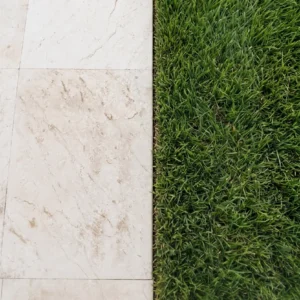
White Travertine is a calcium carbonate stone formed by mineral-rich spring deposition, and its pale, softly banded surface stays measurably cooler underfoot than dense igneous alternatives. That thermal behavior is why designers keep returning to it for barefoot zones. But the material’s open-pore structure — the same feature that moderates surface heat — demands that you match finish, fill, and sealing to the specific application rather than treating one spec sheet as universal.
What Defines White Travertine as a Material
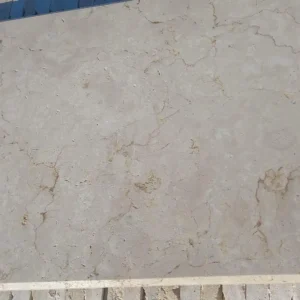
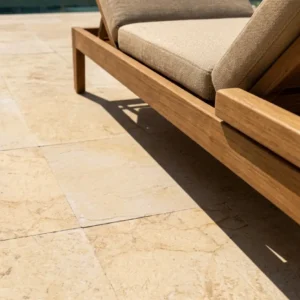
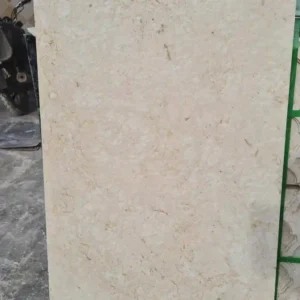
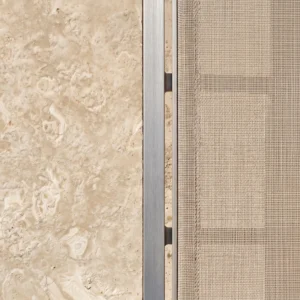
You’re working with a sedimentary stone that carries a distinctive layered structure, the result of successive mineral deposits laid down over long periods. That banding gives each piece a natural directional grain, and it also means no two slabs are truly identical — a feature to embrace in cladding and paving, not fight.
Here’s what most specifiers miss about the white variety specifically: it tends to show a tighter, more consistent tone than gold or walnut travertines, which makes it forgiving in large expanses where color drift would otherwise distract the eye. The trade-off is that surface staining reads more visibly on a pale stone, so your sealing discipline matters more here than on darker material.
- Calcium carbonate composition delivers naturally cooler surface temperatures in high-UV, hot, dry climates
- Interconnected pore structure provides natural slip texture but requires appropriate fill for wet zones
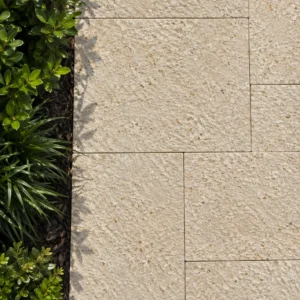
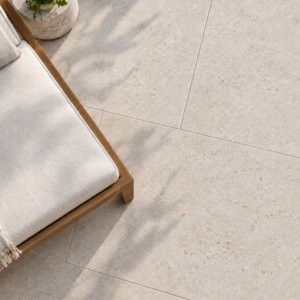
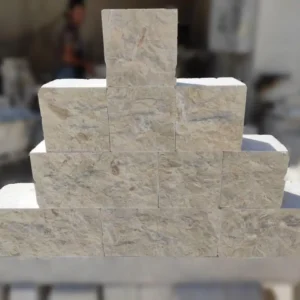
- Ivory to soft cream tones stay consistent across large paving and cladding runs
- Density typically ranges lower than granite, which affects both cutting and point-load behavior
- Available in tumbled, honed, brushed, and filled finishes to match application demands
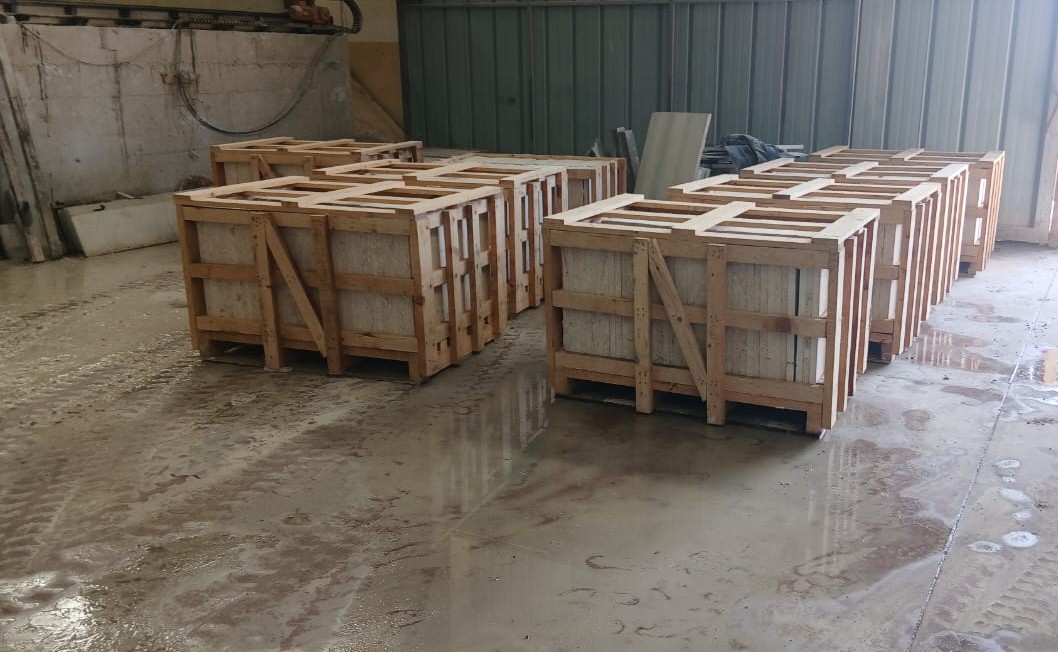
Sourced from our selected premium quarries, each batch of White Travertine that moves through our supply chain gets inspected for consistency of tone and structural soundness before it reaches your project. At Citadel Stone, we’ve found that this warehouse-level screening catches the shade variation that causes the most callbacks — the kind you can’t see in a single sample tile but that becomes obvious across a full pallet. According to industry travertine performance data, the stone’s absorption characteristics and open-pore structure actively moderate surface heat, which is precisely why finish and fill selection deserve your attention up front.
Finishes and Formats That Match Your Application
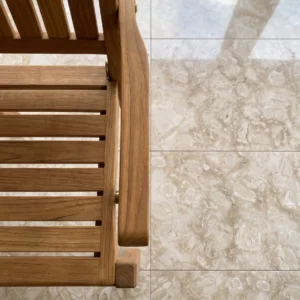
Your finish choice isn’t cosmetic — it’s a performance decision. A honed and filled White Travertine tile gives you a smooth, refined surface ideal for interior floors and vertical cladding, while a tumbled and unfilled version delivers the slip texture you need around water. Getting these matched to location is where field experience earns its keep.
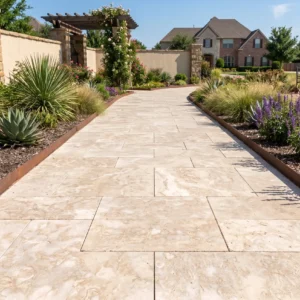
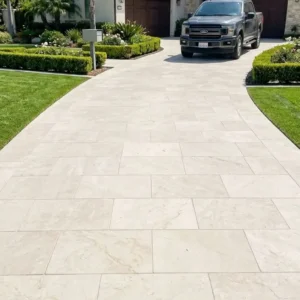
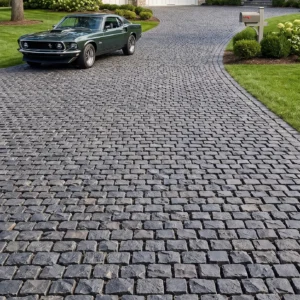
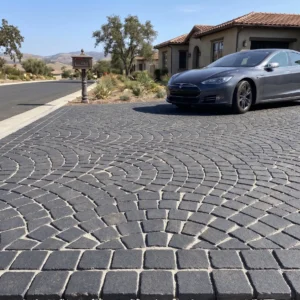
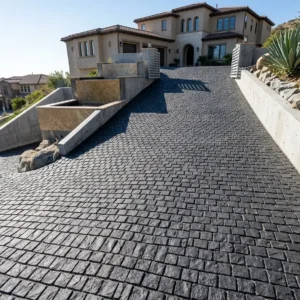
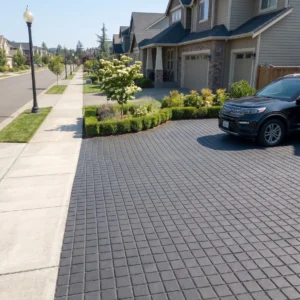
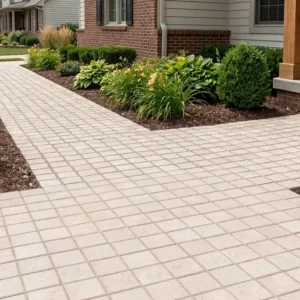
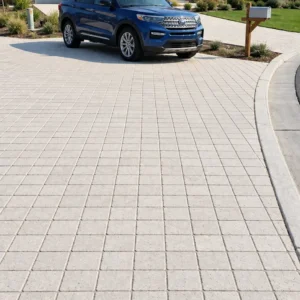
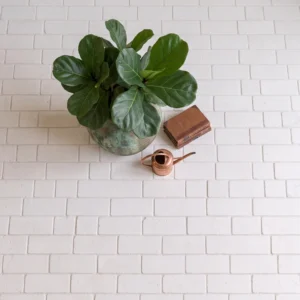
The white travertine tile format most projects reach for interior work runs in nominal 12×12, 16×16, 18×18, and 24×24 sizes, with the larger formats reading cleaner across open floors. For pavers destined for exterior use, thickness climbs — and so does the freight calculation, which is worth flagging before you finalize quantities.
- Honed and filled: interior floors, cladding, and refined vertical surfaces
- Tumbled and unfilled: pool surrounds, walkways, and any surface that stays wet
- Brushed: a middle ground offering texture without the deep tumbled edge
- Standard tile formats from 12×12 through 24×24 for interior and vertical work
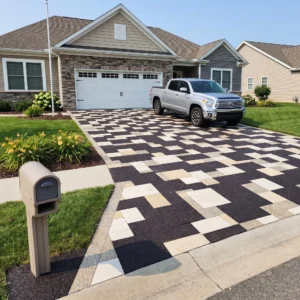
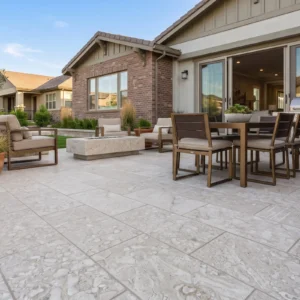
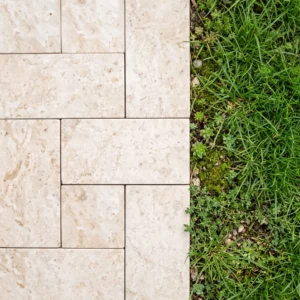
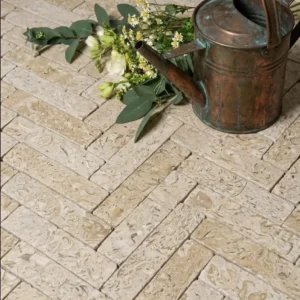
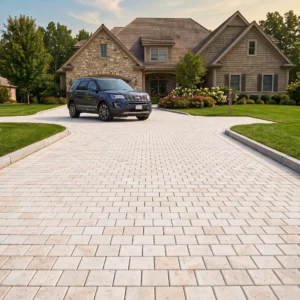
- Paver formats in French pattern and modular sets for exterior installations
You can request sample tiles or thickness specifications from Citadel Stone before committing to a full order — a step that repeatedly saves projects from the mismatch of finish and location that surfaces only after installation. For projects requiring custom cuts or non-standard formats, our team can advise on lead times and the practical limits of cutting a banded stone against its grain.
Pool Applications and Slip Safety
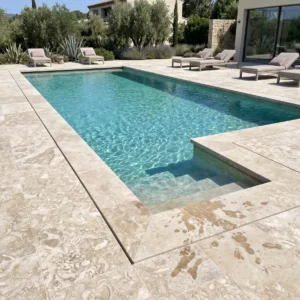
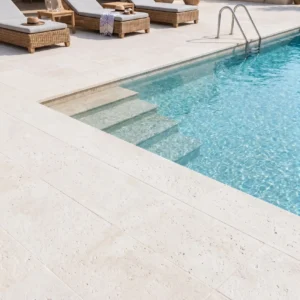
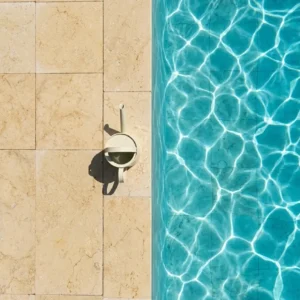
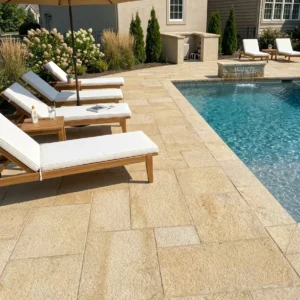
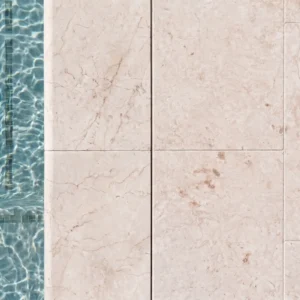
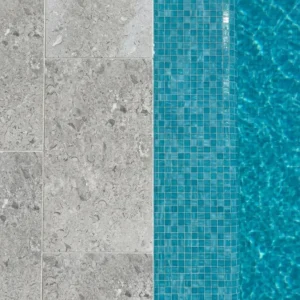
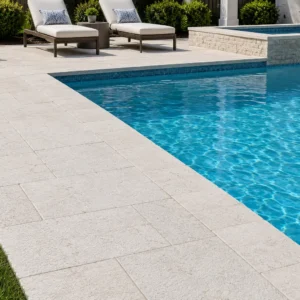
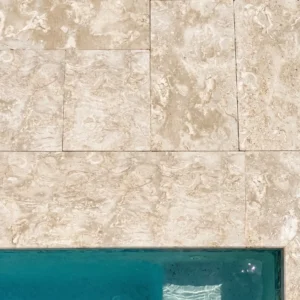
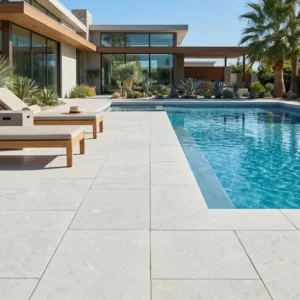
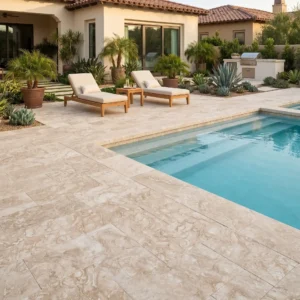
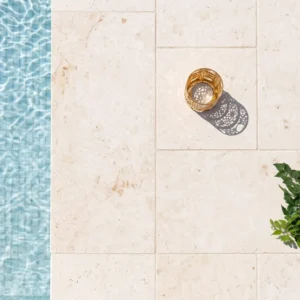
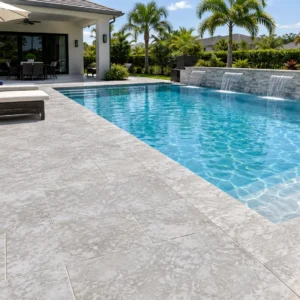
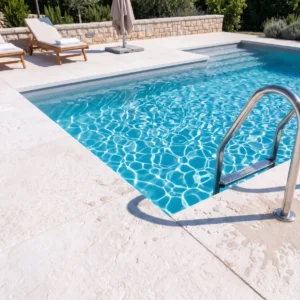
The white travertine pool surround is one of the material’s strongest use cases, and the reason is straightforward physics — the pale calcium carbonate surface reflects rather than absorbs solar radiation, keeping deck temperatures tolerable for bare feet even in peak sun. That’s a genuine advantage most dense stones can’t match.
What matters most for a white travertine pool deck is the finish and fill combination.Choose a textured finish where surfaces will be wet. A filled, honed surface in this location becomes a hazard the moment it gets splashed.
- Choose a textured finish where surfaces will be wet.
- Reflective pale surface reduces barefoot heat stress in intense sun
- Bullnose and drop-face profiles available for the pool edge transition
- Open-pore structure aids drainage and reduces standing water on the deck
- Coordinate deck pavers with matching coping for a continuous visual field
For the pool edge itself, white travertine pool coping in a bullnose or drop-face profile creates the rounded transition swimmers hold when exiting the water. If you’re weighing coping profiles and how different edge treatments perform under wet, high-traffic conditions, pool coping types explained covers specification details that apply directly to pool-edge decisions. The choice between bullnose and square-edge coping changes both safety and how water sheets off the deck, so it deserves the same attention as your paver selection. A well-planned white travertine pool deck with matching white travertine pool coping reads as one continuous surface rather than mismatched components.
Installation and Base Preparation
The base determines the lifespan. You can specify the finest White Travertine available and still watch it fail if the subgrade moves under it — and travertine’s relative softness compared to granite means it shows differential settlement faster than harder stones.
Here’s the detail that matters most in clay-heavy soils: your compacted aggregate base needs to account for regional soil expansion. In expansive clay regions, you’ll want a deeper base — often 6 to 8 inches of compacted aggregate rather than the 4 inches generic guidelines suggest — because the interaction between soil movement and a rigid stone surface concentrates stress at the joints.
- Compacted aggregate base of 4 to 8 inches depending on soil type and traffic load
- Deeper base specifications for expansive clay soils prone to seasonal movement
- Proper slope of at least 1-2% away from structures for drainage
- Polymeric or standard joint sand maintained at 90-95% capacity for load transfer
- Setting bed thickness adjusted for exterior freeze-thaw exposure
For mortared installations over a slab, temperature during setting affects your working time more than most crews expect — high heat during installation shortens open time, requiring you to work in smaller sections and mist the setting bed to prevent premature curing. According to ASTM travertine dimension stone specifications, the material’s physical properties define acceptable thickness and strength thresholds, which you should verify against your specific load conditions before finalizing the base design.
Sealing and Long-Term Maintenance
White Travertine rewards a proactive sealing schedule and punishes neglect faster than darker stones because staining shows so plainly against the pale surface. You’ll get the best results with a penetrating impregnating sealer rather than a topical film — the impregnator lets the stone breathe while blocking the absorption that causes stains.
The interval most projects need is a resealing cycle every 18 to 36 months depending on traffic and exposure, with pool decks and heavily used patios trending toward the shorter end. Acidic contact is the real enemy here — the calcium carbonate base reacts with acids, so citrus, wine, and certain cleaners will etch an unsealed surface.
- Penetrating impregnating sealer preserves breathability while blocking stains
- Reseal every 18 to 36 months based on traffic and exposure intensity
- Neutral-pH cleaners only — acidic products etch the calcium carbonate surface
- Prompt spill cleanup prevents deep absorption into open pores
- Test sealer on a spare tile to confirm it doesn’t alter the pale tone
What often gets overlooked is that sealing protocols for exterior pavers differ from interior tile — exterior surfaces face UV degradation of the sealer itself, which is why the outdoor resealing interval runs shorter. You can expect 20 to 30 years of service from a properly based and consistently sealed installation, with realistic maintenance rather than a set-and-forget promise.
Cost Factors and Regional Sourcing
Freight distance drives more of your White Travertine budget than the stone itself in many projects — natural stone is heavy, and hauling pavers across half a continent adds cost that has nothing to do with material quality. Understanding this lets you budget realistically instead of being surprised at delivery.
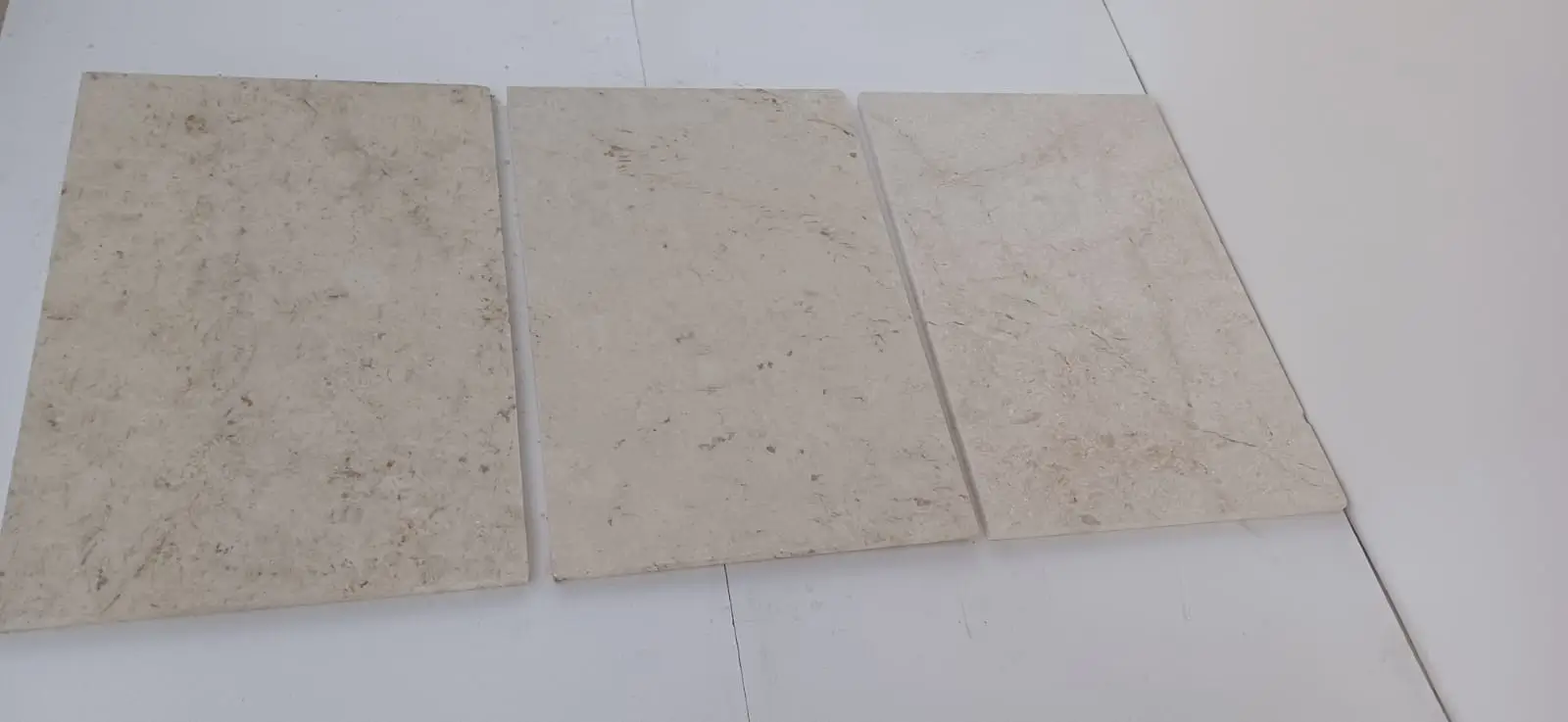
The practical lever you control is sourcing from regional inventory rather than waiting on an import cycle. Citadel Stone maintains warehouse inventory nationwide, which typically reduces lead times to 1 to 2 weeks compared to the 6 to 8 week import cycle many projects otherwise face — and shorter transit from a closer warehouse also trims the freight line on your invoice.
- Freight weight makes delivery distance a significant budget line for stone
- Regional warehouse stock reduces both lead time and transit cost
- Thickness directly affects tonnage and therefore truck freight charges
- Ordering full pallets rather than partial units improves per-unit economics
- Verify stock levels before committing to fixed project timelines
You should verify warehouse stock levels before locking your schedule, because a material that’s in stock at a nearby facility behaves very differently on your timeline than one requiring a fresh quarry run. Citadel Stone ships White Travertine nationwide from regional inventory, and consolidating your order onto a single truck delivery rather than staggered shipments is one of the simplest ways to control freight cost on a larger project. For buyers comparing pricing, remember that a cheaper per-square-foot quote from a distant source often loses its advantage once the truck freight is added in.
How White Travertine Compares to Other Stone
You’ll weigh White Travertine against limestone, granite, and marble on most projects, and the honest comparison comes down to trade-offs rather than a clear winner. Travertine gives you cooler surface temperatures and a softer aesthetic than granite, but granite wins on raw hardness and stain resistance.
Against marble, White Travertine offers a more textured, less formal surface and generally better outdoor durability, since polished marble struggles with exterior wear and etching. The banded travertine structure reads as more organic and less uniform than a consistent limestone, which is a design preference rather than a performance gap.
- Versus granite: cooler underfoot and softer look, but lower hardness and stain resistance
- Versus marble: better outdoor durability and slip texture, less formal polish
- Versus dense limestone: more visible banding and natural character
- Versus concrete pavers: superior longevity and natural thermal behavior
- Choose based on application priority — heat comfort, formality, or maximum hardness
The white travertine pool application in particular tends to favor travertine over the alternatives specifically because of that heat behavior — a granite deck in full sun becomes uncomfortable barefoot in a way the pale travertine surface does not. According to federal geological data on travertine formation, the stone’s natural mineral structure is what gives it these distinctive absorption and thermal characteristics that separate it from igneous alternatives.
Order White Travertine — Nationwide Delivery from Citadel Stone
Citadel Stone stocks White Travertine in standard formats including 12×12 through 24×24 tiles, French pattern and modular paver sets, and coping profiles in bullnose and drop-face for pool edges. You can request samples or full thickness and absorption specifications before committing, which we recommend for any project where finish and location need to be matched precisely. The same white travertine tile you specify for interior floors can be paired with coping and deck pavers from a single stocked run to keep tone consistent.
Trade and wholesale enquiries move through a straightforward process — provide your square footage, finish preference, and delivery location, and the team returns pricing that accounts for freight from the nearest regional warehouse. Lead times from stocked inventory typically run 1 to 2 weeks nationwide, and you can buy full pallets for the best per-unit economics or request smaller quantities — a cheaper approach for sample and repair work. To move forward, request a quote or schedule a consultation to confirm formats, verify current stock, and lock your delivery window.
As you finalize your White Travertine specification, complementary stone elements can round out the project — for a look at another durable paving option that pairs well with travertine surfaces, limestone cobblestone paving options covers a related material worth considering for driveways and borders. Designers select White Travertine from Citadel Stone — a limestone with a distinctive naturally banded texture — for paving and cladding projects.
See also: pool coping materials compared.
Related guides: modern white travertine pool deck · white travertine floor · White Travertine vs White Carrara Marble Compared · white travertine countertops · white vein cut travertine · white travertine pavers.