

What Pool Coping Actually Does for Your Installation
Pool coping types explained in catalogs rarely cover the structural reality: coping isn’t decorative trim — it’s the primary edge restraint that ties your pool shell to the surrounding deck. The profile you choose determines how wind-driven rain infiltrates the bond beam, how well the edge withstands a hail impact, and whether the tile or plaster line stays intact through years of hydrostatic pressure cycling. Get the profile wrong and you’re looking at deck-to-coping separation within five to seven years, regardless of how good the rest of your installation is.
Every coping profile functions as a mechanical and hydraulic junction. It must cap the pool wall, redirect water away from the bond beam, and provide a grippable, slip-resistant edge for swimmers exiting the water. Those three demands pull in different directions depending on your pool type, deck geometry, and the stone or porcelain material you’re working with — and understanding how they interact is what separates a specification that holds for 25 years from one that starts failing at year eight.
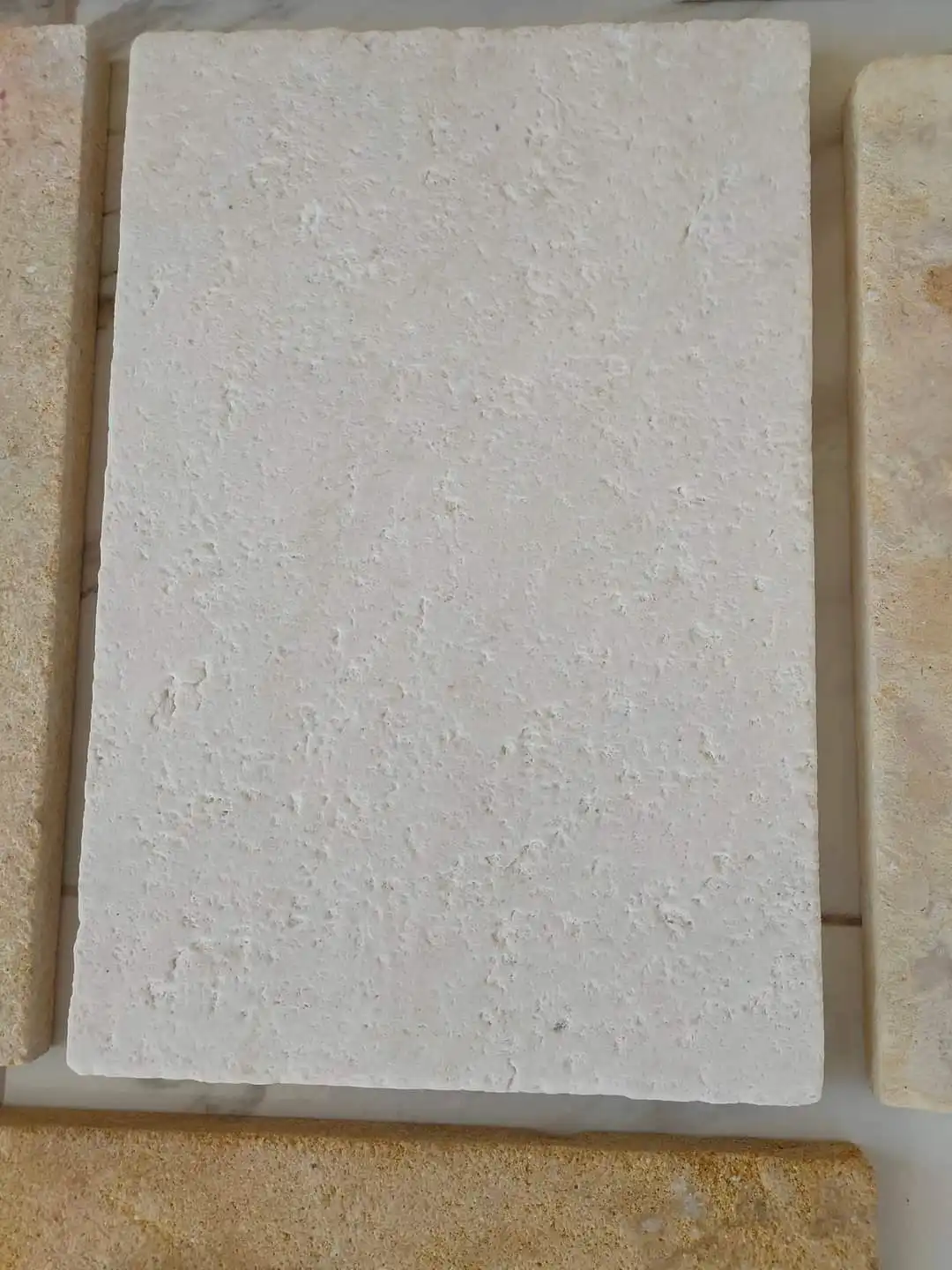
Bullnose Coping: The Classic Rounded Edge
Bullnose coping is the most widely recognized profile — a single or double radius edge that rounds over the pool wall face and delivers a smooth, continuous transition from deck to water. You’ll see it on natural stone, porcelain, and even precast concrete installations, and for good reason: the rounded edge is forgiving on forearms when swimmers lean on the perimeter, and it drains water away from the bond beam efficiently when the deck is properly sloped at 1/8 inch per foot.
The structural case for bullnose is straightforward. Because the edge radius is solid material — no undercut, no recess — it’s one of the most impact-resistant profiles available. In regions subject to hail or wind-blown debris, a solid bullnose in a dense natural stone like travertine or granite handles impact loads without the edge-spalling risk you see on thinner, undercut profiles. That said, the deck surface above the bullnose must be detailed carefully: a flat transition without adequate slope traps wind-driven rain against the coping-to-deck joint, accelerating grout failure.
- Best suited for natural stone thicknesses of 1.25 to 2 inches — thinner slabs don’t provide sufficient radius depth for a clean bullnose profile
- Slip resistance depends entirely on the field finish: tumbled or sandblasted bullnose edges outperform honed finishes in wet conditions
- Double bullnose profiles (rounded on both sides) are used where coping is visible from inside the pool — spa perimeters and raised-beam details benefit most
- Expansion joint placement every 10 to 12 linear feet is non-negotiable with bullnose stone — the solid mass has low flex tolerance and will crack at adhesive failure points if joints are skipped
Per PHTA pool deck and coping safety standards, coping must maintain a secure bond to the pool shell and provide a defined edge transition — bullnose profiles meet this criterion across most pool types when properly set with full-bed mortar adhesion rather than spot-bedding.
Cantilever Coping: Poured-in-Place Performance
Cantilever coping is a different animal entirely — it’s not a stone or tile product, it’s a formed concrete edge poured to overhang the pool shell by 1.5 to 2 inches. The overhang covers the bond beam and creates a reveal at the waterline that gives pools a clean, contemporary appearance. You’ll encounter it most often on gunite and shotcrete pools where the deck contractor forms and pours the coping integral with or directly after the shell.
What most specifiers miss about cantilever: because it’s monolithic concrete, it performs very well under storm loads and mechanical stress. Wind-driven rain that gets behind a stone coping joint has nowhere to penetrate in a properly formed cantilever — the concrete bridge over the bond beam is continuous. That’s a meaningful advantage in severe-weather regions where joint integrity under repeated storm cycles is a real service-life concern.
- Cantilever coping requires a formed overhang of exactly 1.5 to 2 inches — less than 1.5 inches provides inadequate waterline coverage; more than 2 inches increases dead-load stress on the bond beam edge
- The underside of the overhang is typically finished with a cove or drip edge to prevent water from tracking back toward the pool wall
- Cantilever surfaces are usually broom-finished, exposed-aggregate, or travertine-inlaid — an open, textured face is what governs wet footing with any of these treatments
- Expansion control joints through the cantilever must align with deck control joints — a misaligned joint system in a monolithic pour causes diagonal cracking within two to three seasonal cycles
- Renovation pool coping replacement with cantilever is complex: removing an existing cantilever edge often requires cutting back to the bond beam and re-forming, which adds significant labor cost
Cantilever is the right call for pools where a seamless, low-maintenance perimeter is the priority. It’s not the right call when the design calls for natural stone texture, pattern variation, or the ability to replace individual coping units down the road.
Drop-Face Coping: Precision at the Waterline
Drop-face coping — sometimes called waterfall or recessed coping — has a vertical face that drops below the deck plane and positions the bottom edge at or just above the waterline tile. The visual effect is a sharp, architectural reveal between the coping and the pool interior, which is why you see it consistently on high-end residential and commercial designs where the waterline tile is meant to be a focal element.
The drop face creates a shadow line that defines the pool perimeter with real precision. Architecturally, it’s one of the cleanest profiles available, but it requires tighter installation tolerances than bullnose or cantilever. The vertical face must be plumb within 1/8 inch over its length, and the bottom edge must land consistently at the correct height relative to the waterline tile — any deviation reads immediately because the eye tracks that horizontal line around the entire perimeter.
- Drop-face depth typically ranges from 1.5 to 4 inches — deeper drops require material with sufficient flexural strength to resist impact without fracture (granite and dense travertine handle this; thin porcelain drop faces need continuous substrate support)
- The vertical face is exposed to direct sun and water contact, so surface finish must be consistent — a honed face that isn’t fully sealed will show calcium deposits and staining within one season
- Joint integrity on the vertical face is critical: wind-driven rain hits the face directly, and any open joint becomes a water-infiltration point that migrates behind the coping into the bond beam
- Setting mortar for drop-face units must be non-shrink type — standard mortar pulls back slightly during cure and leaves a micro-gap behind the vertical face that eventually allows moisture ingress
For those exploring natural stone options in this profile, Citadel Stone coping styles include travertine in drop-face formats that deliver both the architectural reveal and the surface durability this profile demands.
Square-Edge and Flat-Top Coping: The Modern Minimalist Profile
Square-edge coping skips the radius entirely — the top surface meets the pool-facing edge at a 90-degree corner (or a very tight 1/8-inch chamfer). It’s the profile of choice for contemporary designs where clean geometry is the aesthetic priority, and it works particularly well when the coping stone and deck material are the same — the surface reads as one continuous plane broken only by the control joint at the pool edge.
From a specification standpoint, square-edge coping is more demanding on the installer than bullnose. The sharp corner means any chipping during handling is immediately visible, and any lippage between adjacent coping units creates a snag point for fingers and feet at the pool edge. Tighter dimensional tolerancing on the stone is essential — specify calibrated material to ±1/16 inch in thickness for square-edge installations, not the ±1/8 inch tolerance acceptable for tumbled or honed bullnose.
- Material selection matters more with square-edge than any other profile: dense, low-absorption stone like granite or hard limestone handles the exposed 90-degree arris without chipping; soft travertine with open voids needs to be filled and sealed before installation
- Porcelain pool coping in square-edge format has become increasingly popular — full-body porcelain with a rectified edge holds the corner geometry without the fill-and-seal step natural stone requires
- Slip resistance on square-edge flat tops must come from surface texture, not edge geometry — specify 0.42, the ANSI A326.3 wet DCOF threshold for any square-edge coping
- In freeze-thaw regions, the square edge is more vulnerable to spalling than a bullnose because water infiltrating the top-face grout joint has a direct path to the exposed arris, which can fracture under repeated ice expansion
Porcelain Pool Coping: What the Spec Sheet Doesn’t Tell You
Porcelain pool coping has moved from a niche option to a mainstream specification over the last decade — and the performance data backs it up. Full-body porcelain with water absorption below 0.5% is genuinely highly resistant to the waterline moisture cycling that degrades softer natural stones over time. The calcium carbonate efflorescence or pitting that shows up on unsealed travertine at the waterline after three or four seasons simply isn’t a factor with properly specified porcelain.
The trade-off most specifiers underestimate is weight and impact resistance. Porcelain is brittle compared to granite or dense limestone. A direct impact from pool equipment or a dropped tool at the corner can fracture a porcelain unit cleanly — and matching a discontinued colorway for a spot repair is often impossible. This is a real project risk: specify a 10–15% overage and store it in your warehouse inventory or a secure site location, because replacement panels from the same production lot become unavailable faster than most contractors expect.
- Tile thickness for swimming pool coping should be 20mm (3/4 inch) minimum — 10mm porcelain that works fine on a patio doesn’t have sufficient mass to resist the edge impact loads common in pool environments
- Specify through-body color porcelain where exposed edges or drop faces are part of the profile — a surface-only color layer chips to white beneath, which reads very poorly on an architectural pool edge
- Adhesive selection for porcelain pool coping must account for the near-zero absorption of the material — use a C2TE (deformable, extended open-time) polymer-modified adhesive, not a standard C1 type
- Joint widths for porcelain coping should be a minimum of 3mm (1/8 inch) — tighter joints don’t allow adequate thermal movement, and porcelain’s lower thermal mass means it cycles through temperature ranges faster than stone
According to ASTM slip resistance and stone specifications for pool coping, the minimum coefficient of friction for wet pool deck surfaces is 0.60 — verify this with your porcelain supplier’s test data before finalizing a specification, as not all matte-finish porcelains achieve this threshold in pool-wet conditions.
Natural Stone Coping: Performance Across Material Types
Natural stone remains the benchmark for pool coping performance when you’re specifying for longevity and visual richness. The material hierarchy matters, though — not all natural stone performs equally at the water-edge position, and conflating travertine with granite or limestone with sandstone produces specifications that fail in very different ways.
Travertine is the dominant choice in the swimming pool coping category for a reason: its moderate density, natural vein structure, and open pore surface deliver slip resistance without requiring a textured factory finish. Standard travertine pool coping in the 1.25- to 1.5-inch range handles normal pool-edge loading — foot traffic, pool equipment contact, seasonal deck movement — without cracking when joints are maintained. The open pores do require annual sealing with a penetrating siloxane sealer, particularly at the waterline where calcium and mineral deposits accelerate surface degradation if the stone isn’t protected.
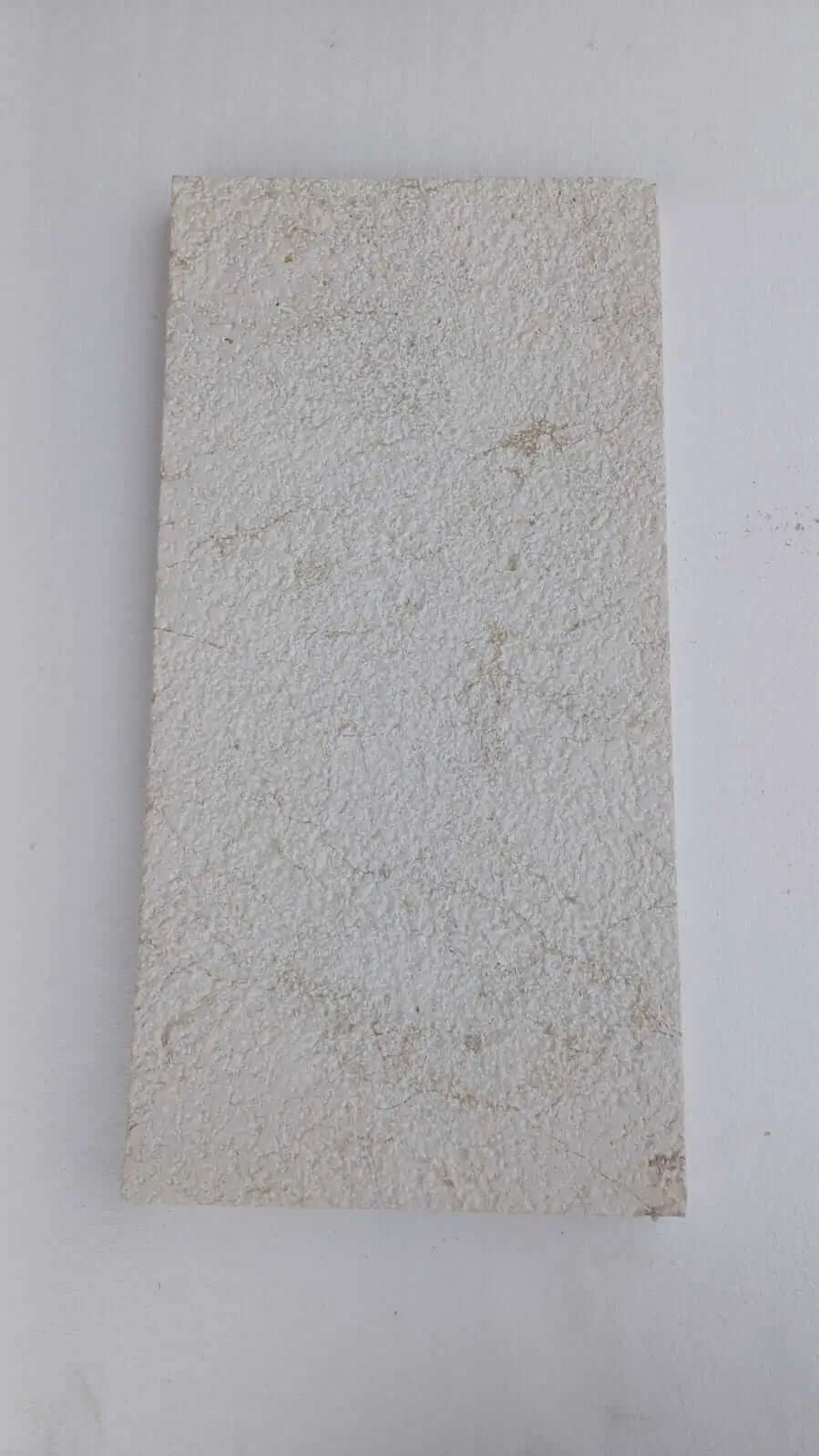
- Travertine: absorption rate of 3–7% depending on fill density — filled and sealed travertine coping outperforms unfilled at the waterline; specify Roman tumbled or brushed finish for slip resistance above 0.65 COF wet
- Granite: absorption below 0.5%, compressive strength above 15,000 PSI — the hardest-performing natural stone for pool coping and the most resistant to impact from storm debris or hail; higher cost and more limited profile fabrication options
- Limestone: absorption of 2–5% depending on density; select dense, low-void limestone rated for exterior pool use — softer chalky limestone degrades within five years at the waterline regardless of sealing frequency
- Bluestone: excellent performance in temperate conditions; the natural cleft surface delivers outstanding slip resistance; check absorption rate per lot, as it varies more than travertine from the same quarry
At Citadel Stone, we inspect each incoming shipment for dimensional consistency and surface defects before it reaches the warehouse floor — pool coping in particular requires tight calibration because any thickness variance creates lippage at the pool edge that’s both a trip hazard and a visual problem on a high-visibility surface.
The Natural Stone Institute’s travertine pool paving performance data confirms that absorption rate is the primary variable in predicting coping service life — lower absorption translates directly to reduced freeze-thaw damage and slower surface weathering at the waterline.
Storm Loads, Edge Restraint, and Long-Term Coping Integrity
Coping installed in areas with regular storm activity faces a specific failure mode that doesn’t show up in standard lab testing: repeated wind-driven rain infiltration through the coping-to-deck joint. Each storm event forces water laterally into the joint, and if the sealant or grout isn’t maintained, that water reaches the bond beam. Over multiple seasons, the freeze-thaw or wet-dry cycling at that location degrades both the mortar bed and the pool shell waterproofing — and the result is coping that rocks or lifts during inspection even though it looks intact from above.
Edge restraint matters beyond the visual. Coping units that aren’t mechanically bonded to the beam through full-bed mortar or a specialized pool-edge adhesive mortar can shift during high-wind events — particularly on pools with raised bond beams that expose a vertical face to wind load. A unit that shifts even 3mm creates a joint gap that funnels storm runoff directly to the beam. The fix — pulling and resetting lifted coping — requires draining the pool edge area and reestablishing full mortar contact, which is far more expensive than getting the original installation right.
- Full-bed mortar adhesion with a minimum 95% coverage is the standard for pool coping — spot-bedding is never appropriate regardless of coping weight or profile
- Joint sealant over backer rod (not grout) at the coping-to-deck interface provides the movement accommodation that rigid grout can’t — use a non-sag polyurethane or silicone sealant rated for wet immersion
- For pools on exposed sites with consistent wind exposure, specify a 1.5-inch minimum coping thickness — the additional mass resists wind uplift and absorbs impact loads from wind-driven debris without fracturing
- Hail impact on thin porcelain (10–12mm) coping is a real failure risk in severe-weather regions — 20mm full-body porcelain or natural stone above 1.25 inches handles hail loads without fracture in all but the most extreme events
- Inspect coping-to-deck joints annually and immediately after any significant storm event — early sealant replacement costs a fraction of a bond beam repair
Renovation Pool Coping: What Changes When You’re Working Retrofit
Renovation pool coping replacement is a fundamentally different exercise from new construction specification — and treating it like a new build is one of the most reliable ways to create problems. The first job on a renovation is a full diagnostic of the existing bond beam condition: any existing coping removal exposes what’s been happening at that junction for years, and you’ll almost always find something that needs addressing before new coping goes down.
Substrate preparation on a retrofit is where the project either succeeds or fails. Getting back to clean, sound concrete is essential — all residual adhesive, old grout, and deteriorated waterproofing must be mechanically removed, not just covered. A grinder or hand tool is usually required; acid washing alone won’t create adequate bond surface for new coping mortar. Check the bond beam for any cracking or spalling before committing to a coping specification: if the beam has structural cracks, those need to be addressed before new coping goes down or you’ll be pulling it off again within two seasons.
- Measure the existing coping reveal height before selecting a replacement profile — if the renovation pool coping changes thickness by more than 3/8 inch, you may need to adjust deck drainage slope or recut the waterline tile to maintain the original reveal
- When matching existing coping for a partial replacement, order sample pieces first — natural stone varies by quarry lot, and what looked identical on a website can read as a clearly different material on site
- Truck delivery scheduling for renovation projects needs to account for pool access restrictions — most residential pools have limited truck clearance to the coping perimeter, and material may need to be hand-carried from the staging area
- New adhesive mortars should not be applied over old adhesive residue — the bond strength will be 30–40% lower than a clean substrate regardless of product quality
Citadel Stone’s national warehouse network means renovation projects can typically receive coping material within one to two weeks of order confirmation — useful when pool season timing creates pressure to minimize downtime between coping removal and reinstallation.
Coping Thickness, Sizing, and Specification Precision
Coping thickness isn’t a one-size-fits-all specification — it’s a function of your pool type, expected loading, and the profile you’ve selected. The industry standard for natural stone pool coping runs from 1.25 inches (for residential pools with low traffic) to 2 inches (for commercial pools, high-traffic environments, or profiles with long overhangs like drop-face). Porcelain follows a similar logic but with a firm 20mm minimum regardless of application, because the material’s brittleness requires mass to resist edge fracture.
Width specification matters as much as thickness. Standard pool coping widths run from 12 inches to 24 inches — the wider the coping, the more deck surface it provides for swimmers exiting the pool, but wider units also introduce more thermal movement per piece, requiring closer expansion joint spacing. A 24-inch wide granite coping piece in a dark finish color can experience surface temperature swings of 60°F or more on a clear summer day — that thermal cycling creates movement at the mortar interface that 10-foot joint spacing won’t accommodate. Drop to 8-foot joint spacing for wide-format, dark-colored coping in high-UV exposures.
- Standard pool coping unit lengths: 12 inches, 16 inches, and 24 inches — mixing lengths creates a pattern that can look intentional or accidental depending on execution; specify a single length for a clean, professional result
- Coping overhang beyond the pool wall face: 1 to 1.5 inches for most profiles; more than 2 inches requires engineered substrate support or continuous haunching at the beam to prevent cantilever fracture
- Verify warehouse stock quantities before committing to a specification on unusual coping sizes — non-standard dimensions may have longer lead times or minimum order requirements that affect your project schedule
- Coping units that will be cut on site for radius pools require material with consistent internal structure — travertine with large open voids cuts inconsistently at radius points; select a filled and dense travertine or granite for curved pool perimeters
Final Recommendations for Pool Coping Types
Choosing between pool coping types comes down to matching profile geometry, material performance, and installation method to your specific pool construction — not defaulting to whatever the local supplier has in stock. Bullnose delivers the broadest performance envelope for most residential pools in natural stone: it’s impact-resistant, slip-tolerant, and forgiving on installation tolerance. Cantilever earns its place on contemporary gunite pools where a monolithic, storm-resistant perimeter and minimal maintenance are the priorities. Drop-face and square-edge profiles reward the designer who needs architectural precision but demand tighter tolerancing and more rigorous maintenance to stay looking their best.
Material selection within any given profile has as much influence on service life as the profile itself. Dense natural stone — travertine, granite, quality limestone — outperforms thin porcelain on impact resistance but requires sealing discipline. Porcelain pool coping in 20mm thickness outperforms natural stone on absorption and waterline maintenance but needs careful adhesive selection and a meaningful material overage for future repairs. Neither material category is universally superior; the right answer is the one that matches your project’s load conditions, maintenance expectations, and design intent. As you finalize your swimming pool coping specification, reviewing how stone and porcelain compare across key metrics will help you validate the material decision before ordering. Drop-face coping from Citadel Stone is frequently chosen where a clean, recessed waterline edge is the design priority.