

What Your Base Prep Actually Tells You
Base preparation depth determines whether white travertine pavers perform for 10 years or 30 — and most installation failures trace back to compaction depth, not the stone itself. The material’s density and open-pore structure means it responds to base movement more visibly than denser igneous alternatives, so getting below-grade work right before the first paver touches the ground is non-negotiable. For exterior installations, your aggregate base should sit at a minimum 6 inches of compacted crushed stone over a stable, proof-rolled subgrade — and that minimum climbs to 8 inches in any region where soil moisture varies significantly across seasons.
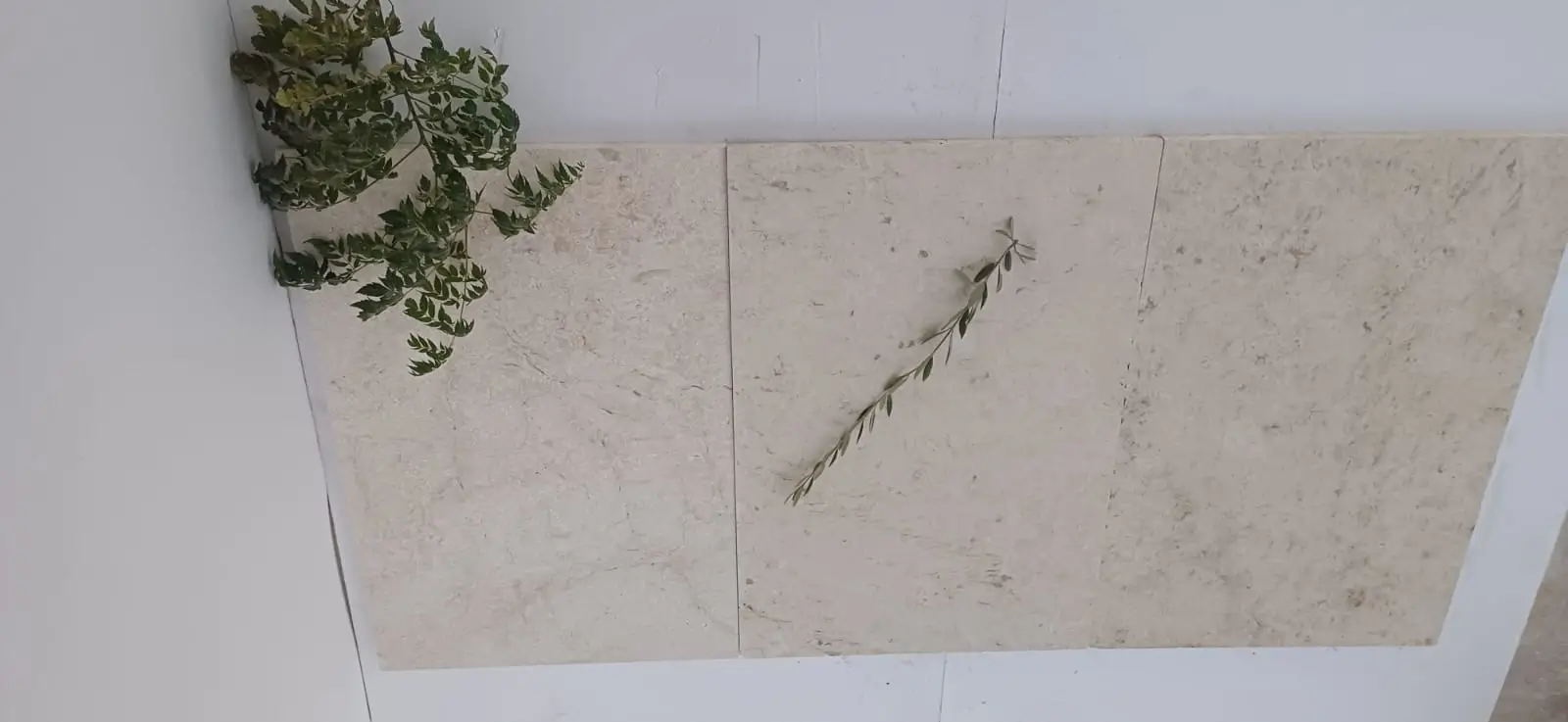
White Travertine Paver Specifications Worth Knowing
The compressive strength of quality white travertine pavers typically ranges from 5,000 to 8,000 PSI — well within the load-bearing requirements for patios, pool surrounds, and residential walkways. Absorption rates generally fall between 3% and 7%, which matters considerably for your sealing schedule and long-term maintenance intervals. According to ASTM C1527 travertine dimension stone standards, dimension-quality travertine must meet minimum flexural strength thresholds that make it suitable for outdoor paving applications when properly supported.
For outdoor use, specify filled-and-honed or tumbled finishes rather than polished surfaces. Polished travertine has a coefficient of friction that drops sharply when wet — a real liability on any exposed horizontal plane. Tumbled finishes deliver a DCOF above 0.42 when properly maintained, which keeps you within safe-use ranges for residential and light commercial exterior paving. This travertine natural stone tile distinction between finish types is one of the most consequential specification decisions you will make.
- Nominal thickness for exterior paving: 1.25 inches to 2 inches depending on point-load demands
- Absorption rate below 5% preferred for freeze-thaw regions
- Filled travertine recommended outdoors — unfilled voids collect debris and accelerate joint degradation
- Tumbled edges reduce lippage risk significantly compared to machine-cut edges on irregular subgrades
Site Layout and Pattern Planning
Start your layout from the most visible focal point — typically a door threshold, a pool edge, or a primary sight line from indoor living spaces. Running your field layout from an inconspicuous corner might save time early, but you’ll end up with awkward cuts at the most prominent visual boundary. Dry-lay a full row in both directions before committing to any mortar or sand, and check your joint alignment at 10-foot intervals rather than just at the starter course.
Joint spacing for white travertine pavers should run between 3/16 inch and 3/8 inch for standard exterior installations. Tighter joints look cleaner initially but leave you no room for minor dimensional variation across a pallet — and travertine does have natural size tolerances of plus or minus 1/16 inch that accumulate across large fields. Wider joints at 3/8 inch give you adjustment room and accept polymeric sand more effectively.
- Use chalk lines at 4-foot intervals in both axes for large installations
- Mark cut lines before wet-cutting — travertine chips at edges if blade speed is mismatched to stone density
- Plan your pattern repeat so cut pieces at borders are no smaller than one-third of the full tile dimension
- Account for a 5–7% cut waste factor in your material order
Setting Bed Options: Sand vs. Mortar
The setting method you choose depends on your drainage requirements and traffic loads more than aesthetics. Dry-set over compacted concrete sand works well for residential patios and pool surrounds where drainage is a priority and point loads stay below 200 PSF. Full-mortar beds are the right call for any application adjacent to vehicle access, heavy planters, or outdoor kitchen equipment — the additional rigidity prevents the micro-movement that opens travertine joints prematurely.
For sand-set installations, your screeded bedding layer should hold at 1 inch nominal — not the 1.5 inches some contractors use to compensate for uneven base work. An oversized sand bed compresses unevenly under load, creating the very lippage problem you were trying to avoid. If your base prep was done correctly, 1 inch of concrete sand gives you the dimensional tolerance you need without sacrificing long-term stability. Citadel Stone outdoor travertine is available in tumbled-edge formats specifically sized for sand-set paving, with dimensional consistency that keeps your sand bed depth uniform across the field.
Thermal Cycling and Expansion Joint Placement
Thermal expansion planning is where most outdoor travertine installations lose years of service life — it is either ignored entirely or handled with generic concrete-spec expansion joints that don’t account for travertine’s actual movement coefficient. Travertine has a coefficient of linear thermal expansion of approximately 4.7 × 10⁻⁶ per °F, which translates to measurable movement across a 20-foot field when temperature ranges swing 60°F or more between night and day.
That kind of cycling doesn’t only happen in extreme climates — many regions with warm summers and cool nights generate 40–60°F day-night differentials that create cumulative stress at fixed boundaries. Over a single season, the repeated expansion and contraction at rigid edges works joint sand loose and begins micro-cracking the stone at corners where movement has nowhere to go. Your expansion joint plan should place soft joints — filled with a flexible backer rod and compatible sealant — every 12 to 15 feet in both directions, not the 20-foot spacing borrowed from concrete flatwork specs.
- Install expansion joints at all fixed boundaries: walls, columns, pool coping edges, and drain frames
- Use EPDM or silicone sealant rated for exterior stone in expansion joints — avoid latex caulk products
- In regions with significant day-night temperature swings, reduce expansion joint spacing to 10 feet for fields larger than 400 square feet
- Re-inspect and top-dress expansion joints every 3–5 years — sealant compression set is the first sign of thermal stress accumulating
Cutting Technique and Edge Detailing
Travertine cuts cleanly with a wet diamond blade rated for soft stone — not the multi-purpose blades that work adequately on porcelain or concrete. The distinction matters because travertine’s calcite matrix and natural voids require lower blade speed and continuous water cooling to prevent the micro-fracturing that shows as a ragged edge after installation. Run your blade at 5,000 to 6,500 RPM with continuous water flow, and you’ll get clean, chip-free cuts through even the most porous sections of the paver.
Edge detailing deserves more attention than it typically gets on residential projects. Border pavers should be full-thickness pieces, not thin cut-downs that lack the structural depth to handle edge loading. At steps and raised features, a 2-inch nominal paver with a nosing profile — whether a natural tumbled edge or a machine bullnose — gives you visual polish and prevents the chipping that flat-cut edges experience from foot traffic impact over time.
Sealing Protocols for Outdoor Travertine
Sealing approach has a larger effect on long-term appearance than almost any other maintenance decision you’ll make. White travertine pavers are particularly sensitive to oil and organic staining because the light color amplifies any discoloration that penetrates the pore structure. A penetrating impregnating sealer — not a topical coating — applied within 48 hours of installation prevents this without altering the surface texture or slip resistance profile.
The Natural Stone Institute travertine outdoor suitability data recommends penetrating silane or siloxane sealers for porous exterior stone, and that guidance holds for white travertine in outdoor paving applications. Apply two coats at 24-hour intervals on freshly installed, fully cured, and clean stone — one coat on travertine’s absorption rate leaves meaningful pore exposure that shows as staining within the first season. Reapply every 18 to 24 months for outdoor surfaces, or annually on south-facing installations that receive heavy UV exposure.
- Test sealer compatibility on a sample piece before full application — some sealers darken lighter travertine slightly
- Allow new mortar or polymeric sand joints to fully cure (minimum 72 hours) before sealing
- Clean travertine with a pH-neutral stone cleaner before resealing — acidic cleaners etch the calcite surface
- Avoid petroleum-based sealers on outdoor surfaces — UV degradation creates a hazy residue within one season
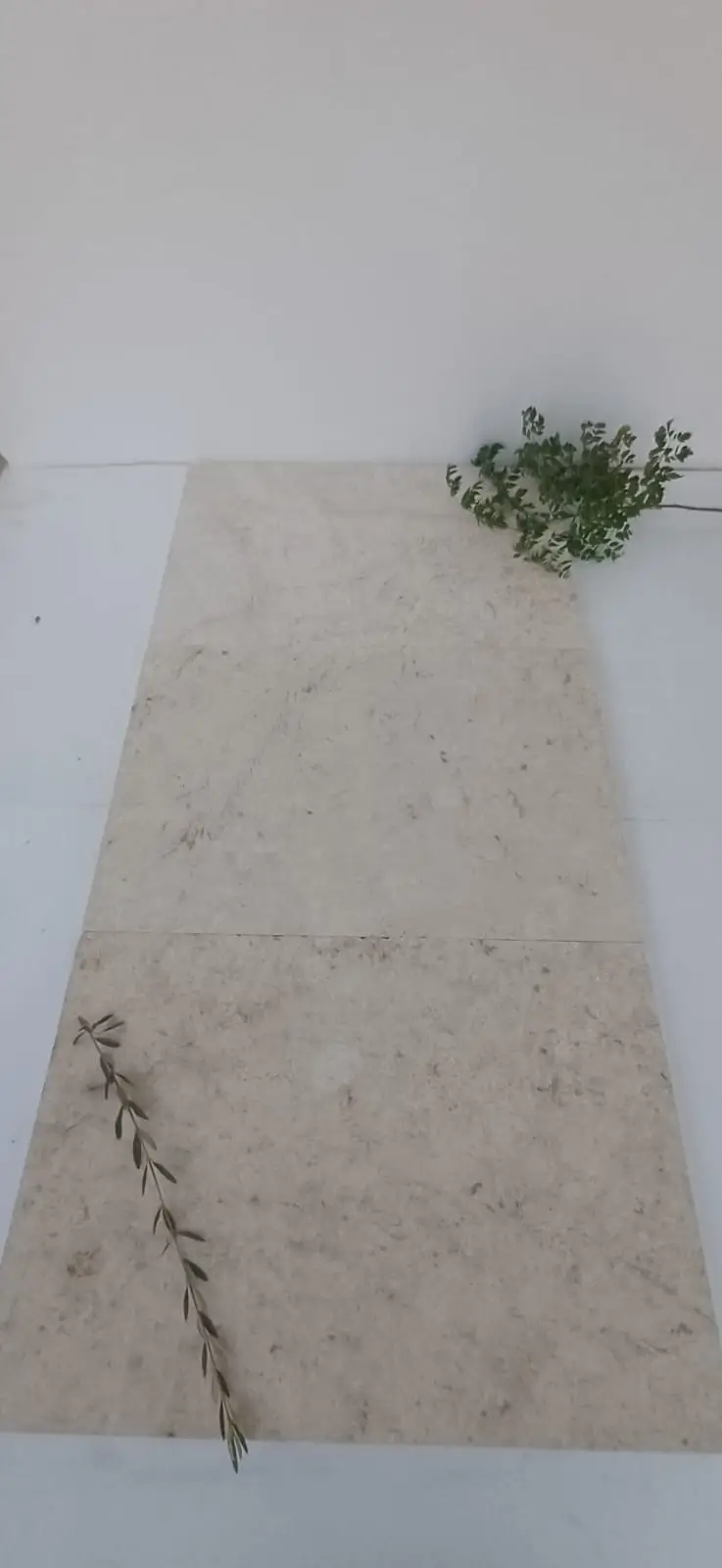
Joint Sand Selection and Drainage Design
Polymeric sand is the standard joint filler for outdoor white travertine pavers, and it outperforms regular concrete sand on every metric that matters for long-term performance — weed resistance, ant resistance, and joint lock stability. The critical installation variable is moisture activation: you need a dry surface and a light, even water mist that activates the polymer binder without saturating the stone. Over-wetting during activation washes polymer into the travertine’s pore structure and can leave a surface haze that’s difficult to remove without mechanical intervention.
Drainage design should target a minimum 1/8-inch-per-foot cross-slope across the paved field. Travertine handles wet conditions well as a material, but standing water on white travertine accelerates biological growth — algae and moss find the open pore structure an ideal environment — and creates freeze-thaw vulnerability in regions where temperatures cycle through the freezing point regularly. Getting water off the surface quickly is as important as sealing the surface against absorption. According to USGS limestone and travertine formation data, travertine’s characteristic pore structure is a direct result of its geologic formation process — designing for drainage works with the material’s natural characteristics rather than against them.
Ordering, Lead Times, and Project Coordination
Material order timelines need to account for the full supply chain, not just the delivery window quoted at the time of purchase. Warehouse inventory levels for white travertine pavers fluctuate with import cycles, and committing your installation start date before confirming available stock is a common source of project delays. Citadel Stone maintains national warehouse inventory that typically allows 1–2 week delivery turnaround on stocked formats — considerably faster than the 6–8 week lead time on direct-import orders from overseas quarries.
Order your cut waste allowance upfront rather than reordering partial pallets after installation begins. Color variation between production batches — a natural characteristic of quarried stone — means a reorder pallet may not match the first delivery closely enough for seamless field use. Truck delivery logistics also need advance planning: standard flatbed trucks require clear site access of at least 14 feet in height and 10 feet in width, and pallet drops in tight residential sites often require crane offload arrangements that should be confirmed before the delivery date.
- Order a minimum 10% overage on white travertine pavers to cover cuts, waste, and future repair stock
- Specify pallet quantities rather than square footage minimums — partial pallets ship at higher per-unit freight cost
- Confirm truck access dimensions with the delivery coordinator before scheduling
- Store pallets on a flat, covered surface and avoid stacking more than two pallets high to prevent edge chipping
Getting White Travertine Paver Specifications Right
Achieving full performance from white travertine pavers outdoors comes down to discipline at every stage — base prep depth, setting bed precision, expansion joint spacing, and a sealing protocol executed before the first weather event hits the surface. The material itself is genuinely capable of 25-plus years of performance in demanding outdoor conditions when the specification details are observed. Where installations fall short, the failure almost always traces to a shortcut in base preparation or an expansion joint plan borrowed from concrete specs without adjustment for travertine’s actual thermal movement coefficient.
Finish selection, joint spacing, and sealing schedule all feed into a system that either works as a whole or develops problems at its weakest point. As a versatile travertine natural stone tile, white travertine delivers consistent results across both interior and exterior applications when correctly specified. For complementary stone applications on your project, white vein cut travertine finishes and uses covers how directional vein patterns and finish variations affect specification decisions for both interior and exterior surfaces. Sourced from our selected premium quarries across multiple continents, Citadel Stone’s white travertine pavers ship in tumbled edges for outdoor use.
Related reading: pool coping materials compared · pool coping types explained · pool tile installation guide.