

What Vein Cut Actually Changes About White Vein Cut Travertine
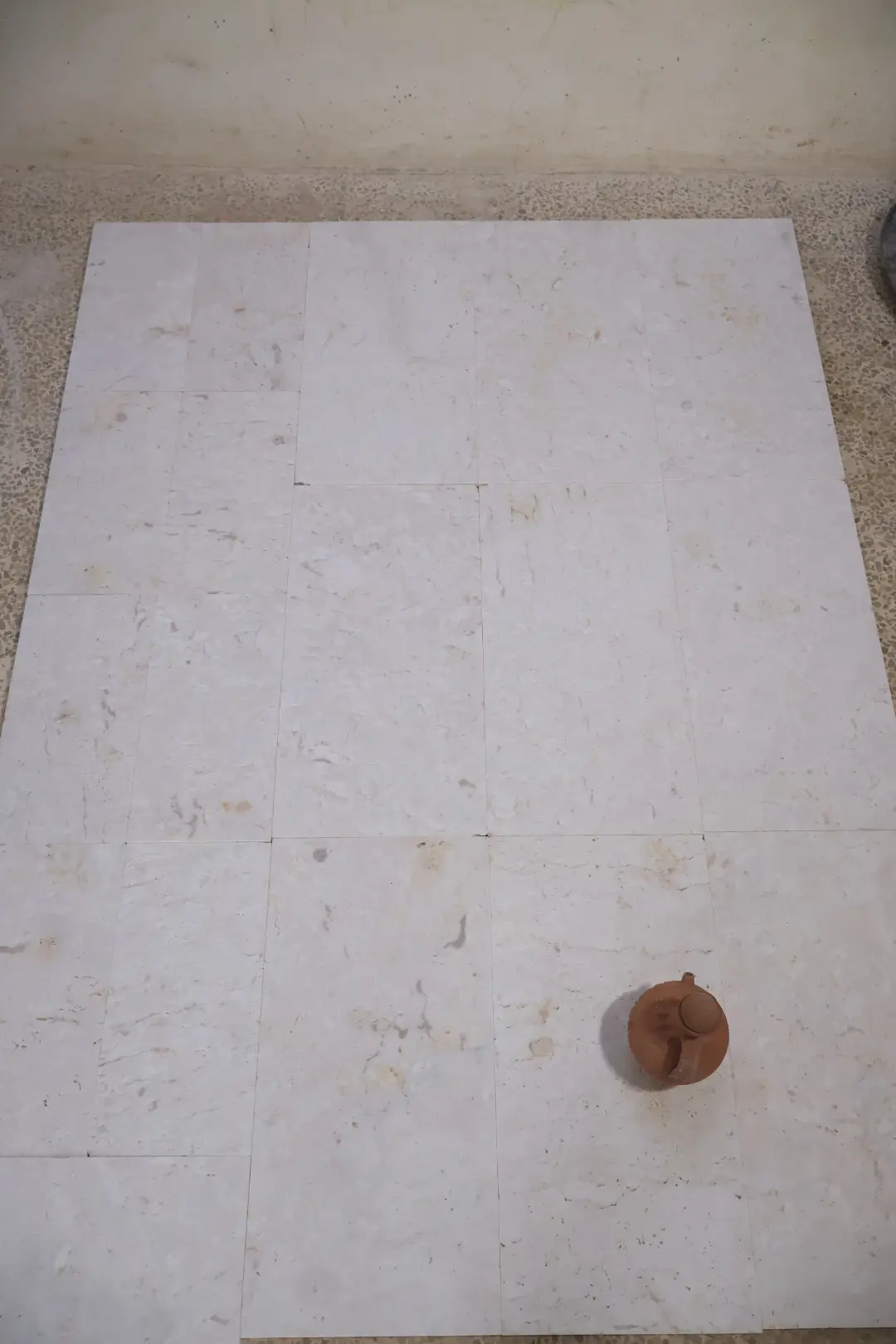
White vein cut travertine gets its name from the cutting orientation — sliced perpendicular to the natural bedding plane, which exposes the linear vein patterns running through the stone rather than the circular cross-sections you see in cross-cut material. That single specification decision fundamentally changes how the finished surface reads at scale. The veining runs in long, directional lines that create movement and visual flow across a wall or floor, giving large-format installations a cohesive, almost architectural energy that cross-cut travertine simply can’t replicate. Specifiers who understand this distinction use it deliberately — orienting slabs to direct the eye toward a focal point or align with a room’s primary axis.
Surface Finish Options for White Vein Cut Travertine
The finish you specify does more work than aesthetics — it determines slip resistance, maintenance frequency, long-term wear behavior, and how the veining pattern actually appears under light. White vein cut travertine is commercially available in four primary finishes, and the performance differences between them are significant enough to drive your selection before you lock in any other detail.
- Honed finish delivers a flat, matte surface with consistent light reflectance — the veining reads clearly without glare, making it the most popular choice for interior flooring and large wall panels where you want visual clarity without shine
- Polished finish amplifies the white-and-grey contrast in the veining dramatically, but the high-gloss surface requires careful wet-area evaluation since polished travertine can drop below acceptable COF thresholds on pool surrounds or bathroom floors
- Brushed finish uses wire brushing to open the surface texture slightly, producing a softened look that sits between honed and tumbled — it retains the linear vein pattern while adding tactile grip, making it well-suited for outdoor applications where barefoot traffic is expected
- Tumbled finish rounds edges and creates an aged, irregular surface — it significantly obscures the directional veining that defines vein cut material, so this combination is less common and typically used only where a heavily rustic character is the explicit design goal
According to Natural Stone Institute travertine properties and outdoor suitability, travertine’s open-pore structure directly influences how each finish behaves over time — brushed and honed surfaces age more gracefully outdoors because they don’t rely on a polished layer that can degrade under UV and foot traffic. Your finish selection should account for that degradation curve, especially in high-use commercial environments.
Using White Travertine Wall Applications Effectively
White travertine wall installations reward careful planning at the layout stage. The directional nature of vein cut material means that random slab orientation creates visual noise — the veining lines up beautifully when you book-match panels or run the veins consistently in one direction, and it looks unresolved when you don’t. This isn’t an aesthetic preference; it’s a specification discipline that separates polished commercial work from commodity tile work.
For full-height feature walls, 24×24 or 24×48 formats in honed finish typically read best because the scale supports the long vein lines without over-fragmenting the pattern. Smaller formats like 12×24 can work in more contained spaces — shower surrounds, fireplace facades — where the reduced scale still allows the veining to register. Thickness matters here too: 3/8-inch rectified tile is standard for white travertine wall applications, but panels above 36 inches in height benefit from 1/2-inch material for mechanical stability, particularly where adhesive bond strength requirements are more demanding.
Floor Specification Details Worth Getting Right
Floor applications for white vein cut travertine involve more variables than wall work, and the ones that get underspecified most often are joint width and fill treatment. Travertine is classified as a filled stone — the natural voids created by its porous formation are factory-filled with grout or epoxy before finishing. On floors, that fill performs differently under compressive load and thermal cycling than the surrounding stone matrix, and you’ll see differential wear at fill boundaries over time in high-traffic applications if you spec the wrong sealer profile.
- Use a penetrating impregnating sealer, not a topical coating — topical sealers trap moisture in the fill pockets and accelerate spalling, particularly in rooms that experience temperature swings
- Joint width of 1/16 inch works for rectified tiles in controlled interior conditions; move to 1/8 inch for larger formats or any installation over radiant heat systems to accommodate thermal expansion
- Specify a neutral-cure silicone at perimeter joints and any change-of-plane transitions — travertine’s thermal expansion coefficient and the movement at substrate boundaries require elastomeric relief that grout can’t provide
- For commercial-grade floors carrying regular heavy foot traffic, 3/4-inch thickness outperforms the standard 1/2-inch nominal by a meaningful margin — the additional mass dampens the micro-flexion that initiates hairline cracking at fill boundaries
The ASTM C1527 travertine dimension stone standard specifications establishes minimum absorption and modulus of rupture thresholds that directly inform these thickness decisions — reviewing those benchmarks before finalizing a floor spec is time well spent, particularly for heavy commercial projects where failure modes carry real cost.
Outdoor Use, Drainage, and Base Preparation
Outdoor applications of white vein cut travertine demand more attention to drainage engineering than most specifiers initially give them. The stone performs well across varied precipitation patterns — from heavy rain seasons and monsoon cycles to drought-prone regions — but the base system underneath it is what actually determines whether the installation survives those conditions intact over 15-plus years. Water that cannot drain away from beneath the stone creates hydrostatic pressure that works against adhesive bond lines and causes efflorescence to wick upward through the fill material.
For mortar-set exterior applications, a minimum 1.5% cross-slope toward drainage is non-negotiable. In regions with sustained heavy rainfall or periodic flooding risk, that slope needs to be engineered into the substrate before any stone work begins — correcting it after the fact is a full demolition and reset. Sand-set installations on a compacted aggregate base offer better natural drainage behavior because water can percolate through joint sand rather than pooling at an impermeable mortar bed boundary. The trade-off is dimensional stability: sand-set systems require more precise base compaction to prevent settlement under point loads.
Sub-base depth also requires evaluation against soil conditions on site. Expansive clay soils create seasonal heave cycles that sand-set travertine cannot tolerate without proper geotextile separation and adequate aggregate depth — typically 6 to 8 inches of compacted base material, not the 4 inches that works in stable sandy sub-grades. Verify warehouse stock on oversized exterior formats before committing to a base system design, since large-format material sometimes carries longer lead times that affect your construction schedule.
Super White Travertine: How It Differs in Practice
Super white travertine occupies a specific niche within the broader travertine family — it refers to material quarried from deposits with exceptionally low iron content, producing a tone that reads as near-pure white rather than the warm ivory or cream typical of standard travertine. In vein cut orientation, super white travertine shows grey veining against a bright white ground, creating a contrast profile that reads almost like a white marble at a distance. That aesthetic sits closer to Carrara marble than to conventional travertine in design vocabulary, which is precisely why designers working on contemporary interiors favor it.
The practical differences extend beyond color. Lower iron content often correlates with slightly lower porosity in some quarry zones, which can improve stain resistance marginally — but this varies significantly by quarry origin, and you shouldn’t assume reduced maintenance needs without verifying technical data from the specific batch. At Citadel Stone, we inspect material at the warehouse before it ships, and lot-to-lot color consistency is something we flag proactively for larger orders where matching across multiple pallets matters. Reviewing Citadel Stone vein cut selections gives you a direct view of available tones and how they translate to finished installations.
The White Wash Travertine Finish and When It Works
White wash travertine is a distinct product treatment rather than a quarry-specific material — it involves applying a diluted white pigment wash to standard travertine (often in cross-cut or tumbled form) to lighten the base tone and mute the natural color variation. The result is a softened, limewashed appearance that suits Mediterranean and coastal design aesthetics particularly well. Understanding the difference between naturally white vein cut material and a white wash travertine finish matters for specification because the maintenance profiles diverge meaningfully over time.
- Natural white vein cut travertine ages by gradual surface wear and patina development — the color is intrinsic to the stone matrix and won’t fade or peel
- White wash treatments are surface-applied and will experience gradual wear in high-traffic zones, requiring periodic touch-up or reapplication depending on the treatment’s penetration depth
- In exterior applications with heavy rainfall exposure, surface washes typically degrade faster than in sheltered interior settings — the wash is susceptible to hydrolysis where standing water or runoff maintains prolonged contact with the surface
- For long-term exterior work, naturally white-toned quarry material will consistently outperform pigment-washed alternatives from a maintenance and longevity standpoint
Sealing Protocols and Realistic Maintenance Expectations
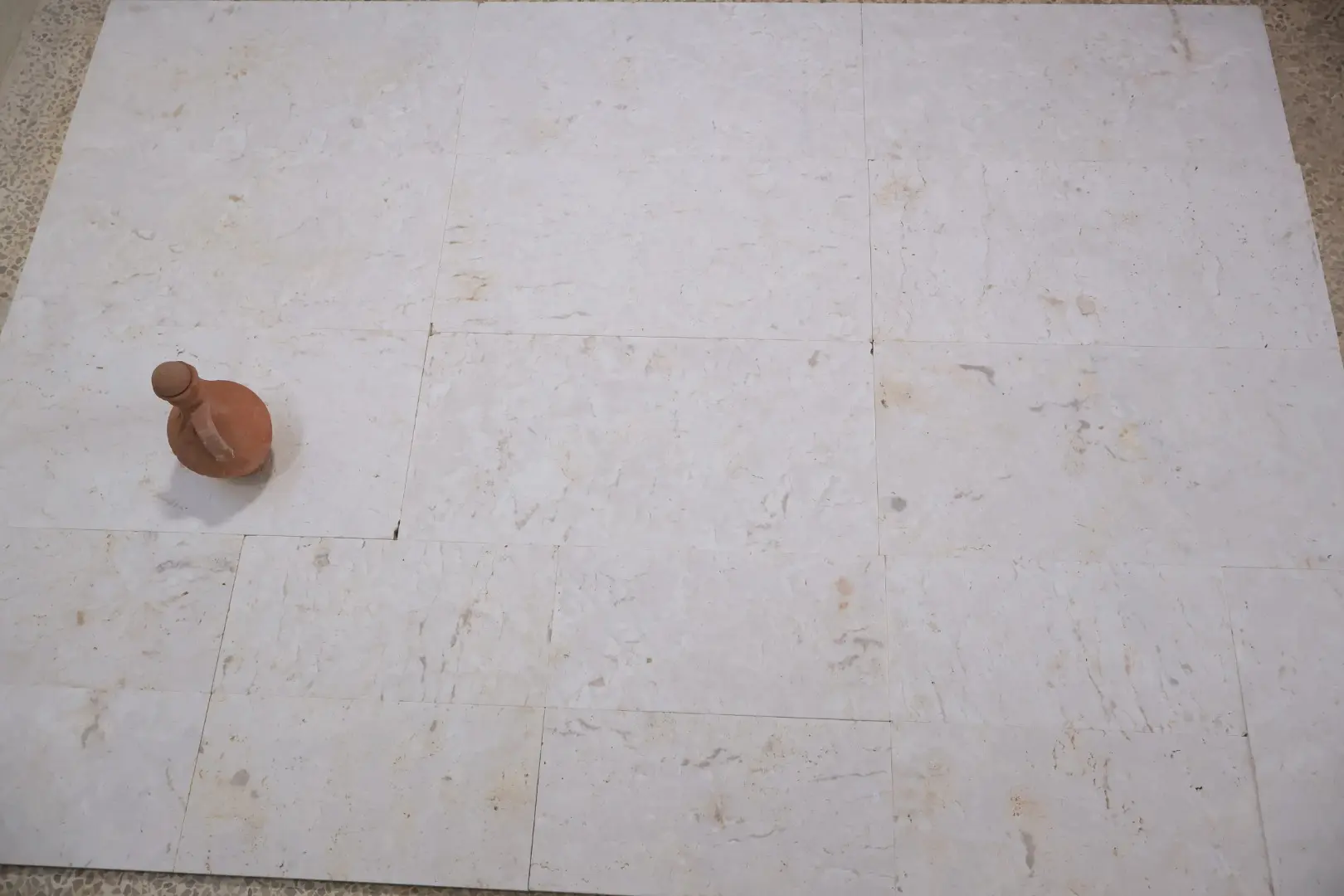
Sealing white vein cut travertine correctly on the first application is one of those details where doing it right saves significant remediation cost later. The stone’s calcium carbonate matrix is reactive to acidic cleaners and will etch if you use the wrong maintenance products — an impregnating fluorocarbon sealer applied within 48 hours of installation protects against both staining and acid etching without altering the surface finish character.
Realistic maintenance expectations: in residential interior applications with proper initial sealing, you’re looking at resealing every 3 to 5 years depending on traffic intensity and cleaning product discipline. High-use commercial applications with daily mopping may require annual resealing to maintain adequate stain resistance. Outdoors, UV exposure and precipitation cycles accelerate sealer breakdown — budget for resealing every 2 years in exterior applications, and use a sealer formulated specifically for exterior stone rather than repurposing an interior product. According to USGS limestone and travertine natural mineral formation, travertine’s calcium carbonate composition and pore structure are fundamental to understanding why sealer selection and reapplication timing matter more for this material than for denser igneous stones.
Ordering and Project Planning Practicalities
White vein cut travertine in premium tones — particularly super white travertine grades — runs on tighter warehouse inventory cycles than standard ivory travertine. Your project timeline needs to account for this, especially if you’re working on a large-scale commercial installation where pattern-matching across multiple pallets is a specification requirement. Ordering from a single lot or pre-selecting matched material at the warehouse stage eliminates the color consistency issues that arise when orders are fulfilled from multiple quarry batches.
Truck delivery logistics for large-format travertine slabs require advance coordination. Material in 24×48 or larger formats typically ships on flatbed trucks with dedicated offload equipment requirements — confirm site access clearances and forklift availability before your delivery window is confirmed. Lead times from warehouse stock for standard sizes typically run 1 to 2 weeks; special orders or large matched-lot requests for premium white grades can extend to 4 to 6 weeks depending on quarry production cycles. Build that buffer into your project schedule rather than treating it as a contingency.
Getting White Vein Cut Travertine Specifications Right
The decisions that define a white vein cut travertine installation — finish type, joint treatment, base system design, and sealer selection — are made before a single piece of stone is set. Getting those specifications right means the material performs at the level it’s capable of for 20 years or more; getting them wrong means callbacks, efflorescence, and premature surface wear that no amount of maintenance can reverse. The stone is forgiving of minor field adjustments but unforgiving of foundational specification errors. As you move from material selection into detailed specification, the adjacent topic of interior stone surfaces is worth exploring — white travertine countertop applications covers how similar material performs in a demanding interior context with its own distinct specification requirements. Sourced from internationally sourced quarries, Citadel Stone’s white vein cut travertine arrives in honed and brushed surface finishes.
Related reading: white travertine marble · pool coping materials compared · pool coping types explained.