

What Sealing Actually Does for a White Travertine Floor
A white travertine floor arrives with absorption rates that typically range from 4% to 12% depending on formation density — and that open-pore structure is exactly what makes routine sealing non-negotiable rather than optional. Calcium carbonate-based stone doesn’t form a glaze the way ceramic does; it drinks liquids at the surface. Understanding that mechanism changes how you approach your entire maintenance schedule.
The Natural Stone Institute confirms that travertine’s interconnected void structure requires penetrating sealers rather than topical coatings for most floor applications, because topical films on high-traffic surfaces tend to peel and trap moisture underneath — creating worse problems than an unsealed floor. A quality impregnating sealer enters the pore matrix, repels water and oil at the sub-surface level, and leaves the stone’s natural appearance intact. That’s the result you’re after.
Sealing frequency depends on use intensity, foot traffic, and finish type. Honed and unfilled white travertine flooring typically needs resealing every 12 to 18 months in residential applications. Polished finishes, which have a denser surface due to the polishing process itself, may extend that to 24 months — but don’t let that lull you into skipping annual inspections. A simple water-bead test takes 30 seconds: pour a small amount of water on the floor and watch whether it beads or starts to absorb. If it absorbs within two minutes, it’s time to reseal.
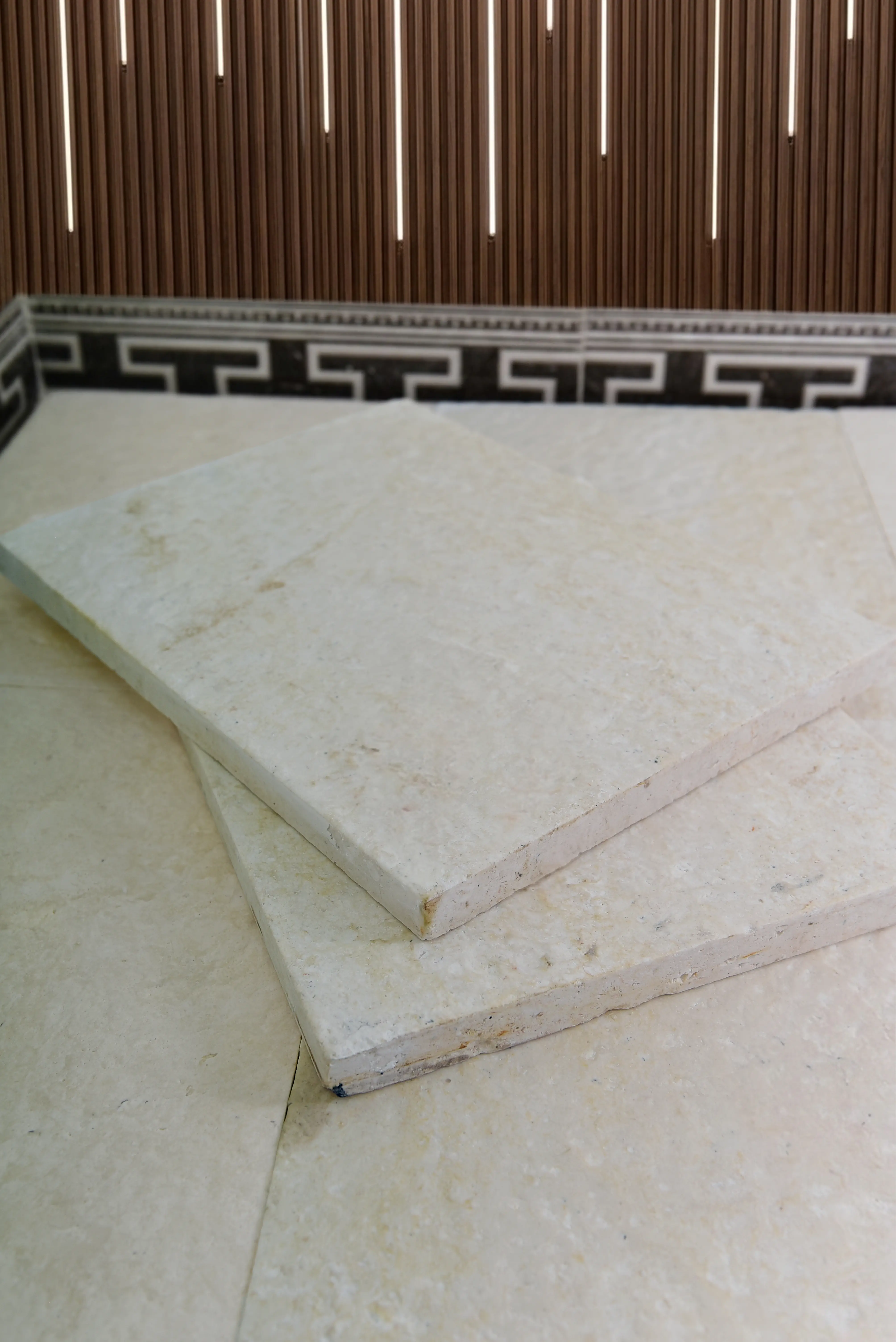
Choosing the Right Sealer for White Travertine Tile Flooring
Not all sealers perform equally on white stone, and this is where a lot of maintenance programs go wrong early. Solvent-based impregnating sealers penetrate more deeply and cure faster than water-based alternatives, but they require better ventilation and off-gassing time before foot traffic resumes. Water-based penetrating sealers are lower-VOC, easier to apply in occupied spaces, and have improved significantly in recent years — though they may require a second coat on highly porous unfilled travertine.
For white travertine tile flooring specifically, you want a sealer with an oleophobic component — one that repels both water and oils. Light-colored travertine is unforgiving with cooking oils, greasy footprints, and lotion residue. A sealer rated for both hydrophobic and oleophobic protection gives your floor the coverage it actually needs for kitchen or entry hall applications. Check the product data sheet, not just the label claims.
- Solvent-based impregnators: deeper penetration, faster cure, best for high-porosity unfilled travertine
- Water-based impregnators: lower VOC, easier indoor application, may need a second coat
- Oleophobic formulas: essential for kitchens, dining areas, and entry points with foot traffic
- Topical coatings: generally avoid on travertine floors — they trap moisture and peel under traffic
- Color-enhancing sealers: an option if you want to deepen the veining without changing the finish category
One practical note: always test your sealer on an off-cut or a hidden tile before committing to the full floor. Sealers interact with surface finish and stone density in ways that are hard to predict from the label alone. A 15-minute test saves you from discovering an unintended sheen change across a full room.
Application Best Practices That Field Experience Confirms
Clean the floor thoroughly before applying any sealer — residual grout haze, construction dust, or cleaning product residue will lock under the sealer and become permanently visible on a white travertine floor. Use a stone-safe pH-neutral cleaner, allow full drying time, and work in thin, even coats rather than flooding the surface. Flooding causes the excess sealer to pool in the travertine’s natural voids and dries milky, which is a frustrating outcome on light stone.
Timing matters more than most guides acknowledge here. Temperature and humidity during application directly affect how a sealer penetrates and cures. The ideal application window is between 55°F and 85°F with moderate humidity. In cooler months, ensure the floor and room have reached at least 55°F for several hours before you begin — cold stone causes the sealer to sit on the surface rather than penetrate, and it won’t bond correctly. In warmer periods, avoid applying in direct sunlight or in rooms that have been heating up since morning; the stone surface can reach temperatures that cause flash-cure, where the sealer skins over before it has time to absorb properly.
For large floor areas, plan your sealing in sections that allow you to maintain a wet edge and avoid lap marks. Work from the far corner toward the door, keep a microfiber applicator pad rather than a brush for even coverage, and buff off any excess after the dwell time specified on the product sheet — typically 5 to 15 minutes. Don’t let excess sealer sit overnight.
Routine Cleaning Protocol for a White Travertine Floor
Daily and weekly cleaning of white travertine flooring comes down to one non-negotiable rule: pH neutrality. Travertine is calcium carbonate. Acidic cleaners — including vinegar, citrus-based products, and many grout cleaners — etch the surface on contact, dulling the finish and creating micro-damage that accelerates staining. This is not theoretical; even diluted vinegar will visibly damage a honed or polished travertine floor within a few cleaning cycles.
Your cleaning routine should follow this sequence:
- Dry dust-mop or vacuum daily in high-traffic areas to remove grit that scratches the surface underfoot
- Damp-mop weekly with a pH-neutral stone cleaner diluted per the manufacturer’s instructions
- Avoid steam mops — the pressurized steam drives moisture into unfilled voids and can loosen grout over time
- Blot spills immediately rather than wiping — wiping spreads the liquid into more pores
- Use entrance mats at exterior doors to intercept sand and grit before it reaches the stone
For deeper periodic cleaning — quarterly or semi-annually depending on traffic — a stone-safe deep-clean formula applied with a soft-bristle machine or by hand will lift embedded soils without stripping your sealer. These products are formulated to clean below the sealer layer without dissolving the impregnating matrix, unlike general-purpose floor cleaners that compromise sealer life with every use.
According to NSI travertine care and maintenance standards, improper chemical use accounts for a significant portion of premature travertine surface deterioration in residential and commercial flooring — a fact that underscores why product selection matters as much as technique.
Addressing Stains and Etching on Ice White Travertine
Ice white travertine surfaces show staining and etching more visibly than darker stone — that’s the honest trade-off of choosing light stone. Knowing how to respond quickly and correctly is what separates a floor that ages gracefully from one that accumulates permanent damage over years of use.
Etching and staining are two different problems that require different responses. An etch is a chemical reaction — acid has dissolved part of the calcium carbonate surface, leaving a dull, slightly rough patch. A stain is a substance that has absorbed into the pore structure and discolored the stone from within. You can’t remove an etch with cleaning products; you need to restore the surface mechanically with a marble polishing powder or, for significant damage, professional re-honing. A stain, on the other hand, responds to a poultice — a paste of an absorbent powder mixed with a solvent appropriate to the stain type, applied and left to draw the contamination out as it dries.
- Oil-based stains (cooking oil, cosmetics): poultice with baking soda and acetone or a commercial oil poultice
- Organic stains (coffee, wine, leaf tannins): poultice with hydrogen peroxide and a neutral absorbent powder
- Rust stains: commercial rust remover formulated for stone — never standard household rust products
- Etch marks: polishing powder for minor surface dullness; professional re-honing for deeper damage
For ongoing protection on Citadel Stone travertine floor tile, a properly maintained sealer schedule dramatically reduces how far organic stains penetrate — making poultice treatments more effective because the contamination is shallower. That’s why sealing and cleaning work as a system, not as separate tasks.
Seasonal Timing and Scheduling Your Sealing Program
The best maintenance programs build sealing into a specific seasonal window rather than reacting to obvious wear. For interior floors, temperature stability is the main variable — you’re looking for the period when your HVAC system maintains a consistent 65°F to 75°F without large swings between morning and evening. That window typically arrives in mid-spring and early fall in most climates, which makes those the natural twice-yearly checkpoints for assessment and resealing if the water-bead test indicates it’s needed.
For new installations, the post-installation sealing window matters enormously. Grout and mortar cure times need to be fully respected — applying sealer too early traps residual alkalinity from cement-based setting materials, and that can cause a haze that’s very difficult to remove from light travertine. Most installations require a minimum 72-hour cure window for the setting bed and grout before sealing, and longer cure times in cooler ambient conditions. In moderate weather, a 5-7 day wait before the first sealer application is a reasonable standard that avoids this issue entirely.
Morning application — before the floor has warmed up significantly from foot traffic or solar exposure through windows — generally produces the most consistent sealer absorption on interior floors. The stone is at a stable temperature, the sealer has time to penetrate fully before the room warms, and you can ventilate effectively as temperatures rise through the day. Scheduling sealing work for early in the day reduces the likelihood of uneven cure across a large floor area.
ASTM standards for travertine dimension stone, including ASTM C1527 travertine dimension stone specifications, provide the underlying physical property benchmarks that inform how products like sealers interact with stone — worth reviewing when specifying maintenance programs for commercial applications.
Grout Joint Maintenance on White Travertine Floors
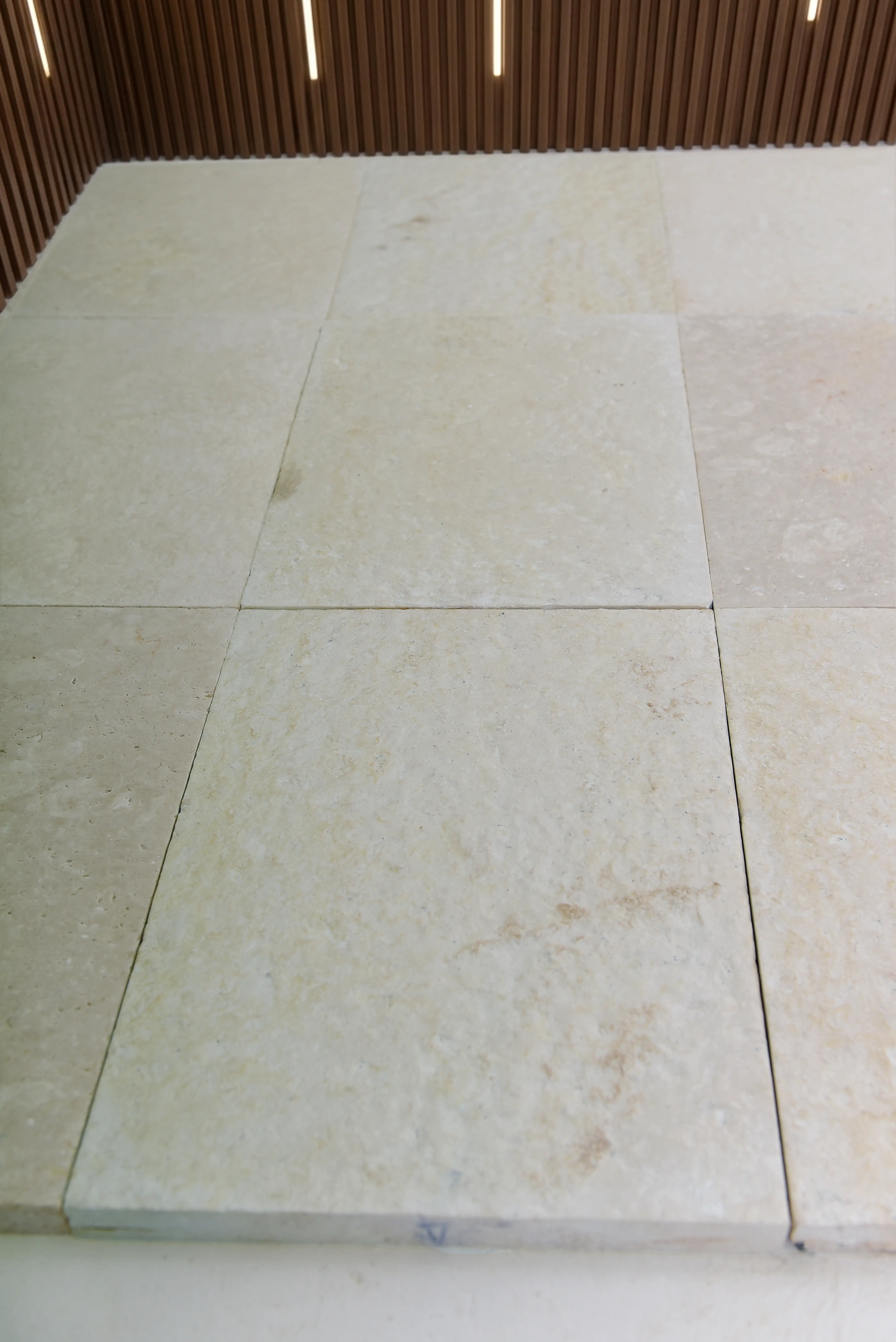
Grout joints on a white travertine floor require their own maintenance track. Grout is more porous than most travertine finishes, and in light-colored floors, darkened or stained grout lines are immediately visible and degrade the overall appearance significantly. Sealing the grout at the same time you seal the stone is standard practice, but grout sealers differ from stone sealers — some products are appropriate for both, while others are optimized for one material type. Check compatibility before applying a single product across both surfaces.
White or light-grey grout in a white travertine tile flooring installation needs periodic deep cleaning with an oxygen-based grout cleaner applied with a stiff-bristle grout brush. This treatment lifts embedded soils without the acid content that would damage the travertine on either side of the joint. For grout that has discolored beyond cleaning — which typically happens after 5 to 8 years of heavy use — grout colorant or professional regrouting are the realistic options. Colorant is the faster and less invasive route for cosmetic restoration; regrouting is the correct specification when structural integrity of the joint has degraded.
Ordering, Warehouse Stock, and Project Logistics
Your maintenance plan also needs to account for material continuity. Travertine varies lot to lot and quarry batch to batch — the ice white travertine in your floor today may not be an exact color match to material pulled from warehouse stock two years from now. For repairs, replacements, or extensions to an existing white travertine floor, keeping a small reserve of tiles from your original order is one of the most practical steps you can take at the time of installation. Even 5-10% overage stored flat in a dry location gives you repair material that matches perfectly.
Citadel Stone maintains warehouse inventory that is regularly refreshed from direct quarry relationships, which shortens lead times considerably compared to projects that source through multiple distribution layers. Confirming current stock levels before scheduling a repair or extension project ensures your timeline doesn’t stall waiting on material. Truck delivery coordination for tile orders also benefits from early scheduling — flagging access constraints at the delivery address during order placement avoids day-of complications that delay project starts.
The Tile Council of North America’s guidance on TCNA natural stone installation standards provides a useful reference for specifying setting materials and joint widths for travertine tile flooring in both new installations and repairs — particularly relevant when matching an existing floor where joint consistency matters visually.
Maintaining Your White Travertine Floor: The Complete Action Plan
Protecting a white travertine floor over the long term is straightforward once you have the system in place. The core variables — sealer type, resealing frequency, cleaning chemistry, and stain response protocol — interact with each other, and getting one wrong undermines the others. Your floor performs well when all four are aligned with the material’s actual properties rather than general-purpose cleaning habits carried over from ceramic or porcelain tile experience.
Run the water-bead test annually at minimum, reseal proactively rather than reactively, maintain strict pH-neutral cleaning chemistry year-round, and respond to stains with the correct poultice approach rather than scrubbing. Build your resealing schedule around temperature-stable seasonal windows — mid-spring and early fall typically offer the most consistent conditions for proper penetration and cure. These aren’t complicated steps, but they require consistency. A white travertine floor maintained correctly holds its appearance for decades; one maintained inconsistently shows its age within a few years.
Beyond interior floor applications, if your project extends to outdoor hardscape, white travertine pool deck ideas explores how the same material performs in a distinctly different exposure context — worth reviewing if your scope includes exterior installations alongside interior white travertine flooring. Sourced direct from quarries in Turkey, the Mediterranean, and beyond, Citadel Stone’s white travertine floor tiles hold color under routine cleaning.
Related reading: light travertine floor design ideas · white pool tile options · pumice vs porcelain pool tile.