

The scale and cleaning comparison between pumice vs porcelain pool tile comes down to a fundamental materials science difference — one is a volcanic mineral with an open, porous cellular structure, and the other is a fired ceramic product engineered to near-zero absorption. That distinction drives every practical outcome you’ll face at the waterline: how scale adheres, how aggressively you need to clean, and how the tile surface holds up after years of chemical cycling. Understanding why each material behaves the way it does lets you specify with confidence rather than discover problems mid-season.
What Makes Pumice Stone Pool Tile Different
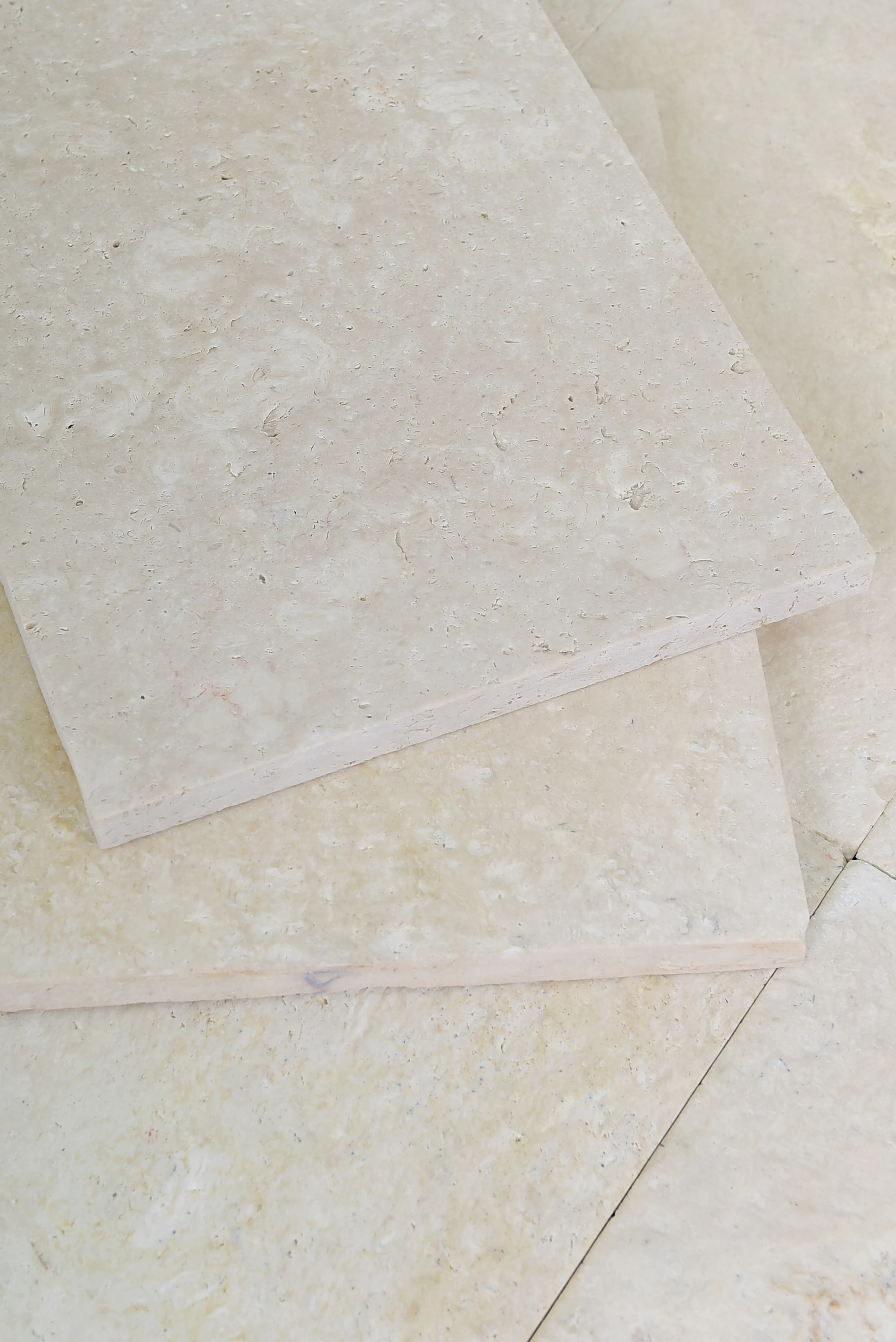
Pumice stone pool tile carries a cellular, vesicular structure formed when rapidly cooling volcanic lava traps gas bubbles inside the matrix. That structure produces a surface that’s genuinely porous — water, minerals, and pool chemicals don’t just sit on top, they penetrate the upper layer. For pool applications, this creates a meaningful trade-off: the texture provides natural grip and a warm, organic aesthetic, but the open pores also give calcium carbonate and silica scale a physical anchor point that flat, dense surfaces simply don’t offer.
The absorption rate for natural pumice used in pool environments typically ranges between 15 and 30 percent by weight, depending on the specific volcanic source and any surface treatment applied. That figure matters because it directly predicts how deeply scale minerals can migrate into the material — and how much mechanical effort you’ll need to remove them without damaging the surface finish. You’ll also find that chlorine and pH-adjusting chemicals gradually work into the pore network over repeated cycles, which affects long-term surface color stability more than it does with non-porous alternatives.
Porcelain Pool Tile: The Engineering Case
Porcelain pool tile is fired at temperatures above 2,200°F under high pressure, producing a vitrified body with water absorption below 0.5 percent — the benchmark defined by industry tile standards. At that absorption level, calcium and magnesium scale can’t penetrate the tile body. Deposits form as a surface film only, which means a pH-appropriate tile cleaner and a soft brush typically remove them in a single pass without the scrubbing cycles that porous surfaces demand.
The mechanical performance data for porcelain is equally compelling. Modulus of rupture values commonly exceed 450 psi, and breaking strength for standard pool-format tiles runs well above 250 pounds in most certified product lines. Those numbers become relevant not just for routine loading but for the mechanical stress that wind-driven debris, storm-borne impact, and freeze-thaw cycling impose on pool coping and waterline tile during severe weather events. Porcelain’s dense matrix resists micro-cracking under repeated impact in a way that natural pumice stone pool tile, with its inherent void structure, simply cannot match over a multi-decade service life.
According to ASTM natural stone tile absorption strength and slip resistance testing, the distinction between vitrified and semi-vitrified tile surfaces is a primary determinant of long-term performance in wet, chemically active environments — a classification system that directly separates porcelain pool tile from natural volcanic stone alternatives.
Scale Formation: How Each Material Responds
Scale at the waterline is a calcium carbonate precipitation problem, not a tile selection problem — but the tile you choose determines how aggressively scale deposits adhere and how difficult removal becomes. On pumice stone pool tile, the porous surface acts almost like a mechanical key. Calcium ions migrate into shallow pores as water evaporates, crystallize, and lock onto the surface structure. You end up with scale that has genuine mechanical bond strength, not just surface adhesion.
- Pumice surfaces with pore diameters above 0.5 mm allow scale crystal growth inside the pore — removal requires either acid etching or sustained mechanical abrasion, both of which gradually degrade the surface texture
- Porcelain’s vitrified face prevents sub-surface crystallization entirely — scale remains a surface deposit that breaks the chemical bond with mild acidic cleaners
- High-calcium pool water (above 400 ppm) accelerates scale formation on both surfaces, but the remediation effort diverges sharply — porcelain responds to a single cleaning cycle, pumice typically requires multiple passes
- Saltwater pool systems produce chloride-based mineral deposits that interact differently with porous volcanic substrates versus dense ceramic, often discoloring pumice at the pore margins over two to three seasons
Your pool’s calcium hardness and total dissolved solids directly predict which material will cost you more in maintenance labor over a five-year horizon. If your source water runs above 300 ppm calcium hardness, the practical case for porcelain over pumice stone pool tile strengthens considerably.
Cleaning Protocols: Practical Differences
The cleaning protocol difference between these two materials is less about chemistry and more about surface tolerance. Porcelain accepts a wider range of tile cleaners — including dilute muriatic acid solutions at 1:10 ratios — without risk of surface etching, because there’s no exposed calcium carbonate in the tile body itself. You can apply a pool tile cleaning compound, let it dwell for 5 to 10 minutes, and rinse without concern for finish degradation.
Pumice requires a more cautious approach. Because the volcanic matrix contains calcium-bearing minerals within the stone itself, aggressive acid exposure doesn’t just dissolve the scale — it also begins attacking the tile body. Acid concentration above 5 percent on natural pumice tile will visibly roughen the surface within a single treatment cycle, which then accelerates future scale adhesion by increasing surface porosity. The practical ceiling for pumice cleaning chemistry is a dilute oxalic acid or citric acid formulation, applied with a soft nylon brush, rinsed thoroughly, and repeated as needed rather than intensified.
For the install pool coping stage, this matters as much as post-installation maintenance. Grout joints on pumice tile installations should be specified with a polymer-modified, water-resistant grout at minimum — ideally an epoxy grout at the waterline — because the porous tile absorbs moisture laterally into the joint interface if standard cement grout is used. That moisture pathway also carries scale-forming minerals directly into the joint, accelerating joint deterioration from the inside out. When you install pool coping with pumice tile, grout selection is therefore not a secondary detail but a primary performance variable.
Flagstone Pool Coping as a Comparison Benchmark
Flagstone pool coping occupies a useful middle ground when you’re evaluating natural versus manufactured tile at the pool edge. Natural flagstone — typically limestone, travertine, or bluestone — shares some absorption characteristics with pumice but generally at lower rates, usually 3 to 8 percent by weight depending on the stone type and finish. That comparison benchmark helps clarify where pumice sits on the performance spectrum: significantly more porous than quality flagstone pool coping, and dramatically more porous than porcelain.
The PHTA pool deck stone and coping safety standards address both slip resistance and material durability at the pool edge, and those guidelines apply equally to natural stone coping and manufactured tile. Whether you’re specifying flagstone pool coping or porcelain tile, the coefficient of friction requirement for wet pool deck surfaces is consistent — and both materials can meet it when the correct finish is specified. Pumice, with its inherently textured surface, exceeds static CoF minimums easily, but the trade-off in cleaning complexity deserves weight in your specification decision.
You’ll find our porcelain pool coping line referenced at our porcelain pool coping line, which provides a direct comparison point for projects weighing the density and absorption characteristics of manufactured versus natural volcanic tile at the waterline.
Durability Under Storm and Impact Stress
Severe weather introduces mechanical stresses that material selection should account for explicitly. Wind-driven debris at pool coping height — branches, furniture, landscaping aggregate carried in storm events — produces point-load impacts on tile edges and faces. Hail in particular delivers repeated impact loads that test tile body integrity in ways routine use doesn’t. For pumice stone pool tile, the cellular void structure that creates its characteristic texture also creates internal stress concentration points under sharp impact. A cellular volcanic tile absorbs the impact energy partially — but micro-fractures initiate at void walls and propagate with repeated loading.
- Porcelain tile’s dense, homogeneous body distributes impact energy more uniformly, with higher resistance to edge chipping under localized loads
- Pumice tile at exposed coping nosing positions is particularly vulnerable — the overhanging nosing edge concentrates wind-driven rain impact and debris strike loads directly on the most vulnerable tile geometry
- Joint integrity under wind-driven rain depends on both grout type and the tile’s own water absorption — porcelain’s near-zero absorption means joints carry the full moisture management responsibility, making epoxy grout the correct specification
- In freeze-thaw regions, pumice tile’s higher absorption creates significantly greater risk of spalling and face delamination during repeated freeze cycles — water trapped in the pore network expands 9 percent by volume on freezing
Edge restraint at the coping-to-deck transition should be detailed with a compressible backer rod and flexible sealant regardless of tile type — but this matters more with pumice installations because the porous tile transmits any joint movement directly to scale deposits at the pore surface, accelerating disbonding at the waterline as thermal cycling compounds the mechanical stress.
Installation Requirements and Substrate Prep
Your installation substrate specification changes meaningfully between these two tile types. Porcelain pool tile requires a very flat, rigid substrate — flatness tolerances of 1/8 inch in 10 feet are standard, because porcelain’s rigidity means any substrate flex transmits directly to the tile body and initiates cracking from the back face. Modified thin-set mortar rated for porcelain is mandatory; standard unmodified mortars lack the bond strength and flexibility the material demands at a waterline location subject to thermal and hydraulic cycling.
Pumice tile is more forgiving of minor substrate variation because the material itself has some capacity to absorb minor flex — but that tolerance doesn’t extend to structural movement. Both tile types require expansion joints at 8 to 10-foot intervals at pool coping positions, and neither tolerates a substrate with active efflorescence or residual moisture from a freshly poured bond beam. At Citadel Stone, we recommend waiting a minimum of 28 days after bond beam pour before tile installation — thermal and shrinkage movement in fresh concrete during that window is enough to open joints in newly set tile regardless of adhesive quality.
The Tile Council of North America installation standards provide the definitive specification framework for pool tile setting — including mortar type selection, expansion joint placement, and grout compatibility for both natural stone and vitrified porcelain applications. These guidelines are the baseline, not the ceiling, for pool coping tile specifications.
Ordering, Logistics, and Lead Time Planning
Natural pumice stone pool tile is a specialty volcanic product — sourcing runs through a narrower supply chain than standard porcelain, and warehouse stock levels fluctuate more significantly with production cycles from primary quarry regions. You should verify current warehouse inventory before finalizing your project timeline, particularly for larger installations where mid-project sourcing interruptions can delay tile setting by several weeks. For porcelain pool tile, domestic distribution networks are broader, and warehouse replenishment cycles are typically faster.
Citadel Stone maintains nationwide warehouse inventory across both natural stone pool coping and porcelain pool tile product lines, which typically reduces lead times to one to two weeks compared to the six-to-eight-week import cycle that specialty volcanic tile often requires when sourced through smaller distributors. For projects with firm installation windows, confirming truck delivery scheduling at least three weeks before your tile-setting date gives adequate buffer for any logistics adjustment — particularly for full-pallet coping orders where truck access to the pool deck area needs pre-coordination with the site.
Expert Summary
The pumice vs porcelain pool tile decision resolves cleanly once you weigh scale adhesion, cleaning tolerance, and long-term durability against each other in your specific pool chemistry context. Pumice delivers a natural volcanic texture with genuine aesthetic character, but its porous structure demands stricter water chemistry management, gentler cleaning protocols, and more frequent maintenance cycles than most pool owners anticipate at specification time. Porcelain’s vitrified, near-zero-absorption body eliminates the sub-surface scale problem entirely and handles the mechanical stress of storm events, freeze-thaw cycling, and chemical exposure with considerably more predictable long-term performance.
For pools in freeze-thaw regions or areas subject to seasonal storm events, the structural argument for porcelain over pumice at the waterline and coping position is compelling — the void structure that gives pumice its visual character is the same structure that concentrates thermal and impact stress in ways that shorten service life. Your grout selection, joint detailing, and substrate flatness requirements remain critical regardless of which tile you choose, and those specifications should be locked in before material orders are placed. As you finalize your pool tile selection, white pool tile options for a bright finish covers a range of materials and finishes worth reviewing alongside your coping specification. Porcelain pool coping from Citadel Stone offers a dense, low-absorption surface that generally simplifies waterline cleaning over the long term.
Related reading: pool coping materials compared · pool coping types explained · pool tile samples.