













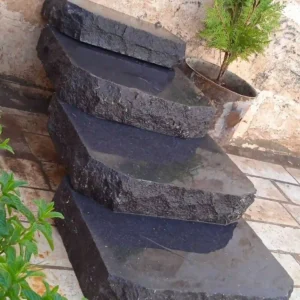
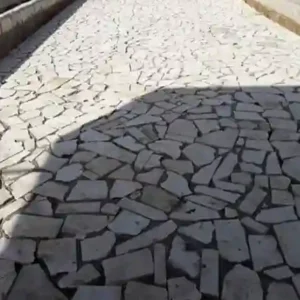

Absorption rate and bedding-plane orientation predict how natural limestone paving performs over twenty years far more reliably than any showroom photograph. Most specification problems trace back to two decisions made in the first hour of material selection — the density band you accepted, and the direction each slab was split relative to its natural bedding. Those two variables drive edge chipping, staining, slip behavior, and long-term flatness more than brand, finish, or price ever will. What follows is detail-level guidance drawn from crate inspections, lifted installations, and the jobs that still read correctly at year twenty-five.
Reading a Limestone Test Report Before You Read the Price
ASTM C568 sorts limestone into three density classes, and that classification narrows your options faster than any other filter you can apply. Type I low-density stone runs 110–135 lb/ft³ with compressive strength near 1,800 psi; Type II medium-density lands between 135 and 160 lb/ft³ at roughly 4,000 psi; Type III high-density exceeds 160 lb/ft³ and 8,000 psi. For exterior limestone paving carrying foot traffic and patio furniture, Type II is the practical floor — Type III where vehicles roll.
Absorption tells the longer story. Request the ASTM C97 result and treat 3% by weight as your decision line: below it, the stone sheds most surface water before it penetrates; above it, you are managing moisture for the life of the installation. Limestone is a calcite-dominant sedimentary rock whose pore structure depends on how the sediment settled and cemented, which is why the way limestone forms from marine sediment explains the wide performance gap between two stones that look nearly identical in a sample box.
- ASTM C97 absorption and bulk specific gravity — ask for the actual number, not just the class
- ASTM C170 compressive strength tested wet as well as dry, since wet values commonly run lower
- ASTM C880 flexural strength, which governs slab thickness far more than compression does
- ASTM C241 or C1353 abrasion resistance, with an Ha value of 10 or better for pedestrian surfaces
- ASTM C1646 freeze-thaw cycling data if your site sees more than a handful of frosts each winter
The bedding-plane detail nobody asks about
Sedimentary stone splits along the planes it was deposited in, and the sawyer’s choice of direction changes how a slab behaves underfoot. Material cut with the bedding parallel to the walking surface resists delamination and holds its arris under traffic; material cut across the bed shows more dramatic veining but can shed thin flakes at exposed edges after repeated wetting. You should ask which orientation a batch was produced in — careful producers know the answer immediately, and that alone tells you how the block was worked.
Finishes, Fossils, and the Look of Worn Limestone Paving
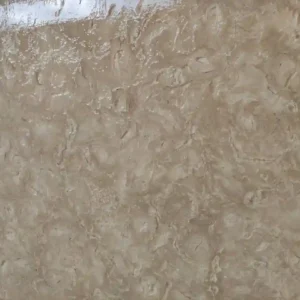
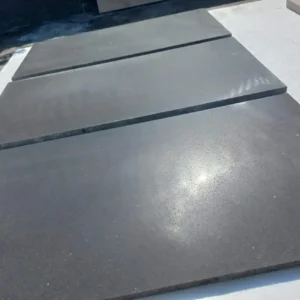
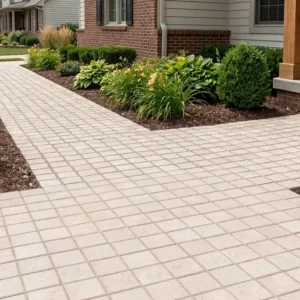
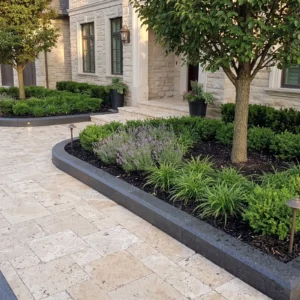
Finish selection changes the effective working surface, not merely the appearance. A honed face on a medium-density bed reads smooth and tight; the same block brushed and tumbled loses 1–2 mm of softer matrix and gains micro-texture that performs noticeably better when wet. The gently rounded, softened look of worn limestone paving comes from a controlled tumble followed by a wire-brush pass, and that same process removes the sharp arris that chips first in service.
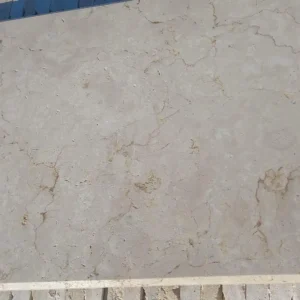
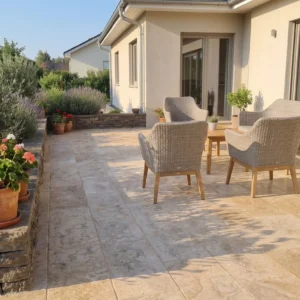
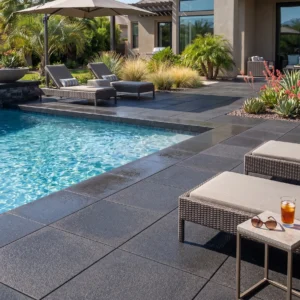
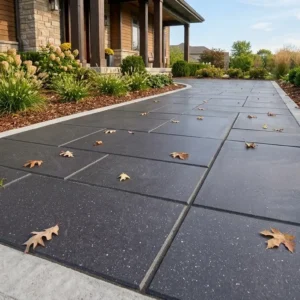
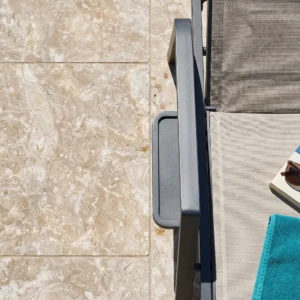
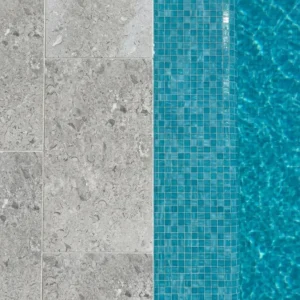
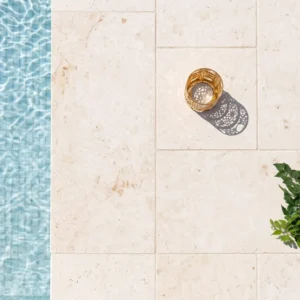
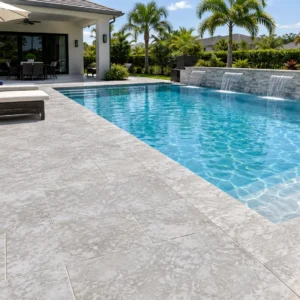
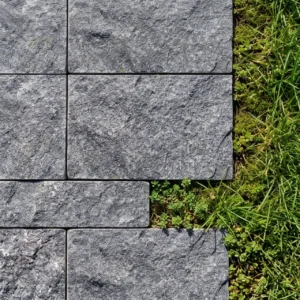
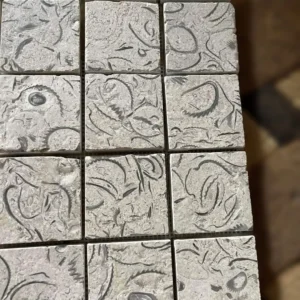
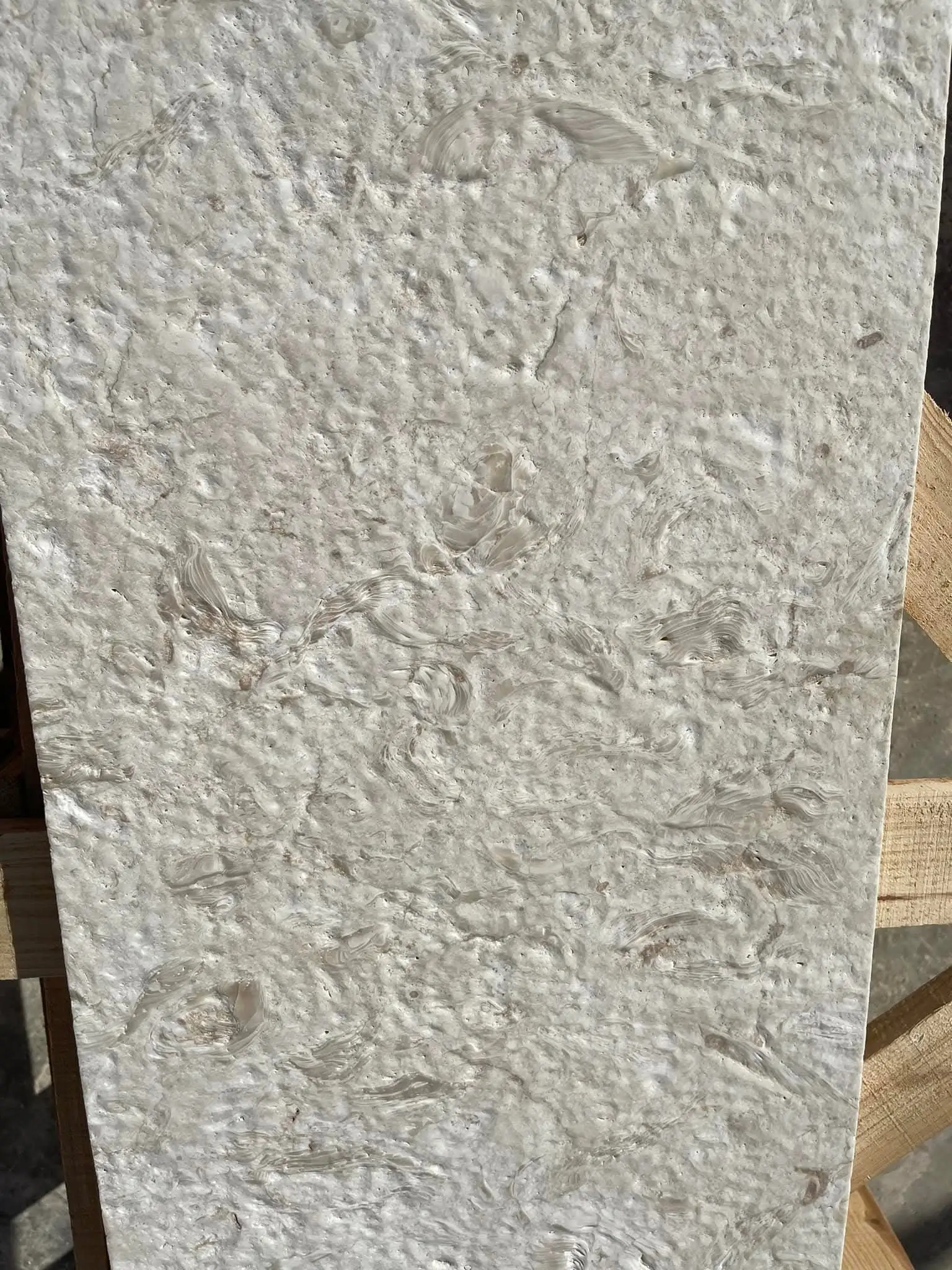
Color character is a geology question before it is a design question. Grey-toned beds weather toward a silvery, mottled patina that installers describe as worn grey limestone paving once a few seasons of rain and UV have evened the surface out. Cream and buff beds hold their warmth longer. Fossil limestone slabs — the ones showing crinoid stems, shell fragments, and bivalve cross-sections — come from shallow marine beds where organic material was never fully recrystallized, and those fossil pockets read as slightly softer spots you can feel with a fingernail.
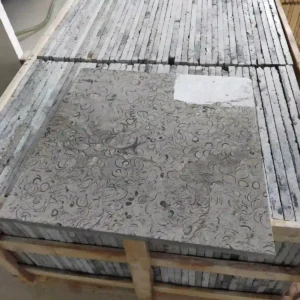
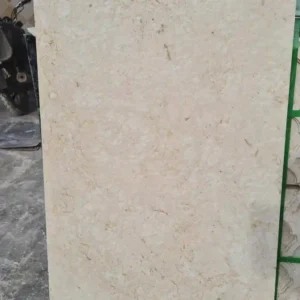
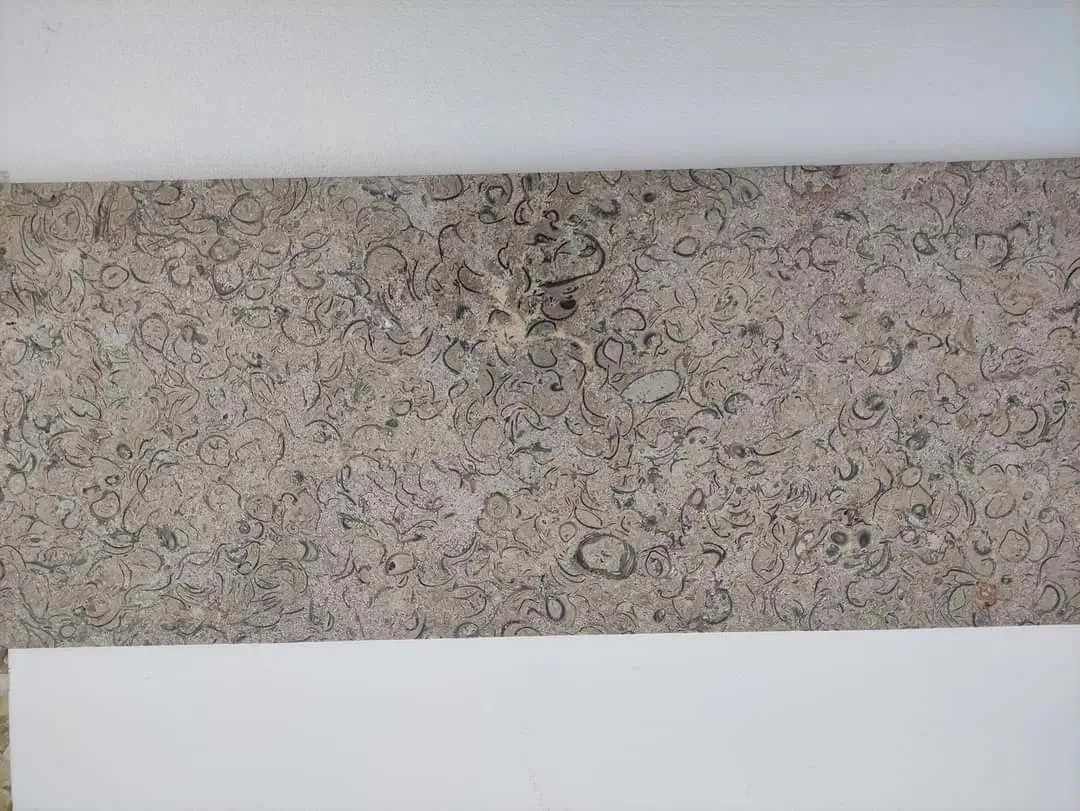
Trade names deserve translation before you specify from a photo. Limestone slates and limestone slate slabs describe riven, cleft-faced limestone finished to mimic the layered look of true slate, which is a metamorphic rock with entirely different cleavage behavior — the terms describe appearance, not geology. A seagrass limestone slab refers to warm beige stone carrying dark, ribbon-like fossilized markings that run in loose parallel bands. Both categories sit comfortably inside external limestone paving schemes, but their surface texture varies more crate to crate than a sawn honed product does.
- Sawn and honed — tightest tolerance, best for formal layouts with narrow joints
- Brushed or antiqued — softened surface with better wet traction than honed
- Tumbled — rounded edges and corners, forgiving of minor thickness variation
- Bush-hammered — aggressive texture for ramps and slopes, harder to clean
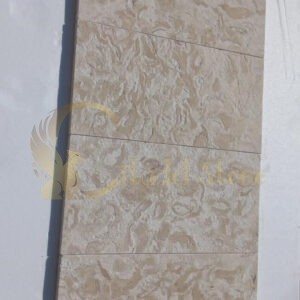
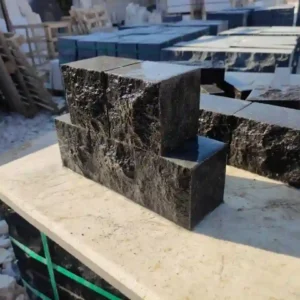
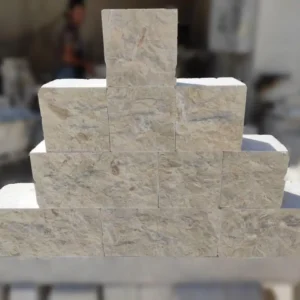
- Riven or cleft — the natural split face behind most riven-finished limestone on the market
Thickness, Format, and Sizing for Outdoor Limestone Slabs
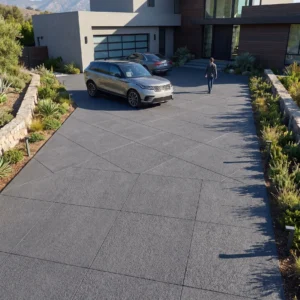
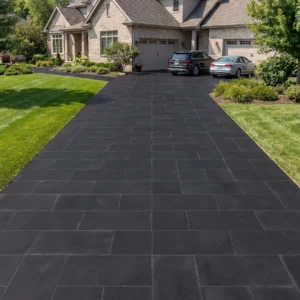
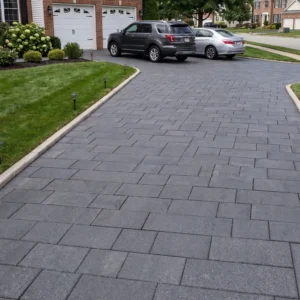
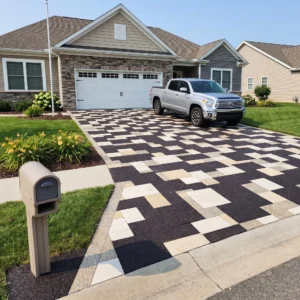
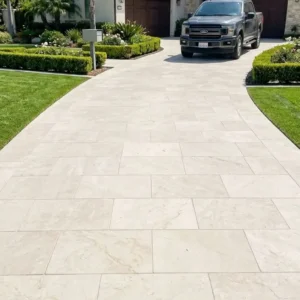
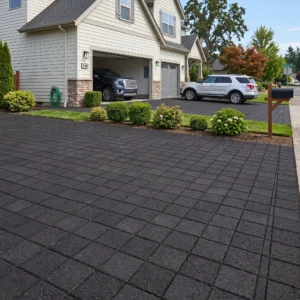
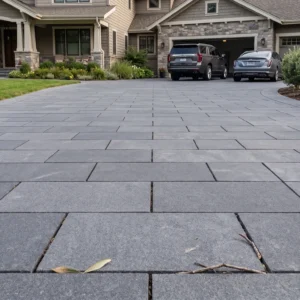
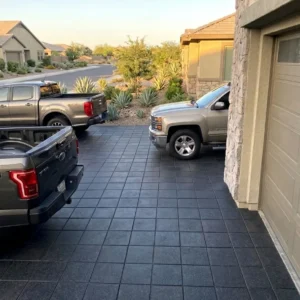
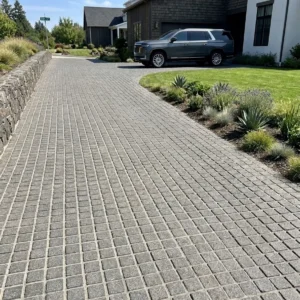
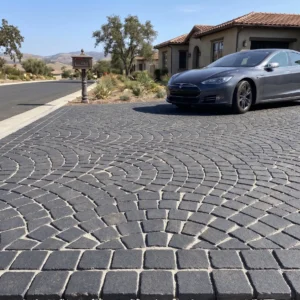
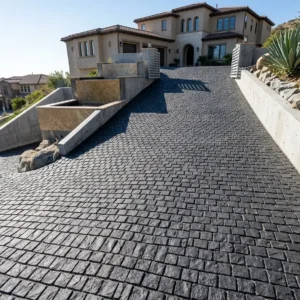
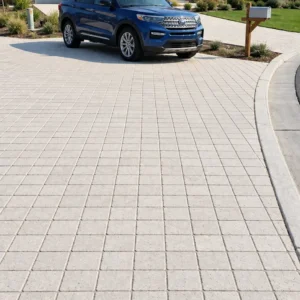
Thickness follows the load path, not the budget line. Twenty-millimeter material (roughly ¾ inch) belongs on a bonded mortar bed over a structural slab and nowhere else outdoors. Thirty-millimeter stock handles sand-set residential patios with joints under ⅜ inch. For driveways and any surface a vehicle touches, specify 50 mm (2 inch) natural limestone slabs at minimum, and step to 60–80 mm where delivery vans or an RV will park.
Format drives waste more than most estimates account for. Single-size modular layouts run 5–7% overage; random or opus patterns using four coordinated sizes run 12–15% because you cut more perimeter pieces and reject more corners. Outdoor limestone slabs in plank formats — 16 x 32 or 16 x 48 — look excellent on long axial runs but demand a flatter base, since any dip under a long slab telegraphs immediately.
- Standard modular sizes: 12×12, 16×16, 16×24, 24×24, and 24×36 inches
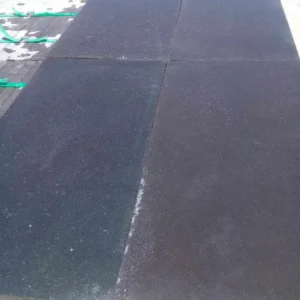
- Calibrated backs for mortar-set work; uncalibrated split-back material only for sand-set applications
- Nominal thickness tolerance of ±⅛ inch is realistic — anything tighter carries a premium
- Limestone slate slabs and riven products need a thicker bedding allowance for their variable back face
- Chamfered or sawn-clean edges depending on whether you want shadow lines in the joint
Citadel Stone holds warehouse inventory of natural limestone paving across these formats, and you can request sample tiles plus the batch test data before committing a specification. Choosing limestone for pavers on a mixed-use site often means running two thicknesses from the same bed — a 30 mm patio field and a 50 mm driveway apron — so the color reads continuous while the structure changes underneath.
Shade Range, Batch Blending, and Layout Sequencing
Natural limestone paving is not a manufactured product, and the single largest source of client complaints is a blotchy field caused by installing crate by crate. The fix costs nothing but discipline: open four to six crates simultaneously, dry-lay 100 square feet, and pull from all open crates in rotation so the shade range distributes evenly instead of banding.
Shade tolerance varies dramatically by stone type. Fossil limestone slabs carry the widest natural range because fossil density changes across the bed, while uniform buff beds hold tighter. A seagrass limestone slab batch can shift from pale beige to a distinctly grey-green cast depending on which quarry bench it came from, so photograph the approved sample and compare it against material before crates leave the warehouse. If you want a fuller breakdown of how tone families behave across different beds, the natural limestone colors guide walks through the practical differences that matter at specification stage. Getting shade expectations agreed in writing before delivery prevents the most expensive conversation on the job.
Weathering changes the equation over time. Freshly laid worn grey limestone paving often looks lighter than the sample for the first six to nine months, then darkens and unifies as fines settle into the surface texture. You should tell clients this up front rather than field the phone call in month two.
Base Preparation and Bedding Methods That Survive Ground Movement
Base failures account for most of the lifted, rocking, and cracked natural limestone paving in the field — the material itself is rarely the culprit. Excavate 8–10 inches below finished grade for pedestrian limestone external paving in stable soils, and 12–14 inches where clay subgrades or vehicular loads are involved. Compact the subgrade to 95% standard Proctor in lifts no thicker than 4 inches, and place a woven separation geotextile over any plastic clay to stop fines pumping upward into your aggregate.
- Dense-graded aggregate: 4–6 inches compacted for patios, 8–10 inches for driveways
- Open-graded permeable build-up: #57 stone base with a 1½–2 inch #8 setting bed and chip-filled joints
- Surface fall of 1.5–2% — roughly 3/16 to ¼ inch per foot — away from all structures
- Mortar-set work: a full 1 to 1¼ inch latex-modified bed with 95%+ coverage, never spot bonding
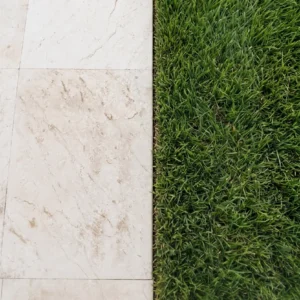
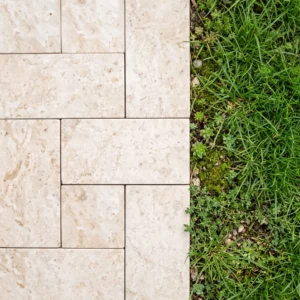
- Perimeter restraint on every sand-set edge, including where the field meets a lawn or planting bed
Specifying limestone for pavers over an existing concrete slab introduces a moisture question most crews skip. A solid slab traps water beneath the stone unless you install a drainage mat and weep the perimeter, and trapped moisture is what turns a sound installation into an efflorescence problem within two seasons. The same principle governs stone paving on roof decks and podium levels, where pedestal systems solve the drainage issue outright.
How Natural Limestone Paving Handles Freeze-Thaw and Daily Thermal Swings
Temperature range punishes paving far more than temperature peaks do. Limestone expands measurably with temperature, so a long uninterrupted run grows and shrinks between a January night and an August afternoon — size the joints from the thermal expansion value for the stone you actually specify. That movement has to go somewhere — into designed joints, or into cracked pointing and spalled edges.
Daily cycling deserves equal attention. High-desert and mountain sites routinely swing 35–45°F between afternoon and pre-dawn, and the stone surface itself swings wider than the air temperature does. The stone reaches thermal equilibrium slowly, which means a slab that absorbed water during an afternoon rain can still be saturated when the air drops below freezing eight hours later. Water expands about 9% on freezing, and damage begins once pore saturation passes roughly 91% — calcite’s solubility and pore behavior in water are documented in federal geological data on limestone, and that same chemistry explains why drainage detailing outranks stone hardness in freeze-thaw regions.
Joint detailing that absorbs the cycle
Sand-set joints handle thermal cycling almost automatically because the aggregate redistributes. Mortar joints do not, which is why external limestone paving in freeze-prone regions needs a deliberate movement strategy rather than a continuous rigid field.
- Place expansion joints every 12–16 feet in both directions on mortar-set fields, with backer rod and a flexible sealant
- Add a soft joint at every perimeter, column, step riser, and change of substrate
- Point with a mortar softer than the stone — Type N or Type O, never Type S, so the joint sacrifices before the arris does
- Keep polymeric sand joints at 92–95% fill and re-top them every three to four years
- Avoid chloride and ammonium-based de-icers entirely; clean sand or calcium magnesium acetate protects the surface
Request ASTM C1646 freeze-thaw cycling data with flexural strength measured before and after 300 cycles. A stone retaining more than 90% of its original flexural value after cycling will give you decades of service life; one that loses 25% will show edge deterioration inside a decade regardless of how well it was installed.
Slip Resistance, Sealing, and Maintenance Across Decades of Service
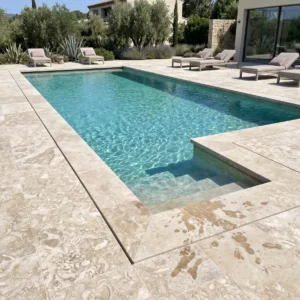
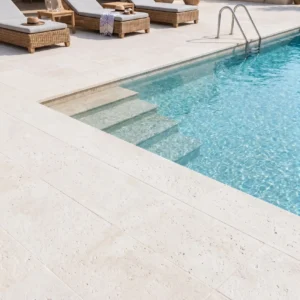
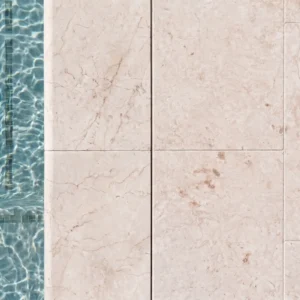
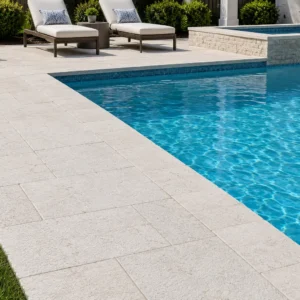
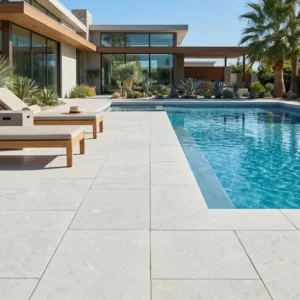
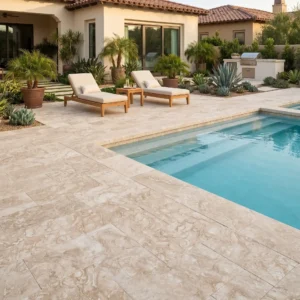
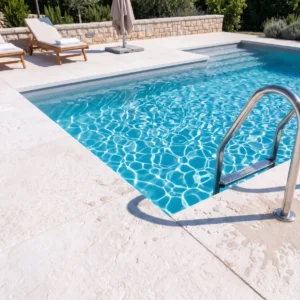
Wet traction is a specification input for natural limestone paving, not an afterthought. ANSI A326.3 sets a wet DCOF threshold of 0.42 for level interior surfaces, and exterior work — particularly around pools, at ramps, and on stair treads — should sit meaningfully above that. Brushed, tumbled, and bush-hammered finishes clear it comfortably; honed surfaces on dense beds often do not once a film of algae develops.
Sealing is where good exterior limestone paving gets ruined by the wrong product. Use a breathable penetrating impregnator based on silane or siloxane chemistry, which sits inside the pore structure and lets vapor escape. Film-forming topical coatings trap moisture below the surface, and in any region with a freeze cycle that trapped water lifts the coating and takes a thin layer of stone with it. Expect to reseal every three to five years on pedestrian areas and every two to three on drives; performance ranges published in industry limestone specifications line up with what crews report in the field.
- Clean with pH-neutral products only — calcite etches on contact with acidic cleaners and vinegar
- Never pressure-wash riven limestone slates above 1,500 psi; you will open the cleft face
- Treat efflorescence with dry brushing first and allow one full season before chemical intervention
- Reset any rocking unit immediately; a loose slab grinds its bed and accelerates edge damage
- Expect 30–50 years of service on well-drained outdoor limestone slabs with routine maintenance
Patina is not damage. The softened, slightly irregular surface of worn limestone paving is the reason many designers choose the material in the first place, and over-restoring it with aggressive cleaning removes exactly the character the client paid for.
Sourcing, Crating, and Delivery Planning for Limestone External Paving
Weight governs logistics on every limestone external paving delivery. Two-centimeter material runs about 10–11 lb per square foot, three-centimeter about 16 lb, and 2-inch natural limestone slabs roughly 26 lb per square foot. A standard crate lands between 2,800 and 3,500 lb, which puts it beyond most liftgate ratings and means your site needs forklift access or a boom delivery.
- Confirm truck access width of at least 12 feet plus overhead clearance before scheduling
- Identify a level staging area within reach of the flatbed truck — crates should not be double-handled
- Order 7–10% overage for modular layouts, 12–15% for opus, diagonal, or heavy-cut perimeters
- Inspect crate corners on arrival; transit damage concentrates at the top course
- Keep crates off bare soil and covered until installation to prevent ground-moisture staining
Lead time separates a smooth job from a stalled one. Stock formats shipping from domestic warehouse inventory typically move in 5–10 business days, while a direct import cycle from quarry to site runs 8–12 weeks with customs variability on top. At Citadel Stone, we inspect each incoming batch for thickness consistency, shade range, and edge condition before it enters warehouse stock, because the crate that fails inspection at the dock is far cheaper than the one that fails on a client’s patio. Material is sourced from established quarry partners including selected quarries from the Middle East and long-running European beds, and our technical team can advise on truck route constraints and custom cutting lead times during specification.
Order Natural Limestone Paving — Nationwide Delivery from Citadel Stone
Natural limestone paving ships from Citadel Stone in standard modular sizes from 12×12 through 24×36 inches, plus plank formats, in 20 mm, 30 mm, and 50 mm thicknesses across honed, brushed, tumbled, and riven finishes. You can request physical samples together with the ASTM test data for the specific batch in stock, which is the pairing you need for a defensible submittal. Specifiers weighing limestone for pavers against alternative surfacing can use that same data set to compare durability on numbers rather than marketing. Trade and wholesale enquiries are handled with volume pricing on full-truck quantities, and custom cutting — steps, copings, drainage channels, or non-standard slab sizes — is quoted with lead times confirmed up front. Stock items typically dispatch within 5–10 business days to sites nationwide.
Beyond patio and walkway work, vehicle-bearing surfaces bring their own thickness and base requirements — driveway stone options for vehicle loads covers that side of the specification in detail. Contact the team for a project quote, a sample set, or a specification review before you finalize quantities. Designers select Natural Limestone Paving from Citadel Stone — a sedimentary stone valued for its even, consistent tone — for paving and cladding projects.
See also: is limestone a natural stone.
Related guides: natural limestone pool surfaces · natural limestone cladding · natural limestone cleaning guide · stone veneer exterior · natural limestone landscape ideas · Natural Limestone Retaining Wall: Build Guide & Tips.