Slip Resistance Is the Specification That Defines Everything Else
Natural limestone pool surfaces demand a fundamentally different specification logic than interior stone — your starting point isn’t aesthetics or color tone, it’s the coefficient of wet friction that determines whether the deck is safe for barefoot traffic. A honed finish on dense limestone typically delivers a dynamic coefficient of friction (DCOF) in the 0.42–0.55 range when wet, which clears the minimum threshold established under ASTM slip resistance testing standards — but that number shifts based on surface texture, finish depth, and the presence of pool chemicals that can temporarily alter surface chemistry. You’ll want to confirm the finish specification against wet DCOF test data from the actual lot you’re ordering, not just the material category in general.
The finish decision also drives thermal performance. Tumbled and brushed limestone surfaces scatter direct solar radiation more effectively than polished or lightly honed equivalents — a detail that matters significantly for barefoot comfort on exposed pool decks in high-heat climates. Open-texture finishes moderate surface temperature by reducing the contact area between the stone and the foot, which translates directly to comfort during peak afternoon hours.
Thermal Mass, Surface Temperature, and the Barefoot Comfort Equation
Dense limestone carries significant thermal mass, which is a double-edged variable at the pool deck. During the first two to three hours after sunrise, the stone radiates stored overnight cool, keeping surface temperatures lower than the ambient air. By mid-afternoon on a cloudless day, that same thermal mass is working against you — the stone has absorbed heat steadily, and the surface temperature can run 15–22°F above air temperature depending on finish and color tone. Your finish and color selection together determine where that peak sits.
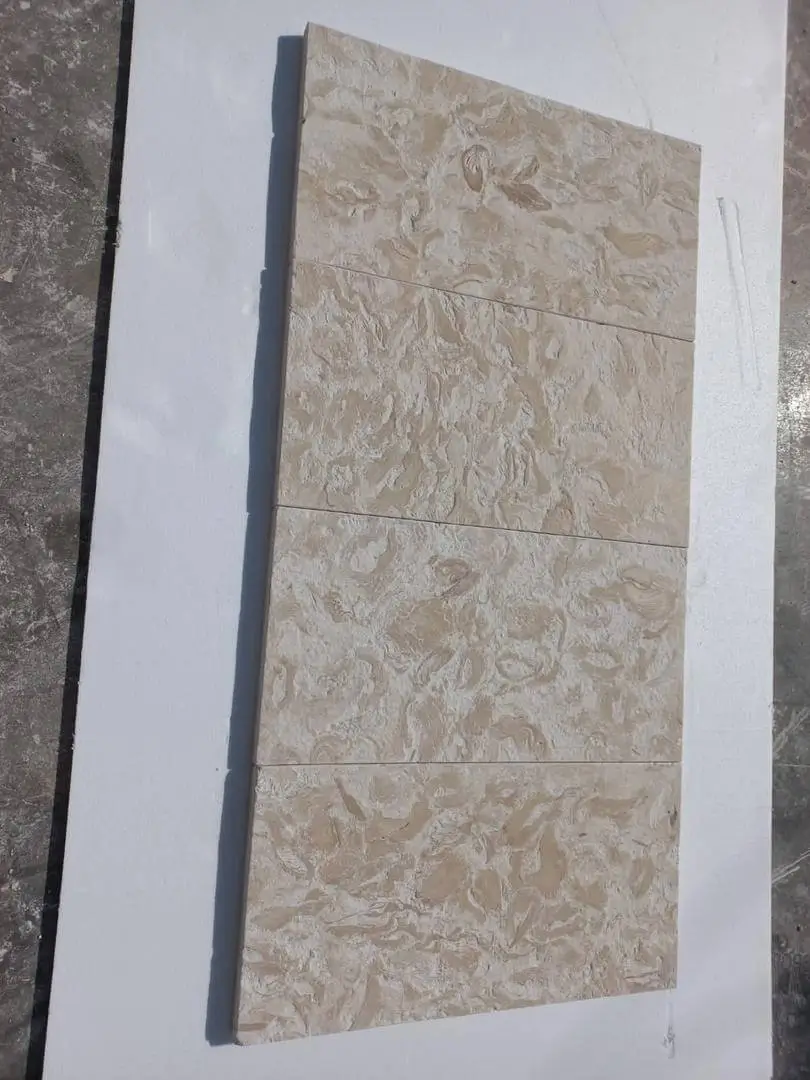
Lighter limestone tones — cream, buff, and pale grey — reflect a higher proportion of solar radiation and measurably reduce peak surface temperature compared to darker varieties. For pool decks in hot, dry climates, specifying a light-tone tumbled or brushed finish is one of the most effective thermal comfort decisions you can make without changing material category. Darker limestone in the same region requires either a textured finish to break up the contact plane or architectural shading to make barefoot use comfortable through the afternoon.
- Tumbled finish: maximizes texture depth, reduces contact area, best thermal comfort and slip resistance
- Brushed finish: moderate texture, good DCOF, slightly smoother underfoot than tumbled
- Honed finish: smooth, lower DCOF when wet — requires verified slip test data before pool deck specification
- Polished finish: not appropriate for exterior pool deck applications — insufficient wet DCOF for safety
Thickness, Base Depth, and Why Building Code Governs Material Specification
Here’s what often gets missed in residential pool deck projects: local building codes in many jurisdictions classify pool decks as “hardscape adjacent to a body of water” and impose specific base depth requirements, edge restraint standards, and sometimes minimum slab thickness. The International Building Code and its local amendments treat pool surrounds differently from standard patios — your project may require a compacted aggregate base to a minimum depth driven by frost line penetration in freeze-thaw regions, which in northern climates can push the base requirement to 12–18 inches below finished grade.
Natural limestone pool surfaces in 2-inch nominal thickness handle typical residential point loads competently when set over a properly compacted base. Thinner formats — 3/4 inch to 1.25 inch — are better suited to mortar-set installations over concrete substrates, where the structural work is done by the slab beneath. For unbound aggregate-set pool decks, you’ll need to match thickness to the base specification: 2-inch stone over 4–6 inches of compacted crusher run is a common proven combination, but verify your jurisdiction’s requirement before finalizing the spec. Some coastal and seismic zones impose additional lateral restraint requirements that affect edge coping and border treatment design.
- 2-inch nominal limestone: appropriate for aggregate-set pool decks with compacted base
- 3/4 to 1.25-inch limestone: mortar-set over concrete substrate only
- Frost line depth: drives minimum base depth in freeze-thaw regions — confirm local code requirement
- Edge restraint: IBC and local amendments may require mechanical restraint at pool deck perimeter
- Seismic zones: check local amendments for lateral connection and joint spacing requirements
At Citadel Stone, we recommend confirming the local building department’s pool deck specification requirements before ordering material — thickness and base depth requirements sometimes change the quantity calculation significantly, and it’s easier to adjust the spec before warehouse stock is committed to a project.
Water Absorption, Pool Chemistry, and Long-Term Surface Integrity
Limestone’s interaction with pool water chemistry is a specification variable that most project guides understate. Chlorinated pool water at standard pH levels (7.2–7.8) is mildly acidic, and over years of repeated contact — splash zones, drainage patterns, wet feet tracking water across the deck — this can affect the calcium carbonate matrix of softer limestone varieties. Denser, lower-absorption limestone is substantially more resistant to this gradual process than softer grades.
For natural limestone pool surfaces, target water absorption below 3% as a practical performance threshold for exterior pool applications. The Natural Stone Institute limestone technical guidance confirms that absorption rate is one of the primary predictors of long-term durability in wet exterior environments. Request absorption data from the specific lot you’re sourcing — not just a product category average — because limestone varies considerably between quarries and even between batches from the same source.
- Below 1.5% absorption: excellent pool environment performance, dense and highly resistant to water penetration
- 1.5–3.0% absorption: acceptable with proper sealing protocol and annual maintenance
- Above 3.0%: not recommended for pool deck applications without specific technical review
Sealing is not optional for limestone in pool environments — it’s a specification requirement. A penetrating silane-siloxane sealer applied to a clean, dry surface before installation and reapplied every 18–24 months provides the chemical barrier that keeps pool chemistry from working into the stone matrix. Your sealer spec should explicitly identify a product rated for calcium carbonate substrates and chlorinated water environments.
Joint Spacing, Drainage Geometry, and the Details That Prevent Callbacks
Drainage geometry is where most pool deck installations either succeed long-term or create persistent problems. Natural limestone pool surfaces need a consistent 1/8-inch to 3/16-inch joint to allow for thermal movement — limestone’s thermal expansion coefficient runs approximately 4.4–5.0 × 10⁻⁶ per °F, which means a 20-foot run of stone can expand roughly 3/16 inch between a cold morning and peak afternoon heat. Tighter joints than the spec allows will eventually push stones against each other at edges and coping interfaces, causing chipping and joint failure.
For Natural Limestone Paving at pool surrounds, the deck surface must slope away from the pool edge at a minimum of 1/8 inch per foot — this is both a drainage standard and a safety requirement in most jurisdictions, directing splash water away from the pool structure and toward perimeter drains or planted areas. Getting this right during base installation is critical; trying to correct slope after stone is set is expensive and often structurally impossible without resetting the entire field.
Joint fill selection also matters. Polymeric sand performs well in unbound pool deck applications and resists the water saturation that standard joint sand allows. For mortar-set installations over concrete, a flexible sanded grout rated for wet exterior use prevents the joint cracking that rigid grout develops as the substrate moves seasonally.
Specifying Limestone Across Pool Deck, Outdoor Kitchen, and Backsplash Applications
Pool deck projects increasingly extend into outdoor kitchen zones, and coordinating material specification across both environments requires deliberate planning. The natural stone backsplash behind an outdoor kitchen grill sees grease, heat, and moisture — a different exposure profile than pool splash — but selecting from the same limestone family keeps the visual language of the space unified and simplifies procurement. Choosing the right stone for outdoor kitchen vertical surfaces early in the design phase prevents the color-matching complications that arise when these elements are specified separately.
For natural stone for outdoor kitchen vertical applications, a polished or lightly honed finish is acceptable because vertical surfaces don’t carry the slip resistance requirements of the deck. You can use a slightly lower-density limestone for vertical applications and reserve the denser, textured material for the deck surface. Thickness for outdoor kitchen backsplash cladding typically runs 3/4 to 1 inch over a waterproof backer board, with a waterproof thinset mortar rated for exterior use.
- Pool deck: tumbled or brushed finish, 2-inch thickness minimum for aggregate set, dense limestone below 3% absorption
- Outdoor kitchen countertop: honed finish, minimum 1.25-inch thickness, penetrating sealer rated for food-adjacent surfaces
- Natural stone backsplash: polished or honed acceptable, 3/4 to 1-inch thickness, waterproof mortar bed
- Coping: thermal or flamed finish for grip, matching limestone family for visual continuity
Coordinating the same limestone family across deck, coping, outdoor kitchen counter, and natural stone backsplash surfaces is a straightforward logistical decision when you source from a supplier with consistent batch availability. Citadel Stone maintains warehouse inventory across multiple limestone formats, which means you can pull matching pool deck slabs, coping pieces, and backsplash tiles from compatible production batches without the color-shift risk that comes from sourcing from multiple vendors.
Coping Specification: Where Safety Standards and Aesthetics Converge
Pool coping is the most technically demanding element of the entire deck specification. It sits at the pool edge, takes concentrated foot traffic at the exact moment people are transitioning from wet to dry surfaces, and must satisfy both aesthetic expectations and safety code requirements simultaneously. The PHTA pool deck and coping safety standards address slip resistance, overhang geometry, and edge profile requirements that directly affect your limestone coping specification.
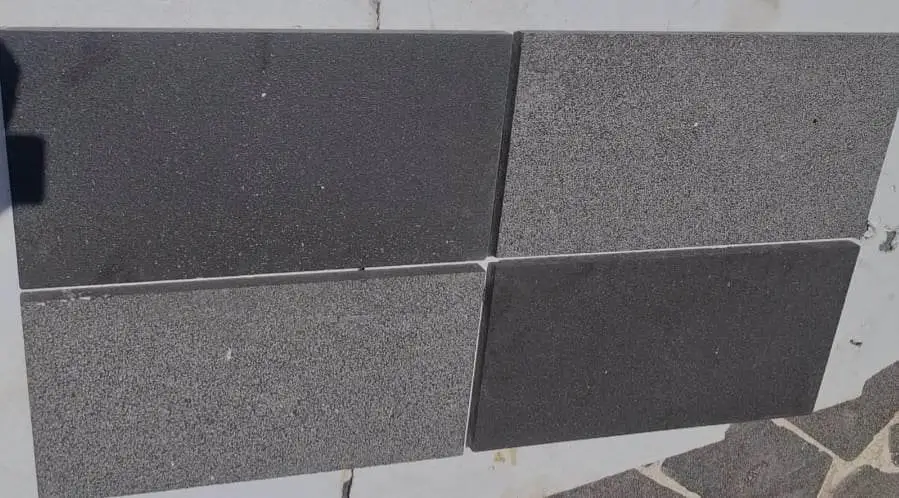
Thermal and flamed limestone coping finishes deliver the highest wet DCOF values — typically 0.55 and above — which provides a meaningful safety margin at the pool edge compared to brushed or honed alternatives. The cantilevered bull-nose or drop-face profile standard for pool coping requires a minimum 1.5-inch thickness to maintain structural integrity at the overhang without cracking under foot traffic. Thinner formats at this location are a structural liability, regardless of the compressive strength of the limestone itself.
- Thermal or flamed finish: highest DCOF, recommended for all pool coping
- Minimum 1.5-inch thickness at cantilevered coping edge
- Bull-nose or drop-face profile: standard pool edge geometry per PHTA guidance
- Mortar-set over bond beam: required for structural pool coping — unbound installation is not appropriate
- Match limestone family to deck field stone for color and visual continuity
Ordering, Batch Consistency, and Managing Lead Times
Natural limestone pool surfaces require careful batch planning at the ordering stage. Color variation between production batches is a normal characteristic of natural stone — the calcium carbonate matrix, fossil content, and iron mineral distribution shift between quarrying cycles even within the same deposit. For pool deck projects, all field stone, coping, and step material should be ordered from the same production batch whenever the project size allows.
Your ordering sequence should account for truck delivery access at the project site. Pool deck limestone arrives on pallets at 2,000–3,000 pounds each, and a full residential pool deck surround can require 4–6 pallet deliveries. If the site has restricted access, narrow gates, or soft ground adjacent to the delivery point, coordinate staging logistics before the truck arrives — not after. Confirm delivery site conditions with your contractor before placing the warehouse order so that material arrives sequenced correctly for installation flow.
Standard lead times for limestone pool deck material from warehouse stock run 1–2 weeks for commonly stocked formats. Custom-cut coping with specific profiles or non-standard dimensions adds 3–4 weeks to the production schedule. Build that timeline into your project schedule, particularly if the pool shell installation has a hard completion date that drives the deck specification deadline.
Getting Natural Limestone Pool Specifications Right
Natural limestone pool surfaces reward thorough specification work — the decisions made about finish, thickness, absorption rate, joint spacing, and drainage geometry determine whether the installation performs well for decades or develops problems within the first few seasons. Your slip resistance specification drives the finish selection; your local building code drives the base depth and edge restraint requirements; and your drainage geometry drives long-term structural performance. These three variables together are the technical core of any pool deck specification, and each one deserves specific data — not general category assumptions.
Sourcing material from a single supplier with consistent batch inventory is a practical way to manage color continuity across pool deck, coping, outdoor kitchen, and natural stone backsplash applications in a single project. As you explore limestone’s geological composition and how quarry origin affects material character, limestone rock formation and weathering provides useful background on how formation conditions shape the density and absorption characteristics that matter most in pool environments. Landscape designers frequently pair Citadel Stone limestone coping with matching outdoor kitchen surfaces to keep material tone consistent across the full entertaining zone.
Related reading: is limestone a natural stone · natural limestone colors guide.