

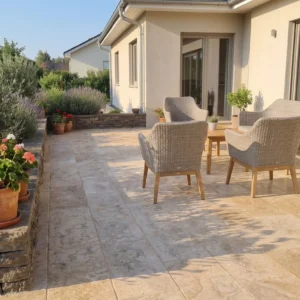
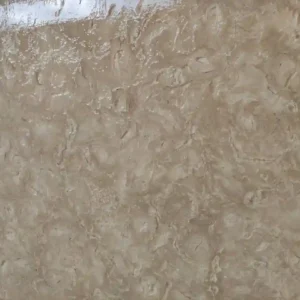
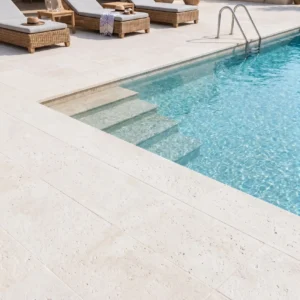

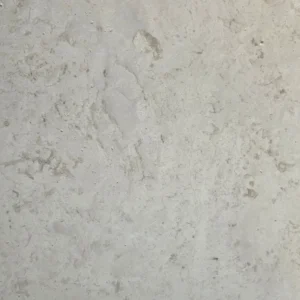
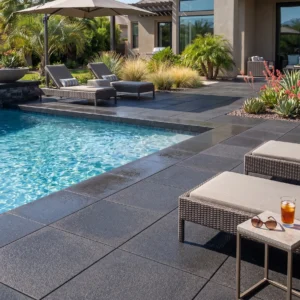
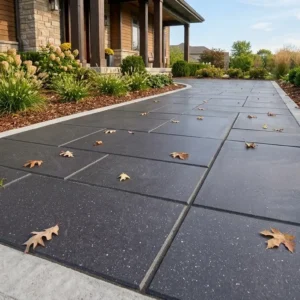
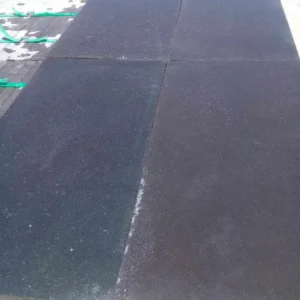
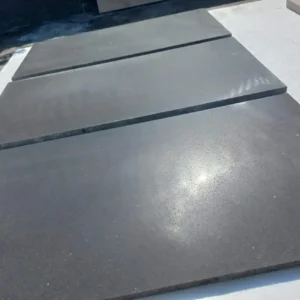
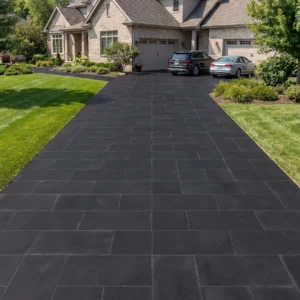
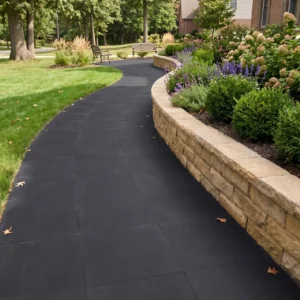
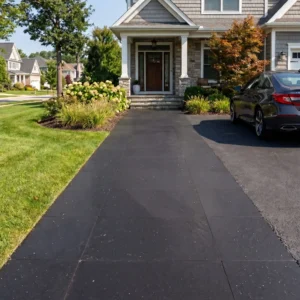
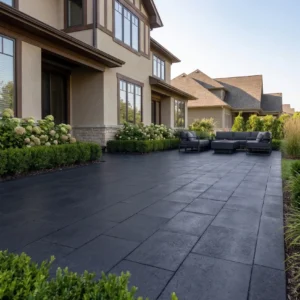



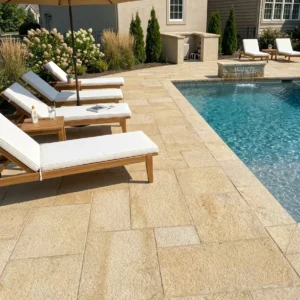
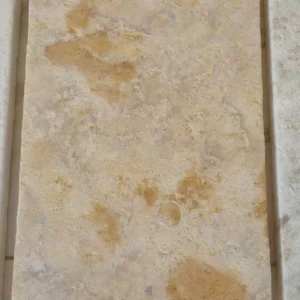
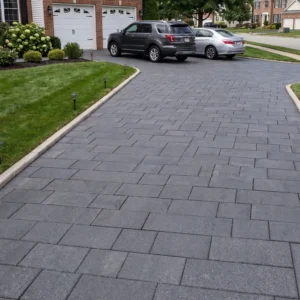
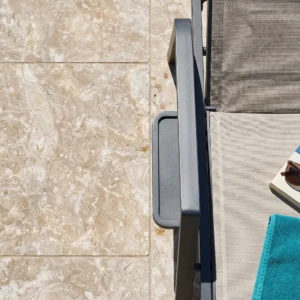
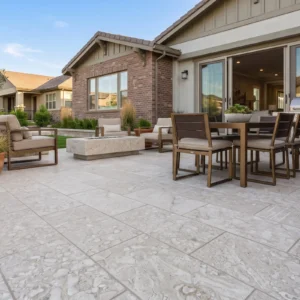
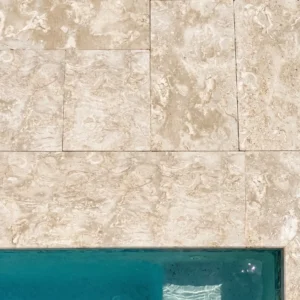
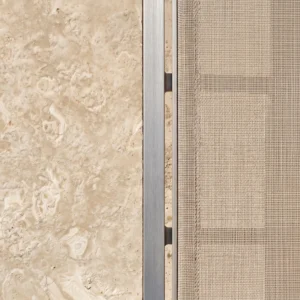
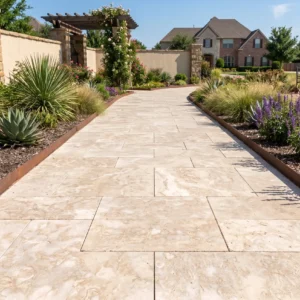
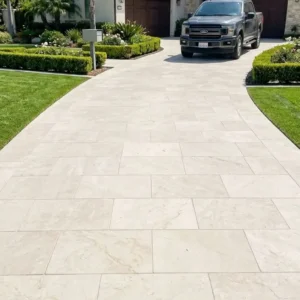
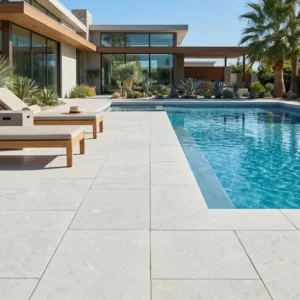
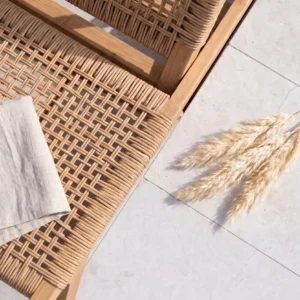
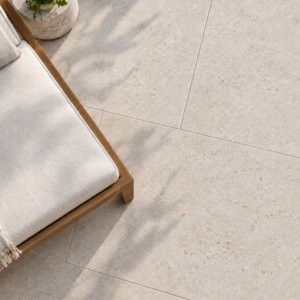
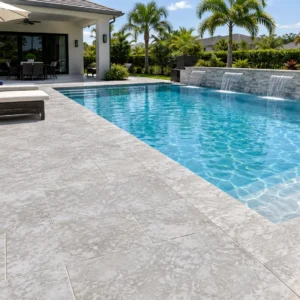

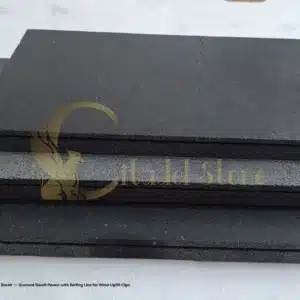
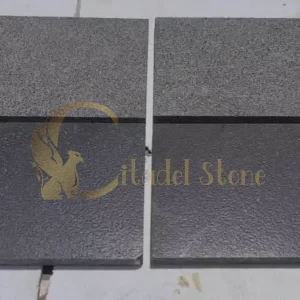
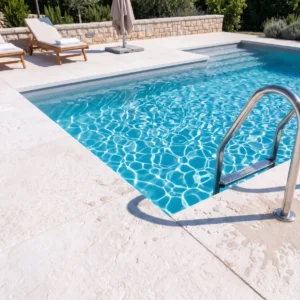
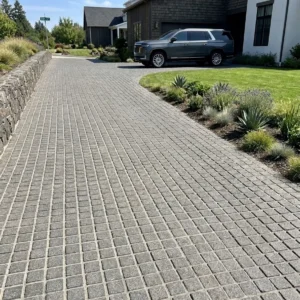
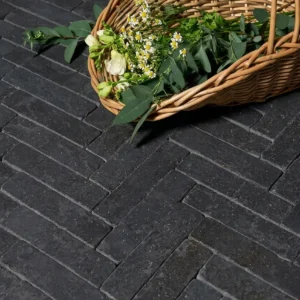
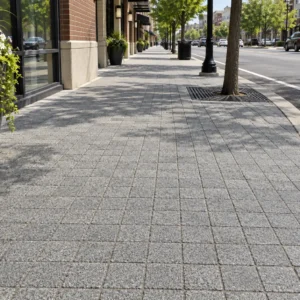
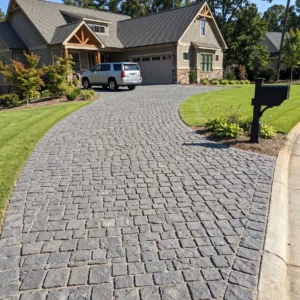
The detail that decides whether a Large Travertine Tile floor reads as one continuous plane or a field of lipped edges is substrate flatness, checked before the first crate is ever opened. Stone at this scale amplifies every deviation in the slab beneath it, and travertine’s natural void structure gives you less forgiveness than a dense granite in the same format. You’ll get far better results by treating format selection, fill grade, and setting method as a single decision rather than three separate ones. What follows is the specification sequence that keeps big-format travertine flat, dry, and serviceable for decades.
What Actually Counts as Large Travertine Tile
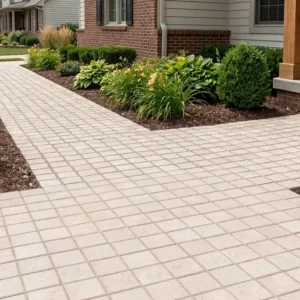
Large format begins, in practical terms, at the point where one person can no longer set a piece comfortably by hand and where substrate tolerance starts to govern the installation rather than the installer’s skill. Buyers searching travertine tile large tend to mean anything from 18-inch squares up to slab-scale panels, so the first thing to pin down on your drawings is the nominal face dimension and the edge detail.
Formats you’ll commonly see specified include:
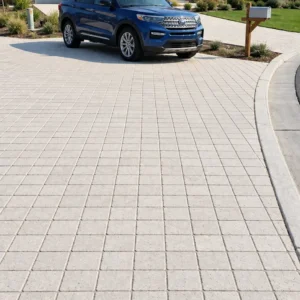
- 24×24 squares, the workhorse size for open-plan interiors and covered patios
- 20×20 travertine tile, which lays out cleanly in corridors, narrow rooms, and stair landings
- 36 x 36 travertine tile, chosen when the design brief calls for the fewest possible joint lines across a wide floor
- Rectangular planks and 24×48 panels for directional layouts that stretch a room visually
- French pattern sets, where a few oversized pieces carry most of the visual weight
Citadel Stone cuts Large Travertine Tile to order in these standard formats, and you can request sample pieces in the exact size and finish before you commit the specification. Raise any non-standard face dimension early, because it changes both the cutting schedule and the way the material is crated.
Cut, Fill, and Color Consistency Across Big Travertine Tiles
Travertine forms where mineral-rich water precipitates carbonate around springs and seeps, which is why the stone carries bedding planes and gas voids that no manufactured surface truly replicates. Published geological summaries of carbonate rock formation make clear that this porosity is structural to how the stone grew, not a flaw in your particular lot.
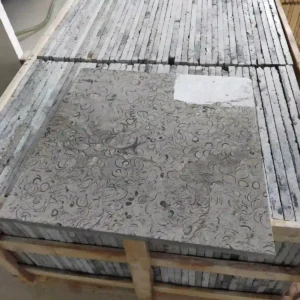
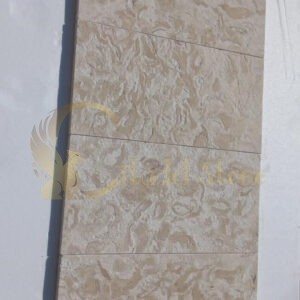
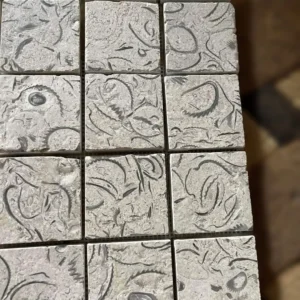
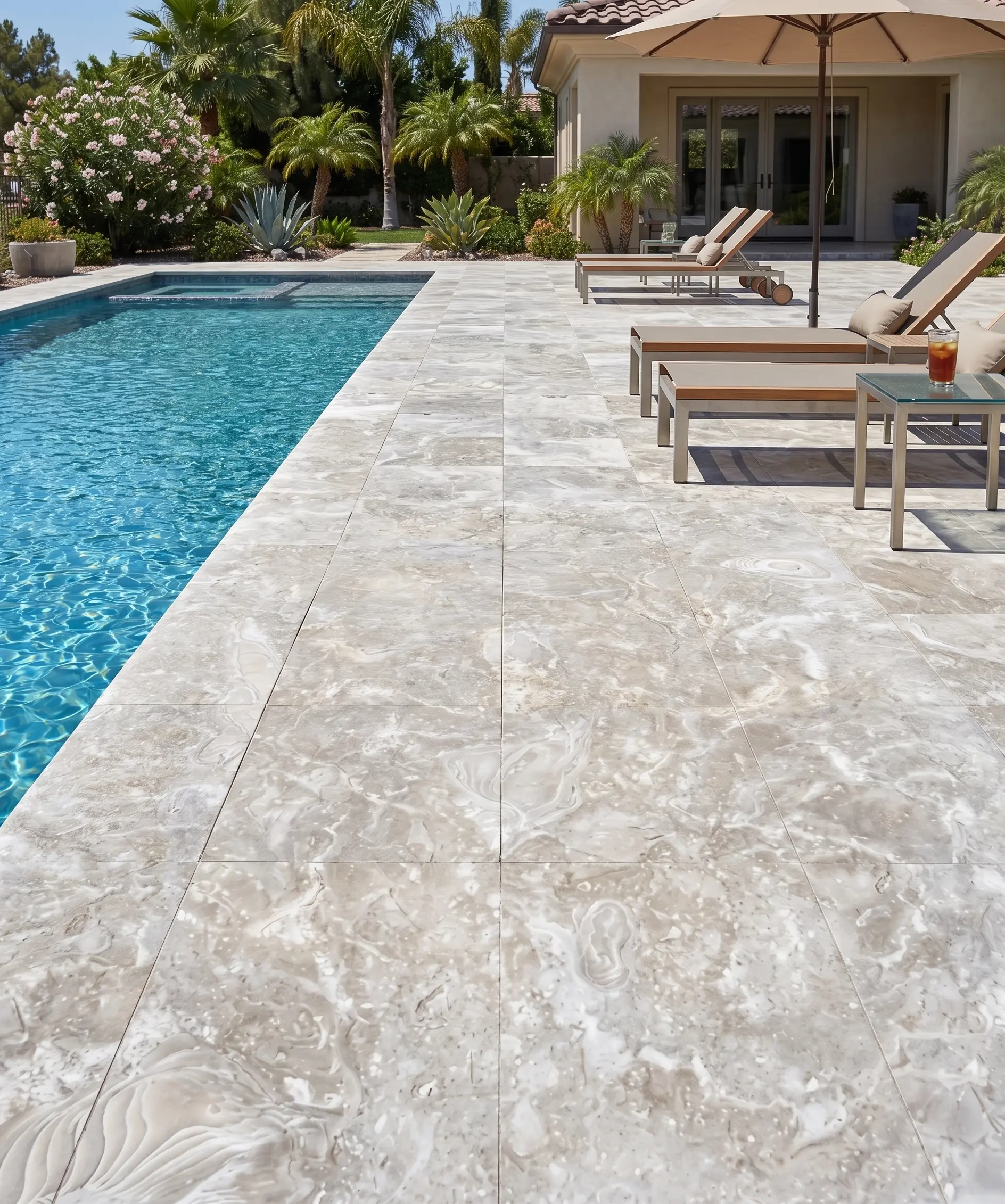
Cross cut and vein cut describe how the block was sawn relative to those bedding planes, and the choice changes the entire character of the floor. Cross cut gives you cloudy, flowery figure with rounded voids; vein cut produces linear banding and shows voids as elongated slots that run with the grain.
Big travertine tiles magnify that difference because each piece carries more of the pattern, so a layout that looked balanced on a small sample board can read busy at full scale. Lay out a dry run from at least three crates before any mortar goes down.
Fill grade deserves the same scrutiny. A wider face carries more fill, and under raking light from a window or a wall washer, any color mismatch between fill and stone becomes the thing your client notices first. Ordering all pieces from one production run is the single most effective way to keep shade range tight across a large floor.
Thickness and Flatness: The Tolerances That Decide the Outcome
Thickness selection for Large Travertine Tile is driven by span, support, and load path rather than by a preference for heavier stone. A fully bedded interior floor over a sound slab asks less of the material than a pedestal-set terrace where each piece spans between supports and carries point loads at the corners.
ASTM C1527 is the dimension stone specification that covers travertine, and it is the right document to name in your submittal. Ask your supplier which classification the material is supplied to and request the test report rather than accepting a marketing sheet — the published travertine standard tells you what was actually measured and how.
Flatness is where large formats punish shortcuts. Consider the following before you settle on a size:
- Calibrated backs set more predictably than natural-back stone at large face dimensions
- A 20×20 travertine tile tolerates a slightly less perfect substrate than a 36-inch square does, simply because it bridges less distance
- Bowed or cupped pieces can sometimes be sorted out at the crate, so budget time for inspection rather than discovering it at the trowel
- Thicker travertine pavers used outdoors resist edge chipping during handling better than thin gauged material
- Edge condition — sawn, chiseled, or tumbled — determines how tight a joint you can realistically hold
Finishes and What They Do to the Surface
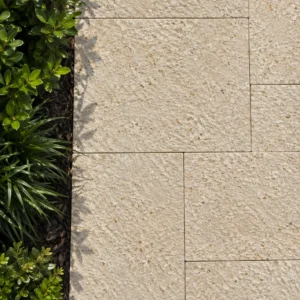
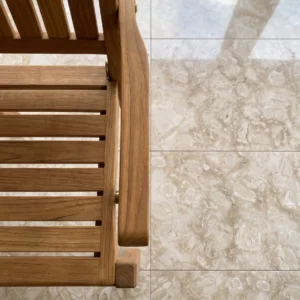
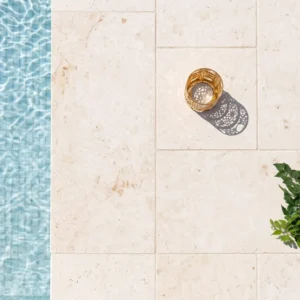
Finish is the variable that changes how a travertine floor looks, feels, and cleans, and it deserves as much specification attention as the format. A honed surface is flat and matte with the voids filled level; a brushed surface leaves a subtle mechanical texture that follows the stone’s grain; a tumbled surface has softened, rolled edges and an open, slightly irregular face.
Industry variety guidance from the Natural Stone Institute on carbonate stone is a useful reference point when you’re comparing finishes across suppliers, because terminology varies more than most buyers expect.
On the question of slipperiness, the current test method is ANSI A326.3, and it is measured wet. Finish is the variable that moves the result, so a single material can behave quite differently depending on how its surface was processed. Never accept a dry-tested figure as evidence for a wet-condition requirement; where a tested value exists for material you’re considering, ask for the test report.
- Honed and filled reads calm and contemporary and shows footprint marks less than polished stone
- Brushed leaves a fine directional texture that hides everyday dust better in high-traffic rooms
- Tumbled and unfilled gives an open, matte, weathered character with a visibly textured face
- Polished travertine is uncommon at large formats and is generally reserved for walls and vertical feature work
Setting Large Travertine Floor Tiles on a Prepared Substrate
Mortar coverage is the failure point nobody sees until a corner cracks under a chair leg. Large travertine floor tiles need full, void-free support beneath the entire face, which means back-buttering every piece and using a mortar formulated for large and heavy tile rather than a general-purpose thinset.
Your substrate needs to be flattened to the tolerance the tile size demands, not to the tolerance the slab was originally poured to. Self-leveling underlayment or a patch coat is almost always cheaper than trying to correct deviation with mortar thickness, and it avoids the shrinkage and lippage that thick beds introduce.
Here’s what most schedules leave out: travertine is a carbonate stone and it moves with moisture. Use a white or light mortar under light-colored stone so the bed doesn’t shadow through the face, and confirm that any adhesive, membrane, or leveling compound is compatible with natural stone before the crew opens a bag.
- Set movement joints at the perimeter and wherever the substrate changes plane or material
- Leveling clip systems help, but they correct lippage — they do not correct a bowed piece
- Grout joint width should follow the stone’s actual edge condition, not a default number from a datasheet
- Seal before grouting on unfilled or heavily textured faces to keep pigment out of open pores
Exterior Grade, Drainage, and Terrain-Driven Base Design
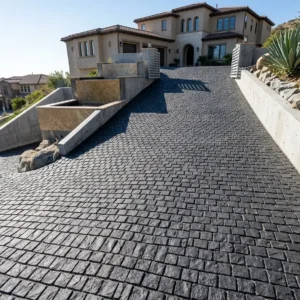
Outdoor work is where terrain starts dictating decisions that indoor specifiers never face. A terrace cut into a slope sits on two different conditions at once — undisturbed ground on the uphill side and engineered fill on the downhill side — and those two halves settle at different rates unless the fill is placed and compacted in controlled lifts.
Drainage design comes before material selection on sloping sites. Water moving downhill through a subgrade will find the bedding layer and travel along it, so intercepting that flow with a drain line above the paved area matters more than any sealer you apply to the surface afterward.
Consider how your site conditions change the detail:
- Cut-and-fill platforms need the fill compacted in lifts, with the base extending beyond the paved edge on the downhill side
- Cross-fall should be built into the base, not created by varying mortar or bedding thickness
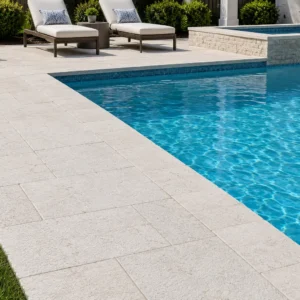
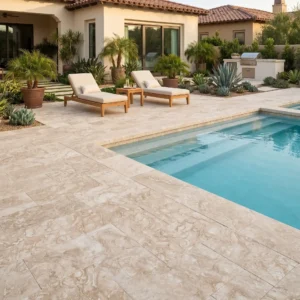
- Open-graded base layers let water pass through instead of perching beneath large travertine pavers
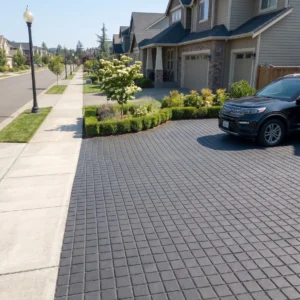
- Steep approaches limit where a delivery truck can safely position, which affects staging and offload planning
- In freeze-thaw regions, a saturated base under carbonate stone is the mechanism behind most edge spalling — drainage is the fix, not a coating
At Citadel Stone, we quarry, template, manufacture and handle the material, which means specification questions about thickness for a sloped terrace can be answered against the actual production capability rather than a generic catalog range.
Large Travertine Tile Versus Porcelain Look-Alikes
Porcelain that mimics travertine has improved enormously, and it’s worth an honest comparison rather than a defensive one. Porcelain gives you a low-absorption, highly consistent surface with repeating print patterns; travertine gives you a stone whose figure never repeats and whose surface can be refinished decades into its service life.
The trade-offs cut both ways. Porcelain is harder to chip-repair invisibly and its printed edges show as solid color, while travertine accepts honing, re-filling, and patching in ways that keep an old floor looking maintained rather than tired. Buyers weighing the two should read the broader comparison in marble look porcelain vs stone, which sets out where each material genuinely earns its place. For most large-format applications, the decision comes down to whether you want repeatable uniformity or geological variation.
Cost comparison is rarely apples to apples either. Large porcelain panels often require specialized handling tools and crews trained on them, so the installed-cost gap narrows once you price the whole scope rather than the material line alone.
Sealing, Cleaning, and Long-Term Care
Travertine is acid-sensitive, and that single fact drives the entire maintenance program for a Large Travertine Tile floor. Citrus, wine, vinegar, and many general-purpose bathroom cleaners will etch a honed carbonate surface regardless of whether it’s sealed, because a penetrating sealer resists staining rather than chemical attack.
Use a quality impregnating sealer and follow the manufacturer’s stated reseal interval for the traffic level you actually have — a kitchen floor and a guest bathroom age at different rates. Where large travertine floor tiles run through an entry, expect to reseal sooner in the traffic lane than at the margins.
Fill loss is the maintenance item people forget. Over years, factory fill in high-traffic areas can work loose and small voids reopen; re-filling with a color-matched compound during a routine deep clean keeps the surface reading as intended. Outdoor travertine pavers generally need less sealing attention than interior floors, since UV and rain keep the surface weathering evenly rather than developing localized wear patterns.
Layout Planning, Waste Factor, and Quantity Takeoff
Your takeoff should start from a scaled layout drawing with the starting point and grid direction fixed, because large formats leave you very little room to absorb an out-of-square room. Set the grid off the most visible sightline — usually the main doorway or the longest uninterrupted wall — and push the cuts to where furniture or cabinetry will sit.
Waste allowance rises with format size. A 36 x 36 travertine tile produces more offcut waste per cut than a smaller piece, and a diagonal or running-bond layout increases it again, so build the allowance from your actual cut count rather than a blanket percentage.
- Order the whole floor at once; matching a later add-on to an earlier production run is difficult
- Blend from multiple crates as you set, which distributes natural shade variation evenly
- Going travertine tile large means two-person handling and staging space at the work face
- Confirm where a delivery truck can park and how crates will move from the curb to the room
- Keep a small quantity of big travertine tiles in reserve for future repairs
Offloading arrangements are confirmed before the delivery date, and restricted-access sites should be flagged at quotation stage so the right equipment is planned in rather than improvised.
Order Large Travertine Tile — Delivery Arranged by Citadel Stone
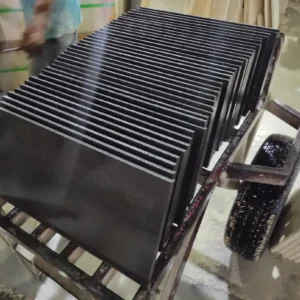
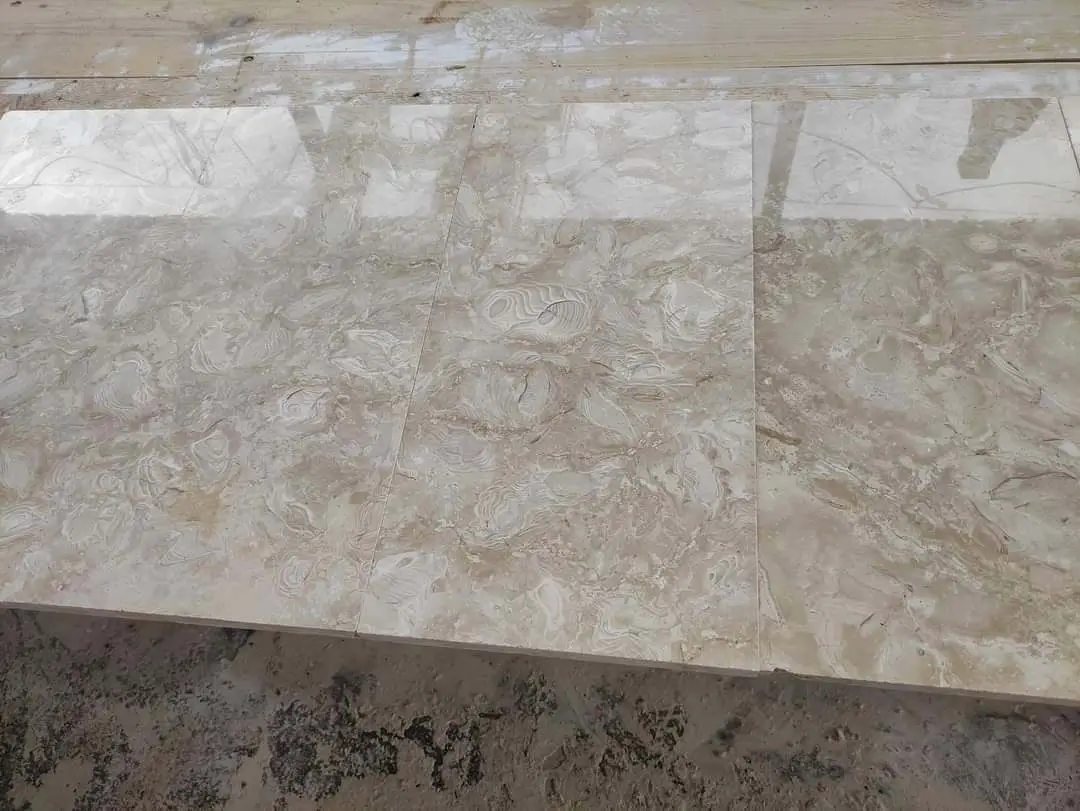
Quarried and cut to order at our selected quarries in the Middle East, each Large Travertine Tile order is checked against the agreed specification for format, thickness, fill grade, and finish before it ships. Standard sizes run from 20-inch and 24-inch squares up to 36-inch squares and rectangular plank formats, with honed, brushed, and tumbled surfaces available.
You can request samples in your chosen size and finish, along with the relevant test report, before you issue a purchase order. Trade and wholesale enquiries are handled with volume pricing, and for projects needing custom face dimensions or matched runs across multiple phases, our team can advise on cutting schedules and lead times. Lead times are quoted with the order, and delivery is arranged and managed through to the jobsite, including truck access and offload planning for difficult sites. Contact Citadel Stone for a project quote or to schedule a specification consultation.
Not every room calls for oversized stone — tight bathrooms, shower floors, and detailed borders often work better at smaller scale, and where smaller travertine formats perform better is worth reading alongside this page before you finalize sizes across a whole property. Landscapers and specifiers source Large Travertine Tile from Citadel Stone for tiled floors and wet areas, cut to order at our selected quarries and delivered to the jobsite.
See also: large tile vs standard tile.
Related guides: Large Format Travertine Tile: A Complete Buyer’s Guide · Large Format Marble Tile vs Travertine: Which Wins? · large format tile for shower · large tile shower ideas · porcelain tile garage floor · 24×48 Travertine Tile: Layout Ideas That Impress.