Why Format Drives Design With 24×48 Travertine Tile
The 24×48 travertine tile format changes how you think about layout before a single tile is set. That elongated rectangle — roughly two-to-one in proportion — creates directional energy that a square format simply doesn’t produce. Your floor stops reading as a field of individual units and starts reading as a unified plane, and the direction you choose to run the long axis is one of the most consequential design decisions you’ll make for the space.
Running Bond and Directional Layouts That Work
The standard running bond — offset joints at the midpoint of the tile below — suits 24×48 travertine tile beautifully for rectangular rooms and hallways. Running the long axis parallel to the room’s longest wall draws the eye along the length of the space, making a moderately sized room feel more expansive than it is. In a hallway, this same principle becomes almost cinematic: the continuous vein movement in travertine, uninterrupted by frequent cross-joints, produces a flowing visual corridor that shorter tile formats never achieve.
For wider rooms where a single directional read isn’t the goal, consider a one-third offset rather than the traditional half offset. This reduces the visual emphasis on a single horizontal line running across the floor and creates a more random, quarried appearance — closer to how you’d expect large travertine slabs to be laid in a traditional Mediterranean courtyard. The trade-off is slightly more cut pieces at perimeters, but the visual result is worth the extra templating time.
- Run the long axis parallel to the primary view axis for maximum room-length perception
- Use a one-third offset to reduce the mechanical regularity of a full half-offset pattern
- In hallways, a stacked layout with no offset produces a bold, architectural stripe effect
- Diagonal layouts at 45 degrees work with this format but demand careful waste calculation and precise cutting at every wall
Stacked and Ashlar Pattern Possibilities
Stacked layouts — where every joint aligns vertically — give 24×48 travertine tile a strong contemporary character. This works particularly well in open-plan spaces where the architecture favors clean horizontal and vertical lines. The risk with stacking is any lippage between tiles becomes immediately visible because the eye tracks across the continuous joint line without interruption. Your substrate has to be flatter than you might accept in a staggered layout, and your setting bed needs to be worked carefully to hold that plane through the full tile length.
An ashlar pattern mixes the 24×48 format with a coordinating 24×24 or 12×24 piece to break the repetition. This creates a formal, classical layout that suits larger open spaces — entry halls, great rooms, covered outdoor terraces — and gives the travertine’s natural variation more canvas to express itself. According to Natural Stone Institute ASTM tile stone specifications, large-format natural stone installation demands attention to both flatness tolerance and tile warpage before layout patterns are finalized, which is particularly relevant when mixing formats in an ashlar grid.
How 24×48 Travertine Compares to Large-Format Ceramic and Porcelain Options
You’ll encounter the 24×48 format in ceramic floor tile and porcelain mosaic floor tile ranges too, and it’s worth being clear about what the format decision is actually deciding. A porcelain panel in this size is dimensionally consistent and virtually free of warpage — that regularity is its primary advantage for tight-tolerance stacked layouts. Travertine in the same format introduces natural variation: slight tonal shifts between pieces, the characteristic vein movement, and the texture of a filled-and-honed or tumbled surface that no ceramic floor tile can authentically replicate.
White porcelain bathroom floor tile in this format is a common alternative to light travertine in wet environments. Porcelain’s lower water absorption is a genuine technical advantage in continuously wet areas, but it comes with a visual trade-off — the surface reads as manufactured rather than geological. For spaces where that geological character matters to the design brief, travertine at 24×48 carries a warmth and depth that porcelain approximates but doesn’t match. The specification decision isn’t about which material is better in the abstract — it’s about which performance profile fits your project’s specific demands.
- Porcelain in this format offers tighter dimensional tolerances, simplifying stacked layout execution
- Travertine delivers natural vein movement and tonal variation that distinguishes large surfaces from manufactured alternatives
- In lower-moisture applications — living rooms, dining rooms, covered terraces — travertine’s visual character is uncompromised by absorption concerns
- Where a porcelain mosaic floor tile product might suit a heavily wet utility space, travertine’s character remains the preferred choice in principal living areas
- Sealing protocol and resealing schedule are the maintenance variables that separate well-maintained travertine from neglected installations
Finish Selection and Its Effect on the Completed Surface
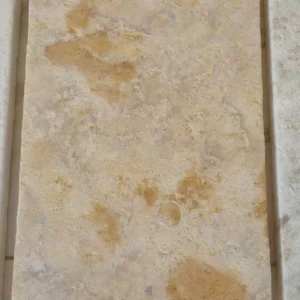
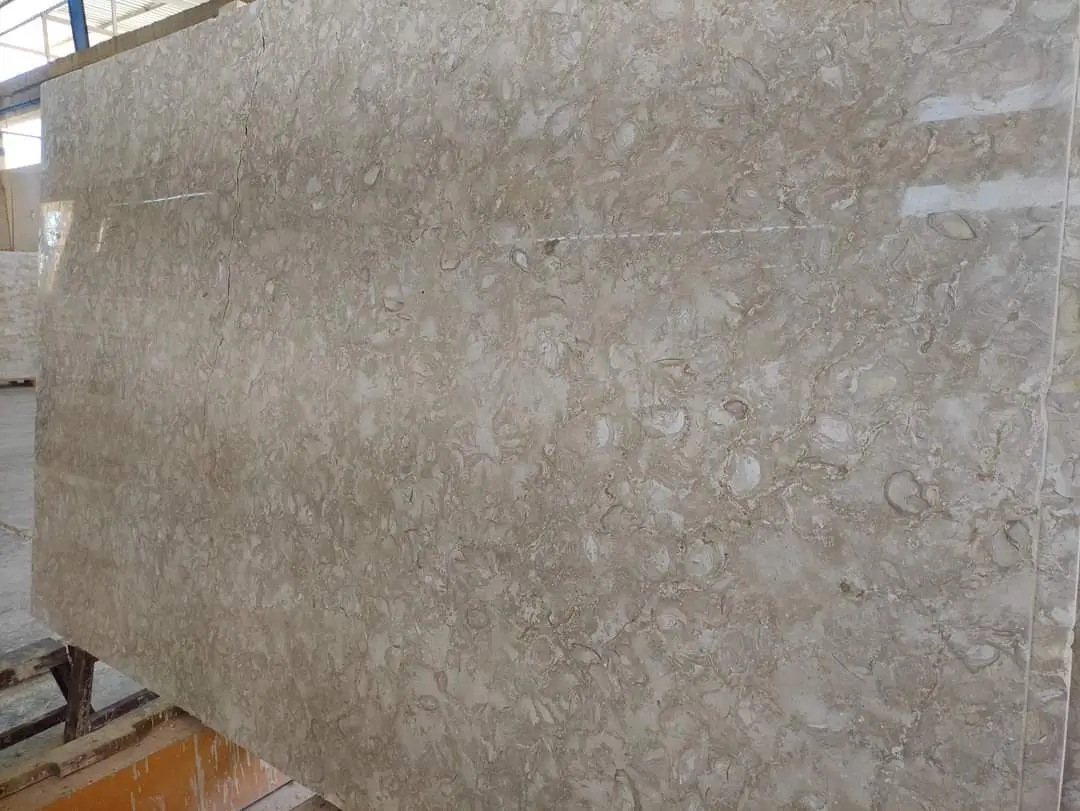
The finish you specify changes the character of 24×48 travertine tile more dramatically than it does with smaller formats, simply because there’s more surface visible per tile. A honed finish in this size produces a sophisticated, low-sheen surface that catches raking light gently — ideal for living areas and bedrooms where a polished floor would feel overly formal. A tumbled finish leaves an open, matte texture with softened edges; over large rectangular tiles, this creates a weathered, antique-floor quality that suits transitional and Mediterranean-inspired interiors.
Finish selection also intersects with wet-area planning. Where white porcelain bathroom floor tile is specified for its lower absorption, travertine with a honed or brushed finish is often selected in spa-style wet rooms for its geological warmth — with sealing and maintenance protocols adjusted accordingly. The ASTM C1527 travertine dimension stone standard covers dimensional tolerances and physical characteristics that your supplier should be able to provide on request — including absorption rate, which is directly relevant to finish selection and sealing strategy. A more open-textured surface absorbs sealer differently than a tightly honed one, and your sealing interval should follow the sealer manufacturer’s guidance for the specific finish and absorption profile of the stone you receive.
Seasonal Timing and Installation Scheduling for Large-Format Travertine
Setting 24×48 travertine tile in outdoor or unconditioned indoor environments puts your installation squarely at the mercy of temperature — and in ways that are easy to underestimate until you’ve watched a setting bed skin over before you can back-butter and place a tile of this size. Large-format natural stone takes longer to position and adjust than small mosaic units, which means your setting material’s open time needs to be matched carefully to the ambient temperature you’re actually working in, not the printed temperature range on the bag.
The optimal installation window for most polymer-modified mortars is between approximately 50°F and 90°F with stable humidity. In summer, that window often closes early in the day in many parts of the country — experienced installers schedule large-format travertine work to start early morning when slabs and substrate are still cool, breaking by midday before the surface temperature spikes. In cooler months, morning work on exterior surfaces can mean working on a substrate that hasn’t fully warmed, which slows the cure rather than accelerating it. Either extreme affects bond strength, and with tiles at this scale, an incomplete bond can telegraph as a hollow sound that’s expensive to address after grouting.
- Match mortar open time to your site’s actual temperature, not the bag’s printed range
- In warm periods, start setting early morning and complete critical sections before surface temperatures climb
- In cool conditions, confirm the substrate is above the mortar manufacturer’s minimum application temperature before proceeding
- Allow full cure before grouting — don’t compress this timeline in the interest of schedule
- If working outdoors in fall or spring, monitor overnight low temperatures to avoid freeze risk during the initial cure period
For interior projects in conditioned spaces, seasonal timing matters less — but delivery scheduling does. Your project’s truck access constraints and building conditions should be confirmed before you commit to a delivery date, particularly for large-format travertine tile orders that require careful offloading to avoid edge chipping.
Layout Planning and Field Preparation for 24×48 Travertine
The planning stage for 24×48 travertine tile design deserves more time than most projects budget for it. Dry-lay a representative section before committing to adhesive — this lets you identify tonal clusters, decide which pieces go where for visual balance, and confirm your joint alignment before it’s locked in. Travertine’s natural variation means adjacent tiles can read as a mismatched pair if you don’t control the placement of similar veining patterns.
Your floor’s flatness tolerance directly controls what’s achievable in the layout. The Tile Council of North America natural stone tile installation standards provide flatness requirements for large-format stone that your substrate must meet before setting begins — these tolerances are tighter than what older construction documents specify, and many subfloors need grinding or self-leveling compound before large travertine tile can be properly installed. Discovering this after delivery adds lead time and cost; build the substrate assessment into your pre-installation phase.
For projects where the 24×48 format runs into complex geometry — curved walls, multiple room transitions, step-downs — it helps to sketch the layout to scale and identify every cut line before ordering. This lets you calculate waste accurately and ensures you order enough material to complete cuts without hunting for matching batch pieces later. At Citadel Stone, we verify batch and shade consistency before orders leave our selected quarries, which matters significantly when your layout plan depends on continuity across a large floor plane.
Grout Joint Width and Its Visual Weight at This Scale
Grout joint decisions carry more visual consequence at the 24×48 scale than at smaller formats. A narrow joint — in the range that reads as a fine line rather than a visible band — lets the travertine surface dominate and reads as a near-monolithic floor. This is the right choice for most interior applications where you want the stone’s natural character to lead. A wider joint, more common in outdoor applications where movement accommodation is a practical requirement, creates a visible grid that competes with the tile surface.
Your joint width should also be governed by the tile’s actual dimensional variation — not the nominal specification. Travertine cut to order at our selected quarries is held to tolerance, but natural stone is not porcelain, and a joint that’s too narrow to accommodate real-world variation will produce inconsistent-looking results. Request dimensional tolerances from your supplier and size the joint accordingly.
What Matters Most
The design decisions that define a successful 24×48 travertine tile installation happen well before the first tile is set: layout direction, offset pattern, finish selection, and substrate preparation. These choices compound — a strong layout direction in a running bond emphasizes the tile’s proportions; the right finish brings out the vein movement at this scale; a properly prepared substrate makes a tight stacked layout achievable rather than aspirational. Get those foundational decisions right and the travertine does the rest.
You’ll find that our oversized travertine tile range covers the format specifications and finish options that this scale of project requires, with test reports available on request for absorption, dimensional tolerance, and other technical properties. For broader specification context on this material category, large-format travertine specification detail covers the purchasing and project-planning considerations that complement the layout and design decisions covered here. Travertine tile from Citadel Stone is drawn from our selected quarries in the Middle East for reliable batch color.
Related reading: 9 Large Tile Shower Ideas for a Seamless, Modern Look · large floor tile layout guide · marble tile for shower care.