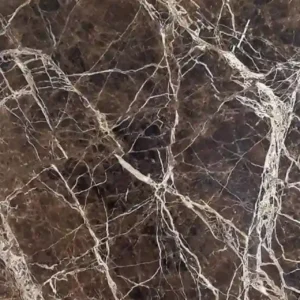
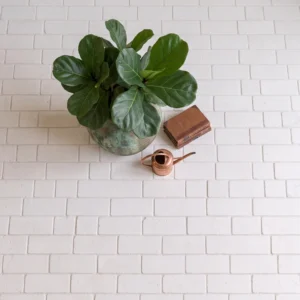
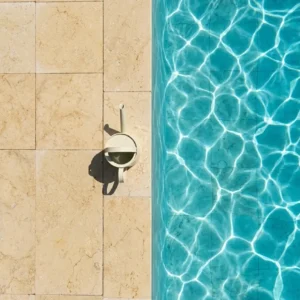
The gap between marble look porcelain vs stone isn’t measured in aesthetics — it’s measured in how each material responds to mechanical stress over decades of real-world use. Porcelain manufacturers have narrowed the visual gap dramatically, but the structural conversation is more nuanced than most comparison articles acknowledge. Your decision hinges on substrate conditions, exposure severity, installation method, and how the material will perform under the kind of loading and weather events that reveal a specification’s true quality.
What You’re Actually Comparing
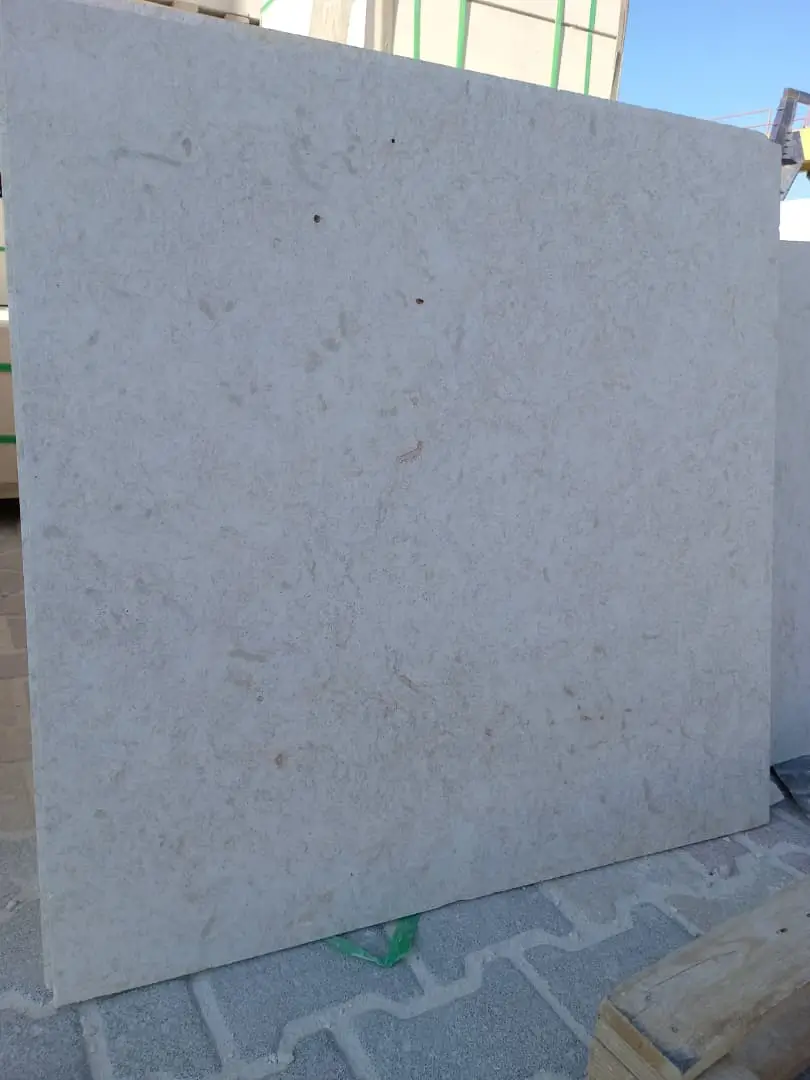
Most homeowners frame this as a style decision, but for any serious installation — particularly one exposed to the elements — it’s a material science decision first. Marble look porcelain tile is a fired ceramic body printed with high-resolution imaging to replicate natural stone veining. Natural marble is a metamorphic calcium carbonate rock formed under intense heat and pressure over geological timescales. These are fundamentally different materials, and treating them as interchangeable substitutes is where most specifications go wrong.
Natural stone carries inherent variation in density, pore structure, and mineral composition from slab to slab. That variability is precisely what makes it visually compelling — and also what demands more careful specification. Porcelain, by contrast, is engineered to consistent tolerances. Each tile in a porcelain batch will behave nearly identically under load and moisture, which simplifies installation planning but removes the organic character that drives many buyers toward stone in the first place.
- Marble look porcelain tile is produced by firing at temperatures above 2,200°F, producing a dense, vitrified body with very low water absorption
- Natural marble absorbs moisture through interconnected pore networks — absorption rates vary by origin and finish, and test reports are available on request
- Porcelain carries uniform dimensional tolerances; natural stone requires calibration and grading before installation
- Natural stone develops a surface patina over time; porcelain holds its printed surface indefinitely or chips to reveal the clay body beneath
Porosity and Moisture Performance
Moisture management is where the marble look porcelain vs stone debate gets genuinely technical. Porcelain is highly resistant to water penetration — its vitrified structure means water sits on the surface rather than migrating into the body. That’s a significant advantage in wet zones: bathrooms, covered outdoor kitchens, and areas prone to standing water. Natural marble, depending on its finish and origin, requires sealing to manage moisture ingress, and the sealing schedule matters more than most installers admit upfront.
For outdoor applications in freeze-thaw regions, water absorption in natural stone is a critical specification variable. Moisture that penetrates an unsealed or under-sealed marble surface can expand during freeze cycles and cause spalling at joints or face edges. Stone-look porcelain tile essentially sidesteps this mechanism. That said, the grout joint and bedding mortar beneath any tile — porcelain or stone — are still vulnerable to water infiltration if the joint integrity isn’t maintained. The tile body is only one part of the moisture equation.
- Sealing natural marble annually or biennially is the practical standard for most outdoor installations
- In high-humidity interior environments, both materials perform well when properly installed — the substrate vapor barrier matters more than the tile choice
- Honed marble finishes absorb sealers more readily than polished finishes, so surface prep timing during installation affects long-term moisture resistance
- Porcelain’s low absorption reduces efflorescence risk but doesn’t eliminate it — bedding mortar and grout formulations still need proper selection
Wind, Storm, and Weather Durability
Here’s what most comparison guides skip entirely: how these two materials behave when a storm rolls through. For exterior applications — terraces, covered patios, pool surrounds, facade cladding — wind loads and impact events are real design parameters. Stone-look porcelain tile in large formats (600mm × 600mm and above) presents a significant wind uplift surface area, and without adequate adhesive coverage and proper edge restraint, tile can delaminate under sustained wind pressure or wind-driven rain penetration at joints.
Natural marble, being denser and heavier, has more inherent resistance to uplift by mass alone — but joint integrity under wind-driven rain is a shared vulnerability for both materials. Grout joints that develop micro-cracks over time create entry points for pressurized water during storm events. In both cases, specifying a full-coverage adhesive mortar (minimum 95% contact area on exterior applications) and using a flexible grout rated for exterior exposure dramatically reduces this risk. The material choice matters less here than the installation detailing.
Impact resistance is a different story. Hail or falling debris can chip the printed surface layer of porcelain, exposing the unprinted clay body beneath — a cosmetically irreversible outcome. Natural marble, being a monolithic material through its full thickness, chips in a way that’s consistent with its overall color and pattern. Spot repairs on natural stone are far more achievable than on digitally printed porcelain surfaces.
- Specify flexible expansion joints at maximum 10-foot intervals on exterior porcelain installations to accommodate thermal and wind-induced movement
- Edge restraint profiles on exposed terrace edges prevent corner lift under wind uplift events — this applies equally to porcelain and natural stone
- Wind-driven rain pressure testing for facade applications should reference ASTM E331 — joint sealant selection is critical regardless of tile material
- For high-wind-exposure zones, thicker tile formats (20mm porcelain or 3cm natural stone) significantly improve resistance to cracking under point impact loads
Surface Finish and Slip Resistance
The finish you choose — not the material category — is the primary variable in slip resistance performance. Both marble look porcelain and natural marble can be specified in finishes ranging from high-polish (maximum slipperiness when wet) to heavily textured or flamed (substantially better wet traction). Your finish selection should be informed by ANSI A326.3, which establishes the current standard for wet dynamic coefficient of friction testing, with a minimum wet DCOF threshold for surfaces intended for wet foot traffic.
Polished marble and polished porcelain are both genuinely slippery when wet — this isn’t a material deficiency, it’s a finish choice that demands appropriate application context. For pool surrounds, bathroom floors with direct shower exposure, or any outdoor surface that accumulates water, you should be specifying honed, brushed, or textured finishes regardless of whether you choose stone or porcelain. The Natural Stone Institute provides stone tile specifications and ASTM standards that cover finish categories and their performance implications for different applications.
- High-gloss polished finishes — porcelain or marble — are best reserved for interior dry areas with adequate drainage control
- Brushed and honed finishes on natural marble provide improved wet traction without sacrificing the material’s aesthetic appeal
- Anti-slip treatment products can be applied to polished stone, but they require periodic reapplication and alter the surface appearance slightly
- Non-slip mat systems are a practical supplementary layer in specific high-risk zones regardless of the tile material specified
Structural Load and Installation Substrate
Your substrate conditions may resolve the marble look porcelain vs stone debate before you get to aesthetics. Natural marble, particularly in large slab format, adds significant dead load to a floor structure — something that must be accounted for in structural calculations for upper-floor installations. Porcelain, while dense, comes in thinner profiles that typically reduce load impact. On ground-level slabs or concrete substrates, this distinction rarely matters. On suspended timber floors or older residential structures, it can be a deciding factor.
Both materials require a deflection-limited substrate — generally L/360 minimum for stone and L/360 minimum for marble porcelain tile, though stone installations benefit from exceeding this threshold to prevent grout and mortar cracking from substrate flex. If your subfloor has any perceptible flex, you’ll encounter joint failures within 2-3 years regardless of how well the tile is installed. Addressing the substrate before tile selection is the professional approach; most field failures trace back to this step being treated as secondary.
For installations where you’re comparing format sizes, Large Travertine Tile from Citadel Stone illustrates how large-format natural stone navigates the substrate and adhesive coverage requirements that also apply to large-format porcelain comparisons — the installation engineering overlaps significantly.
Cost and Long-Term Value
The upfront material cost of marble look porcelain tile has dropped considerably as digital printing technology matured. Entry-level stone-look porcelain tile can undercut natural marble by a meaningful margin, but the full lifecycle cost comparison is more nuanced. Natural marble, when properly maintained, can deliver decades of service life and often increases a property’s perceived value in ways that porcelain replicas don’t replicate in appraisal contexts.
Maintenance costs favor porcelain in most scenarios — it doesn’t require sealing, tolerates cleaning chemicals that would damage unsealed natural stone, and holds its surface appearance without intervention. Natural marble requires a consistent sealing and cleaning protocol. Skipping that protocol doesn’t immediately compromise the stone’s structural integrity, but it does allow staining and acid etching that are cosmetically difficult to reverse. Budget for ongoing stone maintenance realistically, or the cost advantage of lower initial natural stone pricing erodes over time.
- Natural marble from Middle East quarries and selected quarries across Europe often commands a premium that reflects genuine geological rarity and visual depth
- Porcelain waste on complex layouts runs higher than natural stone because cuts often reveal the unprinted clay body at edges, requiring careful joint placement
- Insurance and resale data in high-value residential markets consistently shows natural stone as a value-positive specification — test report on request for specific material grades
- Replacement tile matching is far easier with porcelain (consistent manufacturing batches) than with natural stone, where vein matching across multiple years of quarrying is genuinely difficult
Where Each Material Genuinely Excels
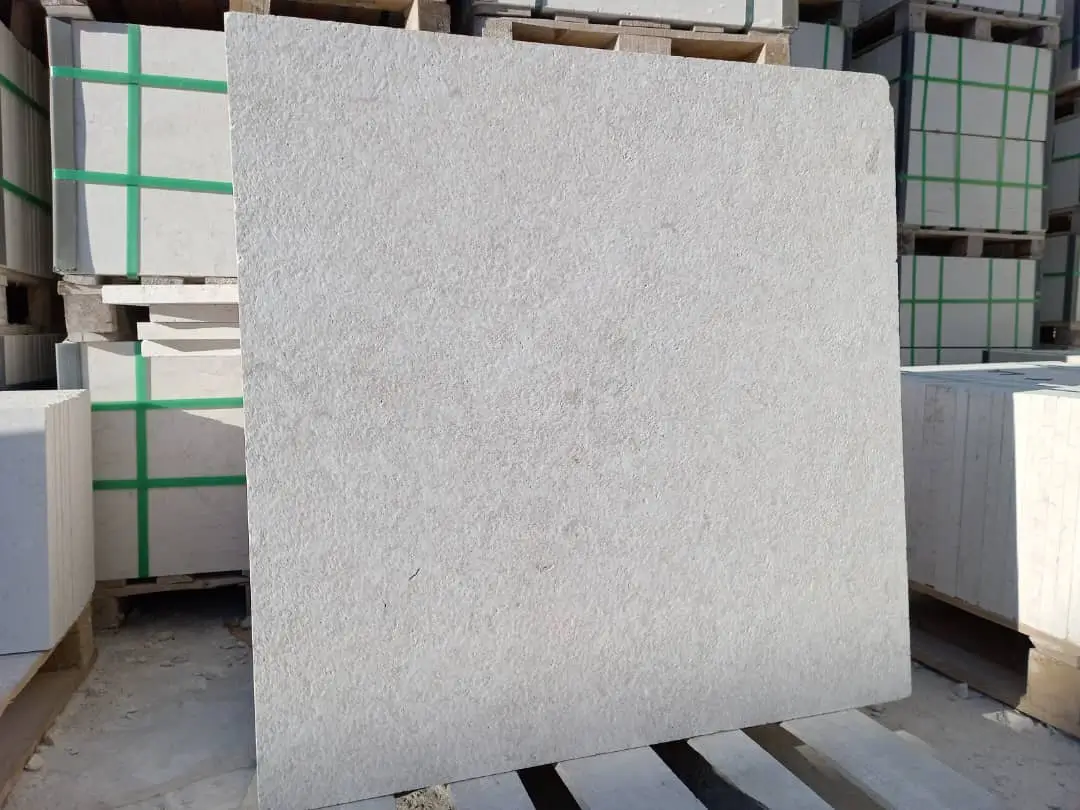
The Tile Council of North America’s natural stone tile installation standards draw a clear distinction between the performance expectations for ceramic products and natural stone — and those distinctions directly map to where each material is best applied. Marble porcelain tile wins in high-moisture environments with demanding maintenance requirements, commercial-grade foot traffic, and anywhere dimensional consistency is critical for large-scale pattern work. Natural marble wins where aesthetic authenticity, tactile warmth, and long-term material value are the primary drivers.
For high-end residential interiors — entry halls, principal bathrooms, kitchen islands — natural marble delivers a sensory quality that even the best marble look porcelain tile doesn’t fully replicate. The way light interacts with genuine calcite crystal structures creates depth that printing technology approximates but doesn’t match. For a commercial lobby, a high-traffic retail floor, or an outdoor kitchen countertop exposed to regular moisture and cleaning chemicals, porcelain’s consistency and low-maintenance profile is the more defensible specification.
Ordering, Lead Times, and Project Logistics
Project logistics often tip the decision in ways that aren’t obvious at the specification stage. Natural marble, sourced from selected quarries from the Middle East, Turkey, Italy, or Greece, carries inherent lead time variability. Quarry production schedules, shipping consolidation, and customs clearance can extend delivery from 6-10 weeks for imported material. If your project timeline is compressed, warehouse inventory becomes a critical factor — and that’s where Citadel Stone’s national supply model offers a practical advantage. We quarry, template, manufacture, and handle material at our selected quarries, maintaining warehouse stock that reduces lead times substantially for many natural stone specifications.
Stone-look porcelain tile, produced in consistent manufacturing runs and held in domestic distribution warehouses, typically ships within 1-2 weeks for standard in-stock profiles. For large commercial projects requiring volume commitments across multiple phases, the predictability of porcelain supply chains is genuinely valuable. Your truck access and receiving logistics matter too — large-format natural stone slabs require specialized crating and careful unloading equipment, while porcelain in standard tile formats moves through conventional freight channels without special handling.
- Always confirm warehouse stock levels against your full quantity requirement before finalizing a purchase order — running short mid-project creates dye-lot matching challenges for both materials
- Natural stone orders should include a 10-15% overage allowance for cutting waste, breakage, and future repair stock
- Truck delivery scheduling for heavy stone material requires site access confirmation — forklift or pallet jack capability at the receiving point is standard for large stone orders
- Citadel Stone’s technical team can advise on lead time realities for specific stone varieties before you commit project timelines to a client
Expert Summary
The marble look porcelain vs stone decision is rarely clear-cut, and that’s actually useful information — it means the right answer is genuinely project-specific rather than defaulting to one material. Your substrate, climate exposure, maintenance commitment, and authenticity requirements each carry weight in the final specification. Porcelain delivers engineering consistency and low maintenance at a competitive price point; natural stone delivers irreplaceable material character and long-term value that natural stone quality and testing standards from ASTM consistently distinguish from ceramic alternatives.
As you evaluate your options, the format question runs parallel to the material question. Larger tile formats — whether porcelain or natural stone — change the installation engineering, adhesive coverage requirements, and visual scale of the finished surface in ways worth understanding before your specification is finalized. tile format performance and specification explores how those decisions play out across different project types, and the substrate and adhesive principles covered there apply equally whether you’re specifying marble porcelain tile or natural stone. For large-format installs where veining depth and surface warmth matter most, natural stone from Citadel Stone often reads differently underfoot than even the best porcelain replicas.