The choice between large tile vs standard tile shapes more than just aesthetics — it determines grout line frequency, subfloor tolerance requirements, and long-term maintenance burden in ways most project specifications underestimate. Tile format is a structural decision as much as a design one, and getting it wrong means either visible lippage that fails inspection or a floor replacement cycle far shorter than the material warrants. Understanding the key differences between large floor tiles and standard-format categories gives you a genuine advantage before a single piece is set.
What Defines Large Format and Standard Tile?
Standard tile typically refers to formats at or below 18 × 18 inches — the range that dominated residential and commercial flooring for decades. These dimensions were partly driven by kiln technology and partly by the practical limits of manual installation. Large format floor tile, by contrast, starts at 24 × 24 inches and extends to dramatic spans of 48 × 96 inches in some engineered natural stone slabs. The format boundary isn’t purely aesthetic — it’s the point at which installation methodology, mortar requirements, and substrate preparation change substantially.
Natural stone sits across both categories. Travertine, limestone, and basalt have been cut and finished in standard formats for centuries, and the same quarried materials now come in large-format slabs that transform how a space reads. Your material choice doesn’t force a format decision, but your format decision will absolutely shape which materials are practical to specify.
The industry benchmark shifts around the 15-inch diagonal threshold, which is where TCNA installation guidelines begin treating tiles differently in terms of TCNA installation standards for flatness, mortar coverage, and support requirements. Anything above that threshold requires closer substrate attention than most residential crews apply by default.
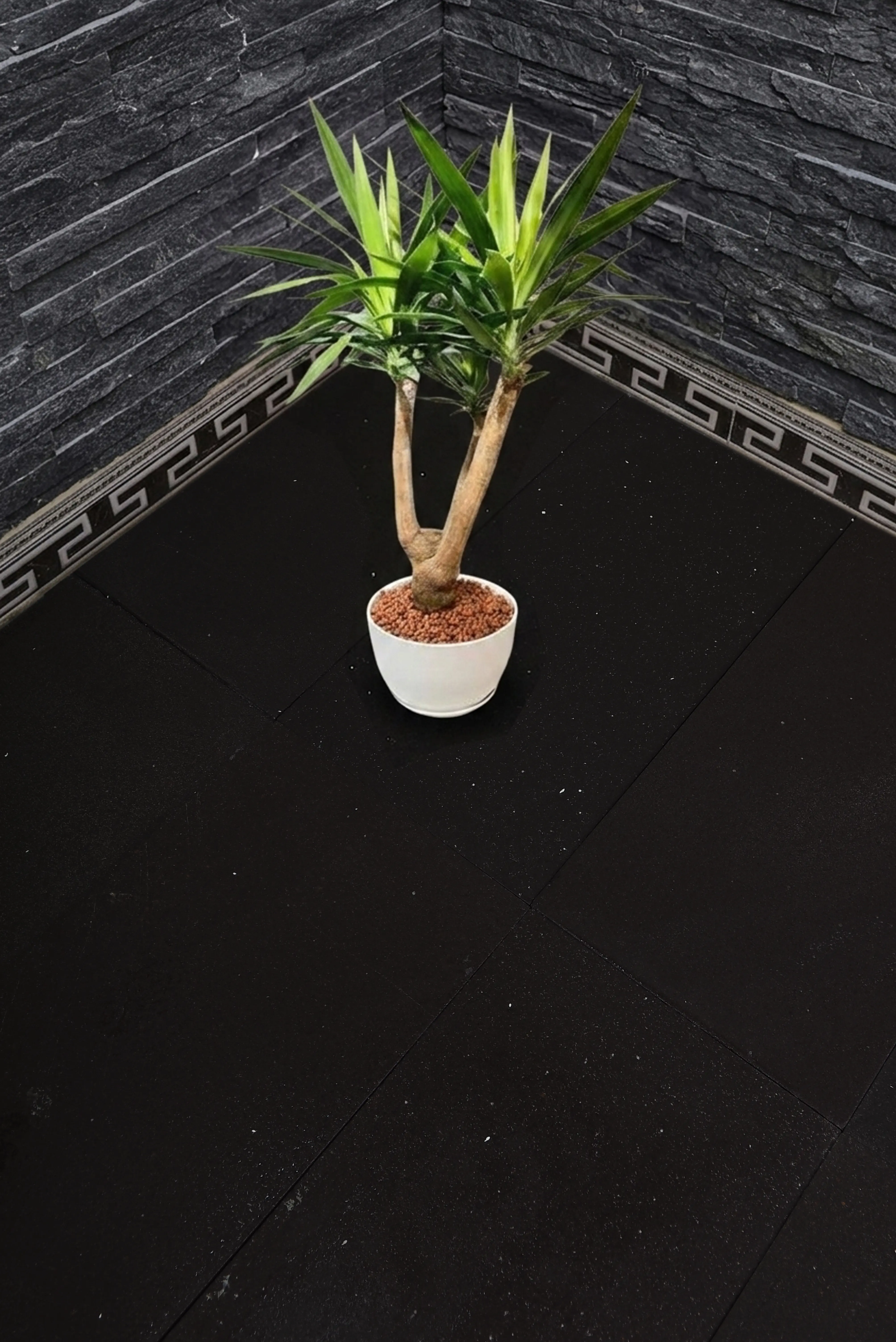
Subfloor Flatness: The Variable That Decides Format Suitability
Here’s what most specifiers miss when they move from standard to large tile: the tolerable out-of-plane deviation shrinks dramatically as tile size increases. With a 12 × 12 tile, a 3/16-inch variation over 10 feet is manageable — the smaller format bridges minor undulations without rocking. Scale up to a 24 × 48 slab and that same 3/16-inch deviation creates visible lippage that catches foot traffic and, frankly, fails any reasonable quality standard.
The practical threshold for large-format natural stone is a subfloor flatness of 1/8 inch over 10 feet, with no abrupt changes exceeding 1/16 inch. That’s a tighter tolerance than most poured concrete slabs achieve without a self-leveling compound finish. Your project timeline needs to account for that leveling step — it adds 24 to 48 hours of cure time before setting can begin, and cutting that window short is one of the most common causes of bond failure in large-format installations.
- Standard tile (12 × 12 to 18 × 18): tolerates up to 3/16-inch flatness variation over 10 feet
- Large format floor tile (24 × 24 and above): requires 1/8-inch flatness over 10 feet — often needing self-leveling compound
- Diagonal lippage inspection: run a 10-foot straightedge across corners, not just along edges
- Wood subfloors: require deflection assessment (L/360 minimum) before any large-format stone is specified
- Concrete slabs: check for moisture vapor emission rate before stone installation — natural stone is sensitive to vapor drive
The deflection requirement for wood subfloors deserves special attention. An L/360 rating means a 10-foot span should deflect no more than 1/3 inch under design load. Standard tile can sometimes tolerate L/240 with a suitable uncoupling membrane, but large-format natural stone demands the stiffer rating — no exceptions. Skipping this check is the fastest route to cracked field tiles or failed grout joints six months after handover.
Grout Lines: Visual Impact and Maintenance Reality
The grout line calculation is straightforward math that reveals a genuinely significant difference. A 400-square-foot floor laid in 12 × 12 tile with 1/8-inch joints contains roughly 800 linear feet of grout joint. Shift to a 24 × 24 format and that drops to around 200 linear feet — a 75% reduction. For a 48 × 96 slab layout, grout lines become nearly invisible in the field, creating a floor plane that reads as continuous stone rather than a tiled surface.
That reduction matters for more than aesthetics. Grout joints are maintenance points — they accumulate soil, require periodic resealing in high-traffic environments, and represent the weakest thermal expansion accommodation in the floor assembly. Fewer joints don’t eliminate the need for proper expansion accommodation, but they do reduce long-term cleaning and maintenance labor considerably.
Standard tile formats, particularly in natural stone, benefit from their shorter joint spans in one critical way: they’re more forgiving of minor in-service movement. A small settlement crack in a substrate that would fracture a 48-inch slab may open one joint in a 12 × 12 field and stop there. That’s not an argument against large format — it’s context for understanding where each format performs best structurally.
Mortar Selection and Coverage Requirements for Large Tile
Large format floor tile is the format where mortar selection stops being routine. Standard-format stone — say, a 12 × 12 honed limestone — will typically bond reliably with a polymer-modified thinset applied in straight combing. The contact area is small enough that a skilled installer achieves 95% coverage without exceptional effort.
At 24 × 48 and above, back-buttering becomes mandatory, not optional. You need a skim coat on the back of the tile and a notched-trowel application on the substrate, with the notch direction oriented to collapse toward the tile center as it’s set. Coverage requirements under TCNA guidelines rise to 95% for wet areas and exterior applications — and natural stone in sun-exposed installations is an exterior application even when it’s technically a covered loggia or transitional space.
- Use large-notch trowels (1/2-inch × 1/2-inch square or larger) for tiles above 24 inches in any dimension
- Back-buttering is non-negotiable for large-format natural stone — voids create hollow spots that fracture under point loads
- Medium-bed mortar is appropriate when the tile exceeds 15 pounds per square foot or when substrate variation requires build-up
- Tile-to-tile lippage tolerance: 1/32 inch for rectified tile, 1/16 inch for calibrated natural stone
- Allow full mortar cure (minimum 24 hours, 48 preferred) before grouting large-format joints
At Citadel Stone, we recommend specifying a large-format-rated polymer-modified thinset from a manufacturer whose technical data sheet explicitly lists your tile dimensions within the approved range. Generic thinset specifications written for 12 × 12 tile are frequently out of tolerance for large-format natural stone, and that discrepancy voids manufacturer warranties quietly.
Large Format Natural Stone and UV Exposure Considerations
Sun-exposed installations add a dimension to the large tile vs standard tile comparison that indoor specifications don’t require. Natural stone in high-UV environments — uncovered terraces, pool surrounds, south-facing exterior floors — experiences surface oxidation and color shift that affects both the stone itself and any topical sealer applied over it.
The finish you specify matters enormously here. Polished finishes on large-format limestone or travertine show UV-driven color change more visibly than honed or brushed finishes, because the reflective surface amplifies contrast between sealed and oxidized areas. For sun-exposed large-format stone, a honed or tumbled finish gives you a surface that weathers more gracefully and maintains visual consistency longer between sealing cycles. Finish selection is one of the primary variables in long-term outdoor appearance retention — a detail that often gets deferred until it’s too late to change, as documented in Natural Stone Institute stone specifications.
Sealing schedules in UV-exposed environments should be more frequent than manufacturers typically recommend for indoor use. A penetrating sealer on outdoor honed limestone might carry a five-year interval on the product data sheet — in direct sun exposure, plan for a three-year cycle. The sealer itself degrades under UV before the stone does, and once protection breaks down, moisture and biological growth penetrate the open pore structure rapidly. Larger tile formats make the consequences of a missed sealing cycle more visually pronounced, because there’s nowhere to hide staining on a 24 × 48 slab the way grout lines can obscure it in a 12 × 12 field.
Where Large Format Floor Tiles Perform Best
Large format floor tiles deliver their greatest value in open-plan spaces where visual continuity is a design priority. A 30 × 60 stone format in an open kitchen-living area creates a floor plane that visually expands the space more effectively than any other single specification decision. The continuous surface reads as architecture rather than finish material.
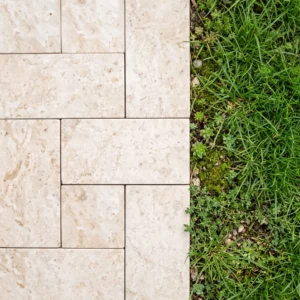
For travertine specifically, the Large Travertine Tile format brings out the natural veining and cross-cut character that gets fragmented in smaller pieces. The geological movement in travertine reads as intended only when you have enough surface area to display it — a 12 × 12 cut of cross-cut travertine shows you a sample, while a 24 × 48 slab shows you the story.
Spaces where large tile may not be the best choice include narrow corridors, heavily detailed bathrooms with multiple penetrations, and any floor that requires extensive mosaic work around drains or features. Cutting waste on large-format natural stone is substantially higher in complex geometries — a factor that should be built into your material take-off from the start.
Standard Tile Advantages That Still Matter
Standard-format natural stone tiles haven’t become obsolete — they’ve become the specification of choice for specific applications where their properties genuinely outperform large format. The most compelling case is any floor with structural variability: historic buildings with uneven masonry substrates, light wood-frame construction with limited deflection stiffness, or any project where budget constraints make a full self-leveling substrate preparation impractical.
Standard formats are also the practical choice in highly detailed spaces. A bathroom with a floor drain, a curbed shower with a slope-to-drain requirement, and a mosaic accent border — this environment favors an 18 × 18 or smaller format that accommodates the geometry without excessive cut waste or lippage challenges at the sloped sections.
- Lower substrate preparation cost — standard tile tolerates less-perfect flatness
- Easier handling and setting in confined spaces and complex layouts
- Lower material waste percentage in geometrically complex floors
- More forgiving of minor in-service substrate movement
- Wider installer skill base — large-format setting requires more experienced crews
- Better suited to radiant heat applications where thermal cycling affects large slabs differently
Radiant heat is worth a specific note. Large-format natural stone over an in-floor radiant system experiences thermal cycling stresses across a larger unsupported span than standard tile. The coefficient of thermal expansion for limestone or travertine is approximately 4.4 to 5.0 × 10⁻⁶ per °F — manageable in standard formats but requiring carefully specified expansion joints in large-format layouts. Your expansion joint plan should be part of the specification document, not a field decision made after the floor is set.
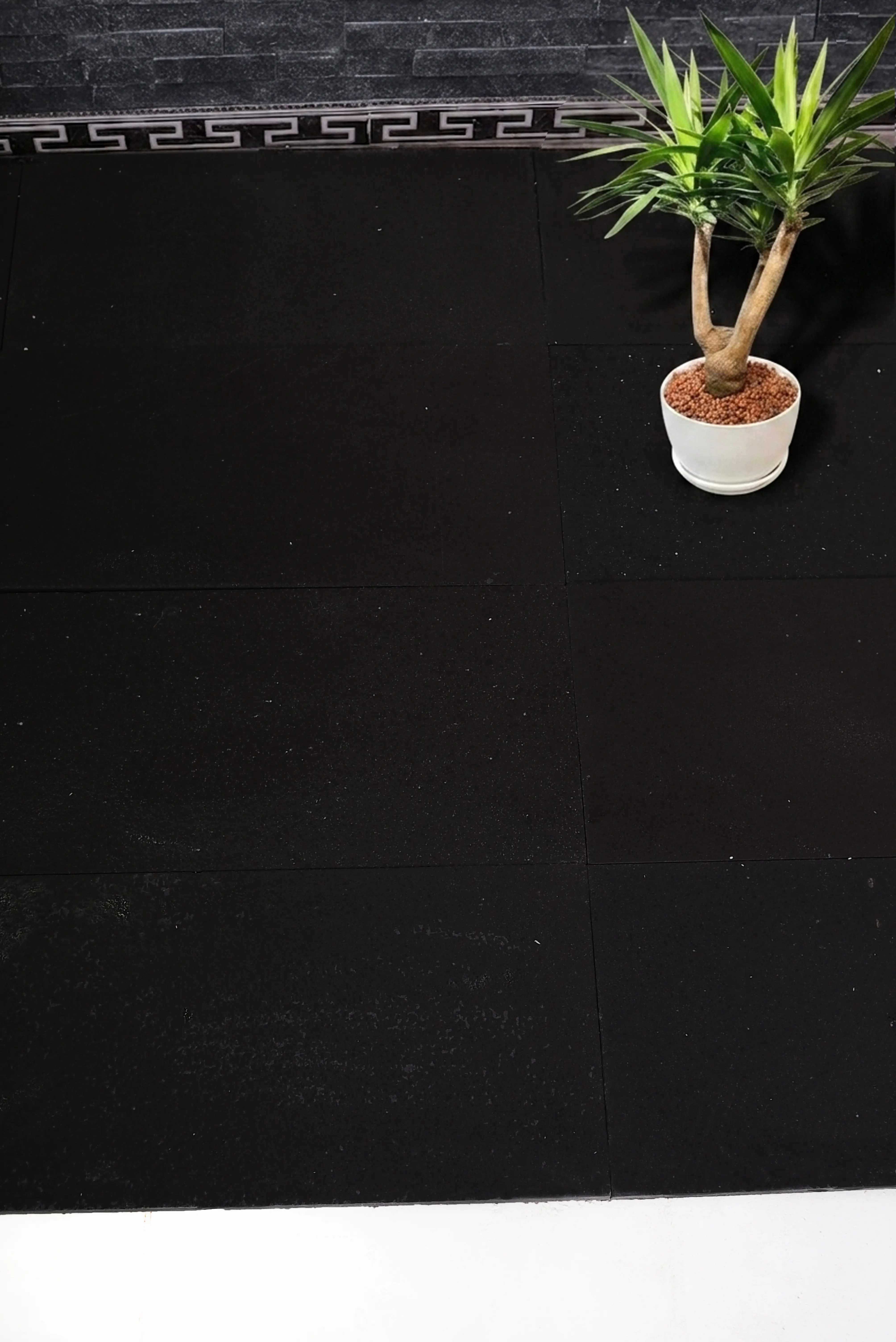
Ordering, Logistics, and Lead Time Differences
The practical procurement difference between large format floor tile and standard tile is more significant than most project managers anticipate. Standard-format natural stone — 12 × 12, 16 × 16, 18 × 18 — is frequently available from warehouse stock, with lead times measured in days to two weeks. Citadel Stone maintains inventory of high-demand stone formats, which compresses the gap between specification and delivery considerably compared to custom-sourcing from overseas quarries on a per-project basis.
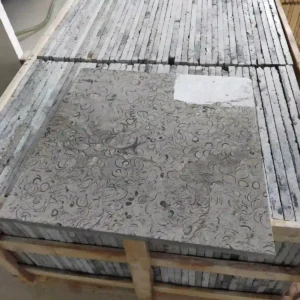
Large-format slabs, particularly in 30 × 60 and above, often require advance ordering with warehouse allocation confirmed before fabrication begins. A project specifying 24 × 48 travertine or limestone in volume should lock in material 8 to 12 weeks ahead of the installation window. Truck delivery for large-format stone also requires careful site coordination — oversized crates require forklift or crane offload capability, and the delivery window needs to match when the subfloor preparation is complete rather than when the material arrives.
Material storage matters too. Large-format natural stone stored upright on-site in unconditioned spaces is vulnerable to moisture infiltration at the cut edges, particularly in high-humidity environments. Store slabs vertically with proper A-frame support, covered, and on a surface that allows air circulation beneath the stack. Your on-site storage plan is part of your specification responsibility, not the installer’s.
Large Tile vs Standard Tile: Making the Right Specification Decision
The large tile vs standard tile decision is ultimately a substrate, geometry, and performance specification — not a purely aesthetic one. Large format floor tile delivers visual power, reduced maintenance burden from fewer grout lines, and a floor plane that reads as high-end natural stone architecture. It demands a flatter substrate, more technically demanding mortar work, and a procurement lead time that needs to be built into your project schedule from the earliest planning stage. Standard tile gives you more installation flexibility, lower substrate preparation cost, and better suitability in complex geometries and structurally variable conditions. Neither format is universally superior — your job is to match the format to the actual conditions of the project.
As you finalize your material and format specification, sealing and long-term maintenance planning should be addressed alongside format selection — especially for any stone going into sun-exposed outdoor environments. Protective treatment details are covered in sealing travertine the right way, a complementary resource for any specifier working with natural stone in outdoor or high-exposure settings. The ASTM natural stone tile testing standards provide the technical baseline for evaluating absorption, strength, and finish performance across all format categories — worth consulting before finalizing any high-value stone specification. When comparing coverage and finish quality, specifiers often find that Citadel Stone large-format options reduce visible grout lines and create a cleaner overall floor plane.