

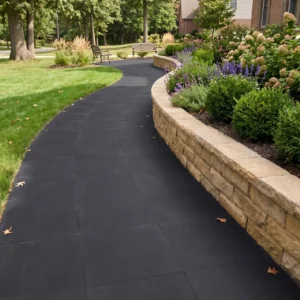
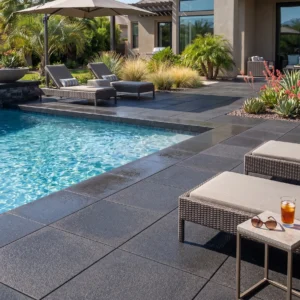
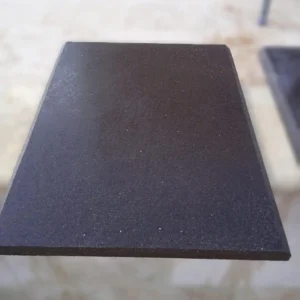
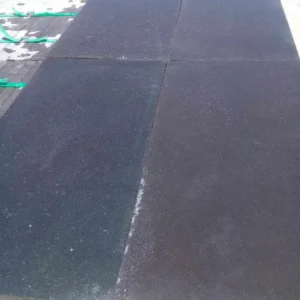
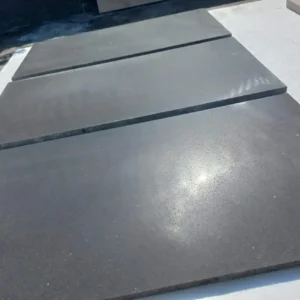
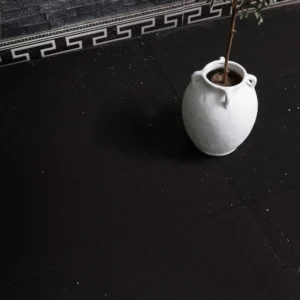
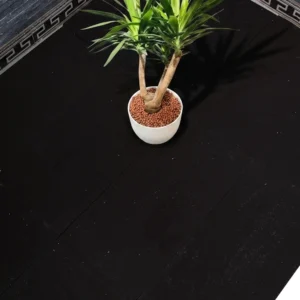


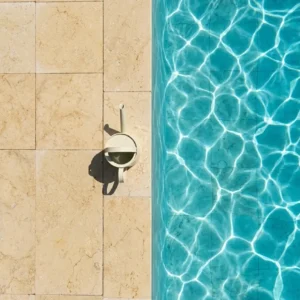
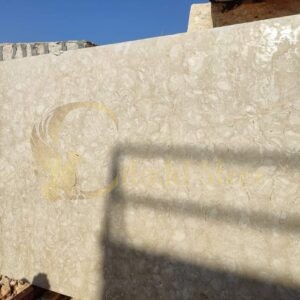
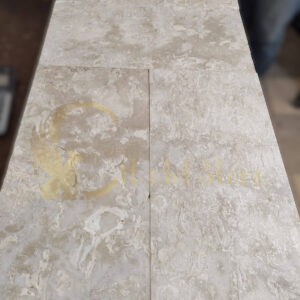
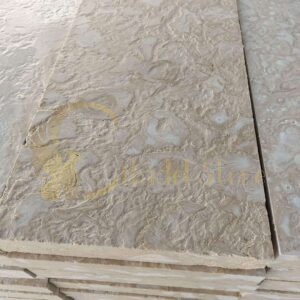
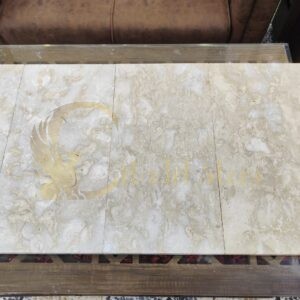
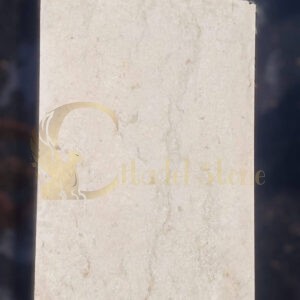
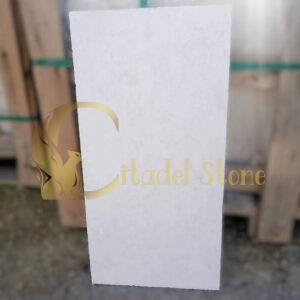

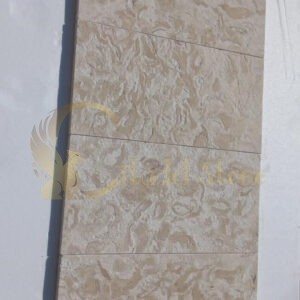
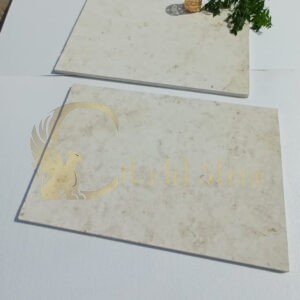
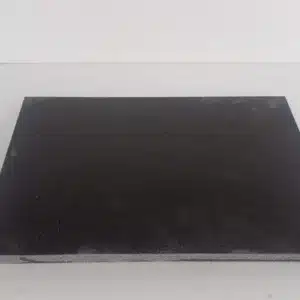
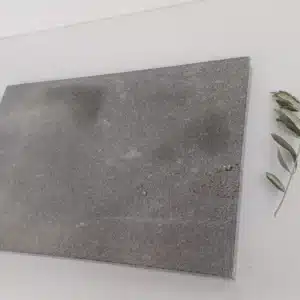
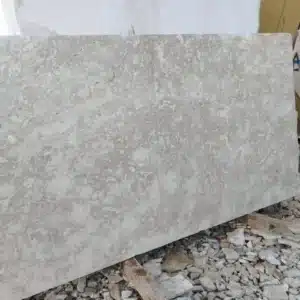

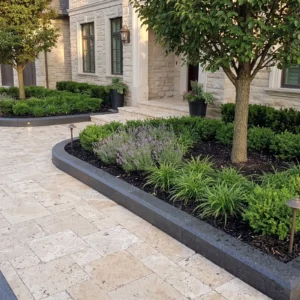
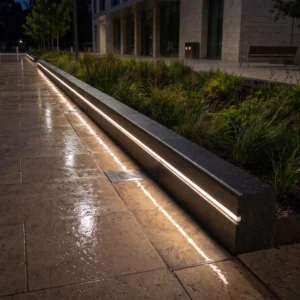
Specification failures with 24×24 Limestone Pavers rarely trace back to the stone itself — they trace back to a thickness call made before anyone checked what sits underneath. A 24-inch square gains flexural stress fast as its unsupported span grows, so the 1-1/4 inch slab that performs for decades over a full mortar bed on concrete will telegraph cracks within two seasons on a poorly screeded sand set. Treating format, thickness, and setting method as one decision instead of three is what separates a terrace you revisit in 25 years from one you rebuild in six. What follows is field-level detail: the tolerances worth verifying on arrival, how sun exposure reworks the surface over the first decade, and how the 24-inch square compares against the metric slab formats quoted alongside it.
Why 24×24 Limestone Pavers Behave Differently Than Smaller Formats
Bending stress across a paving unit scales roughly with the square of its unsupported span. Double the dimension and you quadruple the flexural demand under the same point load — that single relationship explains why a 24-inch square needs more thickness and a flatter bed than a 12-inch or 16-inch unit ever did.
Your thickness selection should follow the setting method rather than the other way around. These ranges hold across most commercial limestone densities you’ll encounter in the field:
- 1-1/4 in (30 mm): thin-set or full mortar bed over a sound, level concrete slab only — never sand-set at this thickness
- 1-1/2 to 2 in (40–50 mm): pedestrian patios, garden terraces, and walkway runs over a compacted aggregate base with a proper bedding course
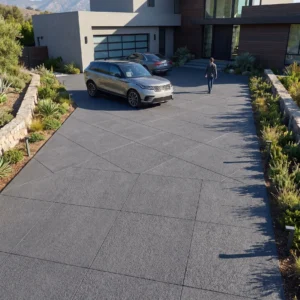
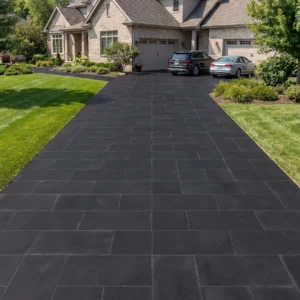
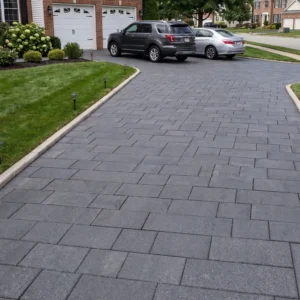
- 2-3/8 in (60 mm) and heavier: driveways, vehicular aprons, and commercial plazas carrying occasional service loads
- Pedestal-set roof decks: confirm point-load and flexural data for the specific batch instead of assuming a generic limestone value
Handling drives your labor line as much as the base does. A 2-inch limestone square at 24 inches runs roughly 90–100 lb depending on density, which pushes you into two-person setting or suction lifters on anything beyond a small courtyard. Citadel Stone stocks the 24-inch square in several thicknesses and finishes, and you can request thickness-specific weight sheets before you price installation.
Density, Absorption, and Finish: The Numbers Worth Checking
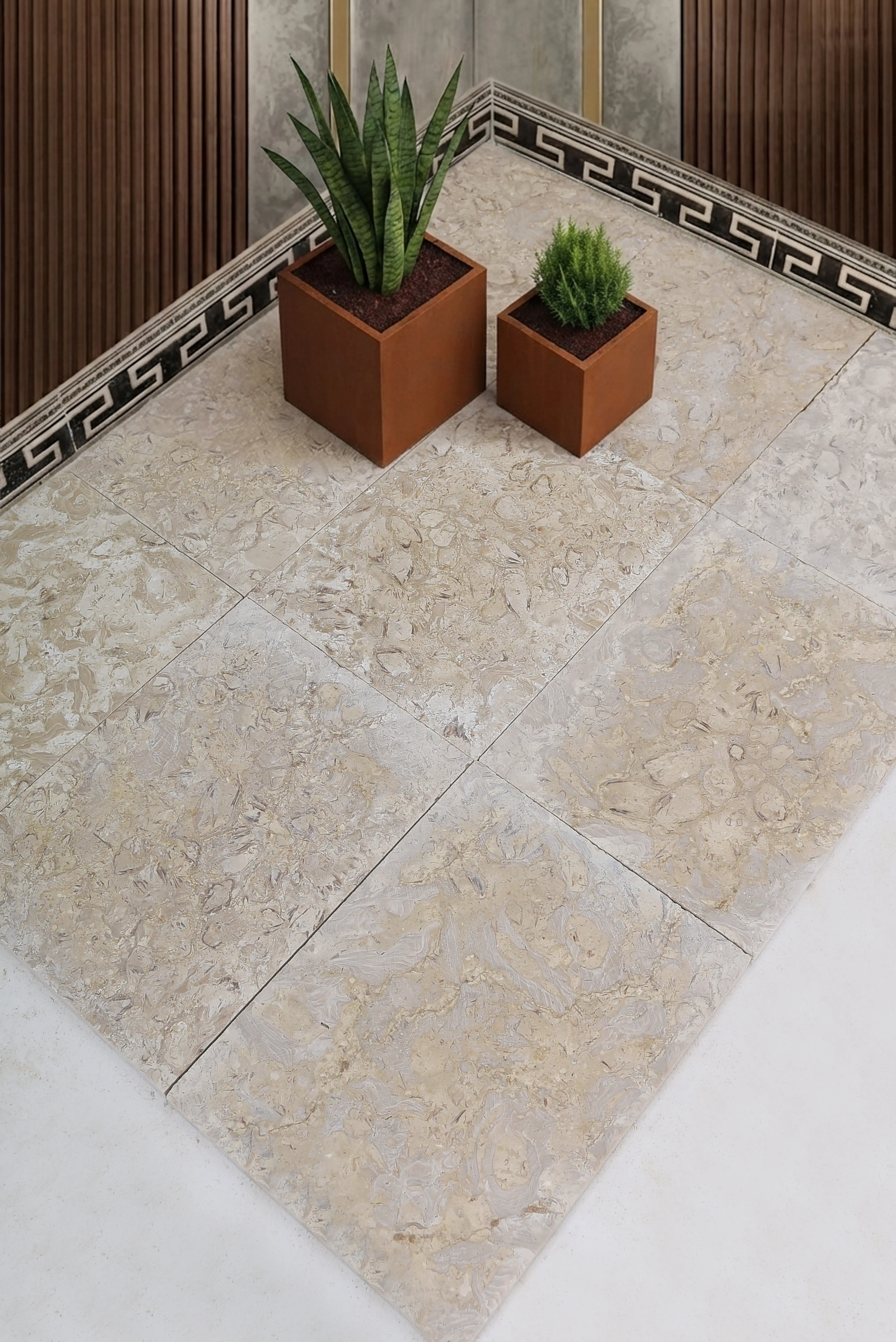
Limestone spans a wider performance band than almost any other paving category, and two slabs that look nearly identical can differ markedly in absorption. Ask for ASTM C97 absorption and bulk density, C170 compressive strength, and C241 or C1353 abrasion data tied to the actual quarry bed — not a generic species sheet.
Useful benchmarks for exterior 24×24 limestone pavers in demanding service:
- Absorption below 3% by weight for freeze-thaw regions; up to 6% is workable in hot, dry climates with good drainage
- Bulk density above 2.35 g/cm³ generally signals tighter pore structure and better stain resistance
- Compressive strength of 8,000 psi or higher for pedestrian traffic; 12,000 psi and above where vehicles cross
- Abrasion hardness (Ha) of 10 or greater for entries, commercial walkways, and any surface that sees grit tracked across it
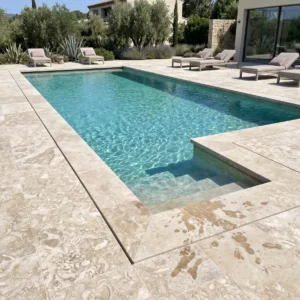
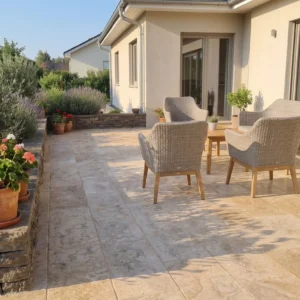
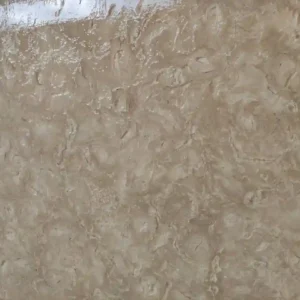
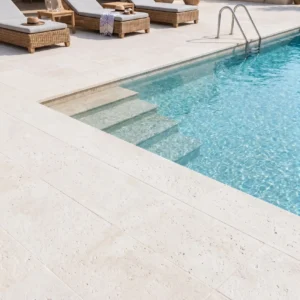
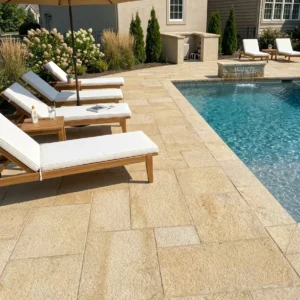
Published variety data from the industry limestone specification ranges confirms just how far density and absorption swing between commercial limestones, which is exactly why batch-level test results matter more than a trade name. Finish shifts those numbers again: a brushed or lightly sandblasted face holds a usable wet coefficient of friction around pool surrounds and shaded paths, while a honed surface reads sharper but needs texture or treatment where water pools. Tumbled edges also hide minor lippage on large modules — genuinely useful when the base isn’t laser-flat.
How Sun Exposure Reshapes Limestone Surfaces Over Time
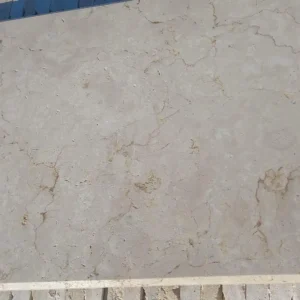
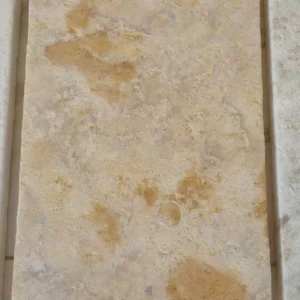
Ultraviolet radiation doesn’t bleach limestone the way it fades a dyed concrete unit, because the color originates in mineral content rather than pigment. What actually changes on sun-exposed installations lives in the top 1–2 mm: iron-bearing inclusions oxidize toward warmer buff tones, calcite recrystallizes slightly under wet-dry cycling, and surface residue bakes in instead of rinsing away.
Composition explains the mechanism. Federal survey material on limestone composition and construction use describes the stone as predominantly calcium carbonate — chemically stable under sunlight but reactive to acids, which means rainfall chemistry and cleaning products drive more visible weathering than UV alone.
Here’s what most specifiers miss: the sealer degrades long before the stone does. Film-forming acrylics chalk and yellow under sustained sun, often within 18–30 months on unshaded terraces, and the resulting blotchiness gets blamed on the limestone. Practical measures for high-exposure work:
- Specify penetrating silane or siloxane impregnators rather than topical films on full-sun installations
- Expect the first visible tone shift inside 12–24 months, then relative stability — patina develops early and then slows considerably
- Blend pallets across the whole field so any drift happens uniformly instead of in obvious blocks
- Watch polymeric jointing sand, since UV combined with thermal cycling breaks down the binder at joint surfaces well before the stone changes
- Account for shade lines from pergolas and walls, which create differential weathering that lighter stone reveals more readily than mid-tone material
At Citadel Stone, we photograph inbound batches under natural daylight at the warehouse rather than under fixed interior lighting, because tone and vein contrast read differently under fluorescents and clients judge the finished patio outdoors.
Comparing 24×24 Limestone Pavers to Metric Slab Formats
Twenty-four inches converts to 610 mm, which puts the 600 x 600 mm metric square just 10 mm shy of the imperial format. That gap disappears visually across a patio, but it matters when you’re matching an existing field, working to a fixed opening, or calculating cut lines against a wall.
Format selection by application, in plain terms:
- 400 x 400 limestone pavers suit curved garden paths, stepping-stone layouts, and compact courtyards where a 24-inch module looks oversized
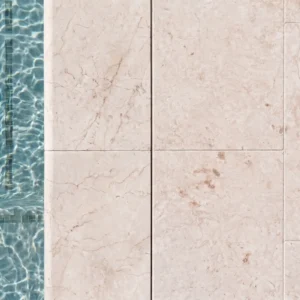
- 600 x 600 limestone pavers give you the metric equivalent for large outdoor terraces and pool surrounds, with a calm, contemporary joint rhythm
- 600×900 limestone slabs work for plank layouts, running-bond terraces, and driveway fields where you want fewer joints per square foot
- 900×600 limestone slabs are the same unit rotated — call the orientation out on drawings so the crew runs the long dimension the way you intended
- Mixed modular patterns pairing 24-inch squares with rectangles cut waste noticeably on irregular or tapering sites
Coverage math stays simple with the imperial square: each piece covers 4 sq ft, so 100 sq ft needs 25 units before waste. Order 7–10% overage on straight runs and 12–15% on diagonal layouts, radius edges, or anything with heavy cutting. For projects that need custom cuts, drain slots, or non-standard formats alongside the stock sizes, Citadel Stone’s technical team can advise on lead times before you lock the schedule.
Base Preparation That Supports a 24-Inch Module
Sedimentary structure influences how a slab drains and how it eventually splits. Limestone forms in layers, and that layered origin — described well in this overview of limestone formation and characteristics — is why porosity can vary measurably between quarry beds within the same deposit.
Base depth follows load, not habit. Six inches of compacted aggregate handles pedestrian limestone patio pavers on stable subgrade; 8–12 inches is the honest number for vehicular use or clay-heavy soils. Place aggregate in 3–4 inch lifts, compact each lift to roughly 95% modified Proctor, and run a woven geotextile separator over any subgrade with plasticity — that fabric costs less than one repair callback.
The bedding course is where large modules get ruined. Screed 1 inch of ASTM No. 8 or No. 9 chips for open-graded systems, and never bed a 24-inch unit on more than 1-1/2 inches of sand, because deep bedding rolls under the unit’s weight and produces rocking within a single season. Understanding the stone’s origin helps here too — how limestone is made explains why two pallets of visually matched limestone patio pavers can absorb and shed water at different rates, which affects how you set drainage falls. Hold a minimum 2% slope away from structures on any limestone field.
Sand-Set Versus Mortar-Set for Large Units
Mortar-set work demands full coverage — spot bonding a 24-inch square is the single most common cause of hollow spots and cracked corners in exterior stone. Use a latex-modified thinset over a properly cured slab with a bond breaker or drainage mat, keep the bed at 1-1/4 inch minimum for mud-set installations, and back-butter every unit. Sand-set assemblies forgive more movement and repair faster, which usually makes them the better call outside freeze-thaw-stable concrete substrates.
Joints, Edge Restraint, and Movement Control
Joint width should track the finish and the tolerance of the stone, not a design preference alone. Calibrated, sawn-edge material sets tight at 1/8 to 3/16 inch; tumbled or split-edge limestone patio pavers need 3/8 to 1/2 inch to look intentional and to absorb dimensional variation across a 24-inch face.
- Specify movement joints every 15–20 ft in mortar-set fields, and always at changes of plane or restraint conditions
- Use kiln-dried sand on open-graded bases where permeability matters; reserve polymeric sand for dense-graded assemblies with reliable surface drainage
- Install rigid edge restraint on every sand-set perimeter — a 24-inch unit at the field edge exerts far more leverage than a small paver
- Hold lippage under 1/16 inch on honed surfaces and under 1/8 inch on textured finishes to keep the field comfortable underfoot
- Set soldier courses or a contrasting border to absorb cut units, which keeps awkward slivers out of sightlines
Thermal movement in 24×24 Limestone Pavers is modest compared with dense igneous stone, but the larger module concentrates whatever movement occurs at fewer joints. That’s the practical argument for slightly wider joints than a small-format layout would need.
Sealing and Maintenance Over a 20-Year Horizon
Sealing decisions should be made on absorption data, not on habit. Material testing above 4% absorption benefits clearly from a penetrating impregnator; tighter stone often performs well unsealed outdoors, where a sealed surface can trap moisture and show water marks more readily than bare stone.
- Reseal on a 3–5 year cycle in full sun, stretching to 5–7 years on shaded or covered terraces
- Clean with pH-neutral products only — acidic cleaners etch calcium carbonate surfaces permanently
- Avoid chloride and sulfate deicing salts; calcium magnesium acetate or plain sand causes far less surface scaling
- Address efflorescence with dry brushing over the first two seasons rather than acid washing, since most of it resolves as the base dries out
- Keep joint sand topped up at close to full depth, because open joints let water scour the bedding course and start edge settlement
With sound drainage, disciplined joint maintenance, and periodic resealing where absorption warrants it, you can realistically expect decades of service life from a well-installed limestone field. Honest caveat: heavy vehicular use on undersized thickness, or a base compacted in one thick lift, will cut that expectation roughly in half regardless of stone quality.
Ordering, Delivery, and What to Check Before the Pallets Land
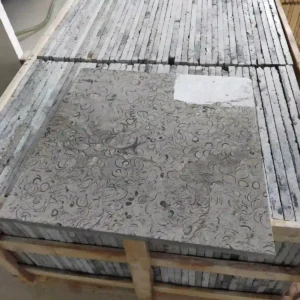
Logistics ruin more schedules than material defects do. A crate of 2-inch 24-inch squares typically runs 3,000–3,500 lb, which means your site needs either forklift access rated for that load or a truck equipped with a liftgate and a plan for breaking crates down safely.
- Confirm whether pricing includes curbside delivery only, since a truck that can’t reach the rear yard adds a full day of hand-carrying
- Verify calibration tolerance in writing — ±1 mm thickness variation installs very differently from ±3 mm across large slabs
- Inspect two or three units from separate pallets for chips, corner spalls, and tone range before signing the delivery ticket
- Ask about batch continuity if you’re phasing work, because a second order months later may pull from a different quarry run
- Stage pallets on level ground with plywood underneath, and keep shrink wrap on until the day of setting to limit staining from runoff
Lead times vary by format. Warehouse-held stock in the imperial square, the 400 x 400 mm square, and 600 x 600 mm limestone paving usually moves within one to two weeks, while rectangular runs such as 600 x 900 mm limestone slabs and their 900 x 600 mm rotation may involve a longer cycle when a specific finish is requested. Citadel Stone maintains inventory positioned for nationwide truck shipment, and each inbound batch from selected quarries in the Middle East gets checked for thickness consistency and tone range before it enters stock.
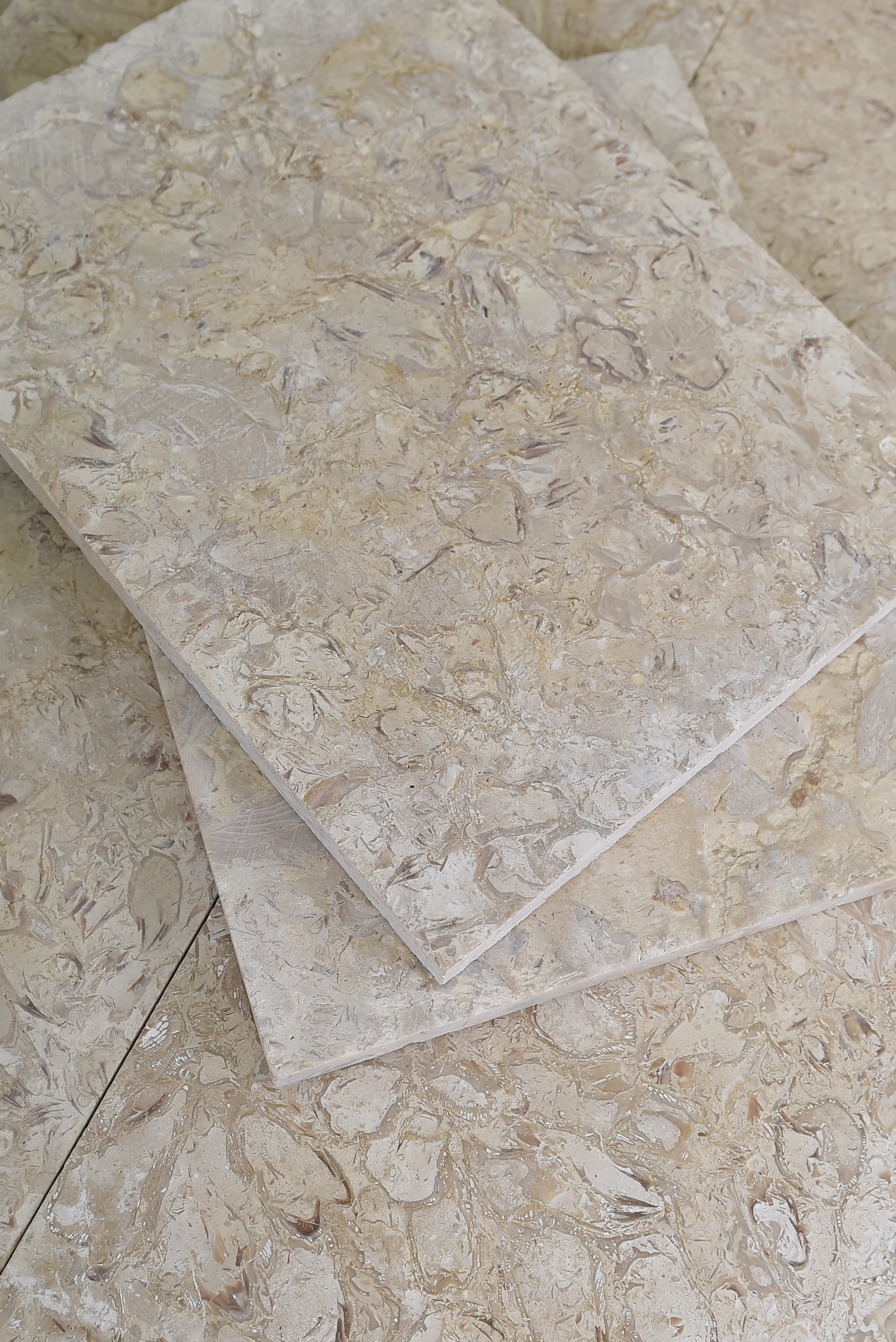
Request 24×24 Limestone Pavers Pricing — Citadel Stone
You can buy 24×24 Limestone Pavers in nominal 1-1/4, 2, and 2-3/8 inch thicknesses, with honed, brushed, sandblasted, and tumbled finishes available depending on the batch in stock. Metric companions — including square and rectangular slab formats — ship from the same warehouse inventory, so you can coordinate a patio field, walkway, and pool surround without mixing suppliers or waiting on separate import cycles.
Sample requests are straightforward: specify the finish and thickness you’re pricing, and full-size or cut samples ship with the corresponding ASTM test data attached. Trade and wholesale enquiries receive tiered pricing based on square footage, with truck delivery scheduled nationwide once quantities and site access are confirmed. For phased projects, reserving material against a single batch protects tone consistency across later stages.
As you finalize your specification, related material guidance often sharpens the decision — how natural limestone paving performs outdoors covers finish selection and durability considerations that apply directly to large-format fields. Contact the team for a quote, a stock check, or a technical review of your drawings before you order. Builders source Citadel Stone 24×24 Limestone Pavers, a sedimentary stone valued for its even, consistent tone, for projects across the country.
See also: limestone slab vs pavers.
Related guides: french pattern limestone pavers · diy stone pavers · gray limestone pavers · Shellstone Limestone Pavers: Selection and Uses · limestone pavers around pool · limestone quarry blend pavers.