What Quarry Blend Actually Means for Your Budget
Limestone quarry blend pavers carry a price range that surprises most specifiers the first time they see it — not because the material is expensive, but because the range is wide and the variables driving it aren’t always obvious. You’ll typically encounter material-only pricing between $4.50 and $14.00 per square foot for limestone quarry blend pavers, depending on stone grade, slab thickness, finish type, and order volume. Understanding where your project falls in that range before you go to bid is the difference between a realistic budget and a costly revision after approval.
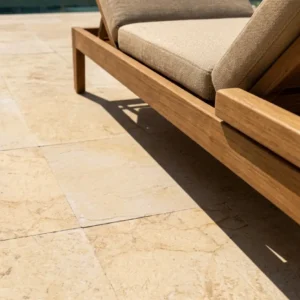
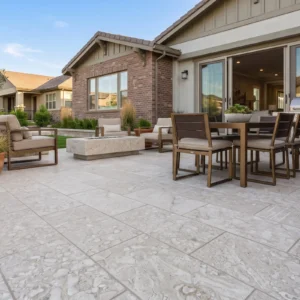
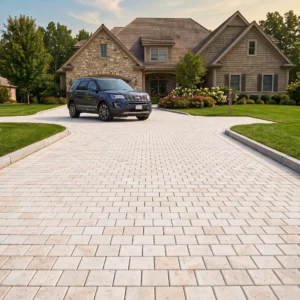
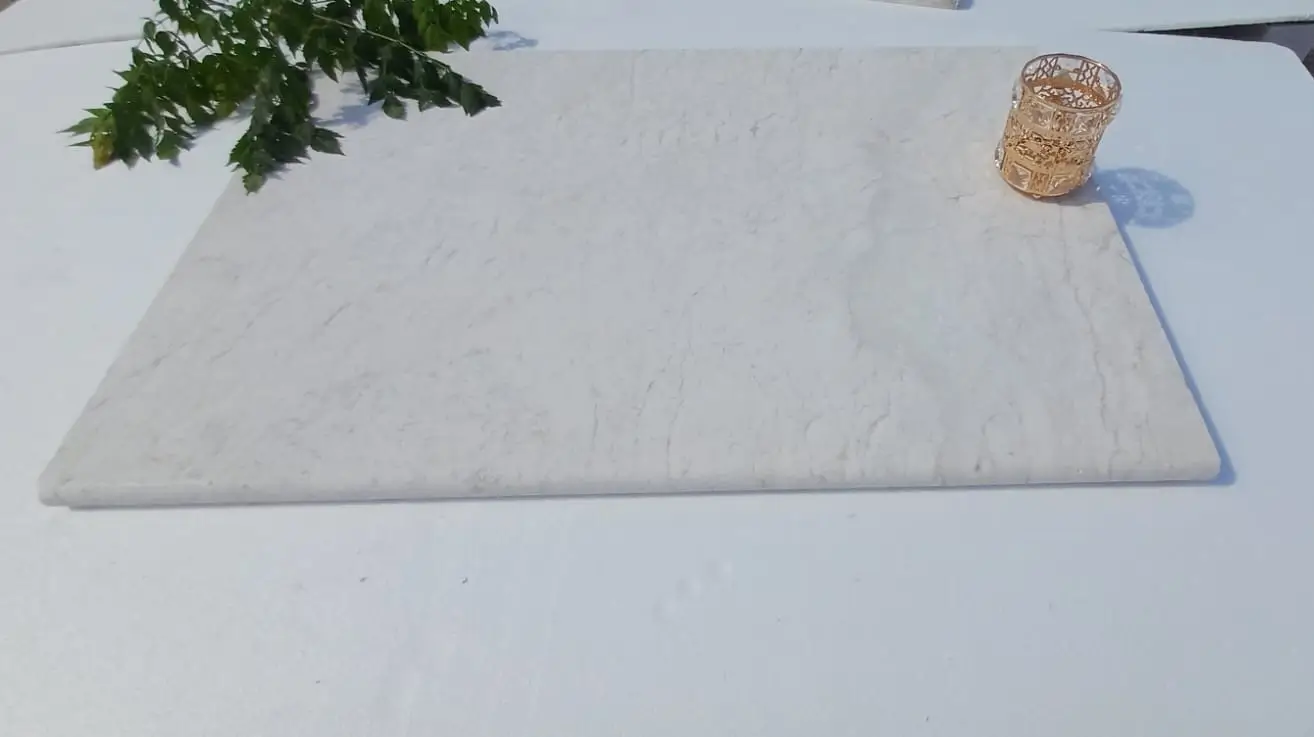
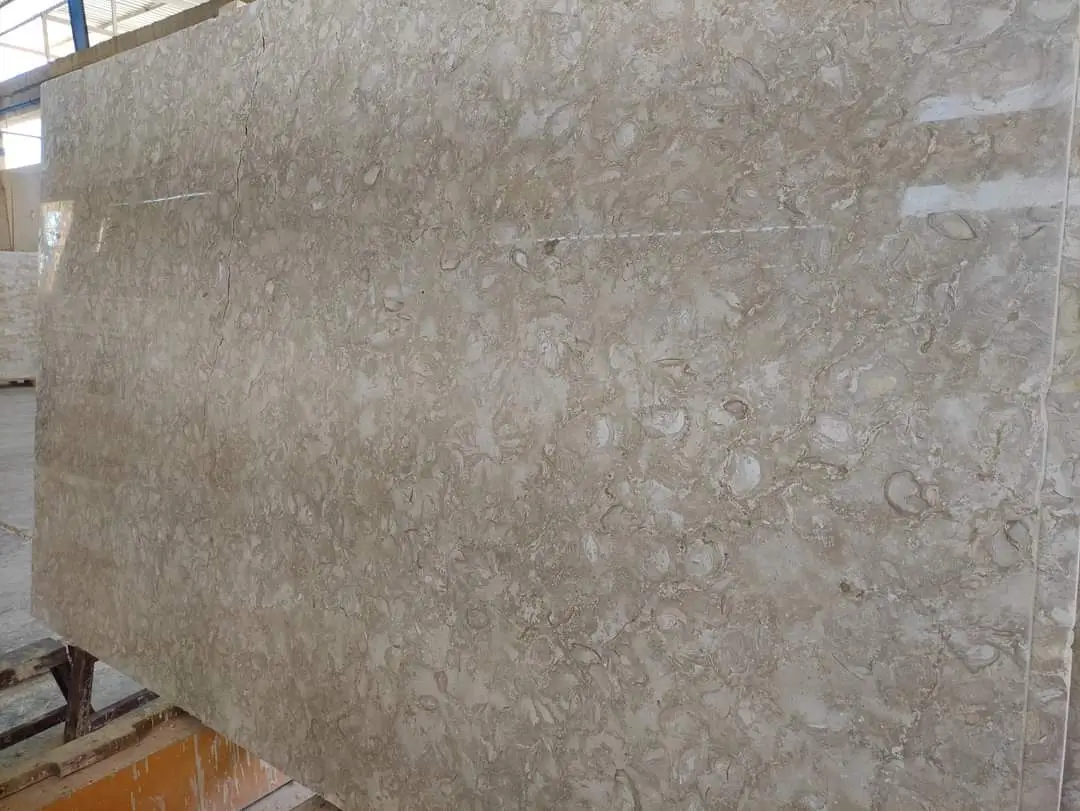
The term “quarry blend” itself is worth unpacking. These pavers are cut from limestone blocks that include variation in tone, veining, and fossil texture — characteristics that are inherent to sedimentary formation rather than a quality defect. According to limestone formation and characteristics, this material develops through the accumulation of calcium carbonate sediment over geological timescales, which naturally produces the tonal shifts that define quarry blend aesthetics. That variation is precisely what designers pay for, and it’s also what separates quarry blend from more uniform, processed stone products.
Material Cost by Grade and Thickness
Your first specification decision — thickness — has an immediate and direct impact on material cost. Standard residential applications typically call for 1.25-inch (30mm) pavers, while driveways and commercial walkways demand 2-inch (50mm) stock. The jump from 1.25″ to 2″ nominal thickness generally adds $1.50 to $3.00 per square foot to your material cost, not including the added freight weight, which compounds the number further.
- Select grade (uniform tone, tight tolerance): $9.00–$14.00 per sq ft material cost
- Standard grade (moderate tonal variation, quarry blend character): $5.50–$9.00 per sq ft
- Commercial grade (wider variation, field-cut tolerances): $4.50–$6.50 per sq ft
- Honed finish typically adds $0.75–$1.50 per sq ft over natural cleft
- Tumbled or antiqued finish adds $1.00–$2.00 per sq ft for processing labor
The Natural Stone Institute limestone technical specifications confirm that finish processing, absorption rates, and density all affect field performance — and they’re the same variables that differentiate pricing tiers. Choosing honed over natural cleft isn’t just an aesthetic call; it affects slip resistance, sealing frequency, and long-term maintenance cost, all of which feed back into your total project budget over time.
Bulk Order Pricing and Volume Thresholds
Ordering pavers bulk changes the cost equation significantly. Most suppliers structure pricing in pallet-based tiers, and crossing a volume threshold — often around 500 square feet, then again at 1,000 and 2,500 square feet — unlocks meaningful per-unit savings. You’re looking at reductions of $0.50 to $1.75 per square foot as you move up the volume ladder, which on a 2,000 sq ft project can represent $3,000 to $3,500 in material savings alone.
Here’s what most buyers don’t account for in bulk purchasing: pallet configuration and truck load optimization. A standard 48″ x 40″ pallet of 2″ limestone quarry blend pavers runs approximately 1,800–2,200 lbs. Your truck delivery configuration — whether you’re receiving a full truckload (typically 20–22 pallets) or a partial LTL shipment — determines your freight rate per square foot more than the per-unit material price in many cases. Full truckload rates per square foot can run 40–60% lower than LTL rates on the same material. If your project is close to a full-truck threshold, it’s worth adjusting scope or phasing to hit that number.
- LTL freight (1–8 pallets): $0.85–$1.60 per sq ft freight cost
- Partial truckload (9–17 pallets): $0.55–$0.90 per sq ft freight cost
- Full truckload (18+ pallets): $0.30–$0.55 per sq ft freight cost
- Liftgate service adds a flat $75–$150 if the delivery site lacks a dock or forklift
- Inside delivery or job-site placement adds time and cost — confirm site logistics before ordering
For projects requiring precise cost modeling across volume tiers, Citadel Stone bulk paver pricing provides a practical reference point for large-format limestone orders by pallet quantity.
How Freight Distance Shapes Your Total Cost
The assigned cost factor that catches most project managers off guard is freight — specifically, how dramatically delivery distance reshapes the per-square-foot math on limestone quarry blend pavers. Stone is heavy, and weight-based freight pricing means your delivered cost in a region close to warehouse stock looks very different from a project hundreds of miles inland from a distribution hub.
Domestic freight on stone products is largely driven by weight, distance, and access. A 1,500 sq ft order of 2″ limestone pavers weighs roughly 30,000 lbs — a full LTL shipment by most carrier standards. Freight from a centrally located warehouse to a project within 300 miles might add $0.35–$0.55 per square foot. That same order shipped 900–1,200 miles may add $0.80–$1.25 per square foot, narrowing the cost advantage of a lower material rate. Citadel Stone maintains warehouse stock in coordinated pallet quantities that reduce staging time, which helps cut down on the holding and re-handling costs that inflate delivered price on phased projects.
- Regional material availability affects lead time — not just price
- Labor market conditions in high-cost metro areas can push installation to $8–$16 per sq ft, rivaling or exceeding material cost
- Value engineering with quarry blend — accepting wider tonal variation in exchange for commercial-grade pricing — is a legitimate strategy on budget-constrained projects
- Material-to-labor cost ratios on limestone paver projects typically run 40:60 to 55:45, meaning labor dominates total installed cost in most markets
- Sourcing decisions that reduce truck trips (optimizing pallet configuration) directly reduce installed cost by shortening site logistics time
Installation Cost Factors for Limestone Quarry Blend Pavers
Your installed cost adds $5.00 to $16.00 per square foot over the material price depending on base preparation complexity, pattern selection, and site conditions. Pattern cutting drives labor hours faster than almost any other variable — a simple running bond on a flat site installs at 150–180 sq ft per crew-day, while a complex diagonal or circular pattern like gypsy pavers drops that rate to 60–90 sq ft per crew-day. That’s not a minor adjustment — it can double your labor budget on the same square footage.
Base preparation is where specification errors become expensive. Limestone quarry blend pavers require a compacted aggregate base of 4–6 inches for pedestrian applications and 8–12 inches for vehicular loads, with a 1-inch setting bed of coarse concrete sand. Skimping on base depth is the single most common cause of paver failure — not the stone itself. The USGS limestone composition data confirms limestone’s compressive strength makes it highly resistant to surface fracture, meaning most field failures trace to inadequate sub-base support, not material weakness.
- Flat site with clean access: base prep adds $2.00–$3.50 per sq ft
- Sloped site requiring cut-and-fill or retaining: $4.50–$8.00 per sq ft base cost
- Existing concrete demolition and removal: $1.50–$3.00 per sq ft additional
- Joint sand stabilization with polymeric sand: $0.35–$0.60 per sq ft
- Edge restraint installation (steel or aluminum): $3.50–$6.00 per linear foot
Circular and Pattern-Cutting Cost Premiums
Circular fire pit pavers and other radius-cut applications carry a cost premium that specifiers frequently underestimate in early-stage budgets. A circular paver pattern around a fire feature requires radial cuts on nearly every unit — and those cuts take time, generate waste, and demand a skilled installer who understands how to maintain consistent joint width around a curve. Expect a 25–45% labor premium over a straight-run installation of the same material.
Waste factor is equally important to budget when specifying circular fire pit pavers. Straight-pattern installations generate 5–8% cut waste. Circular layouts — particularly tight-radius designs around fire pit surrounds — can generate 15–22% waste depending on the design geometry and the paver format you’re using. Your material order must account for that waste upfront. Ordering short and making a second truck delivery mid-project not only costs more in freight; it risks a tonal mismatch if the second batch draws from a different quarry pull, which is especially noticeable with quarry blend material where tonal variation is already part of the palette.
- Order 10% overage minimum for straight patterns
- Order 20–25% overage for circular, diagonal, or complex inset patterns
- Confirm all material ships from the same quarry lot if tonal consistency matters
- Wet saw with a 10″ diamond blade is the correct tool for radius cuts — angle grinders leave rough edges that compromise joint integrity
- Factor blade wear into installation cost: diamond blades on dense limestone wear faster than on softer stone
Sealing and Maintenance Costs Over Time
The total cost of ownership for limestone quarry blend pavers extends well beyond installation day. Sealing is non-negotiable for longevity — untreated limestone in outdoor applications absorbs oil, organic staining, and mineral deposits at a rate that accelerates surface degradation. A penetrating sealer (silane-siloxane base) applied at initial installation and reapplied every 2–3 years represents $0.15–$0.35 per square foot per application, a manageable ongoing cost relative to the material investment.
Your maintenance schedule also depends on application context. Pavers in high-traffic areas or near cooking features — like circular fire pit surrounds — need more frequent inspection of joint sand integrity. Polymeric joint sand should be inspected annually; if you see ant tunneling or joint erosion exceeding 20% depth, reapplication is warranted before water infiltrates the sub-base. At Citadel Stone, we recommend documenting your sealer brand and application date at the time of installation — contractors change, and having a maintenance record prevents the common mistake of applying an incompatible topcoat sealer over a penetrating base.
- Initial sealing: $0.25–$0.60 per sq ft for professional application
- DIY sealing with a quality penetrating sealer: $0.10–$0.20 per sq ft in product cost
- Joint sand replenishment: $0.20–$0.45 per sq ft every 3–5 years depending on traffic
- Professional cleaning before resealing: $0.30–$0.55 per sq ft
- Total 10-year maintenance cost estimate: $1.80–$4.50 per sq ft (all-in, professional service)
What Matters Most for Limestone Quarry Blend Paver Budgets
Every cost variable in a limestone quarry blend paver project connects back to three core decisions: material grade, order volume, and base specification. Getting all three right at the start of a project eliminates the revision cycles that inflate final cost beyond initial estimates. Your material grade should reflect the visual tolerance of the design — quarry blend’s natural tonal range is an asset, not a compromise, when the design embraces it. Your order volume should be sized to hit the most favorable freight tier, accounting for waste percentage upfront rather than as an afterthought. Your base specification should follow load and drainage requirements without shortcuts, because no material delivers decades of service life over a sub-base that wasn’t built to support it.
As you finalize your stone scope, pool surrounds and wet-area paving represent a related specification challenge worth reviewing — limestone pavers in pool environments covers how surface finish, absorption, and joint design interact differently in continuously wet conditions. Ordered in bulk from established quarry partners across multiple continents, Citadel Stone limestone quarry blend pavers ship in coordinated pallet quantities for full-project coverage.
Related reading: Round Fire Pit Pavers: Layout, Stone Choice, and Safety · Limestone Facade Design: Materials and Style Guide · Gray Limestone Pavers: A Complete Buyer’s Guide.