The variability between a 15-year limestone installation and a 30-year one almost always traces back to decisions made before the first paver was ever laid — specifically, to the geological conditions that formed the stone itself. Understanding how limestone is made isn’t academic curiosity; it directly predicts how a specific batch will perform under load, how it responds to moisture cycling, and whether its pore structure will accept a penetrating sealer or reject it. The formation process determines compressive strength ranges, absorption rates, and density profiles that no surface inspection can reveal.
What Limestone Formation Actually Means for Specifiers
Limestone forms primarily from the accumulation of skeletal fragments — shells, coral, and calcite precipitate — in warm, shallow marine environments over millions of years. Pressure and cementation convert those sediments into rock, but the specific conditions of that process vary enormously. Temperature gradients during formation, the organic composition of the original sediment, and the rate of compaction all produce stone with fundamentally different physical characteristics. That’s why two limestone slabs from quarries 200 miles apart can have compressive strengths that differ by 4,000 PSI or more.
The cementation matrix is the detail most specifiers overlook. Calcite cement binds the grains together, and the tightness of that bond determines porosity. Loosely cemented limestone — often visually indistinguishable from tightly cemented stone — absorbs water far more aggressively, which affects freeze-thaw performance, staining susceptibility, and long-term structural integrity under traffic loads. According to Britannica’s geological overview of limestone, porosity in natural limestone ranges from under 1% in dense micritic varieties to over 40% in highly porous shell-rich formations — a range that makes material-specific testing non-negotiable for any serious specification.
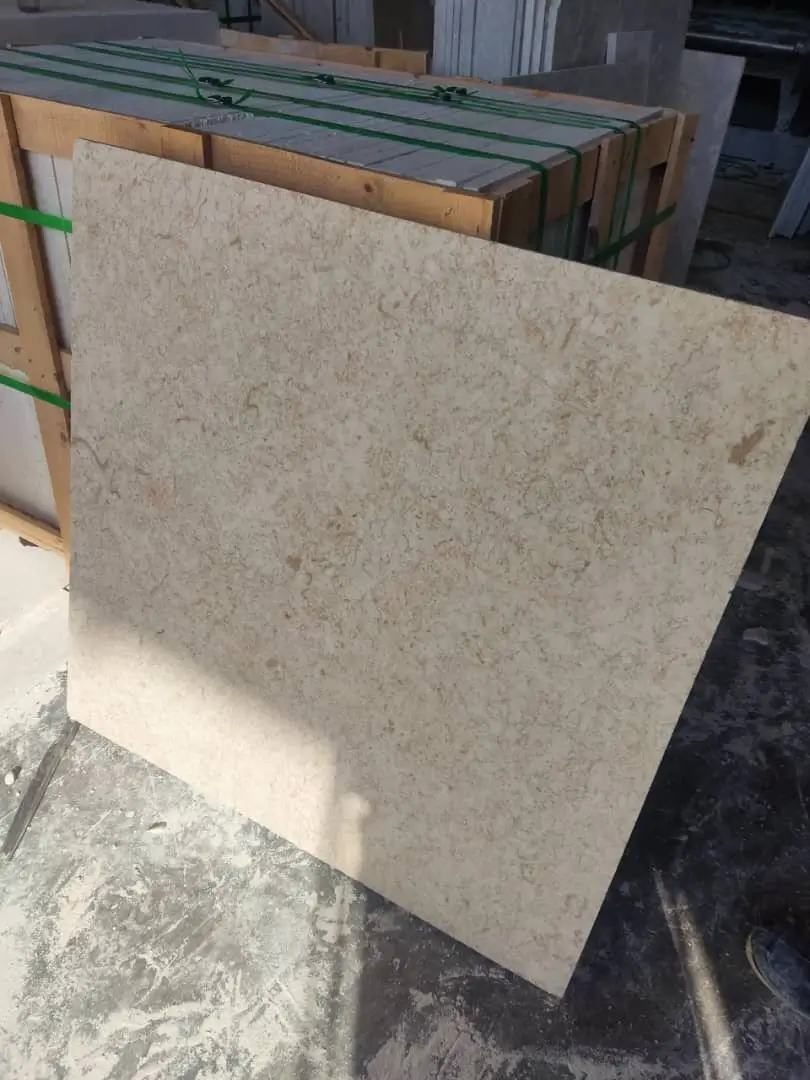
The Three Formation Types That Drive Paver Performance
Not all limestone is made the same way, and the formation pathway matters enormously when selecting pavers for structural applications. Broadly, limestone falls into three formation categories, each with distinct performance profiles.
- Bioclastic limestone forms from shell and fossil fragments — it tends toward moderate porosity and good workability, but surface integrity depends heavily on how those fragments are oriented during sedimentation
- Micritic limestone (mudstone) forms from fine carbonate mud — it’s typically denser and lower-porosity, making it well-suited for high-load applications like driveways and commercial pedestrian zones
- Oolitic limestone forms from small spherical grains of calcite — it has a distinctive appearance but variable density depending on cement content, requiring careful ASTM C568 classification before structural specification
Your application should drive which formation type you pursue. For light residential patios, bioclastic varieties with absorption rates up to 7% can perform adequately with proper sealing. For driveways, vehicular courts, or any installation subject to point loads above 2,000 lbs, micritic or dense oolitic stone with absorption below 3% and compressive strength exceeding 8,000 PSI is the appropriate specification target. Understanding how limestone is made at the formation level is what allows those distinctions to be drawn with confidence rather than guesswork.
Is Travertine Limestone, and Why It Matters for Selection
The question of whether travertine is limestone comes up constantly in specification discussions, and the answer shapes material selection in ways that matter practically. Travertine is a form of limestone — both are calcium carbonate-based sedimentary rocks — but their formation mechanisms are completely different. Travertine precipitates from hot spring or geothermal waters rather than marine sediment accumulation. That process produces the characteristic voids and banded structure that distinguish travertine from standard limestone pavers.
The practical implication is this: travertine’s void structure, while aesthetically distinctive, creates a different performance profile than dense marine-origin limestone. Travertine’s unfilled voids can trap moisture and organic debris, which accelerates biological staining in shaded installations. Filled travertine resolves some of this, but the filler compound — typically grout or epoxy — responds differently to thermal cycling than the parent stone. According to Natural Stone Institute limestone specifications, understanding whether you’re selecting travertine or conventional limestone requires evaluating formation origin alongside absorption, compressive strength, and freeze-thaw resistance data — not just visual similarity.
For pool deck and outdoor patio applications where consistent surface texture and moisture management are priorities, the formation difference between travertine and marine sedimentary limestone becomes a real specification decision, not just geological trivia. Is travertine limestone? Yes — but specifying it as though it performs identically to dense micritic stone is where projects run into trouble.
How Quarry Depth and Bed Orientation Affect Paver Quality
Here’s what most specifiers miss when evaluating limestone: the same quarry can produce stone with dramatically different performance characteristics depending on which bed layer the material comes from. Near-surface beds are more weathered, typically more porous, and show greater variability in density. Deeper beds, extracted from below the water table in some quarries, are often more consistently cemented and better suited to structural applications.
Bed orientation also determines how the stone should be installed. Limestone laid on its natural bed — with the sedimentary layers oriented horizontally, as they were formed — resists compressive loads far better than stone laid on its edge or in the split-face orientation. For pavers, natural bed orientation is standard, but issues arise when material is cut in a way that exposes cross-bedded faces to weathering. The cross-cut surface is more susceptible to delamination in freeze-thaw regions because moisture penetrates along the bedding planes and causes lateral expansion during ice formation.
- Specify quarry depth and bed orientation data when sourcing limestone for high-load or freeze-thaw-exposed applications
- Request ASTM C568 test data by quarry lot, not by general material type — batch-to-batch variation within a single quarry can be significant
- For installations in regions with frost penetration depths below 18 inches, prioritize limestone with absorption rates under 3% and compressive strength above 10,000 PSI
- Natural-bed-oriented cuts perform measurably better under point loads — confirm cut orientation before accepting warehouse shipments
Pavers vs Flagstone: Formation and Why the Cut Matters
The pavers vs flagstone distinction is often treated as purely aesthetic, but it’s actually a manufacturing decision rooted in how the stone was formed. Limestone pavers are gang-sawn to uniform thickness — typically 1.25″, 1.5″, or 2″ nominal — which produces consistent load distribution and predictable base-depth calculations. Flagstone, by contrast, is split or rough-cut along natural bedding planes, producing irregular thickness profiles that require a more forgiving installation method.
For structural applications under building codes that specify minimum base depth and edge restraint requirements — and most commercial and municipal specifications do — uniform paver thickness is non-negotiable. Model building codes, including those derived from ICC standards, require that hardscape installations adjacent to structures maintain consistent bearing capacity across the installation field. Variable flagstone thickness makes that difficult to verify and harder to defend in a code inspection. Your structural engineer will thank you for specifying sawn pavers when load documentation is required.
That said, flagstone split from the same limestone formation carries the same geological performance characteristics as sawn pavers from the same quarry. The material science doesn’t change — only the dimensional consistency does. For informal garden paths and low-traffic residential settings where building code compliance for load-bearing isn’t the primary concern, flagstone from a dense limestone source performs admirably. The pavers vs flagstone decision ultimately reduces to whether dimensional uniformity is a project requirement, not a question of which stone type is inherently superior.
What Truncated Dome Pavers Reveal About Limestone Surface Durability
Truncated dome pavers — the tactile warning surface pavers required by ADA standards at curb cuts, transit platforms, and accessible pedestrian routes — represent one of the most demanding applications for limestone surface durability. The dome profile concentrates foot traffic into raised contact points, which means surface hardness and abrasion resistance are tested more aggressively than with flat paver surfaces.
Limestone’s suitability for truncated dome pavers depends directly on its formation density. Soft bioclastic limestone with Mohs hardness below 3.5 will show measurable dome erosion within 5–7 years in high-pedestrian-traffic locations. Dense micritic limestone with compressive strengths above 12,000 PSI, however, holds the dome geometry well and maintains the tactile detectability that ADA compliance requires. When specifying limestone for accessible route applications, request flexural strength data alongside compressive strength — dome profiles create bending stress at the dome base that pure compressive testing doesn’t capture. Understanding how limestone is made explains exactly why formation density, not trade name, should drive truncated dome paver selection.
- ADA-compliant truncated dome installations require tactile dome dimensions of 0.9″ base diameter, 0.2″ height, and 2.35″ center-to-center spacing — non-negotiable regardless of material
- Limestone surface hardness for dome pavers should test at or above 4 on the Mohs scale to resist pedestrian abrasion effectively
- Sealer application on dome pavers requires vapor-permeable penetrating formulas — film-forming sealers reduce dome tactile contrast and can create slip liability in wet conditions
Building Codes, Base Depth, and Limestone Thickness Requirements
Limestone paver thickness isn’t just a material preference — in many jurisdictions, minimum material thickness for hardscape installations is embedded in local amendments to model building codes or in municipal right-of-way specifications. The structural logic traces directly back to how limestone is made: denser, more tightly cemented stone can carry equivalent loads at thinner profiles than porous or loosely cemented alternatives.
For residential driveway applications subject to residential code review, 2″ nominal limestone thickness over a compacted aggregate base of 6–8″ is the typical minimum specification. Commercial applications, particularly those where the hardscape abuts a structure or falls within the structural influence zone of a foundation, often require 2.5″ or thicker material with a 10–12″ engineered base. Frost line depth adds another variable: in regions where frost penetration reaches 36″ or deeper, base depth must extend below the frost line or incorporate insulating drainage layers that prevent heave. Your geotechnical consultant’s soil bearing capacity report will drive the final base specification.
For projects where you need a format that satisfies both aesthetic and structural requirements, 24×24 Limestone Pavers offer the large-format profile that contemporary hardscape design demands while maintaining the slab thickness needed for load-compliant installations.
Sourcing Consistency and What Quarry Origin Means for Your Project
The supply chain dimension of limestone specification is where geological understanding translates directly into project outcomes. Limestone sourced from Middle East quarries — where many of the world’s most consistent sedimentary limestone formations are extracted — typically offers well-documented ASTM test data because those quarries supply international commercial projects that require certification. That documentation trail is something you should request and verify before committing to a supplier.
Sourcing consistency across a single project phase is the detail that causes the most field problems. Limestone from the same named quarry but from different bed extractions — which is common when large project volumes deplete a single bed layer — can show visible color and texture variation that becomes apparent after installation. Specifying material by quarry lot number, not just quarry name, and requesting that warehouse stock for your full project be reserved from a single lot, eliminates the most common source of post-installation variation complaints.
According to USGS limestone composition and construction applications data, natural variation in carbonate content, clay mineral inclusions, and grain size across formation beds is expected and documented — which is why lot-specific testing matters more than broad material category claims. At Citadel Stone, we evaluate quarry batches individually for density, absorption, and compressive strength before releasing material to project specifications — because two pallets labeled identically can perform differently if they came from separate bed extractions.
- Always request ASTM C568 test certificates issued per quarry lot, not per material name
- Confirm warehouse inventory levels for your full project quantity before finalizing your schedule — partial orders filled from different lots are a common source of visible color banding after installation
- Lead time from confirmed warehouse stock is typically 5–10 business days for standard formats; custom-cut material from Middle East quarries carries 8–12 week import lead times that must factor into your project schedule
- Request a thickness tolerance certification — industry standard allows ±1/16″ variation in sawn limestone, but tighter tolerances are available from precision-cut quarries for grid-pattern installations where joint consistency is critical
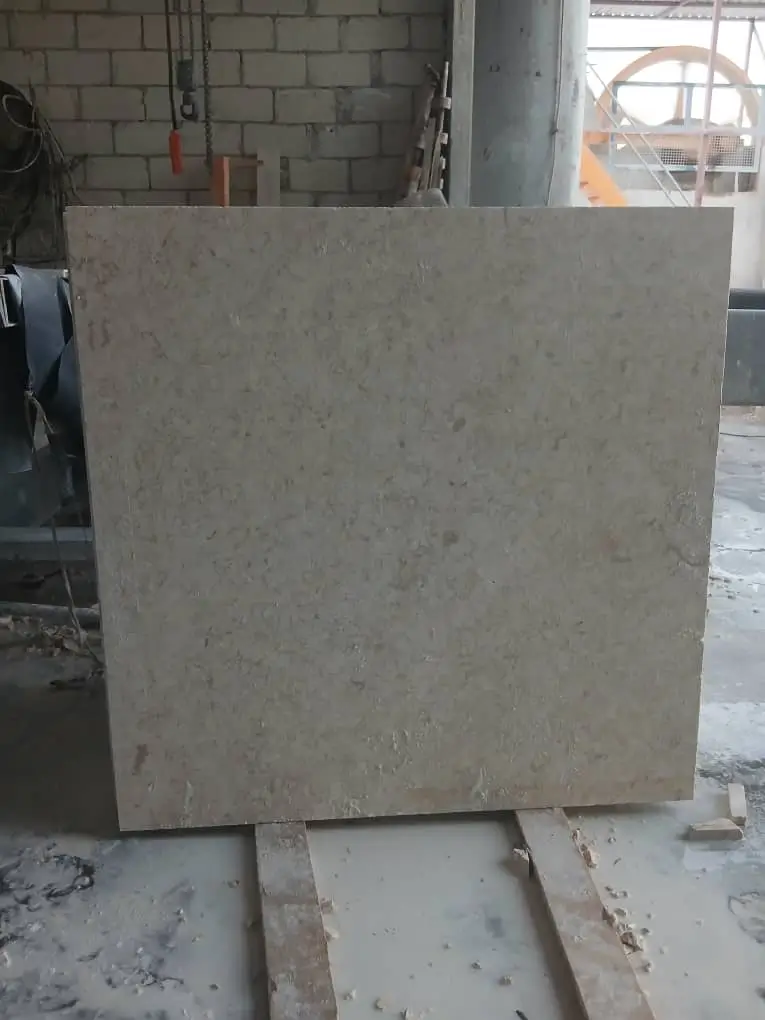
Sealing and Maintenance Tied Directly to Formation Porosity
Your sealing specification can’t be written accurately until you know the formation-derived porosity of the specific limestone you’ve selected. This is where the geological background becomes a direct maintenance decision. High-porosity limestone — absorption above 5% — requires a penetrating silane-siloxane sealer that fills pore channels without forming a surface film. Dense micritic limestone with absorption below 2% may accept either penetrating or light film-forming sealers, depending on the finish and the exposure context.
The resealing interval also connects to formation density. Dense limestone in a well-drained installation can typically go 3–4 years between sealer applications. Porous limestone in a shaded, moisture-prone installation may need resealing every 18–24 months to maintain stain resistance. The sealer itself doesn’t change the stone’s formation characteristics — it compensates for them. Understanding how limestone is made helps you write a realistic maintenance specification rather than defaulting to a generic “reseal every two years” instruction that’s accurate for some stone and inadequate for others.
Spec Wrap-Up: Formation Knowledge in Practice
The geological process that creates limestone — marine sediment accumulation, calcite cementation, compaction over geological time — produces a stone whose performance characteristics are baked in long before it reaches a warehouse floor or a jobsite. Your specification decisions about thickness, base depth, sealer type, and maintenance intervals are all downstream consequences of formation variables that you can measure but can’t modify. The practical move is to source material with documented ASTM C568 data, request lot-specific test certificates, and align your base and thickness specifications with the actual compressive strength and absorption rates of the material you’ve selected — not the category average.
As you work through your broader hardscape specification, understanding how individual stone formats perform in different applications adds another layer of precision to your decisions. For projects where you’re weighing continuous slab formats against individual paver units, limestone slab versus paver formats covers the structural and aesthetic trade-offs that affect long-term performance. Understanding how limestone is made helps explain why Citadel Stone evaluates each quarry batch for compaction consistency before offering material to project specifiers.