

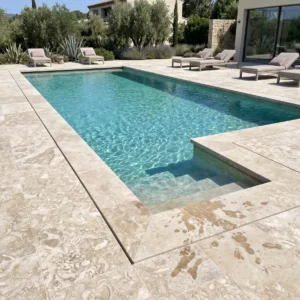





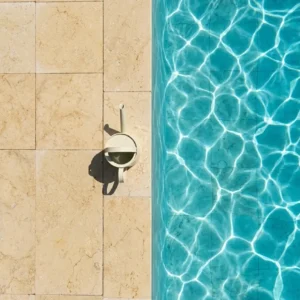
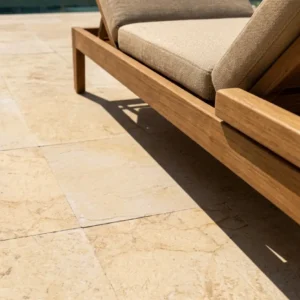
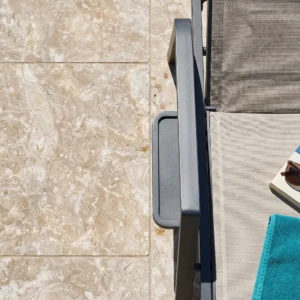
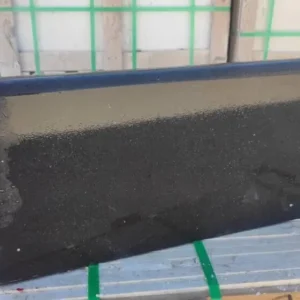

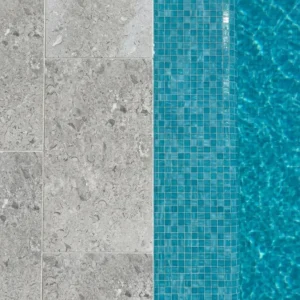
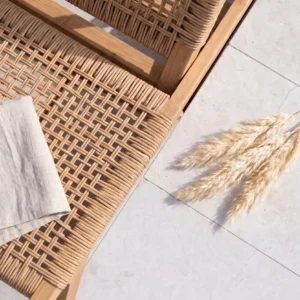

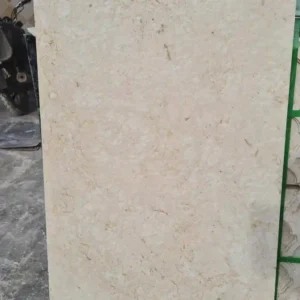
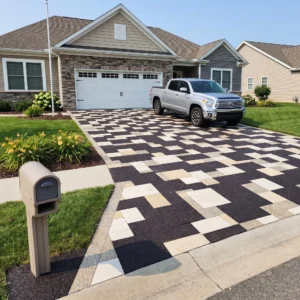
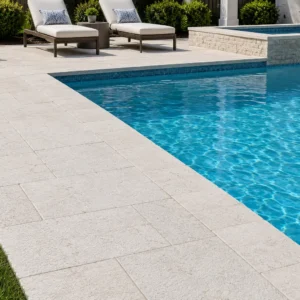
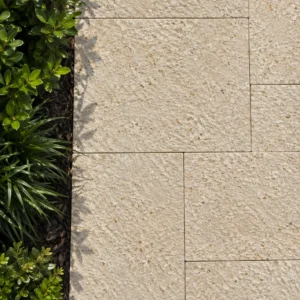
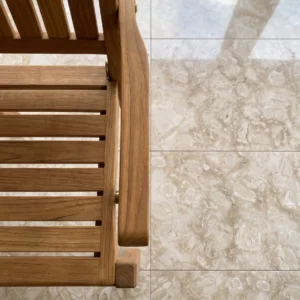
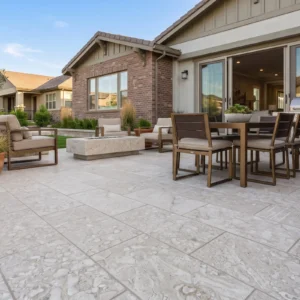
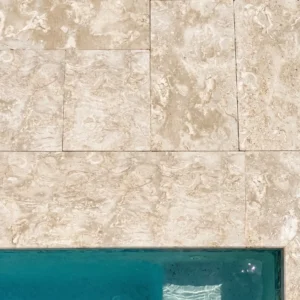
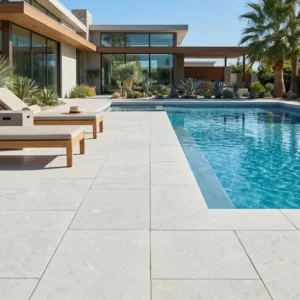
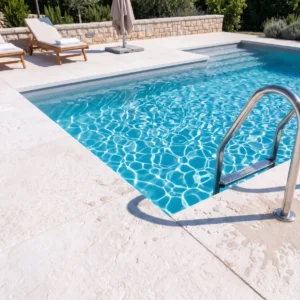

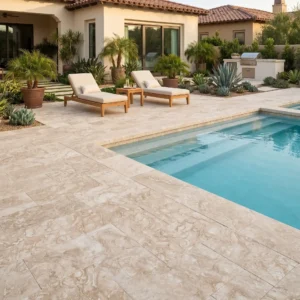










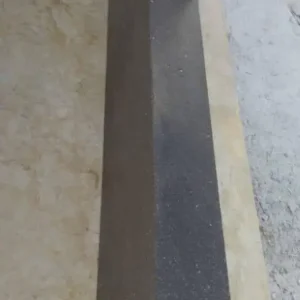
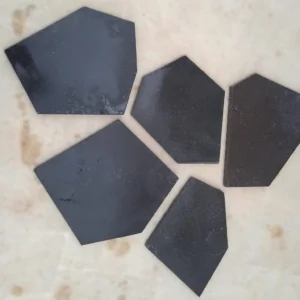



The single detail that separates a pool coping installation lasting 25 years from one failing at 8 is the joint interface between the coping stone and the pool shell. Pool Coping takes a punishing combination of loads most horizontal paving never sees — constant moisture at the waterline, chlorine and salt chemistry, foot traffic, and the mechanical stress of thermal cycling where wet stone meets dry deck. Getting the material selection and edge profile right at the outset determines whether you’re managing a durable perimeter or chasing hairline cracks and lippage a few seasons in.
You’ll find that most specification errors trace back to treating coping as decorative trim rather than a working structural transition. The edge does real work: it caps the bond beam, sheds water away from the shell, and gives swimmers a safe, comfortable handhold. Every decision you make about thickness, absorption, and finish should serve those three jobs before aesthetics enters the conversation.
Material Properties That Drive Pool Coping Performance
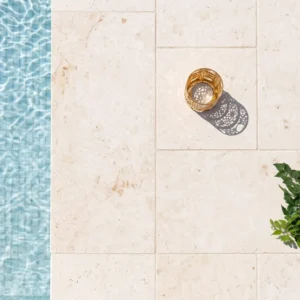
Your first filter should be water absorption. Coping sits in a chronically wet zone, and stone that pulls water readily will spall, effloresce, and degrade at the waterline faster than anywhere else on the deck. Dense travertine and premium limestone in the 1–3% absorption range hold up well; anything above 5% needs careful sealing and honest client conversation about maintenance.
- Compressive strength above 7,500 PSI handles edge loading where swimmers push off and grab the lip
- Water absorption below 3% resists freeze-thaw damage in cold-climate regions
- Flexural strength matters more for coping than field pavers because the overhang creates cantilever stress
- Slip resistance — a wet DCOF at or above 0.42 per ANSI A326.3; request the test report for the finish you specify
- Thermal stability keeps the stone from buckling where sun-baked deck meets cool waterline
Stone Coping in natural materials outperforms cast concrete alternatives on longevity, but you pay for it in careful sourcing. According to ASTM slip resistance testing standards, wet-surface friction values should be verified per batch rather than assumed from a product category. At Citadel Stone, we run wet-slip checks on incoming coping lots during warehouse intake because absorption and surface texture vary even within a single quarry seam. Working alongside careful coping stone manufacturers who publish their test data makes this verification far easier.
How Sun Exposure Changes Coping Over Time
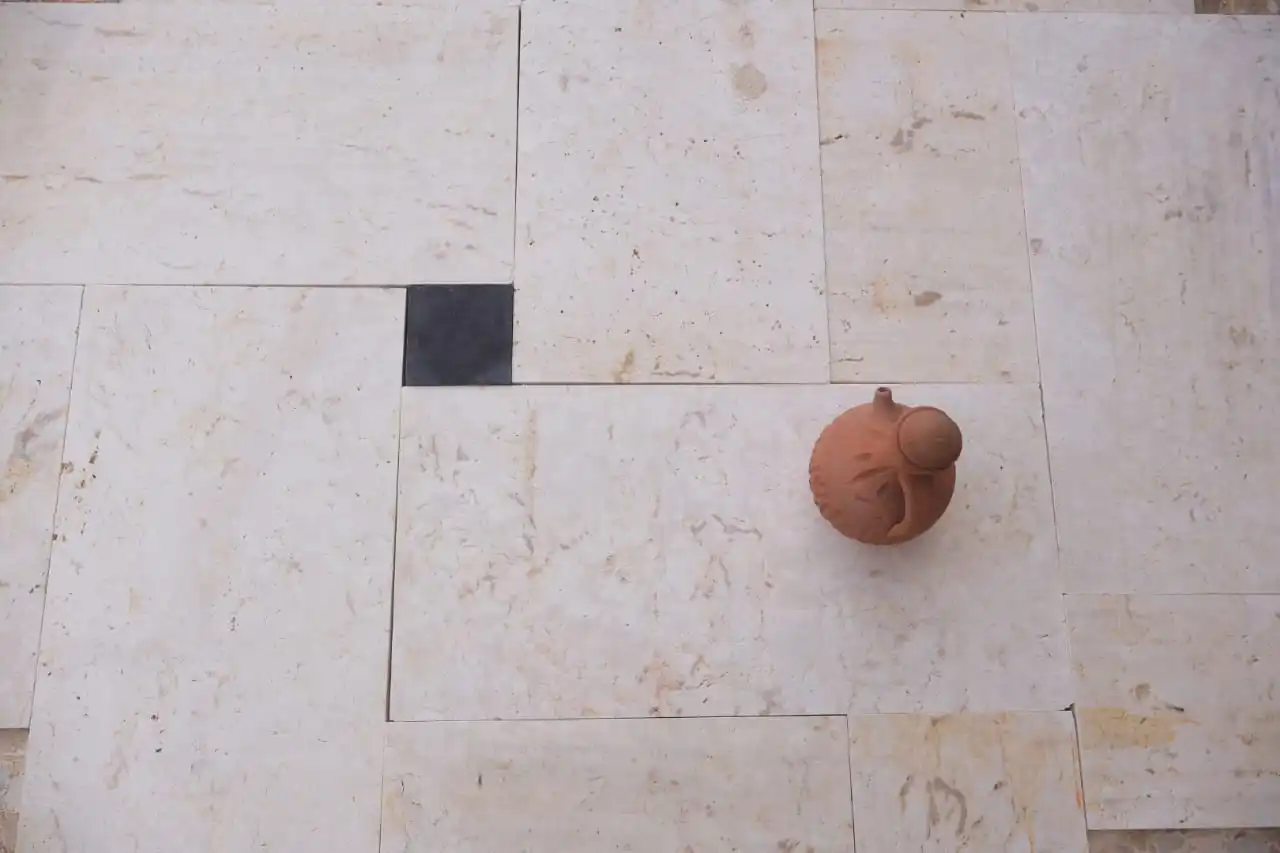
Here’s what most specifiers miss about poolside stone: the perimeter takes more direct, sustained UV load than nearly any surface on a property. The pool sits in the open, unshaded, reflecting light back up at the coping from the water surface. That doubled exposure accelerates color shift and surface oxidation in ways a shaded patio never experiences.
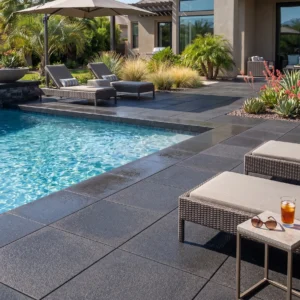
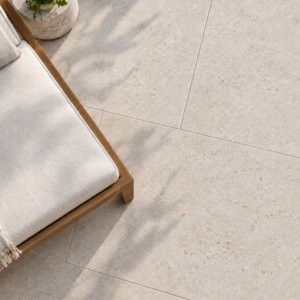
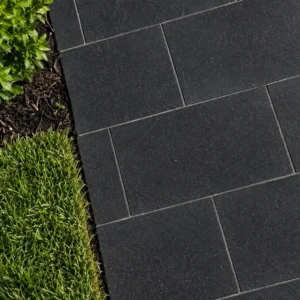
You’ll see this most clearly in stones with iron content. Certain limestones and travertines carry trace iron that oxidizes under prolonged UV and moisture cycling, warming the tone toward amber or rust over several seasons. That’s not a defect — it’s mineralogy — but you need to set client expectations up front. Cream and ivory travertine tend to hold their tone; darker gray and charcoal stones can develop a subtle silvering as surface minerals weather.
- UV degradation breaks down the surface binder in some sedimentary stones, opening micro-porosity over time
- Reflected light from the water surface roughly doubles effective exposure at the coping edge
- Color fading appears first on the pool-facing lip where reflection concentrates
- Sealers with UV inhibitors slow oxidation but require reapplication every 18–24 months in high-sun installations
- Honed and tumbled finishes mask weathering better than polished surfaces, which show etching sooner
What often gets overlooked is that surface oxidation and slip resistance are linked. As UV and weathering open the surface pores, some stones actually gain grip while others glaze and become more slippery when wet. Test the finish you’re specifying in its aged state, not just fresh off the pallet.
Choosing the Right Coping Profile and Format
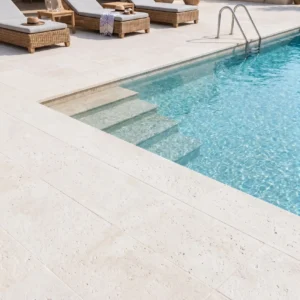
Profile selection drives both safety and drainage. The bullnose profile — a rounded front edge — remains the workhorse for residential pools because it’s comfortable underhand and sheds water cleanly. As a bullnose pool coping supplier, we see the rounded edge specified on the majority of freeform residential shells, while square-edge and drop-face profiles suit modern rectilinear designs and negative-edge details.
- Bullnose: rounded front, safest for swimmers, best all-around residential choice
- Square edge: clean modern line, requires precise deck-level matching to avoid trip hazards
- Drop-face (rebated): overhangs the shell, hides the tile line, ideal for vanishing-edge designs
- Remodel/cantilever: sits over existing bond beam, useful for renovation without full deck rebuild
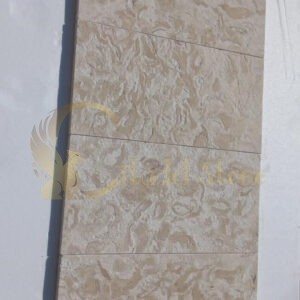
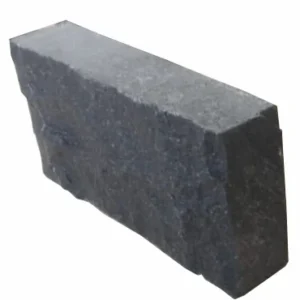
Standard coping runs 12×12 and 12×24 in nominal sizing, with thickness in the 1.25–2 inch range depending on span and profile. Citadel Stone stocks pool coping in bullnose, square-edge, and drop-face profiles across cream, ivory, silver, gray, and charcoal tones, and you can request sample pieces or thickness specifications before committing a full order. For those seeking supreme coping stones with tight tolerances, our team can advise on lead times for factory-cut segments and custom radius pieces on curved shells.
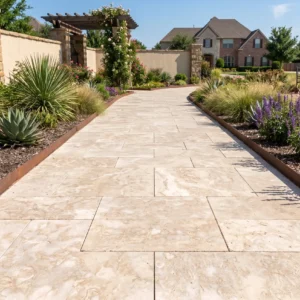
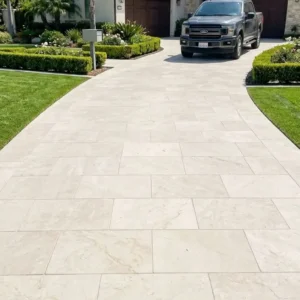
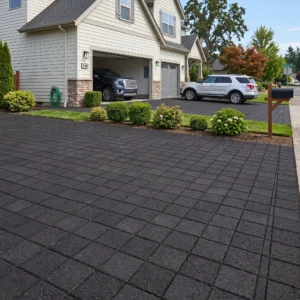
Getting the format right also affects how you handle the pool paving field behind the coping. When you specify pool paving to match or complement the coping run, our pool coping material comparison lays out how material pairings perform under similar site and moisture conditions. Matching absorption rates between coping and deck prevents differential weathering that leaves an obvious line where the two materials meet.
Base Preparation and Installation Detailing
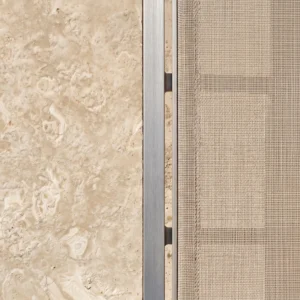
The bond beam bond is where installations succeed or fail. Coping must key firmly to the pool structure while allowing a controlled expansion joint between the coping and the surrounding deck. Skip that joint and you’ll transfer deck movement directly into the coping, cracking the mortar bed within a couple of freeze cycles.
Your mortar bed should be full-coverage, not spot-bonded — voids under coping become water traps that freeze, expand, and pop stones loose. Set the coping with a slight backfall (roughly 1/8 inch per foot away from the pool) so surface water drains toward the deck drains rather than back into the pool or pooling at the joint. The expansion joint between coping and deck gets a flexible sealant, never rigid grout.
- Full mortar coverage eliminates voids that trap and freeze water
- Backfall of 1/8 inch per foot directs water away from the waterline
- Flexible sealant at the coping-to-deck joint absorbs differential movement
- Expansion accommodation every 8–12 feet on long straight runs
- Waterline caulk joint between coping and tile requires periodic inspection and reapplication
Per PHTA pool deck and coping safety standards, the coping edge and adjacent deck must meet specific slope and slip criteria to reduce fall risk in the wet zone. These aren’t suggestions — they’re the baseline for a safe, code-compliant perimeter.
Sealing and Long-Term Maintenance
Sealing coping is a different discipline from sealing field pavers because of the chemistry involved. Chlorine, salt-chlorine generators, and cyanuric acid all attack stone at the waterline. You want a penetrating impregnating sealer that leaves the surface breathable rather than a topical film that chlorine will cloud and peel.
- Impregnating penetrating sealers protect without creating a slippery film
- Reseal every 18–24 months in high-UV, high-chlorine installations
- Neutralize splashed pool chemistry with fresh-water rinsing to slow surface etching
- Inspect the waterline caulk joint each season and reseal before it opens
- Address efflorescence early with a stone-safe cleaner, never acid on limestone or travertine
You’ll extend service life dramatically by treating maintenance as scheduled rather than reactive. A coping run that gets a rinse after heavy use and a reseal on cycle can realistically hold 25–30 years; the same Stone Coping left to accumulate chemistry and lose its sealer can degrade visibly in under a decade.
Sourcing Consistency and Supply Planning
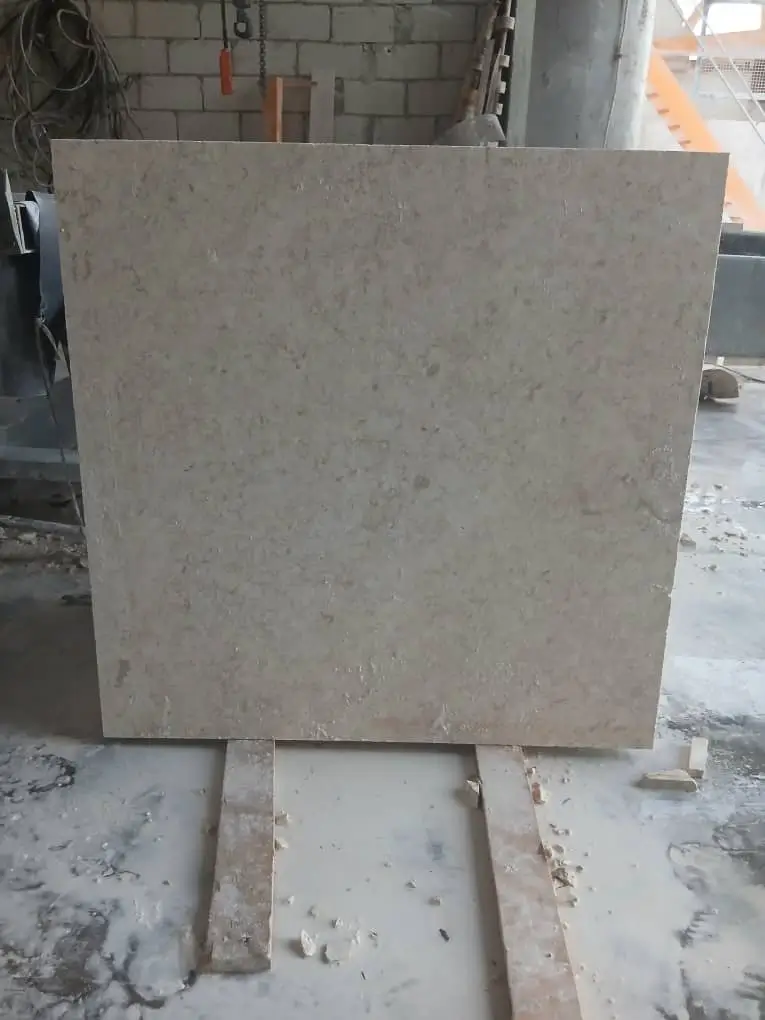
Batch consistency is the quiet dealbreaker on coping projects. Because the coping wraps a continuous perimeter, any tonal or dimensional variation between pallets shows immediately as a mismatched section. Ordering all coping from a single production run — and ordering 10–15% overage for cuts and future repairs — prevents the dreaded dye-lot mismatch that no amount of sealing will hide.
Working with established coping stone manufacturers and reputable coping stone suppliers who track batch data lets you match replacement pieces years later. Citadel Stone sources from our established selected quarries and inspects each batch for tonal and dimensional consistency during warehouse intake, holding lot records so you can order matching stone for a future spa addition or repair. As pool coping suppliers shipping nationwide, we maintain regional inventory that typically reduces lead times to 1–2 weeks versus the 6–8 week cycle common with direct import. Sourcing supreme coping stones from a single documented run is the surest hedge against a visible seam.
- Order the full coping run from one batch to guarantee tonal match
- Add 10–15% overage for cuts, breakage, and future repairs
- Confirm warehouse stock levels before locking project timelines
- Verify truck access and staging space for coping delivery on tight sites
- Request batch documentation from your coping stone suppliers for future matching needs
Getting Pool Coping Specifications Right for Your Project
The projects that go smoothly share a pattern: material chosen for low absorption and verified wet-slip resistance, profile matched to shell geometry and swimmer safety, a properly detailed expansion joint, and a realistic maintenance schedule the client actually understands. Nail those four and the aesthetic choices — cream travertine, silver gray limestone, honed charcoal — become the fun part rather than the risk. Reliable pool coping suppliers and bullnose pool coping supplier partners will document each of those variables so nothing gets assumed.
Your poolscape rarely stops at the coping line, so the surrounding hardscape deserves equal attention to material performance. If you’re planning walls, planters, or decorative features around the deck, our landscape stone options for surrounding features cover complementary materials that weather in harmony with your coping selection. Coordinating those choices early keeps the whole poolscape aging gracefully together. Builders source Citadel Stone Pool Coping, a natural stone selected for residential and commercial projects, for projects across the country.
Related guides: pool coping material guide · 9 Pool Coping Ideas for Every Deck Style · how to install pool coping · how to repair pool coping · how to replace pool coping · how to seal pool coping · painting pool coping guide · pool tile and coping guide.