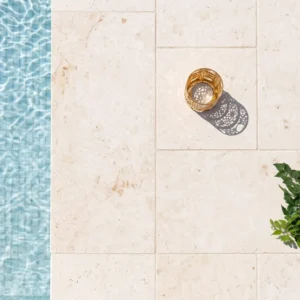
Timing Is Everything When You Seal Pool Coping
Surface moisture is the single variable that causes more sealing failures than any other — not product selection, not application method. To seal pool coping correctly, you need bone-dry stone, and that means waiting a minimum of 72 hours after the last water contact, whether that’s rain, splash, or a fresh fill. Many installers check the surface and call it dry, but stone absorbs and holds moisture well below what you can feel. A moisture meter reading above 4% on travertine or limestone means you’re trapping water under the sealer, and you’ll see whitish hazing or premature delamination within a season.
Your coping material also dictates which sealer chemistry is appropriate. A penetrating impregnator works below the surface and lets the stone breathe — that’s the right choice for porous materials like travertine and limestone pool coping. Topical film-formers offer more surface sheen but tend to peel in wet environments and trap moisture from below. For pool applications, penetrating sealers consistently outperform film-forming products over a five-year horizon when you seal pool coping on high-exposure installations.
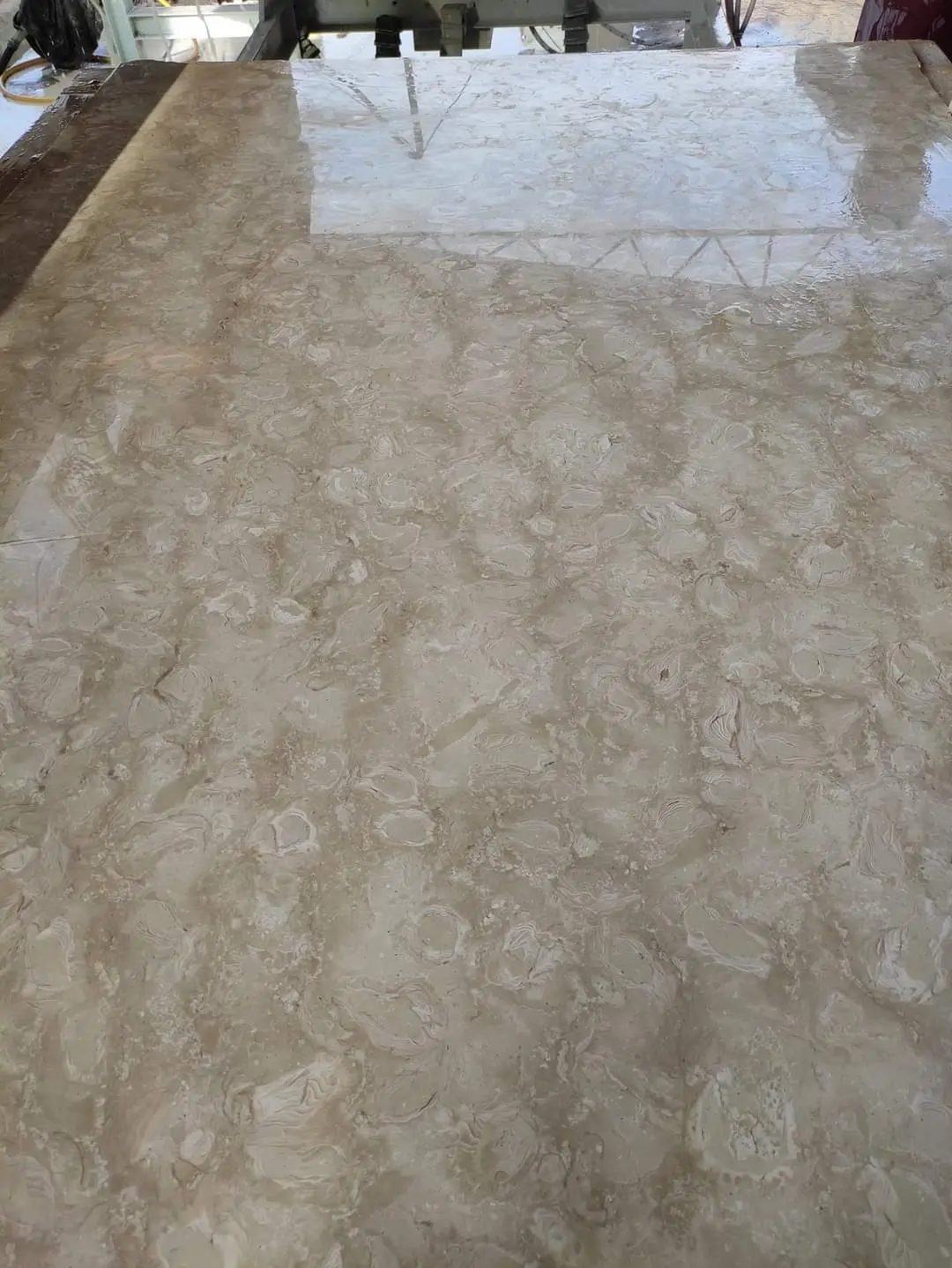
Surface Preparation Before Sealing Pool Coping
Your prep work determines the seal’s longevity more than the sealer brand itself. Before any sealing pool coping application, the coping surface needs thorough cleaning with a pH-neutral stone cleaner — not a standard household cleaner, which can leave soap residue in the stone’s pores that physically blocks penetration. Run a soft-bristle scrub over grout lines and any textured finish areas where algae or calcium deposits tend to build up near the waterline.
- Remove efflorescence with a diluted stone-safe acid wash before sealing — sealing over efflorescence locks the salts in place and they’ll continue working through the sealer layer
- Let the cleaned surface dry completely — 48 to 72 hours in normal conditions, longer if the stone is thicker than 2 inches or if ambient humidity is elevated
- Lightly sand any rough patches on cut edges to prevent the sealer from sitting unevenly on high spots
- Blow out expansion joints and grout lines with compressed air so the sealer reaches these vulnerable zones properly
- Test a small inconspicuous area first — apply the sealer to a 12-inch section and observe the absorption rate before committing to the full run
Calcium deposits from pool water are a particular challenge with pool tile and coping sealing because they bond to the surface before you get a chance to seal. Addressing these with a poultice or diluted acid solution before sealing saves you significant rework.
Choosing the Right Sealer for Your Coping Material
Not every stone on a pool deck responds the same way to the same sealer, and this is where specifiers and homeowners alike make costly missteps. Travertine, with its interconnected void structure, requires a lower-viscosity penetrating sealer that migrates deeply into the stone matrix — a heavy-bodied product will sit on the surface and peel within a year under constant wet-dry cycling. According to NSI stone variety specifications, travertine and limestone share similar pore structures that benefit from breathable impregnating formulations rather than surface-coating sealers.
For the pool coping sealing process, solvent-based fluoropolymer sealers tend to outperform water-based options in chemical resistance — specifically, resistance to pool chlorine and bromine. Chlorinated water at typical pool pH levels of 7.2 to 7.6 won’t dissolve a good-quality sealer quickly, but UV exposure degrades most organic sealer molecules over 18 to 24 months regardless of chemistry. That degradation timeline is the basis for most resealing schedules.
- Fluoropolymer penetrating sealers: best chemical and UV resistance, 2-to-3-year service life in pool environments
- Silane/siloxane blends: excellent water repellency, moderate chemical resistance, 18-to-24-month resealing interval
- Silicone-based products: avoid for pool coping — poor UV stability, and they tend to yellow with chlorine contact
- Topical acrylics: suitable only for covered or indoor coping applications, not direct pool exposure
For Citadel Stone pool coping for sealing, our technical team recommends fluoropolymer impregnators specifically because the material density and porosity we source is calibrated for outdoor pool environments — the sealer needs to move through the stone without pooling at the surface.
Application Technique That Actually Works
Your application method affects coverage uniformity more than most product guides acknowledge. For coping with a honed or brushed finish, a low-nap paint roller gives you the most consistent spread — foam applicators tend to release sealer unevenly and create streaks. For tumbled or heavily textured surfaces, a natural-bristle brush gets into the texture valleys that a roller skips over.
Apply in thin, even coats and work in sections no longer than 6 to 8 linear feet at a time. The sealer needs to penetrate before the carrier solvent flashes off — if you apply too much at once on a warm day, the surface layer dries before the lower layers have fully penetrated. Two thin coats separated by 20 to 30 minutes of wait time reliably outperform one heavy coat when you seal pool coping on textured or porous materials. Wipe off any sealer that sits on the surface after 10 minutes and hasn’t been absorbed — those standing droplets will cure as a film and leave shiny patches.
- Work in shade or during cooler parts of the day — direct sun accelerates flash-off and reduces penetration depth
- Maintain ambient temperature between 50°F and 85°F during application and the initial cure window
- Keep traffic off the sealed surface for a minimum of 24 hours; full cure typically takes 48 to 72 hours
- Do not apply within 24 hours of expected rain — even if the surface appears dry, rainwater can push uncured sealer back out of the stone
How Material Sourcing and Project Scale Affect Your Sealing Budget
The cost of sealing pool coping isn’t just the product cost per square foot — it’s the complete picture of prep labor, material freight, and resealing frequency over the installation’s lifecycle. Labor markets vary significantly across the country, and in regions where skilled stone installers are in high demand, the labor component of a sealing job can exceed the material cost two or three times over. That makes material selection decisions upstream of sealing genuinely important: choosing a denser stone with lower absorption means longer resealing intervals and lower total lifecycle cost.
Freight distance from a national stone supplier also plays into your total project budget. Citadel Stone ships pool coping materials from warehouse stock nationally, which typically shortens lead times compared to importing directly — and that affects whether your project hits its installation window before the next weather hold. Knowing warehouse availability before you finalize your specification prevents costly schedule delays that compound labor expenses. The PHTA pool deck safety standards also inform material and finish selection for coping, which can influence both your specification decisions and your insurance considerations.
Value engineering on sealing projects usually focuses on resealing frequency. Spending 20 to 30 percent more on a premium fluoropolymer sealer upfront often makes sense when it extends your interval from 12 months to 30 months — especially if labor rates in your market are high. Run the full-cycle calculation, not just the per-gallon cost, before committing to a lower-price product.
Sealing Grout Joints and Expansion Gaps
Grout joints between pool coping units are a common failure point that separate careful installations from ones that require early remediation. The grout joint absorbs pool water, holds algae, and experiences the full thermal expansion cycle every day — it needs its own sealing attention, not just the overspray from coping sealing. Use a narrow brush or a detail applicator to work sealer into each joint separately before doing the field of the coping.
Expansion joints present a different challenge. These gaps are typically filled with a backer rod and a flexible polyurethane or silicone caulk — not grout — and they should not be sealed with stone sealer. Applying penetrating sealer into a caulked expansion joint doesn’t improve performance and can interfere with the caulk’s adhesion. Inspect expansion joint caulk condition before every resealing cycle; if it’s cracked or pulling from the substrate, replace it before re-sealing the coping field. According to ASTM stone and slip resistance standards, proper joint maintenance is integral to long-term performance of stone deck assemblies in wet environments.
Setting Your Pool Tile and Coping Resealing Schedule
The pool tile and coping assembly lives in one of the harshest environments a natural stone product encounters — constant UV, chemical exposure from chlorine, thermal cycling between water temperature and air temperature, and mechanical stress from swimmers and maintenance equipment. That combination degrades sealer faster than most interior or even general exterior applications.
- Fluoropolymer sealers in pool environments: plan for resealing every 24 to 36 months
- Silane/siloxane blends: reseal every 12 to 18 months when chlorine exposure is consistent
- Travertine coping: tends to require the shorter end of any resealing range due to open pore structure
- Dense granite or basalt coping: lower absorption means you can often extend resealing intervals to the upper end of the product’s rated range
- Visual cues that resealing is overdue: water no longer beads on the surface, stone color deepens when wet and takes longer to return to dry appearance, algae begins establishing in low-traffic areas
A simple water bead test each spring tells you quickly whether you’re inside your effective sealing window. Drop a tablespoon of water on the surface — if it beads and holds for 3 to 5 minutes, the sealer is still performing. If it absorbs within 60 seconds, you’re past the protection threshold and it’s time to reseal pool coping before chemical exposure accelerates surface degradation.
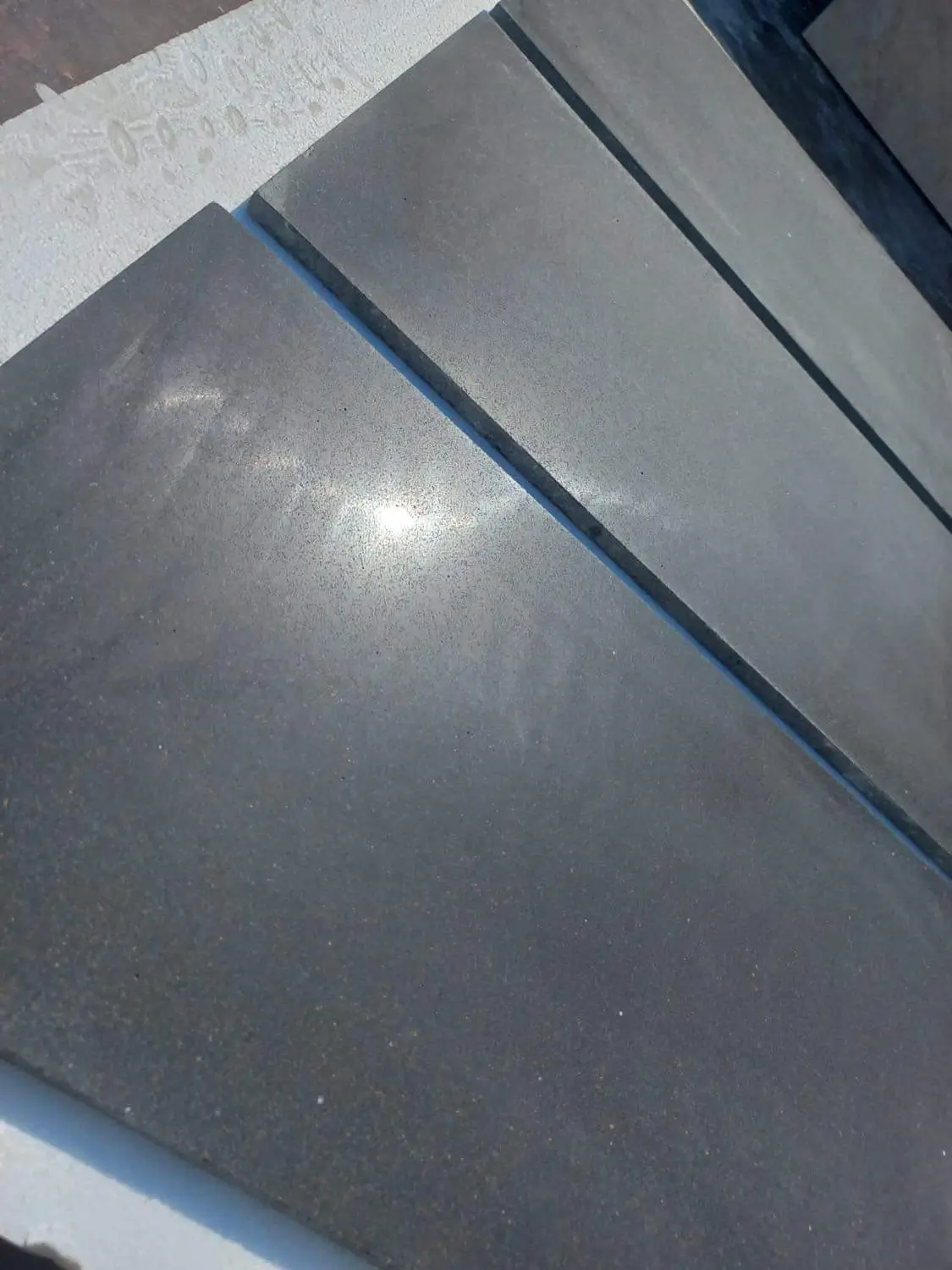
Mistakes That Experienced Installers Know to Avoid
The most common and costly sealing mistake is applying to stone that hasn’t fully cured after installation. New stone set in polymer-modified mortar needs a minimum of 28 days before sealing — the mortar off-gasses moisture through the stone as it cures, and trapping that vapor under a sealer creates blistering and bond failure within months. Many installers know the 28-day rule in theory but skip it under project schedule pressure.
- Sealing over wet or recently cleaned stone — always allow full drying time after any cleaning, even routine maintenance washes
- Using the same sealer on pool tile and coping that you’d use on an interior floor — pool environments need dedicated exterior-rated, chemical-resistant formulations
- Applying sealer in direct sun on hot stone — surface temperatures above 90°F cause the carrier to evaporate before penetration occurs
- Over-application in a single coat — excess sealer that can’t penetrate forms a surface film that will peel
- Neglecting to seal the underside of coping units on new installations where the underside is exposed — moisture intrusion from below bypasses your surface sealing entirely
Field experience with sealing pool coping also shows that using the wrong cleaning products between resealing cycles accelerates sealer breakdown. Acid-based pool surface cleaners, if applied to sealed coping, will chemically etch the sealer just as they etch unprotected stone. Use only pH-neutral cleaners on sealed coping between application cycles. The NIOSH wet surface safety guidance reinforces that maintaining sealed, clean stone surfaces is directly tied to slip-resistance performance over time.
Professional Summary: How to Seal Pool Coping for Long-Term Performance
The decisions that determine whether your pool coping sealing lasts two seasons or eight aren’t made during application — they’re made in the prep work, the product selection, and the timing. Dry stone, the right sealer chemistry for your specific material, thin application in cool conditions, and a realistic resealing schedule built around your actual exposure conditions give you an installation that holds up. Cutting corners on any one of those variables compounds into visible failure faster in pool environments than almost any other outdoor application.
Your coping material’s porosity, the chemical makeup of your pool water, and your climate all interact to define your actual resealing interval — not just the number printed on the product label. As you plan future maintenance or specification decisions, understanding how coping performs over time is part of a larger picture. If your coping shows signs of stress beyond what sealing can address, it may be worth reviewing when coping replacement makes more sense than another sealing cycle. Resealing intervals for stone coping near chlorinated water typically run shorter than interior applications — a consideration Citadel Stone outlines when advising on stone selection.
Related reading: What Is Pool Coping and Why Does It Matter? · pool coping material comparison · pool coping material guide.