What the Numbers Reveal About Stone Coping Performance
A proper pool coping material comparison starts where most homeowners never look — the coefficient of linear thermal expansion and the static coefficient of friction (SCOF) when wet. These two values, more than aesthetics or price per linear foot, determine whether your coping edge stays tight and safe over a 20-year installation cycle. The swimming pool coping options you’re weighing each behave in fundamentally different ways once pool chemistry, UV exposure, and foot traffic enter the picture, and those differences compound quickly.
Travertine: The Benchmark Material for Pool Edges
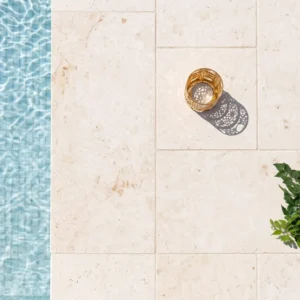
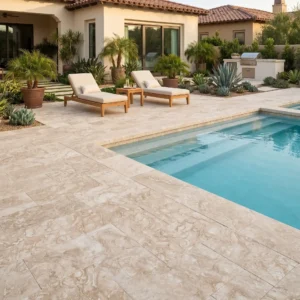
Travertine earns its place at the top of almost every pool coping material comparison for a combination of reasons that go deeper than its obvious good looks. Its thermal expansion coefficient sits around 4.6 × 10⁻⁶ per °F — low enough that joint movement stays manageable through wide daily temperature swings. More importantly, its open-pore structure genuinely moderates surface temperature; tumbled travertine in direct midday sun typically runs 20–30°F cooler underfoot than dark granite or dense concrete coping of equivalent thickness.
The honest trade-off is porosity. Travertine’s voids absorb pool water, cleaning chemicals, and airborne debris. You’ll need to seal it with a penetrating impregnator on a two-year cycle minimum — skip that and the calcium carbonate matrix begins to etch from chlorinated splash-back within three to five seasons. For installations in freeze-thaw regions, specify filled travertine at 2-inch nominal thickness rather than the common 1.25-inch material; the unfilled cross-section becomes a frost pocket that spalls from the interior out. According to NSI travertine performance data, absorption rates for travertine can exceed 3% by weight, which directly informs your sealing schedule and base drainage design.
- Thermal expansion coefficient: approximately 4.6 × 10⁻⁶ per °F — favorable for wide temperature range installations
- Slip resistance: tumbled or brushed finish for pool zones — specify against the ANSI A326.3 wet DCOF threshold (0.42)
- Compressive strength: typically 4,000–8,000 PSI depending on quarry and vein density
- Sealing requirement: penetrating impregnator every 18–24 months in high-splash zones
- Best thickness spec: 2 inches for cantilever nosing, 1.5 inches minimum for drop-face profiles
Limestone: Underrated Durability With Real Specification Nuance
Limestone doesn’t get the marketing attention travertine does, but in a straight head-to-head pool coping material comparison, dense limestone — specifically grey and blue-grey varieties with low absorption — consistently outperforms travertine on abrasion resistance and long-term edge retention. The key variable is density: specify limestone with water absorption below 0.75% by weight and compressive strength above 8,000 PSI, and you’re working with a material that resists the edge chipping and surface wear that high-traffic pool surrounds generate.
Thermal performance is where limestone requires more attention. Its thermal mass is higher than travertine, meaning it stores more heat during peak sun hours. Light-coloured honed limestone reflects 55–65% of solar radiation back and keeps surface temperatures tolerable, but polished dark limestone can become genuinely uncomfortable underfoot in the afternoon. Stick to honed or bush-hammered finishes for any pool coping application regardless of stone colour. Your base preparation also matters more with limestone than most specifiers acknowledge — limestone’s lower void ratio means water needs a clear path off the slab surface and through the drainage layer beneath, especially in areas that receive intense seasonal rainfall.
- Absorption rate target: under 0.75% by weight for pool-zone durability
- Recommended finish: honed or bush-hammered — polished surfaces drop SCOF wet below safe thresholds
- Compressive strength range: 6,000–18,000 PSI depending on formation density
- Thermal behaviour: higher heat storage than travertine — light colours and textured finishes are non-negotiable outdoors
- Edge profile durability: excellent on dense material — outperforms travertine for high-traffic residential pools
Granite: Maximum Durability, Demanding Slip Resistance Management
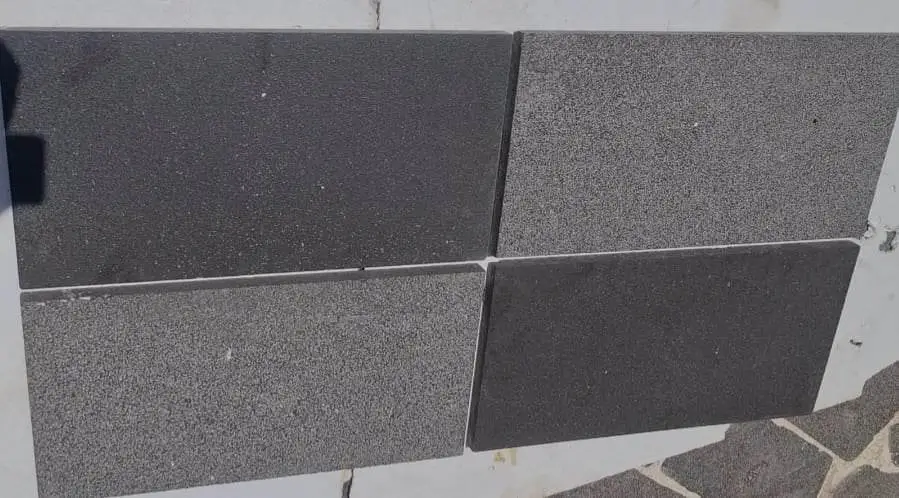
Granite is the most durable material in this pool coping material comparison by a clear margin. Compressive strength routinely exceeds 20,000 PSI, absorption is typically below 0.4%, and it handles pool chemicals, UV, and freeze-thaw cycling without meaningful degradation for decades. Those properties make granite a legitimate specification for commercial pools, resort installations, and any project where long-term maintenance access is limited.
The specification challenge with granite is slip resistance. A polished granite surface leaves a closed, reflective face with very little texture — the opposite of the surface profile that ASTM slip resistance standards for wet pool surfaces reference as the safety baseline for pool deck applications. Two reliable options exist: thermal finish (flame-textured) brings the surface into the pool-safe texture range, and sandblasted or bush-hammered finishes perform similarly. Do not accept a honed granite coping spec for any pool project — it’s a liability regardless of how the stone looks in the showroom sample. Granite also runs hotter underfoot than lighter-coloured travertine and limestone; dark absolute black or nero varieties should be reserved for projects with generous shade structures overhead.
- Compressive strength: 20,000–35,000 PSI — highest of any natural coping option
- Absorption: below 0.4% — essentially highly resistant to pool water and chemical uptake
- Polished: very little wet texture (unsafe) — thermal or sandblasted finish required
- Thermal finish: pronounced texture — meets pool zone requirements
- Maintenance: minimal — no sealing required; periodic cleaning with pH-neutral cleaner only
Bluestone: Strong Performer Where Drainage Is a Priority
Bluestone sits in a compelling middle position among pool coping options: harder than travertine, lighter in thermal mass than dense granite, and naturally textured in sawn or thermal finish in ways that generate consistent wet texture without additional processing. Its tight grain structure limits absorption to 1.5–2.5% depending on the specific quarry cut, and it holds its edge geometry well across thermal cycling ranges that travertine can struggle with.
The drainage angle matters specifically with bluestone. Its relatively low void content means surface water has to move off the stone efficiently — it doesn’t absorb and buffer the way travertine does. In installations receiving heavy seasonal rainfall, monsoon cycles, or hurricane-adjacent precipitation patterns, your base preparation needs to deliver a minimum 2% cross-slope away from the pool shell and into a positive drainage channel. Bluestone laid flat with inadequate slope will pool surface water at the edge detail, which accelerates joint deterioration and creates slip hazards. Get the drainage geometry right and bluestone rewards you with a low-maintenance, long-performing installation. You can explore the full range of coping stone options at Citadel Stone to see how bluestone profiles compare to other available edge treatments.
- Absorption: 1.5–2.5% — moderate; drainage slope design is critical
- Sawn or thermal finish: pool-safe without additional texturing
- Compressive strength: 12,000–20,000 PSI — strong edge performance under load
- Drainage requirement: minimum 2% slope to positive drain — non-negotiable in high-rainfall climates
- Thermal mass: moderate — lighter colours run cooler than dark granite equivalents
Matching Material to Application: What the Comparison Actually Tells You
Running a side-by-side pool coping material comparison only becomes useful when you map each material’s performance profile to your specific project conditions. Here’s how those profiles translate into real installation decisions.
For residential pools with high daily foot traffic, travertine and limestone are the most forgiving swimming pool coping options. Both materials are workable with standard diamond tooling, available in the most common coping profiles (bullnose, drop-face, cantilevered, and square-edge), and deliver finishes that manage surface temperature and wet grip without special treatment. For projects in areas with heavy seasonal rainfall or drainage-constrained sites, prioritise limestone or bluestone — their lower absorption reduces the water uptake that accelerates biological growth in moist climates.
Granite belongs at the specification table for commercial installations, high-use resort pools, or any project where the owner genuinely cannot commit to a biennial sealing programme. The premium price per linear foot is real — typically 30–60% above travertine for equivalent profiles — but the 40+ year service life without structural intervention makes the arithmetic work on high-value projects. The slip resistance requirement for thermal or bush-hammered finish is the one non-negotiable you’ll need to specify explicitly; it won’t come as the default from every fabricator.
- High residential traffic, cost-conscious: travertine (filled, 2-inch, tumbled or brushed finish)
- Dense-use residential or light commercial: honed limestone above 8,000 PSI compressive strength
- Commercial or zero-maintenance requirement: granite, thermal finish only
- Drainage-sensitive sites or high-rainfall zones: bluestone with confirmed 2% cross-slope
- Freeze-thaw exposure in any material: verify absorption below 1.5% and confirm filled voids in travertine
Repairing Pool Coping: What Each Material Demands
The ability to repair pool coping cleanly after impact damage, chemical staining, or mortar failure is a practical factor that rarely appears in material comparison charts — but it should. Each stone type responds differently to the repair cycle, and those differences affect long-term ownership cost.
Travertine chips and cracks can be filled with colour-matched resin or grout filler, and individual units can be replaced without significant visible mismatch if you’ve held back 5–8% of original material from the warehouse delivery. That surplus stock strategy is one of the most consistently overlooked project planning details — ordering exact quantity with no reserve makes repair pool coping work four to seven years later a sourcing nightmare, particularly when quarry batches shift in colour tone between production runs. To repair pool coping in limestone, you’re largely grinding out cracked sections and resetting mortar-bedded units; the stone itself rarely fails, but bond failure at the substrate is common when drainage wasn’t set up correctly at installation.
Granite coping repair is the most demanding. The material rarely cracks under normal use, but when it does — typically from impact or structural movement — the options are adhesive epoxy injection, full unit replacement, or acceptance of the crack as cosmetic. Colour-matched epoxy repairs on granite are visible under raking light, and sourcing an exact replacement slab from the same batch is essentially impossible five years post-installation. Factor that into your granite specification decision. According to PHTA pool deck safety standards, coping integrity is a pool safety compliance issue, not just a cosmetic one — damaged coping that creates a trip hazard or exposes the bond beam requires documented repair, not just aesthetic patching.
- Travertine: hold 5–8% surplus from original warehouse order for future repair matching
- Limestone: most failures are mortar-bed related, not stone failure — inspect drainage and base before specifying repair scope
- Granite: epoxy injection for cracks; full unit replacement requires exact batch matching which is rarely achievable
- Bluestone: delamination along natural cleavage planes is the primary failure mode — check original thickness specification if splits appear
- All materials: coping with visible cracks, spalls, or displaced units is a safety issue — repair timelines should be measured in weeks, not seasons
Ordering, Lead Times, and Getting Delivery Right
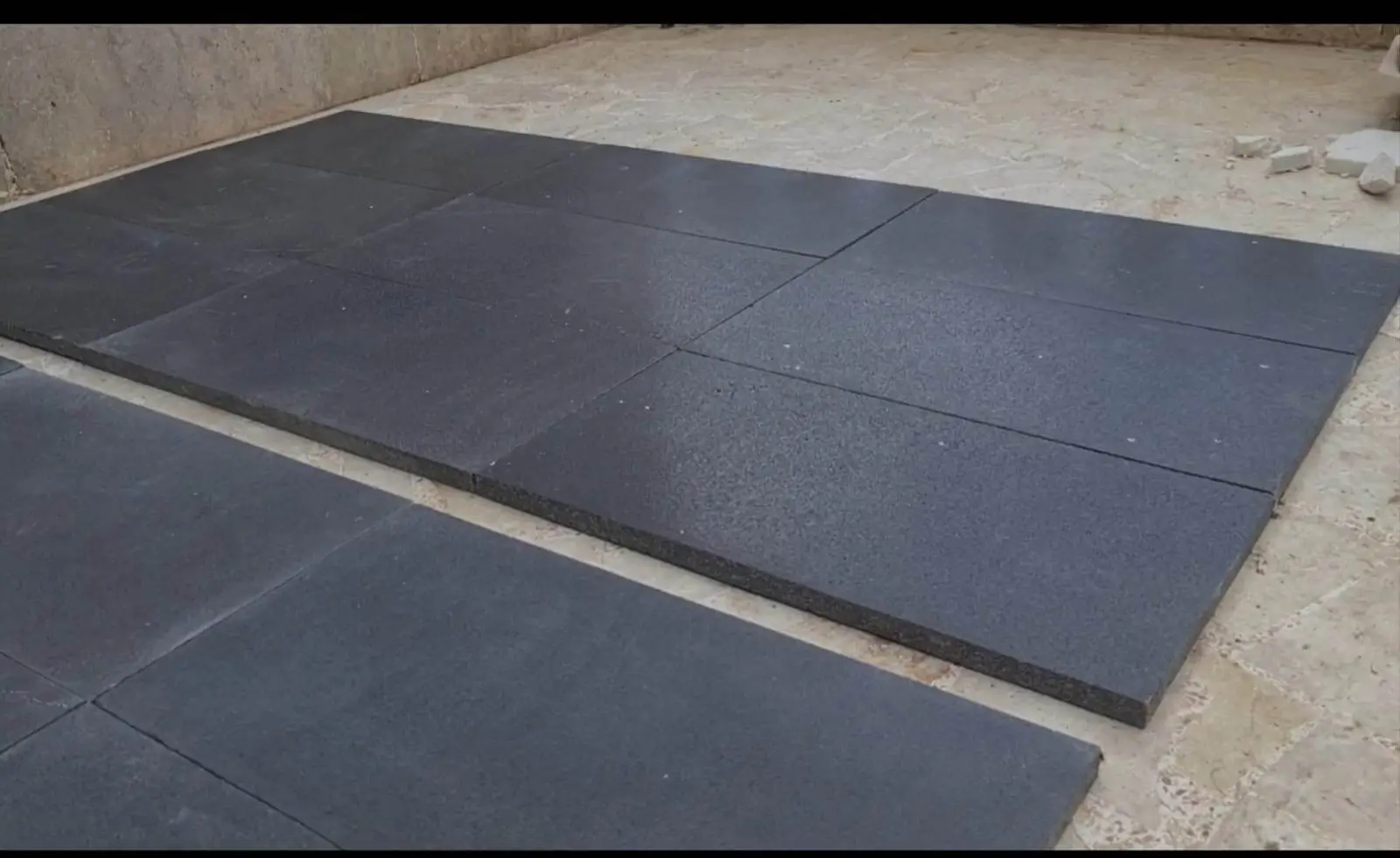
Your material decision doesn’t end at specification — it continues through procurement, and the logistics details that affect project timelines are worth understanding before you commit. Natural stone coping profiles require fabrication to your pool’s radius and edge geometry; standard straight-cut units won’t work on curved pools without additional cutting at the site, which adds cost and introduces more opportunities for edge chipping.
Citadel Stone maintains warehouse stock of the most common coping profiles across travertine, limestone, and granite, which typically allows 1–2 week lead times on standard orders rather than the 6–8 week cycle that direct import projects face. For custom profiles or less common materials like bluestone drop-face coping, build 3–4 weeks of lead time into your project schedule from the point of order confirmation. Truck delivery logistics for coping stone require a level unloading area — fork access or liftgate service is the norm, and a receiving area clear of pool excavation spoil is a detail that saves real time on delivery day. Confirm your site’s truck access before scheduling delivery; a standard flatbed needs approximately 40 feet of clear approach for safe unloading.
- Standard coping profiles: typically available from warehouse stock within 1–2 weeks
- Custom or radius-cut profiles: allow 3–4 weeks from confirmed order
- Order quantity: add 8–10% to calculated linear footage for cuts, waste, and future repair stock
- Delivery access: confirm truck clearance and unloading surface before scheduling
- Batch consistency: request material from a single production batch when ordering over 50 linear feet — colour variation between batches is visible in finished installations
Professional Summary
Your swimming pool coping options narrow quickly once you apply the performance criteria that actually govern long-term outcomes: wet slip resistance, thermal expansion, absorption rate, and repairability. Travertine remains the most broadly suitable material across residential applications when properly filled, sealed, and thickness-specified for your climate. Limestone earns specification on projects where edge durability and lower absorption are priorities. Granite is the right answer for commercial use and zero-maintenance ownership — provided the finish specification explicitly calls out thermal or bush-hammered texture. Bluestone delivers excellent results where drainage geometry is well-designed and you’re working with a contractor who understands its surface water behaviour.
At Citadel Stone, we’ve reviewed enough failed coping installations to know that material choice is rarely the cause — base preparation, drainage slope, and finish specification are where most projects go wrong. Getting those details right at the design stage is worth more than any premium material upgrade. For a broader look at how coping functions within the pool surround system, what pool coping does structurally is worth reviewing before you finalise your specification. Each stone type in the Citadel Stone range behaves differently underfoot when wet, a detail that often drives the final material decision for pool surrounds.