

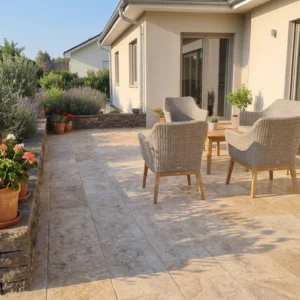
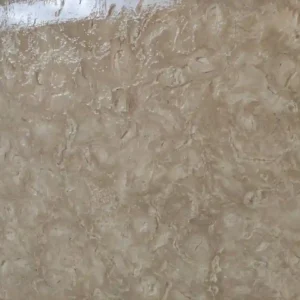
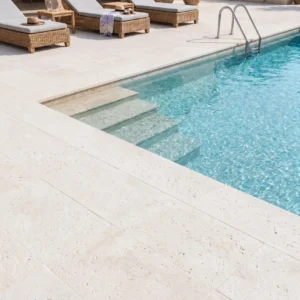
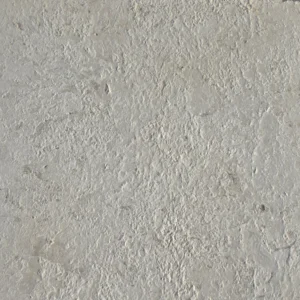

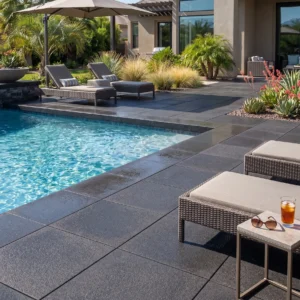
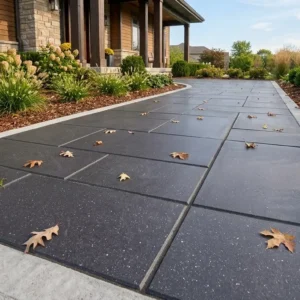
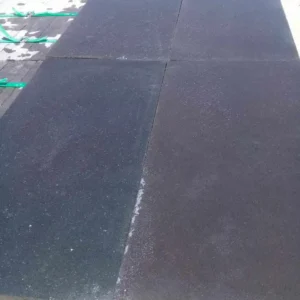
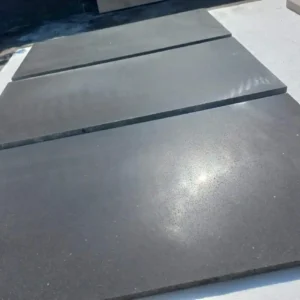



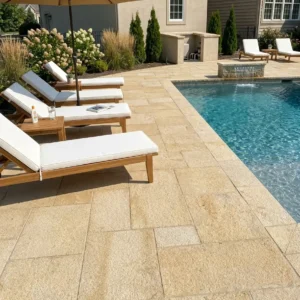
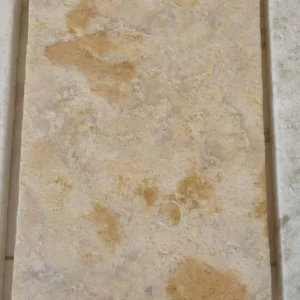
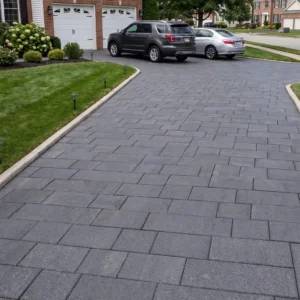
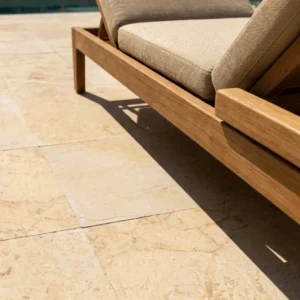
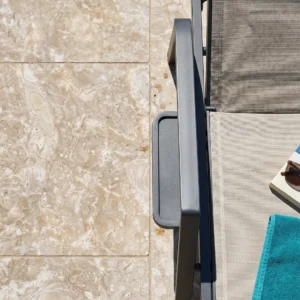
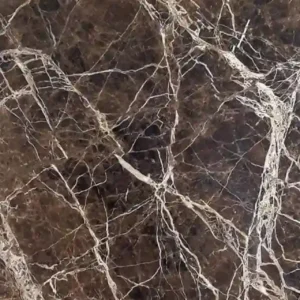
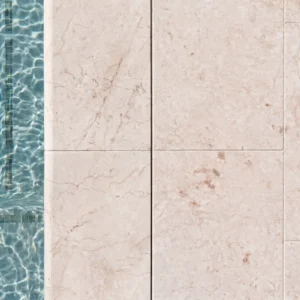
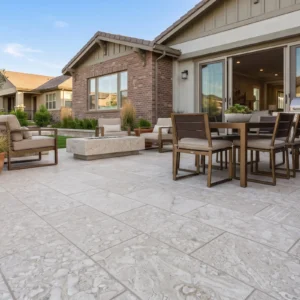
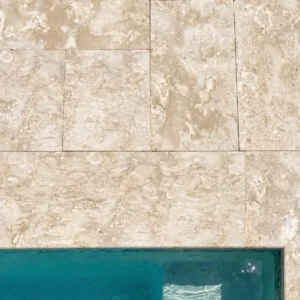
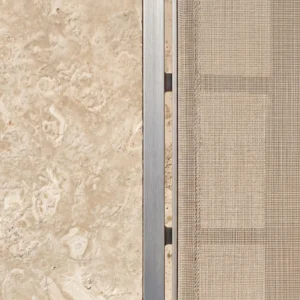
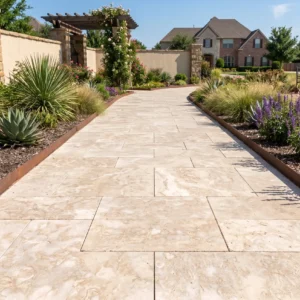
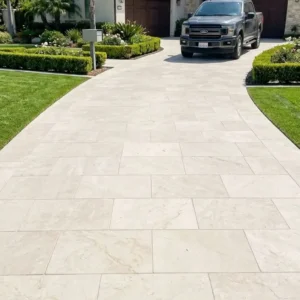
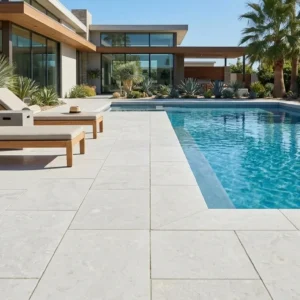
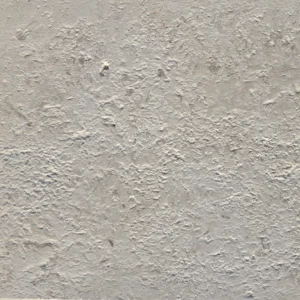
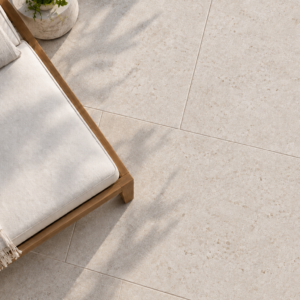
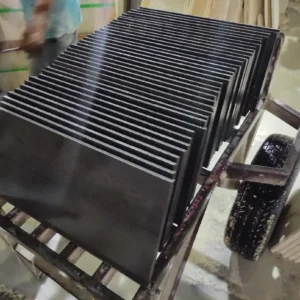
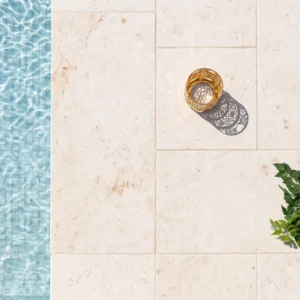
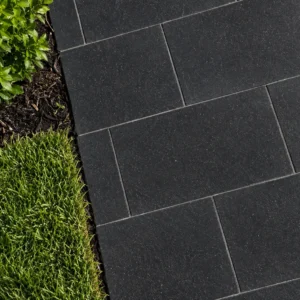
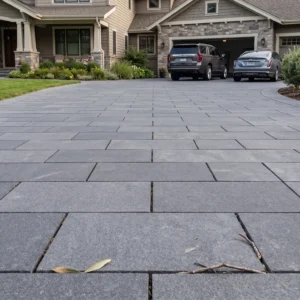
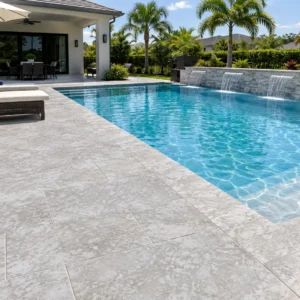
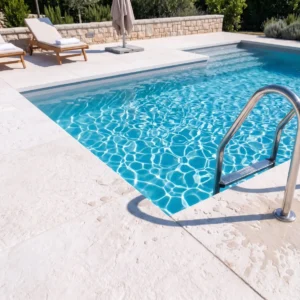
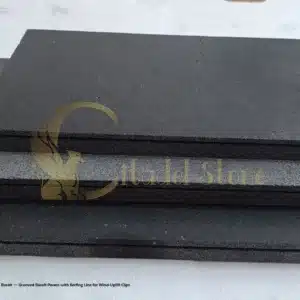
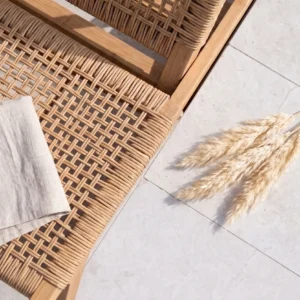
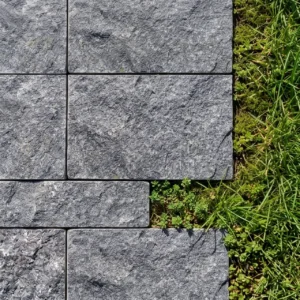
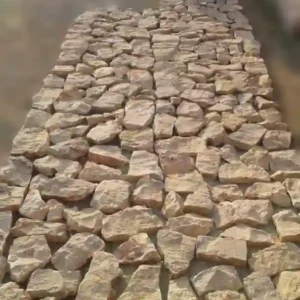
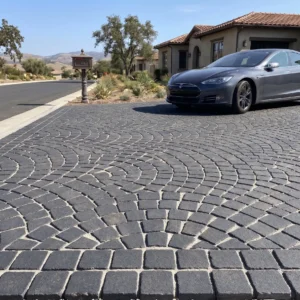
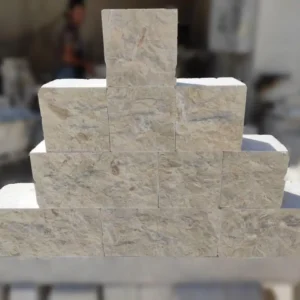
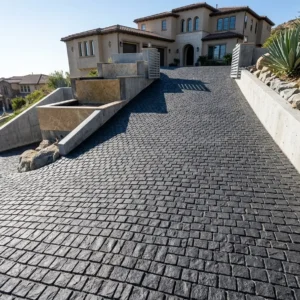
The variable that decides how pool pavers age isn’t surface hardness — it’s how much water the stone holds when a temperature swing hits it while the deck is still saturated. That one relationship explains most of the spalled corners, hairline crazing and lifted coping you’ll find on decks under fifteen years old. Everything else — format, finish, color, joint width — either protects that relationship or works against it. What follows is the specification sequence experienced installers actually work through, in the order the decisions have to be made.
What Makes a Pool Deck Stone Different From a Patio Stone
A pool deck is the one paved surface on a property that meets treated water on a daily cycle. Splash-out, wet feet and backwash drive chlorinated or saline water into the joints and the outer skin of the stone, and then the sun pulls it back out again. That wetting-and-drying rhythm is the real workload, and it’s why a stone that performs happily on a dry terrace can disappoint around water.
You’re also specifying a barefoot surface. Pale, light-toned stone sheds solar gain faster than a dark face and reads differently at three in the afternoon — that’s a comfort question rather than a durability one, but it influences more buying decisions than any spec sheet does.
Water chemistry deserves its own line in the brief. Chlorinated water and salt-chlorine generators leave different residues behind, and a salt system in particular puts dissolved solids onto the deck every time a swimmer climbs out. On carbonate stone those salts concentrate in the outer pores as the surface dries, which is one reason pool pavers get rinsed on a schedule a backyard terrace never needs.
Here’s what often gets overlooked: the deck is also a drainage plane. Water has to leave the surface moving away from the shell, not toward it, and the paving has to cooperate with that geometry rather than fight it. For stone pavers, pool decks make six demands:
- Absorption behavior — how readily the stone takes up water and how quickly it gives it back
- Soundness and density, which govern how the material handles repeated saturation
- Surface texture under bare feet, described honestly as texture rather than as a performance promise
- Tolerance for pool chemistry, since calcareous stone reacts to acidic cleaners and low-pH water
- Thickness matched to the setting method your installer intends to use
- Format repeatability, so radius cuts around a freeform shell don’t leave mismatched joints
You can request sample pieces from Citadel Stone before committing, and it’s worth wetting them on site at the hour of day you actually use the deck. Dry showroom samples tell you very little about how a poolside patio will look and feel in service.
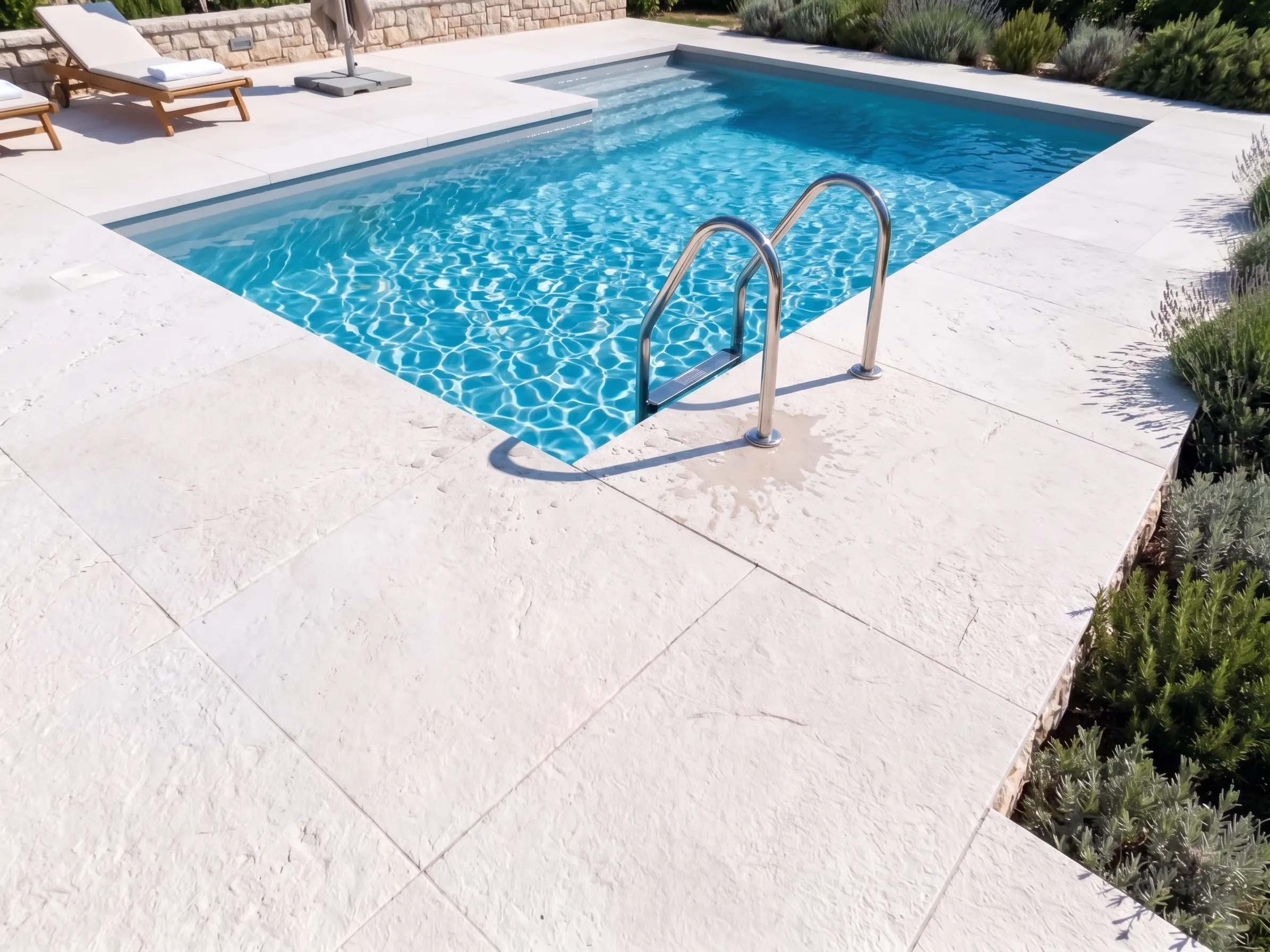
Reading the Technical Properties Before You Pick a Color
Most buyers choose on appearance and then hope the numbers cooperate. Reverse that order and your shortlist gets shorter and better in about ten minutes. Absorption, density, compressive strength, flexural strength and abrasion loss are the properties that predict how stone pavers on pool decks behave over decades of service life, and each one has a named test method you can call out in writing. Choosing the best pool pavers for a particular deck starts with those five figures and ends with color.
Absorption is the property to read first, because it drives most of the others. A stone that takes up water slowly and gives it back readily leaves freeze-thaw damage less to work with, and it also holds fewer dissolved salts in its outer skin. Ask for the tested value in writing on the material you are actually buying rather than a family average from a trade brochure, and compare candidate pool pavers on the same test method so the comparison means something.
Limestone and shellstone are sedimentary rocks built largely from calcium carbonate, much of it the remains of marine organisms — the industry limestone overview sets out that composition and the variety range it produces. That carbonate chemistry is exactly why acid-based deck cleaners are the wrong tool on this family of stone.
Standards Worth Naming in Your Specification
Name the specification standard for the stone type, then name the test method for each property you care about. Limestone falls under ASTM C568 (Limestone Dimension Stone); travertine under ASTM C1527 (Travertine Dimension Stone); granite under ASTM C615 (Standard Specification for Granite Dimension Stone); sandstone and quartzite under ASTM C616 (Quartz-Based Dimension Stone). The full catalog of dimension stone specifications sits in the ASTM standards catalog if your architect wants the source documents.
- Absorption and bulk specific gravity — ASTM C97 test methods
- Compressive strength — ASTM C170 test method
- Flexural strength — ASTM C880 test method
- Abrasion resistance — ASTM C1353 test method
For the limestone and shellstone held in our certificate register, a laboratory certificate of test covering density, absorption, compressive and flexural strength, abrasion and modulus of rupture is available on request. For everything else, ask your supplier which standard applies and have the properties confirmed in writing before the order is cut rather than after it lands.
Color, Finish and How the Deck Reads Beside Water
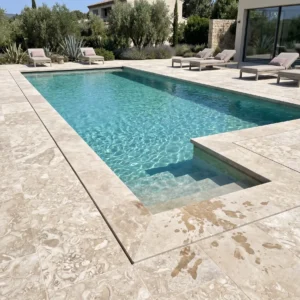
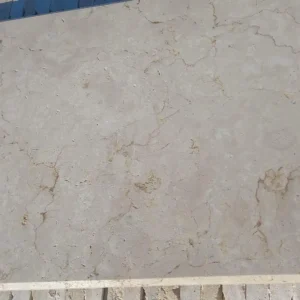
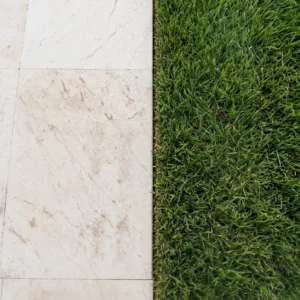
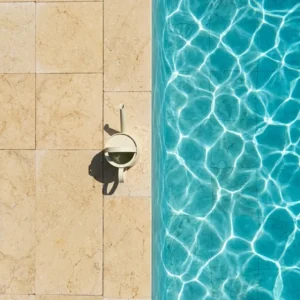
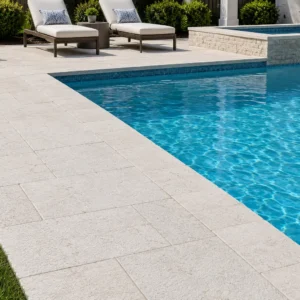
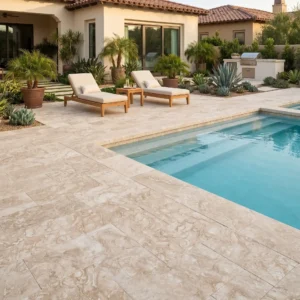
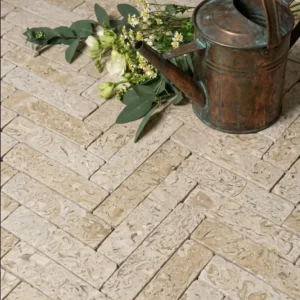
Color choice around water is really a light-management decision. Cream, ivory and white faces bounce reflected light back into the pool and keep the whole area looking open; gray, charcoal and silver tones absorb more of it and make the water read deeper and more saturated. Buff and honey tones sit between the two and tend to flatter warm-toned coping and stone walls. No two pool stone pavers match exactly, so ask the installer to blend from several crates as the deck is laid.
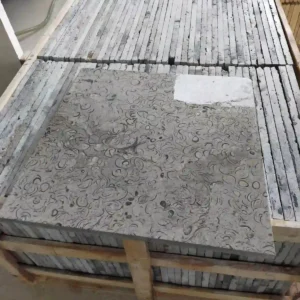
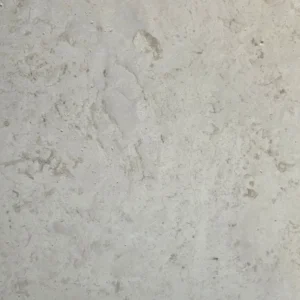
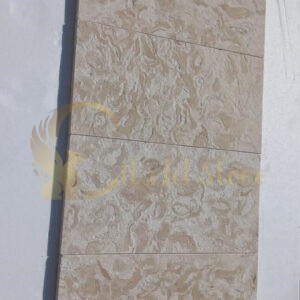
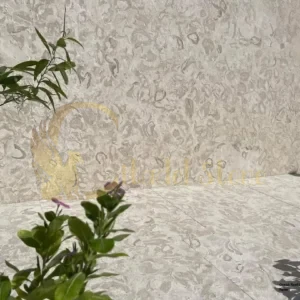
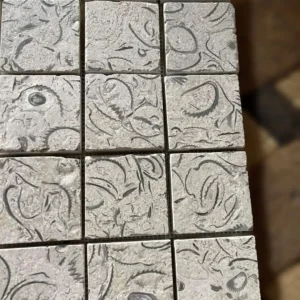
White Limestone Patio Pavers remain the default for buyers who want the deck to recede and the water to dominate. Ocean Reef Leathered Shell Stone Pavers go the other way — the fossil structure and the leathered face give the deck visible character, which works when the pool is a feature in a larger landscape rather than the only event in the yard. Polished faces, including Yellow Limestone – Polished, belong on interior floors, risers and vertical features where that reflective surface is the whole point of the material.
Build a wet mock-up before the order is placed. Lay four or five candidate pieces out on the deck line, hose them down and look at them in the morning and again in late afternoon; honed faces darken noticeably when wet while tumbled faces shift less. Checking a pool paver against the coping stone, the pool interior finish and the house facade at the same time saves more regret than any other half hour in the process.
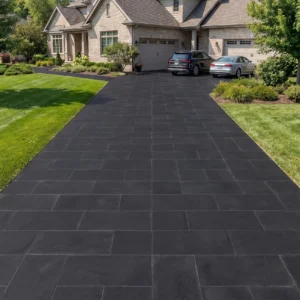
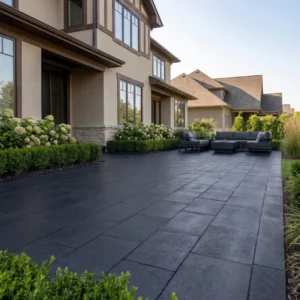
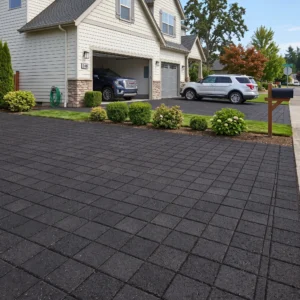
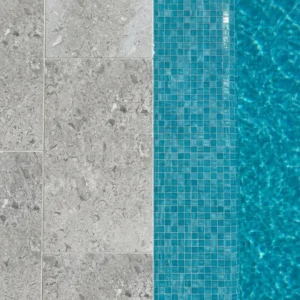
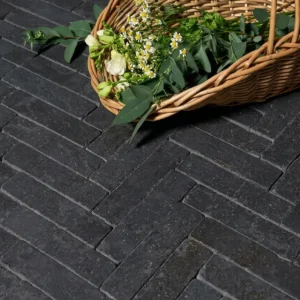
Darker schemes deserve a frank conversation about surface temperature and about how mineral deposits show. Hard water and salt systems leave pale residue that’s far more visible on a charcoal deck than a cream one, and that’s a maintenance reality rather than a defect. If a cooler-toned scheme is where your project is heading, gray pool pavers cover the shade range and finish options in more depth than space allows here. Either way, order your coping and field paving from the same production run so the tones stay in family.
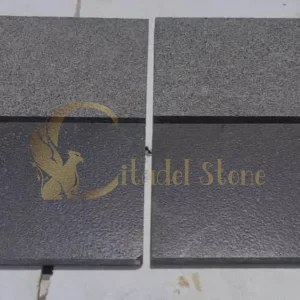
- Tumbled — rounded arrises and an open, matte texture with a softened, older appearance
- Brushed or sandblasted — a fine, uniform surface relief with crisp edges retained
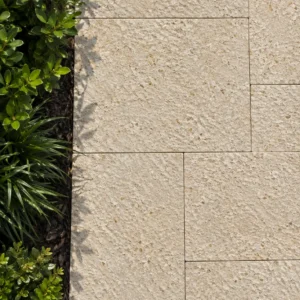
- Leathered — a subtle undulation that follows the stone’s own structure
- Honed — smooth and even, with the color reading darker when wet
- Sawn and chiseled edges — a decision that changes joint width as much as it changes looks
Freeze-Thaw and Daily Thermal Cycling Around Water
The pool deck is the most thermally punished paving on the property, and not because of peak temperature. It’s the swing that does the damage. A deck can run from blazing afternoon sun to a cold clear night in a matter of hours, and in freeze-thaw regions it can cross the freezing point dozens of times in a single season while the surface nearest the shell is still carrying water from the last swim or the last rain.
Water expands as it freezes. Where a stone is close to saturation and the pore network has nowhere to vent that expansion, you get micro-fracturing that shows up years later as surface flaking at the arrises — almost always at the joints and the coping first, because that’s where the deck stays wettest longest. Dry-climate projects aren’t exempt either; a thirty-degree day-to-night swing works the setting bed and the stone at different rates, and the mismatch concentrates stress at bonded edges.
Movement has to be planned, not hoped for. A rigid deck needs its field broken up by working joints at the perimeter, at inside corners, and wherever the paving runs over a change in the structure below — the coping run against the bond beam is a classic location for one. Those joints take a flexible sealant rather than grout, and they stay open for the life of the deck.
Where Freeze-Thaw Damage Actually Starts
Field failures cluster in a short list of predictable places, and almost all of them trace to trapped water rather than to the stone itself:
- The coping course, where the stone overhangs the bond beam and is wet on two faces
- Joints that were filled with a rigid material over a flexible bed, or a flexible material over a rigid one
- Mortar-set decks laid over a slab with no crack-isolation layer and no working expansion joint
- Low spots where meltwater sits instead of draining, re-freezing night after night
- Step treads and the top riser, which get the same water load as the deck with half the thermal mass behind them
Your defense is drainage and movement accommodation, not a heavier stone. Keep the fall positive and continuous, keep joint materials compatible with the setting method, and carry an expansion joint through the paving wherever the slab below has one. Specify a freeze-thaw cycling test for the material with your supplier if the project is in a hard winter zone, and ask for absorption behavior in writing at the same time.
Formats, Sizes and Thickness for Inground Pool Decks
Format selection around a pool is a cutting problem before it’s a design problem. Rectilinear shells take large-format paving cleanly; freeform shells with tight radii waste a lot of large stone and look better with a smaller module that follows the curve. That’s the practical reason French-pattern sets stay popular for inground pool pavers — the mixed module absorbs curve cuts without leaving slivers.
- 12 × 24 in and 16 × 24 in — versatile for both field paving and stair landings
- 24 × 24 in (600 × 600 mm) — clean, modern grid for straight-run decks
- 24 × 36 in — fewer joints across a wide lounging area
- French pattern — a repeating set of four sizes that handles curves and broken runs well
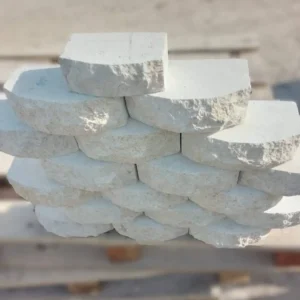
- Coping units at 12 × 24 in with bullnose or drop-face profiles, cut to your overhang
Thickness follows the setting method, not the format. A mortar-set deck over sound concrete works comfortably at 1¼ in (3 cm) nominal, while sand-set work over a compacted crushed-stone base wants more substance underfoot — plan on 1½ to 2 in and discuss the point loads of furniture and planters with your installer. Thinner material in the ⅝ to ¾ in range is the realm of outdoor pool deck tiles bonded over a structural slab, and it isn’t a sand-set product under any circumstances.
Plan the layout from the water outward. Setting the coping line first and working the field pattern back toward the house keeps full units at the edge everyone looks at and pushes the cut pieces to the lawn or the wall, where they read as a border rather than as leftovers. On a freeform shell, ask your installer to dry-lay the first two courses around the radius before any mortar is mixed. Pool patio pavers carried in one format and finish from the coping into a dining terrace make the two areas read as one.
Coping, Bullnose and the Waterline Detail
Coping is where the deck meets water and where most of the long-term trouble is either prevented or built in. A modest overhang past the bond beam throws drip clear of the shell face; too much overhang turns the unit into a cantilever with the wrong leverage on a freeze night. Have the coping cut from the same stone and finish as the pool deck stone pavers behind it. The pool industry maintains its own body of construction and operation standards — the PHTA standards directory is where those ANSI-approved documents are cataloged, and your pool builder should be working to them regardless of which stone you choose.
Base Preparation and Drainage That Decides the Outcome
Nothing you specify above grade survives a base that wasn’t built properly. For pedestrian pool deck pavers over native soil, a compacted crushed-stone base built up in lifts — rather than dumped and rolled once — is the single highest-value line item on the quote. Clay-heavy subgrades want a geotextile separation layer so the base aggregate doesn’t migrate into the soil over a few wet seasons.
- Excavate to firm subgrade and compact before any aggregate goes down
- Build the crushed-stone base in lifts of a few inches, compacting each one
- Set the finished grade to about ¼ in per foot of fall (roughly 2%) away from the shell
- Terminate the fall at a deck drain, a swale or a permeable edge — never at the house or at a retaining wall
- Allow for the bedding course and the paver thickness when you calculate excavation depth
Edge restraint and drainage hardware are the two items that get value-engineered out and then missed. A sand-set deck needs a restraint on every free edge or the perimeter units will creep and the joints will open. Where the grade cannot carry water away cleanly — a deck trapped between the shell and a raised wall, for instance — a linear channel drain tied into a positive outfall is the honest fix, and it has to be set while the base is being built.
Sand-Set Versus Mortar-Set Around a Pool
Sand-set construction tolerates ground movement and lets you lift and reset a unit years later, which matters when a plumbing repair goes under the deck. Its weakness is joint maintenance: the first wet season will settle some joints, and you’ll keep the deck tight only by refilling and re-compacting where it drops. Mortar-set construction gives you a rigid, uniform plane and clean coping details, at the cost of needing a sound slab, a crack-isolation layer and honestly detailed movement joints. It’s also the only sound way to lay thin pool patio tiles, which depend on full mortar contact.
At Citadel Stone, we recommend confirming the setting method before the order is cut, because it changes the thickness, the edge detail and sometimes the format. Temperature also changes the install window — setting materials have a stated temperature range, and in shoulder seasons you work to that range rather than to the printed schedule. Deck work done on a frosty morning rarely bonds the way the data sheet promises.
Slip Resistance and What the Standard Actually Measures
This is the question every pool buyer asks, and it deserves a straight answer rather than marketing language. Slip resistance for hard surfaces is addressed by ANSI A326.3, which measures dynamic coefficient of friction in the wet condition — replacing the ASTM C1028 static test withdrawn in 2014. No figure, class or rating appears on this page, and no slip test report is published for the stone supplied here.
What’s genuinely useful to understand is that finish is the variable, not stone type. The same limestone block can leave the saw as a smooth honed face or come back from the tumbler with an open, matte texture, and those two surfaces behave very differently underfoot — which is why specifications call out finish, not just material. Topography matters too: a surface with visible relief sheds a water film differently from a flat one.
- Decide the finish with your designer, then have it evaluated wet under A326.3 if your project requires documented values
- Ask what condition any quoted value was measured in — a dry result does not answer a wet requirement
- Remember that maintenance changes the surface over time; sunscreen films and algae alter a clean surface’s behavior
- Keep the same finish across the deck, the coping and the steps so the surface doesn’t change character mid-stride
Sealing, Cleaning and Season-to-Season Care
Sealing protocols for pool deck pavers differ from ordinary patio maintenance because the contaminant list is different. You’re dealing with chlorinated or saline water, sunscreen and body oils, leaf tannins, hard-water deposits and, in some regions, iron in the irrigation water. A breathable impregnating sealer is usually the right call on carbonate stone — it slows absorption of oils and salts while still letting trapped moisture escape.
Topical film-forming sealers are a different animal. They sit on the surface, change the way the stone looks, and when water gets underneath them in a freeze-thaw region they can lift and cloud. Reseal on the interval your sealer manufacturer states for exterior horizontal use, and test a discreet corner first — the color shift on a wet-look product surprises people.
Timing the first seal matters as much as the product does. New mortar-set work needs to dry out and finish its initial efflorescence before anything goes on top of it, and sealing too early can trap that moisture and haze the surface. Ask your installer when the deck will be dry enough, then test the chosen sealer on an offcut from the same production run.
- Rinse the deck after heavy swim use to keep chemistry off the stone and out of the joints
- Use pH-neutral cleaners; skip acid-based products entirely on limestone, travertine and shellstone
- Address oil marks promptly with a poultice rather than aggressive scrubbing
- Keep planters on feet so trapped moisture and tannin don’t stain a ring into the paving
- Before winter, clear joints of debris, check the fall still runs true, and top up jointing sand where it has dropped
- Inspect the coping each spring — it’s the first place a movement problem announces itself
Honest expectation setting matters here. No exterior stone stays showroom-new; a well-detailed deck develops a patina and holds its structure, and that’s the realistic outcome to design for.
Delivery, Site Access and Ordering Logistics
Logistics decide more project schedules than fabrication does, and pool projects are harder than most because the deck is usually the last trade in a yard that’s already congested. Work out the delivery picture before you place the order, not the week it ships.
Stone arrives banded and crated on pallets, and a full pallet of 2 in material is heavy enough that hand-balling it across a finished lawn is not a plan. Confirm whether a flatbed truck can reach the staging point, whether the driveway apron will carry the weight, and who provides the forklift or boom for offloading. Where a truck can only reach the curb, you need a sequenced plan for moving crates to the pool area without crossing fresh concrete or new turf.
Order the overage with the first delivery rather than later. A sensible waste allowance covers radius cuts, breakage and the pieces set aside on the deck for figure or tone, and on a curved shell that allowance runs higher than on a straight run — talk the number through with your installer against the actual layout. Any quote for pool deck pavers for sale should state the overage it includes, not just the net deck area. Natural stone varies from one production run to the next, so a small second order months later rarely matches the first.
- Measure the gate width and the tightest turn between the street and the staging area
- Identify overhead obstructions — low limbs and service drops defeat boom offloading
- Stage material on firm, level ground and keep it covered if site work will throw dust or mortar splash
- Order attic stock for future repairs; matching a run years later is rarely straightforward
- Inspect and record crate condition at delivery, before the truck leaves
Citadel Stone arranges and manages nationwide delivery from our selected quarries in the Middle East, with offloading arrangements confirmed before the delivery date and lead times quoted with the order. For projects needing custom radius cuts, non-standard coping profiles or matching step treads, send drawings early — cut-to-order work sets the production sequence, and the best pavers for pool area projects are the ones that arrive already cut to the shell you actually built.
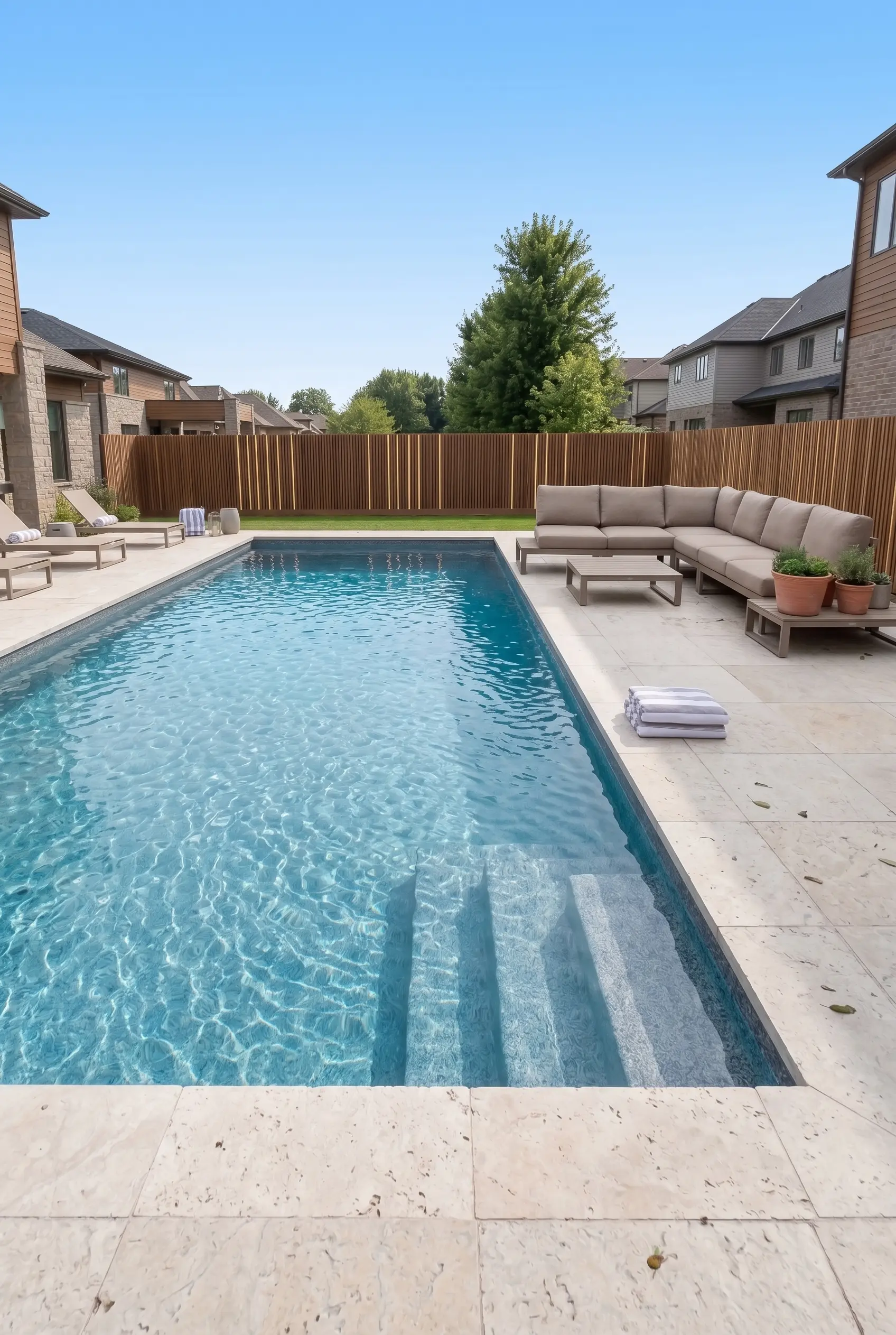
Source Pool Pavers — Nationwide Supply by Citadel Stone
Citadel Stone cuts pool pavers to order in standard deck formats — 12 × 24 in, 16 × 24 in, 24 × 24 in and 24 × 36 in, plus French-pattern sets and matching coping in bullnose or drop-face profiles — with thickness cut to your setting method. We Quarry It. We Cut It. We Deliver It.
If you’re comparing pool pavers for sale, line them up on thickness and finish first and on price second. Request sample pieces and a written specification sheet before you commit; for stones in our certificate register, a laboratory certificate of test covering density, absorption, compressive and flexural strength, abrasion and modulus of rupture is available on request. Trade and wholesale buyers can send a drawing or takeoff for a cut list and quote, and lead times are quoted with the order while delivery is arranged and managed to the jobsite. Contact the team for pricing, or to schedule a specification review for pools and patios at the design stage.
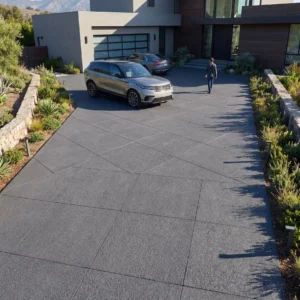
Hardscape decisions rarely stop at the water’s edge, and the driveway or courtyard that frames the yard answers to different loading entirely — how granite pavers handle heavier traffic is worth a read before you finalize the wider site palette. Citadel Stone backs paths, courtyards and pool decks with Pool Pavers — a natural stone range specified for exterior work.
See also: best pavers for pool deck.
Related guides: Pavers Around Pool: How Much Does Stone Cost? · installing pool pavers · pavers for above ground pool · stone pavers around pool · thin pavers for pool deck.