












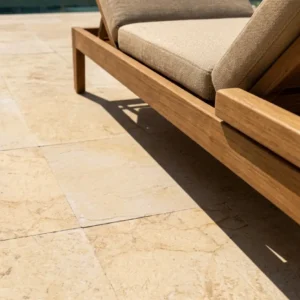



















Absorption varies from block to block on commercial-grade travertine, and that single number drives more 12×12 Travertine Tile decisions than color, finish, or price combined — so request the absorption result for the batch you are buying. It tells you whether the voids need filling, which setting mortar will actually bond, and how the floor behaves over a substrate that moves seasonally. Most failures traced back through a warranty claim show the same pattern — the tile was specified correctly and the substrate was treated as if it were inert. What follows is the specification logic that separates a floor still tight at year twenty from one telegraphing cracks by year six.
Why the 12×12 Format Still Dominates Travertine Floor Plans
Twelve inches converts to 304.8 mm, which is why the same product appears as travertine tiles 305 x 305 mm in some metric catalogs and as travertine tiles 300 x 300 mm when a mill cuts to a true European nominal. That 5 mm gap sounds trivial until you mix both in one field and your grout lines drift almost 3/16″ across a ten-tile run. Verify the gauged dimension on the packing list rather than the marketing description.
The format endures because it handles well on site. A 1/2″ thick 12 x 12 travertine tile weighs roughly six pounds, so a setter can carry three in one hand and adjust a piece into the mortar bed without a second person. That matters on stair landings, tight bathrooms, and lobby infills where large-format handling equipment simply doesn’t fit.
- Smaller modules tolerate substrate deflection better than 24-inch formats, because each piece bridges less span
- Waste on complex layouts typically runs 8% to 10% rather than the 12% to 15% you budget for large slabs
- Diagonal, running bond, and pinwheel patterns all read cleanly at 12 inches without overwhelming a small room
- Replacement pieces stay easy to source years later, since 12×12 travertine remains a permanent stock size rather than a fashion dimension
- Cut-in around floor registers, drains, and door casings produces fewer unusable offcuts
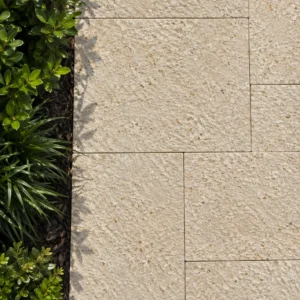
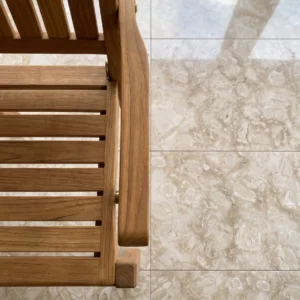
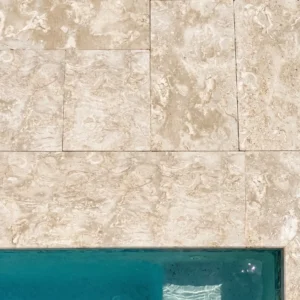
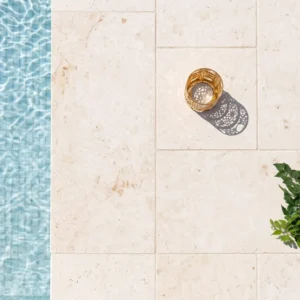
Citadel Stone stocks 12×12 Travertine Tile in filled-and-honed, tumbled, and brushed surfaces, and you can request sample pieces cut from the same production block before committing a full order. Dimension stone consumption data published by the federal survey on carbonate stone formation reflects how consistently travertine and related carbonates hold their share of interior flooring work.
Grades, Fill, and Finish: What to Inspect Before Ordering
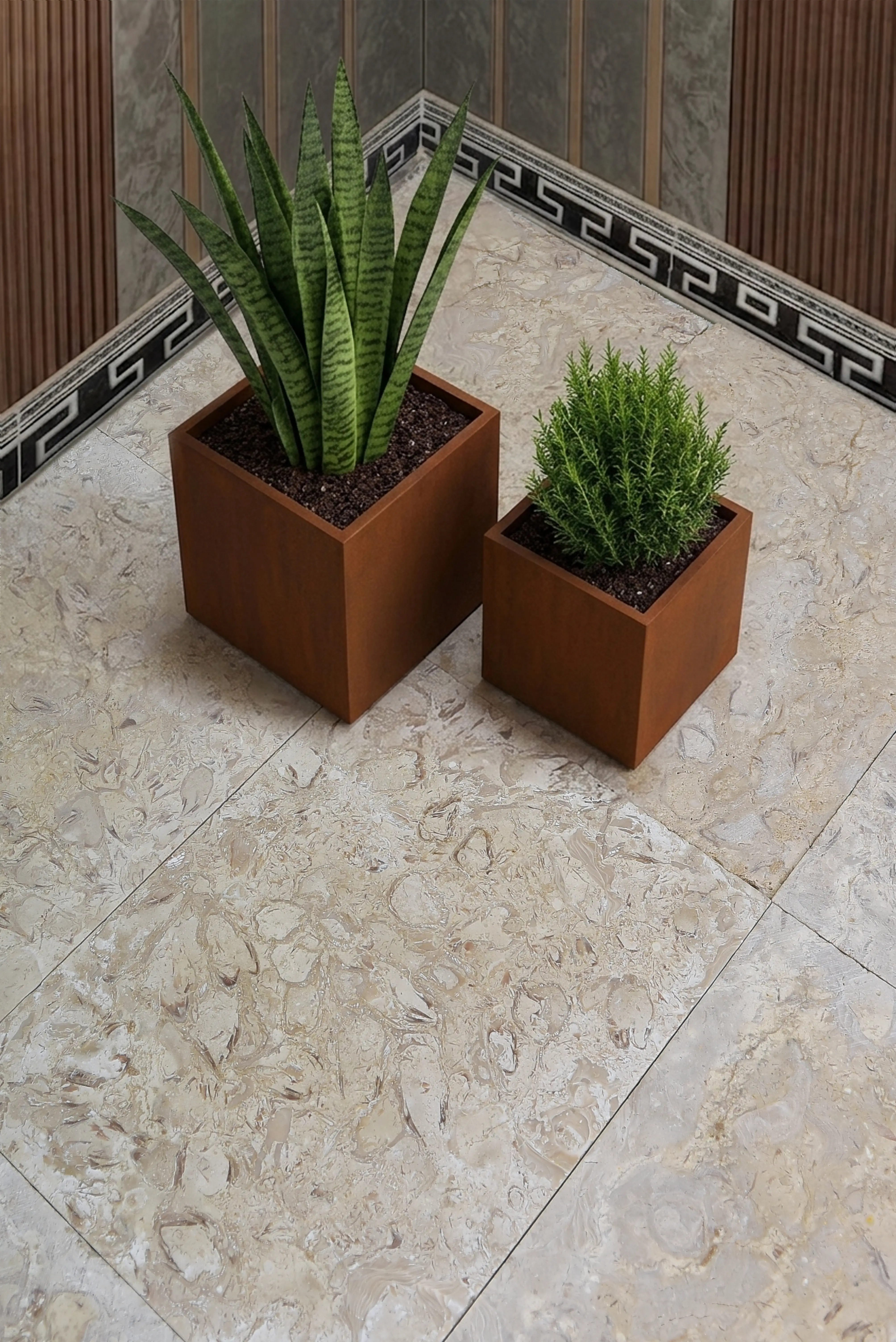
Travertine grading is a commercial convention, not a regulated scale, so two suppliers can label very different material “premium.” What you should evaluate instead is void density, fill quality, and backing condition — those three tell you almost everything about how the floor will wear.
- Filled tiles use cement-based or resin fill; resin holds color better under UV but can telegraph slightly as gloss differential on honed surfaces
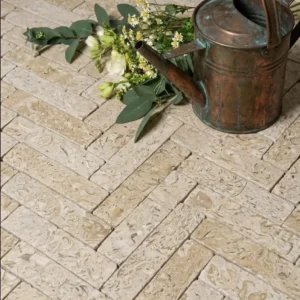
- Unfilled and tumbled pieces read more rustic and hide traffic patterns well, though open pores collect grit in high-use corridors
- Honed surfaces give the most predictable slip performance in interior floor use; polished travertine belongs on walls and low-traffic areas
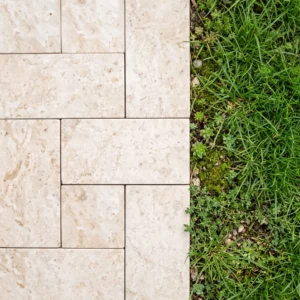
- Brushed and chiseled-edge pieces disguise minor dimensional variation, which helps when you’re working over an imperfect substrate
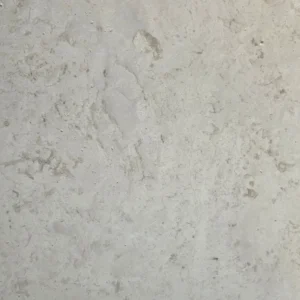
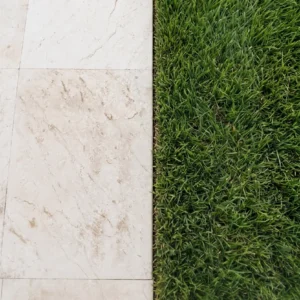
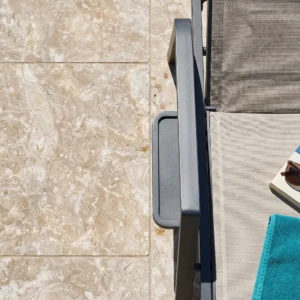
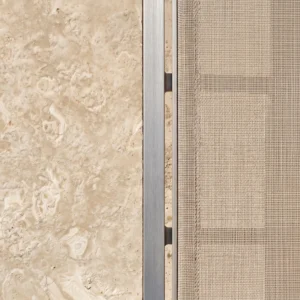
- Ivory, cream, silver, and walnut tones all come from the same broad deposit families, but vein direction — vein-cut versus cross-cut — changes the visual more than the color name does
Turn a sample face-down before you approve it. Excessive netting, heavy resin backing, or crumbling edges signal material cut from a marginal block, and no setting method compensates for that. Published industry guidance on travertine and carbonate varieties explains why open-pore structure varies so widely between quarry benches within a single deposit. At Citadel Stone, every inbound pallet gets pulled and spot-checked at the warehouse for fill integrity and thickness consistency before it’s released to a job.
Thickness, Tolerance, and Where Each Gauge Belongs
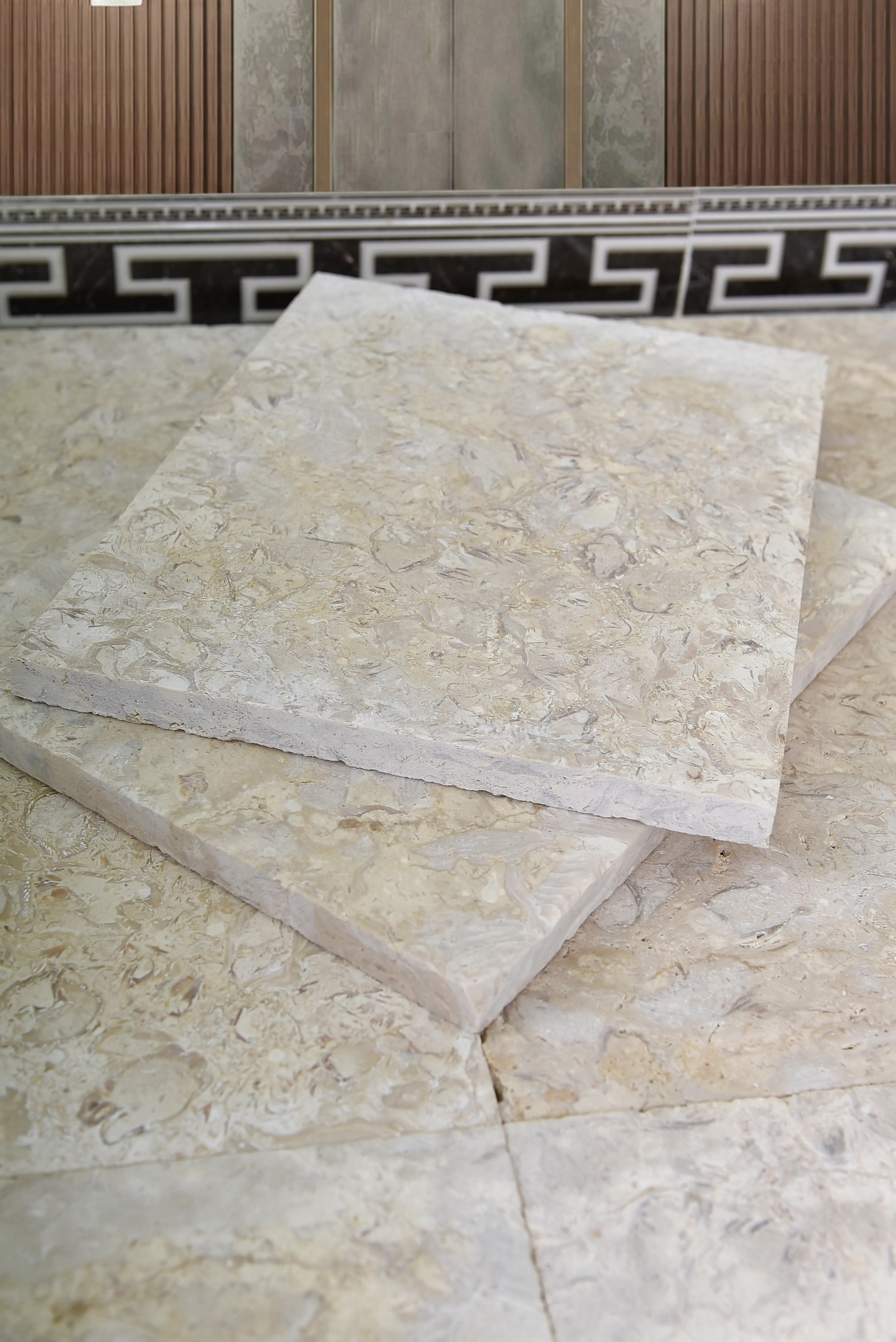
Standard interior 12 inch travertine tile ships at 1/2″ (12 mm) nominal, with actual gauge often ranging 11 mm to 13 mm across a pallet. That variation is normal for calibrated stone and it’s exactly why you use a medium-bed mortar rather than a thin-set rated only for 3/16″ beds.
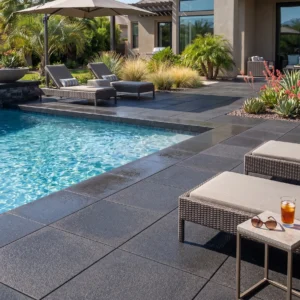
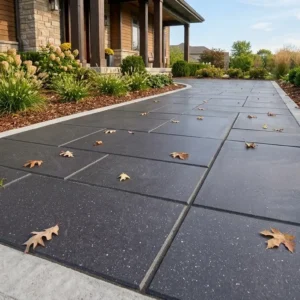
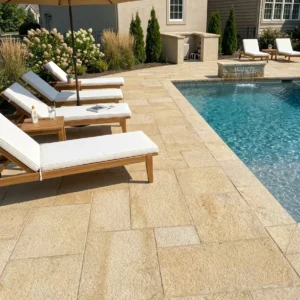
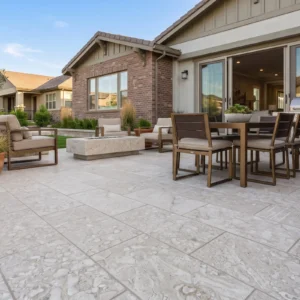
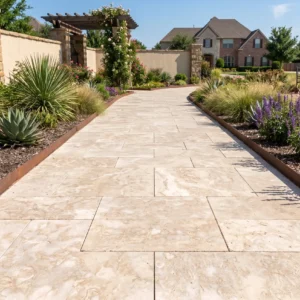
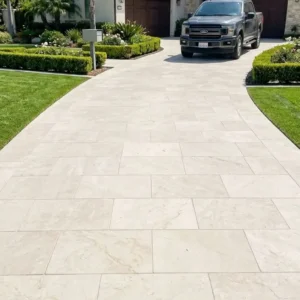
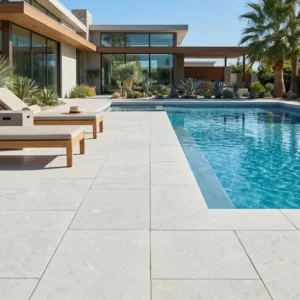
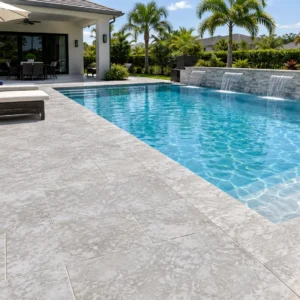
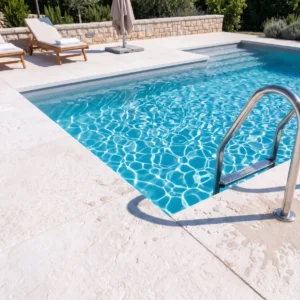
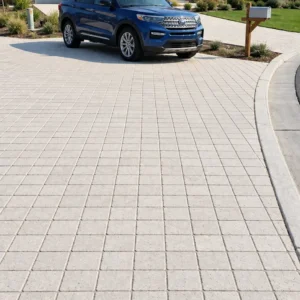
Thicker gauges serve different purposes. A 5/8″ tile buys you margin over a rough slab. Full 1-1/4″ travertine pavers belong outdoors on sand-set or mortar-set exterior work, where point loads from patio furniture and foot traffic on a flexible base demand more section. Specifying interior-gauge stone for an exterior application is one of the most expensive mistakes on this material.
- Check thickness at four corners of a sample piece — corner-to-corner variance above 1.5 mm complicates lippage control
- Warpage matters more than face dimension; a slightly cupped tile fights you across every joint
- Interior lippage should be held to 1/32″ plus allowable warpage for a floor this size
- Rectified or calibrated edges let you run 1/16″ joints; tumbled edges need 1/8″ or wider to look intentional
- Exterior travertine pavers should carry consistent bottom-face texture for mortar keying
Dimensional and physical property requirements for this stone family sit under the ASTM travertine dimension stone specification, which is worth citing directly in your submittal package. Ask for test data on absorption and flexural strength rather than accepting a general durability statement.
Subgrade, Soil, and Substrate Conditions That Decide Longevity
Here’s what most specifiers miss on 12×12 travertine floors: the tile rarely fails, the ground under it does. Slab-on-grade construction over expansive clay with a plasticity index above 25 can move a quarter inch seasonally between the slab perimeter and its center, and a rigid stone floor bonded directly to that slab has nowhere to put the strain.
Soil composition dictates your detailing more than climate does. Silty and clay-rich subgrades hold moisture against the slab underside, driving vapor transmission that can discolor light-toned travertine from below and break down cement-based fill over time. A calcium chloride or relative-humidity test on the slab costs very little compared to lifting a completed 12 x 12 travertine floor tile installation.
Detailing for Unstable Ground
- Install a crack isolation membrane over any slab with existing shrinkage cracking or documented soil movement
- Honor movement joints straight through the stone — perimeter joints at every restraining wall, field joints at roughly 20 to 25 feet interior and 8 to 12 feet in sun-exposed exterior areas
- Never bridge a control joint with tile and grout, regardless of membrane use
- Confirm slab moisture emission before setting light ivory or cream tones, which show alkali staining first
Base Preparation for Exterior Travertine Pavers
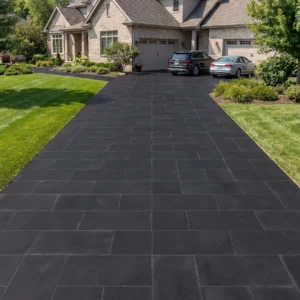
Exterior work over native soil follows different rules. Your compacted aggregate base for travertine pavers should run 4 to 6 inches on stable granular soils and 8 to 10 inches where clay content is high, compacted in lifts to at least 95% of standard Proctor density. Add a woven geotextile separation layer over silty or organic subgrade — without it, fines migrate upward into your base within a few wet seasons and the surface starts to dish. In freeze-thaw regions, positive drainage away from the base matters more than base depth, because saturated aggregate heaves regardless of how well it was compacted.
Setting Methods, Mortar Choice, and Joint Layout
Use white polymer-modified medium-bed mortar under light travertine, always. Gray mortar bleeds through the translucent zones in cream and ivory stone within days, and the shadow never fully disappears. That single substitution accounts for a startling share of “the color looks wrong” complaints on otherwise sound installations.
- Target 95% mortar coverage for interior floors and full coverage on exterior or wet areas — back-butter every piece to get there
- A 1/4″ x 3/8″ square-notch trowel suits most 12 x 12 travertine tile work; collapse the ridges by setting in one direction and beating the tile in
- Unsanded grout at 1/16″ joints, sanded above 1/8″ — sanded grout dragged across polished travertine will scratch it
- Dry-lay two full rows before you spread mortar to check pattern, blend, and cut sizes at the far wall
- Pull pieces from at least four cartons simultaneously so natural shade variation distributes evenly across the floor
Keep grout haze off unfilled surfaces by pre-sealing before grouting. Cured grout inside an open pore has to be dug out mechanically, and that leaves a mark you’ll see under raking light for the life of the floor.
Sealing, Cleaning, and Realistic Maintenance Expectations
Travertine is water-resistant but reactive — it’s calcium carbonate, so any acid attacks it. Vinegar, citrus cleaners, and most bathroom descalers etch a honed surface within seconds of contact, leaving a dull spot that no amount of sealer restores.
An impregnating sealer is the working answer. Penetrating silane or fluoropolymer formulations sit below the surface, allow vapor transmission, and buy you the reaction time needed to wipe a spill before it stains. Application technique matters as much as product selection, and the step-by-step method covered in how to seal travertine tile addresses the coverage rates and dwell times that determine whether the treatment actually penetrates. Plan on resealing kitchen and entry zones every two to three years and lower-traffic areas every four to five.
- Clean with pH-neutral stone cleaner and rinse — residue film dulls honed surfaces faster than traffic does
- Walk-off matting at entries removes the quartz grit that abrades a finish over time
- Spot-test any poultice on an offcut before using it on a stain in the field
- Filled tiles occasionally lose small fill plugs after a decade; keep a few spare pieces for repair fill matching
Handled this way, a 12×12 Travertine Tile floor delivers decades of service life indoors. That’s a realistic expectation, not a marketing figure, and it depends on drainage, sealing discipline, and joint detailing far more than on the grade you bought.
Comparing Travertine Tile to Porcelain and Other Options
Porcelain look-alikes are genuinely good products, and pretending otherwise costs you credibility with clients. Porcelain gives you near-zero absorption, tighter dimensional tolerance, and lower maintenance demand. What it can’t give you is depth — the light scatters differently through a translucent carbonate surface, and the pattern never repeats.
- Travertine can be resurfaced and rehoned decades in; a worn porcelain glaze can only be replaced
- Porcelain wins in commercial kitchens, wet labs, and anywhere acids are routinely present
- Marble offers similar veining with higher polish potential but less forgiving stain behavior on floors
- Dense limestone reads more uniform and monolithic, while travertine’s linear voids give it visible movement
- Cost per square foot on a 12 x 12 travertine floor tile typically lands between mid-grade porcelain and marble
The honest trade-off is maintenance appetite. Clients who want a surface they can mop with whatever is under the sink should not be specified natural travertine. Clients who value material authenticity and accept a light sealing routine get a 12×12 Travertine Tile floor that improves in character rather than simply aging.
Estimating Quantities, Waste, and Delivery Planning
Order by production block, not just by square footage. Travertine color shifts measurably between blocks, and a mid-project top-up from a different batch is visible from across the room. Calculate net area, add 10% for straight lay or 15% for diagonal and heavy cut-in, then round up to full cartons.
Logistics Details Worth Confirming Early
- A full pallet of 1/2″ material typically runs 2,200 to 2,800 pounds — confirm the site can accept it before the truck is dispatched
- Residential deliveries usually need a liftgate; job sites with a forklift can take a standard flatbed truck drop
- Acclimate cartons indoors for 48 hours before setting in conditioned space
- Store pallets on level ground and never stack more than two high — edge chipping happens in storage, not transit
- Keep 3% to 5% overage boxed and dry as attic stock for future repairs
Citadel Stone holds 12×12 Travertine Tile in domestic warehouse inventory, which typically brings lead times down to one or two weeks against the six-to-eight-week cycle a direct import order requires. For projects needing custom sizes, bullnose, or matching thresholds cut from the same block, our team can quote fabrication lead times alongside the field tile so nothing arrives out of sequence. Material is sourced from established quarry partners across the Mediterranean and selected quarries from the Middle East, and each batch is inspected on arrival for shade consistency before it ships out.
Order 12×12 Travertine Tile — Direct Supply from Citadel Stone
Available formats include filled-and-honed, tumbled, and brushed 12 inch travertine tile in 1/2″ and 5/8″ gauges, with 1-1/4″ travertine pavers for exterior work and matching thresholds, bullnose, and stair treads on request. Metric-market projects can be supplied as travertine tiles 305 x 305 mm or true travertine tiles 300 x 300 mm — specify which convention your drawings use so the joint layout resolves correctly.
You can request samples, absorption and flexural test data, or a full submittal package before committing. Trade and wholesale accounts get tiered pricing on pallet quantities, and nationwide delivery runs from warehouse stock with scheduled truck appointments coordinated to your site conditions. Contact the team for a quote with current lead times, or to buy a sample set and compare shade ranges under your actual lighting — it’s a cheap step that prevents an expensive one.
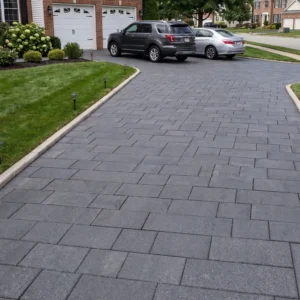
Getting a 12×12 travertine floor right comes down to matching gauge to application, respecting what the ground beneath is doing, and sealing on a schedule you’ll actually keep. As you plan the wider hardscape, adjacent surfaces influence material decisions too, and how larger-format limestone pavers perform outdoors covers a related specification path worth reviewing before you finalize transitions. Contractors and designers rely on Citadel Stone 12×12 Travertine Tile, sourced from quarries across the Mediterranean and Middle East, for commercial work.
See also: travertine look porcelain tile comparison.
Related guides: ph neutral travertine tile cleaner · how to repair travertine tile · travertine tile shower installation · travertine tile for backsplash · gray travertine tile ideas · polished travertine tile finish.