Polished travertine tile finish performs differently from every other stone finish category — and the gap shows up earliest in how the surface interacts with grout joints, moisture vapor, and subfloor movement. Most buyers focus on the visual result and underestimate the technical variables that determine whether that reflective surface stays pristine at year five or starts showing micro-crazing and haze by year three. The type of fill used before polishing, the pore closure achieved during the process, and the underlying flatness tolerance of your substrate all drive long-term performance far more than the travertine’s country of origin.
What Polished Finish Actually Means for Travertine
Polished travertine is not simply honed travertine buffed to a shine. The polishing process involves progressive diamond abrasive stages — typically moving through 50, 100, 400, 800, and 1500 grit — that close the surface pores and create genuine optical reflectivity rather than a surface coating. You’re compressing the calcium carbonate crystals at the surface, which is why polished travertine has a fundamentally different absorption profile than honed or tumbled formats of the same stone. According to NSI ASTM tile stone specifications, the water absorption rate for polished travertine is measurably lower than for open-pore finishes, directly affecting sealing protocols and long-term maintenance requirements.
Your finish selection also determines where the fill goes — before or after polishing. Pre-filled tiles are grouted with a cementitious or epoxy filler that gets polished flat as part of the stone surface. Post-filled tiles are polished first and filled afterward, which creates a visible distinction between the stone face and the void fill at certain light angles. Pre-filled and polished is the specification standard for interior floor applications where you want a consistent reflective plane across the entire tile face.
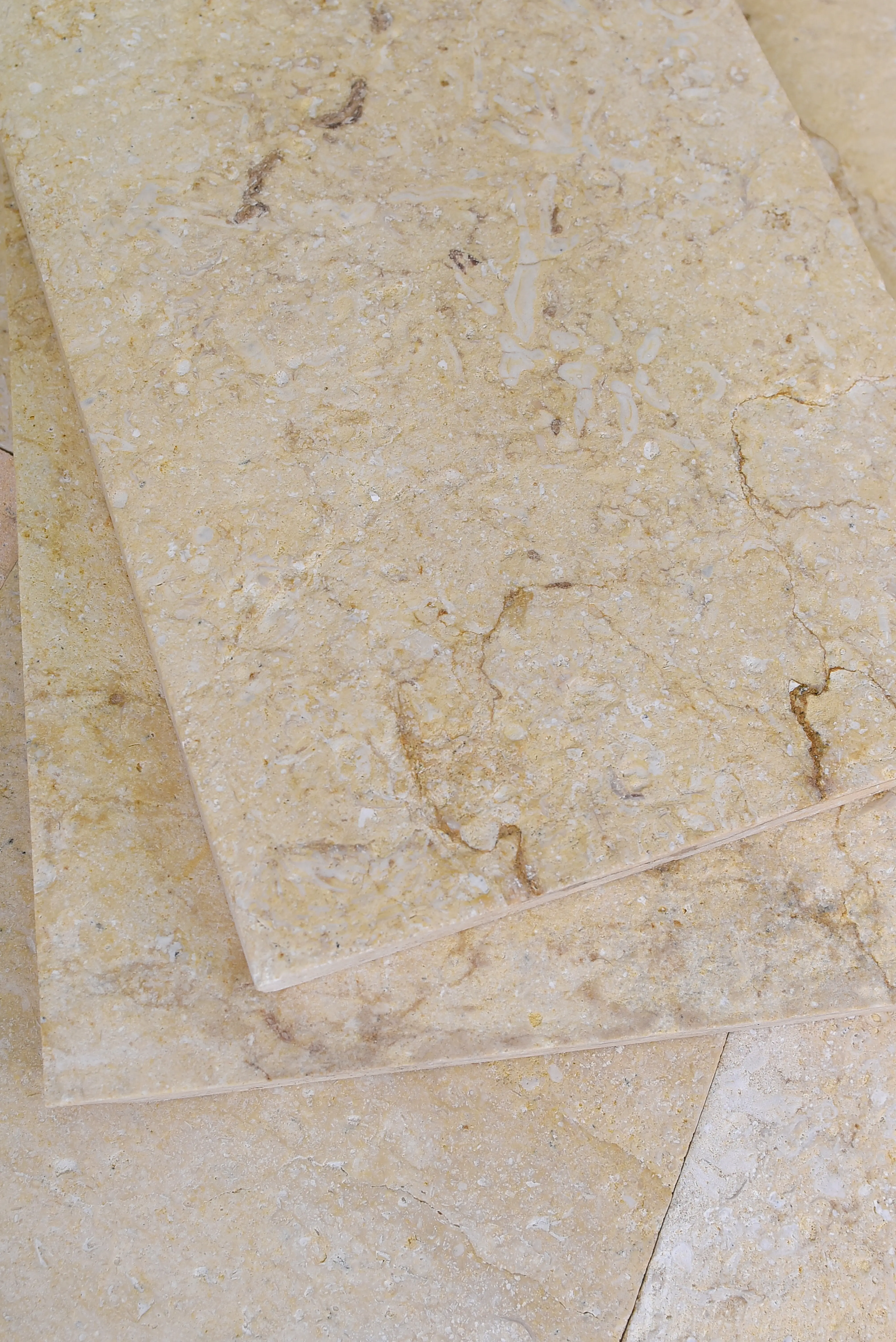
Types of Polished Travertine Tile: Format and Grade Differences
Not every travertine polished tile on the market is produced to the same standard. Understanding the grading system before you commit to a quantity order protects you from receiving material that looks inconsistent once it’s laid. Most commercial polished travertine ships in three grades, and grade differences become dramatically more visible in polished format than in tumbled or brushed finishes because the reflective surface amplifies color variation and fill inconsistencies.
- Select or Premium Grade: Highly consistent color, tight fill density, minimal natural veining variation, recommended for large open floor planes where tile-to-tile continuity matters most
- Standard or Commercial Grade: Natural color range accepted, moderate fill variation, suitable for areas with grout joints that visually break the surface plane
- Classic or Rustic Grade: Wide color variation, visible fill patches, open voids may remain after polishing — typically used for feature walls or intentionally varied floors
- Filled and Polished vs. Unfilled Polished: Unfilled polished travertine retains its natural void structure beneath a polished surface, which creates grout absorption challenges during installation — filled format eliminates this complication entirely
At Citadel Stone, we source polished travertine tile from selected quarries in Turkey, Iran, and the Middle East, running visual checks at the warehouse before pallets are cleared for dispatch. Our technical team looks specifically at fill consistency and reflectivity uniformity across the batch — two performance factors that don’t show up in spec sheets but determine whether the installed floor looks like a coherent surface or a patchwork of varying sheen levels.
Finish Performance Specifications You Should Know
The ASTM C1527 travertine dimension stone standard sets the baseline for dimensional tolerances, absorption limits, and modulus of rupture thresholds that polished travertine should meet before it enters a specification. For interior flooring, your minimum acceptable modulus of rupture is 1,000 psi, and absorption should be below 0.75% by weight for polished formats in moisture-exposed environments like kitchens and bathrooms. These aren’t decorative thresholds — they’re the engineering floor beneath which material performance becomes unpredictable under thermal cycling and cleaning chemical exposure.
Tile thickness is a critical variable that polished travertine buyers frequently underestimate. Standard floor tile runs 3/8 inch nominal, but 1/2 inch and 5/8 inch formats offer meaningfully better flexural resistance over subfloors with minor deflection tolerance issues. Your travertine polished tile specification should always call out thickness alongside finish — a 12×12 at 3/8 inch behaves structurally differently from the same format at 1/2 inch, especially over radiant heat systems where differential thermal expansion stresses the bond layer.
- Minimum substrate flatness: 1/8 inch in 10 feet for standard polished tile, 1/16 inch in 10 feet for large-format polished tile over 15 inches in any dimension
- Lippage tolerance: Maximum 1/32 inch for polished tile — the reflective surface makes lippage dramatically more visible than honed or tumbled finishes
- Bond coat coverage: Minimum 95% mortar contact for wet areas, 80% acceptable for dry interior floors — polished tile allows no hidden air pockets under bathroom applications
- Expansion joint frequency: Every 20-25 feet in field tile, at every change of plane, and where tile meets a dissimilar material — thermal movement in travertine averages 3.0-5.0 × 10⁻⁶ per °F
Polished Travertine and Water Management: What Drainage Does to Your Installation
Water behavior is the single most damaging long-term force acting on any travertine installation — polished format included. The closed surface pore structure of polished travertine tile slows topical absorption significantly, but hydrostatic pressure from below and lateral moisture migration through grout joints bypasses the polished face entirely. In regions with heavy seasonal rainfall, hurricane-season flooding exposure, or prolonged monsoon cycles, your installation’s survival depends less on the tile and more on the drainage architecture beneath it.
For interior polished travertine flooring in basements or grade-level slabs, a vapor barrier rated at 0.15 perms or lower is non-negotiable before you begin your mortar bed. Concrete slabs emit moisture vapor — even slabs that feel completely dry — and that vapor migrates upward, weakening the thin-set bond over time. In drought-climate regions, the same slab that tests fine in dry months may show significantly higher vapor emission after the first heavy rain season, which is why pre-installation calcium chloride testing (ASTM F1869) should be a fixed line in your specification rather than an optional step.
- Exterior polished travertine applications require a positive drainage slope of 1/8 inch per foot minimum — the polished surface sheds water efficiently, but pooling at low points drives grout joint deterioration
- Grout selection for polished travertine should be unsanded or fine-sanded: coarse-sanded grout scratches the polished surface during installation and cleanup
- In freeze-thaw regions, polished travertine is not the appropriate exterior specification — moisture that penetrates grout joints and freezes expands at 9% volume, which fractures the tile face regardless of surface finish quality
- Shower and wet-room applications need linear or point drains positioned to prevent standing water at grout joints for more than a few minutes after water flow stops
Subfloor Preparation: Where Most Polished Travertine Failures Start
The reflective quality of a polished travertine tile finish is merciless about subfloor imperfections. A 1/4-inch dip across a 3-foot span that would disappear under a textured tumbled tile becomes a visible sag in a polished floor because the light reflection across the plane reveals every deviation. Self-leveling underlayment rated for natural stone is your most reliable corrective tool — but it needs a mechanical bond to the concrete below, which means proper surface preparation including shot-blasting or scarifying, not just grinding, before you pour.
Thin-set mortar selection matters as much as base prep. Large and heavy tile mortar conforming to ANSI A118.15 is the correct specification for polished travertine tiles in any format 12 inches or larger. Standard polymer-modified thin-set does not provide sufficient open time or bond strength for polished stone, particularly over radiant heat systems where the adhesive layer experiences daily thermal cycling. Medium-bed mortar formats let you correct minor substrate undulation — up to 3/4 inch — while maintaining full coverage across the tile back, which is the coverage percentage standard you need to meet for interior wet areas.
Sealing and Maintenance of Polished Travertine Tile
Sealing polished travertine is a different operation from sealing honed or tumbled stone. The closed-pore surface accepts penetrating sealers more slowly — application requires lighter coats, longer dwell times, and thorough buffing to prevent surface film buildup that dulls the polished reflectivity. For kitchen floors and vanity tops, a fluorocarbon-aliphatic resin sealer applied annually provides effective resistance against oil-based and water-based staining without altering the surface sheen. Topical acrylic sealers should not be used on polished travertine — they build a film that changes the surface character and peels under cleaning traffic.
You can explore our polished travertine tile options to review specific format availability and finish specifications before committing to your project quantity. Maintenance frequency scales with use intensity — a residential master bath may need resealing every 18-24 months, while a commercial lobby floor with daily foot traffic and mopping needs attention every 6-12 months. The Tile Council of North America’s TCNA installation standards provide detailed maintenance guidance for polished stone tile that aligns with what long-term performance data consistently shows.
- pH-neutral cleaners only — acids (including vinegar and citrus-based products) etch calcium carbonate and permanently dull the polished surface
- Microfiber or soft-pad mop heads prevent micro-scratching that accumulates over time and reduces the high-gloss reflectivity
- Spot polishing with a diamond pad and stone polish compound can restore localized dull areas without relaying tile
- Annual inspection of grout joint integrity prevents moisture infiltration that undermines the bond layer — regrouting isolated joints early costs far less than addressing substrate damage later
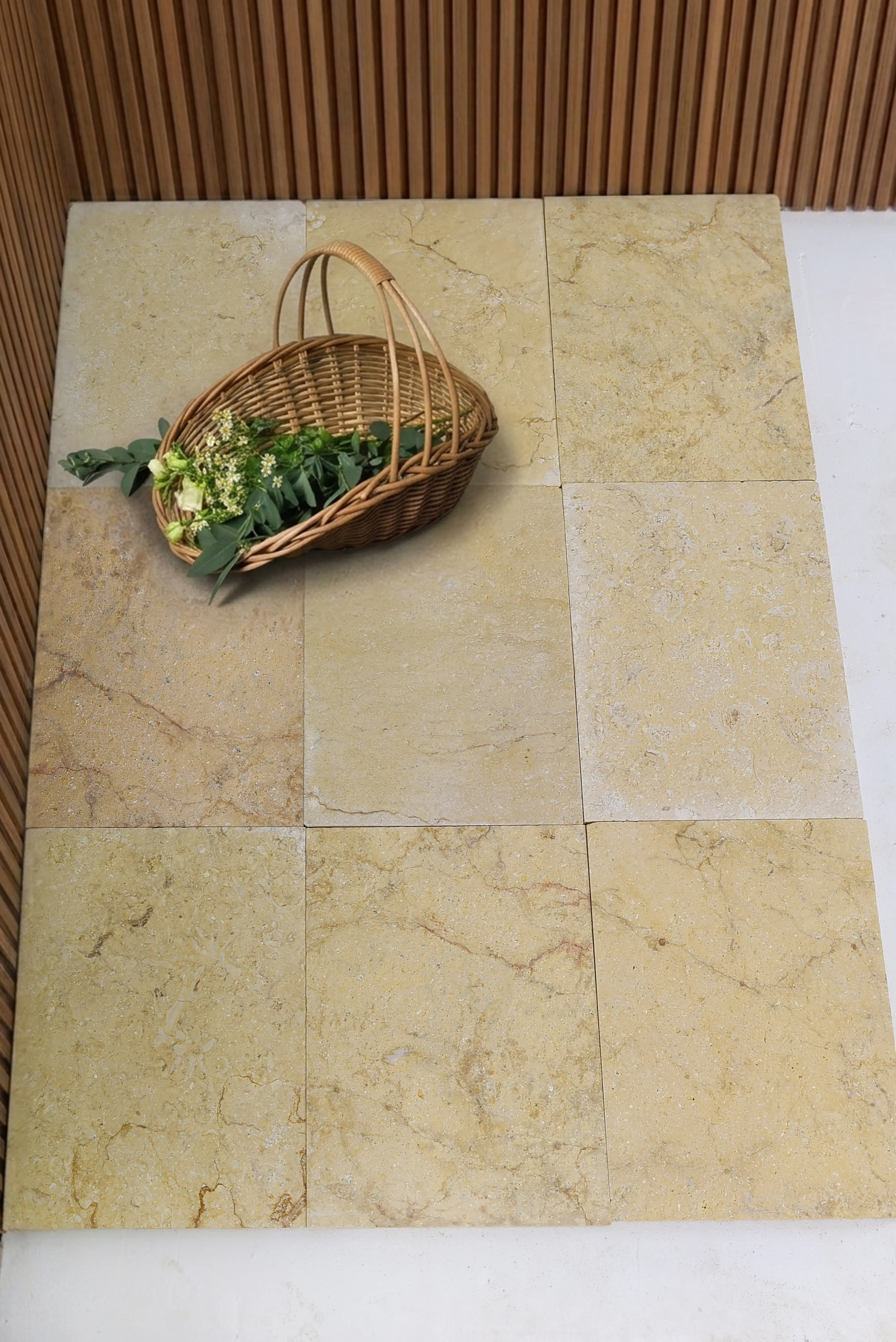
Colour and Vein Selection for Polished Travertine Tile
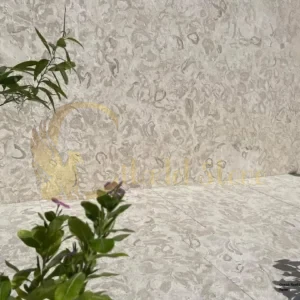
The polished finish amplifies travertine’s natural colour depth and vein definition in ways that no digital photograph captures accurately. Ivory and walnut travertine tones shift perceptibly under different light temperatures — ivory travertine reads warm cream under incandescent light and cooler grey-beige under LED daylight spectrum. Your specification should confirm material samples under the actual fixture type planned for the space, not under warehouse fluorescent lighting, which flattens the warm tones that make polished travertine distinctive.
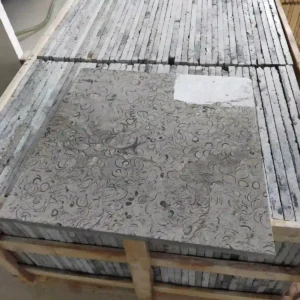
Vein direction matters for polished tile in a way it simply doesn’t for textured finishes. Cross-cut travertine (cut perpendicular to the natural bed) reveals the characteristic swirling cloud vein pattern most associated with polished travertine in interiors. Vein-cut travertine (cut parallel to the bed) shows long linear striations that read more dramatically under the reflective polish. Both are produced from the same quarry block, but cross-cut is significantly more common in standard tile dimensions because the yield from that cut orientation is higher.
- Ivory polished travertine: highest demand format, warm cream base with cloud veining, excellent visual continuity across large floors
- Walnut or noce polished travertine: darker brown-gold tones, pronounced veining, shows fewer visible footprints and water spots than lighter colours
- Silver and grey travertine: cooler undertones, strong vein contrast, pairs well with contemporary interiors and cooler-spectrum lighting
- Silver travertine in polished format is increasingly sourced from selected quarries in the Middle East and Iran, producing a consistent grey-silver base with moderate veining
Ordering, Delivery, and Lead Times for Polished Travertine Tile
Quantity calculation for polished travertine tile needs a minimum 10% overage on top of your measured square footage — 15% for complex layouts with diagonal patterns or field cuts around multiple penetrations. Polished travertine’s visible surface uniformity makes blending replacement tiles from a later lot extremely difficult, and the cost of sourcing match tiles urgently after project completion consistently exceeds the cost of ordering the overage upfront. Store the overage in a dry interior location — moisture exposure to unmounted polished tile over extended periods can affect fill stability in pre-filled formats.
Citadel Stone holds warehouse inventory of core polished travertine formats, which compresses typical delivery lead times to 1-2 weeks for standard orders. Specialty formats, custom thicknesses, or full-container volume orders may require 4-6 weeks for international sourcing cycles. Your project timeline should build in a two-week material acclimatisation period after delivery — polished travertine tile brought directly from a temperature-controlled delivery vehicle into a newly plastered or recently painted interior needs time to reach equilibrium moisture content before installation begins, particularly in humid climates where ambient conditions differ significantly from controlled warehouse environments.
Getting Your Polished Travertine Tile Finish Specification Right
Polished travertine tile finish sits at the intersection of material science and installation precision — and the variables that determine a successful outcome are almost entirely within your control before the first tile is set. Your substrate preparation, fill type selection, mortar specification, and drainage design collectively matter more than the gloss level or colour family you choose. The Natural Stone Institute travertine properties provide a reliable technical foundation for specification writing, and aligning your installation practices with those parameters is where multi-decade performance begins.
As you build out your stone project scope, complementary surface treatments and tile types across your property often inform each other in useful ways. For a related perspective on how travertine polished tile performs across different interior colour directions, gray travertine interior tile ideas covers specification considerations for cooler-toned travertine formats worth reviewing alongside your finish decision. Because polishing closes travertine’s natural pores, Citadel Stone filled-and-polished tiles show fewer grout absorption issues compared with unfilled polished formats.
Related reading: travertine look porcelain tile comparison · how to seal travertine tile · cleaner for travertine tile.