The travertine look porcelain tile comparison that most specifiers run stops at aesthetics — and that’s where the real specification errors begin. Surface texture, grout joint behavior, thermal mass response, and long-term finish durability all diverge sharply between the two materials once you get past the first glance. Understanding those divergences isn’t academic; they determine whether your installation performs the way the design intent requires or creates maintenance headaches within the first few years.
What This Comparison Actually Covers
You’re likely here because a project has pushed you to evaluate both options seriously. The travertine look porcelain tile comparison breaks into six meaningful categories: visual authenticity, physical performance, installation behavior, long-term maintenance, sourcing logistics, and life-cycle cost. Treating them as a simple checklist misses the nuance — each category interacts with the others in ways that shift your decision depending on application type and installation environment.
Real travertine is a sedimentary calcium carbonate stone formed by mineral-rich spring water depositing layers of calcite over geological time. The result is a material with directional veining, natural variation in tone, and an open-pore structure that no digital print process has fully replicated. Porcelain tile engineered to replicate travertine uses high-definition inkjet printing on a vitrified clay body — the result can be visually impressive, but the underlying physics are fundamentally different. According to NSI travertine material properties, the open pore network in natural travertine directly affects absorption rates, surface temperature moderation, and finish behavior in ways a dense porcelain body cannot replicate.
Visual Authenticity: Side-by-Side Reality Check
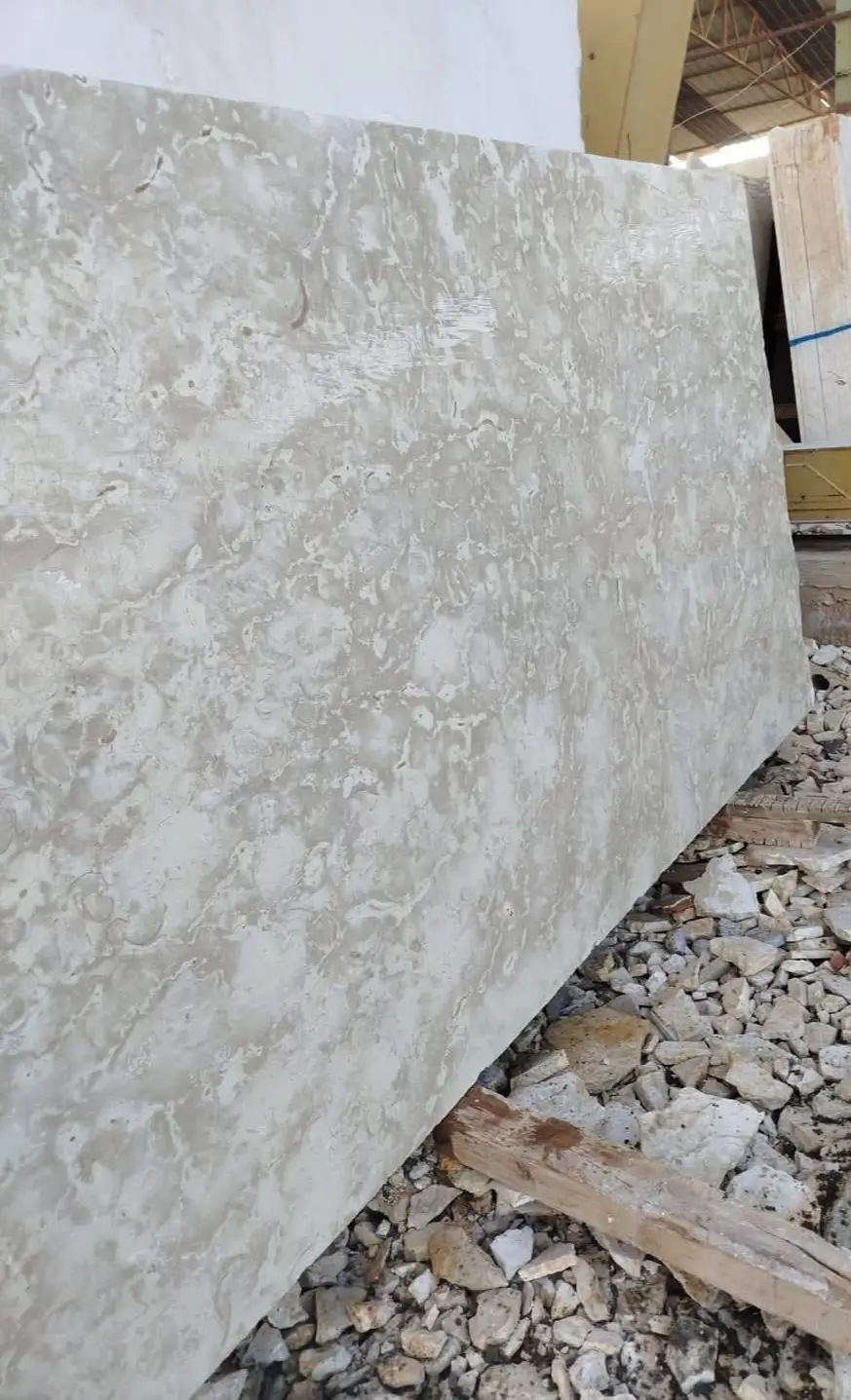
Your eye is the best instrument here, and field experience confirms what the spec sheets can’t fully communicate. Under raking or low-angle natural light, the difference between real travertine and porcelain tile that looks like travertine becomes immediately apparent. The depth of veining in genuine stone reads as three-dimensional because the mineral variation runs through the material — not just across its surface. Printed porcelain replicates the surface pattern, but the variation terminates at the glaze layer, which sits at essentially zero depth.
The repeat pattern issue is the other critical visual gap. Most porcelain tile that looks like travertine is manufactured in production runs of four to six tile faces before the pattern repeats. In a large floor installation, a trained eye can identify the repeat from across the room. Natural travertine cut from the same block shows tonal consistency with genuine variation — no two pieces are identical because the mineralogy actually changes through the stone. For high-end residential and commercial interiors where visual integrity matters, this distinction is not minor.
- Real travertine exhibits through-body veining that shifts with light angle — porcelain prints don’t have this three-dimensional quality
- Porcelain tile faces repeat every 4–6 tiles in standard production runs, creating visible grid patterns in larger layouts
- Travertine’s natural color variation across a pallet means tonal blending requires hand-selection — a skill that separates experienced installers from general tile setters
- Polished porcelain with travertine imagery shows a uniform sheen that conflicts visually with the rustic material it’s imitating — honed or matte finishes read more convincingly
- Filled-and-honed travertine has a tactile profile under foot that matte porcelain approximates but doesn’t match precisely
Physical Performance: Where the Spec Data Diverges
The numbers tell a clear story when you put them side by side. Travertine’s absorption rate typically ranges from 0.5% to 3.5% depending on fill treatment and finish, per ASTM C1527 travertine dimension stone specifications. Vitrified porcelain sits at or below 0.5% water absorption, which is the threshold ASTM defines for highly resistant tile. That difference has direct consequences for freeze-thaw performance, staining behavior, and surface temperature moderation.
Travertine’s open pore structure — even when filled — retains a slight capacity to moderate surface temperature through evaporative cooling. In hot, dry climates or outdoor applications where barefoot comfort matters, this is a measurable advantage over dense porcelain. Porcelain’s near-zero absorption means it stores more surface heat rather than allowing any moisture interaction to moderate it. For pool surrounds and outdoor terraces in high-sun exposure, this distinction influences not just comfort but also slip resistance at peak temperatures.
- Travertine compressive strength: typically 3,000–8,000 PSI depending on density and origin quarry
- Porcelain compressive strength: generally 15,000–25,000 PSI — significantly harder and more resistant to point-load cracking
- Travertine Mohs hardness: approximately 3 — susceptible to scratching from sand and grit without regular maintenance
- Porcelain Mohs hardness: 6–7 — substantially more resistant to surface abrasion in high-traffic zones
- Thermal expansion coefficient for travertine: approximately 4.4 × 10⁻⁶ per °F — requires expansion joint spacing of 15 feet or less in direct sun applications
- Porcelain thermal expansion: approximately 3.3–4.5 × 10⁻⁶ per °F — similar range but with near-zero moisture involvement, behaving more predictably across seasonal cycles
Citadel Stone’s warehouse quality protocols include density and absorption testing on travertine batches before dispatch, which gives specifiers confirmed performance data rather than relying on origin certificates alone. That’s a step most general distributors skip, and it matters when you’re writing a project specification that references ASTM thresholds.
Installation Variables That Change the Decision
The travertine look porcelain tile comparison shifts meaningfully when you factor in installation conditions — and seasonal timing is one of the variables that most planning documents underestimate. Both materials are adhesive-set in most interior and elevated exterior applications, but their thinset requirements and timing windows differ in ways that affect job scheduling.
Travertine requires a medium-bed mortar or large-format thinset rated for natural stone — typically a polymer-modified product that allows for the slight moisture movement the material exhibits. Porcelain tile with travertine aesthetics requires a non-sag large-format mortar when tiles exceed 15 inches in any dimension, which is increasingly common given the 24×24 and 24×48 formats that have become standard in residential projects. The back-butter requirement for large porcelain tiles adds labor time that specifiers often don’t account for in unit-rate estimates.
Seasonal temperature windows affect adhesive cure rates in ways that schedule-sensitive projects must plan around. Thinset mortars designed for natural stone perform best when ambient and substrate temperatures hold between 50°F and 95°F. In freeze-thaw regions, spring installations on exterior substrates require you to verify that substrate temperatures haven’t dropped below 40°F overnight — uncured mortar that freezes before achieving green strength will bond-fail progressively rather than immediately, making the failure hard to diagnose until grout lines begin cracking six months later. Morning installation starts on north-facing or shaded substrates in early spring can carry lower substrate temperatures than the air temperature suggests, so a contact thermometer on the slab surface is worth the 30-second check before you mix your first bucket.
- Schedule travertine exterior installations between late spring and early fall where substrate temperatures hold above 50°F consistently through overnight lows
- Large-format porcelain thinset requires a minimum 6-hour undisturbed cure before grouting — temperature swings in transitional seasons can extend this to 12+ hours
- Avoid thinset application during peak afternoon heat in summer exterior work — rapid moisture loss from the mortar surface reduces bond strength before the tile is set
- Travertine’s slight porosity means it should be pre-dampened (not soaked) before setting in hot, dry conditions to prevent the substrate from pulling moisture from the mortar bed prematurely
- Grout cure for both materials should be protected from direct sun and rain for a minimum of 72 hours after placement — seasonal scheduling around weather forecasts is a practical planning requirement, not a luxury
Real Travertine Tile: Sourcing and Quality Considerations
Natural travertine is quarried from deposits across Turkey, Italy, Iran, and selected quarries from the Middle East. The origin matters more than most buyers realize — not because of brand prestige, but because formation geology directly affects density, pore structure, and the color consistency you can expect across a pallet. Turkish travertine is characterized by warmer ivory and walnut tones with pronounced fill pockets, while Italian deposits tend toward finer grain with less visible vein movement. The travertine look porcelain tile comparison often overlooks this internal variation within natural stone itself.
For projects specifying 12×12 Travertine Tile, the 12-inch format remains a practical choice because it limits differential movement at grout joints while maintaining enough face area to display the stone’s natural veining. Larger formats in natural travertine require more precise substrate flatness tolerances — ANSI A108.02 specifies a maximum variation of 1/8 inch over 10 feet for large-format tile, and natural stone is less forgiving than porcelain tile with travertine look of any lippage that develops from substrate inconsistency.
At Citadel Stone, we source travertine directly from selected quarries and maintain warehouse inventory on high-turnover formats, which means specifiers can confirm stock before committing to project timelines rather than building in the 6–8 week import lead times that spot orders typically require. That logistics certainty is particularly valuable when a project has a tight installation window in a preferred seasonal period.
Maintenance Comparison: The Honest Trade-offs
Your maintenance program is where the two materials diverge most significantly in long-term cost. Real travertine requires sealing at installation and resealing on a cycle that depends on traffic intensity and finish type — typically every 18 to 36 months for filled-and-honed interior floors, and annually for exterior applications in environments with significant rainfall or UV exposure. Without consistent sealing, travertine’s pore structure absorbs oils, wine, and acidic cleaning products that stain the stone or etch the calcite surface.
Porcelain with travertine imaging is essentially maintenance-free from a sealing standpoint — its near-zero absorption means it doesn’t take on stains through the body. The grout joints, however, are a different story. The visual grout lines in travertine-look porcelain installations are often wider than those in real stone applications (to sell the aesthetic), and wider grout joints in high-traffic or kitchen applications require the same sealing diligence that natural stone does. The material savings can be partially offset by grout maintenance that specifiers don’t initially price into the comparison.
- Travertine requires pH-neutral cleaners — acid-based products dissolve the calcite surface and create dull etch marks that require professional honing to correct
- Porcelain with travertine aesthetics tolerates a wider range of cleaning chemistries, reducing maintenance protocol complexity in commercial environments
- Travertine fill material (typically grout or epoxy resin in factory-filled tiles) can darken differently than the surrounding stone over time — a maintenance variable porcelain doesn’t share
- In exterior freeze-thaw applications, sealed travertine can trap moisture beneath the sealer if the product is applied over residual dampness — a failure mode that requires stripping and re-sealing rather than a simple topcoat
- Porcelain’s surface durability means refinishing or honing is not a realistic remediation option — surface damage requires tile replacement, while travertine can often be restored by a stone restoration specialist
Life-Cycle Cost: Realistic Numbers for Specification
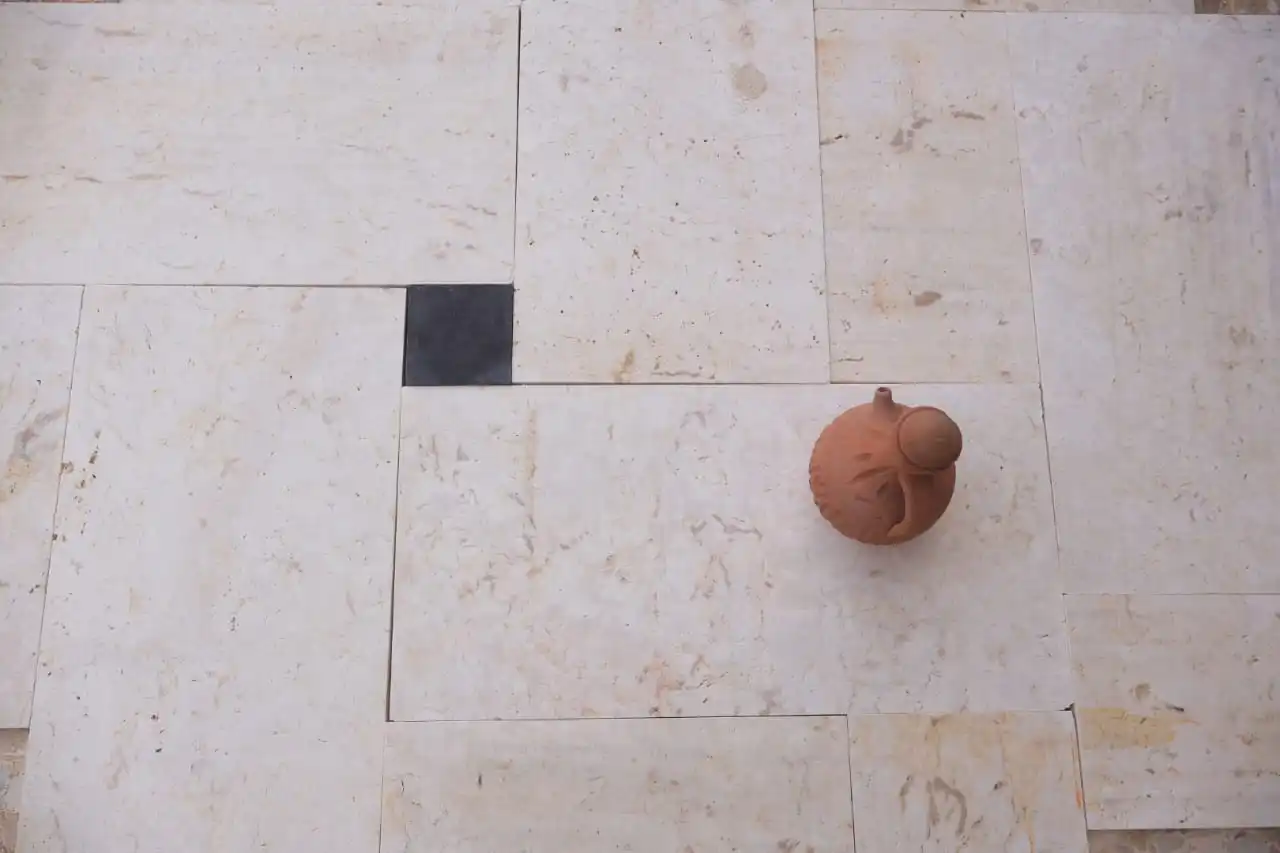
The initial material cost comparison is the part of the travertine look porcelain tile comparison that most procurement conversations lead with — and it’s incomplete on its own. Travertine in standard filled-and-honed formats typically runs higher than porcelain equivalents at the point of purchase, particularly in larger tile formats. Porcelain production at scale drives unit costs down, and the digital printing technology that produces convincing travertine imagery has become cost-competitive with mid-grade natural stone in many markets.
Over a 20-year horizon, however, the cost picture shifts. According to NSI stone tile specifications and ASTM standards, natural stone installations maintained according to manufacturer protocols regularly achieve performance life of 30 years or more. Porcelain tile in residential and moderate commercial applications performs reliably for 15–20 years before surface wear in high-traffic zones creates visible inconsistency with less-trafficked areas. Replacement at that point means full removal and reset costs, not just material cost — a factor that changes the life-cycle math considerably.
- Factor annual sealing cost ($0.50–$1.50/sq ft for professional application) into 20-year travertine cost models — it’s real but manageable
- Porcelain replacement in partial sections creates visual inconsistency because production runs change — matching a 10-year-old porcelain tile lot is often impossible
- Travertine from the same geological deposit maintains consistent tonal character across decades, making future repairs or extensions easier to match
- Truck delivery costs for both materials are similar for full-pallet orders — where travertine adds cost is in spot or partial orders that require splitting pallets, which Citadel Stone can accommodate with warehouse-direct partial orders
- Installation labor costs are comparable for standard formats — the premium for travertine is predominantly in the material, not the installation complexity
Porcelain Tile With Travertine Look: When It Makes Sense
There are legitimate scenarios where porcelain tile with travertine look is the right specification — and presenting this honestly serves the specifier better than a one-sided argument for natural stone. In environments with aggressive cleaning protocols, such as commercial kitchens, healthcare facilities, or high-volume retail, the chemical resistance and near-zero absorption of porcelain provides practical advantages that outweigh the visual fidelity gap.
Radiant floor heating applications also favor porcelain. The through-body density of vitrified porcelain conducts and distributes heat more efficiently and uniformly than travertine’s variable density profile. If underfloor heating is part of the system specification, porcelain tile that looks like travertine can deliver the aesthetic intent while providing better thermal system performance. The Tile Council of North America provides installation standards for stone tile over radiant heat systems that clarify the substrate and adhesive requirements for both material types in this application.
- Porcelain works better in wet shower environments where consistent grout joint width and near-zero absorption reduce mold and mildew maintenance burden
- Large commercial floors with mechanized cleaning equipment benefit from porcelain’s scratch resistance — travertine’s Mohs 3 hardness shows machine abrasion over time in these conditions
- Budget-constrained projects where the travertine aesthetic is desired but natural stone cost is prohibitive — porcelain delivers 80–90% of the visual effect at 40–60% of the material cost in many markets
- Projects with tight seasonal installation windows in freeze-thaw regions may find porcelain’s lower absorption reduces the moisture-management complexity that travertine adds to exterior late-season installs
- Outdoor applications in areas with heavy de-icing salt use — travertine’s calcite base reacts with chloride salts over time, while porcelain is chemically inert to road salt exposure
Before You Specify: Getting the Travertine Look Porcelain Tile Comparison Right
The decision between real travertine and travertine looking tile distills to a question of what you’re optimizing for across the installation’s life. Optimize for initial visual authenticity, long-term repairability, and material character that improves with age — travertine is the answer. Optimize for low maintenance burden, chemical resistance, and installation consistency across challenging seasonal windows — porcelain with travertine imagery makes a legitimate case. Neither answer is wrong; the wrong answer is specifying one without understanding the trade-offs the other eliminates.
Your project documentation should include finish specifications, grout joint width and type, sealing schedule, and cleaning protocol regardless of which material you select — but these documents carry different weights for each option. For travertine, the sealing and maintenance spec is contractually important because deviations create warranty ambiguity. For porcelain, the installation method specification matters most, particularly the back-butter requirement for large formats and the thinset cure window in seasonal outdoor applications. As you think through related stone specification questions for your project, how limestone forms and why it affects stone quality provides useful context on the calcium carbonate geology that underlies travertine’s physical behavior — a connection directly relevant to understanding why natural travertine and porcelain tile with travertine look diverge so significantly in long-term performance.
Your final specification should reference the material standard that governs the product you select — ASTM C1527 for travertine and ANSI A137.1 for porcelain tile — because those standards define the performance thresholds both materials are measured against. Getting the spec right at the document stage prevents the field substitution conversations that happen when a project delivery timeline creates pressure to swap materials. Designers sourcing through Citadel Stone often note that real travertine’s tonal depth reads differently under natural light than any printed porcelain surface.