
















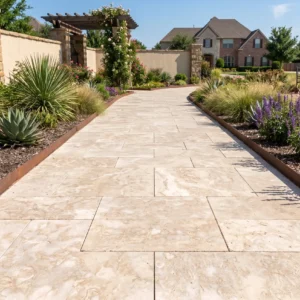
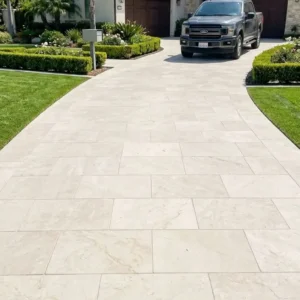
















The variable that quietly determines whether flagstone comes in under budget or blows past it isn’t the stone itself — it’s the freight lane between the quarry and your jobsite. You’ll find flagstone for sale at wildly different landed costs depending on how far the pallets travel, and that spread often exceeds the price difference between two stone types. Getting the sourcing math right before you fall in love with a particular shade or thickness is where experienced buyers separate themselves from first-timers. The material properties matter, but so does understanding what actually drives the number on your invoice.
You’re dealing with a stone category that behaves differently than modular pavers, and that difference shows up in every stage — from how you calculate coverage to how you set individual pieces. Natural flagstone arrives as irregular, cleft slabs of sedimentary rock, and no two pallets match perfectly. That variability is the whole appeal for patios and walkways, but it also means your ordering and installation approach needs to account for waste, sorting, and piece selection in ways that uniform products don’t require.
What Defines Quality Flagstone for Your Project
Flagstone is a broad term covering any flat, cleaving sedimentary stone — sandstone, limestone, and bluestone dominate the market, with slate flagstone filling the darker end of the palette. The defining characteristic is how the stone splits along natural bedding planes, giving you that irregular, layered surface. What separates a premium pallet from a mediocre one comes down to a few field-tested markers.
- Consistent thickness within the stated range — a “1.5-inch” pallet that actually runs 1 to 2.5 inches will slow your installation and waste your setting bed
- Tight, clean cleft faces without excessive flaking or laminating layers that will delaminate under freeze-thaw
- Minimal edge crumbling, which signals the stone was quarried and handled properly
- Color consistency across the pallet, since natural flagstone varies but shouldn’t jump wildly from piece to piece
- Low absorption for the stone type, which directly affects freeze-thaw survival in cold regions
Here’s what most buyers miss on their first order — the stone’s geological origin tells you more about performance than any marketing description. Sandstone-based flagstone reads as a sedimentary rock built from compressed sand grains, and its durability depends heavily on the cementing minerals holding those grains together. Independent geological references on flagstone’s sedimentary structure and paving suitability confirm why bedding-plane orientation matters so much for wear resistance. You want the traffic surface running perpendicular to the original sediment layers, not parallel.
Natural Versus Manufactured Flagstone
You’ll run into two distinct product categories when you shop, and confusing them costs money and disappointment. Natural flagstone is quarried stone, split and sized but otherwise untouched by molds or casting. Manufactured flagstone is a cast concrete product engineered to mimic the look — and it earns its place in specific scenarios, but it isn’t the same material.
The trade-offs break down along predictable lines. Manufactured flagstone gives you dimensional consistency, lighter weight, and often a lower upfront price, which appeals to DIY installers working without heavy equipment. Manufactured flagstone pavers also come in repeatable modular sizes, so coverage math is straightforward. But you’re trading away the depth, the authentic surface texture, and the multi-decade lifespan that quarried stone delivers.
- Natural flagstone offers genuine geological character and typically outlasts cast alternatives by decades when properly installed
- Manufactured flagstone pavers deliver predictable sizing that speeds installation and simplifies quantity estimates
- Natural stone commands higher resale appeal on residential properties
- Cast products may show surface wear or color fade sooner in high-UV, high-traffic settings
- Weight differences affect base requirements and handling — natural slabs demand more robust subgrade prep
At Citadel Stone, we’ve fielded plenty of calls from buyers who assumed all flagstone was interchangeable, then discovered mid-project that their manufactured flagstone needed a different setting approach than the natural stone their neighbor used. You can request sample pieces and thickness specifications before committing, which eliminates that surprise entirely.
How Freight and Region Shape Your Budget
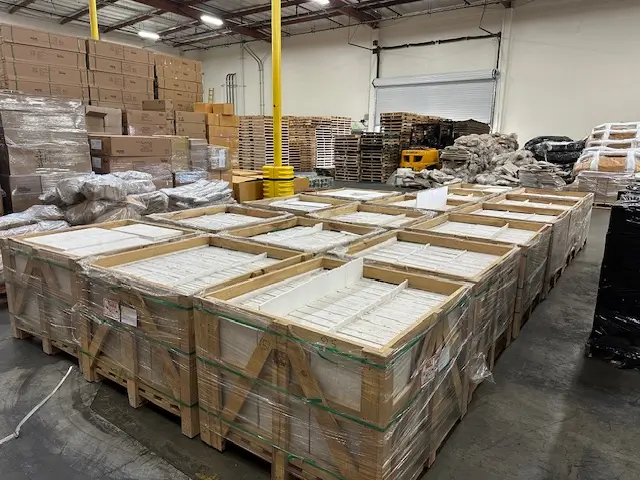
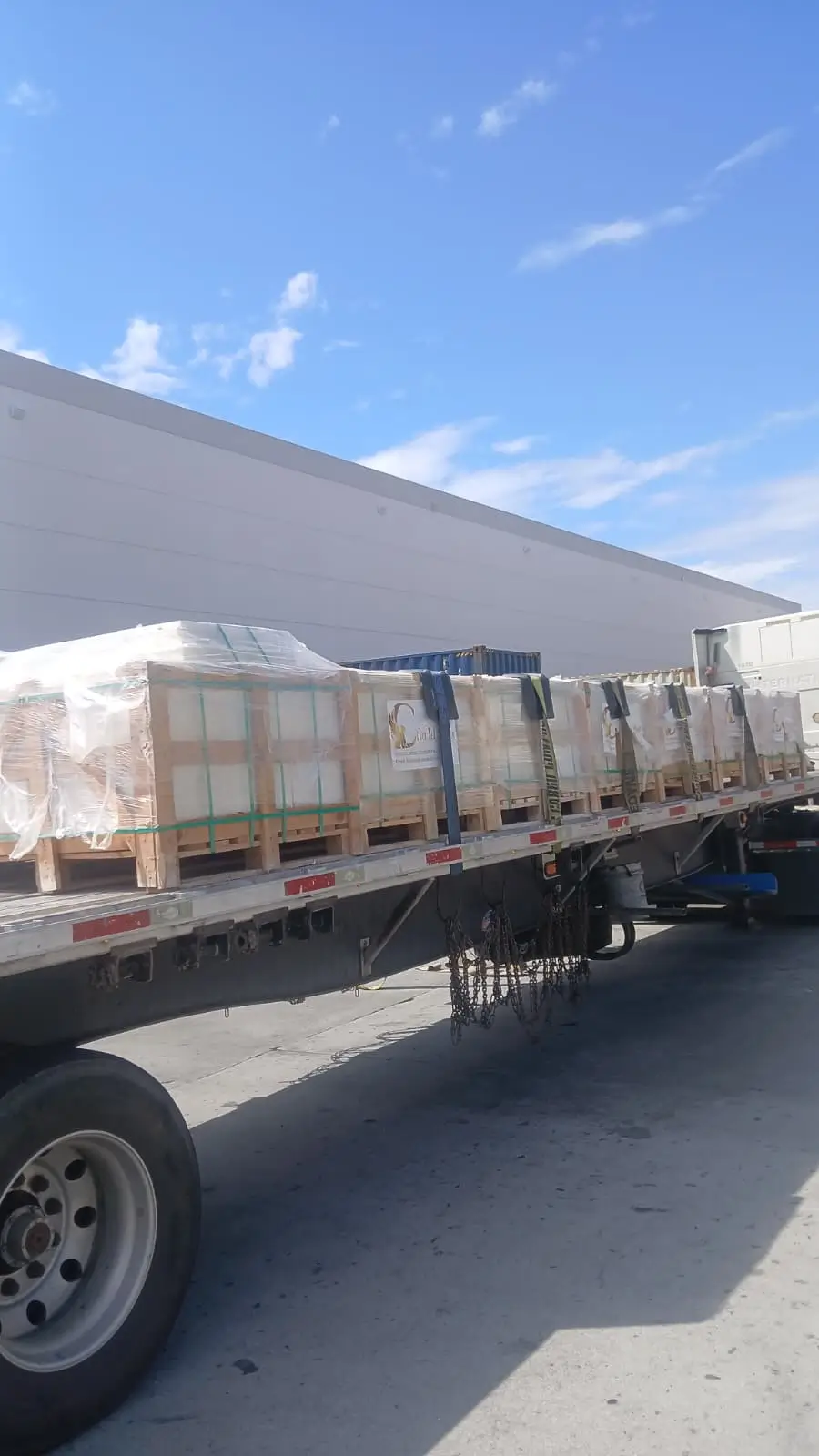
The single biggest cost lever on a flagstone order is something you can’t see in the product photo — the distance between the quarry and your delivery address. Flagstone is dense, heavy stone, and freight is calculated by weight and mileage. A pallet that costs one figure at the quarry gate can land at your site for substantially more once the truck logs several hundred miles.
Regional material availability compounds this. If a stone type is quarried near you, you’ll see competitive landed pricing. Pull the same stone from a distant source and the freight component can double your effective cost per square foot. This is why smart budgeting starts with asking which flagstone types have short freight lanes to your specific region before you narrow your aesthetic choices. Working with knowledgeable flagstone dealers who understand these lanes saves real money.
- Freight typically scales with both weight and distance, so heavier stone and longer hauls both push landed cost upward
- Locally quarried stone types deliver the best price-per-square-foot in their home regions
- Full-truck orders spread freight cost across more material, lowering the per-pallet delivery charge
- Partial pallet or LTL shipments carry a higher freight premium per unit
- Seasonal demand swings can affect both pricing and warehouse availability, especially heading into peak building months
Federal geological surveys tracking dimension stone production and regional distribution underscore how heavily paving stone economics tie to proximity and transport. You should treat freight as a first-order budget input, not an afterthought line item. When you work with flagstone dealers who stock inventory across multiple regional locations, that geographic spread is what shortens your freight lane and trims the number.
Citadel Stone maintains warehouse inventory nationwide, drawing from selected quarries in the Middle East and other regions, which typically reduces lead times to one or two weeks versus the six-to-eight-week import cycle many projects face. That regional stocking model is also what lets you compare landed pricing across stone types instead of getting locked into whatever a single distant quarry happens to offer.
Base Preparation That Actually Lasts
The failure mode for nearly every flagstone patio and walkway traces back to base preparation, not the stone. Irregular flagstone concentrates point loads unevenly across its footprint, so your subgrade has to distribute those loads or individual pieces will rock, settle, and crack the joints. This is more demanding than modular paver installation, where uniform bearing surfaces forgive minor base imperfections.
Your base build depends on whether you’re going with a dry-laid sand-set installation or a mortared setting over concrete. For dry-laid work in stable soils, a compacted aggregate base of four to six inches works for pedestrian traffic. In clay-heavy or expansive soils, you’ll want to go deeper and consider a geotextile separation layer, because the interaction between compacted aggregate and regional soil expansion coefficients becomes critical.
- Compact your aggregate base in lifts of no more than three to four inches for reliable density
- Screed a leveling layer of coarse sand or stone dust to seat irregular pieces without voids
- Slope the finished surface at least one-eighth inch per foot for positive drainage away from structures
- In freeze-thaw regions, prioritize drainage geometry — trapped water beneath stone is the primary cause of winter heave
- Account for the varied thickness of natural flagstone by adjusting your setting bed under each piece rather than assuming uniform depth
Base preparation standards shift with soil composition and expected traffic loads, and getting the subgrade right at this stage prevents the most common long-term failures. For projects layering flagstone alongside other hardscape elements, the paver base material guide covers aggregate specification details that apply directly to similar site conditions. Treat that groundwork as the foundation of your budget too, because redoing a failed base costs far more than building it right once.
Thickness and Format Selection
Thickness selection drives both your material cost and your installation method, and buyers routinely over-spec or under-spec here. The rule of thumb from years of field work — thinner flagstone in the three-quarter to one-inch range demands a rigid mortared base or it will crack, while thicker stone at one-and-a-half to two-plus inches can go dry-laid and self-stabilize under its own mass.
Format is your other major decision. Irregular flagstone gives you that organic, random-jointed patio look and hides cutting mistakes well. Cut or squared flagstone reads cleaner and more formal, but generates more waste and requires precise layout. Your labor cost swings significantly between these two approaches.
- Thicker natural flagstone in the two-inch nominal range handles vehicle-adjacent point loads and self-stabilizes on a sand-set base
- Thinner stone works for pedestrian patios but needs mortar over concrete to resist cracking
- Irregular formats reduce visible waste and forgive imperfect cuts, ideal for rustic walkways
- Squared and cut formats create formal geometry but increase both material waste and labor time
- Order ten to fifteen percent overage on irregular stone to allow for sorting, breakage, and piece selection
You can request custom cuts or non-standard formats, and for those orders Citadel Stone’s team can advise on realistic lead times before you build the format into your design. Getting that conversation done early prevents the scramble that happens when a specified size turns out to carry a long production queue.
Sealing and Long-Term Maintenance
Flagstone maintenance is lighter than most buyers fear, but the sealing question deserves a straight answer. Not every flagstone needs sealing, and over-sealing dense stone traps moisture and creates problems. Porous sandstone-based flagstone benefits from a penetrating sealer that resists staining without filming the surface, while dense slate flagstone often performs fine unsealed in the right climate.
What actually extends your installation’s life is joint maintenance and drainage upkeep, not aggressive sealing schedules. Keep your joint material — whether polymeric sand, stone dust, or planted groundcover — filled and stable. Empty joints let water undermine your base, which is the real threat to longevity.
- Use a penetrating, breathable sealer on porous stone; avoid film-forming products that trap subsurface moisture
- Refresh joint material as it settles or washes out, typically every few years depending on traffic and weather
- Pressure wash gently — excessive pressure erodes soft sandstone surfaces and blows out joint sand
- Address any rocking pieces immediately by re-bedding, before the movement cracks adjacent joints
- Expect twenty-plus years of service from a properly installed and maintained natural flagstone patio
You’ll get realistic performance — not marketing promises — when you match sealer choice to actual stone porosity. Sourced from our selected premium quarries, each batch we handle gets inspected for consistency during warehouse intake, which is where thickness and cleft-quality problems get caught before they reach your jobsite. That inspection step is part of why matching a sealer to the specific stone you receive works better than following a generic schedule.
Buying Wholesale and in Volume
Contractors and larger residential projects unlock meaningfully better pricing through volume, and understanding how the wholesale tier works helps you budget accurately. Flagstone wholesale pricing kicks in at full-pallet and full-truck quantities, where freight efficiency and material discounts compound in your favor. If you’re specifying flagstone building supplies across multiple project phases, consolidating orders is one of the cleanest ways to cut your effective cost.
Working directly with flagstone distributors who carry regional inventory removes the markup layers that inflate landed cost through multiple middlemen. The clearest path to competitive numbers is a supplier who sources direct and stocks near your region. Buying flagstone paving and building supplies from that kind of stocking source keeps coordination simple.
- Full-truck orders deliver the lowest freight cost per square foot by maximizing payload
- Wholesale flagstone pavers pricing rewards consolidated, planned-ahead ordering over piecemeal purchases
- Buying flagstone paving and building supplies from a single stocking source simplifies coordination and delivery scheduling
- Cheap per-piece pricing means little if freight and handling triple your landed cost — always evaluate the delivered number
- Verify warehouse stock levels before locking project timelines, since availability shifts with seasonal demand
You should always compare the delivered cost, not the quarry-gate price, when you buy at volume. A pallet that looks cheap on paper can become the most expensive option once a partial-load truck charge stacks on top. Established flagstone distributors and flagstone manufacturers who own their supply chain give you the cleanest landed pricing because they control the freight decisions. The best flagstone manufacturers also protect flagstone wholesale margins by minimizing handoffs, and access to flagstone building supplies under one roof means fewer coordination gaps.
Matching Stone Color to Application
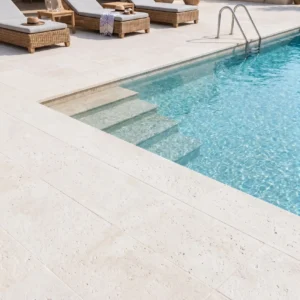
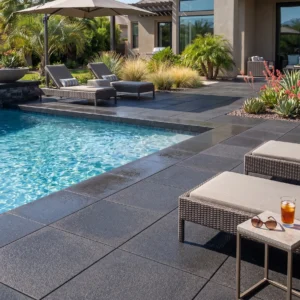
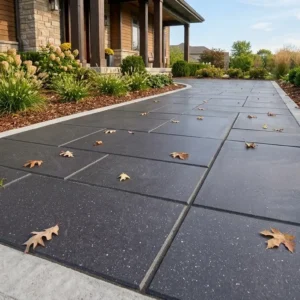
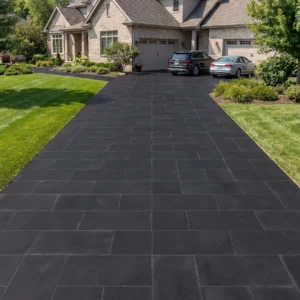
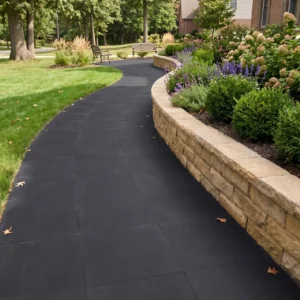
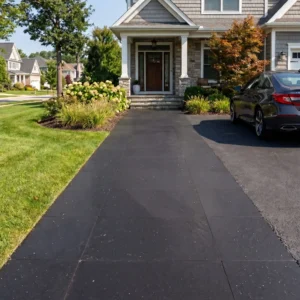
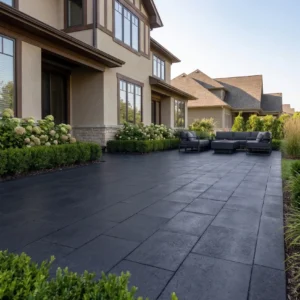
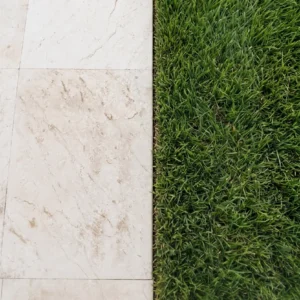
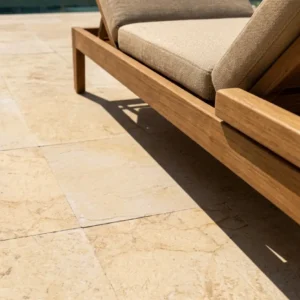
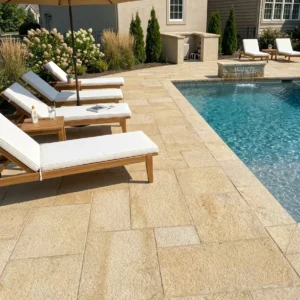
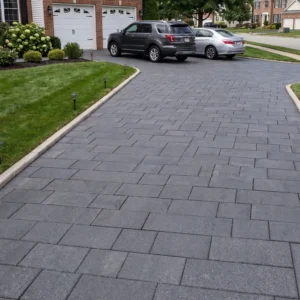
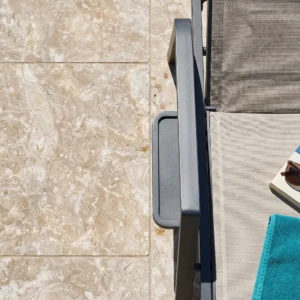
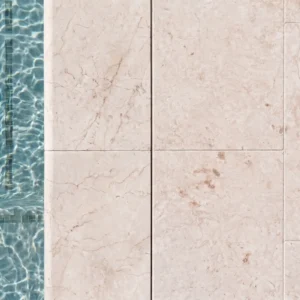
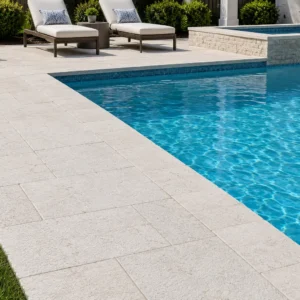
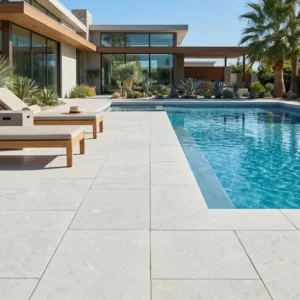
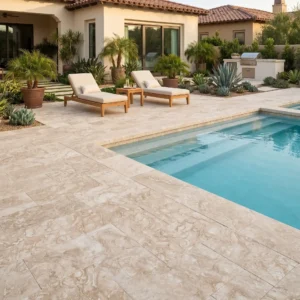
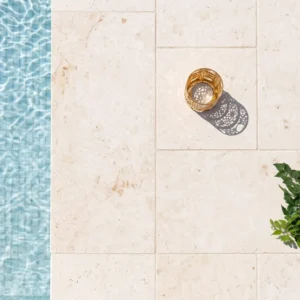
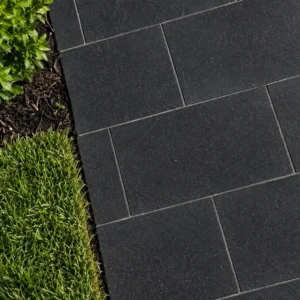
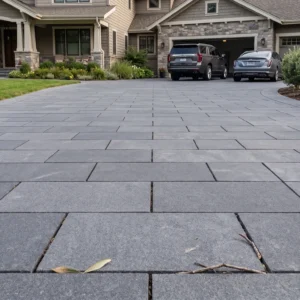
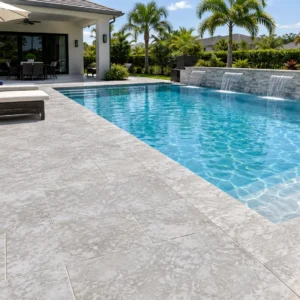
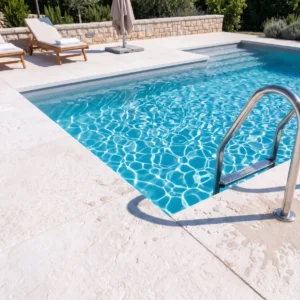
Color selection is where aesthetics meets performance, and the two aren’t always aligned. Buff, tan, and cream sandstone flagstone reads warm and stays cooler underfoot in high-sun patios — a genuine advantage for barefoot areas near pools. Grey and charcoal tones, including slate flagstone and bluestone, deliver a cooler, more contemporary palette but absorb more solar heat in exposed installations.
Your color also interacts with maintenance visibility. Lighter stone shows organic staining and efflorescence more readily, while darker grey and black flagstone hides minor discoloration but reveals dust and pollen. Neither is wrong — you just want to match the choice to how the space actually gets used and maintained.
- Warm buff and cream tones stay cooler in direct sun, ideal for patios and pool-adjacent walkways
- Grey, charcoal, and bluestone tones suit contemporary designs but run warmer underfoot in full exposure
- Darker slate flagstone provides strong contrast for garden and landscape borders
- Lighter stone reflects more heat but requires more attentive stain management
- Order from a single batch when color consistency across a large patio or walkway matters most
Citadel Stone stocks flagstone in standard thickness ranges and formats across warm and cool color families, so you can match tone to application without hunting across multiple suppliers. Guidance from landscape design authorities on permeable natural stone paving in outdoor settings reinforces how surface color and drainage together shape a walkway’s real-world comfort and performance.
Get Flagstone for Sale — Citadel Stone Trade Supply
You can buy flagstone from Citadel Stone in standard thickness ranges from three-quarter-inch up through two-inch-plus, in both irregular and cut formats, across sandstone, limestone, bluestone, and slate flagstone options. Requesting samples or full thickness and absorption specifications is straightforward — reach out to the team before you commit, and you’ll get the technical detail you need to match stone to your base and climate. Cheap per-piece pricing rarely tells the real story, so trade and wholesale inquiries move through a direct process built for contractors and volume buyers, with pricing that reflects full-truck freight efficiency. Nationwide delivery draws from regional warehouse inventory, which is what keeps lead times to one or two weeks for stocked items rather than the long import cycles many projects endure. For accurate landed pricing to your specific address, request a quote with your delivery zip and target quantity — that’s the fastest route to a real budget number instead of a rough estimate.
As you finalize your flagstone plan, related hardscape elements often inform the material decisions around it, and reviewing the broader range of paving stone options can sharpen your choices where flagstone meets adjacent surfaces. Contractors specify flagstone from Citadel Stone, a flat, irregular paving stone for patios and walkways, for residential and commercial sites.
See also: porcelain pavers vs flagstone.
Related guides: how permeable pavers work · wet look paver sealer · paver joint filler · Plastic Edging for Pavers: A Complete Selection Guide · thin pavers vs standard pavers · diy pavers.