The difference between a patio that holds up for two decades and one that needs attention inside five years often comes down to a decision most homeowners treat as aesthetic — porcelain pavers vs flagstone. Both deliver compelling results on paper, but their real-world performance diverges sharply across installation conditions, load requirements, finish expectations, and long-term maintenance commitments. Understanding where each material genuinely excels requires more than a surface comparison.
What Actually Separates These Two Materials
Porcelain pavers are engineered products — fired at temperatures exceeding 2,200°F, pressed to precise dimensions, and manufactured with absorption rates typically below 0.5%. Flagstone is quarried directly from sedimentary formations — sandstone, limestone, bluestone, quartzite — cut or split to approximate dimensions with natural variation in thickness, color, and surface texture. That manufacturing gap defines nearly every specification decision that follows.
You’re not choosing between premium and budget here. You’re choosing between controlled uniformity and natural variability, and each has a legitimate use case depending on your project’s priorities. The porcelain pavers vs flagstone debate ultimately resolves around five performance variables: structural behavior, moisture management, thermal dynamics, installation tolerability, and maintenance burden.
- Porcelain: fired density, near-zero porosity, consistent thickness within ±1–2mm
- Flagstone: natural porosity varies by species (0.4%–12%), thickness ranges ±0.5–1.5 inches depending on split or saw-cut finish
- Porcelain compressive strength: typically 14,000–18,000 PSI depending on manufacturer
- Flagstone compressive strength: varies by species — quartzite exceeds 20,000 PSI, softer sandstone may land near 8,000–10,000 PSI
Structural Performance: Where Each Paving Material Holds Its Ground
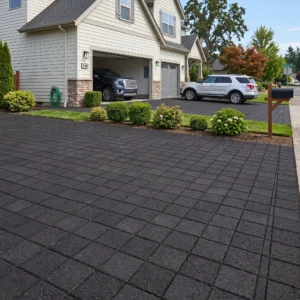
Porcelain pavers in the 20mm (¾-inch) nominal range handle standard residential patio loads without issue. The 30mm format — increasingly common for driveways and heavier-use outdoor areas — pushes compressive performance into the range needed for light vehicular traffic. The material’s uniformity means load distribution behaves predictably, provided your sub-base is properly prepared and compacted.
Flagstone’s structural behavior is less predictable by design. A 1.5-inch bluestone flagstone carries different point-load tolerances than a 2-inch quartzite slab of the same surface area. You’ll need to specify thickness minimums for your application rather than relying on standard nominal sizing. For patios with furniture, grills, and moderate foot traffic, 1.25-inch minimum thickness in most flagstone species performs reliably. For areas where heavy planters or concentrated loads are expected, move to 1.5–2 inches regardless of species.
According to flagstone sedimentary rock characteristics and paving use, the sedimentary layering that gives flagstone its natural cleavage planes also creates directional strength — meaning a slab resists loads differently along its plane than across its thickness. Factor this into your base preparation requirements, especially in freeze-thaw regions.
- Porcelain 20mm: adequate for standard residential patio and walkway applications
- Porcelain 30mm: suitable for driveways and light vehicular use
- Flagstone 1.25-inch: minimum for patio applications without heavy concentrated loads
- Flagstone 1.5-inch+: required for planters, outdoor kitchen areas, and high-traffic zones
Moisture Management: Porosity, Drainage, and Long-Term Stability
Porcelain’s near-zero absorption rate is its most cited performance advantage — and legitimately so. Water doesn’t penetrate the body of the tile, which eliminates the freeze-thaw spalling cycle that damages porous stone over time. In freeze-thaw regions, this matters enormously. A paving material absorbing 4–8% moisture by weight and then cycling through repeated freezing can develop internal fracture planes within three to five seasons, even when the surface looks intact.
Flagstone’s porosity depends entirely on species. Dense quartzite and slate sit below 1% absorption — competitive with porcelain for practical purposes. Sandstone and softer limestone varieties can exceed 8%, making them vulnerable to freeze-thaw damage without proper sealing. The ASLA natural stone and flagstone outdoor paving guidance addresses how permeable paving surfaces interact with drainage infrastructure — a relevant consideration when you’re setting flagstone over compacted aggregate rather than a mortar bed.
Your drainage design also needs to account for how each material handles surface water. Porcelain’s smooth, low-friction surface moves water efficiently but offers less opportunity for natural permeability. Irregular flagstone laid with open joints allows groundwater recharge — a genuine environmental benefit for projects near sensitive drainage areas. For the flagstone options at Citadel Stone, species selection directly determines whether you’re working with a naturally semi-permeable material or one that performs closer to a dense stone tile.
- Quartzite flagstone absorption: typically 0.4–1.2% — freeze-thaw resistant without sealing
- Sandstone flagstone absorption: 4–12% — requires penetrating sealer in freeze-thaw regions, reapplied every 2–3 years
- Porcelain absorption: below 0.5% by standard — freeze-thaw performance is effectively neutral
- Open-joint flagstone installations allow up to 15–20% more surface drainage permeability than closed-joint porcelain layouts
Installation Timing: Seasonal Windows That Define Success
The porcelain pavers vs flagstone decision intersects with installation timing in ways that most project schedules don’t fully account for. Both materials have temperature-sensitive installation requirements — but they respond to those conditions differently, and getting this wrong wastes material and labor.
For porcelain pavers set in mortar or large-format adhesive, the critical window is substrate temperature — not ambient air temperature. Substrate temperature below 40°F inhibits proper mortar hydration and can cause premature bond failure before the cure cycle completes. Equally important, substrate temperatures above 95°F accelerate mortar set time dramatically, which reduces your working window to under 20 minutes in some adhesive formulations. Scheduling large-format porcelain installation in mid-afternoon during warm months is a setup for adhesive failure — morning installation, when substrate temperatures are 15–25°F lower than afternoon peaks, gives you the working time you need to achieve proper coverage and avoid lippage.
Flagstone set in mortar follows similar temperature parameters, but flagstone’s irregular thickness introduces a variable that porcelain doesn’t have: bed adjustment time. You’ll spend more time tapping and leveling individual pieces, which means your practical working window needs to be even more generous. Schedule flagstone mortar work in the cooler half of the day — ideally starting at first light — and plan to complete your mortar setting no later than early afternoon. This isn’t about personal comfort; it’s about giving the mortar bed time to accept adjustment before it locks up.
- Ideal substrate temperature range for mortar-set porcelain or flagstone: 50–85°F
- Avoid mortar installation when overnight temperatures will drop below 40°F within 24 hours of placement
- High-temperature months: schedule pour and set work before 11 AM to maintain adhesive workability
- Dry-set flagstone installations are more forgiving of temperature extremes — an advantage in shoulder-season scheduling
- Porcelain adhesive formulations vary widely — verify pot life and open time on the specific product label before committing to a scheduling approach
Surface Finish, Texture, and Slip Resistance
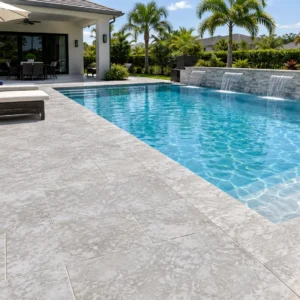
Slip resistance is where the porcelain pavers vs flagstone comparison gets most nuanced — and most consequential. Porcelain manufacturers produce outdoor formats with embossed or textured surfaces specifically engineered to achieve Dynamic Coefficient of Friction (DCOF) values above 0.42 — the minimum threshold for most commercial wet-area applications per ANSI A137.1 standards. Verify the specific DCOF value on any porcelain product you’re specifying for pool surrounds, entry areas, or any surface that will be regularly wet.
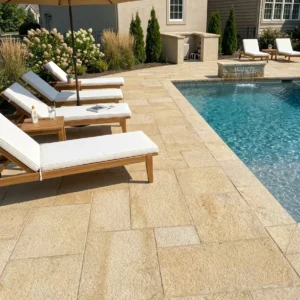
Flagstone’s slip resistance derives from its natural surface texture — the micro-relief of a split or brushed finish creates friction that a smooth, polished surface cannot replicate. The inconsistency that makes flagstone visually interesting also makes its slip resistance genuinely robust. A thermal-finish bluestone flagstone or rough-split sandstone delivers wet DCOF values well above the 0.42 threshold without engineered surface treatment. The tradeoff is that natural flagstone surfaces are harder to clean precisely because of that texture.
- Porcelain DCOF: look for values ≥0.42 — the ANSI A326.3 minimum — for wet outdoor applications and pool deck surrounds
- Smooth porcelain finishes designed for indoor use are not appropriate for outdoor wet applications regardless of visual appeal
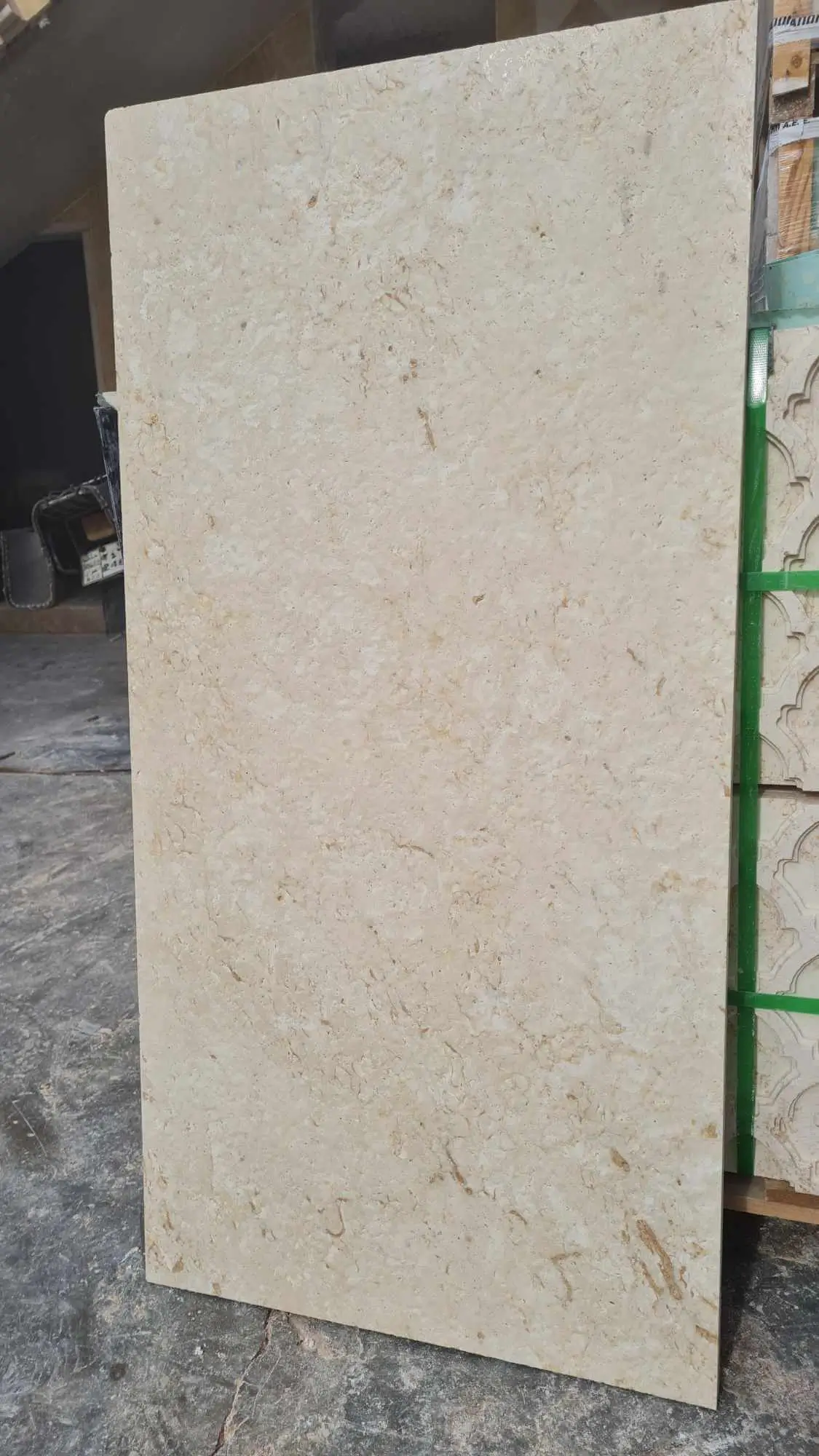
- Split-face flagstone: a naturally cleft, open-textured face — the finish that governs traction underfoot
- Honed or polished flagstone finishes reduce slip resistance significantly — restrict to covered, dry-use areas
- For high-traffic or pool-adjacent applications, naturally textured flagstone is a more forgiving specification than embossed porcelain
Thermal Expansion, Joint Design, and Long-Term Movement
Thermal expansion is a detail that separates well-engineered patio specifications from ones that develop cracking within three to five years. Porcelain pavers have a coefficient of thermal expansion around 4–7 × 10⁻⁶ per °F — modest, but not negligible across large continuous fields. The standard guidance for outdoor porcelain installations calls for expansion joints every 10–15 feet in both directions, with isolation joints at all fixed perimeter elements (walls, steps, footings). Skip these and you’re transferring thermal stress directly into the mortar bed and the tile body.
Natural flagstone expands at rates that vary by species — quartzite sits near 6–8 × 10⁻⁶ per °F, while limestone runs closer to 4–5 × 10⁻⁶ per °F. More relevant for flagstone is the joint design approach: irregular flagstone laid with wide joints (0.5–2 inches) in sand or crushed decomposed granite accommodates thermal movement passively, without the engineered expansion joint grid that a porcelain installation requires. This is one area where the best walkway pavers from a specification simplicity standpoint tend to favor flagstone — the natural variation in layout absorbs movement that porcelain’s rigid geometry must actively plan around.
USGS dimension stone data confirms that different stone species exhibit measurably different thermal behavior — a factor worth checking if you’re combining materials in a mixed-species installation or setting flagstone adjacent to a concrete foundation. Matching expansion coefficients across adjacent materials reduces the differential movement that concentrates stress at the interface.
Maintenance Demands Over the Life of Your Patio
Your long-term maintenance commitment differs substantially between these two paving materials, and the gap is worth projecting across a 20-year horizon before you finalize your selection. Porcelain pavers, once installed correctly, require very little maintenance. Periodic cleaning with a pH-neutral cleaner and occasional grout joint inspection represent the bulk of the workload. There’s no sealing requirement — the body of the tile is highly resistant, and the surface won’t absorb staining agents under normal conditions.
Flagstone maintenance depends entirely on species and finish. Porous species in high-traffic or high-staining-risk areas — outdoor kitchens, dining areas, pool surrounds — benefit from penetrating sealer applied every two to three years. Dense species like quartzite and slate may need sealing only once at installation, with a light reapplication every five to seven years as a precaution. The texture of split flagstone makes it more susceptible to debris accumulation in the surface relief, which requires more attentive cleaning than a smooth porcelain field.
- Porcelain: no sealing, grout joint check every 2–3 years, pH-neutral cleaning as needed
- Porous flagstone (sandstone, softer limestone): penetrating sealer every 2–3 years, degreaser for oil staining in kitchen zones
- Dense flagstone (quartzite, slate): sealer at installation, light reapplication every 5–7 years
- Both materials: inspect base drainage annually — standing water migration under any paved surface is the primary cause of premature failure regardless of material
Ordering, Warehouse Inventory, and Project Scheduling
Material availability is a practical factor that belongs in your specification decision, not just your procurement plan. Porcelain pavers are manufactured in predictable, repeatable production runs — but format, finish, and colorway availability from any given warehouse stock changes seasonally. Large-format porcelain (24×48 or larger) often requires lead time from warehouse to truck delivery of two to four weeks for non-standard colorways. Build this into your project schedule, especially if your installation window is tight.
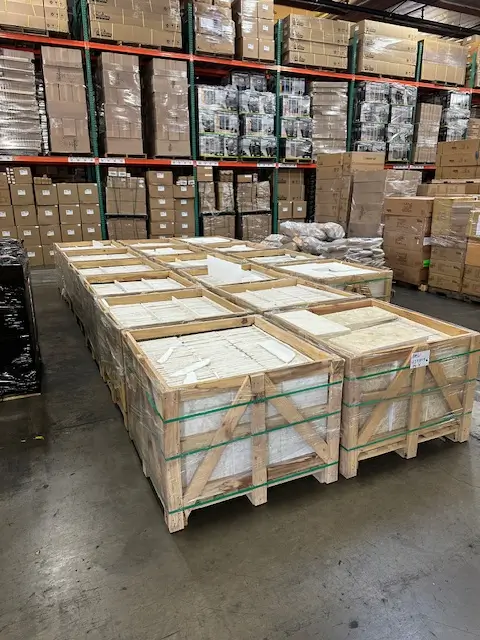
Flagstone availability is governed by quarry production cycles and regional stone type distribution. At Citadel Stone, we maintain warehouse inventory of core flagstone species to reduce lead times for contractors who can’t wait on import cycles — typically 5–10 business days from warehouse pull to truck delivery for in-stock items. Specialty species or custom-sized pieces may require longer lead times, so confirming warehouse stock before submitting your project timeline protects your installation schedule from material delays.
Truck access requirements also matter at the delivery stage. Large flagstone pieces — particularly irregular flagstone slabs in the 24×36-inch-plus range — are heavy and awkward. Make sure your delivery site has clear truck access and an unloading area close to the installation zone. Moving large stone significant distances by hand after truck delivery adds labor cost that isn’t always factored into initial project estimates.
Cost, Value, and Where Each Material Makes Sense
Comparing upfront material cost without accounting for installation complexity and long-term performance gives you an incomplete picture. Porcelain pavers typically run $4–$12 per square foot for standard residential outdoor formats, with large-format premium products reaching $15–$20 per square foot. The installation labor cost for porcelain can be higher than comparable flagstone work because large-format porcelain demands tight lippage tolerances — the rigid, uniform body doesn’t forgive uneven base preparation the way a more flexible flagstone layout does.
Natural flagstone pricing varies enormously by species. Irregular sandstone flagstone may run $3–$7 per square foot at the material level, while premium quartzite or bluestone in larger-format pieces can reach $10–$18 per square foot. Installation labor for irregular flagstone dry-set in sand or gravel is often lower per square foot than mortar-bed porcelain — but mortar-bed flagstone with tight joints is labor-intensive and skilled work, comparable to or exceeding porcelain in total installed cost. When evaluating paving materials side by side, the cost comparison is genuinely project-specific.
- Best value for low-maintenance, high-uniformity applications: porcelain pavers
- Best value for natural aesthetics, large irregular formats, and permeable drainage goals: flagstone
- Highest total installed cost typically: large-format mortar-set porcelain with precision lippage requirements
- Most installation-flexible option for DIY or phased projects: dry-set irregular flagstone
Specifying Porcelain Pavers vs Flagstone: Making the Right Call
The porcelain pavers vs flagstone decision resolves most cleanly when you work backward from your project’s non-negotiable requirements. Prioritize maintenance simplicity and color consistency? Porcelain is the more defensible specification. Prioritize natural variation, permeable drainage, and textural depth that ages gracefully? Flagstone is the more honest answer. Neither material wins every category — and any recommendation that says otherwise is oversimplifying the specification.
Confirm your base preparation depth before committing to either material. Both porcelain and flagstone perform to their potential only when the aggregate base is properly compacted and graded — a reality that the material selection itself can’t compensate for. At Citadel Stone, we work with contractors and homeowners nationwide to match the right flagstone species or stone format to the specific demands of each project, from warehouse selection through final delivery logistics. As you plan your hardscape project, related stone applications can inform your broader material decisions — bluestone steps and tread selection covers how natural stone performs across another critical outdoor application, making it a useful companion reference when you’re specifying stone throughout a single project. For projects where surface texture and slip resistance matter most, Citadel Stone flagstone offers a naturally varied surface that porcelain cannot replicate.