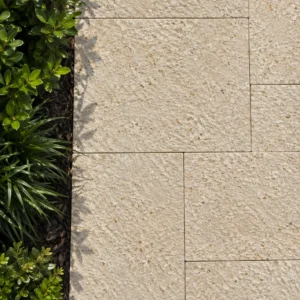
Permeable pavers work by doing something conventional hardscape fundamentally cannot — they allow stormwater to pass through the surface layer itself rather than forcing it to sheet-flow across the top. Understanding how permeable pavers work starts beneath the surface: the critical variable that determines whether a permeable system actually performs is what happens below the paver, not the paver itself. Get the sub-base geometry wrong, and you’ve installed an expensive stone surface that floods just as reliably as the concrete it replaced.
The Basic Mechanics of Permeable Paver Systems
A permeable paver system is best understood as a layered filtration and storage stack. The paver sits on top, joints filled with angular, single-size aggregate rather than compacted sand. Below that, you’ll typically find a bedding course of washed chip aggregate, then a reservoir layer — often open-graded crushed stone — where water actually pools temporarily before infiltrating into native soil or routing to an underdrain. Each layer has a specific job, and collapsing or skipping any of them means the system defaults to conventional runoff behavior.
The stone joints are where most people focus their attention, but the reservoir base is the real workhorse. A 12-inch open-graded stone base holds roughly 30–40% of its volume as air voids — that’s the temporary storage that buffers peak storm events. Your bedding course acts as both a setting medium and a filter, catching fines before they migrate into the reservoir and gradually clog it.
Surface infiltration rates for well-built permeable paver installations routinely exceed 100 inches per hour under initial testing conditions, according to ASLA permeable surface guidance. Real-world performance after a few years of service typically settles in the 10–30 inch per hour range depending on joint maintenance and site sediment load — still dramatically higher than any storm event will demand.
Joint Aggregate: The Detail That Drives Performance
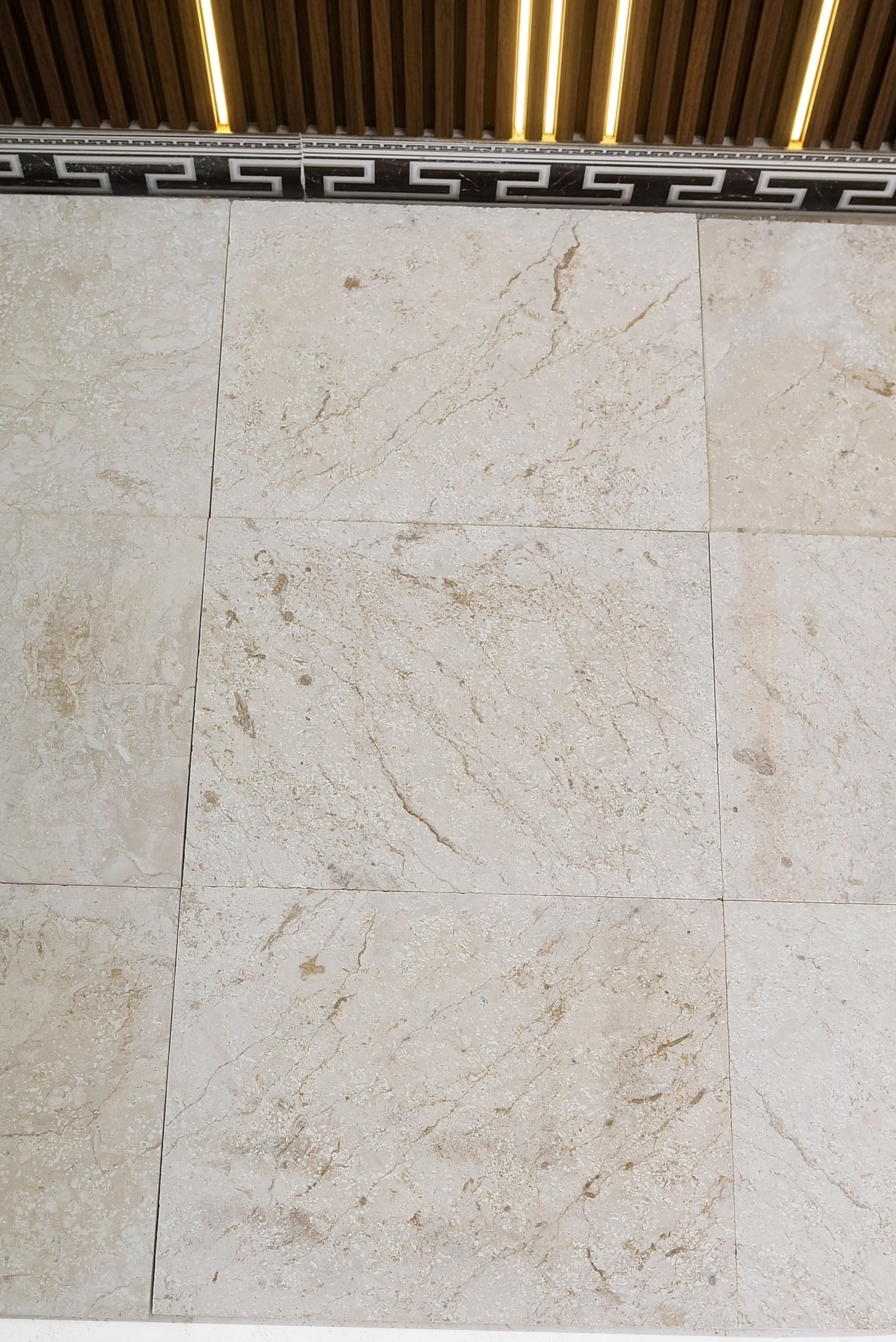
Your joint fill specification is where most permeable driveway pavers installations quietly fail. The instinct is to reach for polymeric sand — it’s familiar, it locks units, it looks clean. But polymeric sand defeats the entire purpose of a permeable system. You need angular, washed, single-size chip aggregate in the 2–4mm range (roughly No. 8 or No. 9 gradation), and it needs to stay unfilled to about 6mm below the paver surface to allow water entry without ponding.
Angular matters here. Round aggregate migrates under traffic loading, which closes joint space over time. Angular stone interlock creates a stable column that stays open even under repeated wheel loads. You’ll want to confirm gradation with your aggregate supplier before placing — sieve analysis is the only reliable check.
- Specify ASTM No. 8 or No. 9 washed aggregate for joint fill — not decomposed granite, not polymeric sand
- Fill joints to 6mm below the paver surface to maintain flow path geometry
- Plan to top-dress joints every 3–5 years as aggregate settles and fines intrude from wind and traffic
- Angular particle shape is non-negotiable — verify before delivery, not after installation
Base Depth and Structural Load Requirements
Here’s where the regional building standards thread becomes genuinely consequential. Base depth for permeable pavers isn’t just a drainage calculation — it’s a load-bearing specification that your local jurisdiction may regulate directly. The International Building Code references permeable paving in stormwater management context, but local municipal engineering standards frequently impose minimum sub-base depths tied to soil bearing capacity, frost line depth, and projected traffic loading class.
Frost line depth is the variable that changes the most across different regions. In freeze-thaw regions, you need the open-graded reservoir base to extend below the frost depth — typically 36–48 inches in colder climates — or you risk heave displacing the paver surface and fracturing the joint fill geometry. The good news is that open-graded bases drain freely, which reduces ice lens formation compared to conventional compacted bases. But the structural depth requirement doesn’t change: you still need the load-bearing capacity to carry design traffic regardless of drainage performance.
For residential driveway applications, a minimum 6-inch bedding and reservoir course handles standard passenger vehicle loads on stable native soils with CBR values above 3%. Commercial applications or sites with poor subgrade — CBR under 2% — typically demand 12–18 inches of open-graded base plus a geotextile separation layer to prevent subgrade fines from migrating upward and clogging the system over time.
- Confirm local frost line depth with your building department before designing base depth
- Verify native soil CBR through a geotech report on commercial or heavy-duty residential projects
- Use geotextile fabric at the subgrade interface on sites with silty or clay-heavy soils
- Seismic zones may impose additional edge restraint and base compaction requirements — check IBC Chapter 18 provisions for your site class
- Some municipalities require underdrain outlet inspection ports for permeable systems above a minimum area threshold
Paver Thickness and Material Specification
Natural stone permeable pavers need to carry structural load through a thinner effective bearing section than concrete units because stone is more variable in cross-section. For pedestrian applications, 1.5-inch nominal thickness is workable on a stable base. For driveways carrying passenger vehicles, move to 2.375-inch (60mm) minimum — the same logic that governs concrete paver specifications applies directly to natural stone.
Compressive strength matters more than most specifiers realize. You’re looking for stone that exceeds 8,000 PSI minimum compressive strength for vehicle applications, with absorption rates below 5% to resist freeze-thaw spalling. Limestone from selected quarries in the Middle East typically tests in the 8,000–15,000 PSI range depending on formation density — always ask for quarry-specific test data, not regional averages.
For projects where natural stone aesthetics and drainage performance need to coexist, explore our flagstone and paving materials — several formats work well with open-joint permeable installations. At Citadel Stone, we evaluate stone from the quarry level, reviewing compressive strength and absorption test certificates before anything ships to our warehouse, because those numbers determine how a paver performs in a freeze-thaw cycle five years after installation.
How Permeable Pavers Work — Layer by Layer
Tracing the water path precisely is the clearest way to understand how permeable pavers work at a system level. Rainfall hits the paver surface and immediately enters the open joints rather than sheeting across the surface. It moves laterally along the bedding course aggregate surface until it finds a path downward through the open-graded reservoir base.
Movement through the reservoir base is governed by Darcy’s Law — hydraulic conductivity of the aggregate multiplied by the hydraulic gradient. Open-graded No. 57 stone achieves hydraulic conductivity values in the range of 0.01–0.1 cm/sec, which is orders of magnitude higher than the infiltration capacity of most native soils. That mismatch is intentional: the base stores water faster than native soil accepts it, buffering peak flow before releasing it steadily. According to Natural Stone Institute stone paving technical specifications, material density and surface texture directly influence how water interacts with stone surfaces — a relevant factor when evaluating natural stone options for permeable applications.
- Rain enters through open joints — the paver surface itself is largely impermeable stone
- Bedding course filters fines and distributes flow laterally into the reservoir base
- Reservoir base provides temporary storage — typically 2–6 inches of water storage capacity per 12 inches of base depth
- Water exits through native soil infiltration or a perforated underdrain pipe at the base
- Underdrain is mandatory on sites where native soil infiltration rate is below 0.5 inches per hour
When to Specify an Underdrain
The underdrain question trips up more permeable paver projects than any other single design decision. The instinct is to skip it — an underdrain defeats the stormwater infiltration narrative and adds cost. But on sites with clay soils, high groundwater, or impermeable bedrock close to grade, a system without an underdrain will saturate, heave in freeze-thaw cycles, and fail structurally within a few seasons.
Conduct a simple field percolation test before finalizing your design. Dig a test pit to subgrade depth, saturate it over 24 hours, then measure the rate of drop. If you’re seeing less than 0.5 inches per hour, design in a perforated underdrain pipe at the bottom of the reservoir base, sloped at minimum 1% to a suitable outlet. An underdrain doesn’t mean the system fails to manage runoff — it means runoff goes to a controlled outlet rather than saturating your subgrade.
Many municipal stormwater codes now require design calculations demonstrating that a permeable paving system manages the 2-year or 10-year storm event to a specified discharge rate. According to USGS dimension stone production and construction data, natural stone paving materials are increasingly specified in stormwater management contexts — a trend that reflects both performance and aesthetic demand. Your local municipality may require a licensed civil engineer’s stamp on the drainage design for larger installations.
Maintenance and Long-Term Performance
Permeable pavers don’t maintain themselves — and the failure mode is slow enough that most property owners don’t notice until the system is already compromised. The primary maintenance task is keeping joints free of organic material and compacted fines. Leaf litter, dirt tracked in from unpaved edges, and windblown sediment all work their way into joints and progressively reduce infiltration rates over time.
Vacuum sweeping is the correct maintenance approach — not pressure washing, which drives fines deeper into the joint structure and actually accelerates clogging. Schedule vacuum sweeping annually for residential driveways and twice per year for high-traffic applications. Budget for joint aggregate top-dressing every 3–5 years to restore joint fill depth as aggregate settles.
- Vacuum sweep annually — pressure washing drives fines deeper, making clogging worse
- Top-dress joints with fresh No. 8 or No. 9 aggregate every 3–5 years
- Keep edges of the permeable area bounded by curb or edge restraint — unpaved edges are the primary sediment entry point
- Check underdrain outlet performance after major storms — debris accumulation at outlets is common and easy to clear
- If infiltration rate drops noticeably, conduct a field permeability test to confirm whether clogging is at the joint level or the reservoir base before committing to a full rehabilitation
Citadel Stone’s technical team advises specifying permeable paving materials with lower surface absorption values for high-sediment sites — denser stone resists fines bonding to the paver face, which makes vacuum sweeping more effective over the long term.
Permeable Paver System Design: The Bottom Line
Understanding how permeable pavers work means holding the entire system in mind simultaneously — paver material, joint aggregate, bedding course, reservoir base, native soil, and drainage outlet all interact. Getting one layer wrong unravels the performance of every layer above it. Your material selection for the paver itself matters, but it’s the base design that determines whether the system actually controls runoff for 20 years or disappoints you after the first significant storm. As you finalize your hardscape budget, it’s worth reviewing budget-friendly paving stone options that can complement permeable system designs without compromising structural requirements. Specifying the right stone thickness from Citadel Stone is key when designing a permeable system that must also bear vehicle or foot traffic loads.
Related reading: paver base material guide · Porcelain Pavers vs Flagstone: Which Patio Wins?.