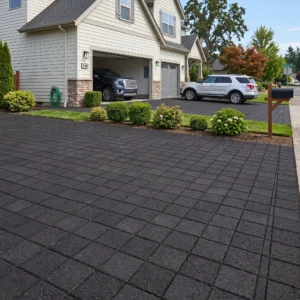
What “Cheapest” Actually Means in Natural Stone
The cheapest paving stones rarely carry the lowest total cost — a distinction that separates experienced buyers from those who repave the same surface twice. The real cost equation includes material thickness, base preparation requirements, expected lifespan, and resealing frequency. A $4/sq ft limestone option that needs resealing every two years and replacement at year twelve isn’t cheaper than an $8/sq ft granite that runs maintenance-free for twenty-five.
Your buying decision gets cleaner once you separate upfront cost from lifecycle cost. Budget paving stones in the short term are almost always thinner, more porous, and more finish-sensitive than mid-range alternatives. That’s not a dealbreaker — it’s a trade-off you need to price properly before committing to pallet quantities.
Limestone: The Workhorse Budget Option
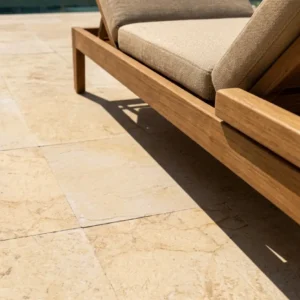
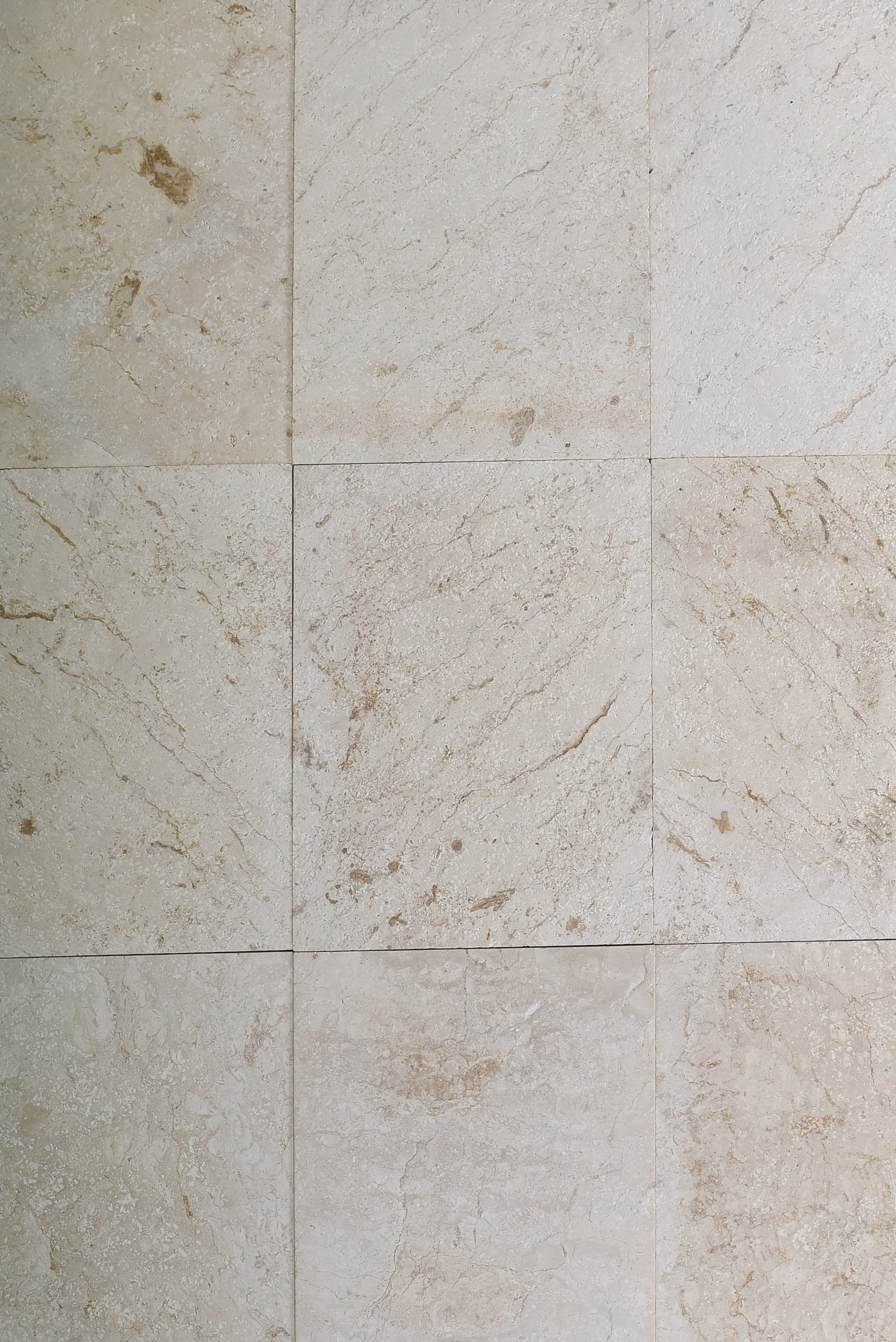
Limestone consistently delivers the strongest value position in the natural stone category. You’ll find it available in thicknesses from 1¼ inch to 2 inch, with the thinner cut being the primary driver of its competitive price point. At standard patio loading conditions — foot traffic, light furniture, occasional vehicle overhang — 1¼ inch limestone handles the job without issue. The material’s compressive strength typically ranges between 4,000 and 8,000 PSI depending on the quarry source, which comfortably exceeds residential load requirements. According to USGS data on limestone composition, the sedimentary formation process produces a consistent density that makes limestone reliably predictable for specification work.
UV exposure is where limestone requires honest attention. Light-colored limestone reflects a high percentage of solar radiation, which helps keep surface temperatures manageable in sun-exposed installations. However, sustained UV exposure — particularly in south-facing installations receiving six or more hours of direct sun daily — accelerates color shift in unsealed stone. The buff tones can bleach toward a washed white, and surface oxidation creates a patchy appearance that owners frequently mistake for staining. Sealing every 18 to 24 months with a penetrating silane-siloxane formula maintains the original color depth and slows UV-driven surface breakdown without creating a glossy film that raises slip-resistance concerns.
- Standard thickness range: 1¼ inch to 2 inch nominal — thinner cuts reduce cost significantly
- Compressive strength: 4,000–8,000 PSI — adequate for residential patio and walkway applications
- Resealing interval under high UV exposure: every 18–24 months with penetrating sealer
- Color behavior: buff and beige tones bleach under sustained sun without sealant maintenance
- Best applications: patios, garden walkways, low-traffic courtyard surfaces
Bluestone: Mid-Budget With Performance Upside
Bluestone occupies an interesting middle ground in any cheapest paving stones comparison. The raw material cost runs higher than limestone, but the durability metrics justify the premium for anything beyond light residential use. Bluestone’s flexural strength — typically in the 2,000 PSI range — makes it significantly more resistant to cracking under point loads than softer sedimentary options. For pathways that see regular foot traffic or thin-slab installations over compacted aggregate, this matters considerably more than the per-square-foot price difference suggests.
The natural cleft surface on bluestone also provides inherent slip resistance without any finish processing, which eliminates the cost and lead time of honing or thermal finishing. You’re getting a ready-to-install slip-resistant surface from the quarry. Natural Stone Institute specifications confirm that natural cleft finishes maintain coefficient-of-friction values appropriate for outdoor pedestrian surfaces, making bluestone a smart choice for wet-environment applications where finish processing would otherwise add cost to cheaper alternatives. Your project saves on finishing while gaining durability — the math often closes the price gap with budget limestone options faster than buyers expect.
Paving Stones on Sale: Timing and What to Watch
Genuine sale pricing on natural stone typically appears at two predictable moments: end-of-season clearance in late October through November, and mid-year inventory rebalancing when warehouse stock runs ahead of demand forecasts. Paving stones on sale during these windows can represent real savings — 15 to 25 percent below standard pricing on specific materials — but they come with constraints worth understanding before you commit.
Sale material is usually a specific quarry run, a specific thickness, and a specific finish. You’re locked into what’s on the pallet. Verify that the available dimensions match your project layout before purchasing — a 24×24 slab that’s 15 percent cheaper isn’t a bargain if your design requires 18×18. Also confirm that sale quantities align with your project’s actual square footage plus the standard 10 percent waste allowance. Supplementing with a different production run mid-project creates color and texture inconsistencies that are difficult to correct after installation. When evaluating paving stones on sale, the dimension and finish constraints matter as much as the discount percentage.
- Best sale timing: late October through November, and mid-year inventory clearances
- Typical discount range: 15–25% below standard pricing on specific SKUs
- Key constraint: sale pallets are fixed in dimension, thickness, and finish — no substitution
- Always verify available quantity covers project area plus 10% waste allowance
- Color matching risk: mixing production runs creates visible inconsistencies after installation
Granite: The Long-Game Value Case
Granite rarely appears in the cheapest paving stones search results, but it belongs in this comparison because the lifecycle math frequently inverts the initial price disadvantage. Field data across diverse installation environments consistently shows granite installations maintaining structural integrity at 25-plus years with minimal maintenance. The material’s igneous composition — interlocked crystalline structure with near-zero absorption — means UV exposure and freeze-thaw cycling cause negligible surface degradation over time. NSI granite durability specifications confirm absorption rates below 0.4%, which directly correlates to the material’s resistance to UV-driven oxidation and staining.
For budget-conscious projects where longevity matters — driveways, high-traffic commercial entries, pool surrounds — granite’s higher upfront cost frequently delivers a lower total cost of ownership than cheaper alternatives requiring replacement within 10 to 15 years. Your calculation should include not just material cost but the labor cost of a second installation cycle. When you factor that in, granite’s apparent premium often disappears entirely on any project planned to last more than two decades.
Basalt: The Underpriced Performer
Basalt deserves attention in any budget stone comparison because it’s systematically undervalued relative to its actual performance characteristics. The material’s volcanic origin produces an exceptionally dense, low-absorption stone — typically absorbing less than 1% moisture by weight — that performs with remarkable consistency under sustained UV exposure. Unlike lighter-colored sedimentary options, basalt’s dark, mineral-rich surface doesn’t exhibit the bleaching or color-shift behavior that requires frequent resealing. In sun-saturated installations, this translates to a dramatically lower maintenance burden over the life of the project.
Sourcing matters significantly with basalt. The strongest material comes from selected quarries from the Middle East and Southeast Asia, where consistent volcanic formation depths produce uniform density across production runs. At Citadel Stone, we evaluate incoming basalt shipments for absorption consistency before releasing material to order — a step that catches quarry-run variability before it becomes your installation problem. You’re looking for absorption below 1% and compressive strength above 20,000 PSI as baseline quality indicators for exterior paving applications.
- Absorption rate: below 1% — resists moisture uptake and UV-driven oxidation effectively
- Compressive strength: typically 20,000–28,000 PSI — well above residential and most commercial load requirements
- UV behavior: dark mineral composition is stable under prolonged sun exposure without significant color shift
- Maintenance advantage: reduced resealing frequency compared to lighter sedimentary options
- Best applications: pool surrounds, entries, high-traffic walkways, and sun-exposed patios
Bullnose Paving Stones: Budget Finishing Done Right
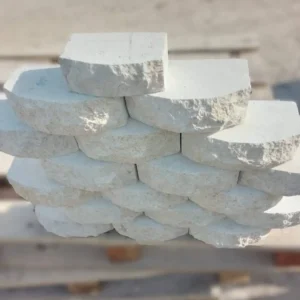
Bullnose paving stones represent the finishing edge of any paved surface — steps, pool surrounds, raised terraces, and border courses — and the pricing on bullnose profiles varies considerably based on material type and processing method. For budget projects, your most cost-effective approach is matching your field stone material to a bullnose profile from the same quarry family. Mixing limestone field pavers with a granite bullnose, for instance, creates a color mismatch that no amount of sealing will correct once it’s installed.
The machined radius on bullnose edges adds approximately 20 to 35 percent to the per-linear-foot cost compared to a straight-cut edge, regardless of material. You can reduce that premium by limiting bullnose application to visible leading edges only — the profile serves a functional purpose (preventing edge chipping and creating a finished visual line) rather than an aesthetic one on hidden faces. For pool step applications, ensure any bullnose paving stones meet the coefficient-of-friction requirements for wet surfaces before specifying — a honed bullnose on a wet pool step is a safety liability that no budget savings justify. Explore our affordable stone paving options to identify bullnose profiles available in limestone and basalt that keep your finishing costs in check without compromising the installed result.
Base Preparation: Where Budget Installs Fail
The single most common failure point in cheapest paving stones projects isn’t the stone itself — it’s the base preparation that gets cut to offset material savings. Skimping on compacted aggregate depth is the fastest way to convert a budget installation into an expensive repair project. A minimum of 4 inches of compacted crushed aggregate is the baseline for pedestrian paving; vehicle-capable surfaces require 6 to 8 inches depending on soil classification. These numbers don’t change based on what you paid for the stone on top.
Thinner, less expensive stone — particularly limestone in the 1¼ inch range — is more sensitive to base settlement than thicker alternatives. Any differential settlement greater than 3/16 inch between adjacent pavers creates a trip hazard and accelerates edge chipping. Your base compaction needs to achieve 95% proctor density before you set a single paver. Cutting base depth to save on aggregate costs will require you to relay sections within three to five years in most soil conditions — a cost that dwarfs any upfront material savings. The USGS dimension stone production data underscores that even lower-cost natural stone products are engineered for long service life when installed correctly — the base is where that service life is won or lost.
Ordering, Logistics, and Pallet Economics
Pallet pricing is where genuine savings on cheapest paving stones become accessible, and understanding pallet economics separates buyers who capture that value from those who overpay on mixed orders. Full pallets typically run 200 to 250 square feet of coverage depending on tile size, and pricing breaks at full-pallet quantities represent the most significant per-square-foot savings available outside of clearance events.
Citadel Stone maintains warehouse inventory across the product range, which compresses lead times to 10 to 14 days in most cases — a meaningful advantage when your project timeline is fixed. Truck delivery of stone pallets requires flat, accessible unloading areas; confirm your site can accommodate a standard delivery truck before placing the order. If site access is restricted — tight driveways, overhead clearances below 14 feet, unpaved surfaces — communicate that upfront so the logistics team can arrange appropriate equipment. Miscommunication on site access is the most avoidable source of delivery delays on stone projects, and delays cost money regardless of how economical your material selection was.
- Full-pallet coverage: 200–250 sq ft depending on format — always buy full pallets to capture the price break
- Typical warehouse lead time: 10–14 days from confirmed order to delivery
- Site access minimum: flat unloading area accessible to a standard delivery truck
- Always confirm overhead clearance and surface bearing capacity before scheduling truck delivery
- Order waste allowance: 10% for standard layouts, 15% for diagonal or pattern cuts
Choosing the Cheapest Paving Stones That Last
Selecting the cheapest paving stones successfully comes down to matching material performance to actual project conditions — not chasing the lowest number on a price sheet. Limestone delivers genuine value for light residential applications with realistic maintenance commitments. Basalt and granite cost more upfront but eliminate the resealing and replacement cycles that make cheaper options more expensive over time. Bullnose profiles, base preparation, and delivery logistics all affect your total project cost in ways that material price alone doesn’t capture. For projects where UV exposure is a real factor, prioritize materials with lower absorption rates and schedule your first sealant application within 30 days of installation completion — before the surface has seen a full season of sun. As you plan your natural stone installation, it’s worth reviewing how to install paving stones correctly to ensure your base preparation and jointing match the material you’ve selected. Pavers from Citadel Stone reach value-conscious buyers through wholesale pallet pricing, with delivery windows typically confirmed within two weeks.
Related reading: how to cut paving stones · how to lay paving stones · preparing ground for paving stones.