Tool Selection Determines Everything
The blade or chisel you reach for first determines whether your cut paving stones come out clean or crumbled — and most failed cuts trace back to that initial decision, not technique. How to cut paving stones correctly starts with matching the cutting method to the specific stone density and thickness you’re working with, not defaulting to whatever tool is already on the job site. Natural stone paving carries internal stress lines, grain orientation, and porosity variations that a concrete saw handles very differently than a dry-cut angle grinder or a hydraulic splitter.
Two categories of tools dominate field work: abrasive cutting (angle grinders, circular saws with diamond blades) and percussive splitting (chisels, splitters, guillotines). Both have legitimate uses — the mistake is treating them as interchangeable. Dense igneous materials like basalt or granite demand wet-saw diamond cutting because abrasive friction alone generates enough heat to micro-fracture the surface before the blade clears the cut. Sedimentary stones like limestone and sandstone tolerate dry cutting far better, though the dust management requirements shift considerably.
Cutting Paving Stones With an Angle Grinder
Cutting paving stones with an angle grinder is the most accessible approach for field adjustments and curved cuts, but it demands a diamond segmented blade rated for stone — not the general-purpose abrasive discs that come standard with most grinders. You’ll want a minimum 4.5-inch continuous-rim diamond blade for smooth decorative cuts, or a segmented blade for faster straight cuts where edge finish matters less. Run the grinder at full RPM before contacting the stone — dragging a spinning-up blade drags abrasive grit unevenly and produces a ragged entry point.
- Mark your cut line with a straight edge and a soapstone marker — pencil lines disappear into dust within the first pass
- Score the cut in two to three shallow passes (no more than 3mm deep per pass) rather than one aggressive plunge
- Keep the blade moving at a consistent pace — dwelling in one spot overheats the diamond segments and glazes the bond
- For straight cuts on pavers over 40mm thick, complete the score on the face, then flip the paver and mirror the cut from the back
- Wear a P100 respirator — silica dust from cutting paving stones is a genuine respiratory hazard, not a precautionary footnote
The angle grinder approach works well for curves, notches, and L-shaped cuts where a tile saw table limits your geometry. Its limitation is heat management on long straight cuts — if you see discolouration or smoke at the blade contact point, stop and let the blade cool for 90 seconds before continuing. Forcing a hot blade produces micro-cracks that run ahead of the cut line and compromise edge integrity.
Wet Saw vs. Dry Cutting: Which to Choose
The choice between wet and dry cutting isn’t just about convenience — it’s about what the stone’s internal structure can tolerate. Wet saws flood the blade and the cut zone with water, which serves two functions: cooling the diamond blade to prevent thermal glazing, and suppressing the fine silica particulate that dry cutting kicks into the air. For dense natural stone paving stones — particularly granite, basalt, and tight-grained limestone — a wet saw is the correct tool, full stop. According to Natural Stone Institute stone variety specifications, dense igneous and metamorphic stones require controlled cutting conditions to preserve surface finish and structural integrity at cut edges.
Dry cutting with a quality segmented diamond blade is appropriate for softer sedimentary pavers in outdoor conditions where running a wet saw is impractical. The trade-off is dust and a marginally rougher cut edge that may need dressing with a hand rubbing stone. On sloped or difficult terrain where setting up a level wet saw table creates a logistical problem, a cordless angle grinder with a dry-cut diamond blade becomes the realistic field solution — just factor in additional dust control measures and shorter working intervals.
Chisel and Hammer Splitting for Natural Breaks
There’s a place for hand-splitting that no power tool fully replaces — particularly when you want a rough, natural-looking edge that blends into irregular paving patterns. The technique requires understanding the stone’s grain before you pick up a chisel. Sedimentary natural stone paving stones like sandstone and certain limestones have bedding planes that run parallel to the natural quarry layers. Split along these planes and the break runs clean; split against them and you get unpredictable fracture lines that ruin the piece.
- Score the full perimeter of the cut line with a bolster chisel before striking — this defines the fracture path
- Use a 3-pound lump hammer, not a claw hammer — the face mass matters more than swing speed for a controlled split
- Position the bolster at the scored line and strike with a single decisive blow rather than multiple taps — multiple light strikes wander off the score line
- Support the paver on a sand bed or folded sacking so the underside doesn’t contact a hard surface that reflects the impact unpredictably
- For thick pavers over 60mm, deepen the score with an angle grinder first, then finish with the chisel — attempting to split thick dense stone purely by hand rarely produces a usable edge
Hand-splitting also has a practical advantage on sites where power access is limited or where the quantity of cuts is small enough that setting up a saw isn’t worth the time. For rustic pathway projects and irregular flagstone installations, the slightly rough split edge often looks better than a machine-cut line anyway.
Base Prep and Terrain: How Slopes Affect Your Cuts
Site elevation and terrain shape don’t just affect drainage design — they directly influence how many cut pavers a project requires and where those cuts fall. On a flat plane, you’re typically cutting only perimeter pieces to fit a border or a fixed boundary. On a sloping site or a terraced hillside installation, every step, every grade transition, and every drainage channel edge generates additional cut pieces. Plan your cut count early by walking the site grading plan and identifying every elevation change that intersects a paver course.
Sloped installations also create a practical challenge for saw setup. A wet saw on a 15% grade needs to be levelled independently of the ground surface — most tile saw stands adjust only a few degrees before they hit their travel limit. On steeper terrain, a portable bench that you level with shims becomes a necessity. Alternatively, pre-cutting pavers at the workshop or staging area and transporting them to the slope by hand saves significant setup time on complex graded sites. Citadel Stone’s warehouse team regularly assists specifiers in calculating cut piece counts for terraced projects, which helps estimate blade wear and material waste before the order ships from our warehouse.
Drainage management on sloped sites also determines paver orientation and joint spacing, which in turn affects cut geometry. You’ll often need to fan cut pieces around curved drain channels or step down courses at specific intervals to maintain positive drainage flow — neither of which follows the simple right-angle cuts a flat grid layout produces. Factor that complexity into your tool selection and your on-site cutting setup from the start.
Working With Natural Stone Paving Stones: Density and Cut Quality
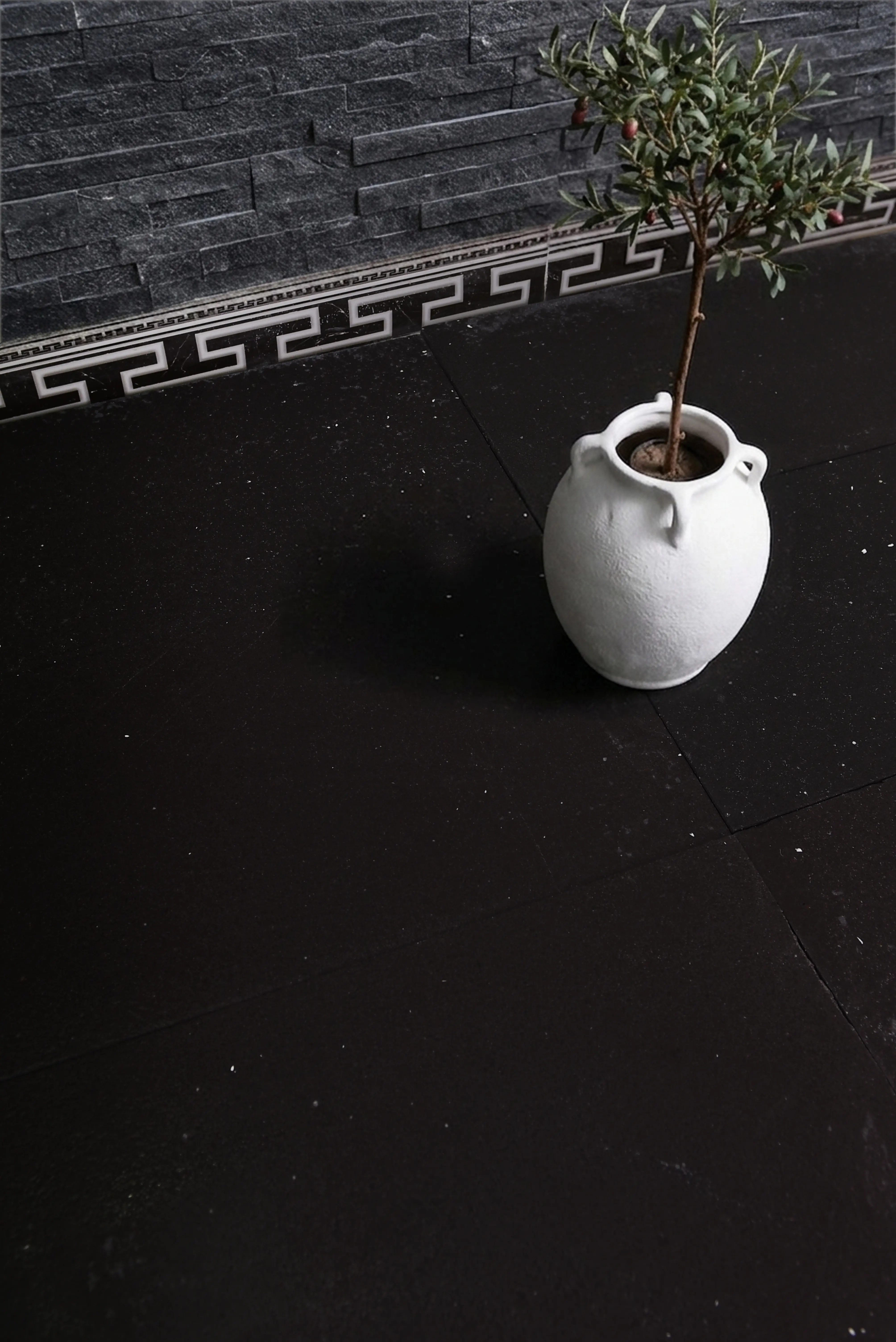
Not all natural stone paving stones cut the same way, and the density range between stone types is wider than most installers expect. A basalt paver at 2,900 kg/m³ requires a completely different approach than a tumbled limestone at 2,300 kg/m³ — the blade speed, water flow rate, and feed rate all shift. Pushing a dense basalt through a wet saw at the same feed rate you’d use on limestone will stall the blade, overheat the segments, and produce a burned, chipped cut edge. According to USGS dimension stone production and use data, the density and hardness range across commercial natural stone categories varies significantly enough to require material-specific cutting protocols.
- Limestone (2,100–2,700 kg/m³): dry-cut friendly with segmented diamond blade, moderate feed rate, good for angle grinder field work
- Travertine (2,300–2,500 kg/m³): open pore structure means the blade can catch — use a continuous-rim wet saw blade and slower feed rate
- Sandstone (2,200–2,500 kg/m³): cuts relatively easily but dusts heavily — prioritise respiratory protection and use wet cutting where possible
- Granite (2,600–2,800 kg/m³): requires wet saw with adequate water flow, slow deliberate feed rate, no dry cutting for production work
- Basalt (2,700–3,000 kg/m³): densest common paving stone, demands maximum water cooling, slowest feed rate, and premium diamond blades
Your blade selection should match the stone density, not the blade price point. A premium blade on a dense stone saves money over a project run because the segment bond doesn’t glaze out prematurely. If you’re sourcing natural stone paving stones through a supplier, ask for the stone’s density specification alongside the finish and sizing data — it’s a practical cutting variable, not just a structural one.
Marking, Scribing, and Tolerances
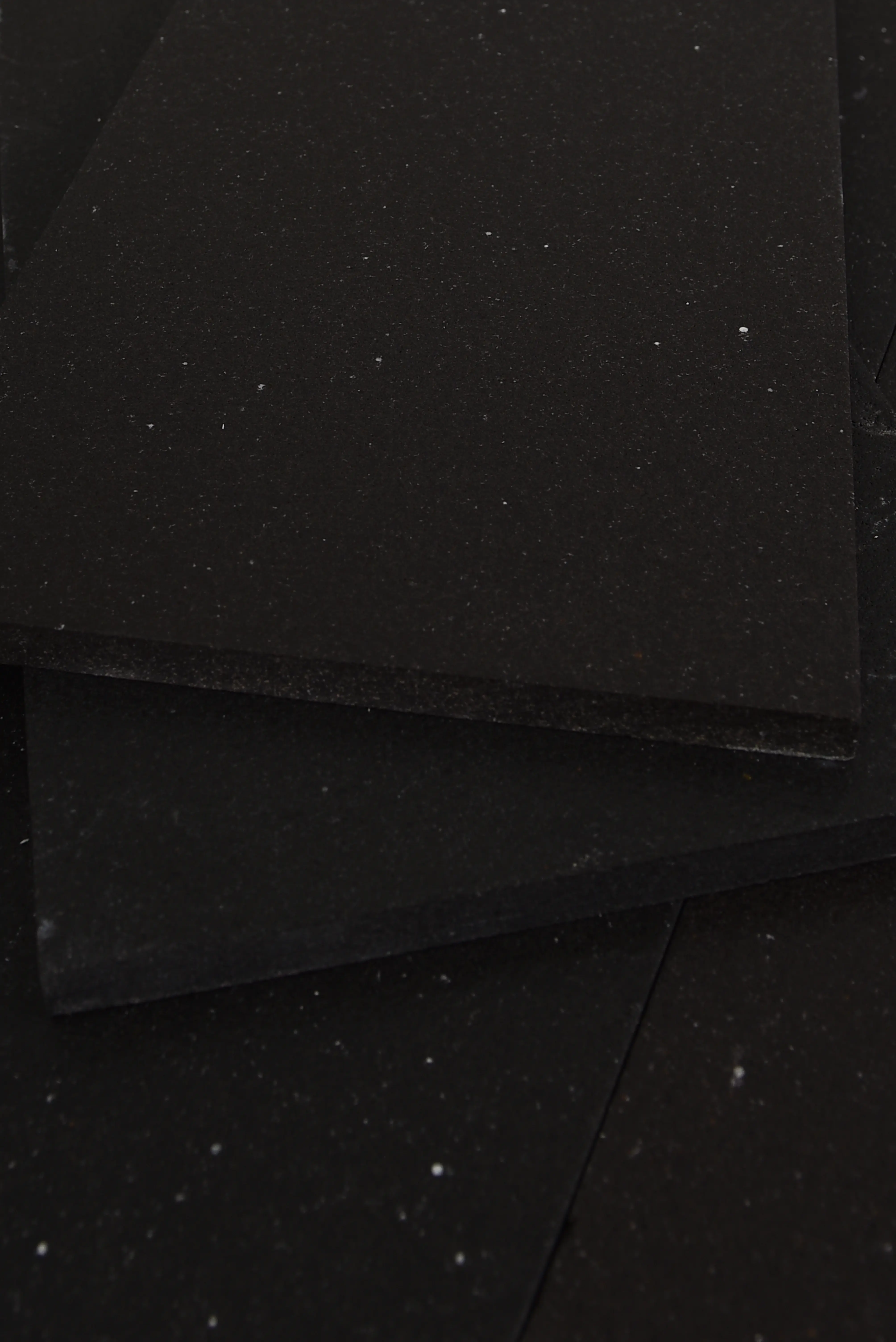
Accurate marking is the step that separates clean cuts from wasted material, and it deserves more time than most installers give it. For straight cuts, a steel square and a soapstone marker give you a line that survives the vibration and dust of cutting. For curved cuts — around circular features, drain covers, or flowing path edges — a profile scribe or a flexible straightedge transferred from a template gives you a repeatable curve line that the angle grinder can follow in passes.
Tolerance matters differently on natural stone than on concrete pavers. Natural stone paving carries natural variation in thickness, up to ±3mm across a pallet from the same quarry batch. When you’re cutting to a precise dimension, measure from the actual face of each paver, not from a nominal specification. A cut piece that’s 2mm short of the intended dimension on a natural stone pathway looks fine in a sand-set installation but creates a lippage problem in a mortar-bedded setting where consistent joint width drives the overall layout.
The practical rule for field tolerances: aim for +0/−2mm on cut pieces in dry-set work, and +0/−1mm in mortar-set work where grout joint width is fixed. Anything wider than the target joint can’t be corrected after setting — you’re cutting a new piece. That’s where careful marking upfront pays for itself in avoided waste. For projects where material was ordered through paving stones from Citadel Stone, thickness consistency within a pallet is documented at the warehouse stage, which reduces the number of re-cuts caused by unexpected thickness variation.
Blade Maintenance and When to Replace
A glazed diamond blade produces the same visual result as a worn-out blade — both skip across the surface, generate heat, and leave a chipped exit edge — but the causes are different and so are the fixes. Glazing happens when the bond matrix around the diamond segments melts and re-hardens without exposing fresh diamond grit. Dressing the blade by running it through an abrasive dressing block or a piece of concrete for 15–20 seconds re-exposes the diamonds and restores cutting performance. A genuinely worn blade, where the segment height has dropped below 3mm from the core, needs replacement — no amount of dressing recovers it.
- Check segment height with a caliper at the start of each significant project — don’t estimate by eye
- A blade that vibrates noticeably during a cut has either a bent core or an unevenly worn segment profile — retire it immediately
- Wet saw blades last significantly longer than dry-cut blades on equivalent material — the water cooling reduces segment bond fatigue
- Store blades flat or hung vertically — storing a blade resting on its side against a wall for extended periods can warp the core plate subtly enough to cause vibration without being visible to the eye
- Running a blade in reverse, even briefly, strips the diamond segments — always confirm blade rotation direction before starting a cut
According to ASTM dimension stone quality and testing standards, the physical properties of natural stone directly influence tool wear rates — which means blade replacement intervals need to be adjusted upward when you move from softer to harder stone categories on the same project.
How to Cut Paving Stones: Final Decisions That Drive Results
Getting how to cut paving stones right comes down to three decisions made before the blade touches the stone: the right tool for the material density, the right blade for the cut type, and accurate marking that accounts for the natural variation in the stone itself. Skipping any one of these steps produces cuts that look acceptable until the installation is complete and the joints reveal lippage, chipped edges, or gaps that no amount of joint sand corrects. Take the time upfront — it’s always faster than re-cutting. As you think through base preparation for the installation that receives those cut pieces, the paver base specification essentials covers what goes beneath the stone in detail worth reviewing before you commit to your setting method.
When cutting curves for path edges, Citadel Stone paving stones are selected for density ranges that score cleanly without crumbling under chisel pressure.