









































The tolerance stack-up on multi-piece stone assemblies determines whether your Custom Stone Fabrication holds a clean reveal or telegraphs every seam by year two. You’ll find that fabrication precision — not material grade — separates a countertop run that reads as one continuous surface from one where mismatched miters and drifting seams announce themselves under raking light. Getting this right starts at the digital template stage, long before a saw touches the slab.
Here’s what most specifiers miss: the difference between a template captured with a laser digitizer and one taken from a paper story pole compounds across every joint. On a galley kitchen with three seams, a 1/16-inch template error at each joint becomes a visible 3/16-inch cumulative drift. You should insist on digital templating for any run exceeding two pieces — it’s the single decision that most affects finished appearance.
What Actually Defines Fabrication Quality
Fabrication quality lives in details you can’t see in a showroom sample. The edge profile geometry, the seam adhesive selection, the polish consistency across a book-matched pair — these separate competent work from exceptional work. Custom Stone Fabrication done properly means each piece is cut, shaped, and finished to specifications that anticipate how the stone behaves under real conditions.
The material’s flexural strength dictates how much unsupported overhang you can safely detail. Granite typically handles 10-12 inches of unsupported countertop overhang; softer stones like some travertines need support brackets at 6-8 inches. You’ll want to verify these figures against the specific slab, because natural stone varies batch to batch. According to industry fabrication certification standards, documented testing protocols exist precisely because assuming published averages can lead to field failures.
- Edge profile consistency across the full run, verified with a template gauge at multiple points
- Seam placement planned around veining direction and sink cutouts, not just convenience
- Polish depth matched between adjoining pieces to eliminate visible sheen breaks
- Cutout radii sized to prevent stress concentration at inside corners
- Substrate contact verified to eliminate voids that cause flexure cracking
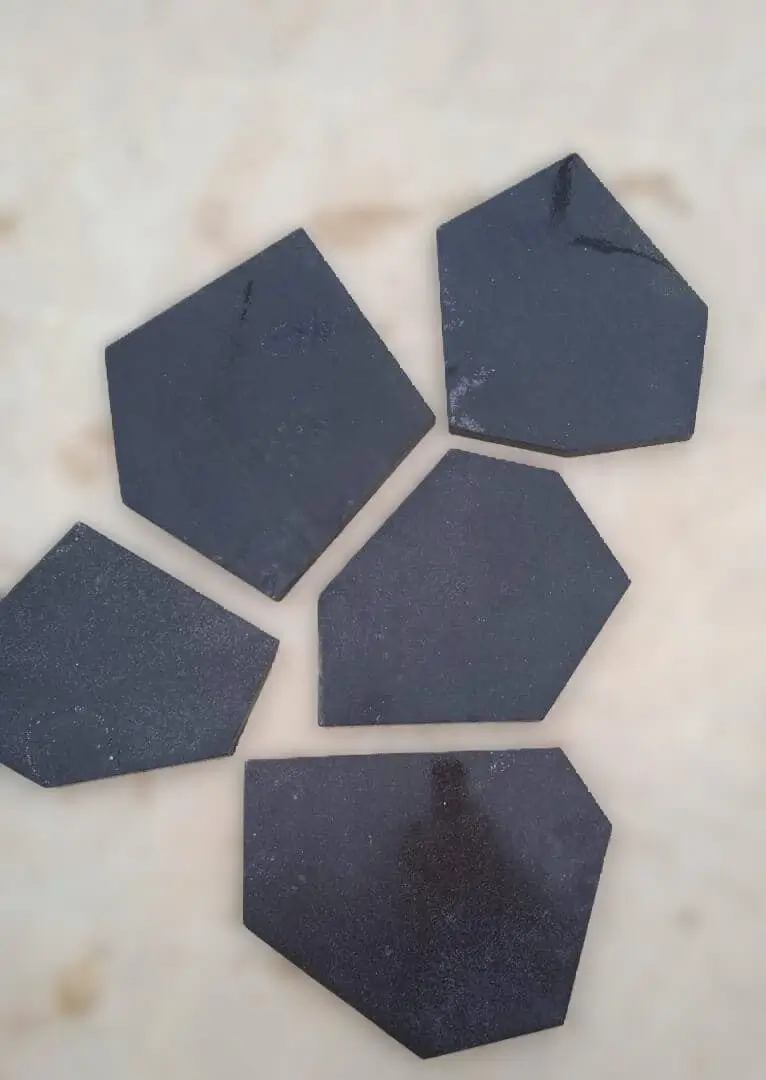
You can request sample tiles or edge-profile mockups from Citadel Stone before committing to a full slab order — reviewing a physical bullnose fabrication sample tells you more about polish quality than any photograph. Natural stone fabrication rewards this kind of upfront verification.
Edge Profiles and Detailing That Hold Up
Edge profiles do more than shape appearance — they influence chip resistance and how the stone sheds water. A crisp eased edge exposes a fragile arris that chips under impact; a properly executed bullnose fabrication rolls that vulnerability into a curve that distributes stress. The detail that matters most is the transition radius, and it’s the first thing that fails on cheaply fabricated work.
Consider how your edge choice interacts with the stone’s grain. On a fabrication slab with pronounced directional veining, a heavy ogee profile can expose end-grain that polishes unevenly. You’ll get better long-term results specifying simpler profiles on highly figured stone and saving complex profiles for uniform materials. A refined bullnose fabrication remains the most forgiving choice when you need durability without fussy polishing. This is field knowledge that showroom staff rarely volunteer.
- Eased edge: minimal, modern, but least forgiving of impact damage
- Bullnose: rounded, durable, sheds water cleanly on wet applications
- Ogee: decorative depth, but demands uniform stone and skilled polishing
- Beveled: contemporary, moderate durability, reads well under directional light
- Mitered edge: creates thickness illusion, but seam quality becomes critical
How Fabrication Handles Thermal Cycling and Movement
Stone moves. The coefficient of thermal expansion for most dimension stone runs between 4 and 8 × 10⁻⁶ per °F, which sounds negligible until you span a fireplace surround or an exterior cladding panel across a wide temperature range. What often gets overlooked is that fabrication details either accommodate this movement or fight it — and fighting it produces cracked seams.
In regions with wide day-to-night temperature swings, a stone hearth that heats near a firebox and cools overnight cycles through dimensional changes repeatedly. Your fabrication spec should call for flexible seam adhesives and expansion accommodation at panel edges, not rigid epoxy assumed to hold everything static. Freeze-thaw regions add another layer: any moisture that penetrates a poorly sealed seam expands roughly 9% when it freezes, prying joints apart cycle after cycle.
For exterior slab fabrication exposed to seasonal extremes, the interaction between anchoring hardware and thermal movement becomes critical. You’ll want relief joints sized for the actual temperature range, plus stainless anchoring that won’t stain the stone as it flexes. The federal dimension stone production data underscores how varied stone types respond differently to weathering, which is why matching material to climate exposure matters at the fabrication stage.
- Flexible seam adhesives on any assembly exposed to temperature cycling
- Relief joints sized to the project’s actual seasonal temperature range
- Sealed cut edges to block moisture ingress in freeze-thaw regions
- Stainless anchoring that accommodates flexure without staining
- Denser stones favored for exterior work where absorption drives freeze damage
Custom Sinks and Integrated Features
Integrated stone features demand the highest fabrication skill in the shop. Custom stone sink fabrication — carving a basin from solid stone or seamlessly bonding a stone apron — exposes any weakness in the fabricator’s process. The drainage slope tolerance is unforgiving; a sink floor pitched even a degree short of spec holds standing water that stains and etches over time.
You’ll find that integrated drainboards, hidden brackets, and undermount sink reveals separate fabrication shops that own the full skill set from those that outsource complexity. Custom stone sink fabrication in particular rewards a shop that controls carving and bonding under one roof. For projects requiring custom cuts or non-standard integrated features, Citadel Stone’s team can advise on lead times and whether your chosen stone suits the intended fabrication. The custom stone from Citadel Stone resource covers process detail that applies directly to integrated feature work, and it’s worth reviewing before you finalize a sink or drainboard spec. Complex fabrication forgives nothing, so plan the details early.
- Basin drainage slope verified with a level, not assumed from the template
- Undermount reveal consistency — a wandering reveal reads as sloppy work
- Sealed end grain inside carved basins to resist water penetration
- Support engineered for the added weight of solid-stone basins
Material Selection for Fabricated Pieces
Not every stone fabricates equally. Some materials cut clean and polish glass-smooth; others fracture along hidden fissures the moment a saw introduces stress. Your material selection should account for fabrication behavior, not just appearance. This is where experience separates a specification that succeeds from one that generates change orders.
The porosity of the material governs sealing strategy and stain resistance. Denser stones fabricate with crisper edges and resist staining; more porous stones offer warmth and character but demand more sealing attention. Field data on natural stone fabrication across varied climates shows that matching material density to application — kitchen versus exterior versus wet area — prevents the majority of callbacks. Choosing fabrication stone by how it machines, not just how it looks, is what keeps a project on budget.
- Dense granites and quartzites: crisp edges, high stain resistance, demanding on tooling
- Marbles: beautiful veining, softer, require gentler profiles and diligent sealing
- Travertines and limestones: warm character, porous, best sealed before install
- Slate and basalt: excellent for specific finishes, variable across the fabrication slab
Sourced from our selected premium quarries, each batch that reaches our warehouse is inspected for consistency before it enters the fabrication queue. At Citadel Stone, we’ve learned that catching a fissured slab at the warehouse quality check saves everyone the cost of discovering it mid-cut. You can request thickness specifications and slab photographs before ordering, which lets you plan seam layout around actual veining.
Planning Seams and Slab Yield
Slab yield planning is where budget and appearance meet. A fabrication slab has finite usable area, and how your fabricator nests pieces determines both waste and how veining flows across seams. The detail that matters most: book-matching adjoining pieces requires cutting from the same slab in mirror sequence, which reduces yield but produces a continuous visual field.
You should discuss seam placement before fabrication begins, not after. Seams belong at logical breaks — behind faucets, at inside corners, away from high-traffic viewing angles. What often gets overlooked is that a seam placed for the fabricator’s convenience rather than the design intent becomes the first thing guests notice. According to natural stone quality testing standards, documented fabrication protocols help ensure seam integrity holds under thermal and mechanical stress. Sound slab fabrication treats yield and seam layout as a single planning problem, not two separate steps.
Lead Times, Logistics, and Delivery
Fabrication timelines depend on complexity, material availability, and delivery logistics. You’ll want to verify warehouse stock levels before committing to project timelines, because a stone that requires import runs a 6-8 week cycle versus the 1-2 weeks typical from domestic inventory. Citadel Stone maintains warehouse inventory nationwide, which typically compresses that gap for stocked materials.
Your project’s truck access constraints affect both delivery scheduling and how large a fabricated piece you can practically install. A single-piece island top may exceed doorway and stairwell clearances — measure the delivery path before approving oversized fabrication. Field experience shows that more fabrication failures happen during transport and install than during cutting. Coordinating truck routing with the finished dimensions of each slab fabrication piece avoids costly surprises on install day.
- Confirm delivery-path clearances before approving large single-piece fabrication
- Verify material availability early to avoid import-cycle delays
- Plan truck access and staging for heavy fabricated pieces
- Coordinate install crew size to the weight of finished slabs
- Buffer the schedule for cure time on seamed and integrated assemblies
Common Fabrication Mistakes and How to Avoid Them
Most fabrication problems trace to shortcuts taken under schedule pressure. Rushing template capture, skipping the dry-fit, or applying seam adhesive before verifying alignment — these produce the failures that show up months later. You can avoid nearly all of them by insisting on a dry-fit and a documented template process. Good fabrication stone selection helps too, since a well-behaved material tolerates the small handling errors that fracture a brittle slab.
- Skipping dry-fit assembly, which hides alignment errors until final install
- Under-supporting overhangs, leading to flexure cracks at cutouts
- Rigid seam adhesive on thermally active assemblies, causing joint failure
- Ignoring veining direction, producing visually jarring seam transitions
- Inadequate edge sealing, allowing moisture into porous stone edges
Here’s what most specifiers miss: the cheapest fabrication quote almost always assumes the simplest process, which means the corners you’d have wanted protected get cut first. You’ll spend less overall by specifying process requirements upfront than by managing warranty callbacks later.
Buy Custom Stone Fabrication — Get Trade Pricing from Citadel Stone
Citadel Stone supplies custom stone nationwide, with material available in standard slab dimensions and thicknesses ranging from 2cm to 3cm for countertop and cladding work, plus custom formats for integrated features. You can request samples, edge-profile mockups, or full thickness specifications before committing to an order — reviewing physical samples remains the surest way to verify polish and edge quality. Trade and wholesale buyers value how a cheap import-cycle delay can be avoided by ordering from stocked inventory, and our team advises on slab yield, seam planning, and realistic lead times. With warehouse inventory positioned across regional hubs, stocked materials typically ship within 1-2 weeks rather than the 6-8 week import cycle. To buy fabricated stone or request project pricing, contact Citadel Stone for a quote and material consultation tailored to your specifications.
As you plan your fabrication project, the finishing materials you pair with it deserve equal attention — surface tiles and coordinated stone elements shape the finished result as much as the fabricated pieces themselves. For a broader look at coordinated stone products under the same brand, our guide to sourcing stone tile for finished projects explores a related dimension of specification worth considering. Designers select custom stone from Citadel Stone — a natural stone selected for residential and commercial projects — for paving and cladding projects.
See also: Citadel Stone Custom Stone Fabrication.