What Fabrication Really Reveals About Each Material
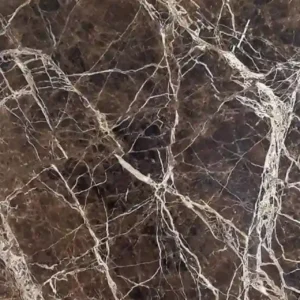
Marble vs granite fabrication decisions begin at the mineral level, and understanding that distinction before the first blade touches the slab prevents the most costly errors downstream. Marble is a metamorphic rock composed of recrystallized carbonate minerals — that continuous crystalline matrix is visually stunning but mechanically unpredictable the moment you start cutting profiles, routing edges, or drilling sink cutouts. Granite, by contrast, is an interlocked mosaic of quartz, feldspar, and mica grains that distribute stress laterally instead of concentrating it at cut lines. That structural distinction drives nearly every fabrication decision downstream, from blade selection to joint tolerancing to how aggressively you can detail an edge without risking a split.
Cutting and Tooling Differences That Change Your Workflow
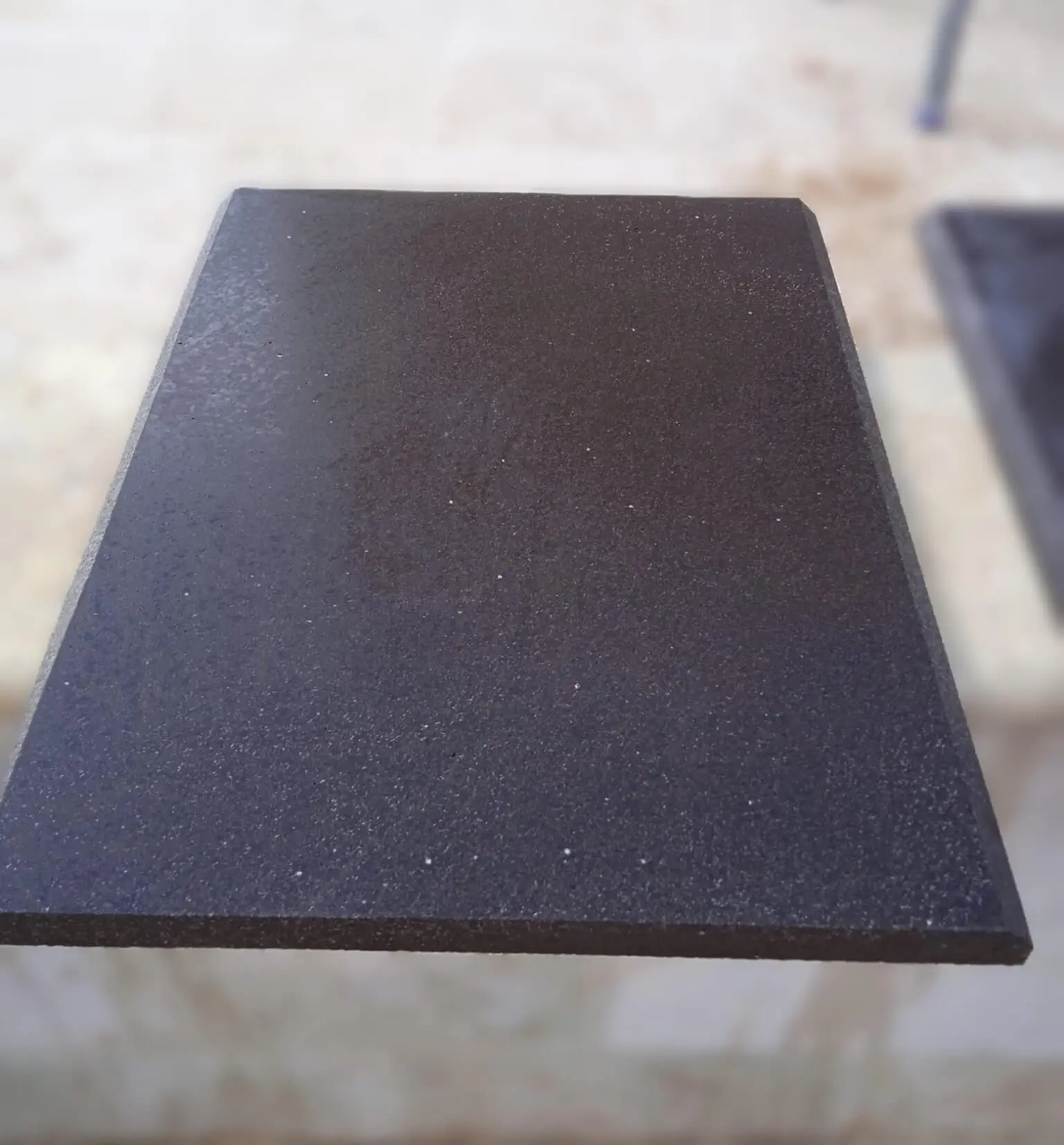
Your blade specification for marble fabrication needs to start softer than you’d instinctively choose. Diamond blades rated for granite — typically aggressive segment bonding with high diamond concentration — will heat the crystalline matrix in marble faster than the coolant can compensate, causing micro-fractures along cleavage planes that only show up after polishing. You’ll want a medium-bond diamond blade running at reduced RPM with a consistent water feed rate of at least 1.5 gallons per minute at the cut point.
Granite and marble fabrication diverge most sharply when you hit the profiling stage. Granite tolerates router passes at higher feed rates because the interlocked grain absorbs lateral tool pressure without delaminating. Marble requires slower passes — typically 30–40% slower than equivalent granite profiling — and any aggressive edge detail like a deep ogee or a tight waterfall profile carries real risk of corner loss at the thinnest cross-section. The material’s calcite crystalline bonds simply don’t grip the way granite’s quartz-feldspar interlocking does. According to Natural Stone Institute marble grades and technical specifications, marble’s homogeneous crystalline structure, while visually consistent, creates directional cleavage that fabricators must work with rather than against.
Edge Detailing and Profile Selection: Where Material Limits Show Up
The profile you specify tells fabricators exactly how much you understand about the material. For granite and marble fabrication projects, the edge detail isn’t just aesthetic — it’s a structural decision. Granite handles eased, beveled, bullnose, and ogee profiles with relative consistency because the grain matrix holds at thin cross-sections. Marble’s calcite crystal structure creates a real vulnerability at points where the slab narrows below about 8mm — corners on laminated edges, the crest of a dupont profile, and the thin return on a full bullnose are all failure-prone zones.
- Granite ogee and dupont profiles are achievable in 3cm slabs with standard tooling — the interlocked grain supports the narrow crest reliably
- Marble ogee profiles in 3cm require a skilled fabricator, slower feed rates, and ideally a 2cm hardened backer epoxied to the underside before routing
- Waterfall edges on marble countertops — a common point of comparison in countertops marble vs granite evaluations — consistently show marble chipping at the leading corner; spec a 3mm chamfer as insurance
- Chiseled or hand-finished edges should be avoided on marble entirely — the percussion stress fractures the cleavage planes unpredictably
- For granite, live-edge or rough-cut finishes are achievable with minimal risk because the grain structure absorbs impact stress laterally
Sink Cutouts and Drilling: The High-Stakes Operations
Sink cutouts separate experienced fabricators from everyone else, and the stakes are highest with marble. You’re removing material from the center of a slab that then must span the opening unsupported — and marble’s cleavage planes can propagate a crack from the corner radius of the cutout straight to the edge of the slab if the router bit catches or the feed rate surges. A consistent 25mm corner radius minimum on all marble sink cutouts isn’t a preference; it’s a structural requirement. Tighter radii concentrate stress at exactly the point where cleavage is most likely to initiate.
Drilling for faucet holes in marble fabrication requires a carbide-core bit running wet with zero lateral pressure — any side-loading as the bit breaks through the bottom face will chip the underside. Granite is significantly more forgiving here. The interlocked grain structure means the breakthrough moment distributes fracture energy across multiple mineral boundaries rather than following a single cleavage plane. You can apply controlled lateral pressure on granite without the same consequence. ASTM C503 marble building stone specification establishes the minimum physical property thresholds that directly affect how marble responds to these high-stress fabrication operations — understanding those thresholds helps you set realistic project tolerances before fabrication begins.
Thickness Tolerances and Flatness: What the Numbers Mean in Practice
Slab thickness variation matters more in marble fabrication than most project specifications acknowledge. Marble slabs exhibit greater thickness variation across their face — sometimes ±3–4mm over a 3-meter run — because the recrystallization process that forms marble doesn’t produce the uniform density you get in granite’s igneous cooling process. That variation affects how the slab sits on support brackets during fabrication, how adhesive distributes under seamed sections, and how your finished countertop reads at the reveal edge.
- Specify thickness checks at 300mm intervals across the full slab before cutting begins — catching a 4mm bow before fabrication is far easier than managing it after
- Granite slabs from quality quarry sources typically hold ±1.5mm across standard slab dimensions — a measurably tighter tolerance than marble
- For countertops, the marble vs granite flatness difference becomes critical at seam locations — granite’s consistency makes seam height matching more predictable and requires less grinding to flush
- Marble seams should be epoxy-filled and color-matched before final polish — the calcite matrix accepts tinted epoxy well and produces near-invisible joints when executed correctly
- For fabrication jobs where slab flatness is non-negotiable — island counters with undermount sinks, for instance — granite is the lower-risk specification
Surface Finishing and Polish Response
Here’s a detail that often catches project teams off-guard: marble and granite respond to polishing at opposite ends of the grit spectrum in terms of where the visual quality jump happens. Marble achieves its characteristic depth and reflectivity relatively early in the polishing sequence — by 800 grit you’re seeing approximately 80% of the final polish quality. That makes marble more sensitive to under-polishing at early grit stages, because defects introduced at 220 or 400 grit don’t always telegraph clearly until the final buff reveals them.
Granite polishing follows a more linear progression. The surface quality improves proportionally through each grit stage, which means fabrication defects show up earlier and give you more opportunity to correct them before committing to final finish. For honed finishes — which are increasingly specified for both materials — marble achieves a distinctly softer visual texture at 400 grit hone, while granite at the same grit reads coarser and more textured. Your finish specification should account for this difference explicitly, not assume both materials produce equivalent aesthetics at the same grit level.
Structural Performance Under Mechanical Stress
The marble vs granite fabrication conversation often focuses on aesthetics, but the structural performance difference is where long-term specification decisions get made. Granite’s compressive strength typically ranges from 19,000 to 30,000 PSI depending on quarry source and mineral composition — a range that makes it highly resistant to point-load failures, impact from dropped objects, and the edge stress that occurs when countertop overhangs flex slightly under load. Natural Stone Institute granite durability and application specifications detail how granite’s mineral interlocking directly contributes to this impact resistance advantage.
This structural resilience becomes particularly relevant when specifying materials for installations exposed to severe weather events. In exterior applications — outdoor kitchens, covered terrace counters, or bar tops in open-air settings — wind-driven debris impact and the mechanical stress of rapid pressure changes during storm events create intermittent loading conditions that marble handles less predictably than granite. The calcite cleavage planes in marble can propagate micro-fractures over time under repeated impact stress, even at energy levels well below what would damage granite. Outdoor specifications for countertop or fabricated stone elements in storm-prone environments should weight this difference heavily.
- Granite’s modulus of rupture typically exceeds marble’s by 30–50% — meaning it resists bending failure under distributed load more reliably
- For exterior fabricated elements subject to hail impact or wind-driven debris, granite’s interlocked grain absorbs and distributes impact energy rather than concentrating it at cleavage planes
- Edge restraint integrity matters for large fabricated panels — granite’s higher tensile strength at processed edges reduces the risk of corner loss under mechanical stress
- Marble in exterior applications should be specified with thicker cross-sections than equivalent granite — moving from 2cm to 3cm adds meaningful resistance to impact-initiated cleavage
Sealing and Maintenance Specification
Your sealing protocol for marble fabrication needs to start at the slab stage, not after installation. Marble’s porosity — typically ranging from 0.1% to 0.5% absorption depending on variety — accepts penetrating sealers well, but the calcite matrix is reactive to acids in ways that granite is not. A single unsealed exposure to citric acid, vinegar, or even high-mineral-content water can etch the surface below the polish threshold, leaving a matte ring that no amount of buffing will fully correct without re-polishing.
Granite is not porosity-free — absorption rates for most commercial granites run 0.1–0.4% — but the silicate mineral matrix is chemically stable against the acidic exposures that etch marble. A quality penetrating sealer applied annually is sufficient maintenance for most granite countertop specifications. Marble requires a sealer rated specifically for calcium carbonate stone, applied every 6–12 months depending on use intensity, and supplemented with a pH-neutral daily cleaner. The ongoing maintenance commitment is a genuine specification variable, not a footnote, and your client needs to understand it before material selection is finalized. For projects where you want to explore the full range of stone works from Citadel Stone, the technical consultation process helps align material choice with the realistic maintenance program the project supports.
Lead Times and Logistics Planning for Fabrication Projects
Marble fabrication timelines carry more variability than granite, and the logistics chain is a key reason. Premium marble varieties — Calacatta, Statuario, Arabescato — are predominantly Italian quarry sourced, which means warehouse inventory cycles run 10–16 weeks for restocked material when popular lots sell through. Your countertops marble vs granite schedule planning should build in a minimum 4-week buffer on marble to account for lot matching, slab inspection, and any quarry-to-warehouse transit delays.
Granite supply is generally more stable because productive quarries exist across multiple continents and domestic sources supplement import availability. Citadel Stone maintains warehouse inventory across its national distribution network, which reduces lead times for in-stock granite to 1–2 weeks for most standard specifications — a meaningful schedule advantage when your project timeline is firm. Marble lots require advance reservation when matching veining across multiple slabs, and that reservation process adds complexity that granite selection typically doesn’t require. Truck delivery logistics are also worth planning early: large fabricated marble panels are more vulnerable to vibration stress in transit than granite, so confirming your trucking provider’s stone-handling protocols before dispatch protects the finished work.
Parting Guidance on Marble vs Granite Fabrication
Choosing between marble and granite fabrication ultimately comes down to three honest variables: the profile complexity you’re specifying, the chemical exposure the finished surface will face, and the installation environment’s mechanical demands. Marble earns its place on the specification sheet for interior applications where its visual depth is the design driver and the maintenance program is sustainable — and when an experienced fabricator is executing the work with the tooling patience the material demands. Granite earns its place everywhere else: complex profiles, outdoor or semi-outdoor applications, high-use commercial surfaces, and any project where impact resistance and chemical stability need to be non-negotiable. Understanding how these two materials compare across a broader range of natural stone applications adds useful context — how natural stone performs across hardscape applications covers additional dimensions worth reviewing as your specification takes shape. At Citadel Stone, we work directly with fabricators and project teams to match slab selection to the actual fabrication scope — including reviewing warehouse inventory for veining continuity and confirming truck delivery requirements for large-format pieces before the order is placed. When selecting between these two materials, Citadel Stone fabricators note that granite’s interlocked grain structure makes it more forgiving during aggressive edge detailing than marble.