












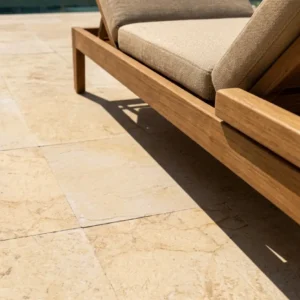
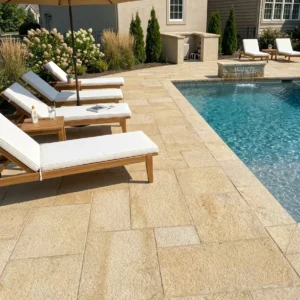

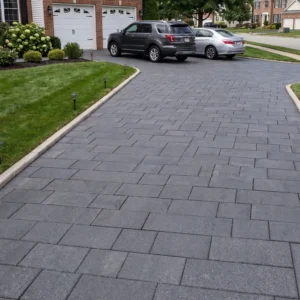
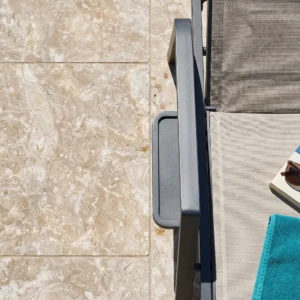

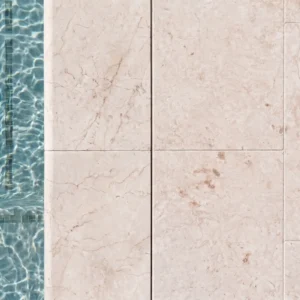
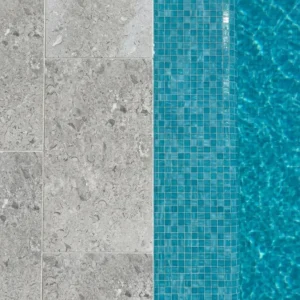

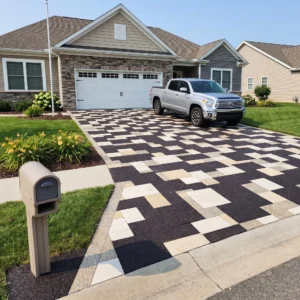
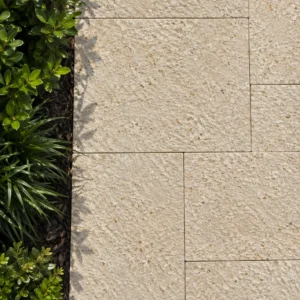
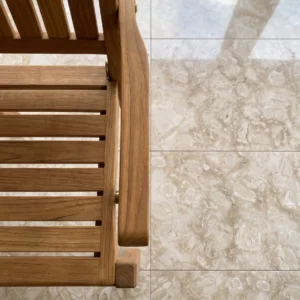
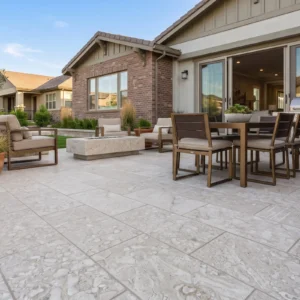
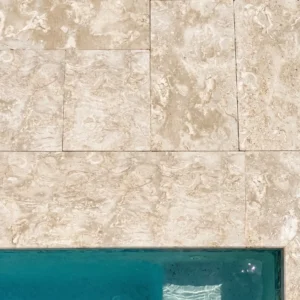
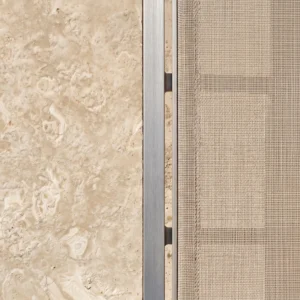
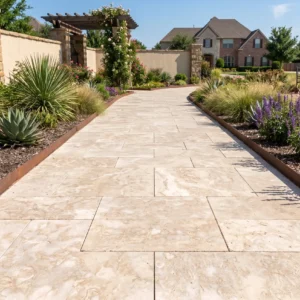
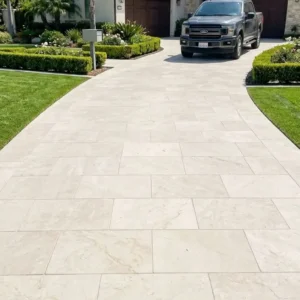
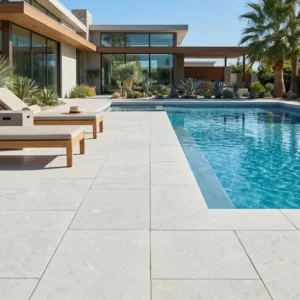
















Why the 18×18 Travertine Tile Format Behaves Differently
Substrate flatness tolerance is the one specification that decides whether an 18×18 Travertine Tile floor reads dead flat or fights you at every joint — you need deviation held to 1/8 inch in 10 feet, not the 1/4 inch that smaller formats forgive. That single number drives more remediation labor on large-format stone jobs than material selection ever does. What follows covers the thickness math, the grade and fill differences that change your setting method, and the ordering details that keep a floor consistent from crate to crate.
Here’s the geometry most specifiers skip. An 18-inch square has a diagonal of just over 25 inches, and natural stone at 1/2 inch thickness has essentially no ability to conform across that span. A 3/16-inch high spot that vanishes under a 6-inch mosaic becomes a shadow-catching edge under an 18 inch travertine tile, especially under raking light from a west-facing window.
Travertine also carries wider dimensional tolerance than pressed porcelain. Calibrated stock typically holds within 1/32 to 1/16 inch across a batch, and thickness can vary slightly within the same crate. Your setting bed has to absorb that variation, which is why mortar selection and trowel technique matter more here than on a comparable ceramic job.
- Fewer grout joints per square foot means less joint maintenance but far less tolerance for substrate error
- Cut waste rises sharply because a partial tile at a wall consumes a full 2.25 square foot unit
- Handling weight per piece roughly doubles compared to a 12-inch format, changing crew sizing and setting pace
- Pattern variation reads bolder — vein movement that looks subtle on a sample board dominates at 18 inches
- Lippage tolerance under industry guidance is tighter as tile size grows, not looser
The upside is real. A large-format field visually expands a room, reduces grout line accumulation of soil, and gives you a calmer surface in open-plan spaces where the floor runs continuously from kitchen to living area.
Grades, Fills, and Finishes You’ll See in 18 x 18 Travertine
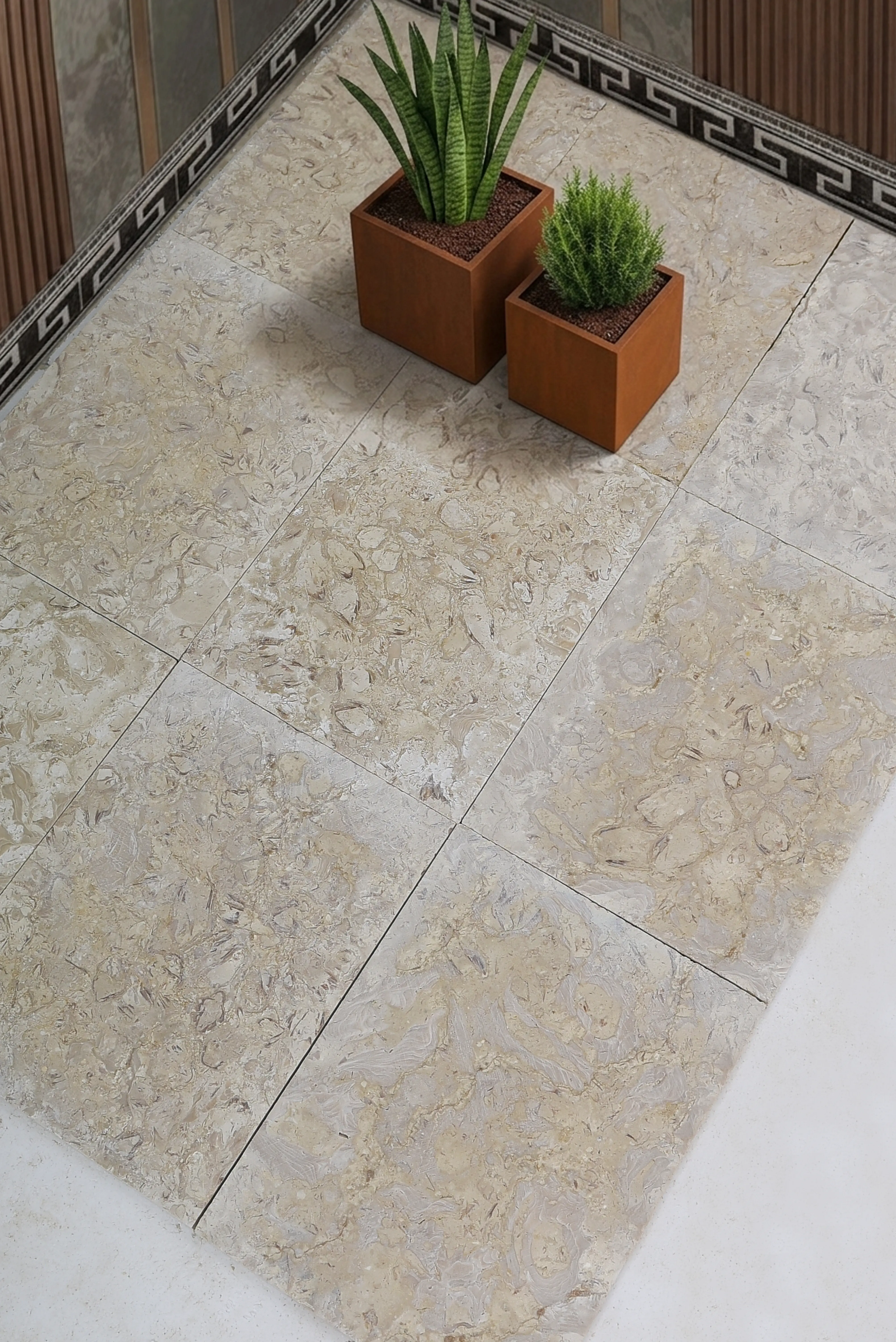
Grade terminology in this material is not standardized across the trade, which is why two sources can both quote “premium” 18 x 18 travertine and ship visibly different stone. What actually varies is void density, fill quality, color consistency, and edge condition. Ask for batch photography and a full-size piece rather than trusting a grade label alone.
Fill quality matters more than buyers expect. Factory fill is either a tinted cementitious grout or a clear-to-tinted resin, and the two age differently. Resin holds up better in wet interiors and under thermal cycling; cementitious fill can shrink and release over the first two heating seasons, leaving pinholes you’ll address on site.
Classification, density, and absorption requirements for this stone family sit under the ASTM travertine dimension stone standard, which separates filled from unfilled material and sets minimum values you can hold a supplier to. Reference it in your submittal package — it turns a subjective quality argument into a measurable one.
- Honed and filled — the standard interior choice, smooth underfoot, shows etching from acids most readily
- Tumbled — softened edges and a slightly open surface, better wet traction, hides minor lippage
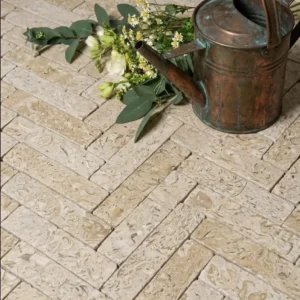
- Brushed or antiqued — textured face with filled voids, a good middle ground for kitchens and entries
- Unfilled — open pores left exposed, best reserved for exteriors and dry decorative fields
- Chiseled edge — a heavier, rustic perimeter profile that widens the visual joint line
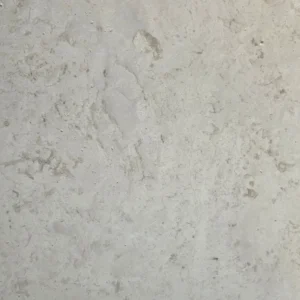
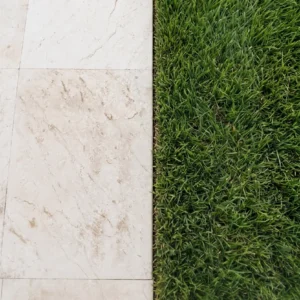
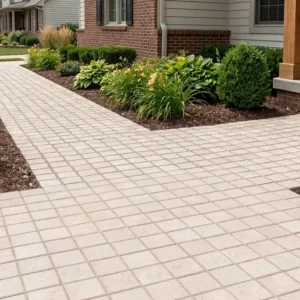
Color families run from ivory and cream through gold and scabos to walnut, noce, and silver-gray. An 18×18 travertine stone tile in a light cream will show foot traffic soiling less than a mid-tone silver, but will telegraph grout haze more. You can request sample tiles from Citadel Stone before committing to a batch, and viewing two or three pieces side by side tells you far more about range than a single chip.
Thickness, Weight, and Deflection Limits That Govern the Spec
Interior travertine tile 18 x 18 typically arrives at 1/2 inch (12mm) nominal, with some mills producing 5/8 inch for commercial specification. Exterior paving stock runs 1 1/4 inch (30mm) and is a different product entirely — do not substitute one for the other because the price looks better. The thinner tile has no business carrying vehicular or heavy point loads.
Weight drives your structural check. Half-inch travertine runs roughly 6.5 pounds per square foot before mortar, and the assembly with thinset and any leveling compound lands near 9 to 10 pounds. Natural stone requires a stiffer floor than ceramic — the working limit is L/720 deflection rather than the L/360 that governs ceramic tile, and on 16-inch-on-center joists that often means adding a layer of plywood or a mortar bed. Where radiant heat is in play, an uncoupling membrane or a properly detailed mortar bed also gives the assembly somewhere to absorb thermal movement instead of transmitting it into the joints.
Mortar coverage is where 18 x 18 travertine tile installations quietly fail. Target 95 percent coverage in wet and exterior areas and no less than 80 percent in dry interiors, with full support under every corner. Use a large-and-heavy-tile mortar rather than a standard thinset; the non-sag formulation holds the tile at the height you set it instead of letting it settle overnight.
- Half-inch nominal thickness for interior floors on properly stiffened substrates
- L/720 maximum deflection for the framing system supporting natural stone
- 1/2 x 1/2 inch square-notch trowel as a starting point, adjusted after a tile pull test
- Back-butter every piece — skim coat the back to fill the mill-cut kerfs
- White mortar under light stone to prevent gray shadowing through translucent areas
Setting Large Stone: Layout, Coverage, and Lippage Control
Dry-lay the first two rows before a single tile goes down. Large-format layout errors compound quickly, and a room that’s 3/4 inch out of square across 20 feet will eat your perimeter cut on one wall while leaving a sliver on the other. Balance the field so no cut piece falls below about half a tile width — with 18 travertine tile that means resolving both axes before the first bead of mortar goes down.
Pull a tile after your first three or four are set and look at the back. Ridges that haven’t collapsed mean your trowel is too small, your mortar has skinned over, or you’re not directional-troweling in a single orientation. Fix it in the first ten minutes, not after the room is closed in.
Cutting large stone opens voids that were sealed at the factory, and the fresh edges along a rip cut almost always need attention before grout goes in. A practical walkthrough of how to fill travertine holes covers the resin-versus-cementitious decision and the color-matching technique that keeps a repair from reading as a patch. Handling this before grouting saves you from chasing grout out of open pores later.
Grout joints on an 18×18 travertine floor tile field should run 1/8 inch minimum indoors and 3/16 inch for tumbled or exterior work. Leveling clip systems help, but seat them carefully — the soft edge of travertine chips under clip pressure more readily than porcelain, and a chipped arris on a large tile is a full replacement.
- Snap layout lines off a centered reference rather than off a wall that may run out of parallel
- Set the first full row against a straightedge and check it before extending the field
- Mix from several crates within each work area so shade shifts distribute across the floor
- Keep open time short — remix rather than retempering mortar that has already begun to skin
- Clean squeeze-out from joints while it is still green; cured mortar is far harder to lift off a porous face
Terrain, Drainage, and Base Design for Exterior Installations
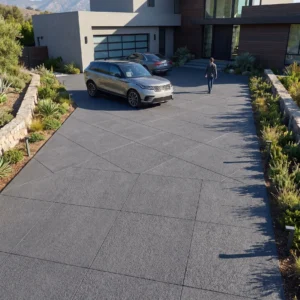
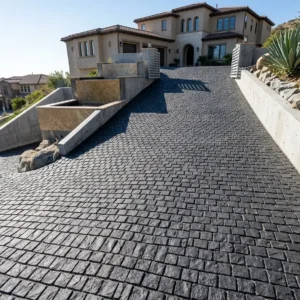
Sloping and stepped sites change the entire calculation. On a graded lot where the patio sits at a cut-and-fill transition, half your slab bears on undisturbed native soil and half on engineered fill — and those two zones settle at different rates for the first two to three years. Your control joints and any bond-break at that seam are what keep the settlement crack out of the stone.
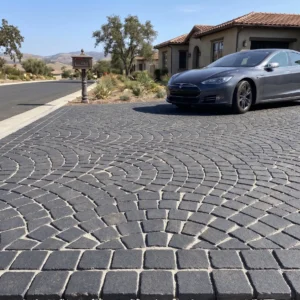
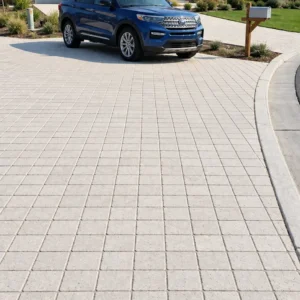
Surface water is the second variable. Hold a minimum 1 percent fall away from structures, 2 percent where the terrain above the installation feeds runoff toward it, and intercept sheet flow with a trench drain rather than asking the paving to shed everything. Steps and landings deserve their own check — a tread that ponds water at the nosing shows wear and edge damage long before the open field does. Exterior work at grade should use 1 1/4 inch travertine pavers over 4 to 6 inches of compacted open-graded aggregate, not the thinner 18 x 18 travertine tile intended for interior slabs.
Porosity is what makes drainage design non-negotiable here. This stone forms through mineral precipitation at spring and seep sites, leaving the interconnected void structure described in federal geological data on carbonate stone, and that pore network will hold water if the base traps it. In freeze-thaw regions, saturated stone over a poorly draining base is the single most common cause of surface spalling.
- Geotextile separation fabric over clay subgrades to stop aggregate migration and pumping
- Compaction in 3-inch lifts to 95 percent standard Proctor, verified rather than assumed
- Perimeter edge restraint on any run that terminates at a slope or planting bed
- Subsurface drainage where the uphill terrain contributes more than a few hundred square feet of catchment
- Wider joints on sloped runs to accommodate the slight differential movement grade changes produce
Slip Resistance and Choosing the Right Surface Texture
Wet dynamic coefficient of friction of 0.42 is the accepted threshold for level interior areas expected to be walked on wet, and finish selection is what gets you there. Honed and filled stone measures well dry and drops noticeably wet, which is why the finish belongs in living areas rather than shower surrounds. Technical property ranges published in the Natural Stone Institute variety profiles give you the absorption and abrasion figures to pair with your traction requirement.
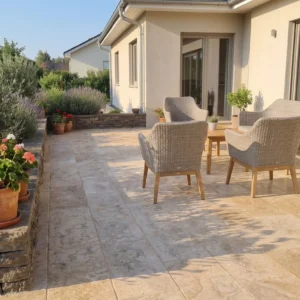
Tumbled and brushed surfaces perform better underfoot when wet because the micro-texture breaks the water film. Specify travertine 18 x 18 in a tumbled finish for covered patios, entry vestibules, and any transition zone where people arrive with wet shoes. The trade-off is a surface that traps more soil and needs a stiffer brush during cleaning.
An 18 inch travertine tile is the wrong choice inside a shower pan regardless of finish — the required slope to drain demands smaller units that can follow a warped plane. Use the large format on the walls and drop to a 2-inch or 4-inch piece on the floor.
- Match finish to the wettest condition the surface will realistically see, not the average
- Avoid polished travertine on any walking surface exposed to water
- Test traction on a sealed sample — some film-forming sealers reduce wet friction significantly
- Keep transitions between finishes out of the primary traffic path
Sealing and Maintenance Across Decades of Service
Use an impregnating sealer, not a topical coating. Penetrating silane or fluoropolymer products sit below the surface, leave the stone breathable, and won’t peel or cloud the way film-formers do when moisture pushes from below. A travertine 18×18 tile floor sealed properly on day one is dramatically easier to keep than one sealed after six months of use.
Seal before grouting on unfilled or heavily textured material. Grout pigment locks into open pores fast, and no amount of scrubbing brings it fully back out. A single pre-grout application costs an hour and prevents a permanent haze across the field.
Cleaning chemistry is simple and non-negotiable: pH-neutral products only. Vinegar, lemon-based cleaners, and most bathroom descalers etch the calcium carbonate surface within seconds, leaving dull patches that require honing to correct. With sensible maintenance, an 18×18 travertine floor tile installation delivers decades of service life and can be refinished in place when it eventually dulls.
- Reseal interiors every two to four years, testing with a water-bead check rather than by calendar alone
- Reseal exposed exterior work every one to two years depending on UV load and traffic
- Place walk-off matting at entries — grit is what abrades the surface, not foot traffic itself
- Address open pinholes as they appear rather than letting them collect soil
- Expect some patina and color deepening in an 18 x 18 travertine tile floor; that change is normal, not a defect
Coverage Math, Waste Factors, and Delivery Planning
Each 18 by 18 travertine tile piece covers 2.25 square feet, and most cut sheets list travertine 18 x 18 by nominal size rather than actual, so verify the real dimension before you calculate joint widths. Boxes typically hold four pieces at roughly 9 square feet and 55 to 65 pounds, which matters when a crew is carrying material up stairs. Pallet quantities for 18 travertine tile generally land between 480 and 540 square feet.
Waste factors climb with format size. Budget 10 percent on a straight-lay rectangular room, 15 percent for diagonal layouts, and 18 to 20 percent for rooms with multiple offsets, curved walls, or heavy cabinetry returns. Order the overage in the initial purchase — matching a batch six weeks later is difficult with natural stone.
Blend from three or four crates simultaneously during installation rather than working one crate at a time. Every batch our warehouse team inspects gets checked for shade range and thickness consistency before it ships, but natural variation between quarry blocks is inherent to the material and blending is what makes it read as intentional. Citadel Stone sources through established quarry partners, including selected quarries from the Middle East, and holds warehouse inventory nationwide so replacement pieces stay available.
Confirm your delivery conditions early. An 18×18 travertine stone tile order arriving on pallets needs either a forklift on site or a truck with a liftgate, and residential streets with tight turns may require a smaller truck at additional cost. Photograph the crate labels and lot numbers on arrival as well; if a shortage turns up mid-install, that record is what lets the warehouse team pull from the same production run. Citadel Stone ships nationwide from regional warehouse stock, which typically holds lead times to one to two weeks rather than the long import cycle direct orders face.
How Travertine 18×18 Compares to Porcelain and Other Floors
Porcelain wins on dimensional precision, water resistance, and zero sealing maintenance — that’s an honest assessment, and on a rental property or a high-abuse commercial floor it’s often the right call. What porcelain can’t reproduce is the depth of a natural surface, the ability to refinish rather than replace, and the way real stone ages. Installed cost rarely settles the question either, since labor on both materials is driven more by substrate preparation than by the tile itself. Choose based on which of those factors your project actually values.
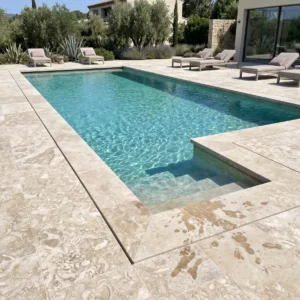
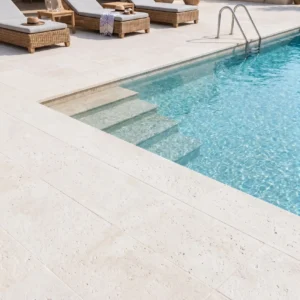
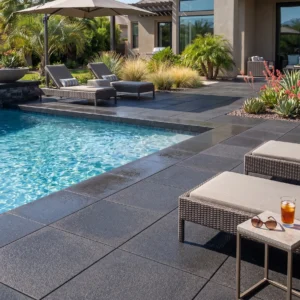
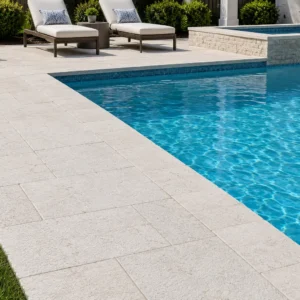
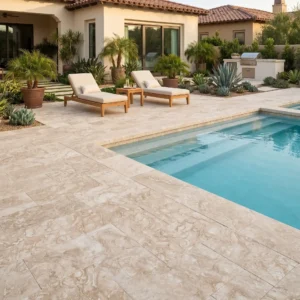
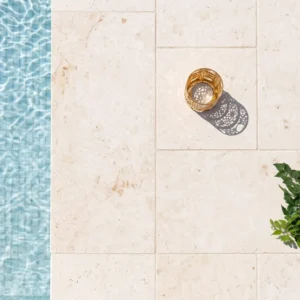
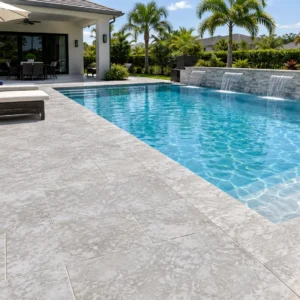
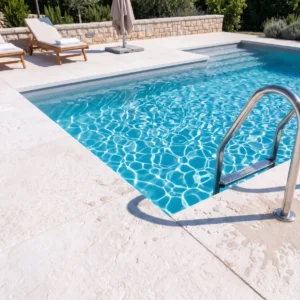
Underfoot temperature is a genuine differentiator. Light-toned travertine reflects a substantially higher share of incident solar energy than dark porcelain or concrete, which keeps sun-exposed surfaces measurably cooler in hot, dry climates. That difference is most noticeable on covered terraces and pool surrounds.
Repairability favors stone. A chipped porcelain tile is a replacement job; a chipped travertine edge is a resin fill and a light hone. Over a 25-year horizon, that difference shifts the total cost picture more than the initial price per square foot suggests, and travertine 18×18 tile generally sits below comparable large-format porcelain on delivered cost.
- Porcelain — tighter tolerances, no sealing, exceptionally durable, limited refinishing options
- Travertine — refinishable, cooler in sun, requires periodic sealing and pH-neutral care
- Concrete pavers — lower material cost, fades and spalls faster under UV and freeze cycles
- Limestone — similar care profile, denser surface, less of the open textural character
- An 18 by 18 travertine tile field reads warmer and less uniform than any manufactured alternative
18×18 Travertine Tile — Request a Quote from Citadel Stone
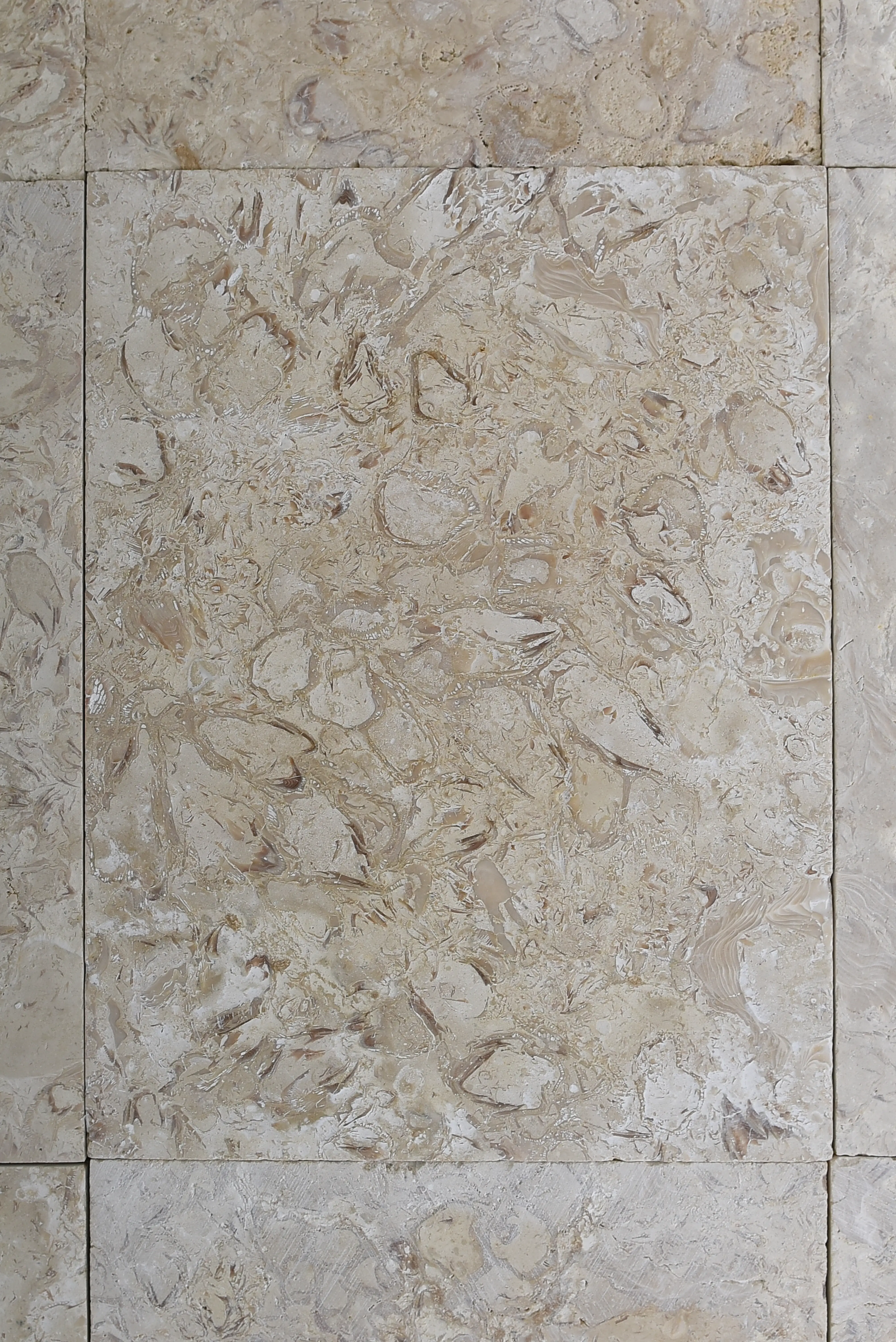
Citadel Stone stocks travertine tile 18 x 18 nominal in honed and filled, tumbled, and brushed finishes across ivory, cream, gold, silver, and walnut tones, with 1 1/4 inch travertine pavers available for exterior work at grade. Sample pieces ship on request so you can evaluate shade range and finish under your own lighting before committing. For projects needing custom cuts, borders, or non-standard formats, the technical team can advise on lead times and cutting feasibility.
Trade and wholesale enquiries receive tiered pricing based on volume, with pallet and container quantities quoted separately. Nationwide delivery runs from regional warehouse inventory, and most in-stock orders dispatch within one to two business days. As you finalize your material schedule, format choice deserves a second look — smaller-format travertine tile options are worth comparing if your layout involves tight rooms or heavy cut work, and the 12-inch format guide breaks down where the smaller unit outperforms. Contact Citadel Stone for pricing, current stock levels, and a delivered quote for your square footage. Project teams specify 18×18 Travertine Tile from Citadel Stone, a limestone with a distinctive naturally banded texture, for outdoor and architectural use.
See also: floor tile sizes compared.
Related guides: 18×18 tile layout patterns · 18×18 Tile Buyer’s Guide: Choosing the Right Fit · 18×18 floor tile · 18×18 outdoor tile · 12×12 travertine floor tile · 18×18 marble tile.