




























































The single variable that separates a 40-year railway ballast bed from one that fouls and pumps within a decade isn’t the parent rock hardness — it’s the fracture geometry and grading of the aggregate feeding into it. Railway Stone Suppliers who understand track engineering will spec angular, freshly crushed granite or basalt with sharp interlock faces, because rounded or partially weathered stone migrates under repeated dynamic loading and loses its confining strength. You need to evaluate three linked properties before any tonnage arrives on site — Los Angeles abrasion value, particle shape index, and the grading envelope your track authority mandates. Get those three right and the rest of the specification follows.
Here’s what most procurement teams miss on their first ballast order: the same crushed stone that performs on a lightly trafficked siding will pulverize under mainline axle loads within three seasons. The distinction lives in the abrasion and impact resistance data, not the visual appearance of the stone. You’ll want mill certificates, not marketing sheets.
What Makes Railway Ballast Stone Perform Under Load
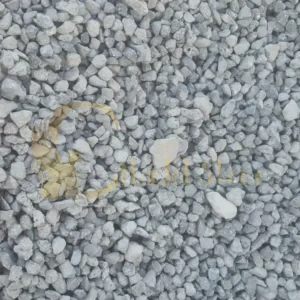
Railway ballast works by mechanical interlock, and that interlock only holds when every particle presents sharp, angular faces to its neighbors. The material performs best when crushed from hard igneous or high-strength sedimentary sources — granite, basalt, and dense quartzite dominate mainline specifications because they resist the twin failure modes of abrasion and impact fragmentation. You’re specifying a stone that must survive millions of load cycles without breaking down into fines that clog the drainage voids.
Consider how the grading envelope controls everything downstream. A well-graded 1.5 to 2.5 inch nominal ballast creates enough void space for water to drain freely while maintaining the particle-to-particle contact that transmits load into the subgrade. Too many fines and you lose drainage; too uniform and you lose stability.
- Los Angeles abrasion loss should stay below 25% for mainline ballast, below 30% for lighter-duty track
- Particle shape must favor angular, cubical fragments — flaky or elongated pieces exceeding 30% weaken the interlock
- Compressive strength above 15,000 PSI for the parent rock ensures the aggregate survives dynamic axle loading
- Water absorption below 1% signals a dense, freeze-thaw resistant stone that won’t spall in cold regions
- Clean crushed faces on at least 90% of particles guarantee the mechanical grip that keeps track geometry stable
The parent geology matters enormously here. According to USGS basalt composition data, the fine-grained volcanic structure of basalt delivers exceptional toughness and abrasion resistance, which is why it remains a preferred railway aggregate across demanding corridors. As Railway Stone Suppliers with quarry-partner relationships, we inspect each batch against these metrics before it ships.
Why Drainage Geometry Decides Ballast Longevity
Water is the primary enemy of any track bed, and the way your ballast manages moisture determines whether the structure lasts decades or fails prematurely. The void network between angular particles must move water off the subgrade fast enough to prevent saturation — because saturated subgrade under repeated loading pumps fines up into the ballast, a failure mode called ballast fouling. You’ll design for the worst rainfall event your route sees, not the average.
In regions with intense seasonal downpours or flooding risk, the free-draining character of clean crushed stone becomes the single most valuable property. The moment fine material accumulates in the voids, drainage collapses, water lingers, and frost or dynamic pumping destroys the bed. That’s why crushed road stone suppliers and railway aggregate producers grade their material so aggressively — the fines fraction is the enemy.
- Maintain ballast void ratios that allow rapid gravitational drainage, typically 40% or higher in fresh material
- Specify a clean grading with minimal material passing the smallest sieve to preserve drainage capacity
- Account for cross-fall and cess drainage so water exits the formation rather than ponding under the sleepers
- In freeze-thaw regions, low-absorption stone resists the internal fracturing that saturated aggregate suffers
- Plan for periodic ballast cleaning where humid climates accelerate biological fouling and fine migration
Field performance data shows that beds losing more than 20% of their void space to fouling need renewal — and the clock on that starts the day drainage fails. You should treat the drainage design and the aggregate cleanliness as one integrated system, never as separate line items.
Choosing the Right Grading and Format for Your Track
Format selection for railway aggregate isn’t about aesthetics — it’s about matching particle size to axle load and track class. Mainline ballast runs coarser to carry heavier dynamic loads and drain faster, while yard tracks, sidings, and pedestrian crossings may use finer graded crushed stone. Your specification should reference the exact grading envelope your governing authority requires, then hold the supplier to it with sieve analysis certificates.
The relationship between particle size and confining pressure is where experience pays off. When you specify crushed railway aggregate in the standard 1.5 to 2.5 inch range, you’re balancing drainage void size against the surface area needed to distribute load. Drop below that band and drainage suffers; climb above it and the sleepers lose bearing contact.
Base preparation and formation standards vary depending on subgrade composition and expected traffic loads. For projects that combine track work with adjacent hardscape or access roads, stone road construction guide covers specification details that carry over to similar subgrade conditions, and the guidance helps road stone suppliers match formation layers to traffic loads. Getting the formation layer right at this stage prevents the pumping failures that plague under-designed beds.
You can request sieve analysis and thickness specifications from Citadel Stone before committing to a grade — a step that saves rework when your track authority audits the delivered material. Sourced from our selected premium quarries, each batch of railway aggregate is inspected for consistency against the grading envelope you specify.
Comparing Granite and Basalt for Ballast Duty
The choice between granite and basalt ballast comes down to your specific load class, climate, and local availability — both are excellent, but they behave differently under extreme service. Granite offers reliable hardness and a proven track record across most mainline applications, with abrasion values that comfortably meet heavy-haul specifications. Basalt often edges ahead in toughness and impact resistance owing to its dense, fine-grained structure.
What often gets overlooked is the interaction between parent-rock density and long-term degradation. According to geological data on basalt formation, the rapid cooling that forms basalt produces a tight crystalline matrix that resists the micro-fracturing repeated impact loading causes. That translates to fewer fines generated over the bed’s service life — which means less fouling and better sustained drainage.
- Granite ballast: broad availability, consistent hardness, excellent for standard mainline and heavy-haul track
- Basalt ballast: superior impact toughness, low absorption, strong performer in freeze-thaw and high-tonnage corridors
- Quartzite ballast: exceptional abrasion resistance where regional geology makes it economical
- Avoid soft sedimentary stone with high absorption for any load-bearing track duty
- Match the parent rock to your abrasion budget, not just the lowest delivered price per ton
You’ll find that the delivered cost difference between grades often disappears when you factor in renewal cycles. A slightly tougher stone that adds five years before the first ballast cleaning pays for itself several times over.
Supply Planning, Tonnage, and Delivery Logistics
Ballast projects live or die on logistics, because the tonnage involved dwarfs most other stone applications and the delivery windows are tight. You’ll calculate ballast quantity from the ballast profile cross-section, track length, and compaction allowance — then add a contingency for the shoulder and cess. Underordering means a second mobilization; overordering means stockpile management you didn’t budget for.
Your project’s truck access and stockpile constraints directly affect delivery scheduling, and you should confirm both before finalizing quantities. Large ballast orders often move by rail or bulk truck in staged deliveries timed to the track possession windows, which means coordination between the warehouse dispatch and your site foreman becomes critical.
- Calculate tonnage from the ballast cross-section area multiplied by track length, plus 8 to 12% compaction allowance
- Verify truck and rail access to your stockpile or trackside laydown area before scheduling deliveries
- Stage large orders to match possession windows rather than dumping full tonnage on day one
- Confirm warehouse stock levels and lead times before locking your track possession dates
- Build a fines contingency — a small percentage of any bulk shipment degrades in handling and stockpiling
Citadel Stone maintains warehouse inventory across regional locations, which typically compresses lead times to a manageable window compared to the long import cycles some bulk aggregate projects face. For orders requiring specific grading or staged trackside delivery, our team can advise on realistic lead times before you commit your possession schedule.
Maintaining Ballast Performance Over Its Service Life
Ballast doesn’t fail suddenly — it degrades progressively as fines accumulate and drainage voids close, so your maintenance strategy should target the fouling curve rather than waiting for track geometry to deteriorate. You can expect 20 to 40 years of service from properly specified mainline ballast, provided you monitor fouling and schedule cleaning before the void space drops below functional levels.
The detail that matters most is early fouling detection. When you see standing water in the four-foot after rain, or the sleepers begin to pump, the drainage has already collapsed and renewal is overdue. Regular inspection during and after heavy rainfall events tells you more about bed health than any calendar-based schedule.
- Inspect drainage performance during and immediately after significant rainfall, not just in dry conditions
- Schedule ballast cleaning when fouling approaches 20% of void space, before pumping begins
- Watch shoulder and cess drainage — blocked side drains foul the bed faster than any other factor
- Replenish ballast at the shoulders to maintain lateral track stability between major renewals
- Track the fines-generation rate; a rising trend signals the parent stone is degrading faster than expected
Broader guidance on aggregate durability and abrasion resistance from the Natural Stone Institute technical resources reinforces why parent-rock selection drives service life. The tougher the stone, the slower the fouling curve, and the longer between disruptive renewals.
Specification Mistakes That Shorten Ballast Life
Most premature ballast failures trace back to specification shortcuts made under budget pressure, not to unforeseeable field conditions. The most damaging error is accepting stone that meets the size grading but fails the abrasion and shape requirements — it looks right on delivery and pulverizes within seasons. You should never approve a ballast source on grading alone.
Here’s what most specifiers miss: the fines limit at delivery is only half the story. A stone that arrives clean but generates excessive fines under load fails just as surely as one delivered dirty. That’s why the Los Angeles abrasion and impact values matter more than the delivered cleanliness.
- Approving ballast on size grading alone without abrasion, shape, and impact testing
- Ignoring the drainage design and treating aggregate cleanliness as an afterthought
- Underestimating tonnage and forcing a costly second mobilization mid-project
- Specifying soft or weathered stone to save cost, then paying triple in early renewal
- Failing to verify grading against the governing track authority’s exact envelope
You’ll protect your project by demanding mill certificates and independent test data before the first truck rolls. The small cost of verification testing is trivial against the cost of premature ballast renewal on a live corridor.
Source Railway Stone Suppliers Wholesale from Citadel Stone
Citadel Stone stocks railway and road stone aggregate in standard graded formats to match mainline, siding, and access-road specifications, with crushed granite and basalt sourced from vetted selected quarries. You can buy in staged bulk quantities and request sieve analysis, abrasion data, and thickness specifications before committing to a grade — practical documentation that keeps your track authority audit clean, and it lets road stone suppliers verify formation material against the same standards. Available gradings span the common 1.5 to 2.5 inch ballast band as well as finer crushed road stone for formation and access work, so you can source everything from one supplier at a cheap delivered rate.
For trade and wholesale enquiries, our team can advise on realistic lead times, staged trackside delivery, and tonnage calculations tailored to your ballast profile. Citadel Stone ships railway aggregate nationwide from regional inventory, which typically keeps lead times to one to two weeks for standard grades. As you plan your broader stone project, related applications can inform your material budget and finish decisions — ivory travertine options for finished surfaces shows how Citadel Stone materials perform in a very different but complementary context. Request a quote or contact our team for pricing and to schedule a supply consultation. Builders source why stone on railway tracks, a natural stone selected for residential and commercial projects, for projects across the country.
Related guides: stone work suppliers · man made stone suppliers · how ballast stone is specified · How to Evaluate Marble Suppliers Before You Buy · choosing stone for sculpting · choosing stone mosaic materials.