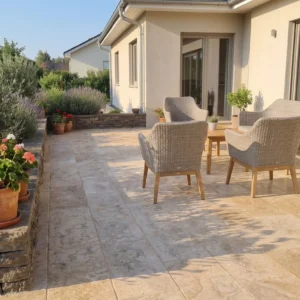
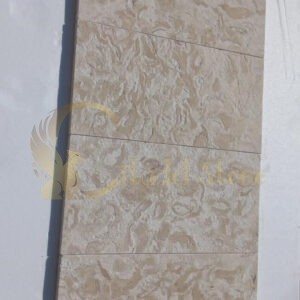
Stone work suppliers vary more dramatically in quality, reliability, and technical depth than most buyers anticipate — and the gaps show up in the field, not in a product catalogue. Vetting stone work suppliers before you commit a purchase order is the decision that separates a smooth project delivery from one spent chasing damaged pallets and mismatched lot colours. What experienced installers know is that the questions you ask before the first truck rolls determine everything that happens after it.
What Supplier Qualification Actually Means
Qualification isn’t about reading a company’s homepage — it’s about understanding whether their operational infrastructure can support your project timeline and specification tolerances. A supplier with a compelling website but shallow warehouse stock will cost you weeks you don’t have. The right stone work suppliers maintain documented lot traceability, consistent quarry relationships, and enough on-hand inventory to absorb mid-project additions without sourcing a new batch from a different extraction run.
Lot consistency is the variable most buyers underestimate. Natural stone pulled from different runs at the same quarry can shift noticeably in tone, veining density, and surface texture. Your eye catches it immediately when you’re standing on a completed installation. Ask any supplier directly: can they guarantee your full order ships from the same extraction lot? If the answer is vague, that tells you something important about how they manage their supply chain.
Reading Technical Documentation From Suppliers
Strong stone work suppliers provide material data sheets without being asked. You should be looking for compressive strength values, absorption rates, modulus of rupture, and finish options — not as marketing copy, but as verifiable test results tied to ASTM standards. According to Natural Stone Institute technical stone specifications, natural stone products vary significantly by variety, and verified test data is the only reliable basis for specification decisions.
Here’s what most specifiers miss when reviewing documentation: absorption rate is often the more critical number than compressive strength for exterior applications. A stone with a 0.4% absorption rate behaves very differently in jointed paving applications than one at 2.1%, particularly where freeze-thaw cycling occurs. Temperature swings that range 50°F or more between day and night — common in continental climates and high-altitude regions — drive moisture into open pores and expand it. Over repeated cycles, that mechanical stress fractures stone from the inside out. Your supplier’s documentation should address this directly, not leave you inferring it.
The specification work for evaluating stone work suppliers includes reviewing whether a supplier’s technical team can discuss thermal expansion coefficients in context. For most dense natural stones, the linear thermal expansion coefficient runs between 4.5 and 8 × 10⁻⁶ per °F. That range matters when you’re calculating joint spacing across a large installation subject to significant temperature cycling. A supplier who can walk you through that calculation is a supplier whose product knowledge you can trust.
Quarry Sourcing and Supply Chain Depth
The best stone work suppliers maintain direct quarry relationships — not broker arrangements that add a layer of uncertainty to every order. Direct sourcing means the supplier knows the extraction method, the block yield quality per run, and any geological variability within the quarry face. That knowledge flows directly into your specification confidence. According to USGS dimension stone production and use data, domestic and imported dimension stone both require rigorous quality controls at the point of extraction, and the traceability of that process matters as much as the material itself.
At Citadel Stone, we source directly from quarries in Turkey, the Mediterranean, and beyond — which means our technical team can speak to quarry-specific characteristics, extraction lot details, and the performance history of specific material runs. That operational knowledge isn’t something a broker can replicate from a distributor’s product sheet.
- Direct quarry sourcing eliminates intermediate lot substitutions that create colour and texture inconsistencies
- Suppliers with proprietary quarry relationships can usually provide extraction certificates on request
- Broker-model suppliers may not know which quarry face a given lot originated from, making lot matching for future orders unreliable
- Supply chain depth — measured by how many extraction runs a supplier holds in warehouse inventory — determines your ability to reorder accurately months into a project
Evaluating Warehouse Inventory and Lead Times
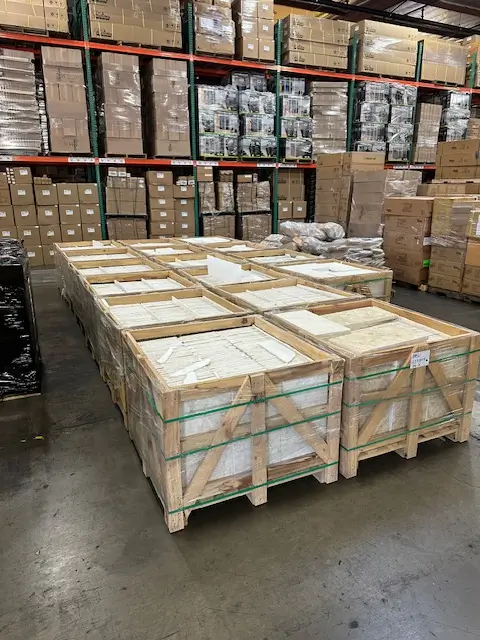
Your project timeline depends on whether the supplier actually has material in stock or is managing an order-to-import cycle. Many stone work suppliers list products they don’t carry on hand — the order triggers an import from overseas, and your six-week timeline becomes fourteen weeks. You need to ask, directly: is this material in your warehouse today, and what is the current stock volume?
Warehouse inventory depth is particularly critical for large-format projects. If you need 4,000 square feet of material for a commercial courtyard and the supplier only holds 1,800 square feet, you’re either waiting for a new shipment or accepting material from a different extraction run. Neither outcome is acceptable on a project where visual continuity matters. Confirm available stock, not listed stock.
To review the range of material currently held in inventory, our stonework inventory reflects current availability across multiple stone types, thicknesses, and finishes — making it a practical first step before committing to a project specification.
- Ask for confirmed warehouse location and stock volume — not just product availability on a website
- Clarify whether lead time quoted is from warehouse dispatch or from import arrival
- Understand whether truck delivery to your site requires a loading dock or if they accommodate tailgate delivery — this affects your site logistics planning
- Request a sample from the actual lot in stock, not a display sample that may be from a different extraction run
Freeze-Thaw Performance and Material Specification
Temperature cycling places demands on natural stone that static load testing doesn’t capture. For projects in regions experiencing significant day-to-night temperature swings — say, a 40°F to 70°F daily range — the cumulative mechanical stress on both the stone and its jointing system can be substantial over 10 to 20 years. Your supplier should be able to specify which materials in their range are appropriate for freeze-thaw exposed applications and provide ASTM C170 compressive strength and absorption data to support that recommendation.
According to ASTM dimension stone quality and testing standards, freeze-thaw resistance is evaluated through standardized cycling tests — and not every natural stone in a supplier’s catalogue will pass at the same threshold. Dense limestone and basalt generally perform well in cycling conditions, while higher-porosity stones require sealing protocols and potentially closed-joint installation to reduce water infiltration at the critical interface.
The joint system is where freeze-thaw failures typically originate. When specifying jointing material alongside your stone selection, confirm that your supplier has considered thermal expansion across the full temperature range your installation will experience. Joints set too tight in cold-weather installation conditions will fail in compression when temperatures climb. A supplier who understands this relationship will recommend joint widths that account for seasonal cycling, not just the installation-day temperature.
- Specify stone with absorption rates below 0.75% for any application exposed to repeated freeze-thaw cycling
- Request cycle test data (minimum 25 cycles per ASTM protocols) for stones specified in temperature-variable environments
- Account for linear thermal expansion across your expected temperature range — calculate total joint movement for slabs longer than 10 feet
- Confirm your jointing compound’s flexibility rating matches the expansion coefficient of the stone species you’ve selected
Finish Quality and Dimensional Consistency Checks
Dimensional tolerance is a quality check that determines installation speed and outcome quality simultaneously. Natural stone cut to inconsistent thicknesses — say, varying between 1.25 inches and 1.5 inches within the same order — forces your installer to adjust mortar bed depth for every individual piece. That adds labour cost, introduces lippage risk, and slows the project. You should ask stone work suppliers for their dimensional tolerance specification before ordering, not after the pallets arrive.
Finish consistency is equally important and harder to spec precisely. Honed, brushed, and flamed finishes each have acceptable variation ranges — but a supplier pulling from inconsistent machinery calibration will deliver mixed finishes that read as defects on a completed surface. Request a finish sample from the production lot, not a showroom display piece.
Sculpture Stone and Specialty Material Sourcing
Buyers working with sculpture stone suppliers face a more specific challenge than standard paving orders. Sculptural applications require block-form material with consistent internal structure — no hidden voids, minimal veining that could fracture under carving or shaping loads, and sufficient dimensional stock to allow the carver’s working margin. The supplier qualification process for sculpture stone differs from paving in that quarry block documentation becomes more important than dimensional cut tolerances.
What you’re looking for in this context is a supplier who understands that sculpture stone must be quarried, not sawn to dimension. Block integrity matters more than surface finish. Strong sculpture stone suppliers can tell you the internal grain direction of a given block — a detail that determines how the material responds to chisel work and point loading in three dimensions. That level of knowledge signals genuine quarry-level expertise rather than a catalogue operation.
- Request block-form documentation including approximate weight, internal structure notes, and any visual anomalies identified at extraction
- Confirm the supplier can source material in the specific block dimensions your project requires — standard paving inventory won’t accommodate sculptural working margins
- Ask whether the supplier has experience working with fabrication studios or architectural stone carvers — this indicates relevant supply chain experience
- Verify that the material’s internal structure has been assessed, not just surface-tested, before committing to a sculptural application
Logistics, Delivery, and Site Access Planning
Your truck access conditions need to be communicated to stone work suppliers before delivery is scheduled, not on the morning the shipment arrives. Natural stone is heavy — a standard pallet of 2-inch pavers can run 2,500 to 3,500 pounds — and delivery truck weight and configuration matters for access on rural roads, properties with soft sub-base conditions, or sites without commercial loading facilities. A supplier who asks about your site access before confirming delivery is demonstrating operational care; one who schedules without asking is creating risk for your project.
Packaging quality is another logistics variable worth confirming. Stone shipped loose on pallets rather than banded and protected with corner padding arrives with edge chipping rates that can exceed 8–12% on long hauls. That loss comes out of your usable material budget. Ask specifically how pallets are prepared for shipment and whether the supplier has damage claim protocols — this tells you both about their packing standards and their accountability when issues arise.
Expert Summary
Choosing stone work suppliers comes down to the operational depth behind the product listing. Technical documentation, quarry-level sourcing relationships, confirmed warehouse stock, dimensional tolerance standards, and logistics competency — these are the criteria that separate a supplier who can genuinely support your project from one who can only list materials on a website. The questions you ask before the first order define the working relationship that follows.
For projects that span multiple material types, the supplier qualification process applies consistently regardless of application. As you develop your full project specification, complementary stone selection decisions are worth exploring early — stone mosaic material sourcing covers how material choices in detailed stone applications connect back to the same sourcing and quality principles outlined here. Strong suppliers demonstrate consistency across their full product range, and that consistency is what you’re ultimately evaluating. Direct from quarries in Turkey, the Mediterranean, and beyond, Citadel Stone matches stonework materials to project specifications.
Related reading: stone road construction guide · how ballast stone is specified · how to evaluate marble suppliers.