








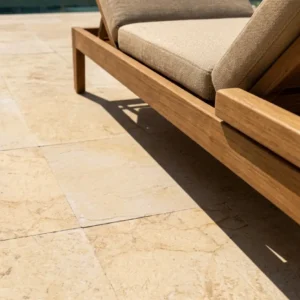
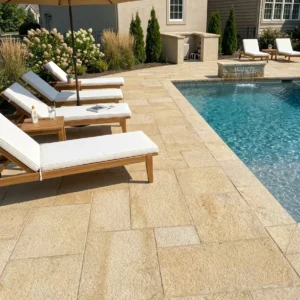

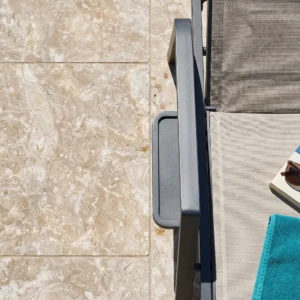

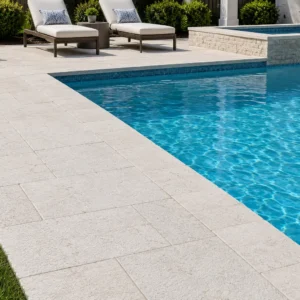
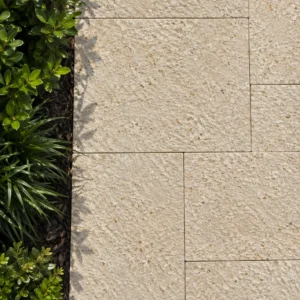
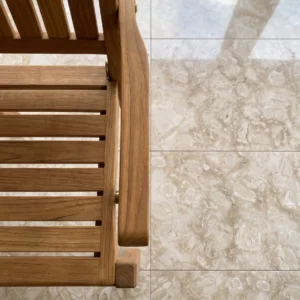
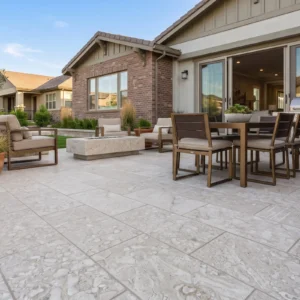
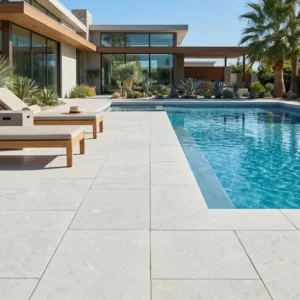
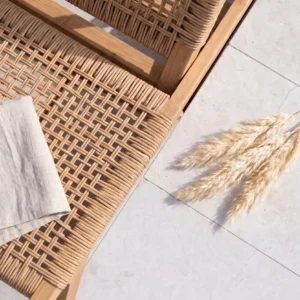
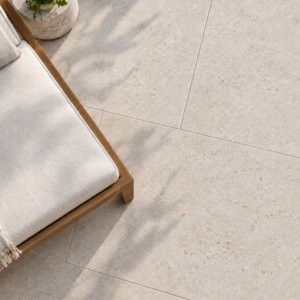


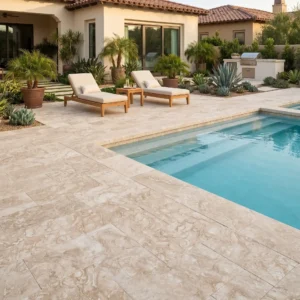




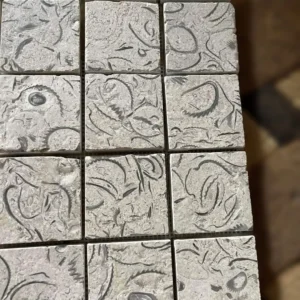




The failure point most people miss with travertine pool decks isn’t the stone — it’s the joint interface where thermal movement and moisture meet. Travertine pool pavers earn their reputation for cool, comfortable surfaces because their calcium carbonate composition reflects solar energy rather than storing it, but that same open-pore structure means your setting bed, jointing sand, and drainage geometry carry more responsibility than the paver itself. Getting those three details right is what separates a deck that stays flat and tight for two decades from one that heaves and spalls in eight years. This guide walks you through the specification decisions that actually determine long-term performance.
Why Travertine Performs Around Water and Foot Traffic
You’ll notice the difference the first time you walk barefoot across a travertine pool deck at midday. The stone’s calcium carbonate base keeps surface temperatures measurably lower than dense igneous alternatives, which is the entire reason it dominates the market for travertine pavers around pool areas. That thermal behavior isn’t marketing — it’s physics tied to how the material absorbs and releases heat.
The naturally textured surface gives you slip resistance that matters most exactly where you need it. Wet feet on a pool edge are a genuine hazard, and travertine’s micro-porous face provides grip without the harsh abrasion of flame-finished granite. According to Natural Stone Institute travertine performance data, its open-pore structure and absorption characteristics actively moderate surface heat and improve traction in high-UV conditions.
Here’s what most specifiers overlook when comparing options for a travertine pool deck:
- The stone’s density varies by quarry, and lower-density blocks absorb more water — a factor that matters enormously in freeze-thaw regions
- Filled and honed travertine reads smoother than a tumbled finish; confirm the wet DCOF of each against ANSI A326.3
- Vein-cut and cross-cut slabs behave differently under load, with cross-cut generally offering better flexural performance for a pool surround
- Surface temperature advantages hold across the full ivory-to-walnut color range, so you’re never trading comfort for aesthetics
Citadel Stone inspects each batch at the warehouse for density consistency and fill quality, because a pool paver that passes visual inspection can still hide the absorption problems that show up two winters later. That same warehouse review is what makes travertine pavers around pool projects predictable batch to batch.
Color and Finish Options That Shape Your Design
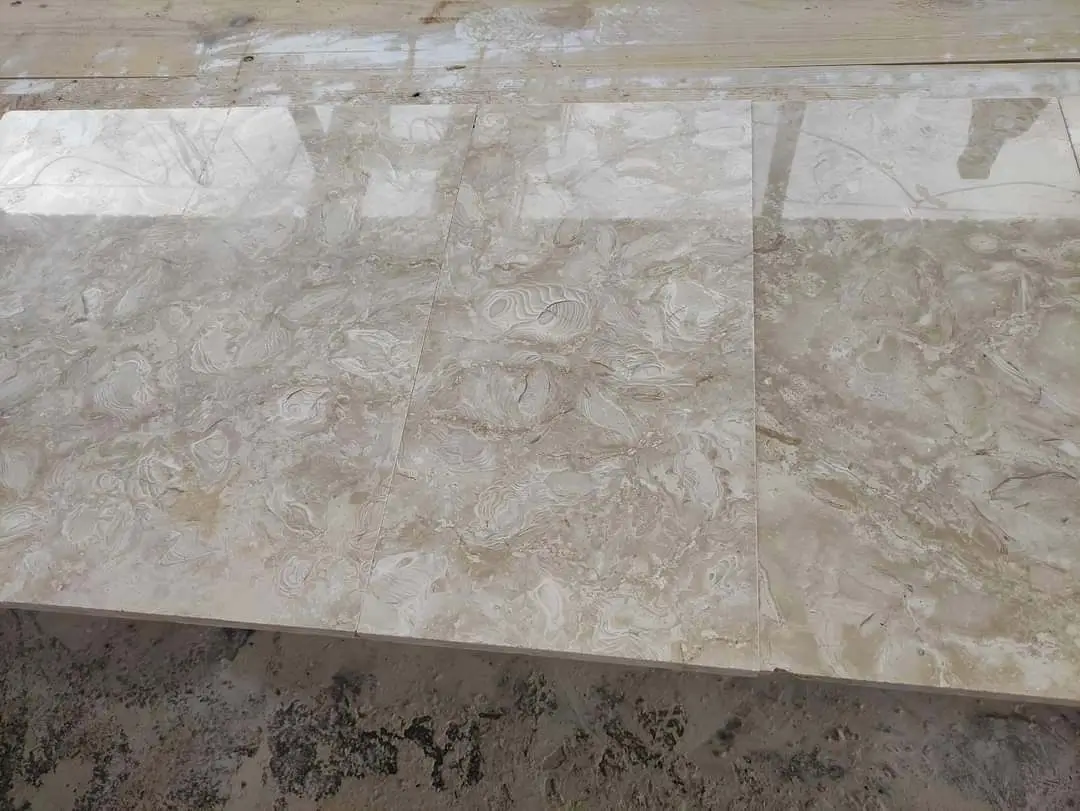
Your color selection does more than set the visual tone — it influences surface temperature, glare, and how forgiving the deck is with mineral deposits from pool chemistry. Lighter tones stay cooler and hide efflorescence better, while darker tones deliver drama at the cost of a few degrees of surface warmth.
The travertine palette gives you genuine range across the entire pool environment:
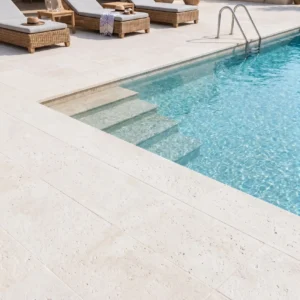
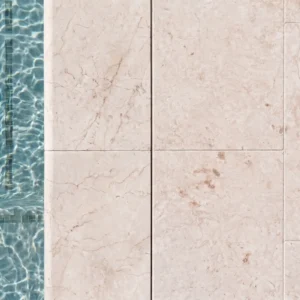
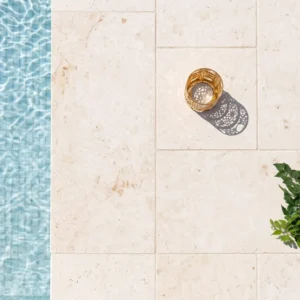
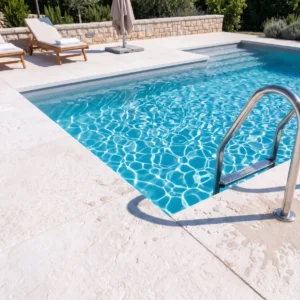
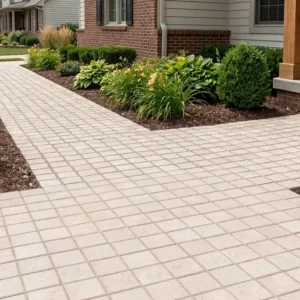
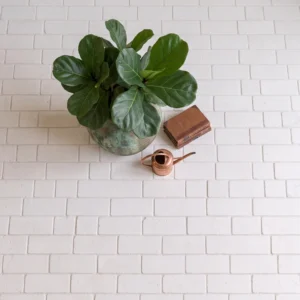
- An ivory travertine pool deck delivers the classic bright, resort feel and runs coolest underfoot
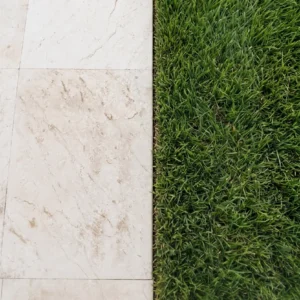
- A white travertine pool deck reads crisp and modern, pairing especially well with dark waterline tile
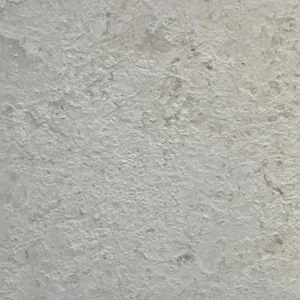
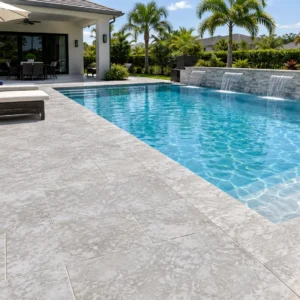
- A silver travertine pool deck brings soft gray undertones that bridge warm and cool design schemes
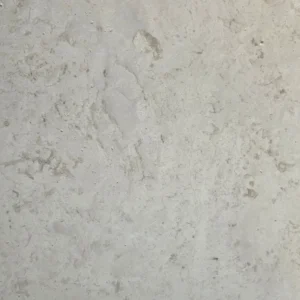
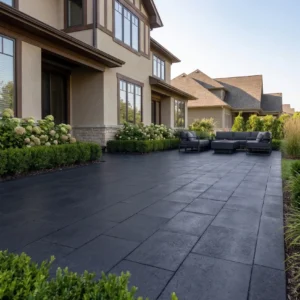
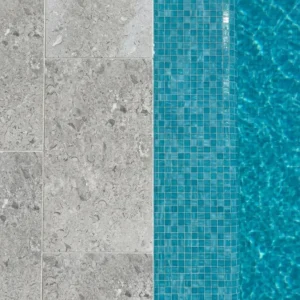
- A gray travertine pool deck (or grey travertine pool deck, depending on your spelling preference) suits contemporary architecture and masks foot traffic
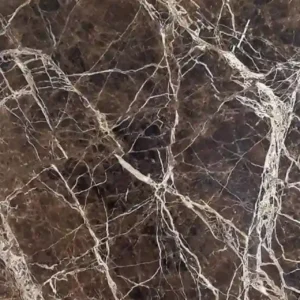
- A walnut travertine pool deck offers rich brown banding that anchors naturalistic landscapes
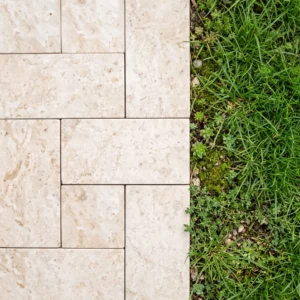
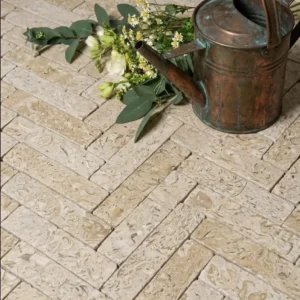
For a modern travertine pool deck, you’ll often want large-format cross-cut slabs with a honed or filled finish to minimize joint lines and emphasize clean geometry. Traditional designs lean toward tumbled French-pattern layouts with visible texture. Either direction, Citadel Stone stocks travertine pool pavers in standard 12×12, 16×16, 24×24, and French-pattern sets, and you can request sample tiles to check color and finish against your coping and pool tile before committing.
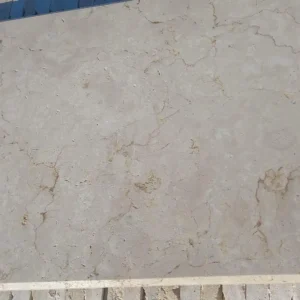
What often gets overlooked: color consistency across pallets. Travertine is a natural material, so batch variation is normal and expected. You should dry-lay the pool pavers travertine field from multiple pallets simultaneously to blend tone rather than working pallet-by-pallet, which prevents visible banding across the finished deck.
Base Preparation That Determines Longevity
The single biggest predictor of how long your pool deck stays flat is what happens below the paver. Travertine is dimensionally stable, but it telegraphs every flaw in the base beneath it. Your aggregate depth, compaction, and drainage slope do the real structural work.
For a sand-set or mortar-set installation around a pool, follow these baseline specifications:
- Excavate to accommodate a minimum 6-inch compacted aggregate base for pedestrian decks, deeper where soils are expansive
- Compact the base in 2-inch lifts rather than one thick pour — single-lift compaction leaves voids that migrate to the surface
- Maintain a consistent slope of 1/4 inch per foot away from the pool shell for positive drainage
- Set a bedding layer of 1 inch of coarse sand or a bonded mortar bed depending on your climate and traffic
- Leave joint spacing appropriate to the pattern — tighter for filled/honed formats, slightly wider for tumbled
Specifying travertine pool pavers for a project in a region that sees hard freezes makes the base assembly matter even more. Water that collects under a paver and then freezes exerts tremendous expansive force, and repeated day-night thermal swings accelerate the cycle. Your drainage design has to move water out of the assembly before it can freeze in place.
Base preparation standards shift with soil composition and traffic loads, and pool decks introduce chemistry and constant moisture that most patios never see. For teams weighing common site problems before they start, travertine pool deck problems covers the failure modes that trace directly back to base and drainage decisions, and getting the subgrade dialed in at this stage prevents the majority of long-term callbacks.
Handling Freeze-Thaw and Daily Temperature Swings
Field performance data shows that travertine holds up well in cycling climates, but only when the assembly manages water. The stone itself resists freeze-thaw damage far better than many people assume, provided moisture isn’t trapped in its pores when temperatures drop.
The mechanism you’re designing against is straightforward. Water enters the open pore structure or collects in the joints, then expands roughly 9% as it freezes. In regions where daytime sun pushes surface temperatures well above freezing and nighttime drops send them back below, that expansion-contraction cycle can repeat dozens of times in a single winter. Each cycle stresses the stone and the jointing.
Your defenses against this are specific and non-negotiable in cold climates:
- Specify a denser, lower-absorption travertine grade for freeze-prone installations — absorption below 3% is your target
- Seal the stone with a breathable penetrating sealer that repels water without trapping vapor inside the pore structure
- Use polymeric jointing sand rated for the temperature range, and keep joints filled to 90-95% capacity so they shed water rather than pool it
- Ensure the base drains freely so no standing water sits beneath the pavers through a freeze
- Re-evaluate joint fill every couple of years, since thermal cycling gradually works sand loose
ASTM standards address the testing behind these numbers directly. The absorption and durability criteria in ASTM C1527 travertine dimension stone specifications give you defensible thresholds to hold your supplier to, rather than relying on visual grading alone. In hot, dry climates the freeze risk drops, but the wide day-night temperature range still cycles the joints, so proper jointing sand remains worthwhile everywhere.
Thickness and Format Selection for Pool Environments
Your thickness spec should follow the load and the setting method, not a default number. Travertine pool pavers in the 1.25-inch (30mm) range suit most pedestrian pool decks over a proper mortar or bonded base. Where you expect heavier point loads or a sand-set application, step up to a 2-inch nominal thickness for the added rigidity.
Format choices around a pool break down like this:
- French pattern (a repeating set of four sizes) delivers a classic, movement-friendly layout that hides minor cuts well
- Large-format 24×24 slabs create a clean, contemporary look but demand a flatter base — any base irregularity shows immediately at large scale
- Standard 16×16 and 12×12 units offer the most forgiving installation and easiest replacement of a damaged piece
- Bullnose and drop-face coping pieces finish the pool edge and should be specified from the same batch as the field pavers for color match
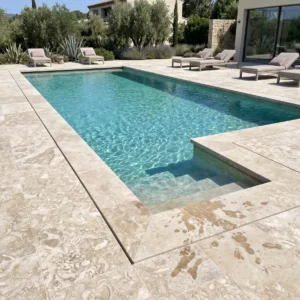
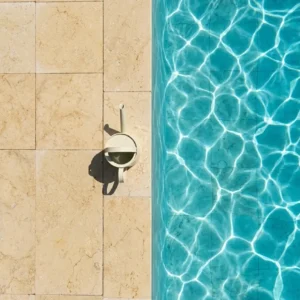
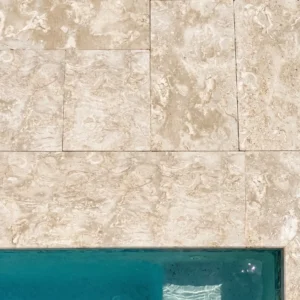
The travertine pool edge is where design and safety converge. Your coping needs a rounded or eased profile so swimmers pushing off the wall don’t meet a sharp arris, and it should overhang the pool shell slightly to shed water away from the bond beam. A clean travertine pool edge also protects toes during entry and exit. Coordinate the pool pavers travertine field with matching coping early — retrofitting a color match later is nearly impossible with natural stone.
Sealing, Cleaning, and Long-Term Maintenance
Sealing protocols for a travertine pool deck differ from standard concrete maintenance because you’re protecting a porous natural stone against both pool chemistry and weather. A penetrating impregnating sealer is the right choice — it sits within the pore structure, repels water and staining agents, and preserves the stone’s natural breathability. Film-forming topical sealers can trap moisture and turn slippery when wet, which defeats the purpose on a pool surround. A well-sealed travertine pool surround also resists the mineral staining that salt systems leave behind.
Your maintenance rhythm should look roughly like this:
- Reseal every 2-4 years depending on sun exposure, traffic, and how aggressively your pool chemistry runs
- Rinse chlorine and salt residue off the deck regularly, since salt systems in particular leave crystalline deposits that accelerate surface wear
- Address efflorescence — the white mineral bloom — with a mild stone-safe cleaner rather than acid, which etches calcium carbonate
- Refill joints as needed, especially after the first winter in a cycling climate
- Spot-replace individual damaged pavers rather than resurfacing, one of travertine’s real advantages over poured surfaces
You can expect 20-30 years of service from a properly installed, regularly sealed travertine pool surround, with the sealing and joint maintenance being the variables you control. Neglect the resealing and you’ll see staining and moisture intrusion creep in around the ten-year mark instead.
How Travertine Compares to Other Pool Deck Materials
Weighing a travertine pool against other stone and manufactured options comes down to honest trade-offs. Travertine’s advantages are real, but so are its maintenance demands, and you should specify with both in view.
Against the common alternatives:
- Versus concrete pavers: travertine stays cooler underfoot and won’t fade, but costs more upfront and requires periodic sealing
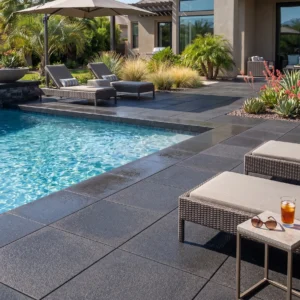
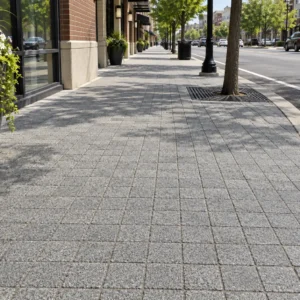
- Versus granite: travertine is far more comfortable barefoot in full sun, though granite needs less maintenance and resists staining better
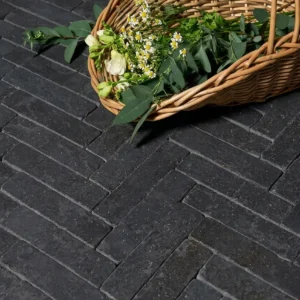
- Versus bluestone: travertine runs lighter and cooler, while bluestone offers deeper color saturation and slightly higher density
- Versus porcelain: travertine gives authentic texture and repairability, whereas porcelain resists chemicals with near-zero maintenance
The honest takeaway: a travertine pool wins on comfort and natural character, and it’s the strongest all-around choice for barefoot pool environments. If your priority is zero-maintenance and you’ll accept a warmer surface, denser materials compete. For most residential and hospitality pool decks, the comfort advantage decides it, which is why demand for a travertine pool surround stays consistent across climate zones.
What to Check Before You Buy
Before you commit budget to a travertine pool deck, run through the sourcing checks that separate a durable installation from a problematic one. Natural stone quality varies quarry to quarry, and the best travertine for pool deck use is graded for absorption and structural consistency, not just appearance. If you’re evaluating a travertine pool deck for sale, that grading data is where the real value lies.
Your pre-purchase checklist should cover:
- Absorption rate — request the test data, targeting under 3% for freeze-prone regions
- Fill quality on honed/filled units — poorly filled travertine develops surface pits over time
- Thickness consistency across the pallet, which affects how flat your finished deck sits
- Color blending — confirm you’re receiving multiple pallets to blend, not a single-block run
- Coping availability in a matching batch, ordered together with your field pavers
Sourced from our selected premium quarries, each Citadel Stone batch is inspected for consistency before it ships. That warehouse check catches absorption and fill issues that visual grading alone misses. For projects requiring custom cuts, a travertine pool wall cladding to match the deck, or non-standard formats, the team can advise on lead times and coordinate the pieces so your coping, travertine pool wall, and field pavers all pull from the same tonal range.
Order Your Travertine Pool Pavers from Citadel Stone
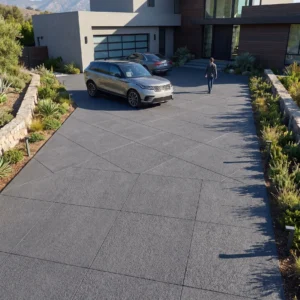
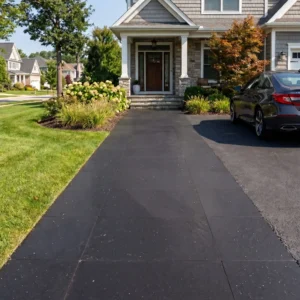
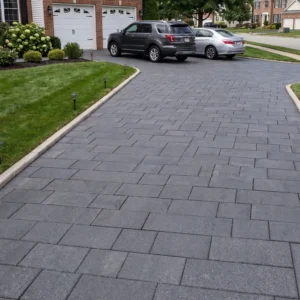
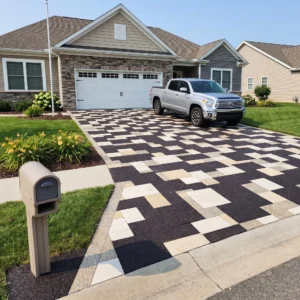
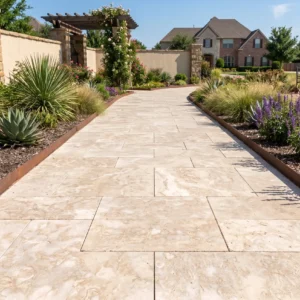
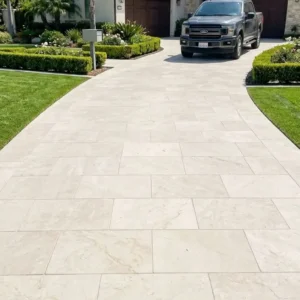
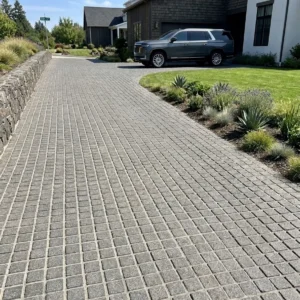
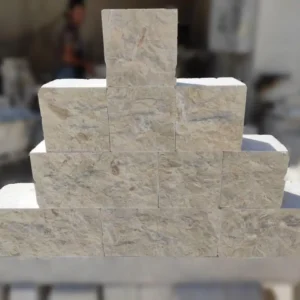
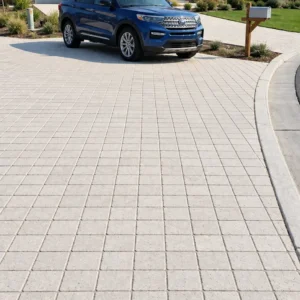
Pulling it together: the material choice is the easy part. Your long-term success with a travertine pool deck rides on base preparation, drainage geometry, joint maintenance, and matching the stone grade to your climate’s freeze-thaw demands. Nail those, and travertine rewards you with a cool, comfortable, repairable surface that holds up for decades. As you plan the surrounding hardscape, related applications can inform your material and base decisions — for a look at how natural stone performs in a different but relevant driveway context, limestone driveway paving options explores base and durability factors that carry over to pool work. Project teams specify Travertine Pool Pavers from Citadel Stone, a limestone with a distinctive naturally banded texture, for outdoor and architectural use.
See also: travertine pool deck pros and cons.
Related guides: pool paver sealer guide · outdoor travertine pool pavers · Travertine Pavers Pool Deck: Cost & Value Guide · travertine for pool deck · travertine paver pool deck cost · pavers or travertine for pool deck.