What the Comparison Actually Hinges On
Choosing pavers or travertine for pool deck surfaces is a structural and performance decision before it is an aesthetic one — how each material responds to load cycling, thermal movement, and constant wet-dry exposure will determine whether your installation holds for 25 years or begins showing joint failure within a decade. Concrete pavers and natural travertine behave fundamentally differently under those conditions, and understanding those behavioral differences is what separates a specification that endures from one that requires expensive remediation ahead of schedule.
Your base preparation, joint design, and finish selection all flow from the material choice — and getting that sequence right from the start is the only way to avoid costly callbacks. This comparison cuts through the surface-level debate and gives you the structural and performance data you need to make the call with confidence.
Material Composition and What It Means for Your Deck
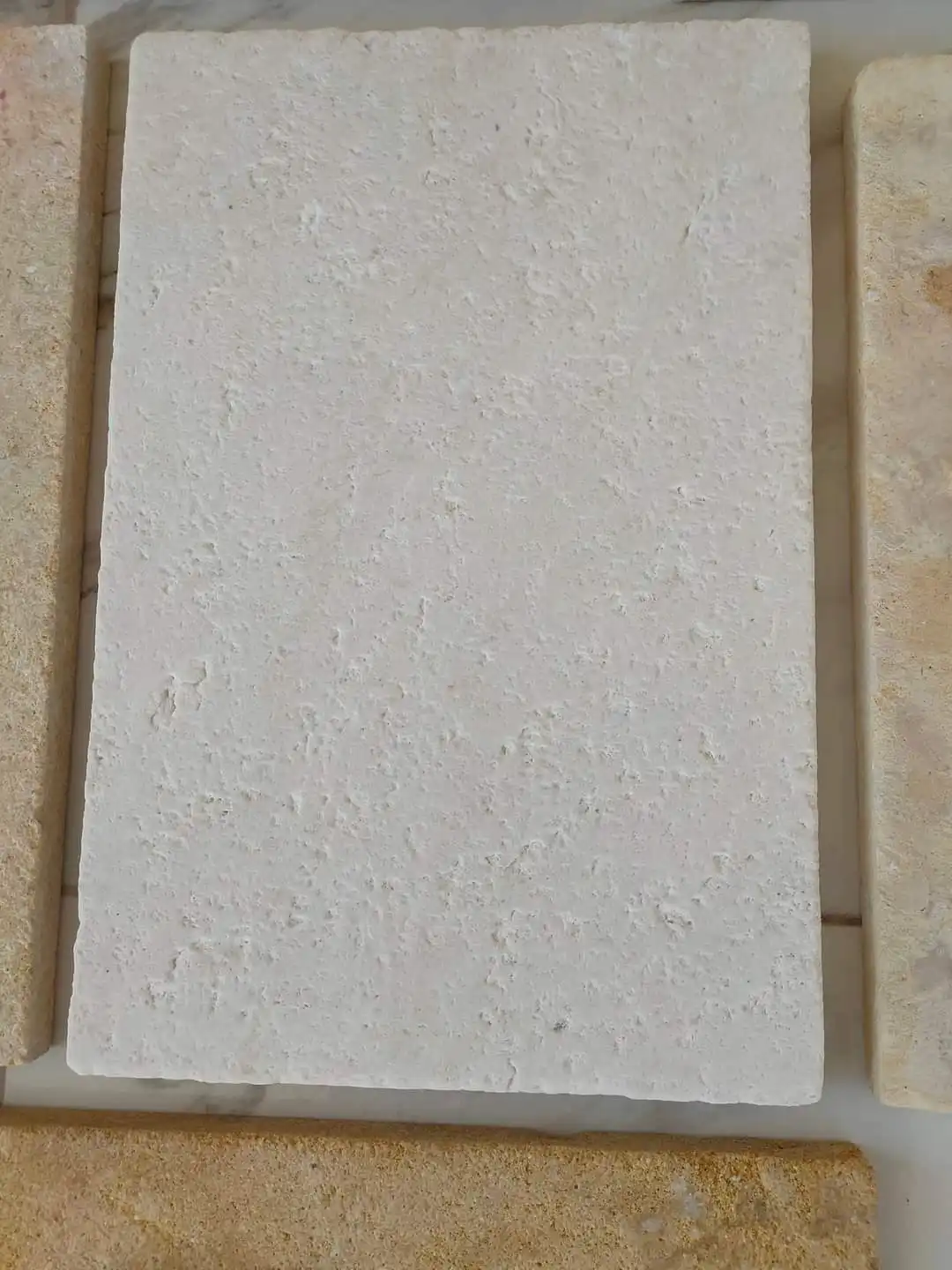
Travertine is a sedimentary calcium carbonate stone formed by mineral-rich spring deposits. Its characteristic open-pore structure — the result of gas escaping during formation — gives it a surface texture that performs well in wet conditions without requiring aggressive mechanical profiling. Concrete pavers, by contrast, are manufactured composites: cement, aggregate, and pigment pressed under high load to achieve a target compressive strength. The two materials start from entirely different structural premises, and that origin drives every performance variable downstream.
- Travertine compressive strength typically ranges from 3,000 to 8,000 PSI depending on quarry origin and density classification — adequate for pedestrian pool deck loads with the correct bedding thickness
- Concrete pavers are manufactured to a consistent 8,000 PSI minimum in most residential grades, giving you tighter strength predictability across a batch
- Travertine’s open-pore structure absorbs and releases moisture, which moderates surface temperature — a measurable benefit for barefoot use in high-UV exposure
- Concrete pavers are denser and more uniform, which improves impact resistance but increases surface heat retention compared to natural stone
- Travertine thermal expansion runs approximately 4.6 × 10⁻⁶ per °F — lower than concrete — which reduces seasonal joint stress in installations subject to wide temperature swings
According to Natural Stone Institute travertine properties and outdoor suitability, travertine’s open-pore structure and absorption characteristics actively moderate surface heat in high-UV environments — a material property that directly supports its use in pool deck applications where barefoot comfort matters.
Slip Resistance and Wet Surface Safety
Pool deck safety isn’t optional — it’s a specification requirement, and the finish you choose determines your coefficient of dynamic friction (CODF) in wet conditions. Travertine in a tumbled or brushed finish achieves CODF values consistently above 0.60, which meets the threshold most pool safety codes reference for wet walking surfaces. Filled-and-honed travertine runs lower — typically 0.42 to 0.55 — and requires sealing with a textured additive if you’re using that finish around water.
Concrete pavers with a textured or exposed-aggregate surface also perform well in wet conditions, often achieving CODF values of 0.65 to 0.75, but the texture pattern is pressed uniformly across the batch — it doesn’t vary with natural stone character the way travertine does. The practical difference: travertine’s surface irregularity provides micro-grip that a manufactured surface approximates but doesn’t replicate exactly. Both materials can meet safety requirements when specified correctly — the key is finish selection, not material default. When evaluating pool deck travertine vs pavers strictly on wet-surface safety, finish choice matters more than the base material.
ANSI A326.3 provides the wet DCOF methodology that should guide your finish specification — particularly for commercial pool decks where code compliance is directly auditable.
Durability Under Storm Events and Mechanical Stress
Here’s what most pool deck specifications underestimate: the mechanical stress from severe weather events — wind-driven rain, hail, and storm surge loading — puts real demands on joint integrity and edge restraint that routine foot traffic simply doesn’t replicate. Wind-driven water at 40+ mph drives moisture into joints at a pressure that exceeds normal capillary action. For travertine installations, this means your joint fill compound and bedding mortar need to be specified for lateral water intrusion, not just vertical drainage.
Concrete pavers handle hail impact slightly better than travertine due to their manufactured density and compressive uniformity. A 1-inch hail strike on a tumbled travertine surface in a 2-inch thickness can create edge spalling at voids near the surface — particularly in unfilled travertine where the pore network extends close to the top plane. Filled travertine reduces this risk significantly, and specifying a minimum 2.25-inch thickness in hail-prone regions adds meaningful impact resistance without changing the visual outcome.
- Edge restraints for travertine pool decks should be set in concrete-haunched footings, not just plastic edging — lateral wind load transfers through the deck plane to the perimeter and requires a rigid anchor
- Joint sand specified for wind-driven environments should be polymer-stabilized — standard kiln-dried sand will purge from joints during heavy storm events
- Concrete pavers benefit from interlock geometry that distributes wind-load stress across multiple units; travertine relies on bedding bond and edge restraint for lateral stability
- Both materials should include weep drainage at the pool beam perimeter — pooled water from storm events creates hydrostatic pressure under the deck that degrades bedding over time
Pool Deck Travertine vs. Pavers: Installation Variables
The installation sequence for pool deck travertine vs pavers diverges most significantly at the bedding layer. Travertine — particularly in 12×24 or 16×24 formats — requires full-coverage mortar or screeded sand-cement bedding to prevent rocking and point loading at voids in the stone’s underside. Concrete pavers can be dry-set on a compacted aggregate and sand base because their manufactured flat bottoms provide stable contact across the bedding surface without the irregularity that natural stone introduces.
Your base depth specification should account for both soil conditions and pool beam proximity. A 4-inch compacted aggregate base is the minimum for travertine pool decks; 6 inches is more appropriate in expansive clay soils or where the deck runs directly adjacent to the pool shell without a bond beam break. Concrete pavers on a properly compacted base can tolerate minor sub-base movement through joint re-sand without full re-bedding — a practical maintenance advantage in areas with seasonal ground movement.
Citadel Stone’s technical team advises specifying a 1/8-inch nominal joint for travertine (wider than the 1/16-inch standard for interior tile) to accommodate field-cut irregularity and allow joint material to anchor properly — a detail that’s easy to overlook on the drawing but makes a real difference in installation speed and long-term joint stability.
Thermal Performance and Surface Temperature
Surface temperature at midday is a practical comfort variable that your specification should address directly — not as an afterthought. Travertine’s open-pore calcium carbonate structure reflects solar radiation and releases absorbed heat more readily than dense concrete. In direct sun exposure, tumbled travertine surfaces typically run 15 to 25°F cooler than equivalent concrete paver surfaces at peak afternoon temperature. That differential is meaningful for barefoot pool deck use, particularly in regions with intense summer sun.
The color and finish of concrete pavers can close some of that gap — lighter-toned pavers with a textured surface approach travertine’s thermal profile — but the material physics don’t fully align. Dense concrete retains heat longer into the evening, which some clients prefer and others find uncomfortable. Your specification should match material thermal behavior to the client’s actual use patterns, not just the midday peak reading. For clients weighing pool deck pavers vs travertine on thermal comfort alone, the natural stone advantage is consistent and measurable across climates.
range offers tumbled and brushed finish options in the most commonly specified pool deck formats — with warehouse stock maintained nationally so you’re not waiting six weeks for a material that defines the project’s aesthetic direction.
Maintenance, Sealing, and Long-Term Care
Travertine requires sealing — that’s not a limitation, it’s a performance specification step. A penetrating silane-siloxane sealer applied to clean, dry travertine creates a hydrophobic barrier that reduces stain absorption and slows calcium carbonate degradation from pool chemical exposure. For pool deck travertine, a biennial resealing schedule is the field-proven standard; high-chlorine environments may require annual resealing to maintain protection at the pore level.
- Pool chemistry with pH above 7.8 accelerates surface etching on travertine — monitor pool chemistry consistently and keep pH in the 7.2 to 7.6 range to preserve travertine finish integrity
- Concrete pavers don’t etch from pool chemistry the way calcium carbonate stone does, but efflorescence and joint sand washout are recurring maintenance items that require attention after storm events
- Travertine grout joints should be repointed every 5 to 7 years in high-traffic deck zones — the joint fill is typically the first component to show wear, not the stone itself
- For both materials, pressure washing at high PSI can dislodge joint material and degrade surface finish — use a fan tip at 1,200 PSI or below for routine cleaning
The PHTA pool deck stone and coping safety standards include maintenance guidance relevant to chemical compatibility between pool deck materials and water treatment systems — worth referencing when specifying natural stone adjacent to pool shells.
Cost and Value Comparison
Material cost for travertine pool pavers runs from $4.50 to $12.00 per square foot depending on grade, format, and finish — with premium filled-and-honed ivory travertine at the upper end and tumbled standard travertine at the lower. Concrete pavers in pool-grade format typically range from $3.00 to $7.00 per square foot for the material, with installation labor comparable to travertine on full-mortar beds. The installed cost differential narrows considerably once labor is factored in.
The value argument for travertine is long-term performance and visual character — a well-maintained travertine pool deck holds its finish for 20 to 30 years without the surface fading that affects pigmented concrete pavers after 8 to 12 years of UV exposure. Concrete paver color integrity depends on pigment quality and UV stabilization in the manufacturing process; natural travertine color is intrinsic to the mineral formation and doesn’t fade the same way. When comparing pavers or travertine for pool deck longevity, the material’s origin — manufactured vs. mineral — is the decisive factor in finish life.
Ordering, Logistics, and Project Planning
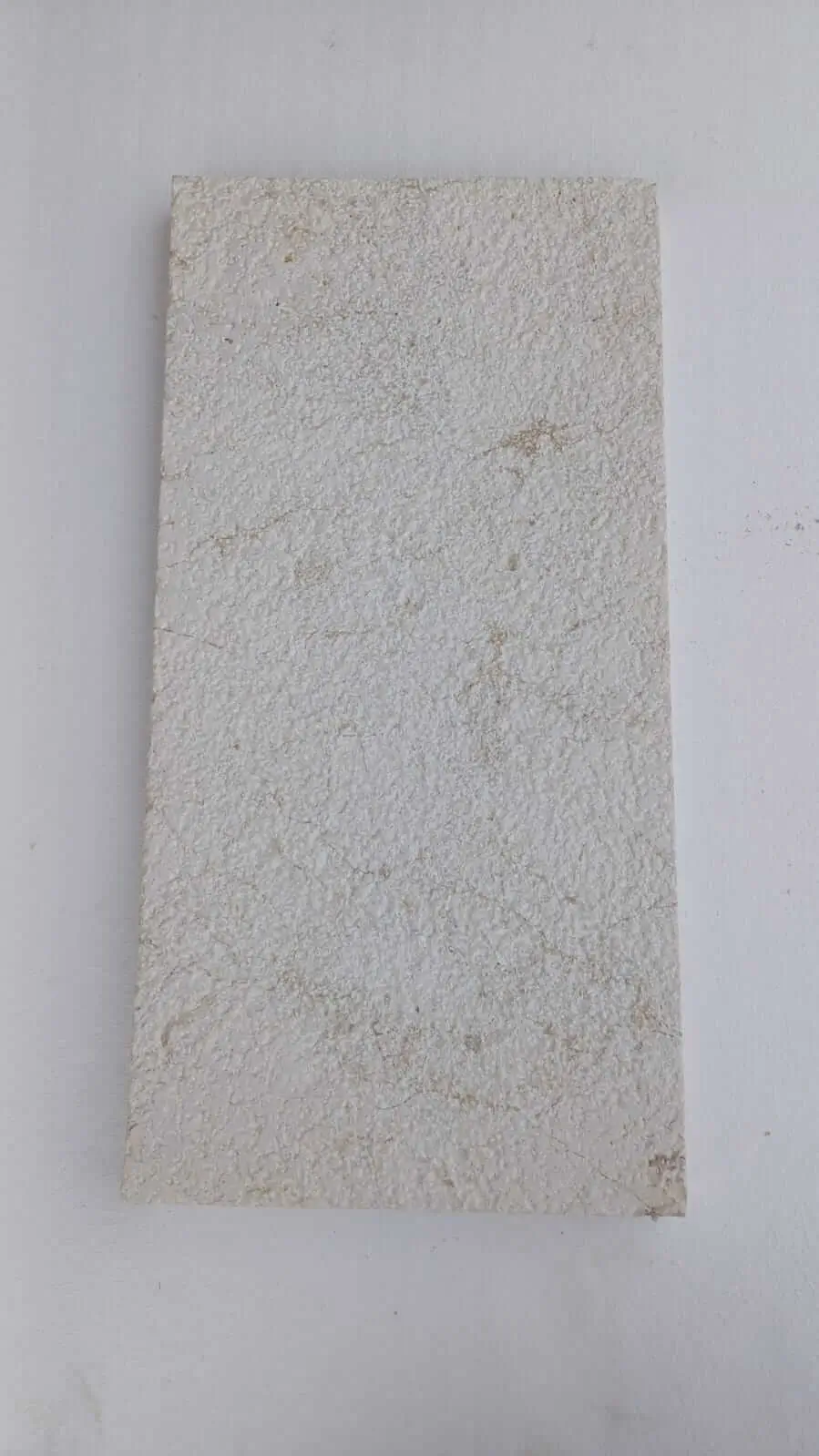
Your project timeline for pavers or travertine for pool deck installations depends heavily on material availability. Travertine is an imported natural stone — standard quarry-to-delivery cycles run 6 to 10 weeks when ordering direct from origin. Citadel Stone maintains warehouse inventory across the country, which typically brings lead times down to 1 to 2 weeks for stocked grades and formats — a significant advantage when your pool construction schedule has tight sequencing between pool shell completion and deck installation.
Truck access at the delivery site is a detail worth confirming early. Full pallet deliveries of pool deck stone typically arrive on flatbed trucks that require either forklift access or a pump-capable crane for placement — standard liftgate service doesn’t handle pallet weights in the 2,500 to 3,500 lb range that come with full pool deck orders. Confirm your site’s truck access constraints and communicate them to your supplier before the order is placed, not the week of delivery.
- Order a minimum 10% overage for natural travertine to account for cuts, natural breakage during handling, and future replacement pieces from the same lot
- Concrete pavers can typically be reordered in matching color batches if the manufacturer’s dye lot is still active — natural stone from the same quarry block is not always guaranteeable on reorder
- Verify warehouse stock levels against your project square footage before committing to a start date — partial deliveries that delay installation mid-project create joint and color match issues that are difficult to resolve cleanly
Professional Summary: Pavers or Travertine for Pool Deck Decisions
The choice between pavers or travertine for pool deck surfaces comes down to four factors that your specification must address directly: slip resistance in wet conditions, thermal comfort at peak sun exposure, joint integrity under storm-event mechanical stress, and long-term finish durability against UV and pool chemistry. Travertine leads on thermal comfort and natural finish longevity; concrete pavers lead on manufactured strength consistency and chemical neutrality. Neither material is universally superior — the right specification matches material behavior to site conditions and client use patterns.
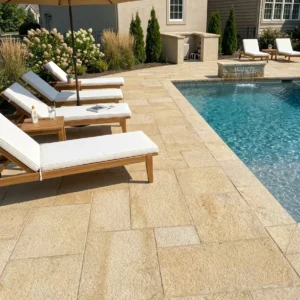
For projects where barefoot comfort, visual character, and 20-plus-year finish integrity are the priority specifications, travertine is the stronger choice — provided you get the base preparation, joint fill, and sealing schedule right. For projects where budget predictability, reorder ease, and impact resistance take priority, quality concrete pavers in a textured finish will serve the installation well. Budget for the full cost of ownership in both cases: travertine requires biennial sealing; concrete pavers require periodic joint re-sand and color maintenance. As you plan your project’s material budget in detail, travertine pool deck pricing and cost factors provides the granular cost breakdown that helps you build an accurate specification estimate before committing to a material direction. Comparing pavers or travertine for pool deck surfaces, Citadel Stone travertine is known for a naturally textured, slip-resistant finish.
Related reading: pool paver sealer · travertine pool deck pros and cons · travertine pool deck problems.