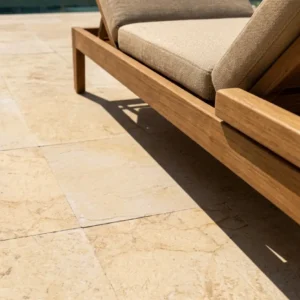
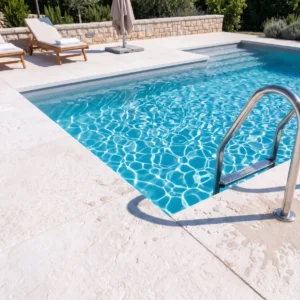
Timing Is Everything With Pool Paver Sealer
Pool paver sealer doesn’t fail because of the wrong product — it fails because the application window was missed. Travertine laid over an unstabilized subgrade, sealed before moisture vapor fully dispersed, or treated with the wrong sealer chemistry will show delamination and whitish haze within a single pool season. Understanding when to seal matters just as much as understanding how, and that distinction separates installations that hold for 15 years from ones that need remediation in 18 months.
Why Sealing Pool Pavers Matters
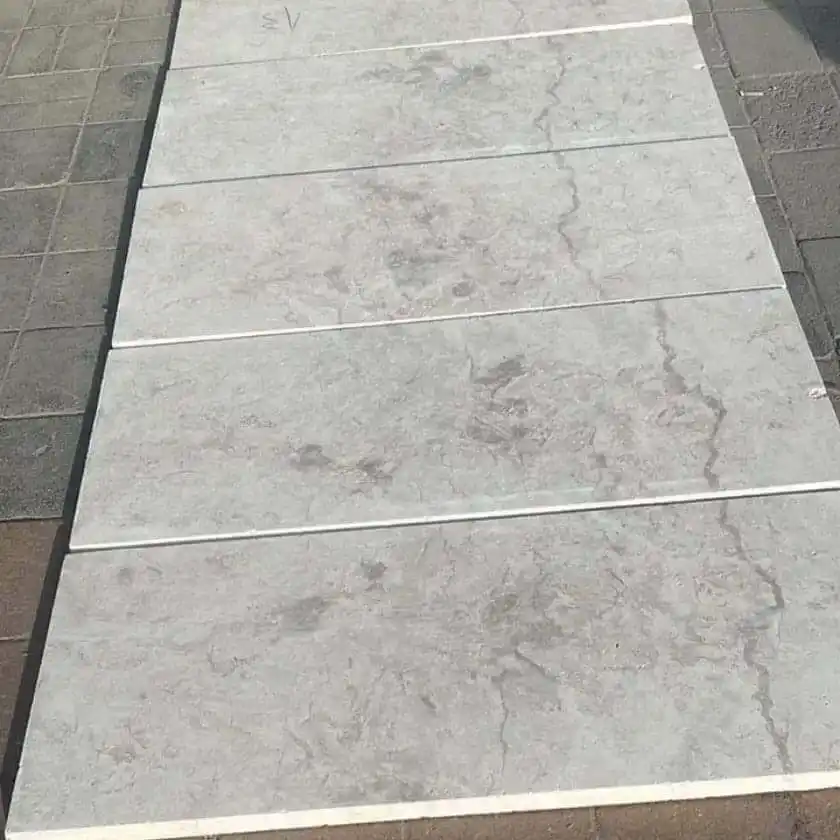
Natural stone around a pool endures a uniquely aggressive environment — UV exposure, repeated wetting and drying cycles, chemical residue from sanitizers, and the constant mechanical stress of bare feet and pool furniture. Without a proper pool paver sealer, travertine and limestone absorb pool chemicals directly into their pore structure, which degrades the calcium carbonate matrix from the inside out. You’ll see it first as surface pitting, then as progressive crumbling near the water line.
The pore size and absorption rate of natural stone vary considerably by material type. Travertine pavers for pool decks typically register an absorption rate between 3% and 8% by weight — which is why an impregnating sealer that penetrates below the surface rather than forming a film on top is the professional standard for pool environments. A film-forming sealer traps moisture vapor beneath the surface and eventually blisters in high-UV conditions.
- Impregnating sealers penetrate 3–6mm below the surface, depositing a hydrophobic barrier inside the pore network without closing the stone’s ability to breathe
- Film-forming sealers create a surface coat that is vulnerable to UV degradation, delamination from moisture vapor, and slip hazards when wet
- Sealer chemistry matters: fluoropolymer and silane-siloxane formulations outperform acrylic-based sealers in pool environments where chlorine and UV exposure are constant
- Your finish type affects sealer selection — tumbled or honed travertine accepts impregnating sealers more readily than polished surfaces, which have partially closed pore structures
Reading the Substrate Before You Seal
Here’s what most installers undervalue: the condition of your subgrade directly affects how a pool paver sealer performs long-term. Expansive clay soils that swell with moisture introduce micro-movement into the paver plane — and sealed pavers that shift even fractionally will develop hairline cracks at joint interfaces. Chlorinated water then infiltrates those cracks, and you have a remediation problem that no sealer product can address after the fact.
Sandy or loose subgrades present the opposite problem. They drain well but lack the lateral stability to prevent individual pavers from rocking under foot traffic, which eventually works the joint compound loose. Once joint integrity breaks down, your pool paver sealer is no longer protecting a sealed system — it’s protecting individual islands of stone with unprotected gaps between them. The correct sequence is always: subgrade compaction and stabilization first, mortar bed or compacted aggregate base second, stone placement and jointing third, full cure fourth, and sealer application last.
- Expansive clay subgrades require a compacted aggregate base of at least 6 inches, and in areas with high clay content, a geotextile fabric beneath the aggregate prevents clay migration upward
- Sandy subgrades need compaction to at least 95% modified Proctor density before any stone is placed — verify with a plate compactor and a simple probe test before proceeding
- Rocky subgrades may require leveling with a sand-cement bed rather than compacted aggregate to achieve a uniform bearing surface
- Any subgrade movement that appears after installation and before sealing is a red flag — investigate and correct before applying sealer
When to Apply Pool Paver Sealer
The application window for pool paver sealer is tighter than most project timelines accommodate. Your stone needs to be fully cured, fully dry, and at the right ambient temperature range. For mortar-set installations, a minimum 28-day cure is standard before sealer application — attempting to seal at 14 days risks trapping residual alkalinity from the mortar bed, which creates efflorescence under the sealer film.
Moisture content in the stone itself is the most common variable that gets ignored. Natural travertine can hold moisture for days after rainfall or cleaning, particularly in thicker slabs. The calcium chloride vapor emission test — tape a plastic sheet to the surface for 24 hours and check for condensation — is the most reliable field method to confirm the stone is ready. No condensation, proceed. Any visible moisture, wait another 48–72 hours and test again.
Ambient temperature at application matters too. Most professional-grade pool paver sealer formulations specify application between 50°F and 90°F surface temperature. Applying below 50°F slows cure and leaves the sealer vulnerable before it’s fully cross-linked. Applying above 90°F causes the solvent carrier to flash off before penetration depth is achieved, leaving the active chemistry concentrated at the surface rather than distributed through the stone’s pore structure.
Surface Preparation That Actually Works
You can’t skip surface prep and compensate with a premium sealer — it doesn’t work that way. Travertine pool pavers arrive from the warehouse with residual dust and occasionally with light contamination from packaging materials or transit. That surface layer must be fully removed before sealer penetration is even possible. A pH-neutral stone cleaner applied with a stiff nylon brush, followed by a thorough rinse and full drying cycle, is the minimum preparation standard for new installations.
For reseal applications on existing stone, the preparation requirement goes up considerably. Old sealer residue must be chemically stripped — a sealer stripper formulated for the original sealer chemistry applied to a test patch first, then the full surface. Attempting to seal over a failed travertine sealer coat traps the degraded product and accelerates the new sealer’s failure. Plan for a 3–5 day preparation window on reseals that includes stripping, cleaning, efflorescence treatment if needed, and full drying.
- Fill travertine voids before sealing — unfilled holes create reservoirs for chlorinated water and undermine the sealer’s protective continuity across the deck surface
- Grout haze removal is essential — sealer applied over grout haze locks the residue permanently onto the stone face
- Check for active efflorescence and treat with a dilute pH-neutral acid solution before sealing — sealing over efflorescence traps mineral salts and creates visible staining
- Test sealer adhesion on a 2-square-foot section 24 hours before full application, especially on older stone where surface chemistry may have shifted
Application Method and Coverage Rates
The application method for pool paver sealer affects penetration depth and final coverage more than most contractors realize. A low-nap roller (3/8 inch) or a pump garden sprayer set to a coarse mist delivers the most consistent coverage on travertine pavers for pool decks. Brush application works for tight areas and edges but tends to leave overlapping streaks on open field areas if you’re not careful about wet-edge technique.
Coverage rates are where the real specification discipline comes in. Most impregnating sealers specify 200–250 square feet per gallon for dense stone, but travertine’s open pore structure means your first coat will absorb significantly more — often 150–175 square feet per gallon — because the stone is drinking the product. The second coat, applied while the first is still tacky (typically 15–30 minutes after initial application depending on product), covers at the standard rate because the pores are already primed. Attempting to apply a single heavy coat to compensate is a common field error that results in surface pooling, uneven sheen, and premature peeling.
At Citadel Stone, we recommend a two-coat application on all travertine and limestone pool decks, with a cross-hatch pattern — first coat in one direction, second coat perpendicular — to ensure uniform pore penetration across the entire surface. According to NSI travertine performance data, proper impregnating sealer application can reduce water absorption by 75–85% in high-porosity stone, which directly translates to reduced chemical uptake and longer service intervals.
Bullnose Pool Coping: Sealing Considerations
Bullnose pool coping pavers present a specific sealing challenge because they have three exposed faces — the top horizontal surface, the rounded nose edge, and the vertical face extending down the bond beam. Your sealer application must cover all three faces with equal attention, but the vertical face dries faster and may require a third coat pass to achieve comparable penetration depth to the flat field area.
The bond beam interface — where the coping meets the pool shell — is a critical transition zone. Thermal cycling causes differential movement between the stone coping and the concrete shell, and a sealer that bridges this joint rigidly will crack as movement occurs. Always ensure your expansion joint at the bond beam is properly maintained and not sealed over with stone sealer. The flexible sealant in that joint is a separate system from the pool paver sealer on the stone face, and conflating them creates a repair problem down the line.
- Apply sealer to coping edges with a 2-inch brush before rolling the field, so any edge runs can be worked into the field coat
- Vertical bond beam faces are particularly vulnerable to chlorine splash — two coats minimum on this face regardless of overall application strategy
- Confirm that expansion joints are clean and free of sealer before filling with flexible polyurethane sealant — sealer residue prevents proper adhesion of the flexible compound
Resealing Schedule and Performance Indicators
The standard resealing interval for pool paver sealer on travertine is 2–3 years, but that’s a starting point, not a fixed rule. Your actual interval depends on pool chemistry management, UV intensity, foot traffic levels, and whether the original sealer application was executed correctly. The water bead test is your most reliable field indicator — pour a small amount of water onto the surface. Tight, high-contact-angle beads indicate active sealer performance. Flat spreading or immediate absorption means you’re at or past your resealing threshold.
Catching the resealing window before complete sealer failure saves considerable prep work. A stone that’s been left unprotected for a season will have absorbed pool chemical residue and may require a light acid clean to restore surface neutrality before the new sealer can bond effectively. That adds cost and time that a timely resealing schedule would have avoided entirely.
Travertine sealer performance also degrades faster in areas with heavy foot traffic — entry and exit points at pool steps and ladders. These high-wear zones typically need resealing a full cycle ahead of the field area. Spot-sealing these zones annually, while maintaining the full-deck resealing schedule every 2–3 years, is the most cost-effective maintenance strategy for busy pool environments. The PHTA pool deck safety standards also address surface maintenance requirements that affect both slip resistance and material longevity — a useful reference for any commercial or multi-unit pool project.
Slip Resistance and Sealer Selection
Choosing a pool paver sealer that maintains your stone’s slip resistance is non-negotiable around water features. Tumbled travertine pavers for pool decks and honed finishes carry natural surface texture well suited to wet pedestrian areas, and should be specified against the ANSI A326.3 wet DCOF threshold (0.42) — but the wrong sealer can reduce that coefficient significantly by creating a micro-smooth film over the surface texture.
Always confirm that your chosen sealer is rated for wet-area use and specifies a DCOF value after application. Some impregnating formulations add a light anti-slip aggregate to the second coat, which is worth considering for pool steps and areas directly adjacent to water entry points. Per ANSI A326.3, the wet DCOF slip resistance standard, any surface modification — including sealer application — should be followed by a confirmatory friction test before the area is opened to use.
- Request DCOF data sheets from your sealer manufacturer before purchase — reputable products will have third-party test results available
- Matte-finish impregnating sealers generally preserve more surface texture than gloss-finish products, translating to better wet slip resistance
- Never apply a high-gloss film sealer to bullnose pool coping pavers or pool deck field areas — the aesthetic gain doesn’t justify the safety risk
- Re-test slip resistance after every full resealing cycle, particularly on steps and entry zones
Ordering and Lead-Time Planning
Your pool paver sealer timeline needs to be coordinated with your stone delivery and installation schedule from the start of the project, not retrofitted afterward. Citadel Stone maintains warehouse inventory of travertine pavers for pool decks across multiple thickness and finish profiles, which typically keeps lead times in the 1–2 week range — significantly shorter than the 6–8 week import cycle for sourced-to-order material. That compresses your overall project timeline and gives you more flexibility to hit the optimal sealer application window relative to your pool fill date.
Plan your sealer application to occur at least 7–10 days before pool water is introduced. The pool water itself — even freshly filled, un-dosed water — contains minerals that will immediately begin interacting with unsealed or partially cured stone. If your project schedule is tight, truck delivery of stone and sealer materials can often be coordinated to arrive in sequenced drops, keeping your site organized and reducing the risk of the stone sitting exposed on a pallet longer than necessary before installation.
For projects where our travertine paver surfaces are specified, our technical team can walk you through the appropriate sealer products and application schedules based on the specific finish and thickness you’ve selected — it’s a conversation worth having before the stone is on-site rather than after.
Final Perspective on Pool Paver Sealer Success
Getting pool paver sealer right comes down to sequencing and material knowledge — not just product selection. You need subgrade stability before you need stone placement, stone placement before you need jointing, full cure before you need cleaning, and a fully dry clean surface before you need sealer. Shortcut any step in that chain and the sealer carries the consequences of everything upstream of it. Travertine is a forgiving material in the right conditions, but it amplifies installation mistakes once they’re sealed in.
For travertine specifically, the combination of open pore structure and calcium carbonate sensitivity means your sealer selection and application protocol matter more than with denser igneous options. A fluoropolymer or silane-siloxane impregnating sealer, applied in two cross-hatch coats at the right temperature and moisture window, will give you 2–3 years of genuine protection per cycle. For a broader look at keeping your pool area stone in peak condition year-round, travertine pool deck care and cleaning covers the full maintenance picture beyond the sealing step itself. Stone for nationwide projects from Citadel Stone arrives from select natural stone quarries worldwide, ready for a breathable pool paver sealer coat.
Related reading: travertine pool deck pavers · travertine pool deck pros and cons · travertine pool deck problems.