Why Your Cleaning Approach Defines Travertine’s Lifespan
Travertine pool decks absorb cleaning chemicals differently than ceramic tile or concrete — the open-pore calcium carbonate matrix pulls liquids inward fast, and the wrong product doesn’t just sit on the surface, it works its way into the stone body within minutes. You’ll see the damage months later as surface pitting, dull hazing, or premature sealer breakdown, which is why the cleaning protocol matters as much as the material itself. Understanding the stone’s internal structure before you touch it with any cleaning agent is the first real step in keeping travertine pool decks looking the way they looked on day one.
Routine Cleaning Fundamentals for Travertine Pool Decks
The foundation of travertine pool deck maintenance is simplicity — rinse often, clean with pH-neutral products, and act fast on anything that spills. Your deck sits in a chemical-rich environment every day: chlorine drift, sunscreen oils, tanning lotions, and algae spores all land on that surface. Weekly hosing with clean water breaks the accumulation cycle before any of those substances have time to bond with the stone’s pore walls.
- Use a pH-neutral stone cleaner rated between 7.0 and 8.0 — anything outside this range accelerates calcium carbonate erosion
- Rinse with low-pressure water after every pool session to remove chlorine residue before it dries and concentrates
- Avoid dish soaps, bleach, and general-purpose bathroom cleaners — these strip sealers and etch the stone surface
- Microfibre mops work better than stiff bristle brushes for routine weekly passes; nylon bristles can drag grit across the finish and scratch honed surfaces
- Pay extra attention to the pool edge where splash-back concentrates sunscreen and chemical residues in a narrow band
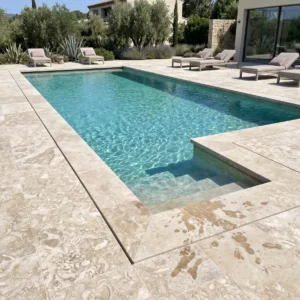
For travertine swimming pool coping specifically, run a damp cloth wipe-down along the nosing lip weekly. That narrow horizontal strip takes the heaviest foot traffic and chemical contact of any surface element in the pool surround.
The Seasonal Deep-Clean Protocol That Actually Works
Twice-yearly deep cleaning — typically spring and early autumn — gives travertine pool deck maintenance real staying power between sealer applications. You’re essentially doing a reset: removing embedded oils, biological growth, and mineral deposits before they reach the point where mechanical intervention becomes necessary. A poultice-style stone cleaner left on the surface for 30 to 45 minutes draws embedded oils out of the pore network far more effectively than scrubbing does.
Field testing on travertine for pool deck applications consistently shows that a two-bucket cleaning method — one with diluted stone cleaner, one with clean rinse water — keeps you from reapplying dirty solution to a surface you’re trying to clean. Work in 4-foot sections, clean, rinse, and move forward. Don’t let the cleaner sit beyond the dwell time printed on the product label; over-dwelling on unsealed or compromised surfaces risks acid sensitivity reactions even with pH-neutral products if the stone’s calcite content is particularly high.
- Pre-rinse the full deck with a garden hose to remove loose debris and lower surface temperature before applying cleaner
- Apply stone-specific deep cleaner with a natural-bristle brush, working it lightly into grout joints and pore openings
- Allow recommended dwell time — typically 20 to 45 minutes depending on product concentration
- Rinse thoroughly with clean water, using enough volume to flush the grout joints — residual cleaner left in joints accelerates joint sand degradation
- Allow 48–72 hours of dry time before applying or refreshing sealer
Stain Removal by Type — Matching Treatment to Cause
Travertine responds very differently to different stain types, and the removal strategy has to match the chemistry of what caused the stain. Organic stains — algae, leaf tannins, sunscreen — lift with a hydrogen peroxide-based poultice. Oil-based stains from tanning lotion or food spills need a solvent-based poultice or acetone application. Mineral stains, typically the white efflorescence deposits you’ll see near grout joints, respond to carefully applied diluted white vinegar — but use this with caution, limit contact time to 60 seconds, and rinse immediately. Vinegar is acidic and will etch unsealed travertine if left in contact longer than that window.
According to Natural Stone Institute travertine properties and outdoor suitability, travertine’s calcium carbonate composition makes it particularly reactive to acidic cleaners, which is why selecting the correct stain treatment method by stain category — rather than defaulting to a single all-purpose cleaner — is the standard approach for maintaining travertine pool decks in outdoor environments.
- Organic stains (algae, tannins, mould): 12% hydrogen peroxide poultice, 30-minute dwell, rinse thoroughly
- Oil-based stains (sunscreen, food grease): acetone-dampened cloth or commercial solvent poultice, avoid scrubbing
- Rust stains from metal furniture: iron-specific stone cleaner — never use generic rust removers, which are typically highly acidic
- Efflorescence (white salt deposits): diluted white vinegar with a strict 60-second contact limit, rinse immediately, reseal that section afterward
- Chlorine haze: this is usually a sealer issue, not a stain — reseal rather than attempting chemical removal
Sealing Schedule and Product Selection for Long-Term Protection
Sealing is where travertine pool deck maintenance either works or fails at a systemic level. You can clean perfectly and still watch the stone deteriorate if the sealer schedule slips. For outdoor pool environments, a penetrating impregnating sealer — not a topical coating — is the correct specification. Topical sealers trap moisture beneath the surface in wet pool environments, which leads to delamination, hazing, and in freeze-thaw regions, spalling damage as trapped water expands during cold cycles.
Resealing frequency depends on traffic levels and UV exposure intensity, but a practical baseline is 12–18 months for heavily used residential pools and 10–12 months for commercial installations. Run the water bead test to check sealer integrity: pour a small amount of water on the surface and watch. If it beads for 30 seconds or longer, the sealer is performing. If it absorbs within 5–10 seconds, reseal within the next 30 days before the next cleaning cycle strips even more sealer from the stone body.
- Always use a penetrating (impregnating) sealer — silane/siloxane chemistry is the industry standard for pool deck travertine
- Apply sealer only to a fully clean and dry surface — moisture trapped under sealer causes cloudy white patches that require full strip-and-reseal correction
- Two thin coats outperform one heavy coat — apply the second coat while the first is still slightly tacky (typically 20–30 minutes after first application)
- Buff off excess sealer within 5 minutes of application with a clean dry cloth — pooled sealer dries as a sticky residue that attracts dirt and dulls the finish
- In climates with hard winters, complete the final seasonal reseal in early autumn before ground temperatures drop below 50°F, which slows sealer cure to the point of incomplete penetration
Slip Resistance and Finish Maintenance Around the Pool Edge
The finish on travertine for pool decks isn’t just an aesthetic decision — it’s a safety specification with code implications in most jurisdictions. Tumbled or brushed travertine finishes carry the surface texture wet pool environments call for; specify against the ANSI A326.3 wet DCOF threshold (0.42). Honed finishes carry less texture, which is why maintenance matters — any build-up of algae, sealer film, or organic residue on a honed surface reduces wet slip resistance further.
Your cleaning routine directly preserves the slip resistance performance your finish was specified to deliver. Algae is the most dangerous variable. A thin biofilm that’s invisible to the eye reduces the COF of any stone surface dramatically, which is why the weekly rinse cycle matters as much for safety as for appearance. Many building codes — particularly those governing commercial pool facilities — specify minimum COF values for pool deck materials, and maintenance records demonstrating routine cleaning can be relevant during liability reviews if a slip incident occurs.
For travertine swimming pool coping along the water’s edge, inspect the nosing finish every season. Tumbled edges that get power-washed at high pressure can lose their textured surface profile over time, smoothing out the very micro-relief that provides barefoot grip. Keep pressure washing below 1,200 PSI and maintain the wand at a 45-degree angle — never perpendicular to the surface at close range.
Base Conditions and Building Code Considerations That Affect Maintenance
Travertine pool deck maintenance doesn’t happen in isolation from the structure underneath. A deck that’s cracking, shifting, or heaving puts stress fractures through grout joints and stone bodies faster than any cleaning oversight would. The base preparation under your travertine determines how the surface responds to seasonal movement — and many maintenance problems that look like cleaning issues are actually base failures expressing themselves at the surface.
Most commercial pool deck specifications call for a minimum 4-inch compacted aggregate base beneath a 1.5-inch mortar setting bed, with travertine pavers at 1.25- to 2-inch nominal thickness. The PHTA pool deck standards address drainage slope requirements (typically 1/8 inch per foot minimum away from the pool edge), which directly affect how well your cleaning rinse water evacuates the surface rather than pooling in low spots where staining and algae growth accelerate. Decks in freeze-thaw zones need base depths extending below the frost line to prevent heave-driven joint cracking that breaks sealer continuity.
- Check grout joint integrity at the start of each season — cracked joints allow water infiltration beneath the setting bed, undermining base stability
- Inspect the perimeter edge where travertine meets the pool coping for movement gaps — these indicate base settlement and need addressing before cleaning can be effective long-term
- Expansion joints filled with flexible polyurethane sealant every 10–12 feet prevent stress fractures from thermal cycling — inspect and replace these every 2–3 years
- Poor drainage slope (less than 1/8 inch per foot) creates standing water zones that accelerate biological growth and require more aggressive cleaning chemistry than properly drained surfaces
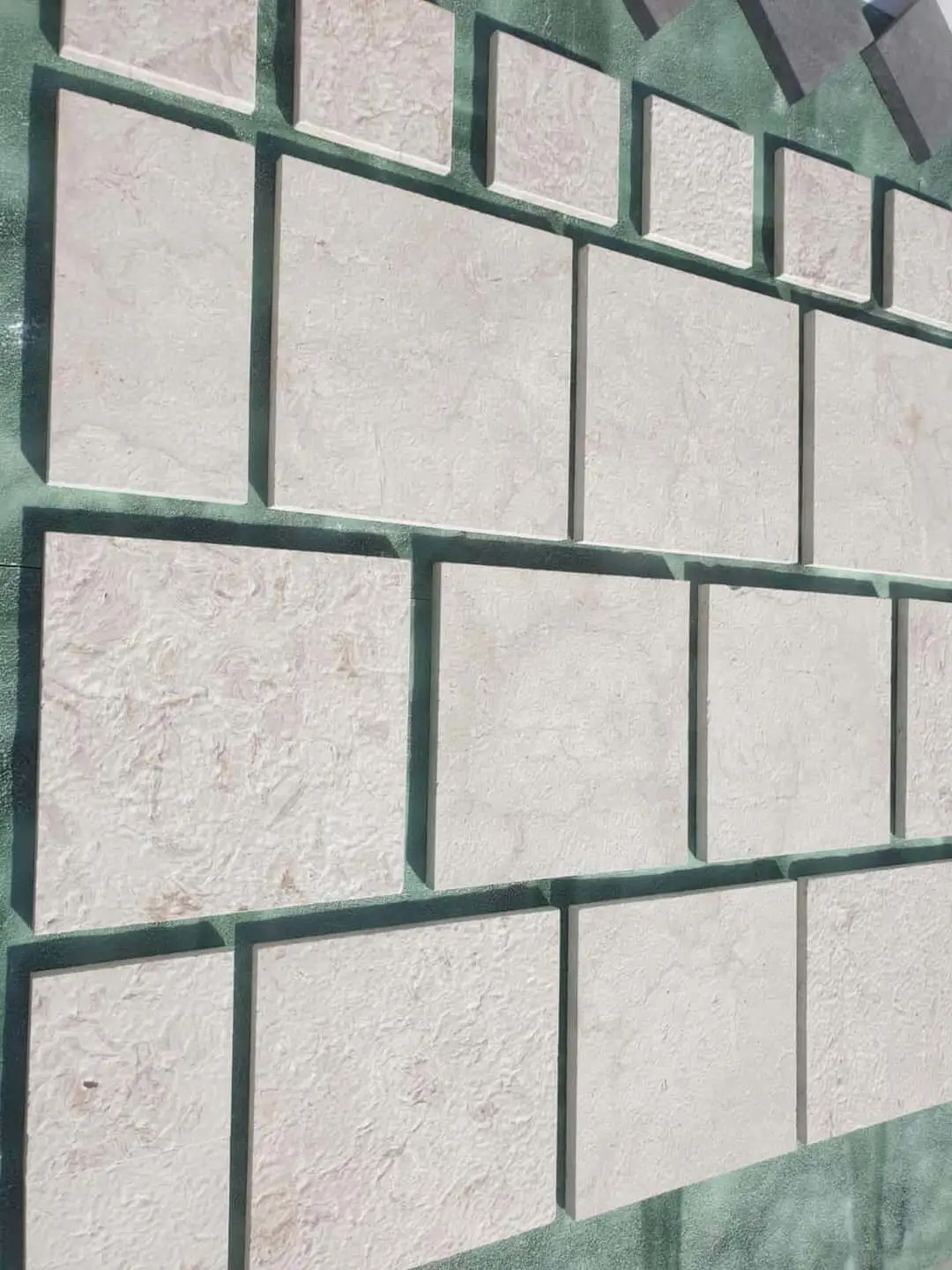
What to Avoid: Cleaning Mistakes That Cut Travertine’s Life Short
The most common maintenance errors on travertine pool decks aren’t from neglect — they’re from using the wrong product with good intentions. Pressure washing above 1,500 PSI is the single most destructive routine maintenance mistake. High-pressure water blasts the fill material out of travertine’s natural voids, strips sealer from pore walls, and over time degrades the surface texture that provides slip resistance. If you need pressure washing for heavy contamination, stay below 1,200 PSI with a wide-fan nozzle and keep a 12-inch standoff distance minimum.
Bleach is another common mistake. Pool owners apply it because it works fast on algae — and it does. But bleach oxidises the sealer chemistry in penetrating impregnating sealers, dramatically reducing sealer bond life. You’ll get a clean deck for two weeks, followed by a deck that stains heavily because the sealer is compromised. Hydrogen peroxide at 6–12% concentration handles the same biological contamination without the sealer damage. At Citadel Stone, we’ve reviewed enough warehouse return requests for “discoloured” travertine to know that bleach and acid cleaners account for the overwhelming majority of finish damage that gets reported as a material defect — it’s almost never the stone.
- Never use muriatic acid on travertine — pool contractors sometimes recommend it for concrete but it causes immediate and irreversible etching on calcium carbonate stone
- Avoid leaving metal furniture, planters, or decorative items in standing water on travertine — rust staining from metal contact is one of the hardest stain types to remove completely
- Don’t use a rotary scrubbing machine with abrasive pads — the mechanical action can round off the tumbled texture that provides grip
- Avoid silicone-based products near travertine — silicone residue from nearby caulking or patio furniture treatments creates a film that sealers cannot penetrate, leading to peeling and delamination
For our travertine pool deck stone, the cleaning and maintenance protocols above apply directly — but the specifics of sealer type and cleaning product selection should match the finish you’re working with, whether tumbled, honed, or brushed.
Travertine for Floors vs. Pool Decks: Why Maintenance Differs
Travertine for floors in interior applications uses similar cleaning chemistry but operates in a completely different environmental condition set. Interior floor travertine doesn’t face UV degradation, chlorine exposure, or freeze-thaw cycling — the three main stressors that define outdoor pool deck maintenance scheduling. The sealer schedule that works for a polished travertine for floors (typically 3–5 years between applications) will leave outdoor pool deck travertine under-protected if applied without adjustment.
Outdoor travertine pool decks face UV radiation that breaks down organic sealer components, and the constant wet-dry cycle at the pool edge accelerates efflorescence and mineral migration through the stone body. Factor these differences into your specification and maintenance planning — the material is the same, but the maintenance protocol is not interchangeable between applications.
Maintaining Travertine Pool Decks for Maximum Service Life
A well-maintained travertine pool deck can realistically deliver 25 to 30 years of service life when the cleaning protocol, sealer schedule, and base integrity are managed as a system rather than addressed independently. Your maintenance investment is small relative to the material’s replacement cost — a seasonal deep clean, annual water bead test, and 12–18 month reseal cycle is the practical framework that keeps travertine performing at specification. For projects where the installation details matter as much as the ongoing care, reviewing how travertine pool deck pavers are correctly set provides context that connects long-term maintenance success back to the original install. Our technical team at Citadel Stone maintains warehouse-level stock of travertine to keep your project timelines on track without the 6–8 week lead times that direct imports typically require. Explore travertine pool deck installation guidance for specification details that complement this maintenance framework. Selected from internationally sourced quarries, travertine pool decks from Citadel Stone hold up to routine rinsing and seasonal cleaning without fading.
Related reading: travertine vs pavers pool deck · modern pool tile ideas · travertine pavers outdoor.