Why Thickness and Finish Define Pool Deck Performance
Travertine pavers pool deck projects fail or thrive at the specification stage — specifically at the thickness and finish decisions most buyers treat as cosmetic afterthoughts. For pool deck applications, a minimum 1¼-inch nominal thickness is required to handle point loads from wet furniture, pool equipment, and foot traffic concentrated near ladders and steps. Go thinner and micro-fracture potential is built in from day one, particularly in areas where the subgrade isn’t perfectly uniform. Two-inch pavers are worth the premium when there’s any uncertainty about base consistency.
The finish question is equally consequential. Tumbled travertine delivers a naturally textured, open face rather than a closed one — the finish characteristic that governs wet footing for a pool surround. Honed finishes drop that closer to 0.42 wet, which approaches the threshold where barefoot slip risk increases meaningfully. Brushed finishes sit in between, offering a reasonable compromise between visual refinement and traction. Finish selection should be driven by the wet-zone layout of the specific deck, not just aesthetics.
Travertine vs. Other Pavers for Pool Deck Applications
The travertine vs pavers for pool deck conversation comes up constantly, and it’s worth being direct about the trade-offs. Concrete pavers offer lower upfront cost and consistent sizing, but their dense surface retains more heat than travertine’s open-pore calcium carbonate matrix. On a midsummer afternoon, a concrete paver surface in direct sun can run 20–25°F hotter underfoot than a comparable travertine surface — the difference between comfortable and genuinely painful barefoot contact.
Porcelain pavers are dimensionally stable and low-maintenance, but they read as manufactured. They don’t offer the tonal variation and organic texture that travertine delivers, and they can be unforgiving on feet over long pool sessions. Travertine’s natural variation in veining and color also means chips and edge wear blend in rather than standing out as obvious damage over time.
- Travertine surface temperatures run measurably cooler than concrete and clay brick alternatives in direct sun exposure due to the material’s open-pore structure and lower thermal mass
- Concrete pavers typically cost 30–50% less per square foot installed, but replacement costs when sections fail can erode that advantage within 10–12 years
- Porcelain offers near-zero absorption but lacks the heat-moderating performance travertine delivers in high-UV pool environments
- Travertine’s natural veining variation makes it far more forgiving of minor surface wear — no two tiles look the same, so imperfections read as character
- Bluestone and slate are durable alternatives but come with color absorption patterns that can look uneven after poolside chemical exposure over several seasons
According to Natural Stone Institute travertine properties and outdoor suitability, travertine’s open-pore structure and absorption characteristics make it one of the better-performing natural stones for outdoor applications where surface temperature control matters. That’s not marketing — it’s a material science reality that experienced specifiers account for when choosing between travertine pavers pool deck options and manufactured alternatives.
Cost Breakdown: What Travertine Pool Deck Projects Actually Run
Material costs for travertine pool pavers typically range from $6 to $18 per square foot depending on origin, grade, finish, and thickness. Turkish travertine in classic ivory or walnut tones sits toward the lower end of that range for standard 16×24 formats. Silver travertine and less common formats push toward the upper boundary. Installation labor adds $8 to $15 per square foot in most markets, though complex patterns — herringbone, versailles, diagonal — add 20–30% to that labor figure.
The full cost picture for a travertine pavers pool deck project needs to account for more than material and labor. Base preparation is often the biggest variable, and it’s the one most quotes underestimate.
- Compacted aggregate base: $2–$4 per square foot depending on required depth, which varies significantly based on existing soil conditions
- Polymeric joint sand: $0.50–$1.50 per square foot, with premium anti-efflorescence formulas adding cost but reducing long-term maintenance
- Sealer (penetrating impregnator type): $1–$3 per square foot for initial application — factor in reapplication every 2–3 years depending on UV exposure and chemical contact
- Coping and pool edge detailing: $25–$55 per linear foot depending on profile complexity and nosing thickness
- Drainage modifications: variable, but often $500–$2,500 if existing drainage geometry doesn’t shed water effectively away from the pool structure
A 1,000-square-foot travertine paver pool deck with proper base preparation, mid-grade Turkish travertine, and quality installation typically lands between $18,000 and $36,000 all-in. Projects that cut corners on base depth or use budget sealers see that investment erode significantly faster than they should.
Subgrade and Soil Conditions: The Foundation Decision Most Projects Rush
Base preparation for a travertine pool deck is where projects either earn their longevity or write themselves a 7-year failure story. The soil beneath a deck isn’t just a platform — it’s an active variable that shifts seasonally, absorbs moisture differently depending on its composition, and responds to pool water intrusion in ways that can be genuinely destructive to a stone surface above it.
Expansive clay soils are the most common subgrade challenge in travertine pool deck installations. Clay expands when wet and contracts when dry, cycling the pavers above it through micro-movements that accumulate into visible lippage over 3–5 years. Over clay subgrades, a 4-inch compacted gravel base isn’t enough — 6 inches minimum is the correct specification, and in areas with high clay content a geotextile fabric separator should be considered to prevent clay migration into the aggregate layer over time.
- Sandy soils drain well but can shift laterally under load — require 4–6 inches of compacted base plus edge restraint systems to prevent lateral creep at pool perimeter
- Caliche layers common in arid regions create an highly resistant hardpan that prevents drainage, trapping water under pavers and creating hydrostatic pressure problems in freeze-thaw regions
- Rocky or cobble-heavy subgrades need leveling with crusher run or decomposed granite before any compaction work — uneven hard spots transfer point loads directly to individual pavers, causing cracking over time
- High-organic soils (fill material near pools is often inconsistent) settle unevenly and should be excavated and replaced with engineered fill before paver installation begins
- In freeze-thaw regions, base depth needs to reach below the frost line — failing to account for this is one of the most predictable ways a travertine pool deck develops lippage within two winters
At Citadel Stone, we recommend getting a soil report before finalizing any base specification. The $300–$500 cost of a basic geotechnical assessment pays for itself many times over in base material savings or avoided remediation. Our technical team has seen too many projects where the paver quality was exceptional but the base was undersized for the actual soil conditions — and the deck looked rough within five years despite the stone being perfectly fine.
Sealing Travertine Around Pools: What the Product Labels Don’t Tell You
Sealing travertine on a pool deck is fundamentally different from sealing interior travertine flooring, and conflating the two is one of the most common mistakes specifiers and homeowners make. Pool decks face a combination of UV exposure, chlorinated water splash, sunscreen and tanning oil contamination, and repeated wet-dry cycles that interior stone never encounters. The sealer chemistry has to handle all of those simultaneously.
Penetrating impregnator sealers — not topical coatings — are the correct product category for travertine pool pavers. Topical coatings build a film on the surface that traps moisture below it and eventually peels or clouds under UV. An impregnating sealer penetrates the stone’s pore structure and lines the internal pathways without sealing the surface itself, allowing vapor transmission while blocking liquid intrusion. For pool environments, look for a fluoropolymer-based impregnator rated for both oil and water repellency — chlorine byproducts are oil-adjacent chemically and standard water-only repellent sealers underperform in pool contexts.
According to ASTM C1527 travertine dimension stone standard specifications, travertine’s absorption rate is a key performance variable that directly informs sealing travertine requirements. Standard travertine has an absorption rate of 0.5–2.0% by weight — porous enough to benefit significantly from proper sealing, but not so dense that impregnator penetration is problematic. The application schedule should account for this: the first seal on new stone should go on within 30 days of installation, before organic contamination has a chance to set into the open pore structure.
- Apply sealer in two thin coats rather than one heavy application — single heavy coats surface-pool before full penetration and reduce adhesion depth
- Resealing intervals for pool travertine should be every 2–3 years, not the 5–7 years some product labels claim — chemical exposure from pool environments accelerates depletion
- Test sealer performance annually using the water bead test — pour 4 ounces of water on the surface; if it soaks in within 3–4 minutes rather than beading, reseal within the season
- Fill travertine voids with color-matched grout or filler before sealing travertine surfaces — open voids collect organic debris and pool chemicals, creating staining pathways the sealer can’t address
- Avoid acid-based cleaners entirely; pool deck travertine is calcium carbonate-based and acids etch the surface, permanently affecting both appearance and texture
Installation Variables That Determine Whether Your Deck Lasts 10 or 25 Years
The specification decisions that most affect travertine pool deck longevity aren’t the ones on the product sheet — they’re the field decisions made during installation. Expansion joint placement is the single most impactful one. Most generic guidelines call for expansion joints every 20 feet, but for pool deck applications with thermal cycling and moisture exposure, the correct interval is every 12–15 feet. The thermal expansion coefficient of travertine runs approximately 4.4 × 10⁻⁶ per °F — modest, but over a 30-foot run with a 60°F seasonal temperature swing, that’s meaningful cumulative movement that needs somewhere to go.
Check out PHTA pool deck stone and coping safety standards for the industry consensus on coping profiles and deck drainage geometry — the standards address water management at the pool edge in ways that directly affect how travertine pavers pool deck installations perform over time.
Setting bed choices matter as much as joint spacing. For travertine pool pavers in sand-set applications, a 1-inch screeded bedding sand layer over compacted aggregate is the proven approach for residential applications. Mortar-set installations over concrete substrates perform well but introduce rigidity that amplifies any substrate cracking into the pavers above. If a pool deck has an existing concrete substrate with minor cracking, address those cracks with flexible epoxy injection before setting pavers over them.
- Use non-sanded polymeric joint sand for travertine pool decks — standard polymeric sand’s particle size is too coarse for travertine’s tighter joint profiles and allows moisture intrusion at the joint base
- Pitch the entire deck surface a minimum of 1/8 inch per foot away from the pool edge and toward designated drainage points — inadequate pitch is the leading cause of subsurface moisture accumulation under pool pavers
- Install edge restraints at all non-pool perimeter edges — travertine pool pavers are more prone to edge creep in sand-set applications than concrete pavers due to their smoother cut faces
- Allow 48–72 hours after final compaction before applying polymeric joint sand — fresh-compacted base still has minor settlement occurring that can disrupt joint filling if rushed
- Factor in a 10–12% waste allowance for standard rectangular patterns and 15–18% for diagonal or versailles layouts — travertine’s natural variation means more pieces will be culled than expected
Ordering, Lead Times, and Getting Delivery Right
The logistical side of a travertine pavers pool deck order is where projects run into avoidable delays. Travertine pavers are heavy — a pallet of 2-inch 16×24 pavers weighs approximately 2,800–3,200 lbs. Delivery sites need to accommodate truck access for a flatbed or curtain-side trailer, with a turning radius that not every residential pool deck site can provide. Working in a tight lot with restricted truck access means delivery logistics should be confirmed early, with plans made for either smaller staged deliveries or a temporary material staging area on the street.
Warehouse stock levels fluctuate significantly for premium travertine formats. For our travertine pool deck pavers, availability across formats and tones is updated regularly — confirming stock before finalizing a project schedule prevents the 4–6 week wait that comes with back-ordered travertine formats arriving from overseas inventory. Cut to order at our selected quarries, each consignment carries a lead time quoted at the point of order and confirmed before production begins.
Order a minimum of 10% overage on top of calculated square footage. Travertine is a natural material with batch-specific tonal variation — replacement material ordered six months after initial installation may not match the original batch even within the same product line. Holding back overage material on-site is cheap insurance against future repairs that can’t be color-matched.
Grades, Origins, and What to Actually Look for When Selecting
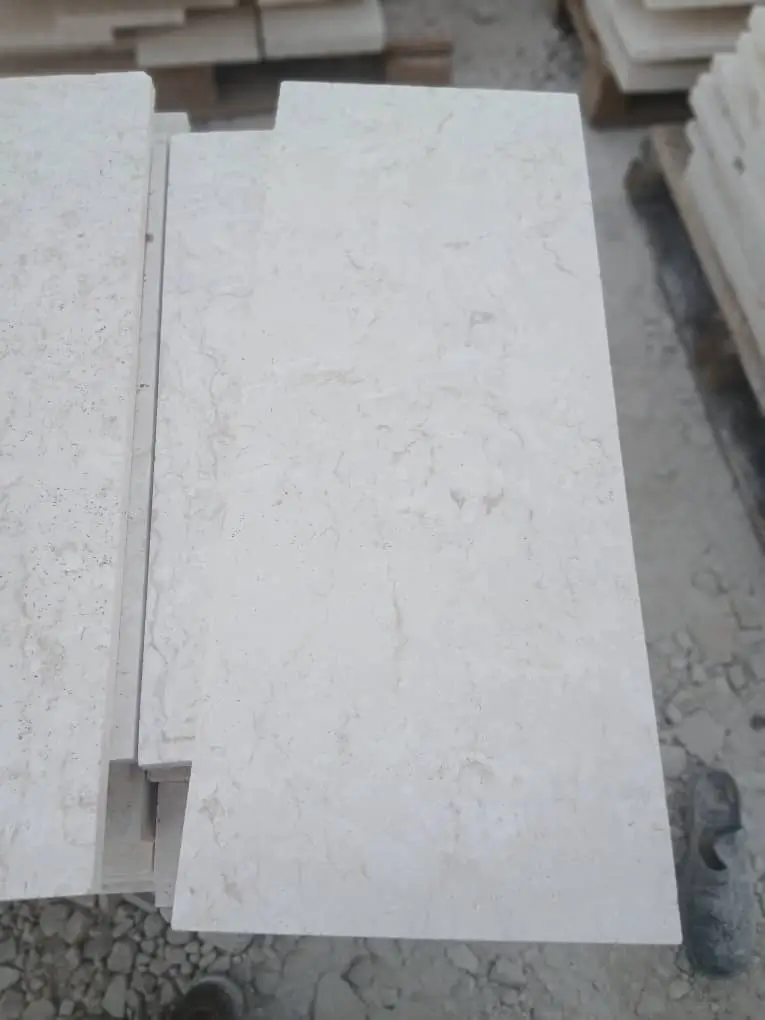
Travertine grades — commercial, standard, and first choice (or premium, depending on the supplier’s terminology) — vary in void frequency, vein consistency, and edge tolerances. For pool deck applications, standard grade is usually the appropriate specification. First-choice material is heavily selected for tight vein patterns and minimal voids, which increases cost without delivering meaningful performance advantages for an outdoor application where natural variation reads well aesthetically.
Turkish travertine dominates the market for good reason — the Denizli region produces material with consistent calcium carbonate density and relatively uniform void patterns across large production runs. This consistency matters when specifying travertine pavers pool deck quantities across a 1,200-square-foot deck — predictable absorption behavior and consistent thickness tolerance across the full order are essential. Italian travertine from the Tivoli region delivers exceptional visual quality but comes at 40–60% premium pricing and longer lead times that affect project scheduling.
- Check thickness tolerance specifications before ordering — travertine pool pavers should hold ±1/16 inch across the stated nominal thickness; wider tolerances create lippage issues in sand-set applications
- Inspect face void frequency on sample pieces — voids should be filled with grout or epoxy filler, not left open; filled void quality varies significantly between suppliers
- Look for consistent calibration across the pallet, not just the face tiles — travertine from some origins shows thickness variation that accelerates from the face to the back of the pallet
- Silver travertine, while visually striking, has a higher iron content that can produce rust-toned efflorescence staining around pool chemical splash zones — factor this into finish selection for high-splash areas
- Noce (walnut) travertine is the most UV-stable tone option — lighter ivory and cream tones show more tonal shift under sustained UV exposure over several seasons
According to USGS limestone and travertine natural mineral formation data, travertine’s composition and pore structure are directly tied to its depositional environment — which is why material from different quarry regions performs differently even when it carries similar grade classifications. Understanding origin isn’t just about aesthetics; it’s a genuine performance variable for any travertine paver pool deck specification.
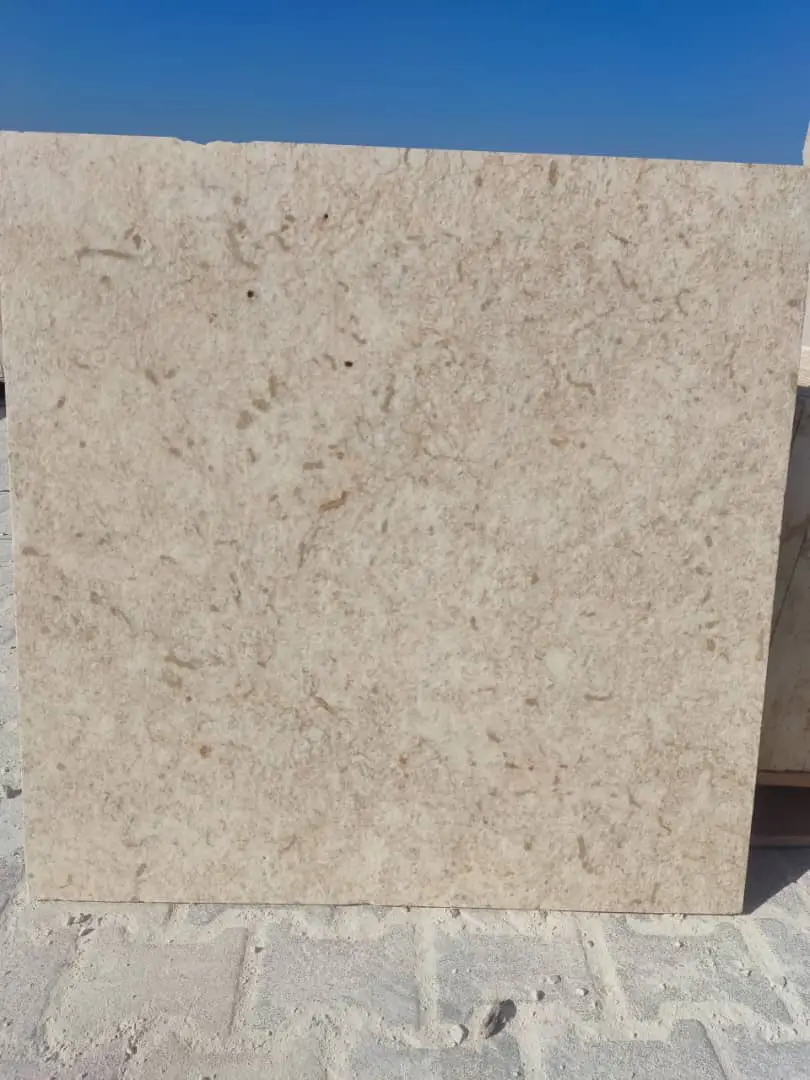
Travertine Pool Deck Specification: Getting It Right From the Start
Every travertine pavers pool deck that performs over the long term shares the same foundation: a base specification matched to actual soil conditions, a finish and thickness suited to the wet-zone layout, sealing protocols that account for pool chemical exposure, and joint spacing that accommodates real thermal cycling rather than generic guidelines. The material itself is forgiving, naturally cool underfoot, and genuinely attractive over decades — but it rewards the specifiers who treat the system as a whole rather than just selecting a product.
Finish, grade, and format decisions should be finalized before confirming warehouse quantities — not after. Confirm truck access to the site early, lock in overage material with the primary order, and schedule sealer application within the first month of installation. These aren’t abstract best practices; they’re the decisions that separate pool decks that look great at the five-year mark from ones that are already showing edge deterioration and joint washout. For a deeper look at finish options and thickness considerations across the full product range, travertine finishes and thickness options covers the specification details worth reviewing before finalizing an order. Sourced direct from quarries in Turkey, the Mediterranean, and beyond, Citadel Stone offers travertine pavers pool deck options in multiple tones.
Related reading: Choosing the Best Pool Deck Tile: A Practical Guide · modern pool tile ideas · travertine pool deck pros and cons.