







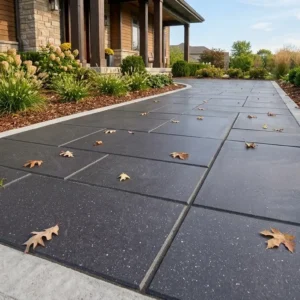

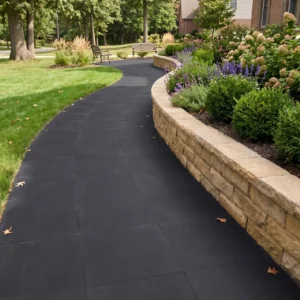
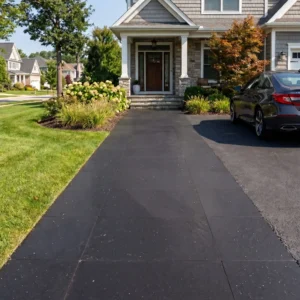















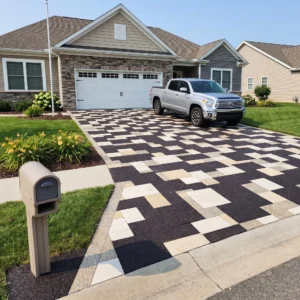













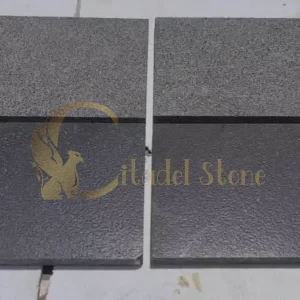
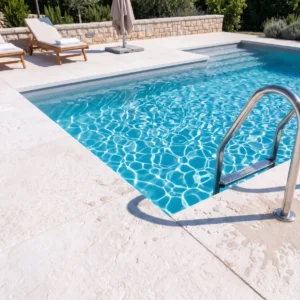
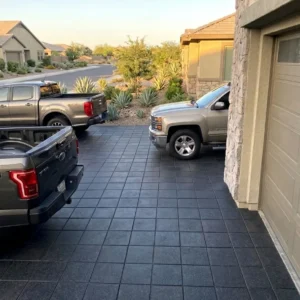

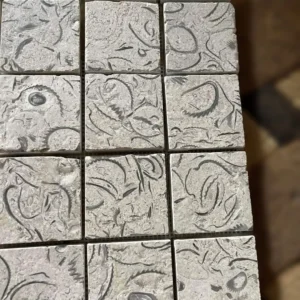

















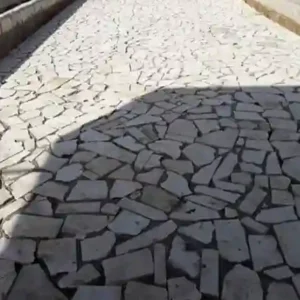
Saint Lucia buys hardscape the way a steep, sovereign island has to: in loads sized for the road that reaches the site, not for the yard that filled the container. Every villa terrace at Cap Estate, every pool deck behind Reduit Beach and every gate apron above Marigot Bay begins as a set of pallets standing on a wharf managed by the Saint Lucia Air and Sea Ports Authority. Between that wharf and a finished surface sit a customs declaration, three separate charges that stack on top of the duty, a haulage booking and a climb. A supplier who cannot discuss all four is selling photographs rather than paving.
This is the wide view of importing paving slabs into Saint Lucia, called pavers in North American usage. It covers how stone actually arrives, which of the two commercial ports suits your project, what an entry costs beyond the invoice, where the island is hardest on an outdoor surface, and which formats and thicknesses justify the freight at all. The material argument for a particular stone, the interior work and the small-unit setts each have their own page. Here we deal with the route, the paperwork and the decisions you make before a single slab is cut.
How Stone Actually Reaches Saint Lucia
Saint Lucia is a destination port, not a stop that only ever sees relayed boxes. SLASPA, as everyone on the island calls the ports authority, owns and manages both commercial seaports, and Port Castries in the north-west handles the majority of container, bulk and general cargo. Scheduled southbound services out of Florida and the US Gulf run into the Eastern Caribbean directly, which is why a United States supply base can serve a Saint Lucian project on much the same routing logic it uses for the wider region. We deliberately publish no sailing-time figure: schedules shift with season and carrier, and the only transit number worth having is the one confirmed at the moment you book, not the one printed on a web page months earlier.
The Castries facility is better equipped than its footprint suggests, and knowing what is there helps you judge whether your consignment is routine or awkward before you commit to a shipping date:
- Berths 2 and 3 give 720 ft of continuous quay at 27 ft alongside depth, with Berths 4 and 5 at 32 ft and Berth 6 at 30 ft.
- Berth 5 carries a roll-on roll-off ramp, which matters when plant or a vehicle travels with your materials.
- The container park holds 400 TEU of ground slots, generous for the island but tight in a busy month.
- Over 100,000 sq ft of covered storage sits behind the quay, alongside reefer and dangerous-cargo facilities.
- Handling equipment runs to mobile cranes, reachstackers and eighteen forklifts, under 24-hour manned security and CCTV.
Normal working hours are 08:00 to 16:00, with overtime available on request. That single line governs more construction programs than importers expect. A box that misses the afternoon cut-off does not move until the next working day, and a laying crew standing idle on a hillside costs more in a morning than the overtime would have cost outright.
Port Castries Congestion and the Cul de Sac Answer
Port Castries occupies roughly ten acres, and that fact explains most of its behavior. A wharf hemmed in by a capital city cannot simply grow a yard when volumes rise. Through 2025 the pressure became public: truckers protested in May and June, government intervened, and SLASPA responded with operational changes and an off-site container storage facility at Cul de Sac. A Caribbean Development Bank-sponsored consultancy has since been studying whether Cul de Sac should become a fully operational port complementing Castries rather than merely a relief yard.
None of that is background reading for an importer. It changes how you plan the week your stone lands, and the contractors who lose money here are the ones who treated a shipping date as a delivery date:
- Arrange haulage before the vessel berths, and never assume a same-day container pull at Castries.
- Ask your broker whether the box will be stripped at the wharf or moved to off-site storage first, because the two carry different costs and different timings.
- Build a buffer of several working days between clearance and the morning the laying crew is booked.
- For work in the south, price the Vieux Fort routing rather than defaulting to the capital out of habit.
- Where a site has no hardstanding, agree a staging area in advance rather than negotiating one with a loaded truck already at the gate.
Stone is heavy, slow-moving cargo with no shelf life, which makes it the ideal candidate for early booking and patient scheduling. A pallet of slabs sitting safely in covered storage for four extra days has lost nothing. A crew, a crane hire and a hotel opening date have all lost something.
Duty, VAT and the Levies Behind Your Landed Cost
Saint Lucia is a full member of CARICOM and applies the Common External Tariff, with bands running broadly from zero to twenty percent and CARICOM-origin goods entering free of duty under the rules of origin. Imported natural stone is not CARICOM-origin, so it meets the tariff. We will not print a stone-specific rate on this page, because classification turns on how the goods are worked, dressed and presented, and a wrong percentage published online is far more damaging than no percentage at all. Run the actual commercial invoice through the Saint Lucia Customs duty calculator on ASYCUDA World, or have your agent do it, and budget from that answer.
What you can plan around with confidence are the charges that stack on top of duty:
- Value Added Tax at the 12.5 percent standard rate; the reduced tourism accommodation and hotel-service rates do not extend to building materials.
- A Service Charge Tax of 6 percent applied on imports.
- The Health and Citizen Security Levy at 2.5 percent, in force since 2 August 2023 and applied to imports.
- Broker fees, wharfage, handling and any storage accruing while a container waits for collection.
One trap deserves naming. A waiver of the 6 percent service charge was made under Statutory Instrument number 82 of 2025 for the period from 1 June 2025 to 31 May 2026, and it circulates in conversation as though it applied to everything crossing the wharf. It does not. That measure targets essential goods, paving is not essential goods, and you should carry the 6 percent in your budget. Entries are filed under the Customs (Control and Management) Act through ASYCUDA World. A broker is not legally compulsory, and customs officers do assist traders with simplified declarations, but in practice a commercial container of imported paving slabs and setts is cleared by an agent who lives inside that system every working day.
Choosing Your Port: Northern Sites Versus the South
The island splits neatly for delivery planning. Cap Estate, Gros Islet, Rodney Bay, Reduit and the villa belt around Pigeon Island all sit within a short haul of Castries, and for those projects the capital is the obvious entry. Soufriere, Laborie, Vieux Fort, Micoud and the southern end of the island are a different proposition. Port Vieux Fort is SLASPA’s second commercial port, sited a short distance from Hewanorra International Airport and the Saint Lucia Free Zone, and routing a container there can spare your load both the Castries bottleneck and the long, winding west-coast road.
A note on published data, because it separates people who know the island from people who have read an aggregator site: SLASPA does not publish berth specifications for Vieux Fort, and the depths circulating online for it are Castries figures copied across. If your naval architect or freight forwarder needs Vieux Fort particulars, get them from the authority directly rather than from a directory.
- Confirm the largest truck that can turn at your gate before the pallet plan is fixed; hillside villa access decides pallet size more often than the design does.
- Decide early whether pallets will be craned, forklifted or broken down and hand-carried to the terrace.
- Split large orders across two deliveries where the site has no room to store a full container of stone safely.
- Keep banding intact until the moment of laying, and store pallets on level ground away from the wash of a slope.
- Photograph any damaged corners on arrival, before the pallets are broken open, so a claim has evidence behind it.
Exposure Zones and Where Consent Bites
Saint Lucia sits squarely inside the Atlantic hurricane belt, and the reference event here is not a wind story. Hurricane Tomas came ashore on 30 October 2010 as a Category 2 system, and the destruction that followed came overwhelmingly from landslides that cut roads, took out bridges and washed away entire river banks after rainfall reaching up to 668 mm in roughly 23 hours. Damage and loss totaled around US$336.2 million, equivalent to about 43.4 percent of that year’s gross domestic product, with eight lives lost in Saint Lucia. Any hardscape specification written for this country that talks only about wind uplift has misread the island.
The exposure map that follows from that is specific. The north and west coasts, Cap Estate through Rodney Bay to Marigot, add salt-laden air and wind-driven spray to the rain. Interior and hillside sites carry slope and scour risk, where the sub-base and the edge detail matter as much as the stone above them. The south around Vieux Fort is the industrial and logistics end of the island, where service yards and aprons see loads no terrace ever sees.
Consent runs through the Physical Planning and Development Act 2001, as amended, which appears in the Revised Laws of Saint Lucia at Chapter 5.12, administered by the Development Control Authority. Locals simply say the DCA. The country also works under the OECS Building Code, adapted from the Caribbean Uniform Building Code, and Section 12 of that code requires doors and windows to be designed by experienced structural engineers or architects to resist hurricane winds. Around Soufriere the picture is more sensitive still: the Pitons Management Area covers 2,909 hectares of inscribed World Heritage landscape containing Gros Piton and Petit Piton linked by the Piton Mitan ridge, with a green buffer zone and an active international monitoring file on intrusive building. Hardscape near the Pitons should be quiet, low in reflectance and naturalistic, and no work there proceeds without proper planning consent.
Formats and Thicknesses Worth the Freight
Freight is charged on weight and space, so every millimeter of thickness you add has to earn its passage. The honest rule for Saint Lucia is to specify by duty rather than by habit. Interior floors and covered veranda runs do not need the section a driveway does, and a driveway does not benefit from a slab so heavy that two workers cannot place it on a sloping site without plant.
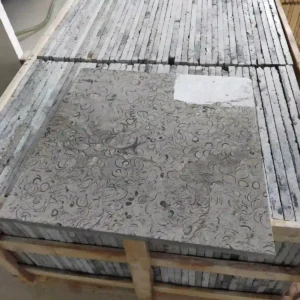
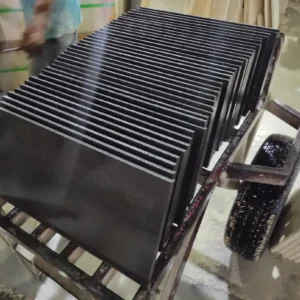
- Interior tiles and sheltered floors: thin, calibrated sections, laid on a screed or adhesive bed, maximizing area per pallet.
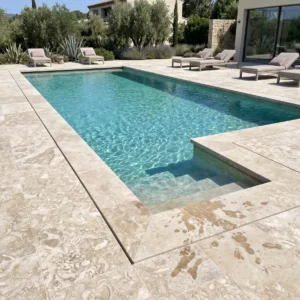
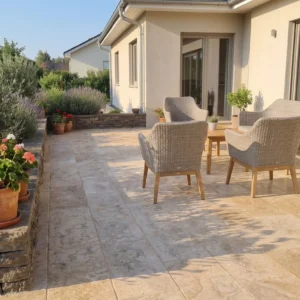
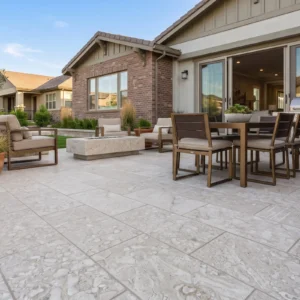
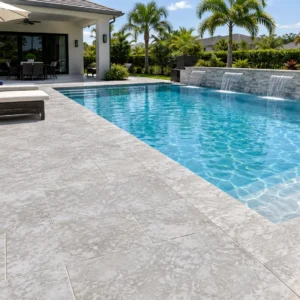
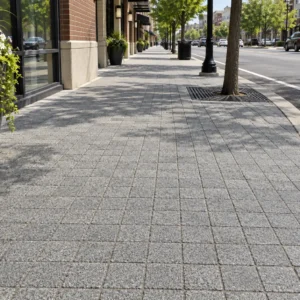
- Terraces, pool surrounds and garden paths: a mid-range slab thickness on a compacted, free-draining bed, with a textured face.
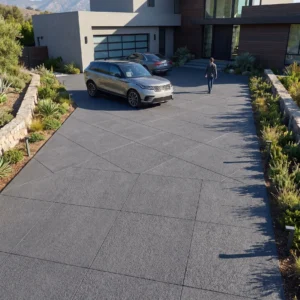
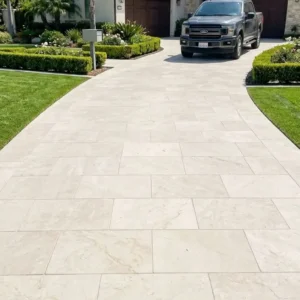
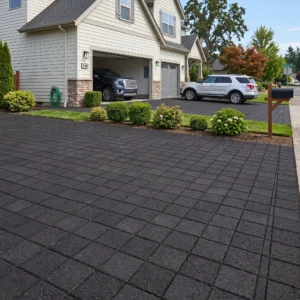
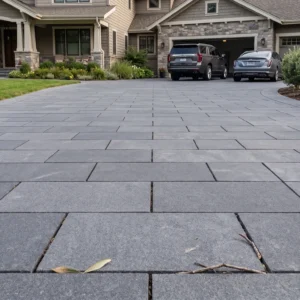
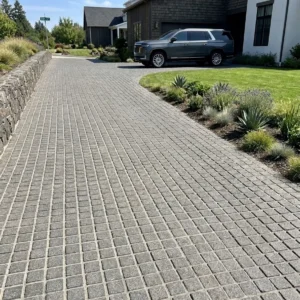
- Driveways, gate aprons and turning areas: heavier sections, or small units laid tightly, on a properly engineered base.
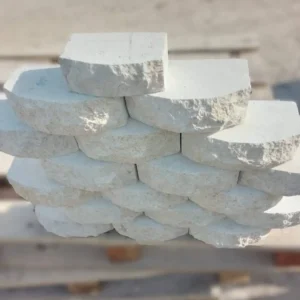
- Steps, copings and risers: cut-to-size pieces ordered from the same batch as the field, so the color run matches.
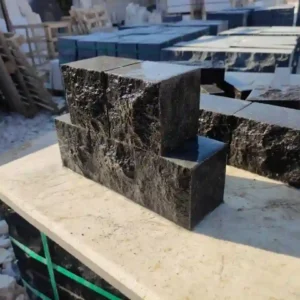
- Setts and cobbles: small units that follow curves and gradients without cutting, and travel well because they stack densely.
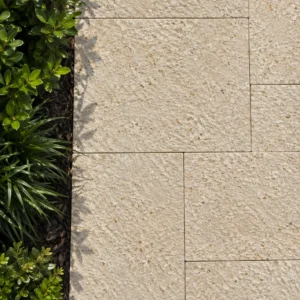
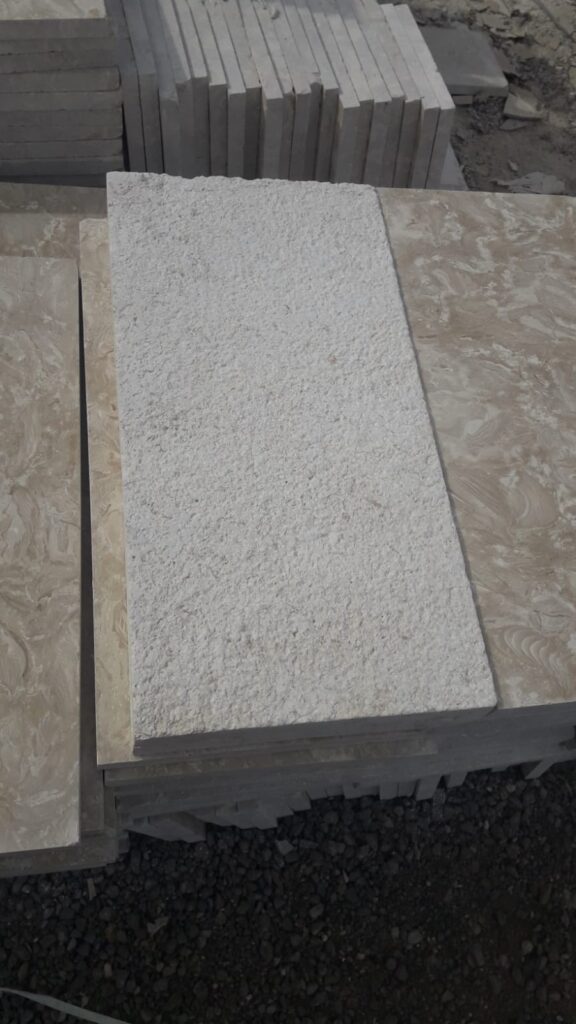
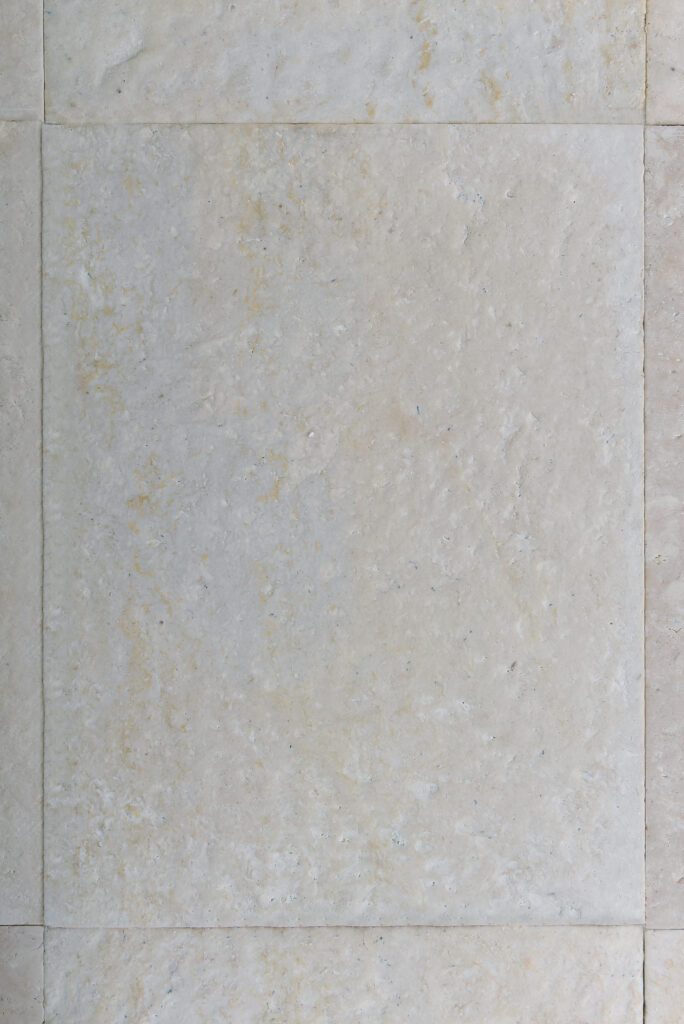
Two practical habits save real money. First, order the whole scheme in one shipment where cash flow allows, because a second container brings a second entry, a second set of charges and a second color run. Second, prove the stone before it travels. Ask for a piece you can wet, walk on barefoot in the sun and leave outdoors for two weeks before you commit a villa terrace to it. You can request a stone sample before you commit and settle the argument on site rather than on screen. Samples are small hand pieces, not pallets, and that is exactly what a finish decision needs.
Local Aggregate Below, Imported Stone Above
Saint Lucia has a real, established and locally owned quarry industry, and any imported-stone page that pretends otherwise deserves to be ignored. Wilrock Limited works a quarry and processing operation at Saphyr Estate in Laborie, producing screened aggregates, blocks, ready-mix and armor stone for coastal protection. Concrete and Aggregates Limited, part of the C.O. Williams group and trading since 1988, is a leading supplier of ready-mix, crushed rock and asphalt. Quarry Products Limited has operated since 1986, RG Quarry Limited supplies boulders and crushed aggregate, and Shuga, Sand and Stone Limited works under O.B. Sadoo Engineering Services. These are names your foreman already knows.
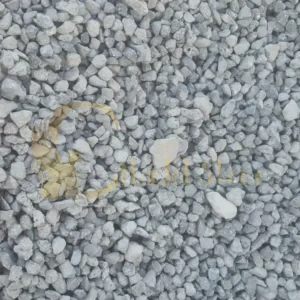
The relationship between those operations and an imported paving slab is layered, not competitive. Saint Lucian quarries supply the sub-base, the bedding aggregate, the armor stone and the concrete. Imported limestone, basalt and shellstone supply the wearing surface that sits on top of them. On a well-built terrace above Marigot Bay, most of the tonnage under your feet was won on this island, and the visible few centimeters came off a ship. Buy the base locally, keep the money and the haulage close to the site, and import only the calibrated surface that a dimension-stone plant produces.
- Specify local crushed aggregate for sub-base and open-graded bedding, sourced through your usual supplier.
- Use local ready-mix for edge haunching, step cores and any structural slab beneath the paving.
- Import only the calibrated wearing course: gauged slabs, tiles, setts, copings and cut-to-size specials.
- Match jointing sand and mortar to the local material so nothing on site fights anything else.
- Keep armor stone and coastal protection work with the operators who already run that line here.
There is a cultural point worth making too. Kwéyòl is spoken across the country and carries genuine national pride alongside English, the official language, and a supplier who bothers to learn how a place talks about itself usually bothers about the rest of the job as well. Send us your levels, your access constraints and your program dates, and we will come back with a load plan, a finish recommendation and an honest delivery window for Saint Lucia.