




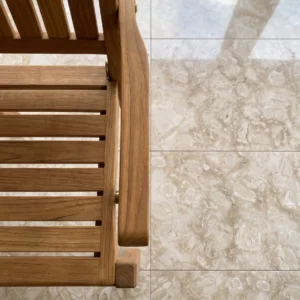
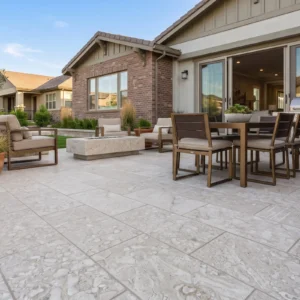
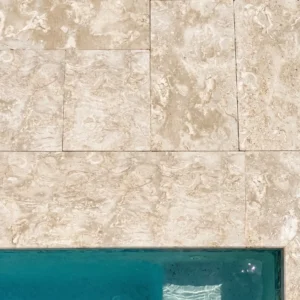
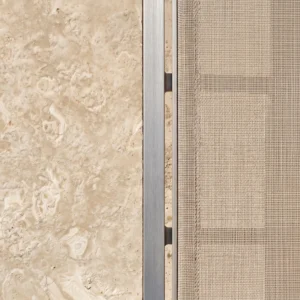





Most paving specifications reaching this island were written somewhere colder. They argue about freeze-thaw cycling, salt scaling from de-icing chemicals and winter maintenance, none of which will ever happen in Saint Lucia. Meanwhile the conditions that actually break external paving here go unmentioned: extraordinary rainfall intensity, saturated ground on steep volcanic terrain, sheet flow that undermines edges, biological growth in warm shade, salt-laden air along the north-west coast, and a sun strong enough to make surface temperature a comfort issue on a pool deck.
This page is the material argument for limestone outdoors in this country. It looks at what absorption and density actually mean in a hot, wet, coastal setting, how a pale stone behaves thermally, which surface textures hold grip when a squall passes over a terrace, how paving should be detailed on and above a slope, and where limestone is not the right specification at all. Freight and clearance are covered on our broad paving page, and interior tiling has its own. Here we deal with the stone itself and the ground beneath it.
Absorption and Density: What the Numbers Mean Here
Absorption is usually sold as a frost argument. Forget frost. In Saint Lucia a low absorption figure earns its keep in four other ways, and each of them is worth understanding before you compare two quotations that look similar on price.
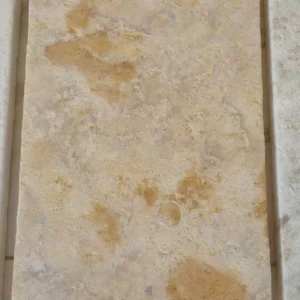
First, saturation weight. A porous paving unit that takes on water gains mass, and on a bedding layer that is itself saturated after a long rain event, that additional load is carried by ground with much reduced strength. Second, salt. On the north-west coast around Cap Estate, Rodney Bay and Marigot, wind-driven spray carries salt into the surface. Where water enters a porous stone, dries and leaves salt behind, crystallization works at the pore structure from the inside. A denser, tighter stone gives that process much less to work with. Third, biology. Warm, wet, shaded surfaces grow algae and lichen, and an open-pored stone holds the moisture those organisms need. Fourth, staining. On an outdoor kitchen or a bar terrace, absorption is what decides whether a spill becomes a memory or a mark.
- Ask for the absorption and bulk density results for the specific batch, not a generic brochure range.
- Ask for slip-resistance data on the exact finish you intend to use, wet as well as dry.
- Ask for compressive and flexural strength when the paving takes vehicles rather than furniture.
- Ask how the stone was tested and by whom, and expect a straight answer.
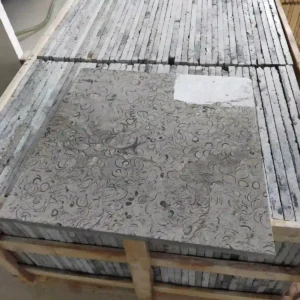
- Ask for a hand sample you can wet, weigh, leave outside and inspect two weeks later.
None of those requests is unusual. A supplier who cannot produce test data for external stone is asking you to buy a structural material on the strength of a photograph, which nobody would accept for concrete and nobody should accept for paving.
Designing Against 668 mm in Twenty-Three Hours
The Saint Lucian design event is rainfall, not wind. When Hurricane Tomas crossed the island on 30 October 2010 it arrived as a Category 2 system with peak winds around 100 mph, and it delivered up to 668 mm of rain in roughly 23 hours. Total damage and loss reached about US$336.2 million, some 43.4 percent of that year’s national output, and eight people died. It remains the latest-in-the-calendar-year Atlantic hurricane on record to strike the Windward Islands, and it is the storm every adult here remembers.
Design the drainage for that, and ordinary weather takes care of itself. The paving is the least of it; the detailing beneath and around the paving carries the water. Where a terrace or driveway sits above falling ground, the question is not whether the surface sheds water but where the water goes once it has been shed, and what it does to the ground it lands on.
- Use permeable or open jointing where the sub-base can accept and release water safely.
- Bed on open-graded aggregate rather than a closed, water-trapping layer.
- Give every surface a positive fall, and give large areas more than one direction of fall.
- Design edge restraint that will not be undermined by sheet flow across or off the paving.
- Intercept water above a slope with a channel or drain rather than letting it discharge over the crest.
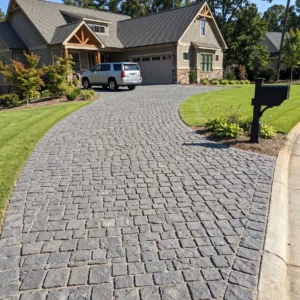
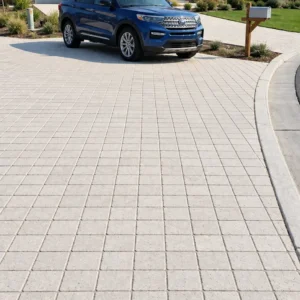
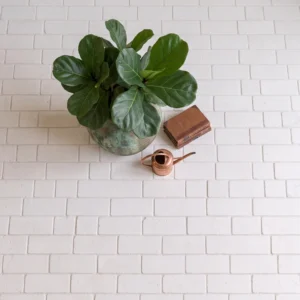
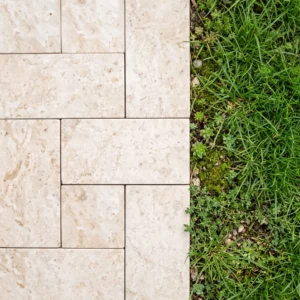
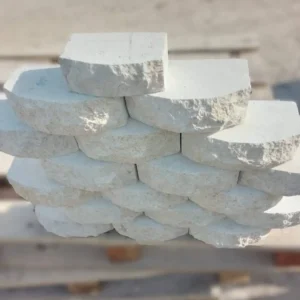
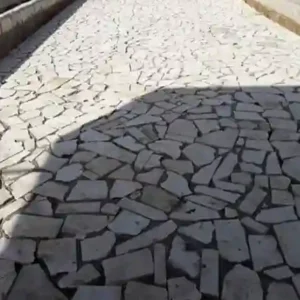
Where the design allows it, limestone paving for outdoor use suits open-jointed construction well, because the units are stable, dimensionally consistent and easy to lift and reset if a drain has to be rodded or a channel altered later. That reversibility is worth far more in a mountainous, high-rainfall country than it is on a flat suburban plot.
Slope, Scour and the Landslide Lesson
The critical fact about Tomas was not the wind speed. Most of the destruction came from landslides that cut roads, destroyed bridges and washed away entire river banks after the ground had taken on more water than it could hold. That is the specific hazard of steep volcanic terrain, and it should change how hardscape is built on any Saint Lucian hillside site.
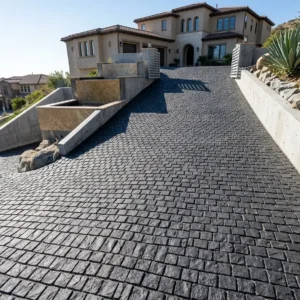
Paving contributes to slope behavior in two ways: it changes where water enters the ground, and it adds load. Both are manageable, but only if they are considered as part of the ground design rather than as a finish applied at the end of a project. On a hillside terrace the sub-base, the drainage and the edge detail deserve an engineer’s attention, and the choice of stone is the easy part of that conversation.
- Never discharge collected surface water informally over the crest of a slope.
- Separate sub-base from subgrade with a geotextile so fines do not migrate and voids do not form.
- Restrain edges structurally on the downhill side, with haunching that is founded, not floating.
- Keep planting and irrigation lines clear of the paving zone where saturation risk is high.
- Inspect edge restraint and joints after any major rain event, and reset small movements early.
The practical advantage of unit paving over a monolithic surface shows itself here. When ground moves slightly, a poured slab cracks and the repair is visible forever. A unit-paved terrace can be lifted piece by piece, the base made good, and the same stone relaid so the repair disappears.
Pale Stone, Strong Sun and Surface Temperature
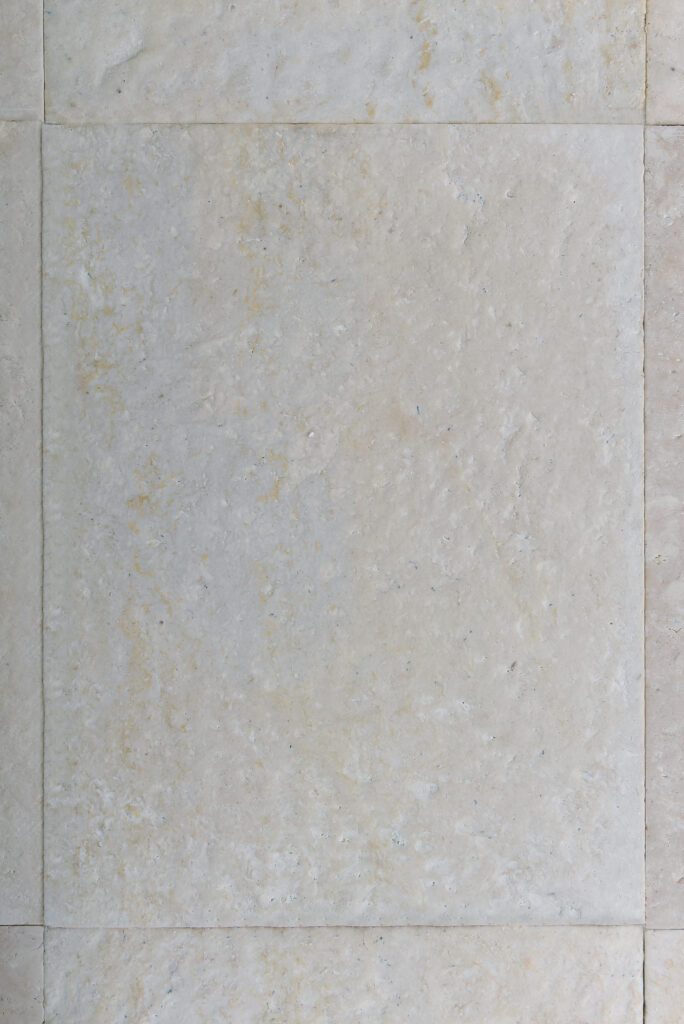
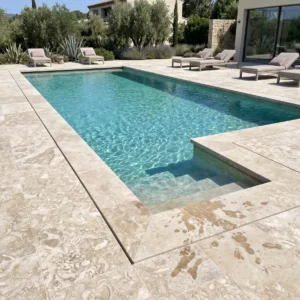
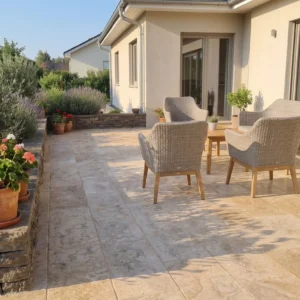
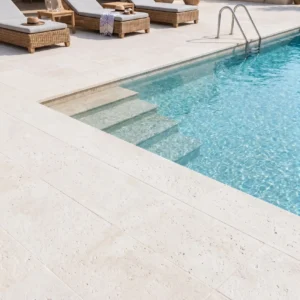
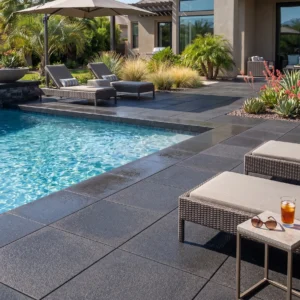
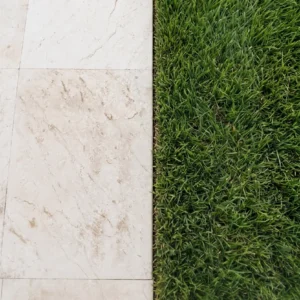
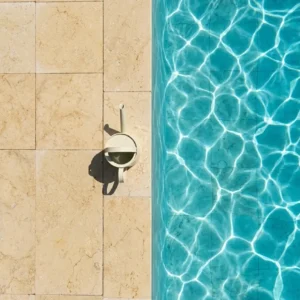
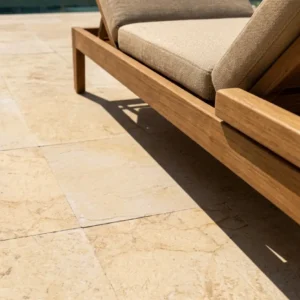
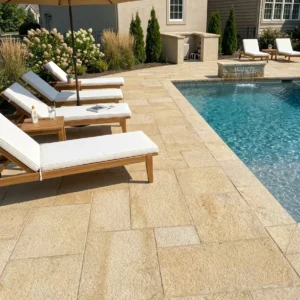
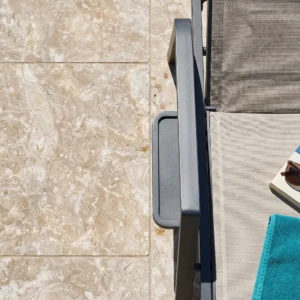
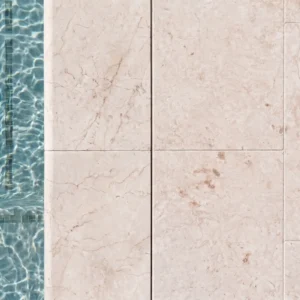
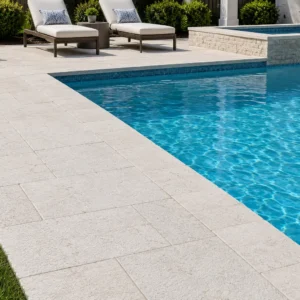
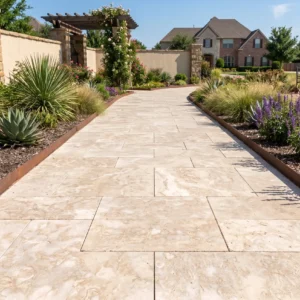
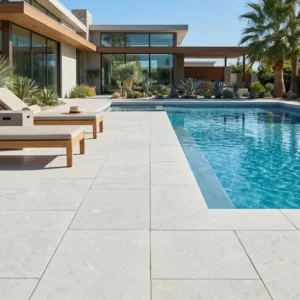
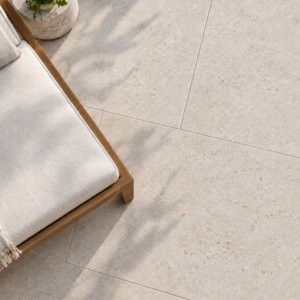
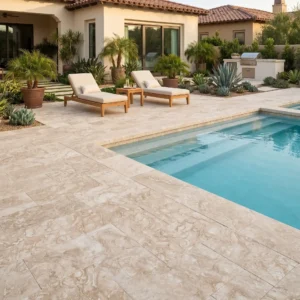
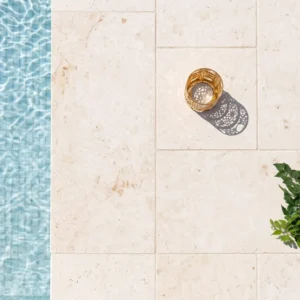
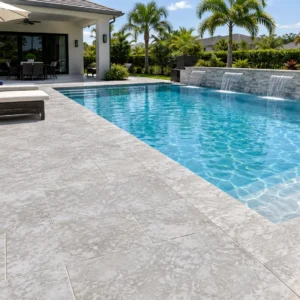
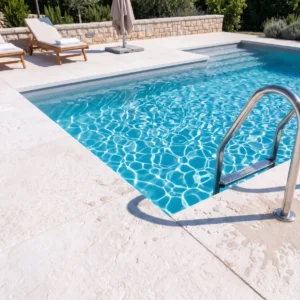
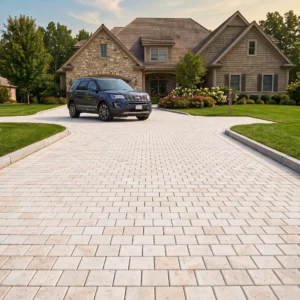
Solar behavior is a genuine comfort specification outdoors, not an aesthetic preference. A pale limestone reflects a large share of incident sunlight and therefore runs cooler underfoot than a dark surface in the same position. Around a pool, on a sun terrace or on a barefoot route between a villa and a beach path, that difference is the difference between a surface people use in the afternoon and one they hop across.
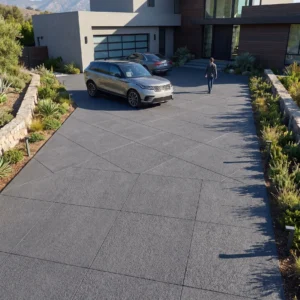
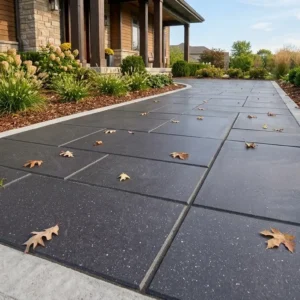
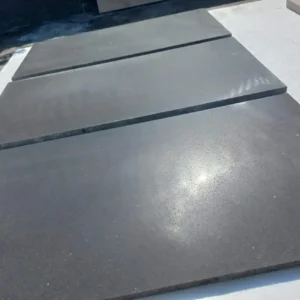
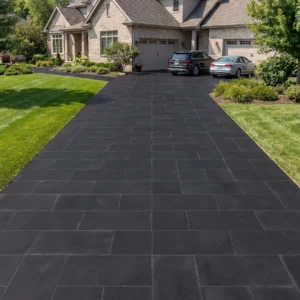
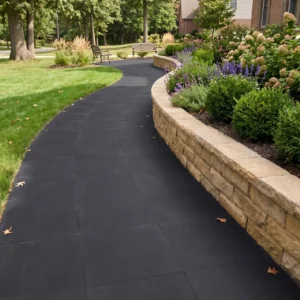
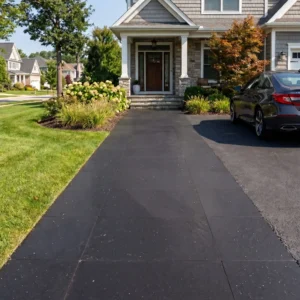
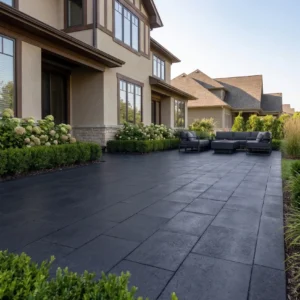
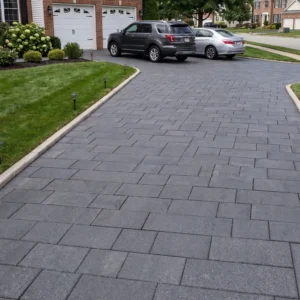
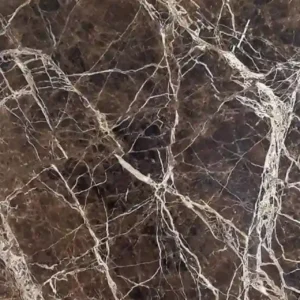
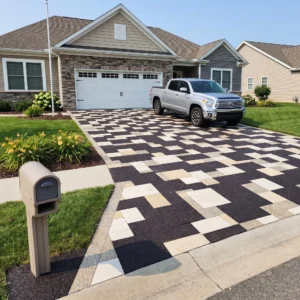
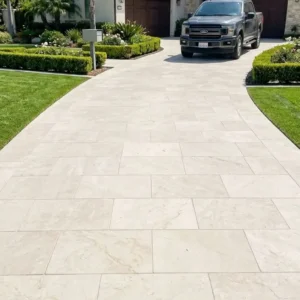
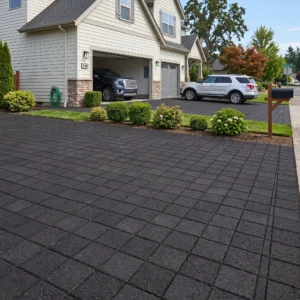
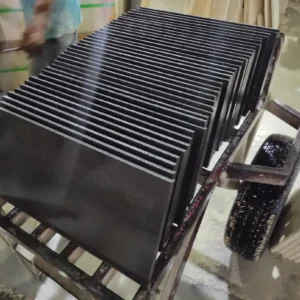
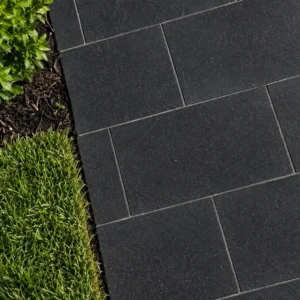
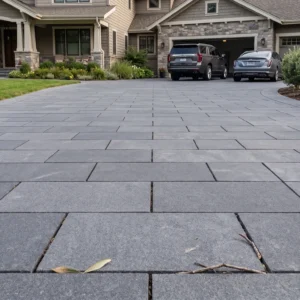
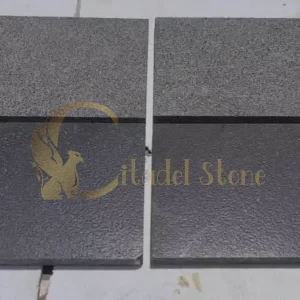
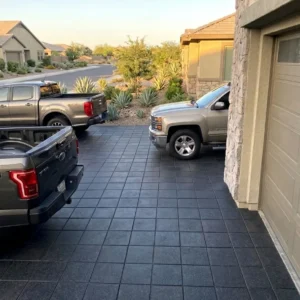
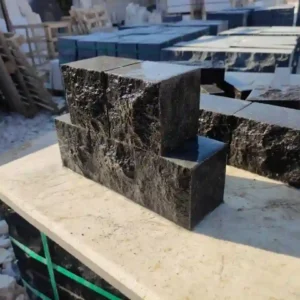
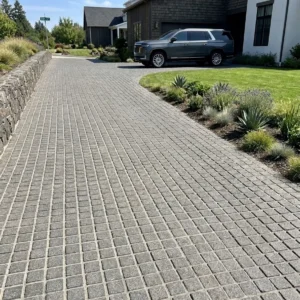
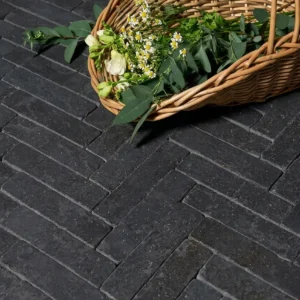
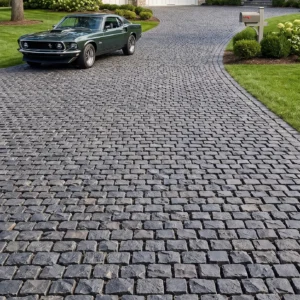
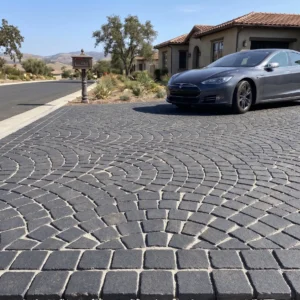
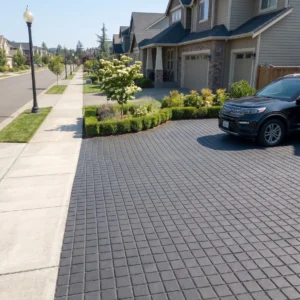
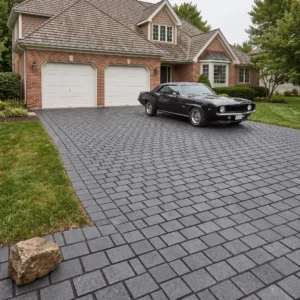
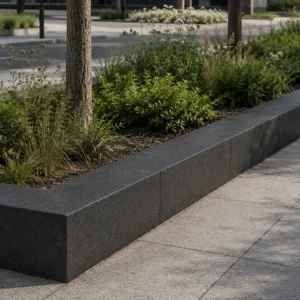
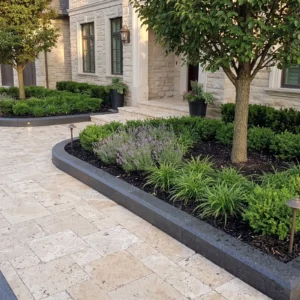
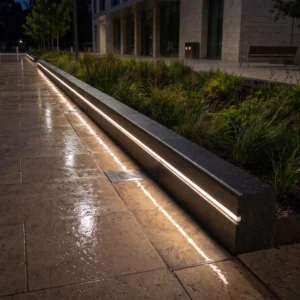
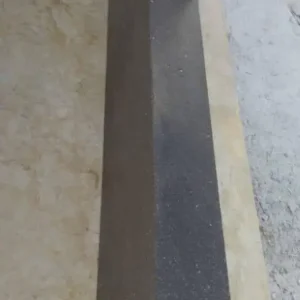
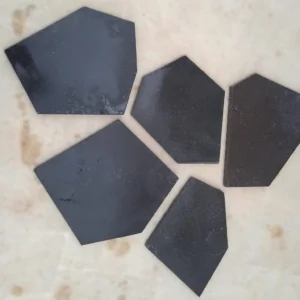
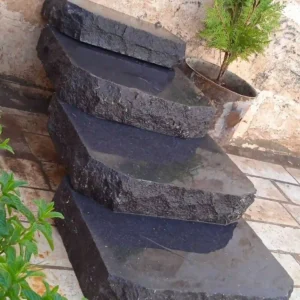
Darker stone is not thereby disqualified; it simply belongs in different places. Our basalt paving cut to size is excellent for shaded courtyards, driveways, parking aprons, edging courses and contrast banding, where nobody stands barefoot and where the deeper tone hides tire marks and traffic film. The intelligent scheme mixes them: pale limestone on the sunlit barefoot zones, darker stone where vehicles and shade dominate, with the change of material doing useful visual work at the boundary.
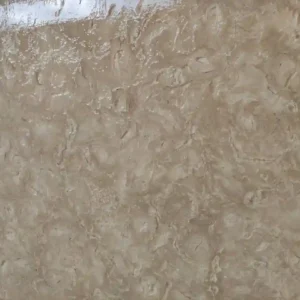
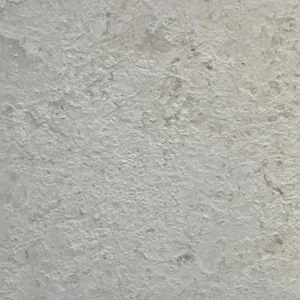
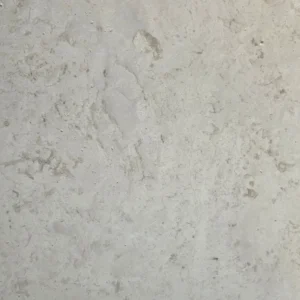
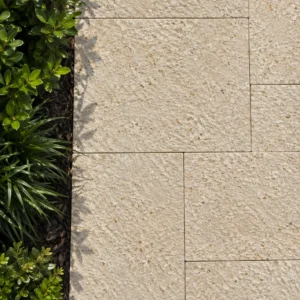
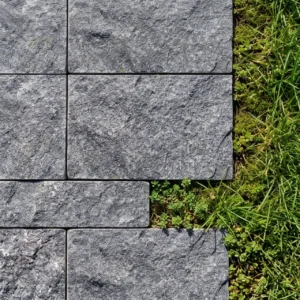
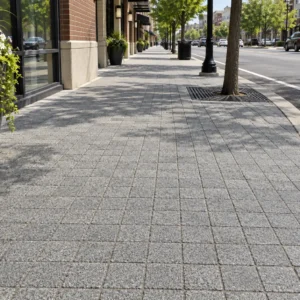
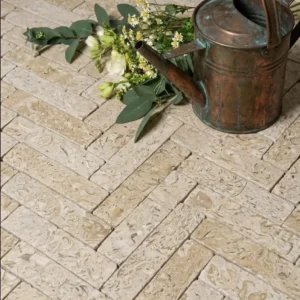
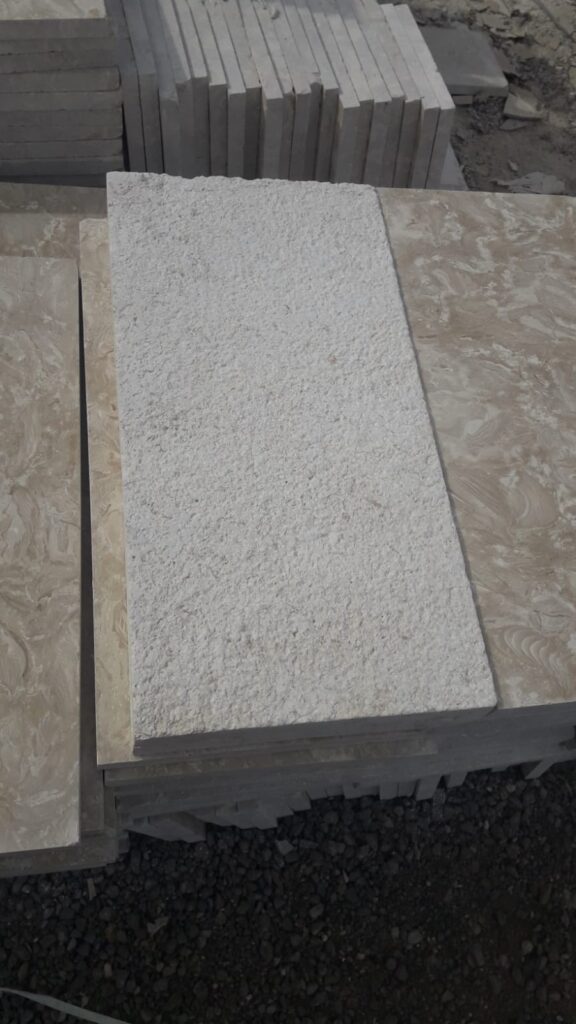
Glare is the counterweight to reflectance. A very smooth pale surface in full tropical sun can be uncomfortable to look at, particularly on a large open terrace facing west into an evening sun. Texture solves it. A bush-hammered, sandblasted or tumbled face scatters light instead of bouncing it, which reduces glare and improves grip in the same operation. That is why textured pale limestone, rather than smooth pale limestone, is the sensible external default in this climate.
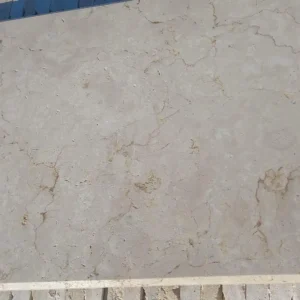
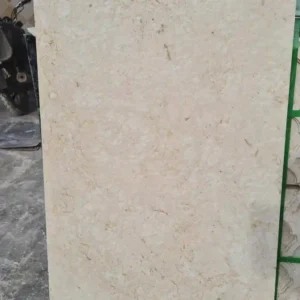
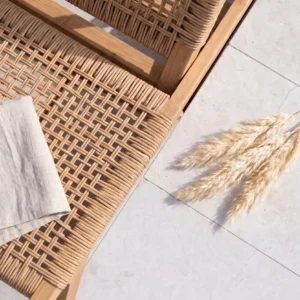
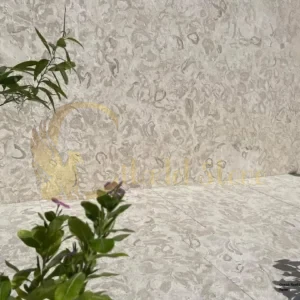
Tone deserves a word of warning as well. Stone looks different here from how it looks in a showroom or a photograph, because the light is harder, the sky is brighter and the surroundings are intensely green. A tone that appears warm and creamy indoors under artificial light can read almost white on an open terrace at midday, and a mid-tone that looks safe on a screen can turn heavy against a dark planted backdrop. The only reliable method is to view a wetted sample outdoors on the site itself, at the time of day the surface will mostly be used, with the surrounding materials present. Ten minutes of that saves an argument that no amount of specification writing can settle afterward.
Grip: Finishes for Rain, Pools and Shade
Rain arrives here suddenly and heavily, and a terrace can go from dry to running water in under a minute. Slip resistance is therefore not a pool-edge concern only; it is a whole-surface concern. The external finishes worth considering all work by giving the foot something to key against while allowing a water film to break up rather than sit continuous.
- Bush-hammered: a pronounced, durable texture, excellent for ramps, pool surrounds and sloping paths.
- Sandblasted: a finer, even grip with a softer look, well suited to large terraces.
- Tumbled: rounded arrises and a worn surface, forgiving underfoot and visually relaxed.
- Flamed: a coarse, open texture for the most demanding wet and sloped positions.
- Polished: for interiors only; on external Saint Lucian paving it is a mistake.
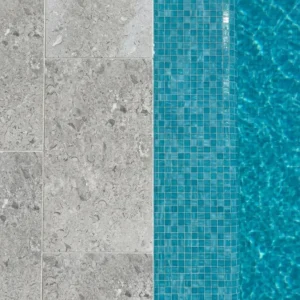
Two details matter beyond the face itself. Pool copings should have a rounded or bullnosed edge with a textured top, so a swimmer pulling out of the water meets a comfortable arris and a grippy surface at once. And in deep shade, particularly under mango or breadfruit canopy where organic debris falls constantly, expect biological growth regardless of the finish and plan for periodic cleaning. A textured face traps slightly more, but it also stays safer when a film forms, which is the trade worth making.
Jointing plays into grip as well. Narrow, tight joints on a smooth slab give a continuous slick plane. Slightly wider joints in a textured surface interrupt water flow and give the foot regular purchase. On steep external steps, joint layout should run across the direction of travel rather than along it.
Honest Limits: Where Limestone Should Not Go
Limestone is a calcium carbonate stone. That chemistry gives it the warmth, workability and even weathering that make it a superb paving material, and it also sets real boundaries. Any supplier who claims a single material suits every position on a site is selling, not specifying.
- Acid exposure: outdoor kitchens with heavy citrus and vinegar use, or any area cleaned with acidic products, will etch.
- Heavy plant and pallet-truck yards: industrial service areas around Vieux Fort or a hotel back-of-house want a harder wearing material.
- Direct wave impact and coastal protection: that is armor stone work, and Saint Lucian quarries already supply exactly that product.
- Permanently wet, deeply shaded surfaces with no maintenance plan: growth will win, whatever the stone.
- Unengineered ground on a steep slope: no paving material rescues a base that was never designed.
Being clear about these limits is what makes the recommendations credible everywhere else. A textured pale limestone on a properly drained villa terrace above Marigot Bay, or around a Cap Estate pool, performs well in that position for many years and improves in appearance as it weathers. The same stone laid in a wash-down service yard will look tired within two seasons, and that outcome is a specification failure, not a material failure.
The practical response is zoning rather than compromise. Keep limestone on the surfaces people occupy, and use a harder or more chemically tolerant material on the two or three positions that genuinely punish it, with the junction between them designed as a deliberate line: a border course, a change of level, a drainage channel or a planted strip. Hotel and villa schemes in this climate almost always end up as a small family of materials rather than a single one, and the schemes that age best are those where somebody decided the boundaries early instead of discovering them after the first year of use.
Where Poured Concrete Works and Where Stone Works
The surface most often specified alongside imported stone in Saint Lucia is concrete: broom-finished, stamped or exposed-aggregate, poured from ready-mix supplied by the island’s own producers, over a base of locally crushed aggregate. That industry is long-established, locally owned and genuinely good at what it does, and the comparison worth making is one of function, not of quality.
Poured concrete gives you speed, monolithic strength and a surface that is easy to form to complex shapes. Its movement is controlled with joints set out in advance, its thermal behavior follows the mix, its finish is decided on the day it is placed, and a later alteration is a cutting and patching job. Natural stone units give you a surface with depth and variation, individual pieces that can be lifted and reset, a texture chosen after the fact rather than troweled in, and a surface whose appearance deepens as it weathers. Where ground has to move, stone forgives; where a base has to be reworked, stone comes up.
- Choose poured concrete for structural slabs, ramps, cores, haunching and anywhere formwork beats laying.
- Choose stone units for the visible wearing surface: terraces, pool decks, paths, steps and entrances.
- Buy sub-base, bedding aggregate and ready-mix from Saint Lucian producers; the haulage economics alone make that obvious.
- Import only the calibrated surface layer, in matched batches with the specials cut to size.
- Keep a small quantity of spare units on site so a future repair matches the original run exactly.
Read that way, the two materials are collaborators rather than rivals: the island’s quarries and ready-mix plants build the structure, and imported calibrated stone provides the few centimeters that people actually see and touch. Send us your exposure, falls and traffic loads, and we will return test data, a finish recommendation and a straight answer about where limestone belongs on your Saint Lucian site.