




















Paving specifications written for the Caribbean are often quietly recycled from temperate markets, where the number that matters is freeze-thaw resistance. On Bonaire that number is irrelevant. It never freezes here. The mechanism that takes paving apart on this island is salt crystallization, and it is driven by a combination of conditions this island has in full: salt pans on the island itself, salt aerosol carried inland on a northeast trade wind that averages around 7 m/s, and annual rainfall of only 350 to 450 mm, which is far too little to rinse a surface clean.
That changes what a technical datasheet is for. The same absorption figure that predicts frost damage in a cold market predicts salt damage here, but the failure looks different and it arrives by a different route. This page works through what absorption and density actually mean on a Bonaire terrace, how a pale stone behaves at roughly 12 degrees north, what makes a wet surface safe around a pool or a rinse shower, where limestone should be replaced with something else, and how imported stone sits on top of the concrete and aggregate the island already builds with.
Absorption, Density And The Salt Mechanism
Here is the sequence you are designing against. Salt-laden aerosol lands on the paving, day after day. Overnight dew, an occasional shower or a hose-down carries that salt into solution and the solution moves into the pore network of the stone. Then the sun and the constant wind evaporate the water quickly, and the salt does not leave with it. It crystallizes inside the pores. Crystal growth in a confined space exerts real pressure on the pore walls, and repeated cycles fatigue the surface, which then powders, sugars or spalls away in thin flakes. Nothing about that process is dramatic on any single day, which is exactly why it is missed at specification stage.
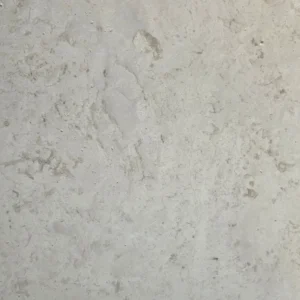
How fast it happens depends on how much salt solution the stone can take up and how connected its pores are. That is what a water absorption figure is measuring, and it is the figure to look for first on a datasheet for this island. Density and compressive strength matter too, but they answer different questions: density tends to track with low absorption and tells you something about how the stone will resist abrasion, while compressive strength speaks to load rather than durability. Ask for figures on the specific lot you are buying rather than a generic range for the material type, because limestone is not one thing and the spread within the family is wide.
- Water absorption is the governing figure on Bonaire, because it predicts salt uptake rather than frost damage
- Low absorption plus a tight, poorly connected pore structure is what resists salt crystallization
- Density is a useful proxy for abrasion resistance and generally moves with low absorption
- Compressive strength answers load questions and says little about weathering in salt air
- Ask for lot-specific test figures, not a family average, and keep them with the project record
Pale Stone Under A Low-Latitude Sun
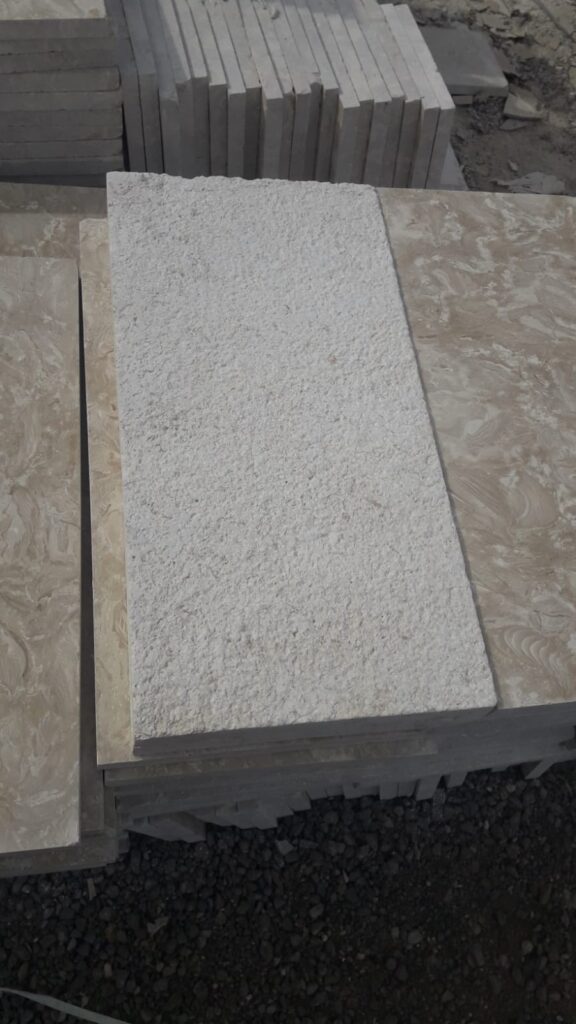
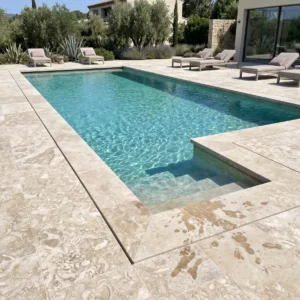
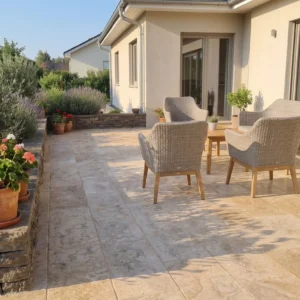
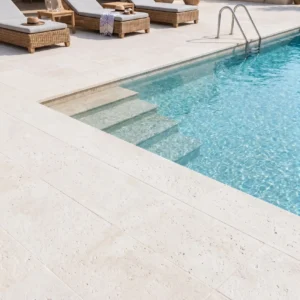
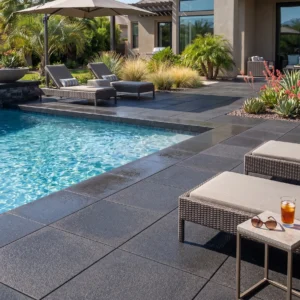
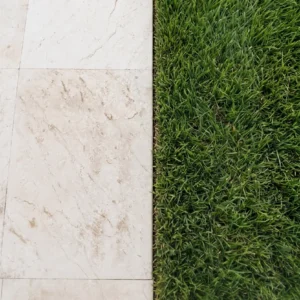
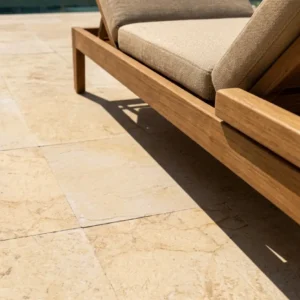
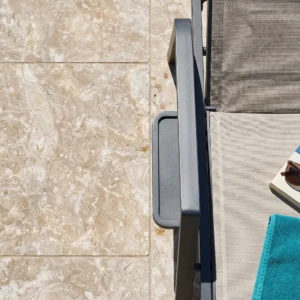
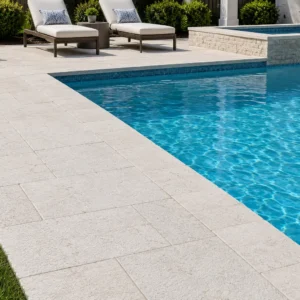
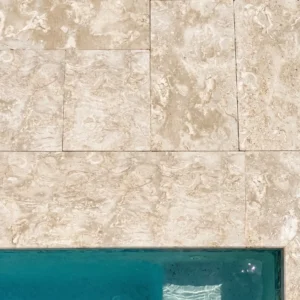
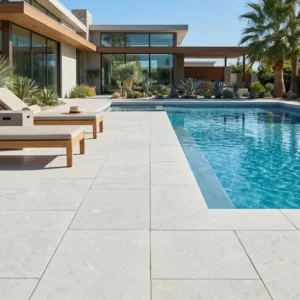
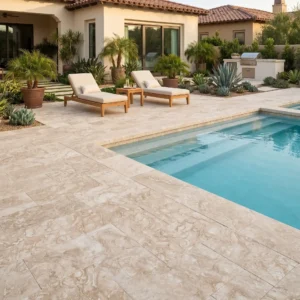
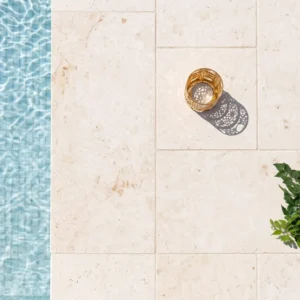
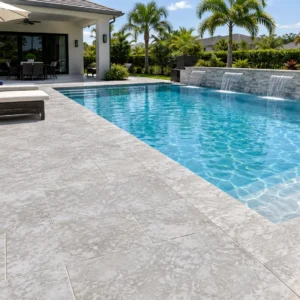
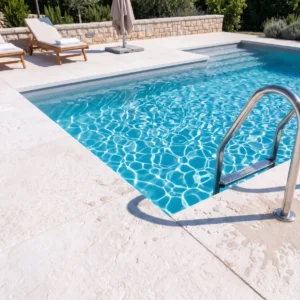
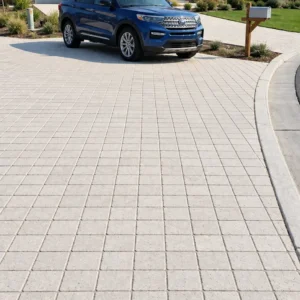
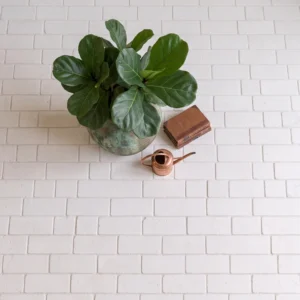
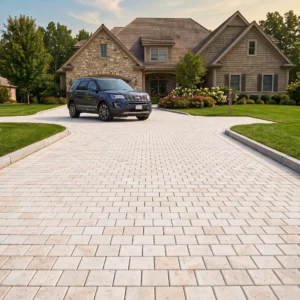
Bonaire sits at roughly 12 degrees north, and a low latitude combined with a semi-arid climate keeps the solar load on horizontal surfaces high through the year. Surface temperature on a paved terrace is largely a function of how much of that energy the stone reflects. Pale stone reflects more and runs cooler at the surface than dark stone does, and on a pool deck or a barefoot terrace that difference is not a matter of comfort language, it is the difference between a surface people can cross at two in the afternoon and one they cannot.
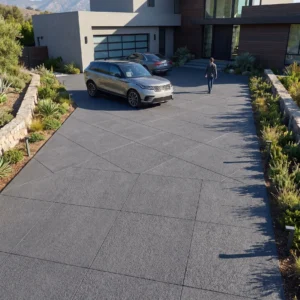
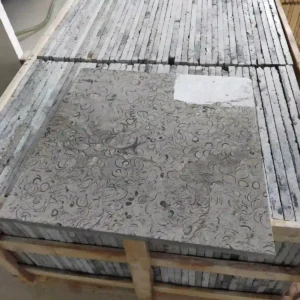
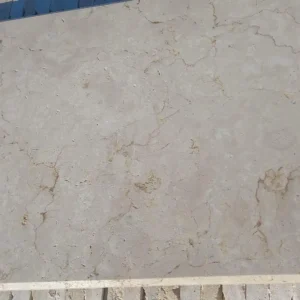
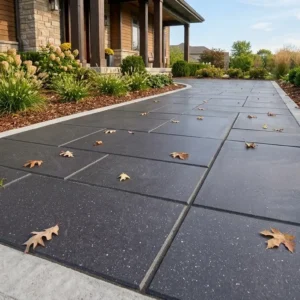
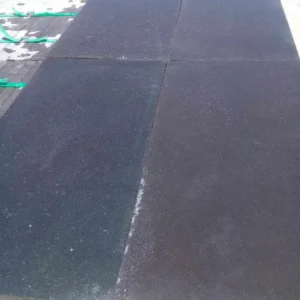
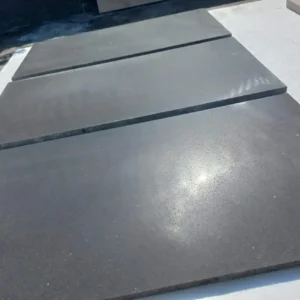
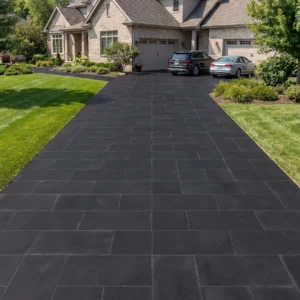
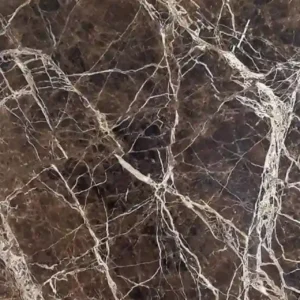
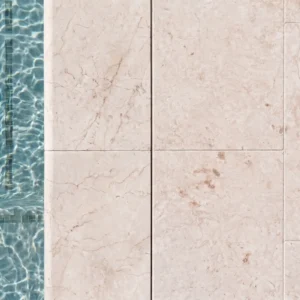
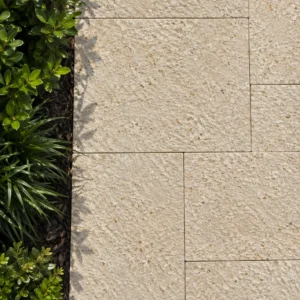
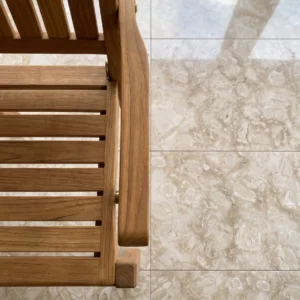
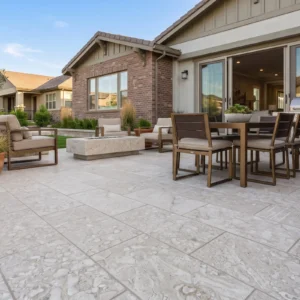
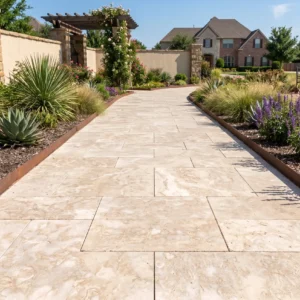
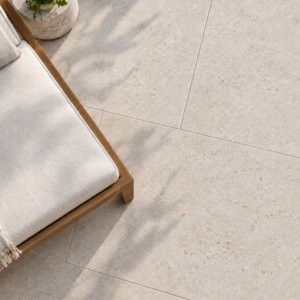
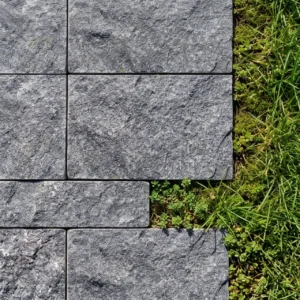
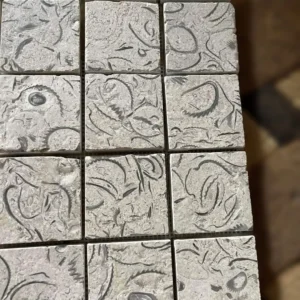
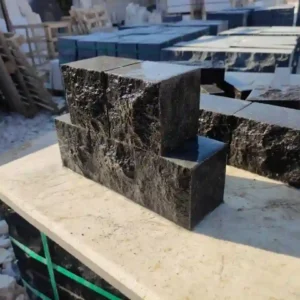
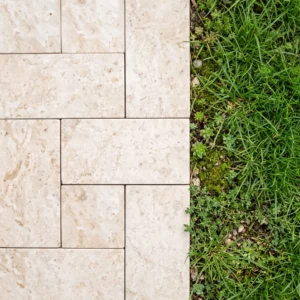
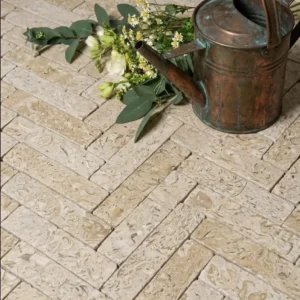
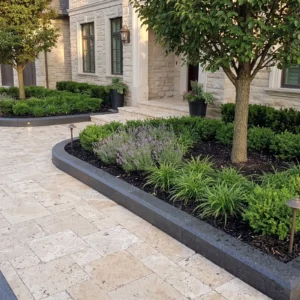
The trade-off is glare. A very light surface with a smooth face throws light back into the eye, and next to a shaded interior it can create an uncomfortable contrast step at the door. Texture is the answer rather than tone: a brushed or lightly bush-hammered face scatters the reflection without darkening the stone, so you keep the thermal benefit and lose the sheet of light. There is a second, quieter consequence of high surface temperature, which is movement. Hot slabs expand, so joint widths and movement joints have to be sized for a genuine daily temperature swing at the surface, and butt-jointed large slabs in full sun are asking for trouble. Absorption band, tone and format all interact, which is why our graded limestone paving line is sorted by technical band as well as by size.
- Pale tones reflect more solar energy and run measurably cooler underfoot than dark ones
- Texture, not tone, is the tool for controlling glare on a bright terrace
- Size joints and movement joints for surface temperature swing, not just for laying tolerance
- Avoid butt-jointed large slabs in full sun where there is no room for expansion
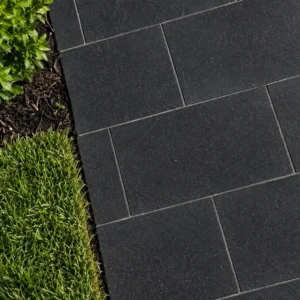
- Keep the darkest units for shaded areas and for zones where wear rather than heat dominates
Grip Where Salt, Water And Bare Feet Meet
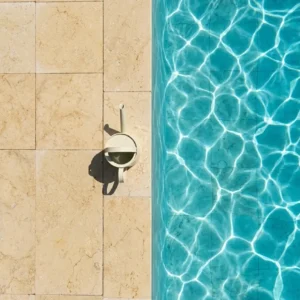
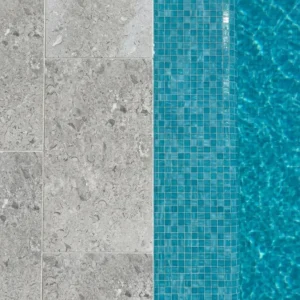
Bonaire is a diving island, and that produces wet-surface conditions a standard paving specification does not anticipate. Rinse tanks and gear-wash areas run wet for hours. People walk from them to the house in bare feet or bootees. Pool surrounds, outdoor showers and the strip between a boat and a terrace stay damp through the day. In each of those places the coefficient you care about is wet slip performance, and it comes from the finish and the joint layout rather than from the stone type.
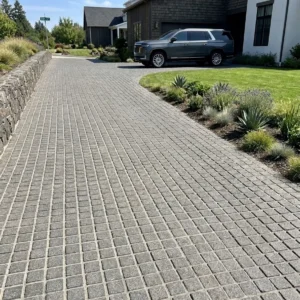
A smooth honed face outdoors is an easy mistake to make here, and the salt makes it worse: as a thin salt film dries it can leave a surface that feels fine to a shoe and treacherous to a wet foot. Brushed, sandblasted and lightly bush-hammered faces all break the water film and keep working when the surface is wet. The joint pattern helps too, because every joint is an edge that interrupts a continuous sheet of water, so a smaller unit or a running pattern outperforms a very large butt-jointed slab in a wet zone even in the same finish and the same stone. Falls matter as much as texture. Set the paving to drain positively, away from the house and away from the shoreline where the site allows it, so water is moving rather than standing.
- Specify wet grip by finish and joint density, not by material name
- Brushed, sandblasted and light bush-hammered faces hold up when a surface is permanently damp
- Smaller units and more joints break the water film better than a single large plane
- Rinse areas and gear-wash zones are the wettest surfaces on the plot and deserve the most texture
- Set positive falls so water leaves the surface instead of drying in place and depositing salt
Where Limestone Is The Wrong Answer
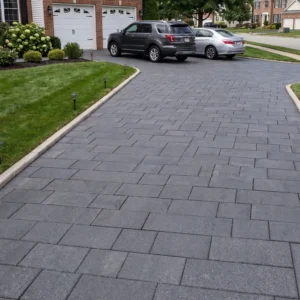
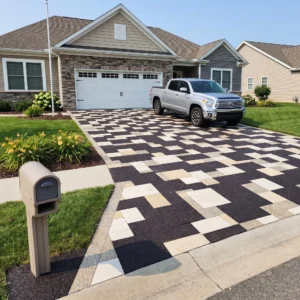
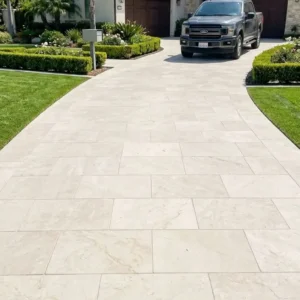
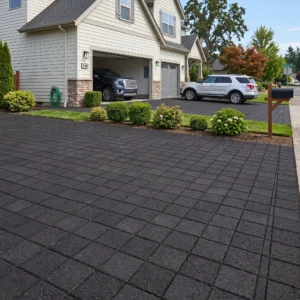
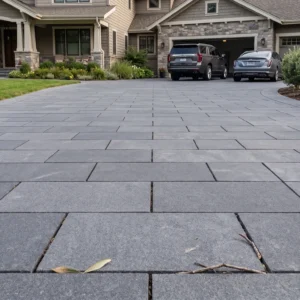
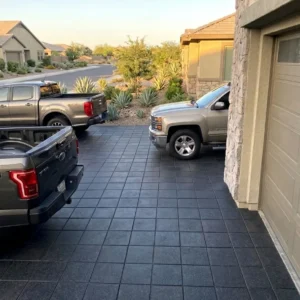
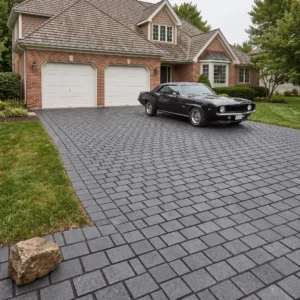
An honest supplier tells you where a material stops working, and there are several places on a Bonaire plot where limestone is not the right specification. The first is heavy vehicle turning. Point loads and wheel scrub concentrate stress on a small area and on the arris of a unit, and a slab format sized for a terrace will not survive a delivery truck pivoting on it. That work belongs to small units bedded on concrete, or to a denser stone with a thicker section.
The second is the gear-drop zone. Steel cylinders, weight belts and toolboxes get set down hard, and a honed limestone deck will chip where that happens repeatedly. Use a textured, thicker unit there, or accept that the area is a wearing zone and detail it as one. The third is the direct splash strip at the water. Constant wetting and drying with full-strength seawater is the harshest condition on the island, and in any case the Marine Park boundary starts at the high-water mark, so that strip is a consents question before it is a materials question. The fourth is anywhere acid is handled, such as a pool plant area or a workshop apron. Limestone is calcareous and reacts to acids, and no sealer makes that go away permanently. The fifth is the combination people reach for most often and should not: a highly absorptive pale unit on an exposed windward frontage, where continuous salt load meets an open pore structure.
- Vehicle turning circles and delivery aprons: use small units on concrete or a denser, thicker section
- Dive-gear and tank staging areas: expect impact chipping on a smooth face and detail accordingly
- The splash strip at the shoreline: the harshest exposure on the island, and a permitting question too
- Pool plant rooms and workshop aprons where acids are handled: limestone reacts and will etch
- High-absorption pale units on windward frontage: a reliable route to a disappointed client
Imported Stone, Local Concrete And The Layers Between
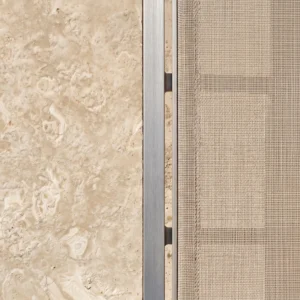
Bonaire builds in concrete, block and render. That is the structural language of the island and it is not in competition with what arrives in a container. A paved surface is a stack of consecutive layers: prepared subgrade, sub-base, base, bedding, then the wearing surface. Everything below the bedding line is concrete and graded aggregate specified by your contractor. Imported cut stone is the layer on top, the part people walk on and look at. The two are consecutive, not rival, and a specification that treats them as alternatives has misunderstood the detail.
There is a second point that belongs here and it is not a technical one. Historic building on Bonaire used stone cut from the coastal limestone formations, and the small houses at White Pan and Orange Pan on the south coast, on the road toward the Pekelmeer salt pans, date from 1850 and hold protected monument status. They stand as memorials to enslaved salt workers, and they are a place of remembrance rather than a design reference. Taking natural material from the island today is separately an offence: collecting shells, coral, sand or other natural material carries fines cited at 100 to 500 dollars depending on quantity, and permission from the bestuurscollege is required for collection within the Marine Park. That has a direct practical consequence for paving. Beach sand cannot lawfully be taken and is salt-loaded in any case, so it has no place in a bedding or jointing specification. Imported, washed and graded material is the correct answer, and imported cut stone is the lawful modern route to a stone surface here.
Bedding, Jointing And Keeping Silt Off The Reef
Reef health is the island economy, and the Marine Park covers all water around Bonaire and Klein Bonaire from the high-water mark down to 60 m depth under STINAPA management. Four Ramsar wetland sites at Washington Slagbaai, Klein Bonaire, Lac Baai and Pekelmeer were extended with a 500-meter buffer zone in 2021, and Washington Slagbaai National Park alone covers almost a quarter of the island. What that means for a paving contractor is that construction-stage sediment control is not a box-ticking exercise. Silt washed off a site during the November and December rains has somewhere very specific to end up.
Design the assembly to reduce runoff rather than to shed it faster. Permeable jointing lets a share of the rainfall through the surface instead of concentrating it at an outfall, and it takes the peak off a short, intense storm. Grade falls toward planted areas, soakaways or a settlement point rather than straight over a shoreline edge. During construction, keep cut-off waste, saw slurry and washdown away from any storm path, sweep rather than hose where you can, and stage a wash-out area well inland of the tide line. Bedding material should be washed and imported or otherwise lawfully sourced, never taken from a beach. Before any of it is fixed on a drawing, put a piece in salt air on the actual plot for a few weeks and look at what the site does to it.
- Marine Park protection begins at the high-water mark, so shoreline work is work at the park boundary
- Four Ramsar wetland sites were extended with a 500-meter buffer zone in 2021
- Permeable jointing takes the peak off a short, intense rainfall event rather than concentrating it
- Control saw slurry and washdown during construction and keep both out of the storm path
- Use washed, lawfully sourced bedding material; beach sand is both illegal to take and salt-loaded
Specifying Limestone Paving You Can Defend
A defensible Bonaire specification has four things in it. Absorption figures for the actual lot, not a family range. A finish chosen for wet grip in each zone rather than one finish applied everywhere. A duty allocation that keeps limestone out of the places listed above and puts something else there instead. And a drainage and sediment strategy that assumes the November rains will arrive all at once, because on this island they generally do.
Put that on paper and the rest is arithmetic. Square meters by zone, thickness by duty, finish by wetness, plus a cutting allowance and a spare-unit allowance for later repairs. We will match the technical bands against it, be direct about anywhere limestone is not the right call, and send samples so the stone is judged in island light rather than on a screen. Tell us where the water goes and how the surface gets used, and we will specify to that rather than to a catalog.