







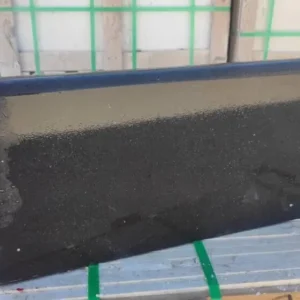
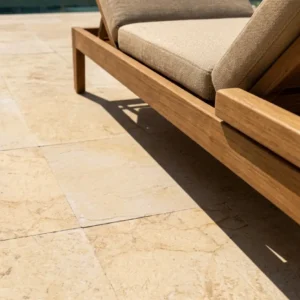
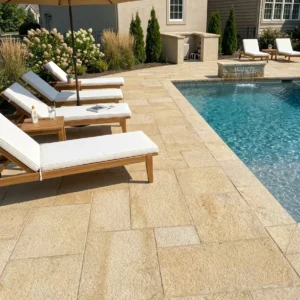
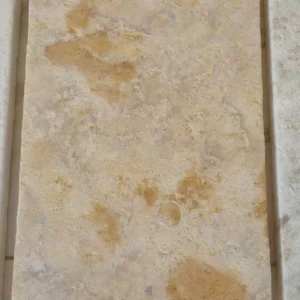
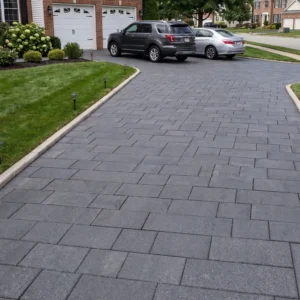

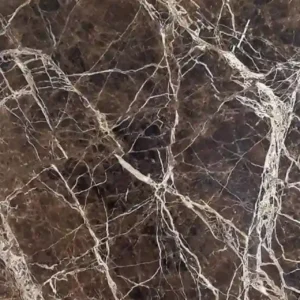
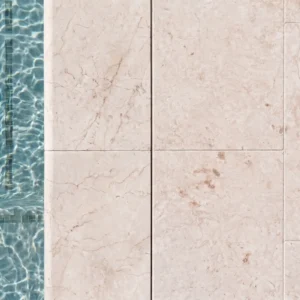
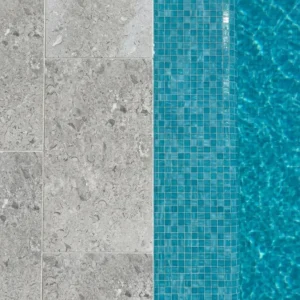
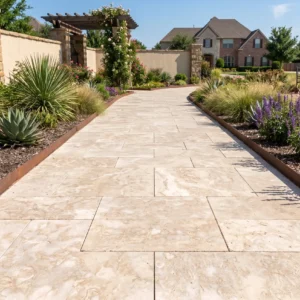
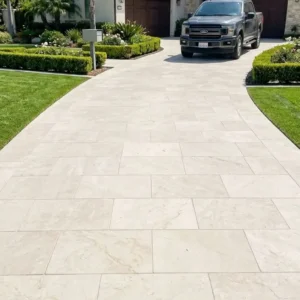
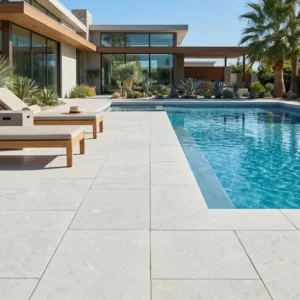
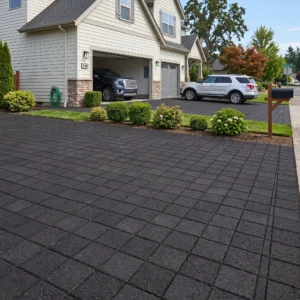
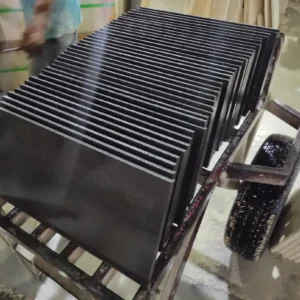
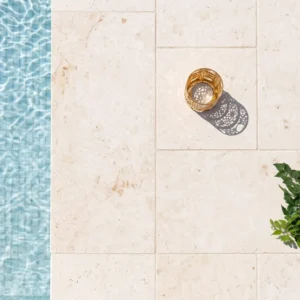
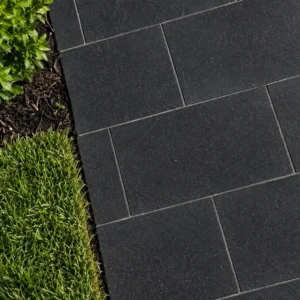

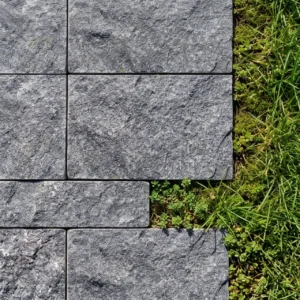
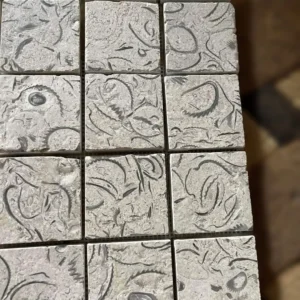
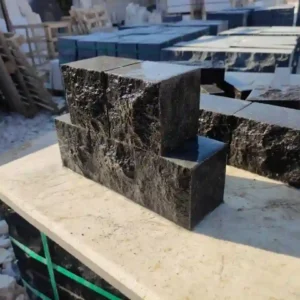
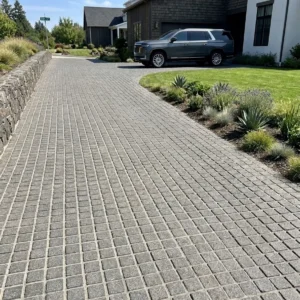
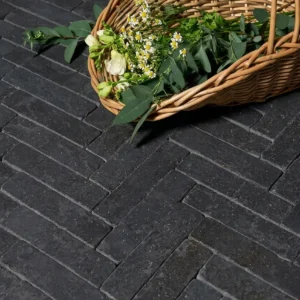
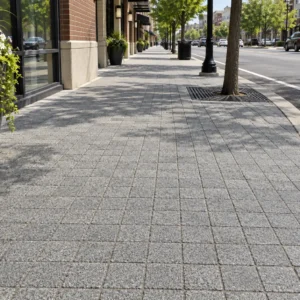
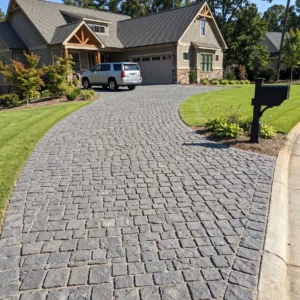
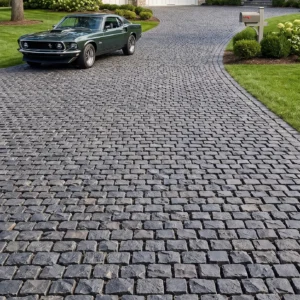
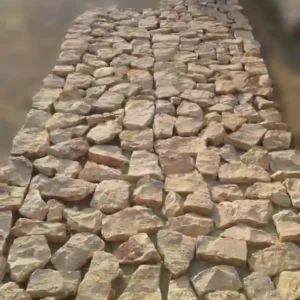
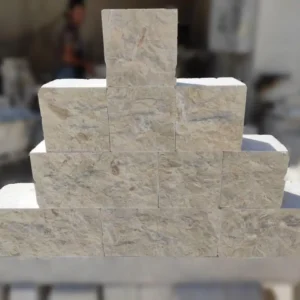
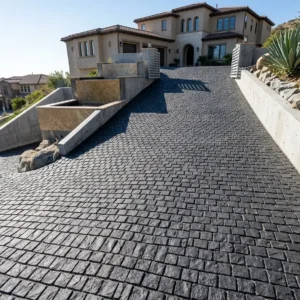
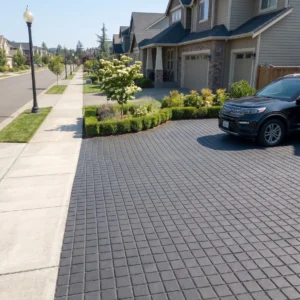
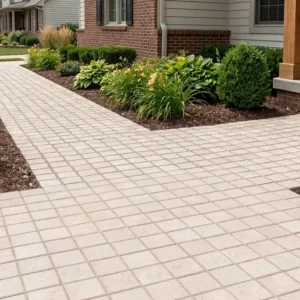
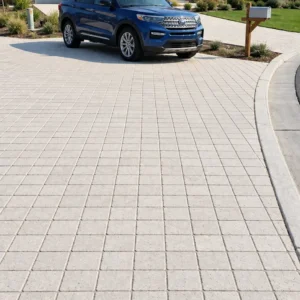
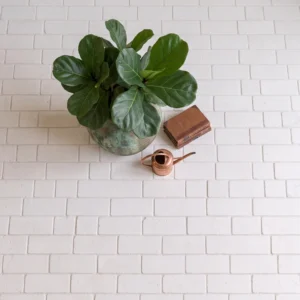
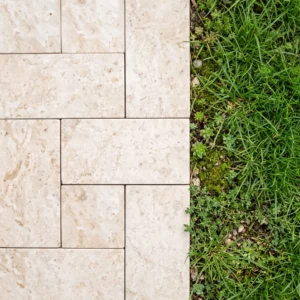
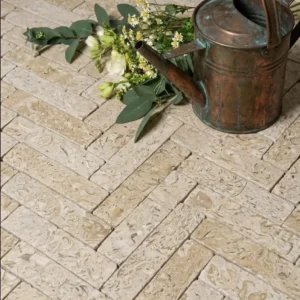
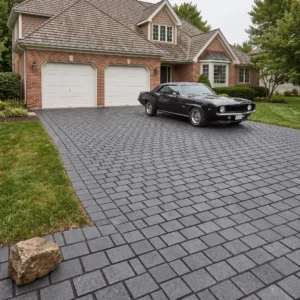
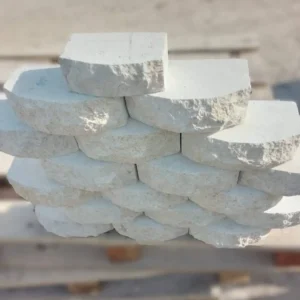
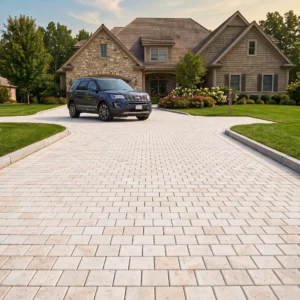
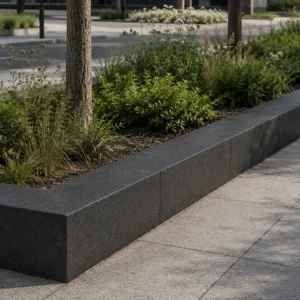
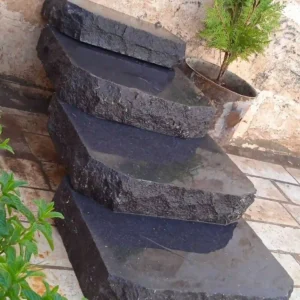
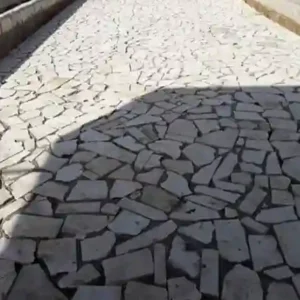
A cobblestone or sett is a small, thick, hand-sized unit of stone, and almost everything that makes it useful comes from those three words. Small means it follows a curve, a changing fall and an uneven base without being cut. Thick means it carries a wheel load through its depth rather than spanning like a slab. Hand-sized means one person can move it up a path, down a set of steps, along a jetty and onto a boat without any machine at all. In a Territory of steep hillsides, dispersed housing and four main islands served through one commercial port, those three properties are worth more than they are almost anywhere else in the world.
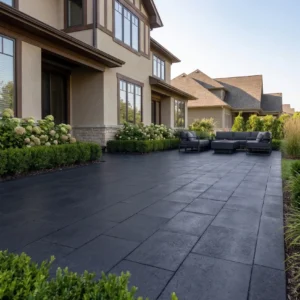
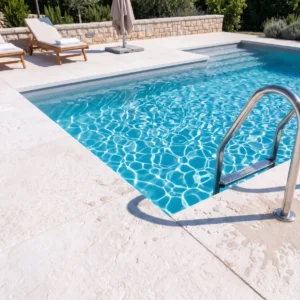
This page is deliberately narrow. It is not about terraces or interior floors. It is about the work that small units do better than anything else: driveway aprons, ramps, turning areas, edges and curbs, steps, curved paths, hand-built and historic settings, and any surface that will have to be lifted and relaid at some point in its life. If your project is a flat entertaining terrace or a barefoot pool deck, a sett is the wrong answer, and we say so plainly further down rather than selling you the wrong thing.
Slopes, Curves and Ground That Will Not Sit Still
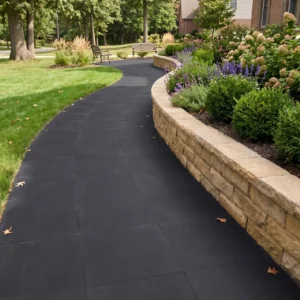
Tortola is steep and mountainous, and housing is scattered across the hillsides rather than gathered on flat land. A driveway that switchbacks steeply from the road up to the house is ordinary. A path that turns three times between the parking area and the front door is ordinary. Slabs handle that geometry badly. Every curve becomes a cut, every change of cross-fall becomes a compromise, and a large unit laid across a warped surface either rocks underfoot or has to be bedded so thickly that it loses proper support.
Small units solve the geometry instead of fighting it. A sett course sweeps around a radius by opening the joints a fraction on the outside. A surface warps gently in two directions across a few courses without a single unit sitting proud of its neighbors. Steps and ramps build up in sett courses that follow the ground rather than imposing on it. And on a slope the joint pattern itself contributes grip, because a textured face with a modest, well-filled joint every few inches gives a foot and a tire something to bite on that a smooth expanse never will.
- Use setts wherever the surface changes direction or cross-fall.
- Open joints slightly on the outside of a curve instead of cutting tapers.
- Run courses across the slope, not straight down it, so no joint line channels water.
- Choose a split or bush-hammered face on any gradient used on foot.
- Detail a positive edge on both sides of a sloping run, because setts creep outward without one.
Driveway Aprons, Gates and Turning Loads
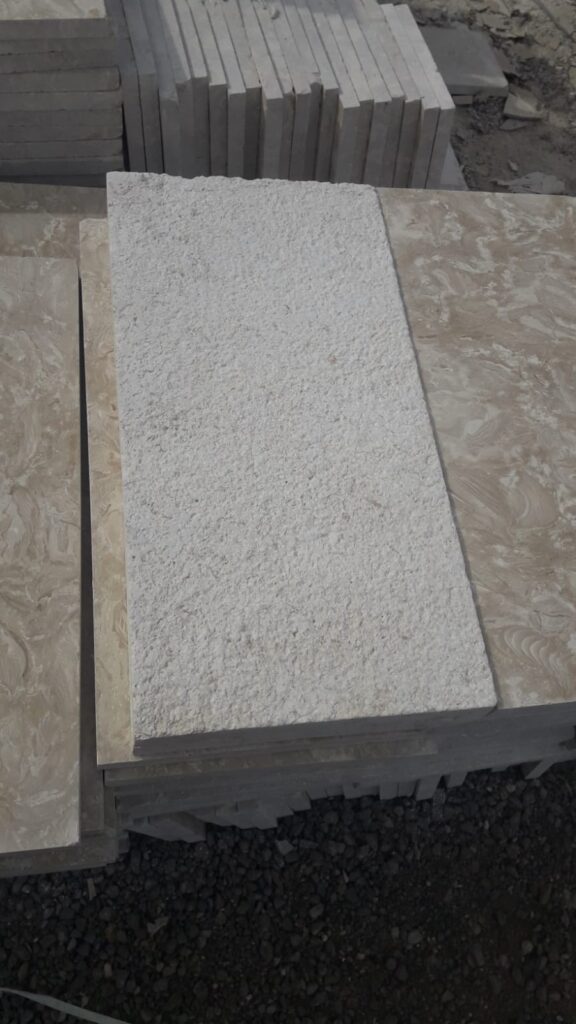
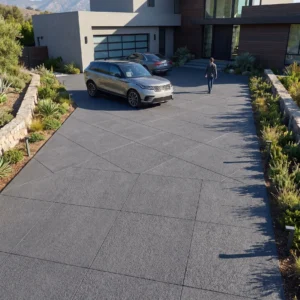
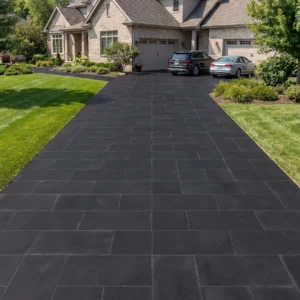
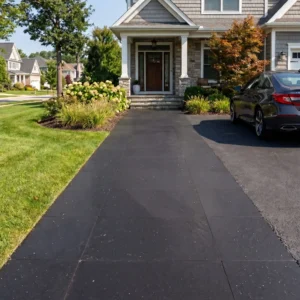
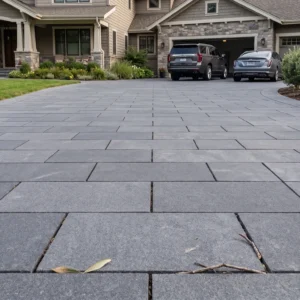
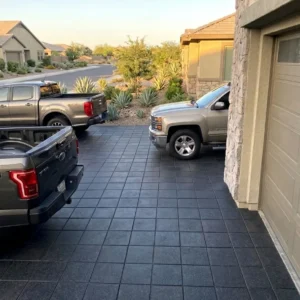
The heaviest thing that ever happens to a residential surface in the Territory is not the owner’s car. It is the concrete truck, the delivery truck bringing your own pallets, the water tanker topping up a cistern in a dry spell, and the equipment that arrives during a renovation. Those vehicles pivot, and a pivoting wheel applies a twisting force that lifts and rotates paving units rather than simply pressing on them. Vehicles here drive on the left while most of them are left-hand drive and imported from the United States, so the trucks are US-spec and their turning circles and axle spacing are American rather than European, which is worth knowing when you set out an apron and a gate opening.
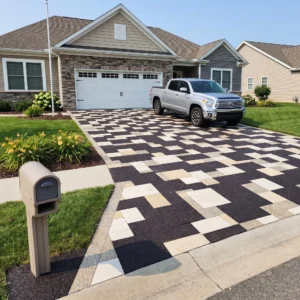
A sett apron handles this better than anything else at a domestic scale. Depth is the key variable, because a unit as deep as it is wide behaves like a small block within the bed rather than a tile sitting on top of it. Bed and haunch it properly, restrain every edge, and lay the pattern at an angle to the direction of travel so that no continuous joint runs the way the wheels do. Take the setts right out to the transition with the public road as well, since that is where the surface takes the worst of the scuffing and where a repair needs to be quick and local.
- Use full-depth setts at the apron, the gate throat and any turning area.
- Lay the pattern at an angle to traffic so no joint line runs with the wheels.
- Haunch and restrain every free edge, because setts fail from the edge inward.
- Size the construction for a tanker or a concrete truck, not for the family vehicle.
Hand-Carried Sites and the Second Boat
This is the argument that does not apply on the mainland at all. Stone for the outer islands lands at Port Purcell on Tortola and moves on from there by onward inter-island delivery, so a pallet bound for Virgin Gorda, Anegada or Jost Van Dyke is handled more times than a pallet staying in Road Town. Add a villa site where the last two hundred feet is a footpath, a stair or a jetty, and the practical question stops being what the stone costs per square foot and becomes what the stone weighs in the smallest piece a person can carry.
A sett is that piece. Two people with a wheelbarrow move a square yard of setts along a path where no machine will ever go, while the same area in large slabs needs a crane, a track machine, or six people and a long conversation about safety. Small units also survive repeated handling far better. A chipped corner on a sett disappears into the surface, whereas a chipped corner on a slab is a rejected piece and a replacement order on the next sailing. When we quote granite and limestone setts for an island job, the handling plan is part of the conversation rather than an afterthought.
- Specify a unit weight one person can lift repeatedly wherever the site is hand-served.
- Ask for half-height pallets where the last leg is a footpath or a boat.
- Expect and allow for a small breakage percentage across two handling legs.
- Mark pallets by island and by area so nothing has to be opened twice.
- Keep spares on site, since a single replacement box from overseas is absurdly expensive.
The Labor-Versus-Material Inversion
On a mainland job the arithmetic is familiar. Setts are cheap by the piece and expensive to lay, slabs are expensive by the piece and quick to lay, and the local labor rate decides which one wins. On an island served by ocean freight two extra terms enter the equation and change the answer. The first is delivered cost, because freight is charged on weight and thick setts are heavy, so the material side of the comparison is less favorable than a mainland price list suggests. The second is access and handling, and that is where setts claw all of it back and more.
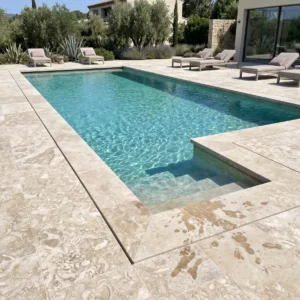
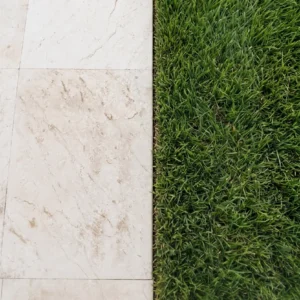
Do the sum properly for each area of the job. Compare delivered material, laying labor, the cost of getting units to the point of work, and the cost of repairing the surface once in ten years. On a flat terrace served by a driveway, slabs win comfortably. On a steep drive, a curved path, an apron, a stair or anything hand-carried, setts win, often decisively. Being straight about the trade-off: a sett surface is not a barefoot surface and it is not a dining terrace, because the texture that gives it grip is the same texture that rocks a chair leg and punishes a bare foot. Use each of them where it belongs and the whole property works.
- Setts for drives, aprons, ramps, steps, edges, curves and hand-served areas.
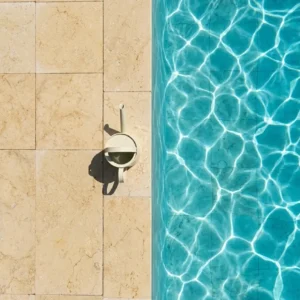
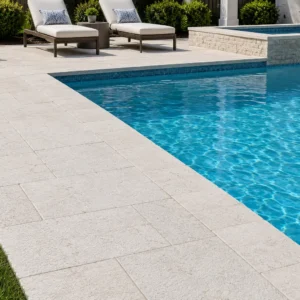
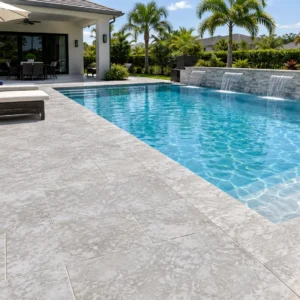
- Slabs for flat terraces, pool decks and anywhere furniture and bare feet live.
- Compare delivered cost plus laying plus ten-year repair, not price per square foot.
- Budget more laying time and less machine time, a trade that usually favors island sites.
- Do not mix the two at random, and change material at a deliberate line such as a step.
Patterns That Work on a Slope and Under a Wheel
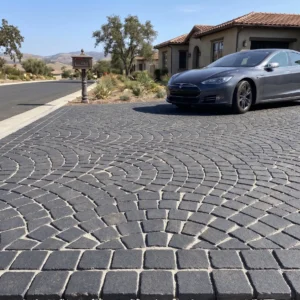
Pattern is structural in small-unit work rather than decorative. A herringbone laid at forty-five degrees to the direction of travel interlocks under a wheel and is the standard choice for driveways and aprons, because no joint line runs continuously in the direction of the load. A fan or segmental arc pattern absorbs curves and changing falls better than any other layout, which is why it appears on old sloping streets and courtyards all over the world, and it also disguises the small dimensional variation of split units. Coursed running bond is quick, calm and suits paths and simple runs. Soldier courses and double borders make a strong visual edge and a genuine restraint at the same time.
On a slope, think about where water will run before you choose. A pattern with continuous joints running downhill channels water and scours the jointing out of them in the first heavy squall of the season. Turn the pattern, or choose a layout with no long continuous lines in the direction of fall. Our guide to laying patterns for small units shows how each layout behaves and where the cuts fall, which is useful when you are pricing labor as well as when you are drawing.
- Herringbone at forty-five degrees for driveways, aprons and turning areas.
- Fan or arc patterns for curves, slopes and ground that warps in two directions.
- Running bond across the fall for paths and simple runs.
- Soldier courses as both border and restraint at every free edge.
- Avoid any pattern with long continuous joints pointing downhill.
Repair, Reuse and Rebuilding
The Territory rebuilt itself after a direct Category 5 strike in September 2017, and anyone who worked through that recovery has a sharper view of maintenance than most people ever acquire. The property of a sett surface that matters most in that light is that it is the only hardscape a single person can repair alone. Units lift with a bar, the base is corrected by hand, and the same stone goes back down with no plant, no cutting and no color mismatch. After debris damage, a slope movement, a trench for a new water line to a cistern, or a settlement crack under an apron, that matters far more than it does somewhere a contractor is a phone call and a short drive away.
It also means a sett surface has a second life. Units lifted from a drive that is being widened are relaid as an edge, a step or a garden path. Nothing is wasted and nothing has to be shipped in to replace it. Small-unit paving suits the older parts of Road Town and the hand-built character of properties across the islands for exactly the same reason it suits repair: it is made of pieces, and pieces can be rearranged by hand. Keep around five percent of the original order in a dry corner of the property and any future repair becomes invisible.
- Hold back roughly five percent of the order as spares kept on site.
- Record the pattern, joint width and jointing material in the handover file.
- Lift and relay rather than patching with a different material.
- Reuse lifted setts as edges, steps or paths whenever a layout changes.
Sizes, Edges and How to Order
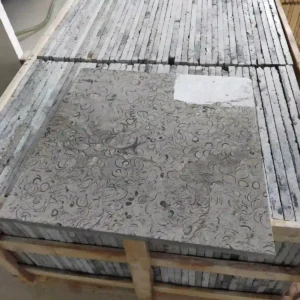
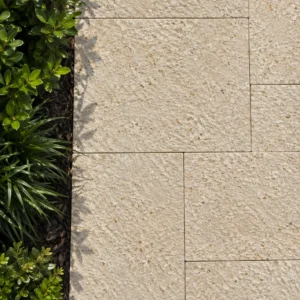
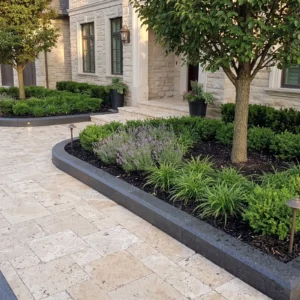
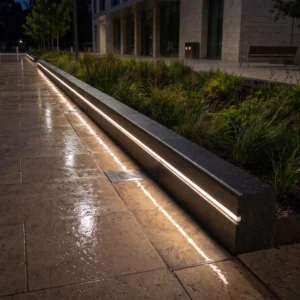
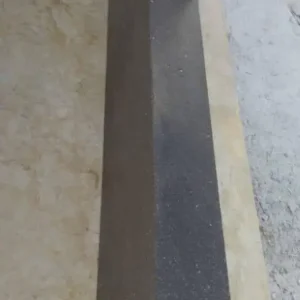
Setts come split, sawn, or a mixture of the two, and the choice sets both the look and the laying rate. A split face with split sides gives the traditional irregular surface, the widest joints and the most forgiving fit. Sawn sides with a textured top lay faster, take a narrower joint and look sharper, which suits a modern villa entrance. Common plan sizes run from small cubes of around four inches through four by six and four by eight rectangles, with the depth chosen for the use rather than for the appearance. Curbstones and edge units in the same stone finish the job properly, because an edge built as a full curb rather than a haunch of mortar is still there after a decade of trucks clipping it.
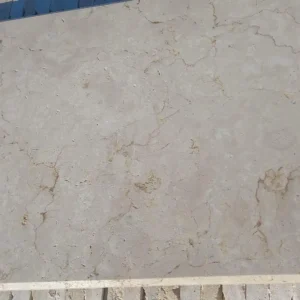
To quote accurately we need the areas by use, the gradient of anything sloping, the pattern, the access route to the point of work, and the island. Prices are quoted in US dollars with no conversion and no sales tax layer to add, while import duty is assessed on entry under the Territory’s own customs legislation and confirmed by HM Customs against your classification. Ask for a small sample of the exact face and size before committing, because a sett is judged by hand far more than by eye, and the difference between a comfortable walking surface and a hostile one is a fraction of an inch of surface relief.
- Give us areas, gradients, pattern and the access route so the quote is real.
- Choose split faces for traditional work and sawn sides for a sharper modern edge.
- Match depth to use, deeper for vehicles and shallower for footpaths.
- Specify matching curbs and edge units at the same time as the field.
- Order spares with the main consignment rather than afterward.
On these islands the smallest stone is often the one that reaches the site, lands on the ground you actually have, and gets repaired without waiting for a shipment.