

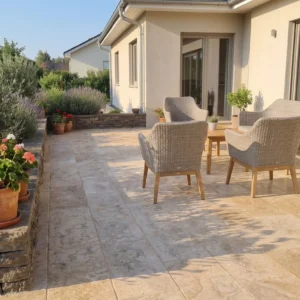

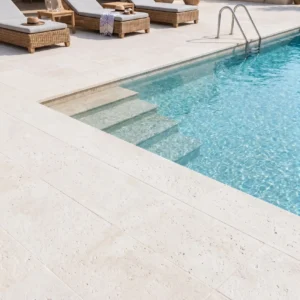


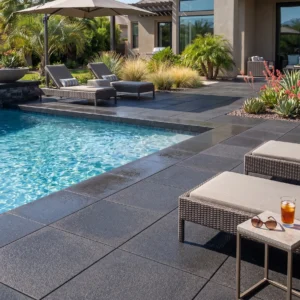
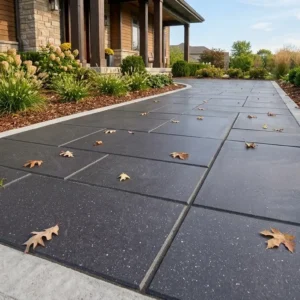





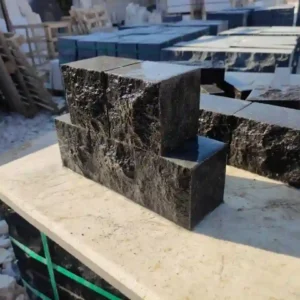
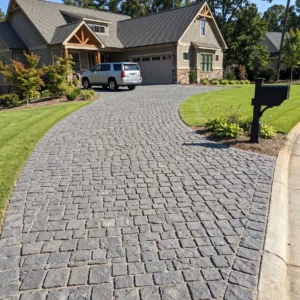
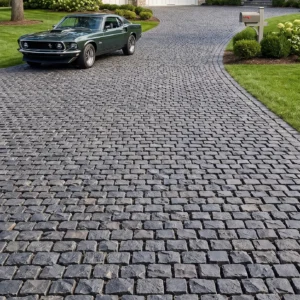
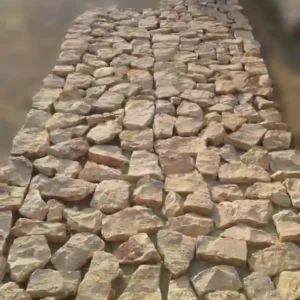
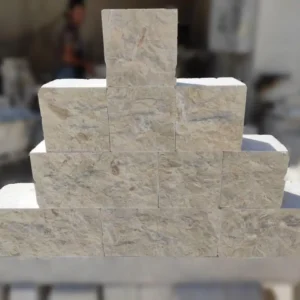
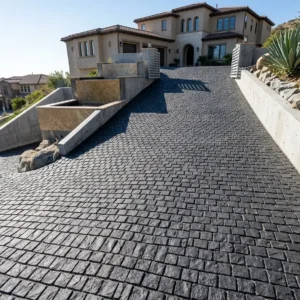
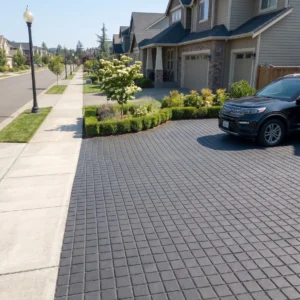
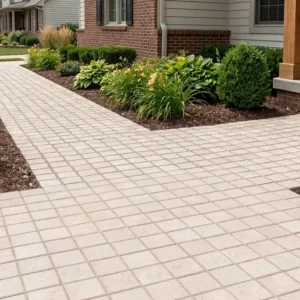
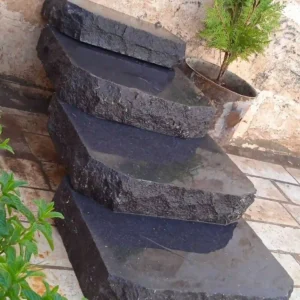
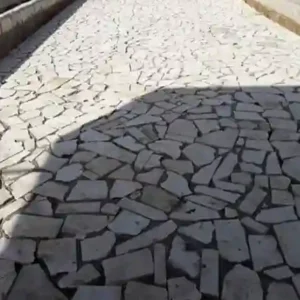
There is a persistent idea, imported wholesale from European practice, that setts are the cheap option and labor is the expensive part. On an island supplied by container that idea is not just wrong, it is backward, and the last third of this page explains why in detail. Setts are worth using on Bonaire for what they do, not for what they cost: they turn tight radii without slivers of cut stone, they follow a warped plane where a large slab has to be flat, and under a vehicle pivoting on its front wheels they behave like a field of small columns rather than a sheet that can crack.
This page assumes you already know the shipping picture, that a container reaches Kralendijk five days after leaving Florida and that the tax at the border is 8 percent ABB with no duty behind it. It goes instead to the ground: where small units earn their place on a low island, how an apron should be built, how to set out a curve, what to do when the setting is sensitive or a protected structure is nearby, which coursing patterns work, and how to buy the quantity you actually need.
Where Small Units Earn Their Place
Bonaire is not a mountainous island. The high ground is at Mount Brandaris in Washington Slagbaai National Park, well away from the average building plot, so the case for setts here is rarely about steep gradients. It is about geometry. A driveway that ramps up to a raised floor level, ground that has to be pulled around to a drain, a kunuku plot that has never been graded, a planting bed that curves, an old wall that runs three degrees off the new building line: all of these are situations where a small unit gives you a surface that follows the ground instead of fighting it.
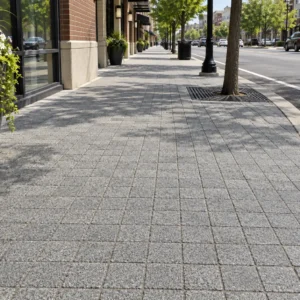
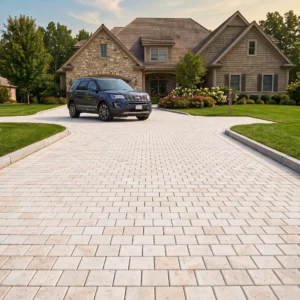
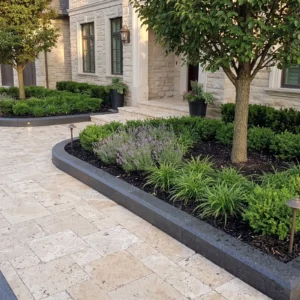
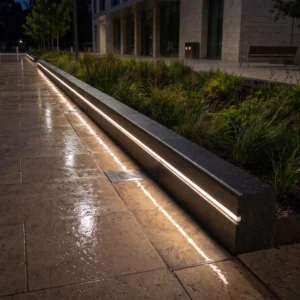
The second case is the junction. Wherever paving meets something that was built earlier, the closing course is where the work is judged, and closing against a curved or irregular edge with large slabs means a run of tapered cuts that will always look like cuts. A sett band absorbs the discrepancy in the joint pattern instead. That is why a sett band works so well as a border, a threshold or a turning apron even where the main field is slab paving. Used that way they earn their keep without carrying the whole area.
- Curves, radii and planting beds, where a slab layout produces tapered cuts and slivers
- Falls and warped planes, where the surface has to twist gently toward a drainage point
- Rough or ungraded ground on kunuku plots, where a small unit tolerates more base variation
- Junctions with older walls and out-of-square building lines that a closing course has to absorb
- Bands, borders and thresholds that frame a slab field and take the concentrated traffic
Aprons, Gateways And Turning Loads
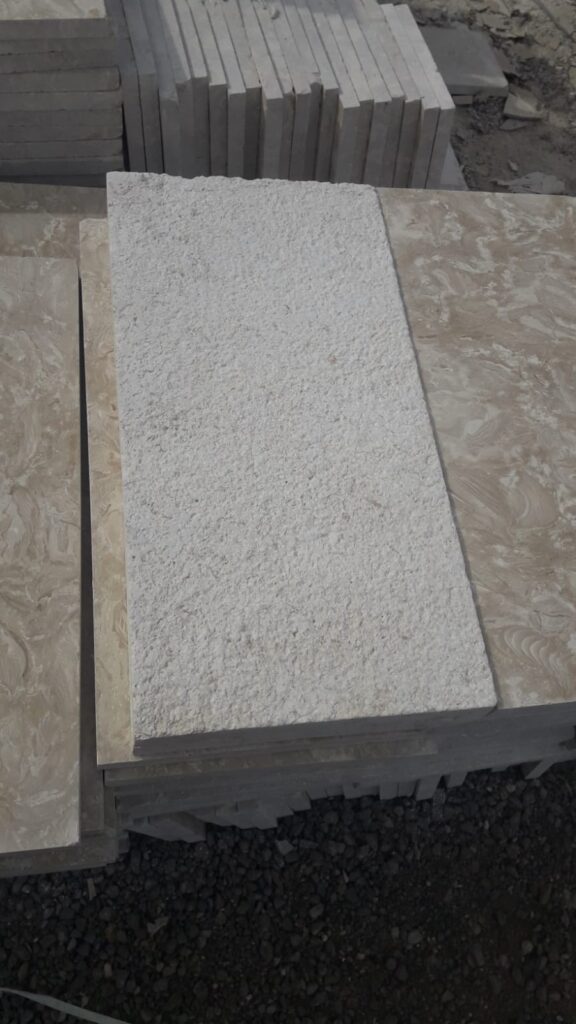
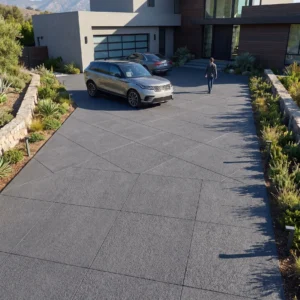
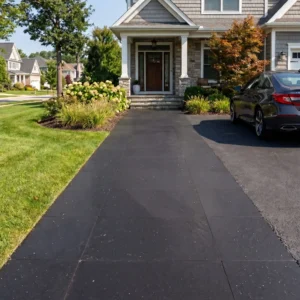
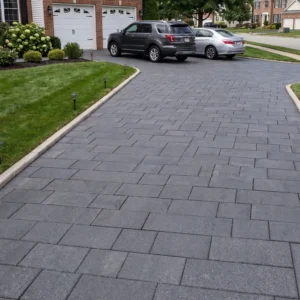
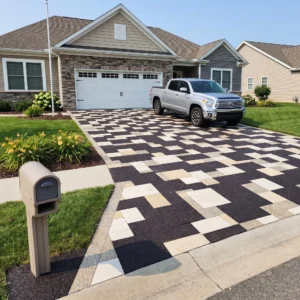
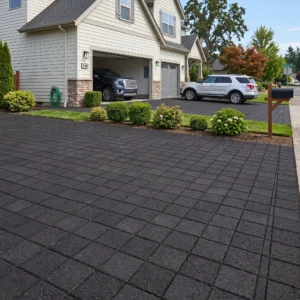
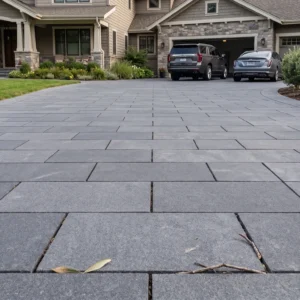
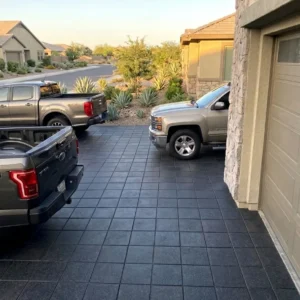
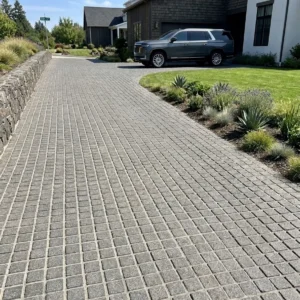
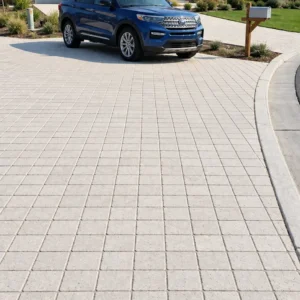
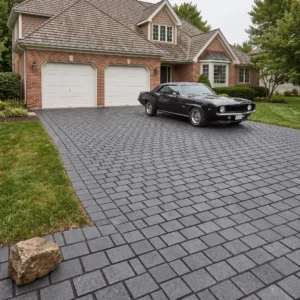
The apron is where a residential paving detail is tested hardest, and the reason is not weight but geometry. A vehicle turning while barely moving drags its tires sideways across the surface, and that scrubbing action attacks the joint before it attacks the stone. Add braking, a gatepost that concentrates load, and delivery vehicles that use the same three square meters every week, and you have the one place where a terrace detail will not survive.
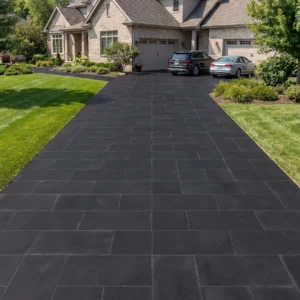
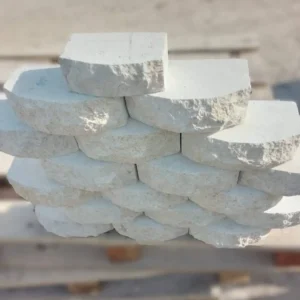
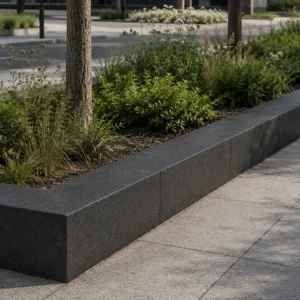
Build the apron differently from the field. Set the units on a concrete bed rather than on a compacted granular layer, and joint them with a mortar or resin product rather than with sand, because sand joints migrate under scrub and there is in any case no beach material you should be taking on this island. Increase the depth of the unit: a sett works as a small column, so its section is what carries the load, and the apron wants a deeper unit than the courtyard does. Restrain the edges positively with haunched concrete or with curb units, and lay the coursing so the joints run across the direction of travel rather than along it. You will find the sizes and depths for this kind of work among cut setts in workable depths, and it is worth agreeing them with the contractor before the base is poured.
- Bed apron setts on concrete, not on a granular layer, wherever vehicles turn or brake
- Joint with mortar or resin rather than sand, which migrates under tire scrub
- Specify a deeper unit for vehicle areas than for pedestrian courtyards and paths
- Restrain edges with haunched concrete or curb units before the field is laid
- Run the coursing across the direction of travel so joints are not tracked open
Curves, Falls And Ground That Is Not Level
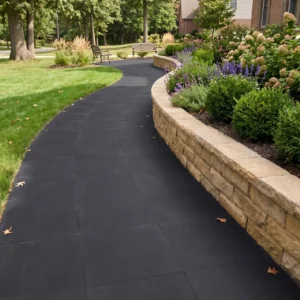
Setting out is where sett paving is won or lost, and it happens before a single unit is bedded. For a curve, establish the arc on the ground first, mark the center point, and lay from a string or a trammel so every joint stays radial to that center rather than drifting into a shape that reads as a mistake from the house. On a tight radius, take the cut on the inside of the arc where the joint closes, not on the outside where the eye follows the line. Keep a consistent joint width and let the coursing open slightly toward the outside of the curve instead of tapering the units.
Falls are the other half of the job, and Bonaire makes them more important than the annual rainfall figure suggests. Only 350 to 450 mm of rain falls in a year, but it arrives in a season running October to January with the wettest weeks in November and December, so what you design for is a short, intense event rather than a steady drizzle. Setts can be laid to a twisted plane that moves water toward a channel without a visible break, which is exactly what a slab field cannot do. Under all of it, base preparation on rough kunuku ground matters more than the units themselves: compaction, a properly graded sub-base and a bedding layer of consistent depth will decide whether the surface is still true years later.
- Set the arc out physically before laying, and keep every joint radial to a marked center point
- Take cuts on the inside of a curve where the joint closes, not on the visible outer line
- Use the coursing to open joints gradually around a radius rather than tapering the stone
- Design falls for a short intense storm in November or December, not for the annual average
- Invest in compaction and a graded sub-base on ungraded ground before spending on the units
Older Properties And Sensitive Settings
Consents come first. A bouwvergunning is issued by the bestuurscollege, which must decide within sixteen weeks and may extend that once by up to eight weeks, and one of the grounds for refusal is a missing monument permit. If a project sits on or beside a protected structure, that separate consent has to be cleared before the building permit can pass, and a paving package is not the place to discover it. Check the designation of the parcel under the Ruimtelijk Ontwikkelingsplan Bonaire early, and let the supply schedule follow the permit rather than lead it.
Bonaire holds protected monuments that deserve to be named accurately rather than used as atmosphere. The small houses at White Pan and Orange Pan on the south coast, on the road toward the Pekelmeer salt pans, date from 1850 and carry official protected status. They commemorate enslaved salt workers. They are a place of remembrance, and nothing in a paving specification should treat them as a visual reference, a style cue or a backdrop. The historic material of the island came from its own coastal limestone, and taking that material today is unlawful, with fines cited at 100 to 500 dollars for collecting shells, coral, sand or other natural material and a permit required from the bestuurscollege within the Marine Park.
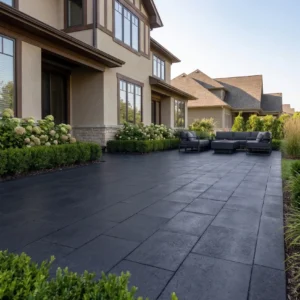
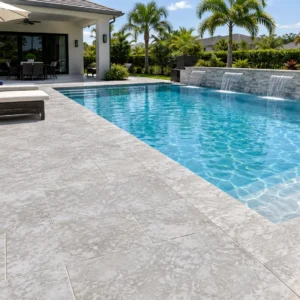
Which leaves a practical question for anyone working on an older property or in a sensitive setting: what do you actually build in? The honest answer is that you work with what is genuinely there. Bonaire builds today in concrete, block and render, and those are the materials any new work will sit against. Imported cut stone should be added as a clearly modern surface that reads as a new layer, laid to a quiet coursing and a restrained format, rather than as an imitation of something the island no longer permits anyone to take.
Coursing Patterns And Cutting Waste
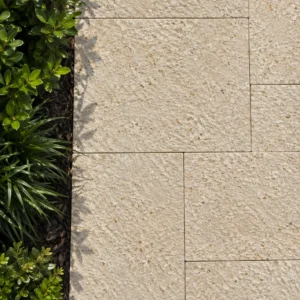
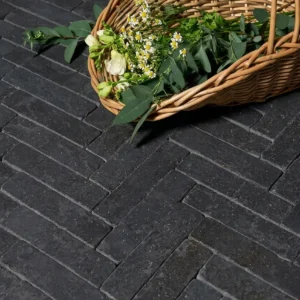
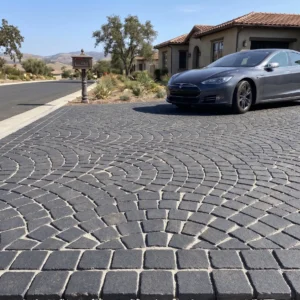
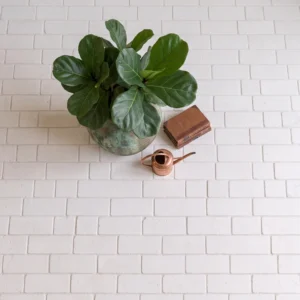
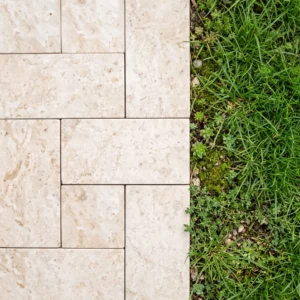
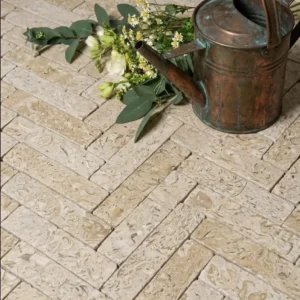
Pattern is a structural decision on small units, not a decorative one. A running bond or stretcher course is the simplest to lay and works well on straight runs and paths, with joints offset so no continuous line runs along the direction of traffic. Herringbone interlocks in two directions, which is why it holds its geometry under wheel loads better than a stack or a straight coursed layout, and it is the default worth considering for any apron or drive. Coursed rows suit formal frontages and read calmly against a modern house. Fan and arc coursing absorbs level change gracefully and looks right on an open area, at the cost of more setting-out time and more cuts.
Waste is the number people forget. A straight run in a simple bond needs a modest cutting allowance; a fan, a curve or a pattern that closes against an irregular edge needs considerably more, and it needs it in the order rather than as an emergency top-up three months later from a different block. Count the cuts off the drawing before ordering. Our guide to the bond patterns worth drawing first sets out how each layout behaves and where the extra material goes.
- Running bond: quickest to lay, good on paths and straight runs, joints offset across the traffic line
- Herringbone: interlocks in two directions and resists creep, so it suits aprons and driveways
- Coursed rows: calm and formal, and easy to close against a straight building line
- Fan and arc coursing: absorbs level change well on open areas but costs setting-out time and cuts
- Allow extra material for curves, fans and irregular closures, and put it in the original order
The Real Cost Balance On An Import Route
Now the part that matters commercially. In a domestic market with a quarry down the road, setts are cheap and laying them is expensive, so the received wisdom is that sett paving is a labor cost with a small material cost attached. Ship the same stone in a container and that arithmetic inverts. A sett covers less area per kilogram than a slab does, because it carries far more depth for the same footprint. Cover a square meter in setts and you are moving substantially more stone than covering the same square meter in slabs.
On a weight-charged import route that shows up three times. The material itself costs more per covered square meter. The freight costs more, because freight follows weight. And the tax base rises with it, since ABB at import is charged on the customs value, which is goods plus insurance plus transport. So on Bonaire, setts are the more expensive material per square meter as well as the slower surface to lay. Labor is still the reason sett paving costs more to install, but it is not offset by cheap stone here, and any budget built on that assumption will be short.
None of which is an argument against them. It is an argument for using them where they do work a slab cannot: the apron that would crack a slab, the curve that would need forty cuts, the level change a slab cannot follow, the border that takes the concentrated traffic. Price them by covered square meter delivered, price the laying separately by the same unit, then compare the total against a slab option for the same area and decide zone by zone.
- Setts carry more depth per covered square meter, so they weigh more than slabs for the same area
- More weight means higher material cost and higher freight cost on a container route
- ABB is charged on goods plus insurance plus transport, so the tax base rises with the weight too
- Labor is the reason sett paving costs more to lay, and cheap stone does not offset it here
- Use setts where geometry or load demands them, and let slabs carry the open field
Ordering Setts By Crate And By Depth
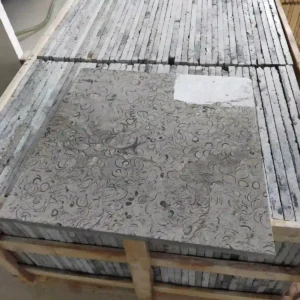
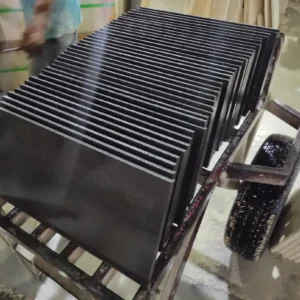
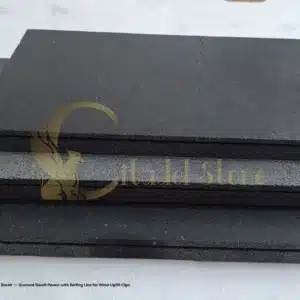
Setts are sold by covered area but they travel by weight, so an order needs both figures on it. Tell us the square meters by zone, the depth each zone needs, the pattern you intend to use and the cutting allowance that pattern implies, and we will return crate quantities, crate weights and a container fill that arrives complete. Depth sorting matters more than people expect: mixing a pedestrian depth and a vehicle depth on one delivery without clear separation creates a sorting job on site that nobody has time for.
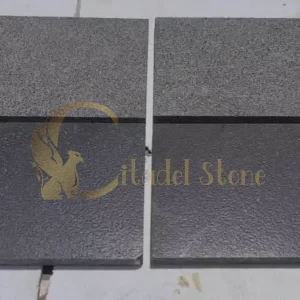
Buy the whole job in one lot and blend across crates as you lay, in the same way you would with tile. Order the border and the field together so the tone runs through, keep a small reserve boxed for future repairs, and if the work is going to be phased, agree the phasing at ordering stage so the later phase is cut from the same material rather than sourced fresh a year on. And before any of that, get a sample in your hand, put it on the ground in real light and stand a car wheel on it if you can. Give us the areas, the depths and the pattern, and we will send back crate counts you can build a program around.