





















Nothing hard-wearing gets built in the Turks and Caicos Islands without a boat. South Dock on Providenciales is the principal commercial port and handles more than 85% of national port traffic, and its physical limits shape every material decision made on the islands. The draft at South Dock is only about eleven feet, and berthing is restricted to vessels of roughly 110 TEU. No large container ship calls here at all. Cargo arrives on shallow-draft feeders and barges out of Florida, is offloaded by Provo Stevedoring, and moves from the dock into the yards that feed Grace Bay and the villa districts behind it. A paving order in this market is therefore not a warehouse transaction with a delivery date bolted on. It is a sailing schedule with stone attached to it, and the sooner a builder accepts that, the cleaner the program runs.
This page is the broad category page. It covers how paving stone physically reaches a site in the Turks and Caicos Islands, what the import mechanics involve, which formats and thicknesses earn their freight, and how the exposure varies from a sheltered inland courtyard to a sea-facing terrace on South Caicos. The Islands are a British Overseas Territory with their own government and their own customs administration. The everyday currency is the United States dollar, and that single detail misleads more first-time importers than anything else, because it makes the run from Miami feel like a domestic delivery. It is not one. Duty is assessed at the border, it is charged on the landed value rather than the invoice alone, and duty together with processing fees funds roughly thirty percent of government revenue. Build that into the first budget draft rather than meeting it at clearance.
A Direct Florida Run, Not a Caribbean Hub Route
Most Caribbean territories are fed through a regional hub, with a mother vessel dropping boxes at a large transfer port and a feeder carrying them the last few hundred miles. The Turks and Caicos Islands work differently. SEACOR Island Lines and Tropical Shipping run container vessels directly between Florida and the Islands, and between them they carry nearly all cargo imported into the country. That is a genuine advantage: fewer handovers, fewer places for a pallet to sit, and a routing that a supplier in the United States can actually control from the loading dock.
SEACOR is reported to sail from South Florida weekly, with two weekly arrivals into Providenciales, but schedules move with the season and with weather, so treat any published day as provisional and confirm the current sailing list with the line before you promise a pour date to a client. The realistic planning discipline is to work backwards from the sailing rather than forwards from the order.
- Book against a named sailing, not against a lead time in weeks, and hold the crate ready ahead of the cutoff rather than chasing it.
- If a freight forwarder consolidates your order with other cargo, allow the two to three week gap between delivery into the US facility and the goods becoming available on Providenciales.
- Full container loads skip the consolidation queue entirely, which is usually the reason a whole-villa order beats a phased one on the calendar.
- Shipping a container from the Port of Miami to Providenciales costs on a par with shipping a container from the United States to Asia, so the short map distance tells you nothing about the price.
- Building supplies generally land in the Islands at 60% to 100% above the average United States cost once duty, freight and utilities are counted, which is the number your client should hear early.
None of that is a reason to avoid importing. Everything on a Turks and Caicos building site is imported, from the block to the lumber to the good aggregate. The question is never whether to ship, only what is worth the space in the box.
Duty, Fees and Clearance Without Guesswork
The Islands are not part of the United States customs territory, and the shared currency does not create duty-free entry. They are also not a full member of CARICOM. The Turks and Caicos Islands have been an associate member since 1991, alongside Anguilla, Bermuda, the British Virgin Islands and the Cayman Islands, so rates quoted for a full CARICOM member should not be assumed to apply here. Confirm the tariff classification and rate for cut stone with TCI Customs rather than copying a figure quoted for another island.
What the Islands do not charge is just as important. There is no VAT and no general sales tax, apart from a tax on tourism services, and there is no income tax, capital gains tax, property tax, inheritance tax or corporation tax. That makes the landed-cost story cleaner than in most of the region: the cost is loaded at the border and then it stops. Duty is assessed on the cost, insurance and freight value, so the freight itself sits inside the dutiable base. Building materials attract a reduced duty rate with a Customs Processing Fee on top, but published figures conflict between sources, so confirm the rate and the correct classification for cut stone paving using the TCI Customs Tariff Finder before you build a budget on it. A wrong rate copied from a forum post is worse than no rate at all.
A licensed customs broker is not legally mandatory, but the Border Force guidance itself recommends using one to assist with the declaration and clearance process, and for a heavy, high-value, classification-sensitive shipment that recommendation is worth taking. Declarations run through ASYCUDA World using the Single Administrative Document.
- Cargo manifest from the carrier, matching the crate and pallet count exactly.
- The Single Administrative Document declaration lodged in ASYCUDA World.
- Commercial invoice showing stone description, quantity, value, freight and insurance separately.
- Any licenses or permits that apply, with Form C14 used for import and export license applications.
- A concession letter where an exemption has been granted, and the ASYCUDA World application where a broker or company is lodging directly.
Clearance fees themselves are modest against the cargo value: roughly ten to twenty-five US dollars for small shipments, and over seventy US dollars for larger consignments handled by a broker. The expensive part of clearance is never the fee. It is the delay when a description on the invoice does not match what is in the crate.
The Outer Islands Are Separate Freight Legs
Providenciales is the entry point and the distribution point, and South Dock is where the outer islands get supplied from. Any quote that treats Grand Turk, South Caicos, North and Middle Caicos or Salt Cay as the same delivery as Provo is quietly wrong, because each of those needs a second vessel, a second booking and a second unloading. We quote Providenciales delivered as the baseline and then price the onward leg openly, because bundling it hides a real cost and produces an argument later.
- A cargo barge runs between Providenciales and North Caicos, which is the workhorse route for construction material heading to the middle of the chain.
- North Caicos and Middle Caicos are the only two islands joined by a causeway, so a delivery landed at Sandy Point can be trucked across to a Middle Caicos site.
- Ferry services run Providenciales to North Caicos, Providenciales to South Caicos, and Grand Turk to Salt Cay, and they set the rhythm for crew and small consignments.
- There is no ferry between Providenciales and the Turks Islands, so Grand Turk and Salt Cay work is planned around cargo movements, not passenger schedules.
- Grand Turk is the seat of government and the cruise landing point, which means its yard space and truck access come under pressure on ship days.
The practical consequence for a builder is sequencing. On Provo you can call for a second delivery and get it in days. On Salt Cay you cannot, so the order needs to arrive complete, with the cut allowance and the breakage allowance already inside it, and with the setting materials on the same barge as the stone.
Formats and Thicknesses Worth the Freight
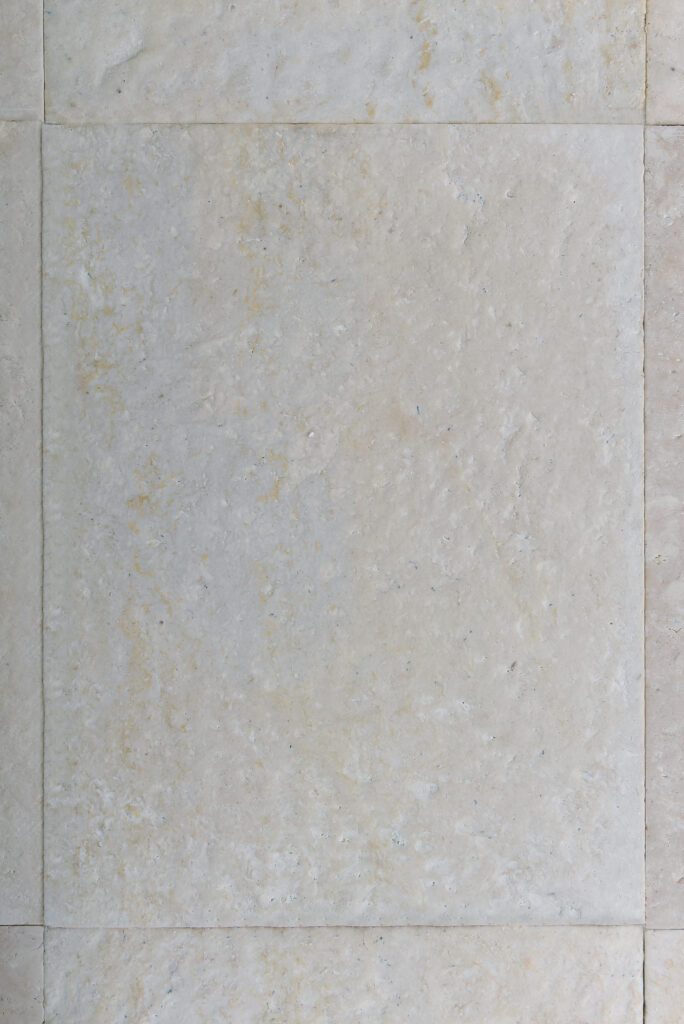
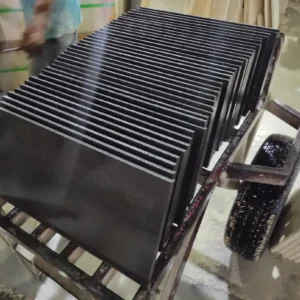
When duty is assessed on the landed value and freight is priced by weight and space, format selection stops being an aesthetic decision and becomes a cost decision. Every pound of stone in the crate is paying twice: once for the ocean leg and once as part of the dutiable base. Calibrated material earns its place immediately, because a consistent thickness means you can use the thinnest section that performs, instead of the thickest section the batch happens to contain.
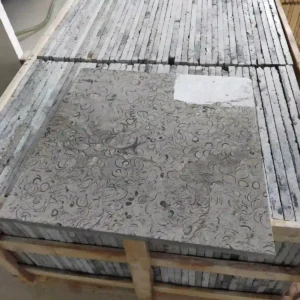
- Interior floors and covered galleries: thin sections in the three-eighths to half-inch range keep weight down and sit well over a poured slab.
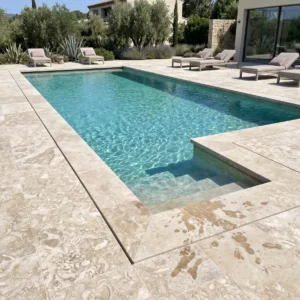
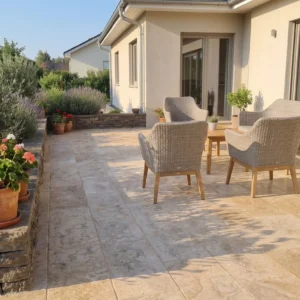
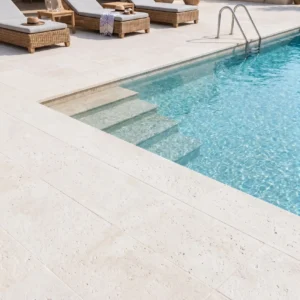
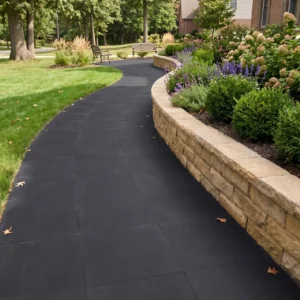
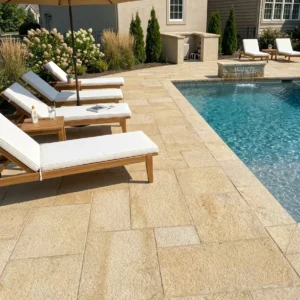
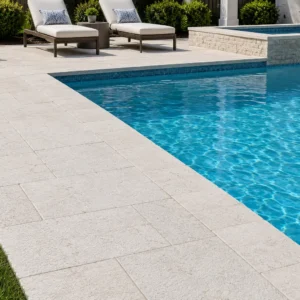
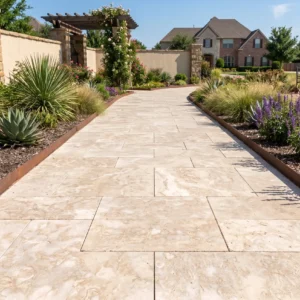
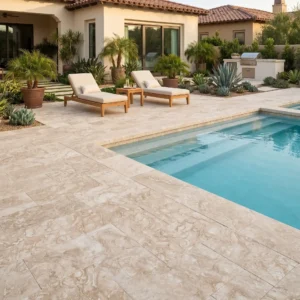
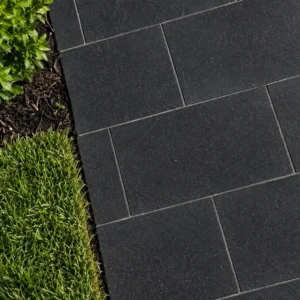
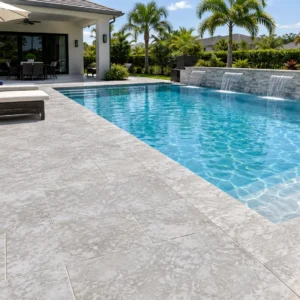
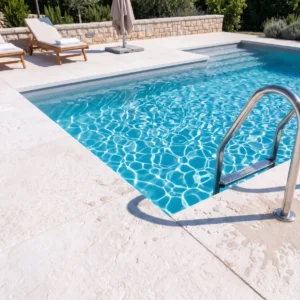
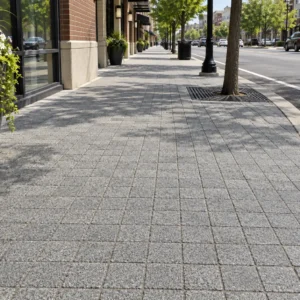
- Foot-traffic terraces, pool surrounds and walkways: three-quarter inch to one and three-sixteenths inch on a bonded bed covers almost all villa work.
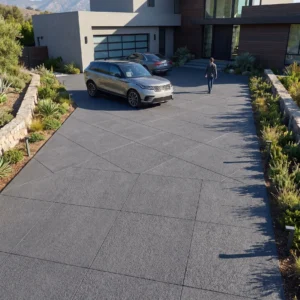
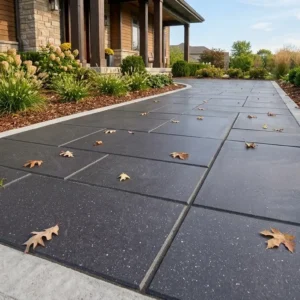
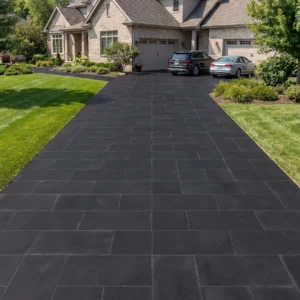
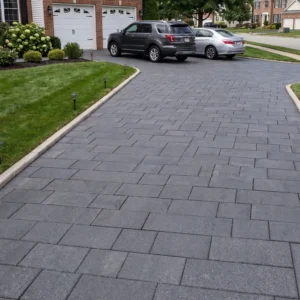
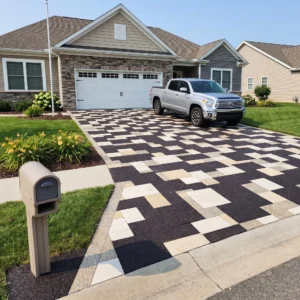
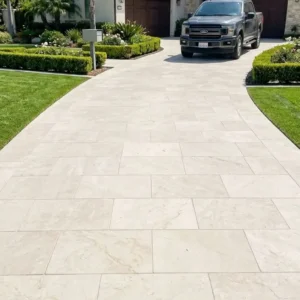
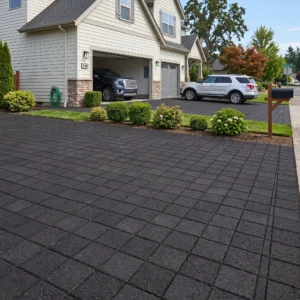
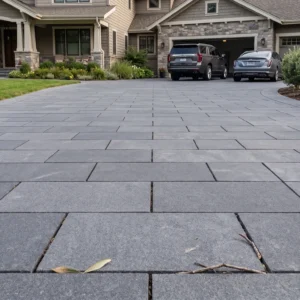
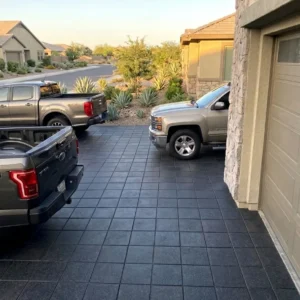
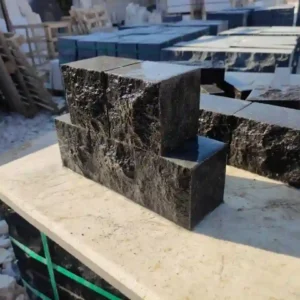
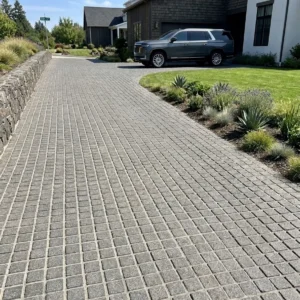
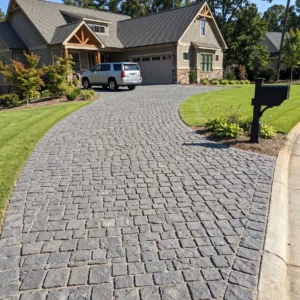
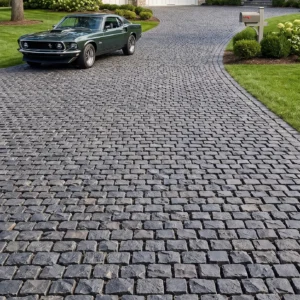
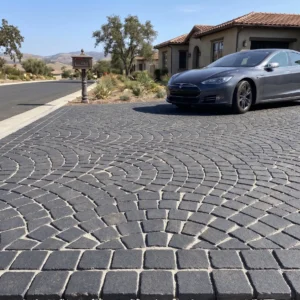
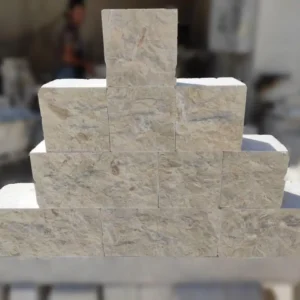
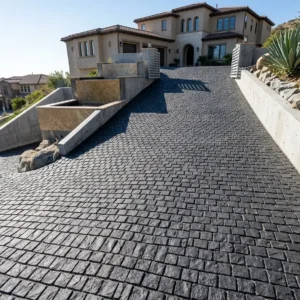
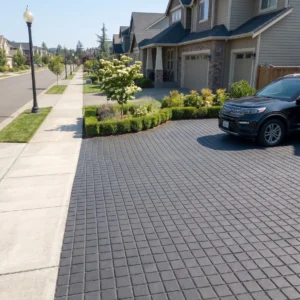
- Driveways, aprons and anywhere a vehicle turns: two-inch slabs or small setts, and setts usually win on both freight and repairability.
- Large modules over about twenty-four by thirty-six inches: beautiful, but plan the handling, because they are the units that suffer when a crate is moved twice.
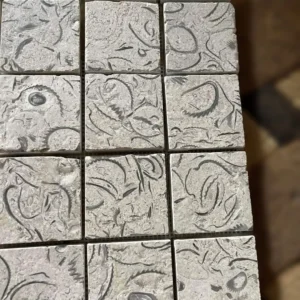
- Modular blends of two or three sizes: fewer cuts on site, and a cut offcut is a piece you have already paid ocean freight and duty on.
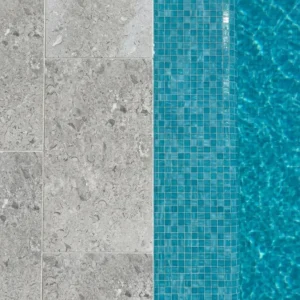
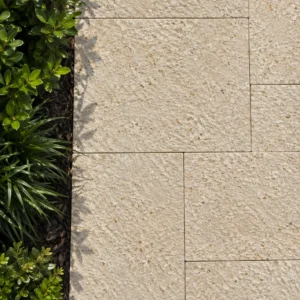
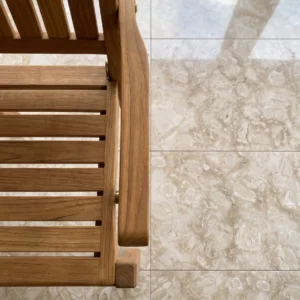
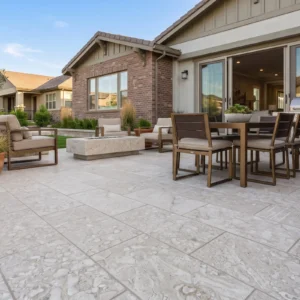
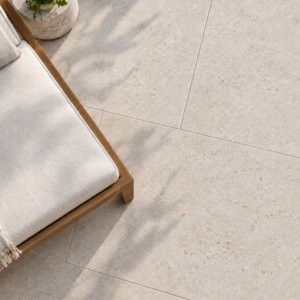
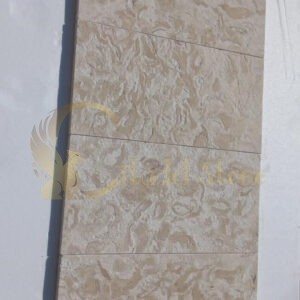
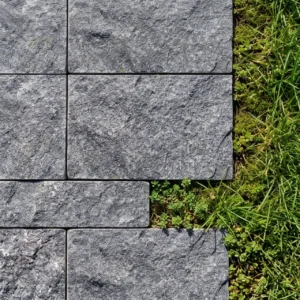
Thickness also interacts with the salt exposure discussed further down. A thin unit bonded fully to a sound concrete bed performs better in a sea-facing position than a thick unit dry-laid on sand, because the failure mode here is not load, it is water and salt getting underneath and staying there. Builders comparing options across the whole full natural stone paver range should shortlist on absorption and finish first, then let format follow the pattern and the freight.
Site Access on Providenciales
Provo is where the market is. Villa and condo-resort construction concentrates on the island, Grace Bay is the resort spine, and vacant land on Providenciales typically starts around 450,000 US dollars an acre as of 2025. That land price has a direct and underappreciated effect on deliveries: nobody has spare ground. Lay-down space on a villa plot is usually the driveway, the neighboring lot is often someone else’s investment, and the landscaping goes in before the last of the hardscape is finished.
The result is that delivery planning matters as much as the stone specification. A single truck dropping an entire villa order at the gate creates a bottleneck that costs more in double handling than a staged delivery would ever have cost in freight. We would rather split a Provo order into two or three drops keyed to the laying sequence, and we would rather know before shipping whether the site has forklift access or whether crates need to break down for hand carry.
Ground conditions matter too. Screened local material makes a soft yard surface, and a loaded pallet placed on it after a heavy rain will sink and tilt, which is how corners get chipped before a single unit is laid. Ask for a hard standing, or a sheet of plywood and dunnage, and keep crates banded until the setter is ready for them. Cover pallets against wind-driven dust and salt spray if they will sit more than a few days, and never leave banded crates directly against a sea-facing wall.
Exposure Zones Across the Islands
The Turks and Caicos Islands sit in the hurricane belt, and the recent record is the reason the building stock looks the way it does today. Hurricane Ike passed just south of the Islands in September 2008 with winds around 135 miles an hour, damaging most homes on South Caicos, putting the airport under water and sweeping away every boat despite them being towed ashore. Building codes were strengthened after Ike. When Hurricane Irma crossed as a Category 5 storm on 7 September 2017, with sustained winds in excess of 156 miles an hour, damage was severe nationwide and worst on South Caicos, Grand Turk and Salt Cay, with communications infrastructure destroyed and extensive roof damage. A large share of that damage was nonetheless classified as minor, an outcome widely credited to the post-Ike code upgrades.
Day to day, though, the governing exposure is not wind. It is salt. Salt-laden air corrodes standard metals rapidly, which is why stainless steel fasteners are advised, cast zinc alloys are avoided, and reinforced poured concrete is recommended as the most durable structure on these islands. Concrete block and stainless railings are popular here for exactly that reason. Everything you fix into a paved surface has to survive the same air the paving does.
- Beachfront and sea-facing terraces: continuous salt deposition, wind-driven spray, and surfaces that need rinsing rather than only sweeping.
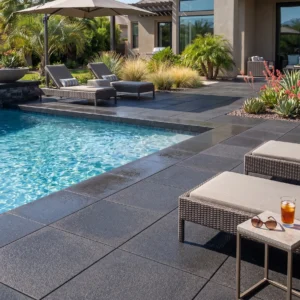
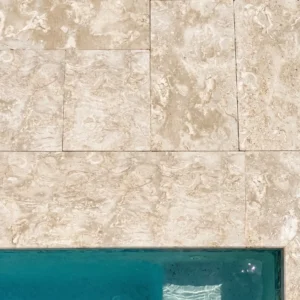
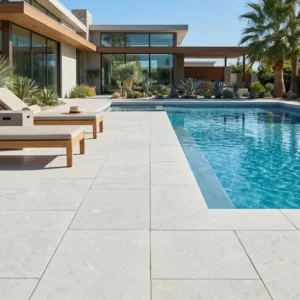
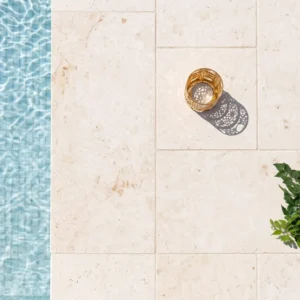
- Pool decks: chlorinated splash-out plus barefoot traffic, so grip and surface temperature outrank everything else.
- Low-lying ground: design for storm surge as well as rainfall, and keep lower levels for utilities rather than living space.
- Inland courtyards and ridge sites: less salt, more heat load, and a much freer choice of finish.
- Everywhere: rainfall of about 43 inches a year arrives in heavy concentrated periods, so drainage has to be sized for the burst, not the annual average.
Termites are common across the Islands, which is why pressure-treated lumber is standard, and it is a reason to prefer stone over timber decking wherever the two are competing for the same terrace. Before pricing anything, send us the site exposure details along with the island, the dock and the intended use, because a sea-facing pool deck on Grand Turk and a shaded inland courtyard on Provo are not the same specification even when they are the same stone.
Samples, Ordering and Lead Time
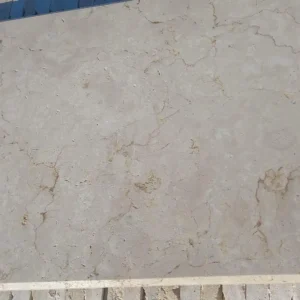
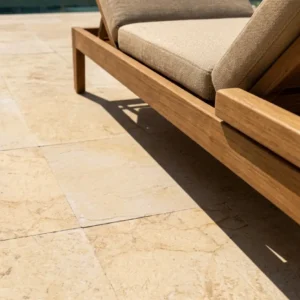
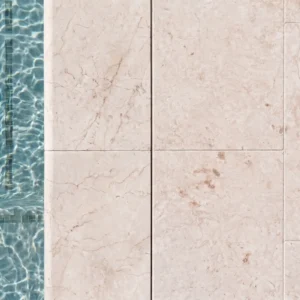
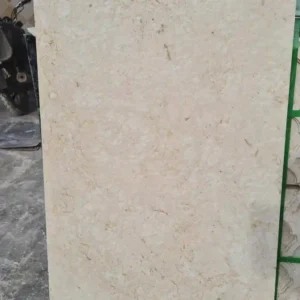
Start with samples. We send small hand samples rather than pallets, and small is the point: a sample exists so you can see the stone wet, see it dry, put it in the sun at midday and see how it reads against the wall color and the pool tile. Get the samples onto the actual site before the order, because the light in the Turks and Caicos Islands is bright, low-contrast and unforgiving of choices made from a screen.
From there the sequence is straightforward. Confirm the laid area and add a cut allowance sized to the pattern, generously for diagonal or fan layouts and modestly for a simple grid. Add a breakage allowance if the material is going beyond Provo. We quote delivered to South Dock or delivered to the site on Providenciales, with the outer-island barge leg shown as its own line. Your broker lodges the declaration, the container is offloaded, and the crates move to site.
There is one argument worth making to any client hesitating over the cost of natural stone here, and it is structural rather than promotional. On these islands the concrete block is imported, largely from the Dominican Republic at around two and a half US dollars for an eight-inch block. The good aggregate is imported. The lumber, the steel, the windows and the doors are all imported. Because everything already carries freight and duty, the marginal step up from imported block and poured concrete to imported natural stone is smaller in the Turks and Caicos Islands than in almost any other market on earth. The boat is coming anyway, so the only real question is what you want walking off it.